📜 Defensive Prior Art
Technical disclosures for proposed systems, published online with dated revision history so readers can examine the disclosed material and how it changed over time.
These pages describe proposed technical systems; many are unbuilt. Whether any page qualifies as prior art, and what it discloses, depends on the facts, including public accessibility, timing, and the disclosure’s content. Publication does not establish novelty, patentability, freedom to operate, or public-domain status. This is general information, not legal advice. Source history on GitHub →
Explore disclosures
25–48 of 237 entries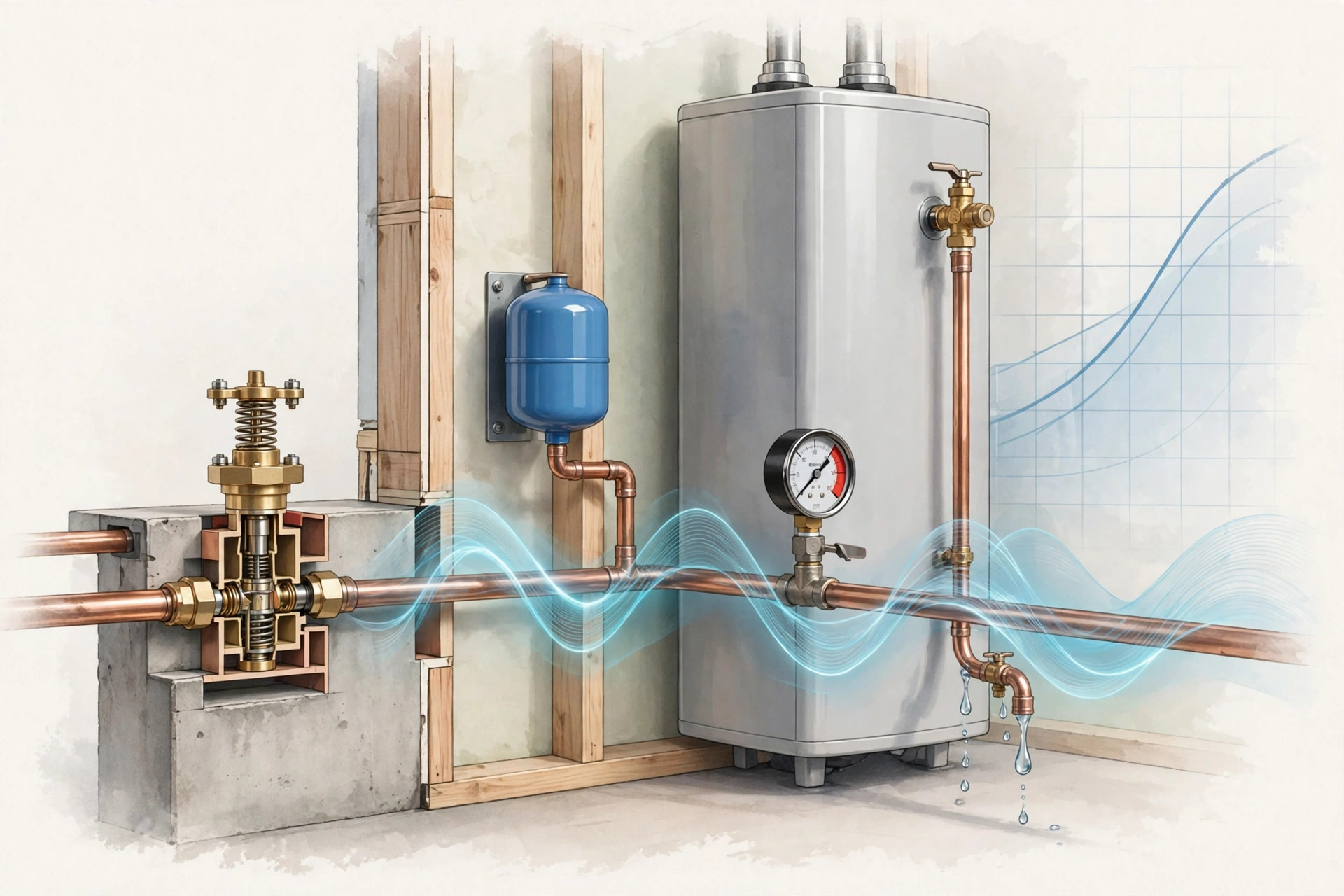
System and Method for Monitoring Residential Water Pressure Regulation Health Using Static Pressure Creep Analysis, Thermal Expansion Transient Signatures, and Relief Valve Discharge Event Detection
Your home's water pressure is guarded by three unsung parts: the pressure-reducing valve, the expansion tank, and the T&P relief valve. All three fail silently, and the first symptom is usually water damage. This disclosure reads their health from a single pressure sensor on a hose bibb: overnight pressure creep exposes a dying PRV, the pressure spike after each water-heater cycle measures how much air cushion the expansion tank has left, and drip counting at the relief pipe logs every time the system blew past its safety limit.
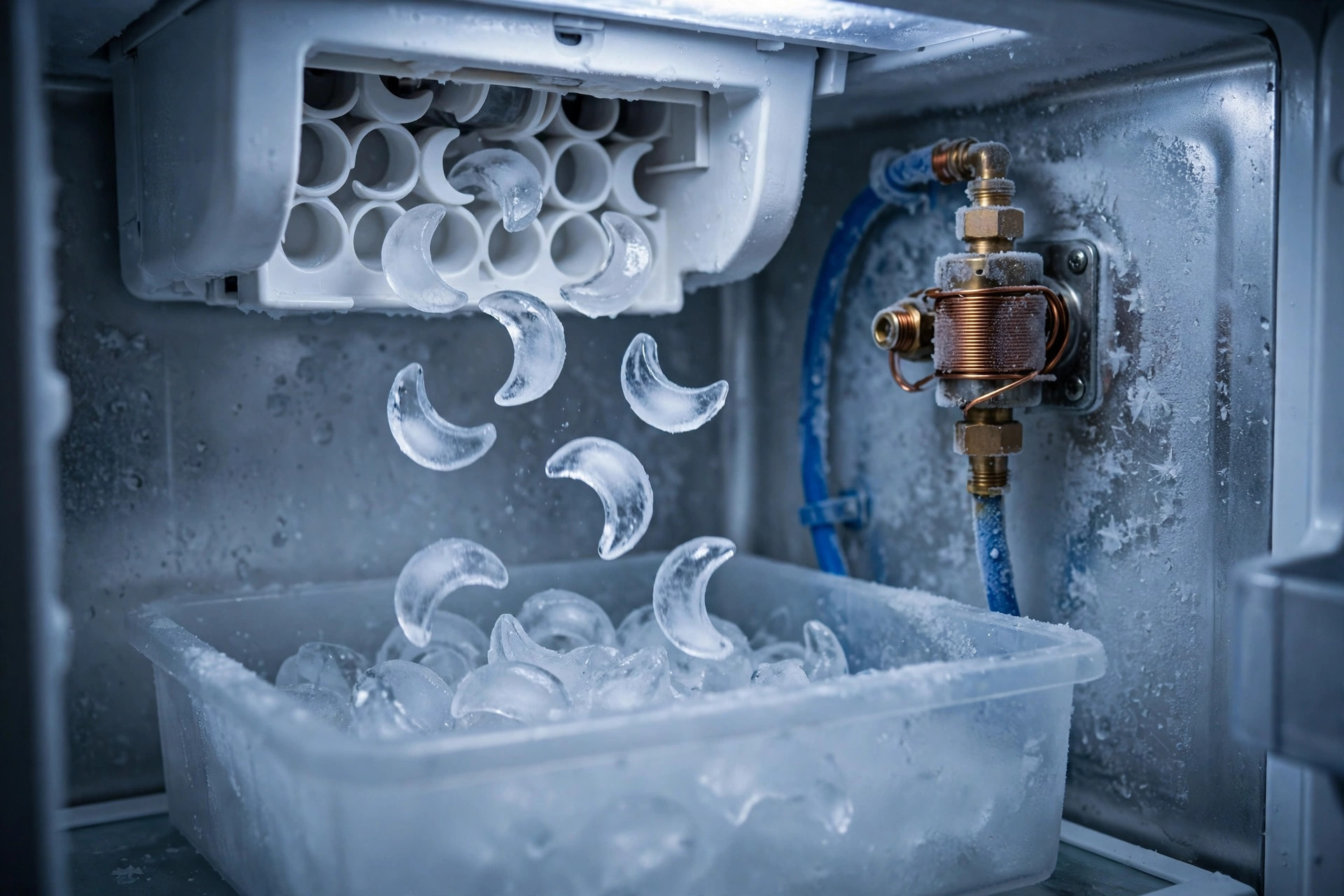
System and Method for Ice Maker Health Monitoring and Water Filter Depletion Estimation Using Fill-Valve Electrical Signatures, Fill Acoustic Analysis, and Harvest-Cycle Event Tracking
Your refrigerator replaces its $40 water filter on a kitchen timer: every six months, whether the cartridge is pristine or choked with sediment. This disclosure reads the filter's actual condition from the ice maker's own behavior — the fill valve's electrical signature, the sound of water striking the mold, the pressure transient when the valve slams shut, and the rhythm of harvest cycles. A starved ice maker leaves a telltale pattern: thinner cubes freeze faster, so harvests come more often with fewer cubes each. The system flags the filter when flow actually degrades, and catches valve stiction and ejector wear before the $500 service call.
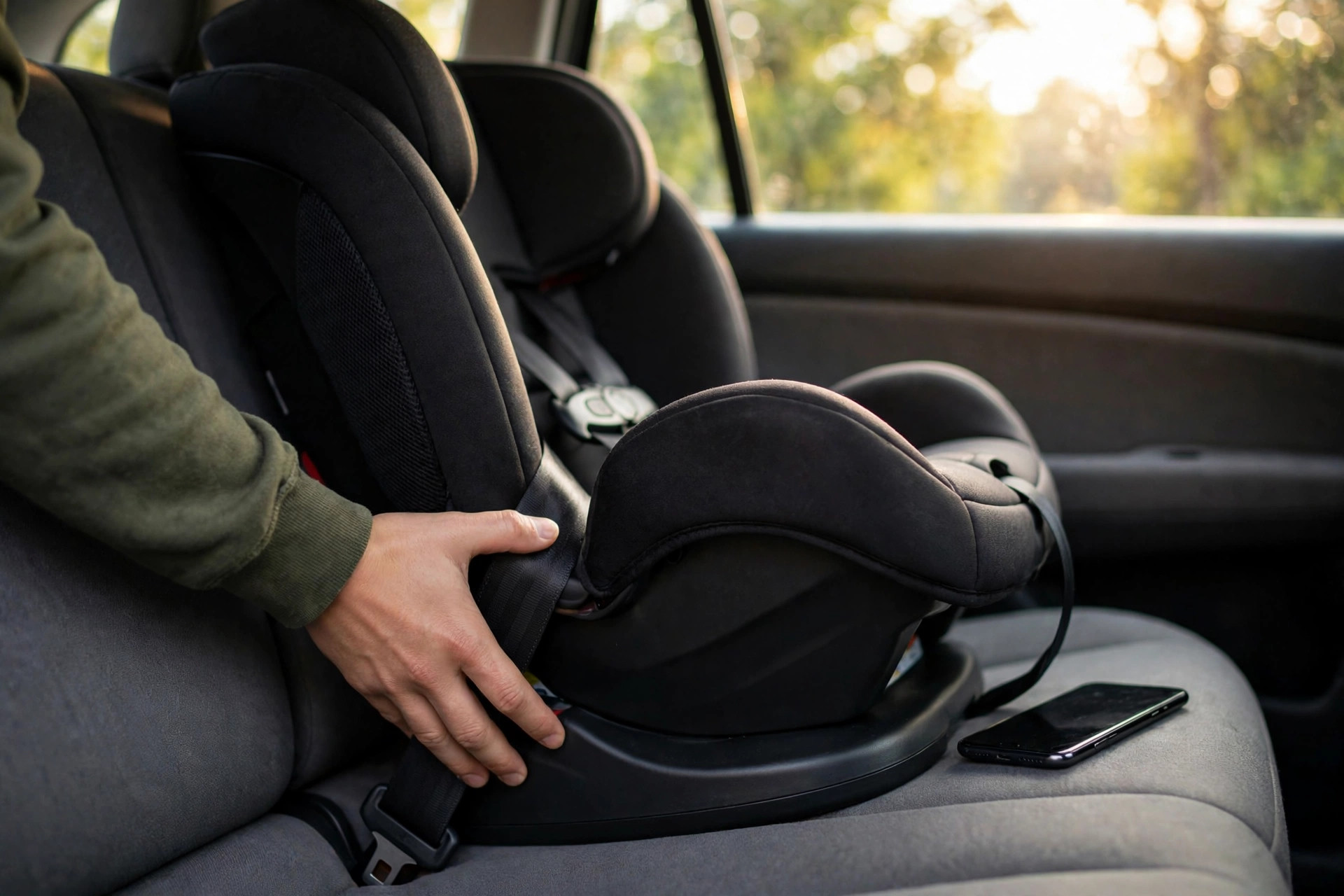
System and Method for Quantifying Child Restraint Installation Tightness Using Smartphone Inertial Sensing and Structural Vibration Analysis
Every parent knows the rule: a car seat should not move more than an inch where the belt holds it. Almost nobody can tell whether theirs passes. This disclosure turns a phone into the gauge: a guided push test measures actual travel with the accelerometer, a tap on the shell reads the seat's structural ring like a tuning fork, and a pluck of the belt webbing reveals its tension from the pitch. Three independent physics, one verdict, and a dated record a safety technician can review.
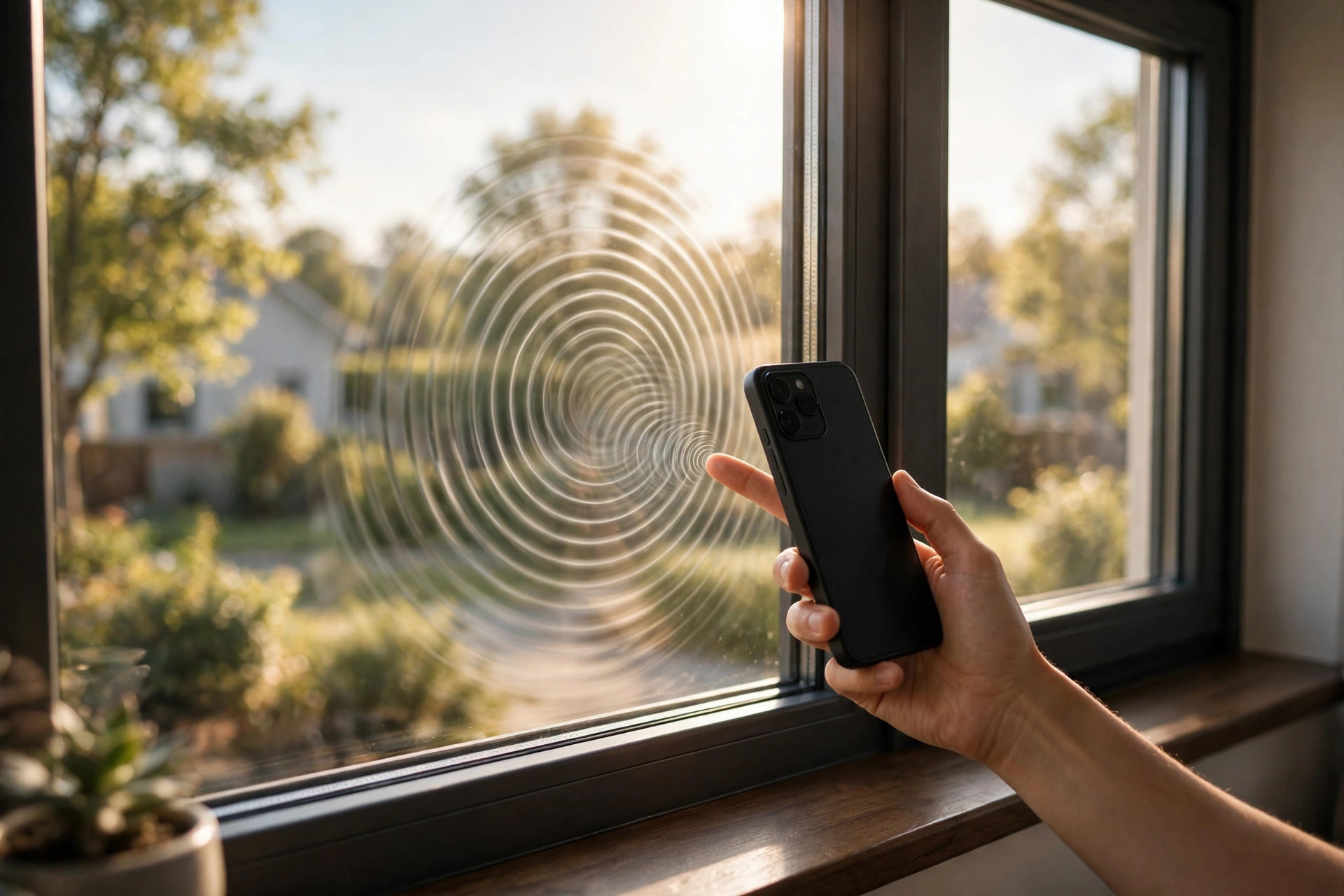
System and Method for Detecting Insulated Glass Unit Seal Failure Using Smartphone-Based Acoustic Tap Resonance Analysis
A failed window seal is invisible for months or years: the argon leaks out, humid air creeps in, and the only symptom anyone waits for is fogging, by which point the insulating value is already gone. This disclosure turns any smartphone into a seal-failure detector: tap the glass, let the phone's microphone listen to how the pane rings, and classify the coupled-pane resonance that only an intact sealed cavity produces. One tap is a snapshot; repeated taps across seasons form the trend line that proves the seal is holding or quietly letting go.
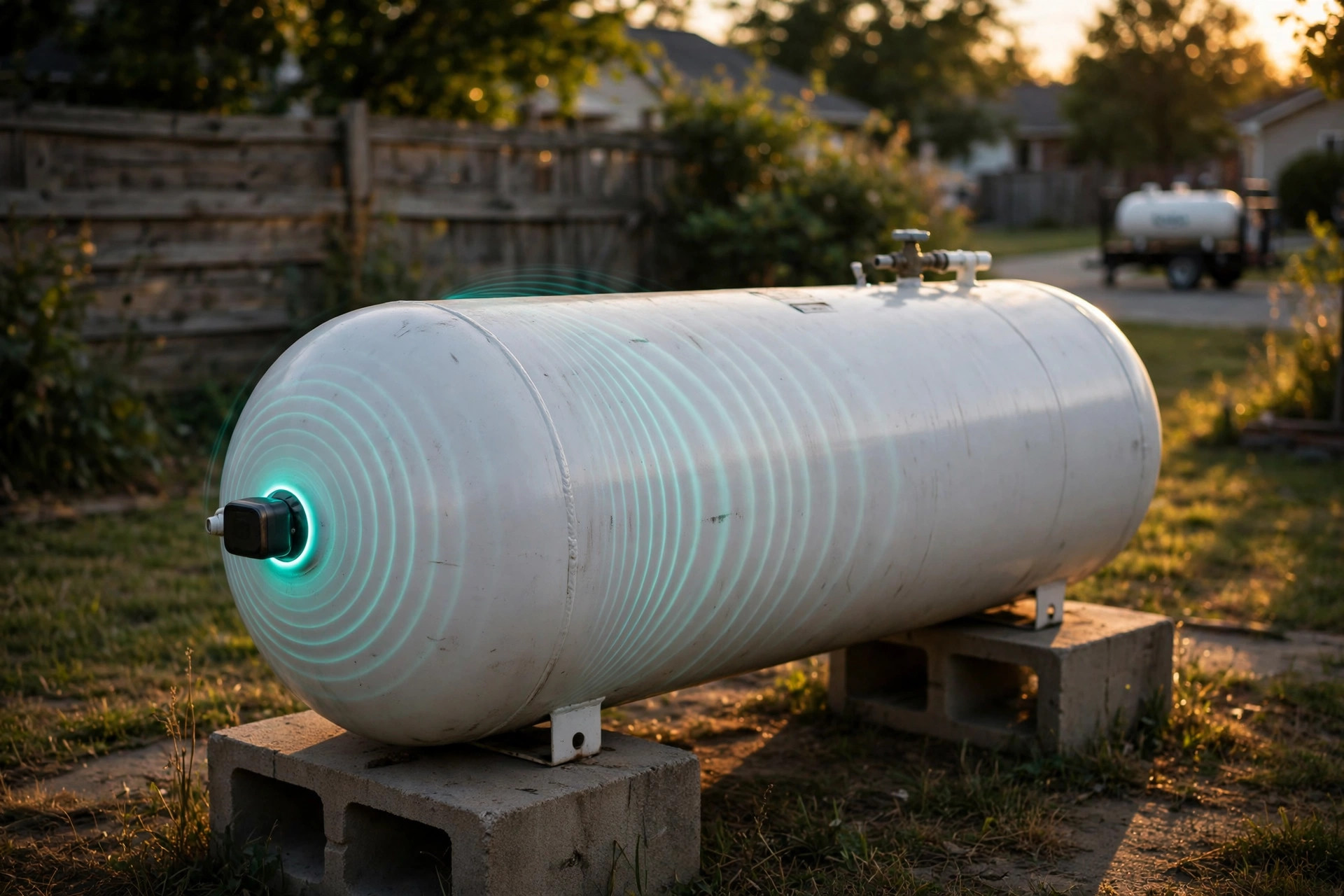
System and Method for Estimating Residential Propane Tank Fill Level Using Acoustic Resonance Spectroscopy and Thermal Time-Constant Fusion
A propane tank runs out at the worst possible time, in the coldest week of winter, and the float gauge on top is famous for sticking. This disclosure estimates fill level without opening the tank or touching the gauge: a clamp-on module taps the steel wall at night and listens to how it rings, fusing the resonance shift with the tank's overnight cooling curve and the delivery history to predict run-out days ahead and catch a lying gauge.
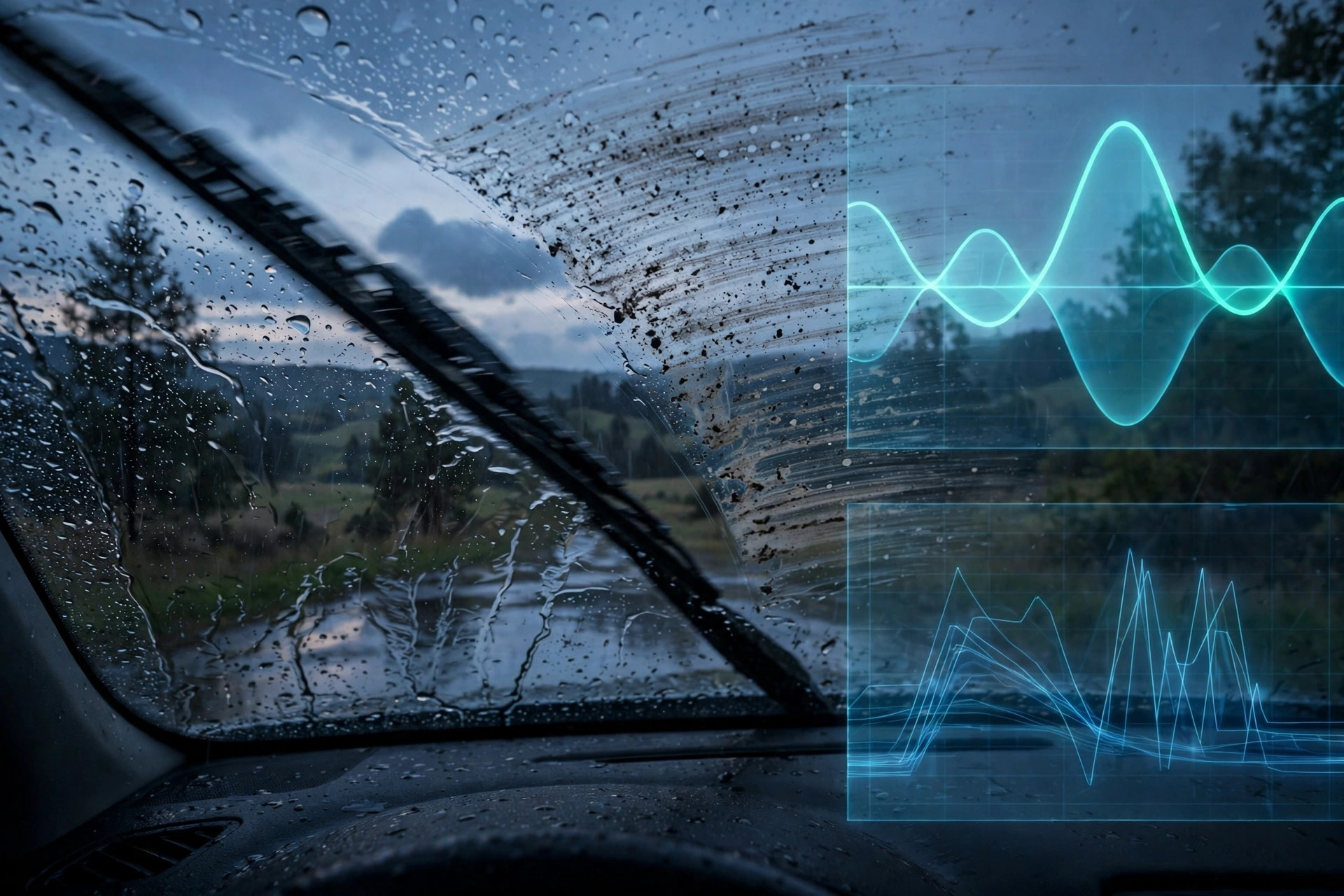
System and Method for Detecting Windshield Wiper Blade Degradation and Washer Nozzle Obstruction Using Wiper Motor Current Signatures, Rain Sensor Data, and Forward Camera Streak Analysis
A wiper blade fails gradually, then matters suddenly in heavy rain at night, and a clogged washer nozzle gets blamed on the blade. This disclosure diagnoses both from signals already on the vehicle: wiper motor current, rain rate, and the forward camera view. A streak persistence test separates blade damage, which returns at the same wiper angles sweep after sweep, from glass contamination, which washes away, while pump signatures separate a nozzle clog from blade wear.
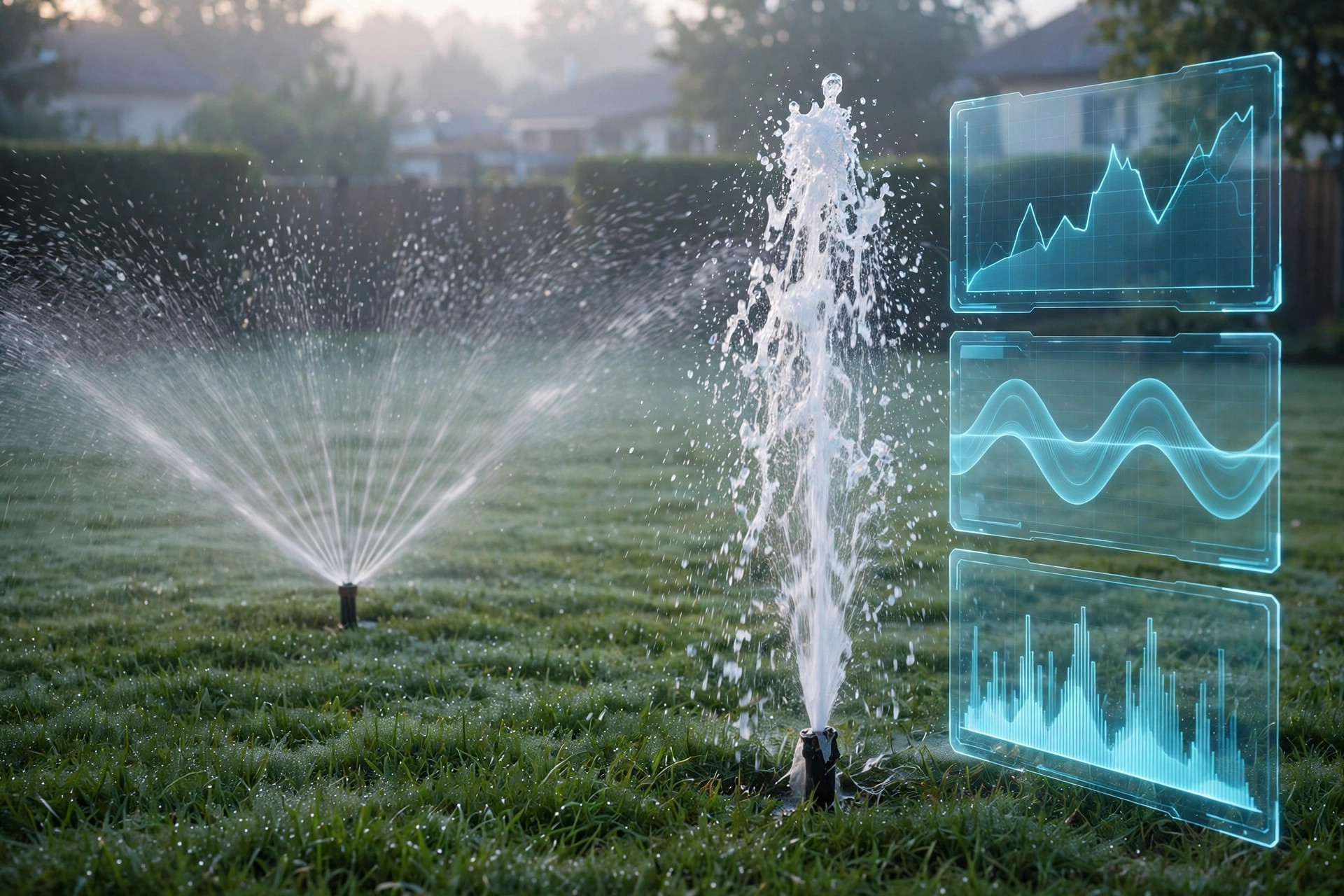
System and Method for Detecting Broken, Clogged, and Misaligned Irrigation Sprinkler Heads Using Single-Meter Flow Disaggregation, Valve Transient Fingerprinting, and Spray Acoustic Classification
A broken sprinkler head can waste thousands of gallons before anyone notices, because the system keeps running. This disclosure diagnoses heads from one whole-property meter, one pressure sensor, and spray sound, using the controller's own schedule to attribute every run to its zone. Flow, pressure, and acoustics together separate a broken head from a clogged nozzle, a tilted head, a stuck valve, and a line break, and a pressure transient reflection narrows a break to a stretch of pipe before anyone digs.
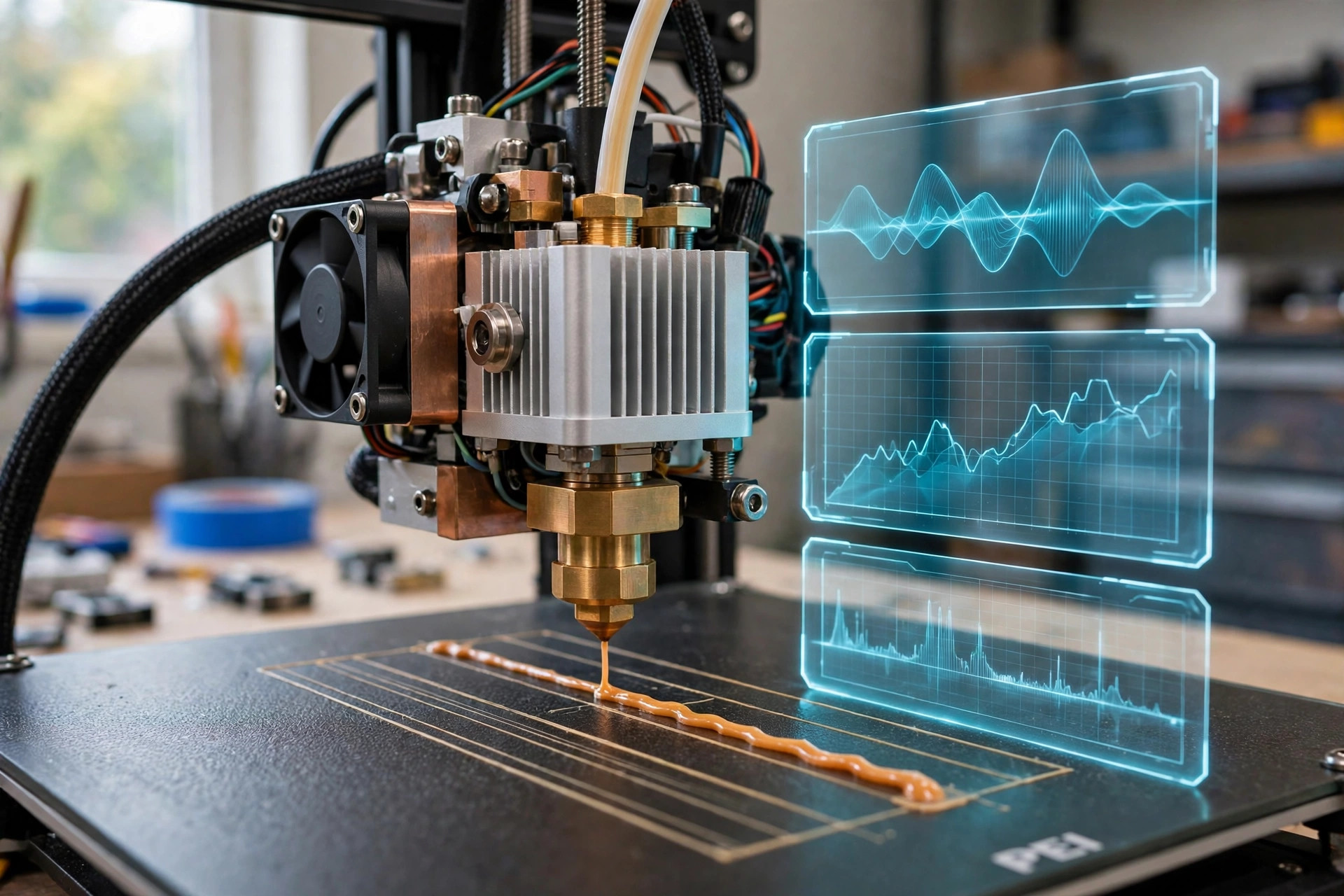
System and Method for Detecting Partial Nozzle Obstruction in Fused Filament Fabrication Printers Using Extruder Stepper Current, Filament Feed Slip, and Extrusion Acoustic Fusion
A fully blocked nozzle announces itself by printing nothing, but a partially obstructed nozzle keeps printing with less material than commanded, so a part comes out weak and wrong. This disclosure fuses filament feed slip, extruder stepper current, extrusion acoustics, and printed coupon mass deficit against a per-filament baseline, so a clog, which moves all four channels together, can be told apart from wet filament, heat creep, gear wear, Bowden friction, and bore wear, with cleaning verified by whether the signals return to baseline afterward.
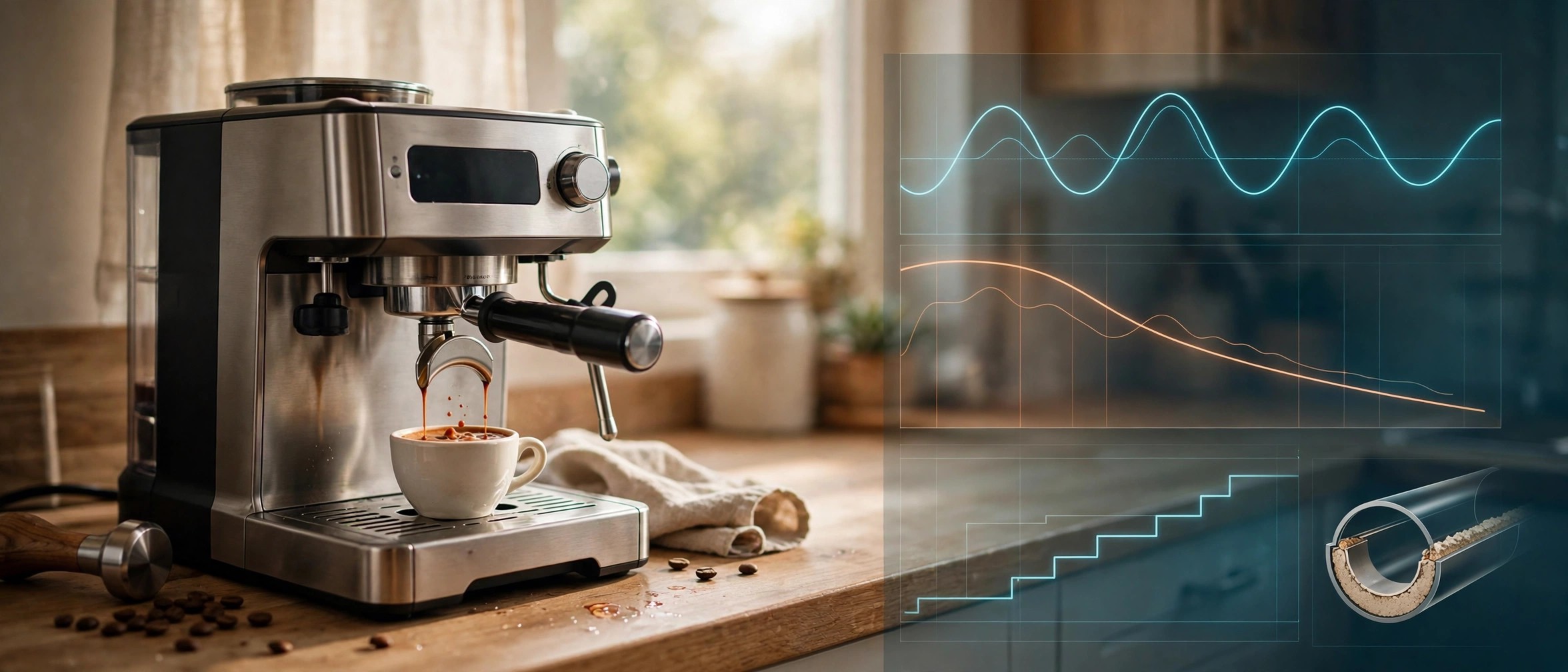
System and Method for Estimating Espresso Machine Limescale Accumulation and Distinguishing Scale from Pump Wear Using Pump Pressure Ripple, Shot Flow Decline, and Heating Duty Fusion
Most espresso machines descale on a calendar, which knows nothing about the water actually used. This disclosure fuses pump pressure ripple, shot flow curves, and boiler heating duty against a post-descale baseline, so scale, which moves flow and heating together, can be told apart from pump wear, basket clogging, grinder drift, and channeling, with descaling verified by whether the signals return to baseline afterward.
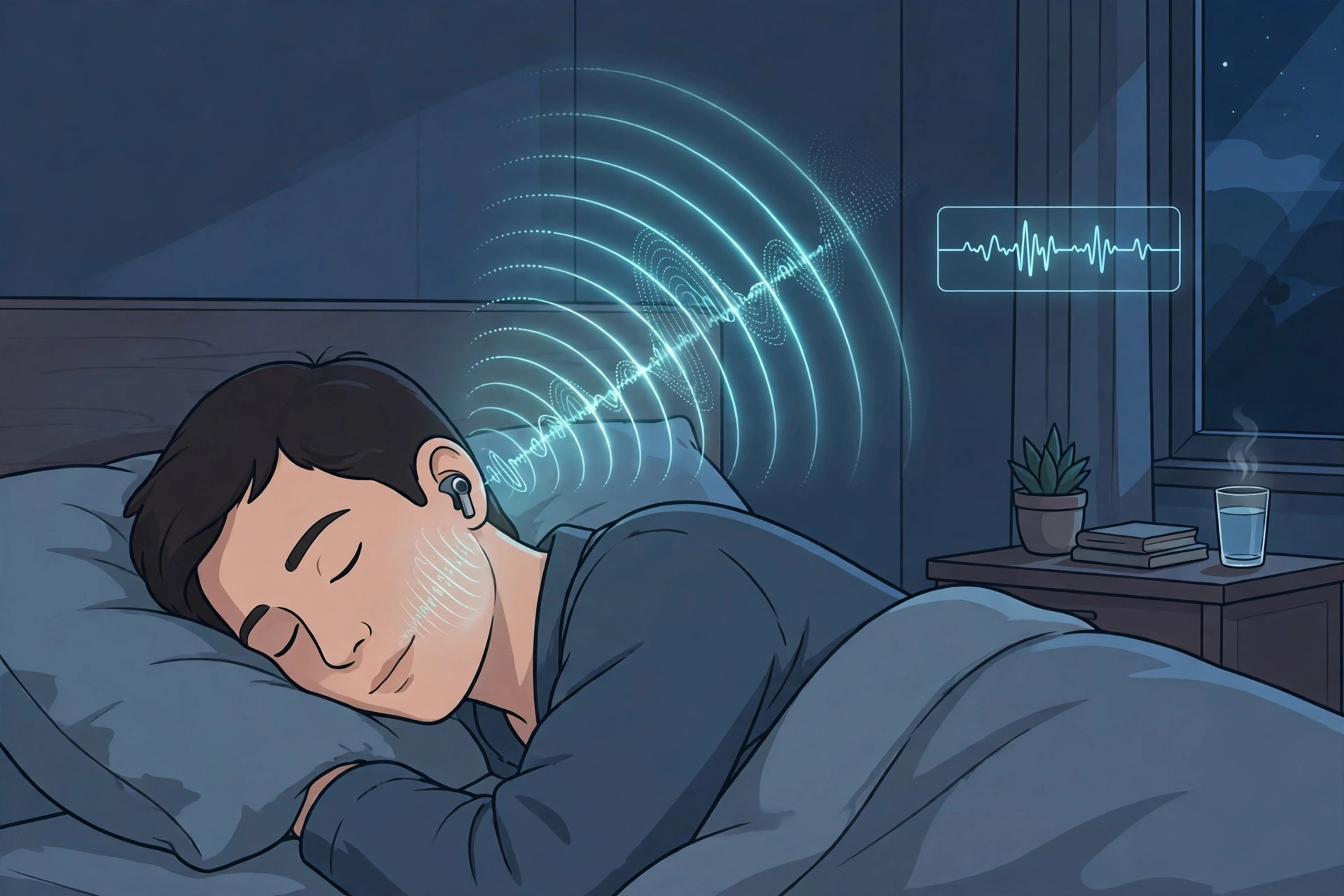
System and Method for Detecting Sleep Bruxism Using In-Ear Bone-Conducted Acoustic Sensing, Bilateral Jaw Motion Correlation, and Autonomic Arousal Fusion in Wireless Earbuds
Most people who grind their teeth at night learn it from a cracked filling or a sore jaw at breakfast, not from a clinician, because the reference test is a night in a sleep lab. This disclosure turns earbuds into a bruxism detector: tooth sounds reach the inward microphone by bone conduction while room sounds do not, both buds must hear the same burst within milliseconds, jaw motion must match, and a heart rate rise counts as supporting evidence. Only bursts that pass those checks count toward a nightly bruxism episode index, computed over many nights instead of one, with raw audio never leaving the device.
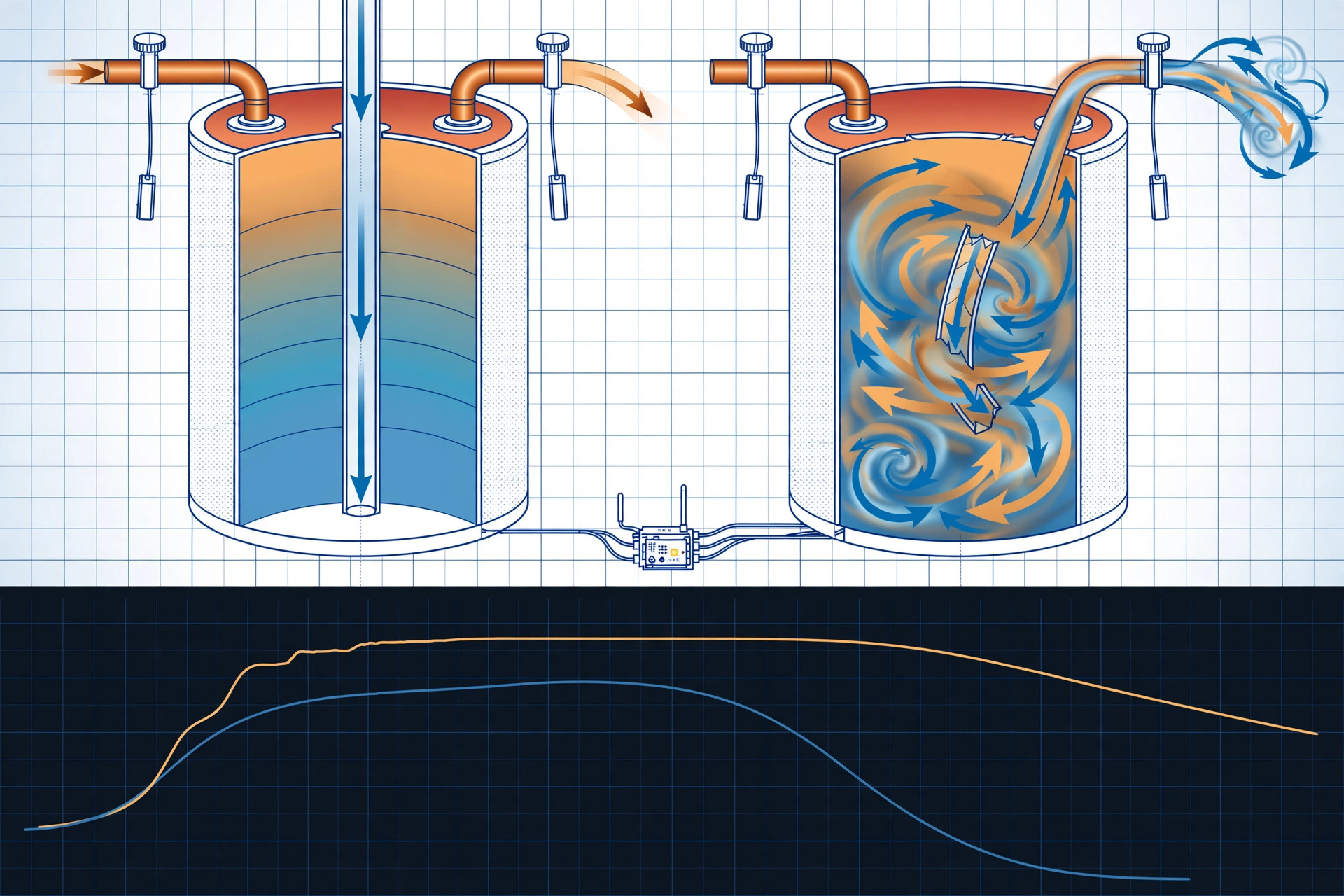
System and Method for Diagnosing Water Heater Dip Tube Failure Using Hot-Outlet Thermal Drawdown Dynamics and Edge-Deployed Flow-Correlated Inference
Showers going lukewarm halfway through? The usual diagnosis is a dead heating element, but a broken dip tube produces the same complaint with a completely different fix. This disclosure reads the tank's thermal drawdown curve through strap-on pipe sensors and an edge classifier to tell the two apart: a healthy tank holds outlet temperature until the thermocline arrives, while a failed dip tube collapses outlet temperature within seconds of flow onset and then recovers between draws. Non-invasive, no plumber visit needed to diagnose, and it learns each household's baseline so seasonal inlet changes don't trigger false alarms.

System and Method for Passive Human Activity Sensing Using Microwave-Oven Emissions as an Opportunistic RF Illuminator with Edge Machine Learning
A system that uses a microwave oven's unintentional 2.45 GHz emissions as the sole radar illuminator for passive human activity sensing: a receive-only front end self-mixes direct and reflected leakage into a baseband Doppler signal, an on-device two-head neural network classifies occupancy and activity (including falls and pet-versus-human), magnetron duty-cycle edges provide automatic calibration, and an optional low-duty sensor mode pulses the magnetron for continuous coverage, all with no added transmitter, no camera, and no microphone.
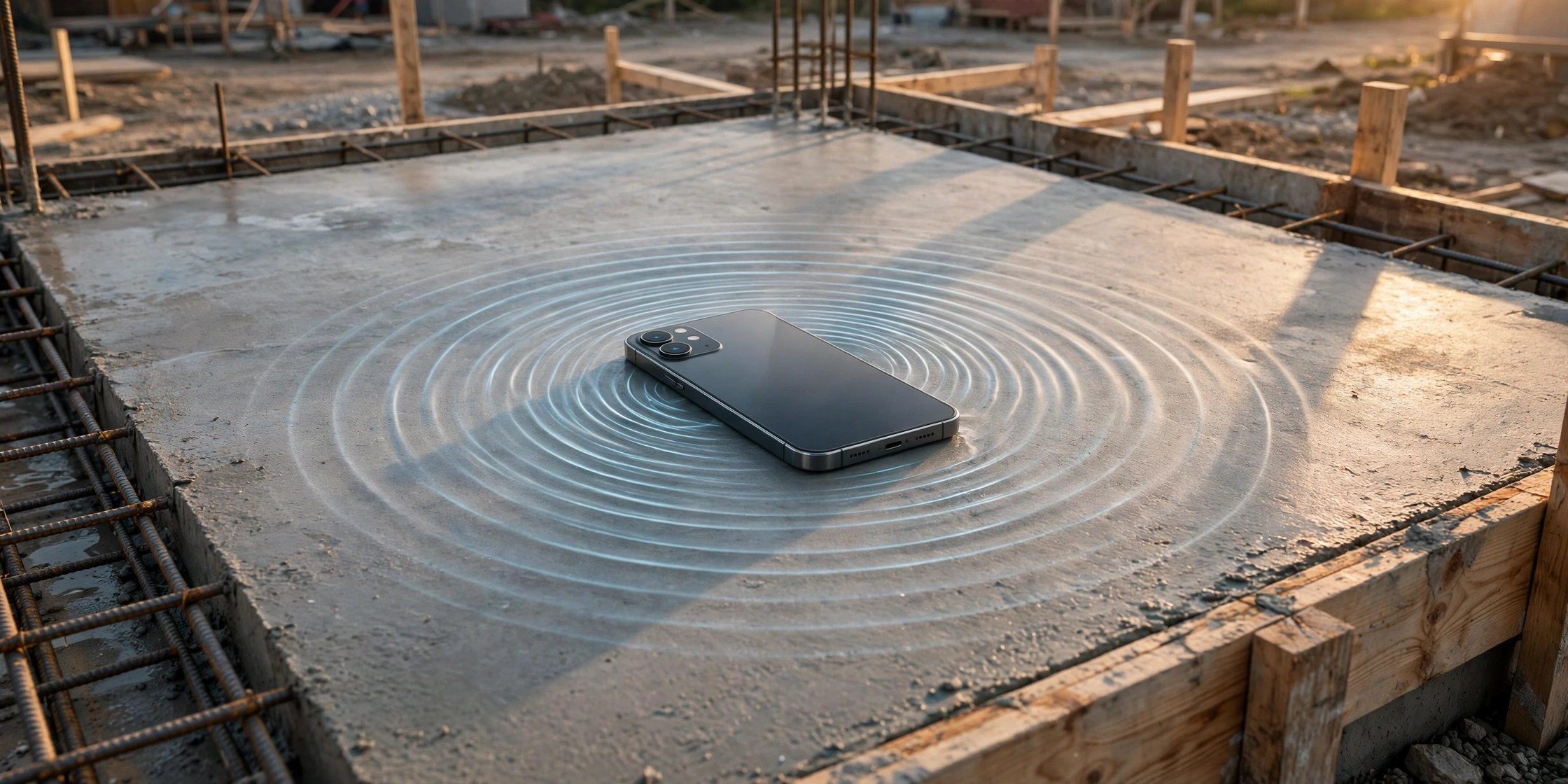
System and Method for Estimating Concrete Curing Strength Using Smartphone Vibration Actuation and Resonant Frequency Tracking
Nobody knows when concrete is strong enough without breaking cylinders or burying consumable sensors in the pour. This disclosure turns an ordinary smartphone into a concrete strength meter: the phone's vibration motor emits a swept tone into the slab, its accelerometer listens to the response, and the coupled resonant frequency rises as hydration stiffens the concrete. Fusing that direct stiffness signal with a temperature-based maturity estimate cross-checks both methods and is designed to catch the mix changes that silently break maturity-only systems. No embedded hardware, no lab wait; the sensing channel is inertial only, so no microphone is ever involved.
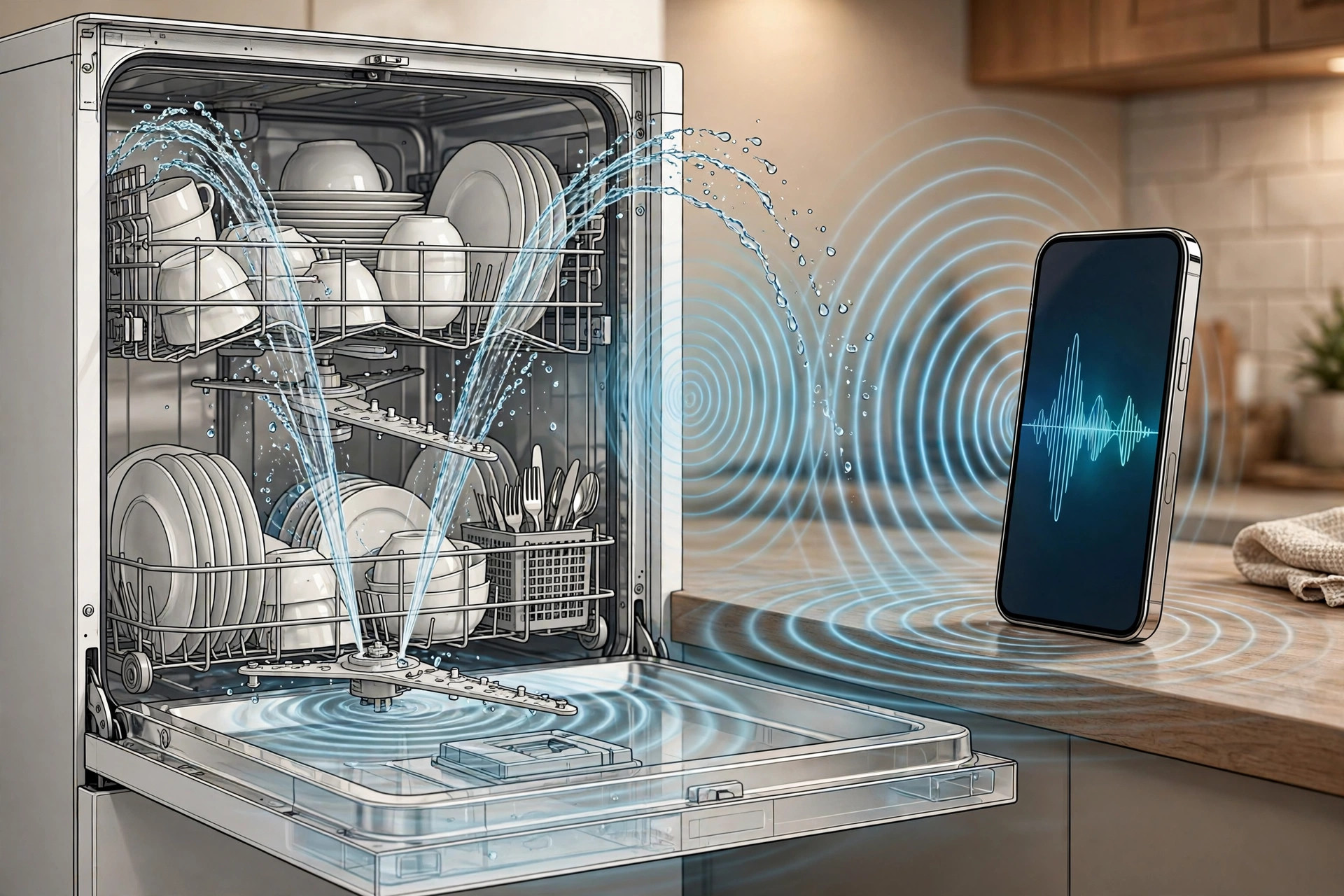
System and Method for Dishwasher Spray Arm and Filtration Health Assessment Using Passive Acoustic Rotation Signatures Fused with Drain Hydraulics Telemetry
A dishwasher's cleaning degrades silently: spray arm jets clog, filters load with debris, and nobody notices until the dishes come out dirty. This disclosure turns a microphone outside the machine into a dishwasher health monitor: rotating spray arms imprint a periodic amplitude modulation on the wash noise, so per-arm rotation rates fall out of the envelope spectrum, while modulation depth and high-frequency spectral balance give a per-arm jet clogging index. The drain phase gives a filter loading index from drain duration, pump current, and cavitation noise. A fusion layer separates filter-caused multi-arm slowdown from single-arm jet clogs, and an on-device classifier issues tiered advisories naming the exact part and action, with trend projection. Raw audio never leaves the device.
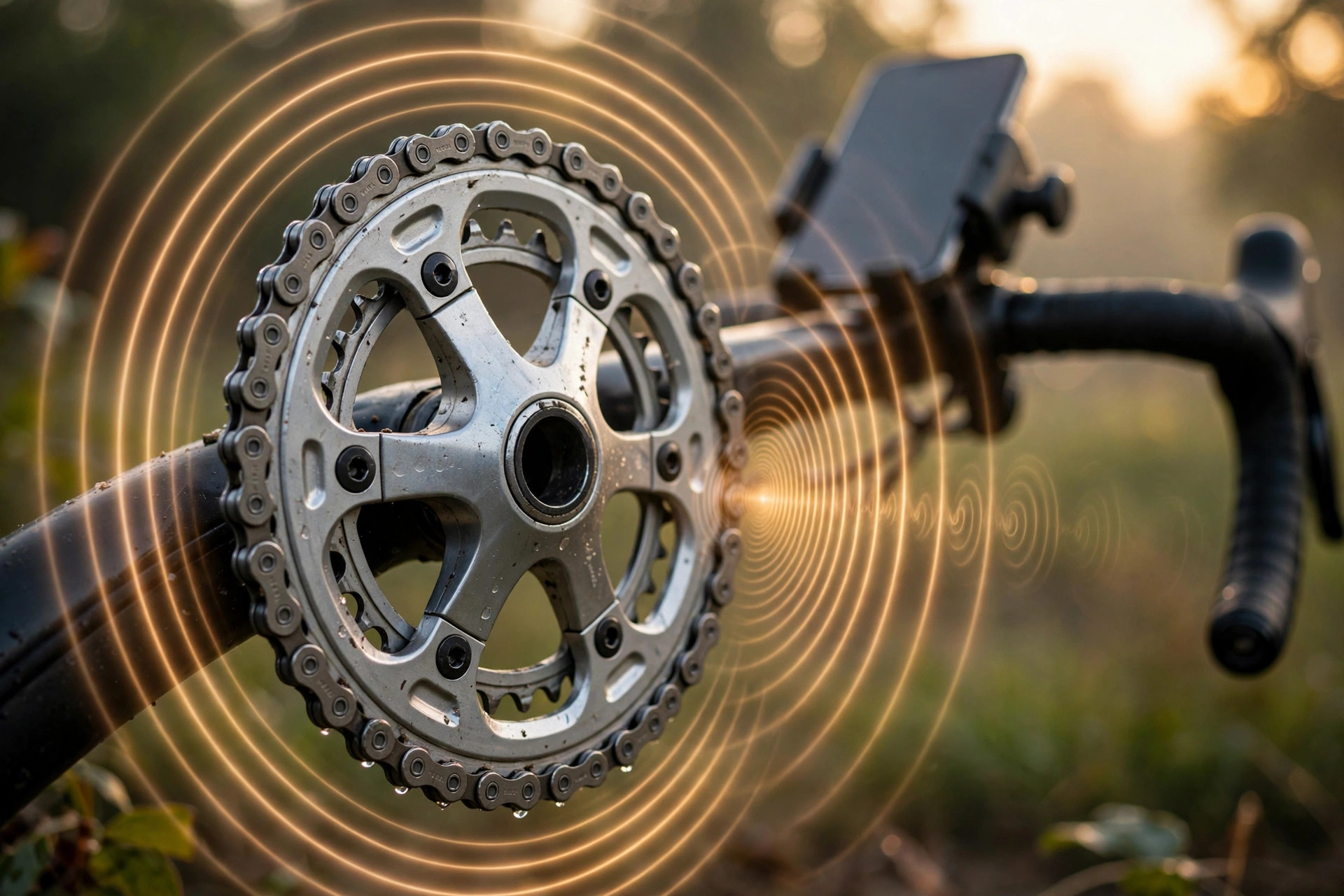
System and Method for Bicycle Drivetrain Wear Assessment Using Acoustic Signature Analysis Fused with Pedaling Cadence
A bicycle chain doesn't stretch; its pins and bushings wear, lengthening pitch until rollers seat late on the teeth. Almost nobody checks with a gauge often enough, and the worn chain destroys a $150-400 cassette to save a $30-60 chain. This disclosure turns the rider's phone into a continuous chain-wear gauge: the microphone captures drivetrain audio, cadence from the IMU or a paired sensor anchors the analysis to the chainring tooth-pass frequency, and wear features (engagement-line broadening, sideband growth, broadband chatter, once-per-revolution stiff-link impulses) feed an on-device classifier that estimates elongation against the 0.5%/0.75% replacement thresholds, with trend projection and a chainsuck safety flag. No installed hardware; raw audio never leaves the phone.
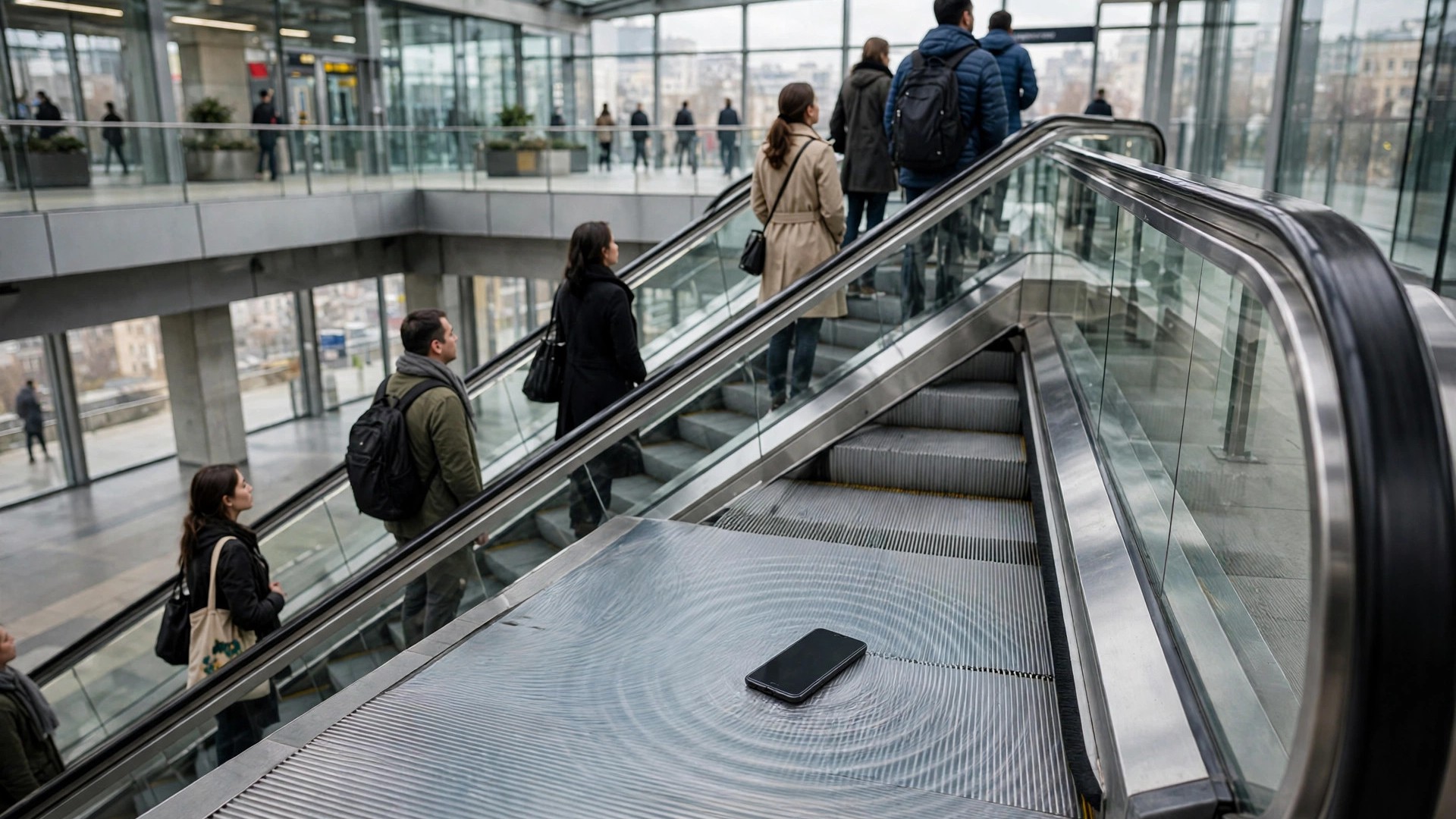
System and Method for Crowdsourced Escalator and Moving Walkway Mechanical Health Assessment Using Passenger Device Inertial Measurement Telemetry with Step-Band Periodicity Analysis and Fleet Anomaly Detection
A standing escalator rider has no gait, so their phone becomes a free accelerometer bolted to the machine by gravity and friction. Ride segments are gated on constant-velocity inclined motion with no gait, verified by barometric altitude slope, rotated into the incline plane, and reduced to step-pass harmonic signatures under 400 bytes. Riders board at random phase, so the cloud phase-aligns fragments by step-band position to reconstruct a full per-revolution vibration signature from the crowd, then runs change-point detection against a per-machine baseline across a six-class fault taxonomy, from sector-localized step-roller wear to step-chain elongation. No installed hardware, no audio, no video, no fine location.
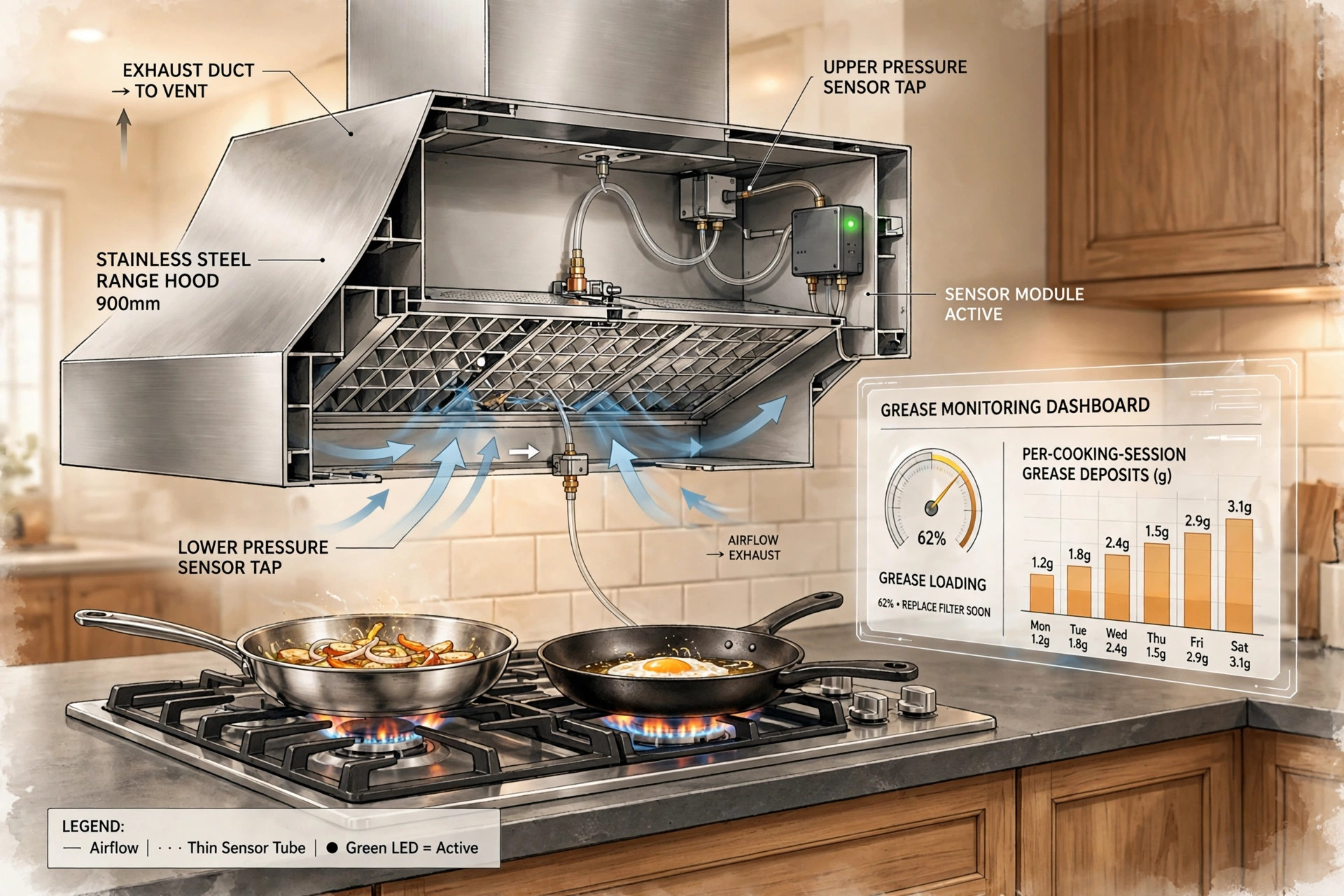
System and Method for Estimating Kitchen Exhaust Grease Filter Loading from Pressure-Differential, Fan Current, and Acoustic Turbulence Signatures with Per-Cook-Session Deposition Modeling
The grease filter collects fuel on purpose and hides the evidence behind a baffle, so cleaning runs on calendars and hour-counter lights. A differential pressure tap across the filter plane, a fan current sensor with tachometer, and a cavity microphone each see loading differently; fused with a per-cook-session deposition model weighted by inferred cook type, they produce a loading index with tiered cleaning advisories and a fire-risk coupling that escalates when high-heat cooking meets a loaded filter.
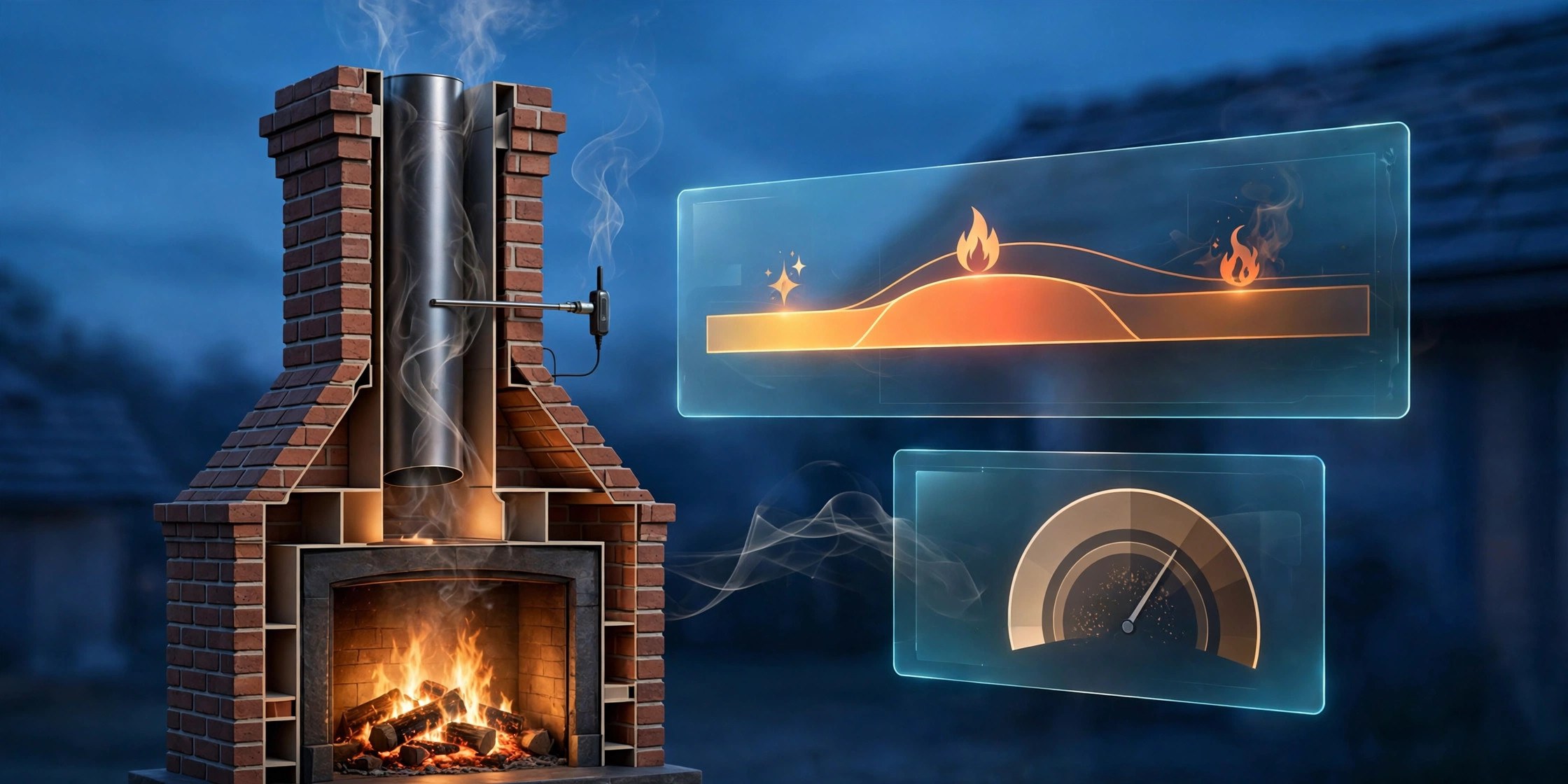
System and Method for Estimating Chimney Creosote Accumulation from Burn-Event Flue Temperature Profiles with Deposition Modeling and Creosote Stage Classification
Chimney fires are scheduled, not freak events: each cool smoldering fire condenses tar onto the flue walls. A temperature probe in the connector pipe segments every burn into ignition, flaming, and smolder phases; a deposition model converts each phase into an estimated deposit, weighted by inferred fuel moisture and outdoor-temperature flue cooling. Stage 1/2/3 accumulators track soot, tar flake, and glaze separately, with a migration term for hot burns baking old deposits into glaze. The running thickness index is judged against the NFPA 211 1/8-inch cleaning line (about two credit cards stacked), with sweep-now on any suspected glaze; per-burn reports coach cleaner burning. Design disclosure; no prototype built.
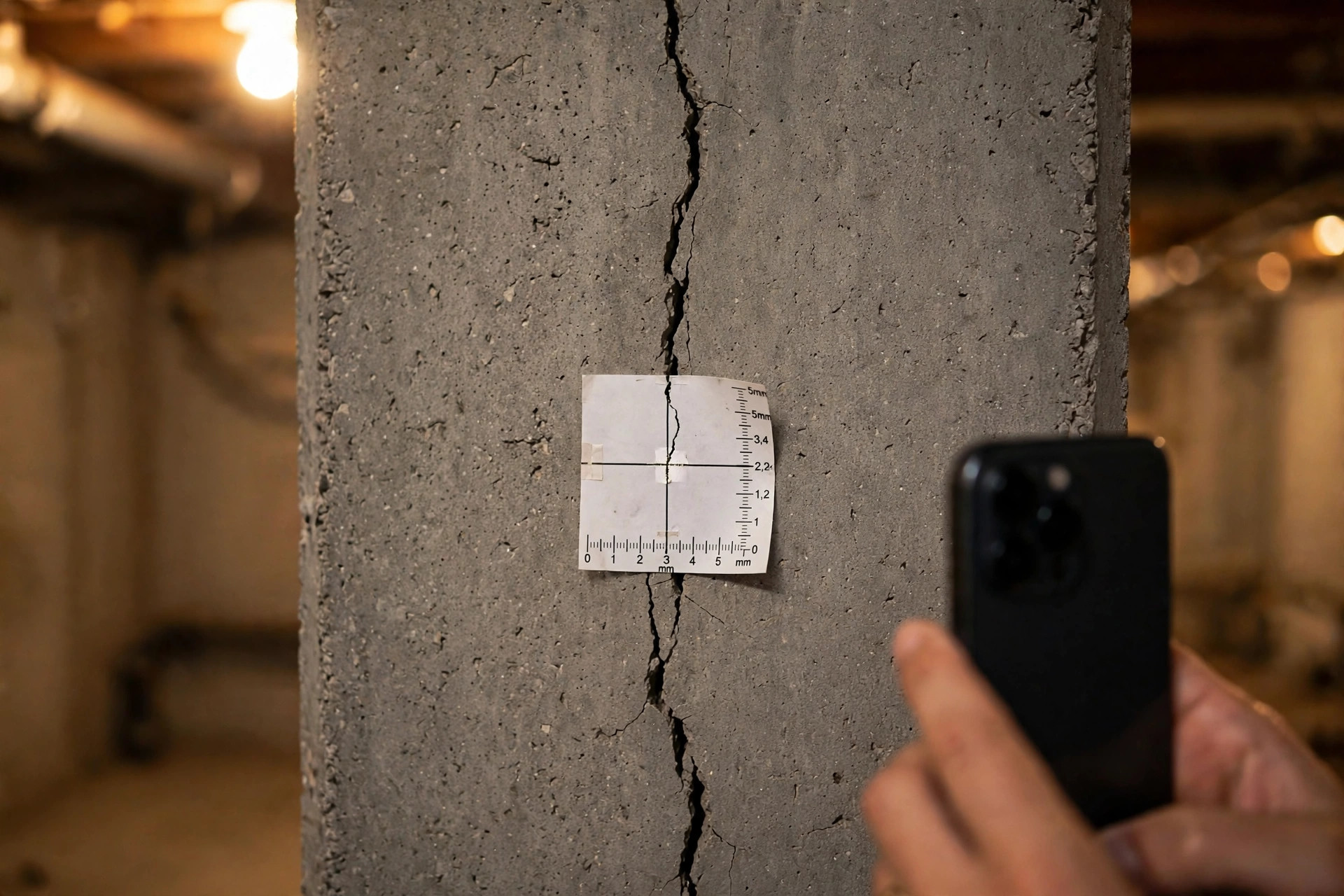
System and Method for Longitudinal Monitoring of Structural Crack Growth Using Smartphone Photogrammetry with Adhesive Fiducial Markers and Sub-Pixel Image Correlation
Foundation cracks worry homeowners because nobody can tell, by looking, whether a crack is growing. Two adhesive fiducial decals straddling the crack give any phone a repeatable sub-pixel frame of reference: each visit's photo is rectified via planar homography, opening and shear are measured from decal centroid motion, cross-checked with direct crack-edge width profiling, and reversible thermo-hygrometric cycling is regressed out to expose irreversible growth. Widths are compared against ACI 224R exposure-class limits with tiered advisories; multiple stations form a crack network map exportable for a structural engineer. Design disclosure; no prototype built.
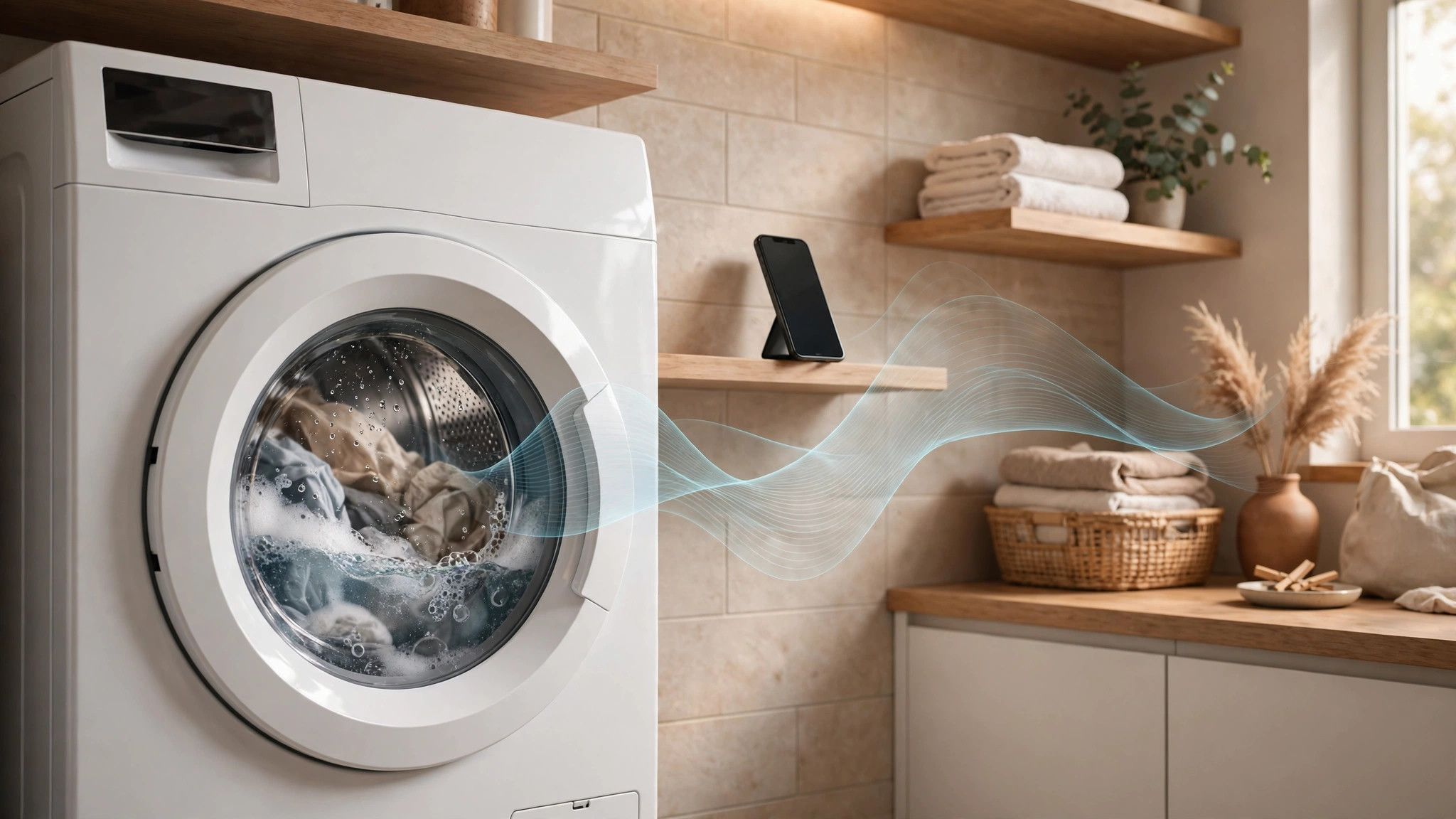
System and Method for Diagnosing Washing Machine Inlet Valve Degradation, Drain Pump Cavitation, and Unbalanced Spin Loads Using Passive Acoustic and Electrical Current Signature Fusion
Washer failures announce themselves as puddles and error codes, never as warnings. A smartphone in the laundry room segments each wash cycle into acoustic phases and trends three failure modes against a per-machine baseline: inlet valve health from load-normalized fill duration plus water-hammer transient analysis at valve closure (hot and cold lines scored separately), drain pump health from blade-pass harmonics and cavitation noise with onset-pattern classification, and spin imbalance from accelerometer vibration with chronic-event counting plus bearing sideband trending. No installed sensors; no audio leaves the phone.
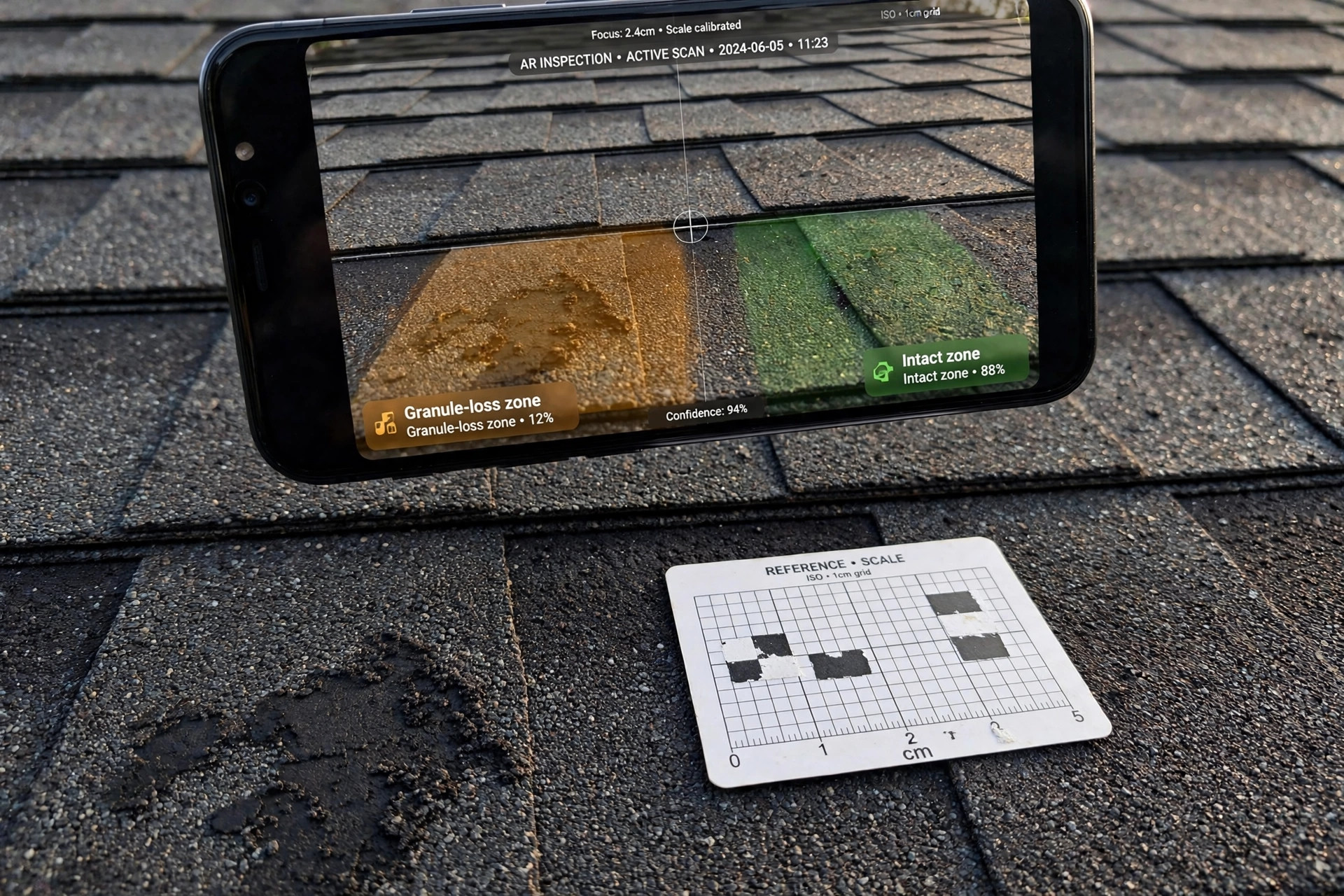
System and Method for Quantifying Asphalt Shingle Granule Loss and Estimating Remaining Roof Service Life Using Smartphone Camera Texture Analysis
A shingle that has lost its granules is a shingle on a countdown, but field assessment is still a roofer's glance. A smartphone app photographs shingle surfaces with a reference card in frame, normalizes scale and illumination, and fuses GLCM texture features, exposed-mat pixel fraction, and specular uniformity into a per-location Granule Retention Index. Differential calibration against the roof's own least-weathered plane reduces lot and color variation; a spatial classifier separates UV aging, hail bruising, foot-traffic wear, and manufacturing defects; and seasonal repeat surveys feed a remaining-life model with honest, narrowing confidence bands.
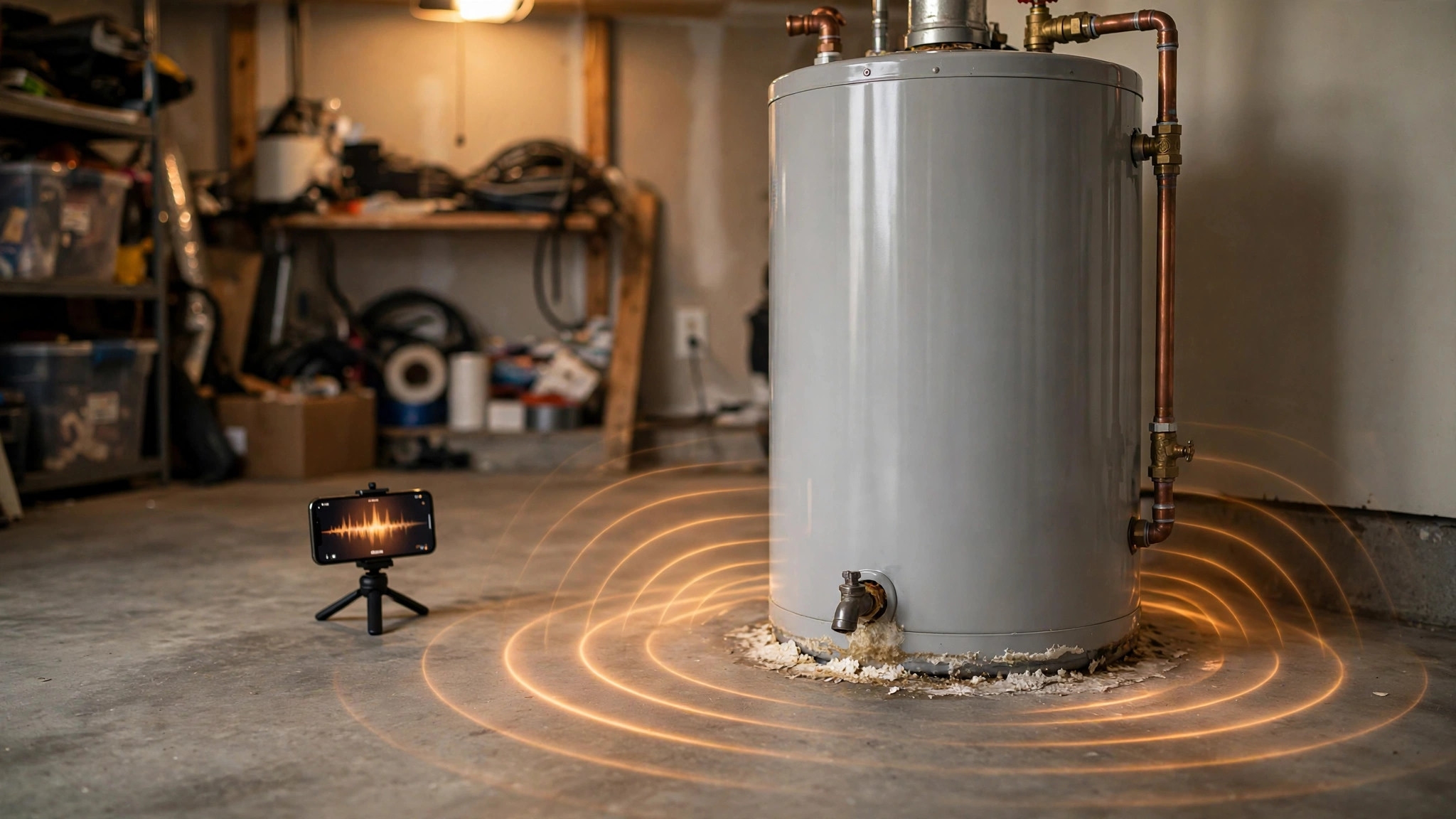
System and Method for Quantifying Sediment Accumulation in Residential Storage Water Heaters Using Passive Smartphone Acoustic Analysis
Sediment is a water heater's silent efficiency thief, and the standard diagnostic is a plumber's ear. A smartphone app records audio during heating cycles and fuses three passive signals: steam-bubble collapse transients (the popping and kettling of water flash-boiling beneath the sediment crust), water-column resonance drift against a per-tank baseline, and burner on-time lengthening across usage-matched cycles. The fused sediment index maps to estimated depth and lost capacity, with advisory and flush-now tiers that name their evidence. No hardware, no draining, no contact sensors.
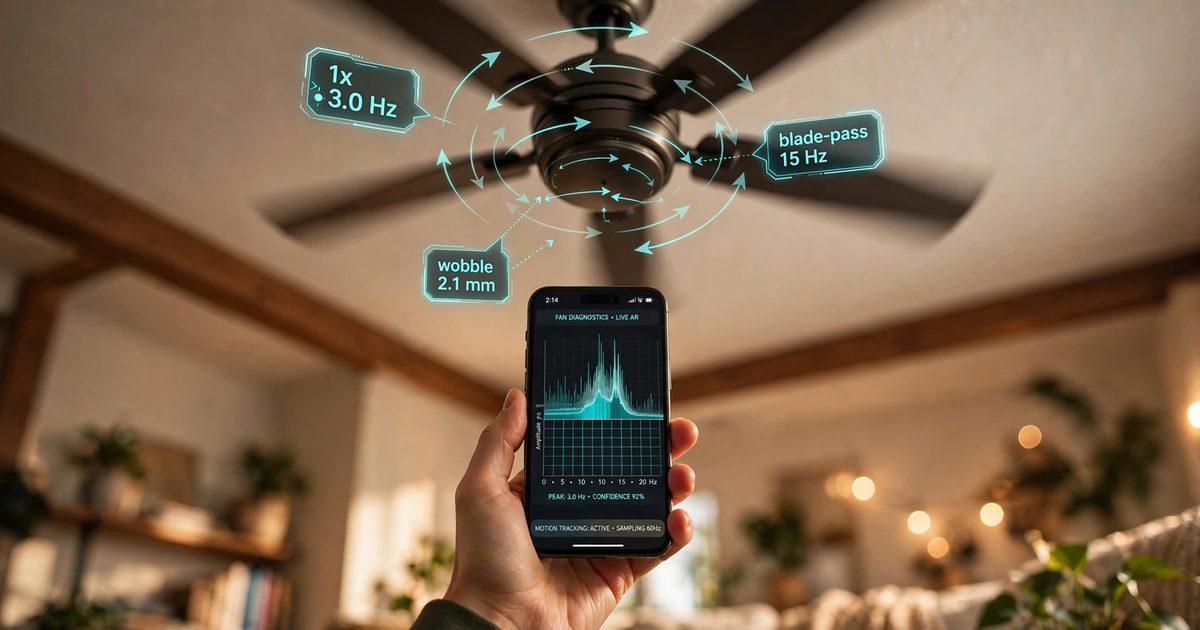
System and Method for Diagnosing Ceiling Fan Mechanical Imbalance, Bearing Degradation, and Mount Failure Risk Using Smartphone Camera-Based Optical Flow Wobble Analysis
Wobble is treated as a cosmetic annoyance, but out-of-balance operation is a cited mechanism in CPSC fall-from-ceiling recalls. A smartphone app records video at two speeds and performs markerless optical-flow tracking of the motor housing and blade-sweep region, no tape or markers. Spectral decomposition separates the 1x imbalance band, the blade-pass band, a 0.4-0.8 Hz downrod pendulum-sway mount mode, and broadband bearing wear. Pixel motion is calibrated to millimeters via fan diameter or AR depth. Phase analysis against the blade-pass flicker reference identifies the heavy blade for guided counterweight placement, and a mount-failure risk score triggers a stop-and-inspect alert.
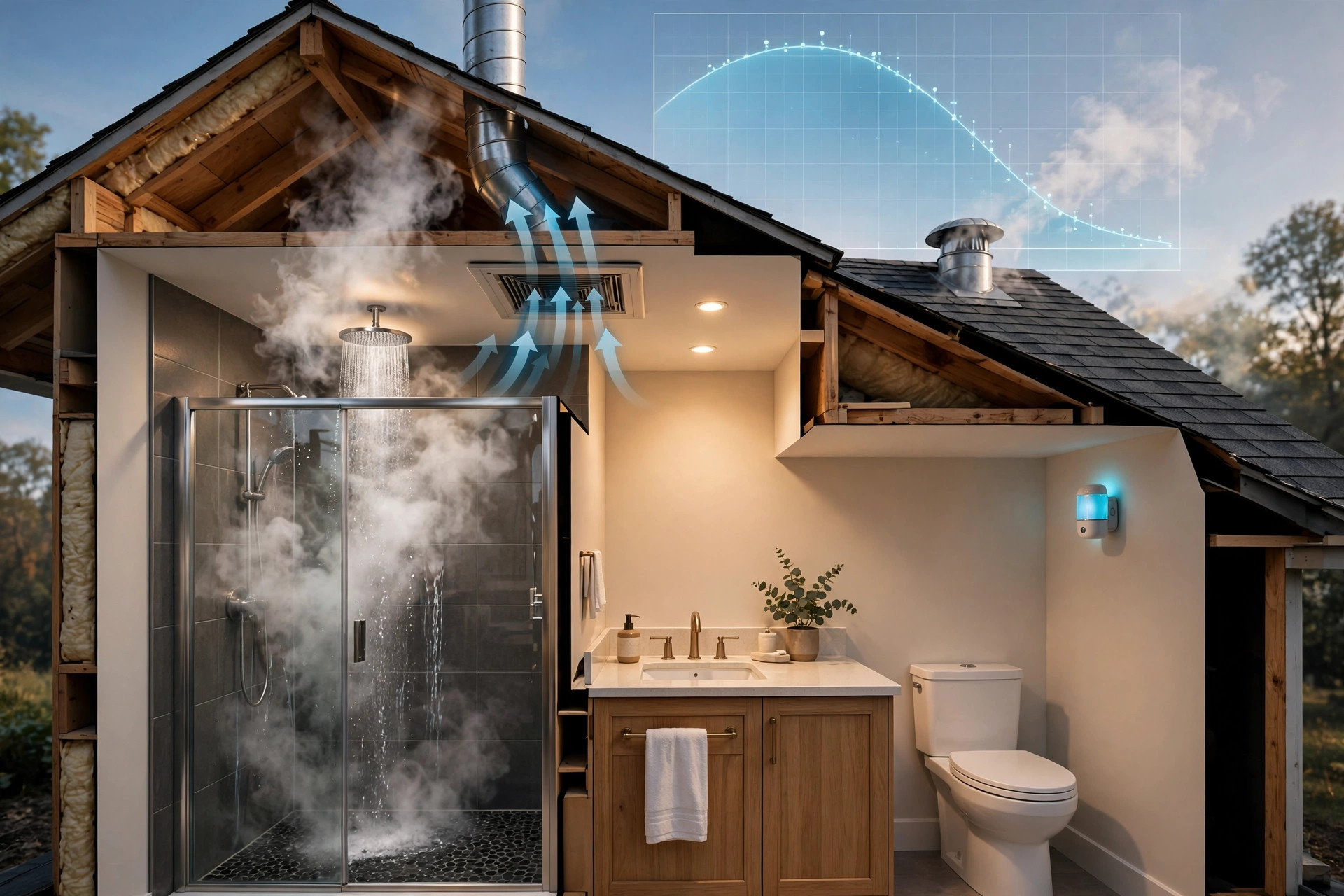
System and Method for Auditing Residential Bathroom Exhaust Ventilation Effectiveness via Humidity Decay Analysis and Acoustic Airflow Verification
Every bathroom exhaust fan gets switched on; almost none get verified. A room humidity sensor records the moisture decay curve after each shower, an edge hub converts readings to absolute humidity and fits an exponential decay to derive effective air changes per hour, and a microphone verifies the fan actually ran. Directional signature tests separate dead motors, disconnected ducts, stuck dampers, clogged grilles, undersized fans, and occupant behavior, producing a per-bathroom ventilation score against ASHRAE 62.2 expectations plus an independent mold-risk index.
More entries load as you scroll.
About Publication and Prior Art
Publishing technical material online may create evidence relevant to a later patent analysis. It does not automatically make the material dispositive prior art or establish the date from which it can be used. Under 35 U.S.C. § 102, the analysis turns on the claimed invention, its effective filing date, and whether earlier material was sufficiently available to the public. For Internet material, public accessibility and the date of public posting depend on the evidence and surrounding facts.
A reference relied on for anticipation must describe the claimed invention and provide an enabling disclosure to a person of ordinary skill in the art, although non-enabling material may still be relevant to other patentability questions. Source-control history can help document versions, but a commit, SHA, or displayed timestamp does not by itself guarantee a legally effective publication date, public accessibility, permanence, or provenance. See MPEP § 2121 and MPEP § 2128.
CC0 addresses copyright and related rights in a work; it does not waive patent or trademark rights or clear third-party rights. Publication here does not establish novelty, patentability, invalidity of any claim, freedom to operate, or public-domain status.
This is general information, not legal advice. Consult qualified counsel about a specific disclosure, patent, or planned implementation.