📜 Defensive Prior Art
Technical disclosures for proposed systems, published online with dated revision history so readers can examine the disclosed material and how it changed over time.
These pages describe proposed technical systems; many are unbuilt. Whether any page qualifies as prior art, and what it discloses, depends on the facts, including public accessibility, timing, and the disclosure’s content. Publication does not establish novelty, patentability, freedom to operate, or public-domain status. This is general information, not legal advice. Source history on GitHub →
Explore disclosures
121–144 of 237 entriesNoise-Robust Speech Comprehension Using Smart Glasses Egocentric Lip-Reading and Audio-Visual Fusion with On-Device Transformer Inference
Fuses egocentric camera lip-reading with microphone audio on smart glasses through a joint audio-visual transformer with SNR-adaptive modality gating. A learned gating network dynamically reweights visual and auditory streams as noise increases — shifting from audio-dominant in quiet to lip-reading-dominant below 0 dB SNR. Gaze-directed speaker selection handles multi-party conversations. The entire pipeline runs on-device at under 120 ms latency with no video transmitted externally, enabling real-time captioning across 23 languages.
Real-Time Wildfire Smoke Plume Height Estimation and Trajectory Prediction Using Spatially Distributed Rooftop Solar Panel Irradiance Anomaly Correlation and Atmospheric Transport Model Data Assimilation
Treats the geographic network of rooftop solar PV installations as a passive irradiance sensor array. When smoke passes between sun and panels, the spatiotemporal pattern of power output drops across thousands of installations reveals the plume's ground shadow boundary. Solar geometry triangulation estimates plume altitude from shadow displacement. Aerosol optical depth derived from irradiance reduction magnitude feeds an ensemble Kalman filter assimilation into a Lagrangian transport model for trajectory forecasting — all from existing inverter telemetry, no new hardware.
Passive Structural Health Monitoring of Wooden Utility Poles Using Ambient Vibration Response Analysis and Edge-Deployed Temporal Convolutional Networks
Permanently installed IoT accelerometer nodes on wooden utility poles continuously analyze ambient vibrations from wind, traffic, and conductor motion to detect internal decay, insect damage, and woodpecker excavation damage. Edge-deployed temporal convolutional networks extract environmentally compensated modal parameters, classify damage types, and estimate remaining useful life — replacing 10-year manual inspection cycles with continuous risk-based monitoring at $3/pole-year.
Continuous Non-Invasive Hydration Assessment Using Wearable Multi-Wavelength Photoplethysmography and Bioelectric Impedance Sensor Fusion
A wearable system fusing multi-wavelength PPG (525/660/940 nm) with tetrapolar bioelectric impedance spectroscopy (5 kHz–1 MHz) for continuous hydration estimation. Cole-Cole model fitting separates intracellular from extracellular water compartments, enabling differentiation of isotonic versus hypertonic dehydration. An on-device temporal attention transformer with hybrid on-device/cloud personalization produces a continuous Hydration Index calibrated against serum osmolality.
Real-Time Wildfire Perimeter Estimation Using Spatiotemporal Correlation of Power Quality Anomalies Across Advanced Metering Infrastructure
A system that tracks wildfire perimeter location and advance rate by correlating spatiotemporal patterns of power quality degradation (voltage sag, harmonic distortion, transient bursts) across a utility's existing smart meter network. Per-meter autoencoders detect anomalies; spatial clustering and wavefront fitting estimate fire advance velocity; alpha-shape algorithms generate georeferenced perimeter polygons at 1-5 minute intervals—orders of magnitude faster than satellite thermal detection.
Continuous Building Envelope Air Leakage Estimation Using Differential Barometric Pressure Spectral Analysis from Consumer IoT Devices
A system using distributed consumer barometric sensors in smartphones, smart thermostats, and weather stations to estimate building envelope air leakage rates under natural wind loading. Computes spectral transfer functions between outdoor wind pressure and indoor pressure fluctuations, then applies CNN regression to estimate ACH50 without blower door testing.
Request for Proposal: Thermally Enhanced Ice Cream Penetration Utensil
Seeking manufacturing partners for a premium consumer utensil combining CNC-machined Grade 2 titanium, embedded copper-water micro heat pipe, and CVD diamond thin film coating. Initial prototype run of 50–100 units, scaling to 10K units. Target retail: $49.99. Target weight: 22g. Target BOM at 10K units: <$25.
Thermally Enhanced Ice Cream Penetration Utensil with Embedded Micro Heat Pipe and CVD Diamond Contact Edge
A high-performance ice cream utensil combining a Grade 2 titanium spork body, embedded micro heat pipe (3 mm diameter, 140 mm length, water working fluid) for hand-to-tip thermal transfer, and CVD diamond thin film on the leading tine edges. Achieves simultaneous mechanical penetration and thermal melting of hard-packed ice cream at -18°C with less than 5 N of applied force.
System and Method for VLM-Guided Closed-Loop Plant-Based Opioid-Agonist Micro-Delivery for Productivity-Linked Reward Conditioning
A wearable transdermal pump system delivering micro-doses of mitragynine and 7-hydroxymitragynine controlled by a vision-language model that confirms the user is engaged in goal-specified deep intellectual work, creating a closed-loop Pavlovian conditioning system that associates euphoric reward with productive cognitive activity.
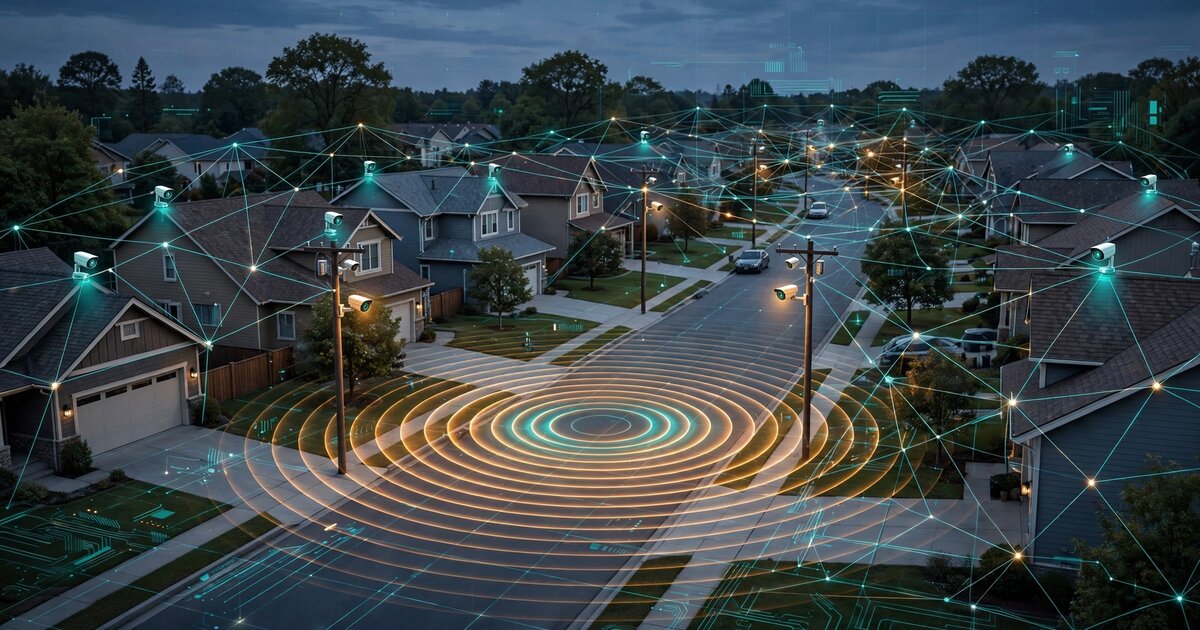
System and Method for Distributed Acoustic Gunshot Localization and Ballistic Trajectory Reconstruction Using Heterogeneous Consumer Security Camera Microphone Networks with Edge-Deployed Deep Learning
A system repurposing existing consumer security camera microphones as a distributed acoustic sensor network for gunshot detection. Edge-deployed CNNs classify impulsive events on-device without transmitting raw audio. TDOA multilateration across GPS-synchronized cameras localizes shooter position to 3–8 m. Muzzle blast and supersonic shockwave separation enables ballistic trajectory reconstruction and caliber estimation. Multi-path acoustic correction using 3D LiDAR building geometry and federated self-calibration via ambient acoustic events of opportunity eliminate the need for dedicated sensor hardware at $0 per square mile versus $65K–$90K for ShotSpotter.

System and Method for Early Detection of Incipient Lithium-Ion Battery Thermal Runaway in Consumer Environments Using Volatile Organic Compound Emission Signature Analysis from Distributed Metal-Oxide Semiconductor Gas Sensor Arrays with Edge-Deployed Anomaly Detection
A system deploying low-cost ($8–15) multi-element MOX gas sensor nodes near battery charging and storage areas. Arrays of 3–5 metal-oxide elements (SnO₂, WO₃, ZnO, In₂O₃, TiO₂) generate orthogonal VOC fingerprints that distinguish lithium-ion electrolyte decomposition products (DMC, EMC, DEC, ethylene) from household background gases. An edge-deployed autoencoder learns location-specific ambient baselines and flags anomalous VOC signatures at cell temperatures of 60–80°C, providing 5–45 minutes of advance warning before the 130–180°C separator collapse that initiates catastrophic thermal runaway.
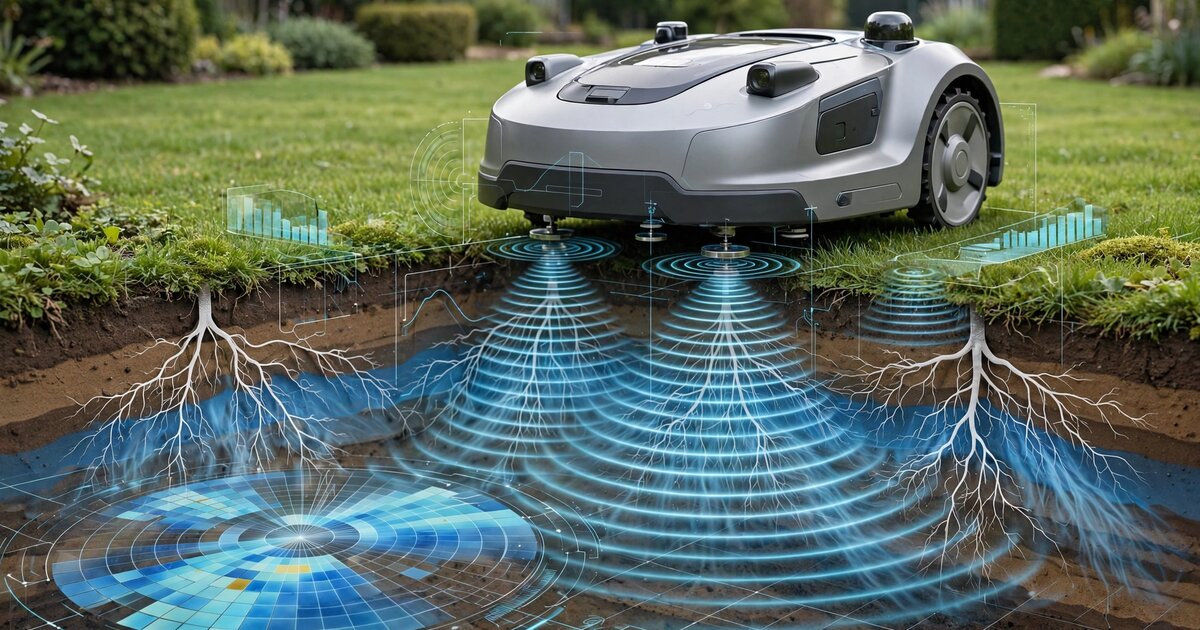
System and Method for Continuous Soil Moisture Profiling and Root Zone Health Assessment Using Autonomous Robotic Mower-Integrated Multi-Frequency Impedance Spectroscopy with Geostatistical Spatial Inference
A system integrating multi-frequency electrical impedance spectroscopy electrodes into autonomous robotic lawn mowers, exploiting RTK-GNSS positioning for precise geolocation of each measurement. Impedance spectra spanning 100 Hz to 1 MHz decompose into volumetric soil moisture, salinity, and root biomass density via dielectric relaxation models. Regression kriging interpolates 20,000-100,000 georeferenced spectra per mowing cycle into sub-meter resolution soil property maps. Temporal change-detection neural networks identify irrigation faults, grub damage, fungal disease onset, drainage failure, and compaction before visible symptoms appear.
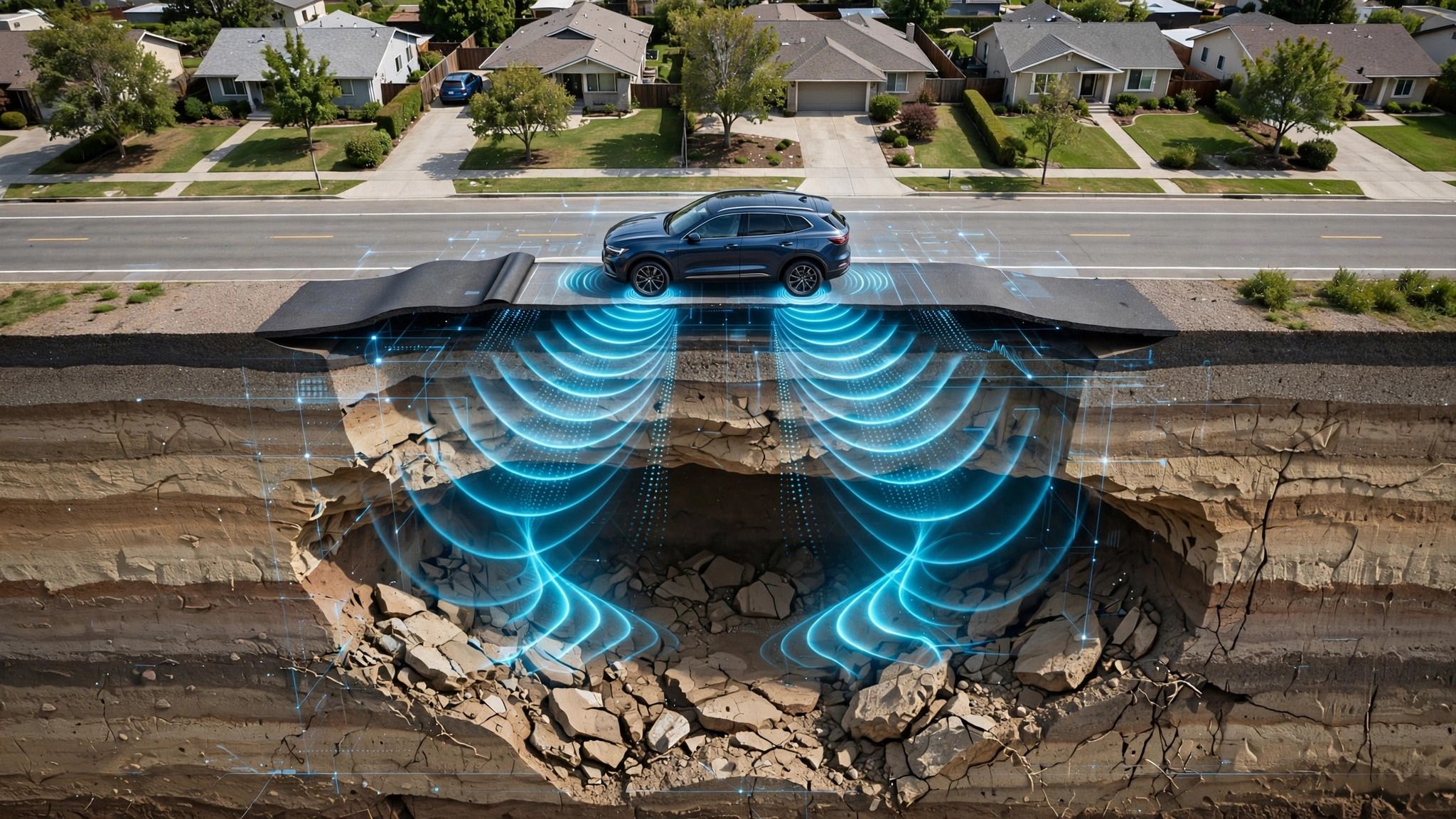
System and Method for Predictive Sinkhole Detection and Progressive Road Subsidence Monitoring Using Crowdsourced Vehicle Suspension Displacement Telemetry and Temporal Surface Deformation Analysis
A system aggregating factory-equipped vehicle suspension displacement telemetry from consumer vehicles with electronically controlled suspension to detect progressive road subsidence. Temporal differencing of GPS-correlated surface profiles across fleet traversals, combined with physics-informed ML classification of six geotechnical failure modes, produces probabilistic time-to-collapse estimates enabling preemptive intervention before catastrophic sinkhole events.

System and Method for Remaining Useful Life Estimation of Residential HVAC Compressors Using Power Line Current Harmonic Signature Analysis and Physics-Informed Degradation Modeling
A system using consumer-grade CT clamps or smart panel sensors sampling at ≥4 kHz to extract 47-dimensional feature vectors from hermetic compressor current signatures, including start transient locked-rotor profiles, steady-state harmonic spectra through the 33rd harmonic, and cycling statistics. A physics-informed neural network encoding Archard bearing wear, Paris law valve fatigue, and Arrhenius insulation degradation produces probabilistic remaining useful life estimates. Joint refrigerant charge state estimation exploits the differential temperature dependence of mechanical vs. charge-related signature changes.
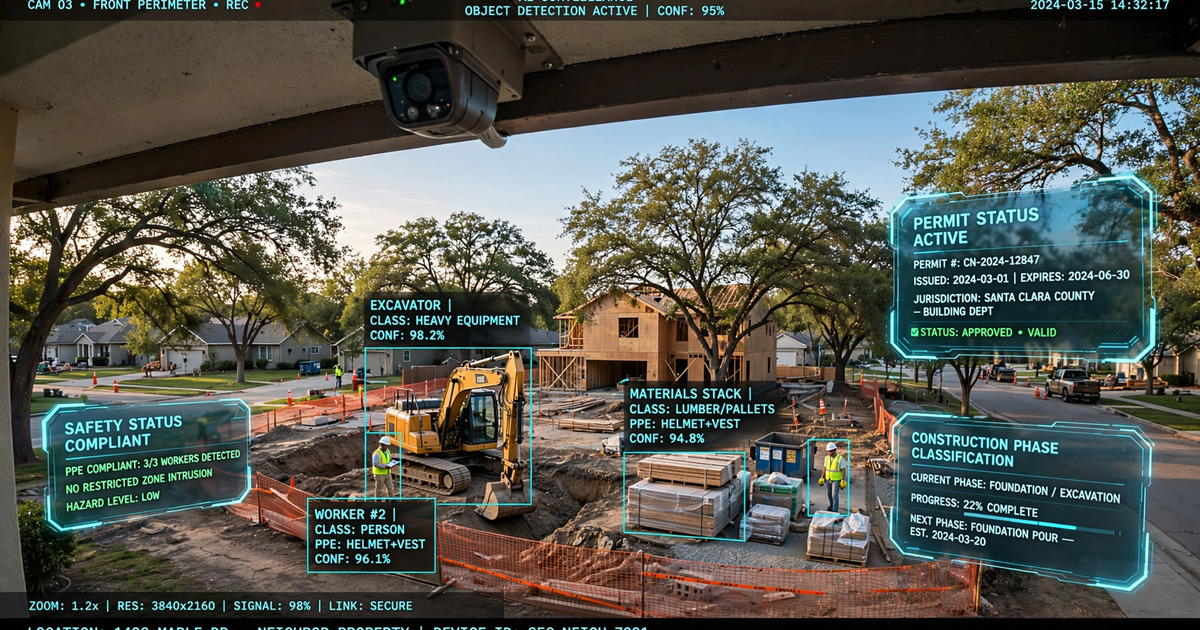
System and Method for Autonomous Detection, Classification, and Temporal Tracking of Construction Activity on Adjacent Properties Using Consumer Security Camera Networks with Edge-Deployed Phase Recognition and Automated Municipal Permit Cross-Referencing
A system repurposing existing consumer security cameras (Ring, Nest, Arlo, UniFi) with edge-deployed CNNs to detect construction commencement via temporal difference analysis, classify activity into 8 construction phases (demolition through landscaping), and automatically cross-reference against municipal building permit databases via BLDS-compliant APIs. Multi-camera triangulation estimates excavation depth, structure height, lot coverage, and setback distances. Generates evidence packages for code enforcement submission when unpermitted work, scope mismatches, or timeline exceedances are detected.
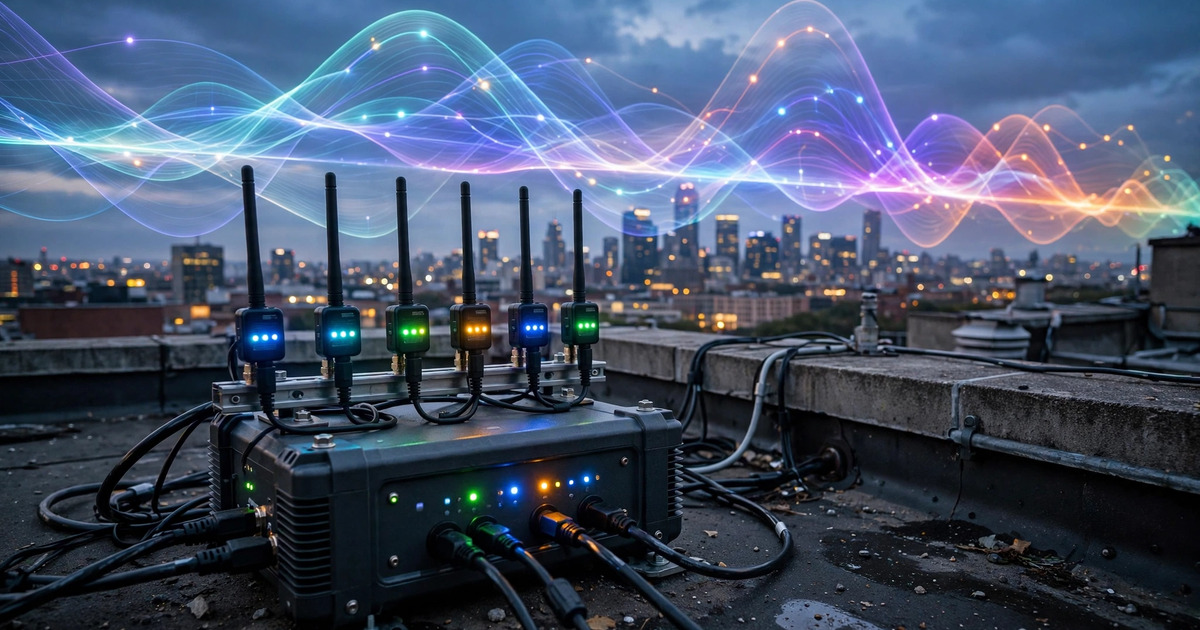
System and Method for Distributed Radio Frequency Spectrum Occupancy Mapping and Unauthorized Transmitter Geolocation Using Consumer-Grade Software-Defined Radio Mesh Networks with Edge-Deployed Deep Learning Signal Classification
A distributed mesh network of consumer-grade SDR receivers ($30-$100 per unit) with edge-deployed CNNs for automatic modulation classification continuously scans 24 MHz to 1.7 GHz, cross-references detections against the FCC ULS licensing database and NTIA allocation chart, and geolocates unauthorized transmitters via collaborative GPS-synchronized TDOA across multiple nodes. Priority-weighted scan schedules dynamically concentrate monitoring on anomalous bands. At 50-200× lower cost than professional spectrum monitoring equipment, the system enables community-scale deployment for interference hunting, drone detection, spectrum enforcement, and occupancy research.

System and Method for Real-Time Cognitive Load Estimation Using Wearable Pupillometry and Ambient Acoustic Scene Complexity Analysis for Adaptive Augmented Reality Information Display Rate Throttling
An inward-facing NIR camera on AR eyewear measures task-evoked pupillary responses while outward-facing microphones compute an Acoustic Scene Complexity Score from spectral entropy, modulation spectrum analysis, and estimated auditory stream count. A fusion model combines both signals into a composite Cognitive Load Index that drives an adaptive display controller, dynamically throttling notification rate, overlay complexity, and information density. Under high load, non-critical content is deferred to predicted low-load windows; under low load, deferred items are released in priority order. All inference runs on-device with no raw physiological or audio data transmitted off-device.
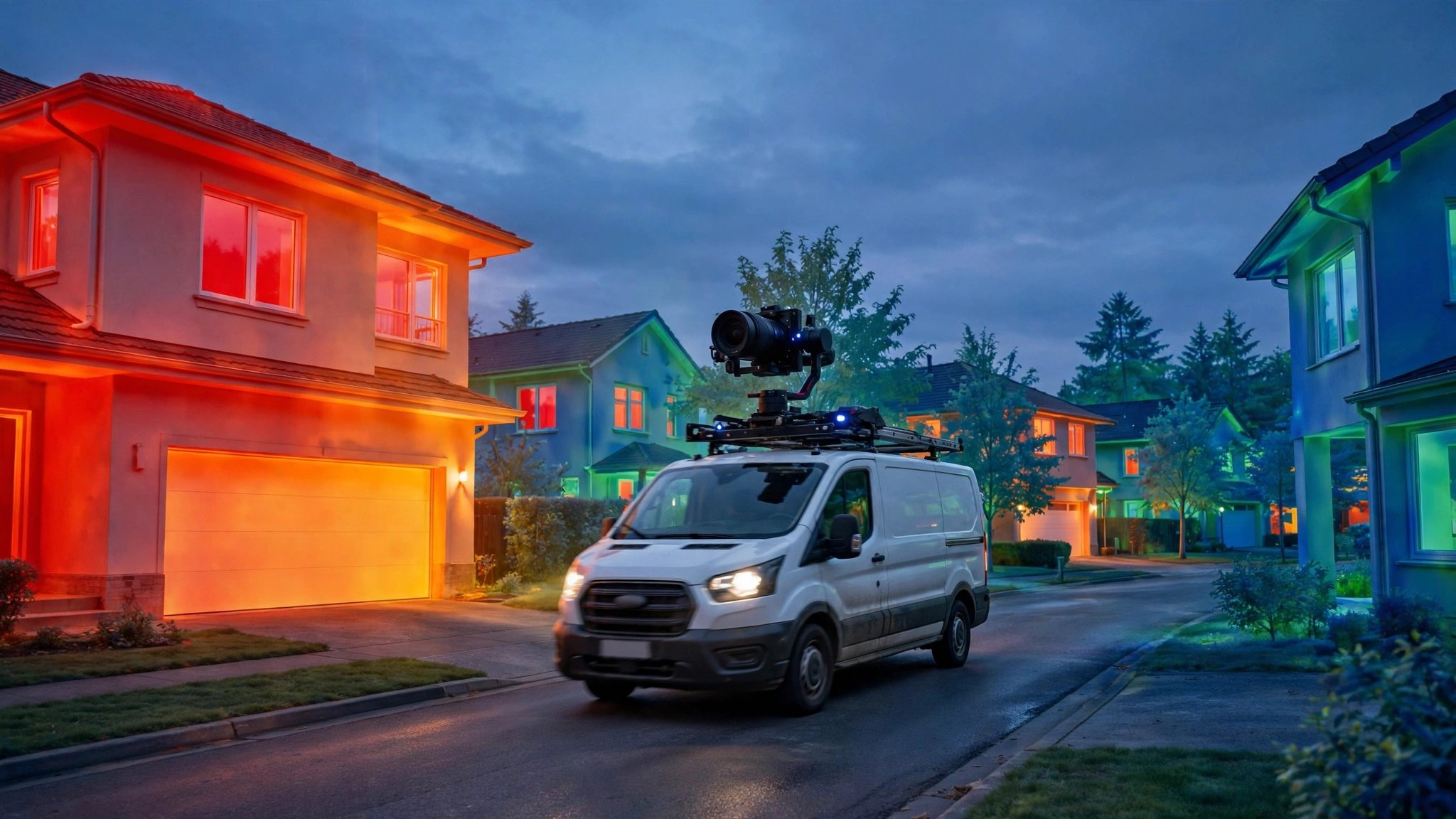
System and Method for Automated Building Energy Performance Assessment Using Exterior Thermal and Visual Imagery from Delivery Fleet Vehicles
Thermal infrared and RGB cameras mounted on last-mile delivery vehicles capture co-registered imagery of building facades during normal route operations. An edge computing module performs radiometric correction, building component segmentation, and thermal feature extraction in real time. A cloud pipeline aggregates multi-pass observations across seasons, computes per-component Thermal Anomaly Scores, and generates a parcel-level Building Thermal Performance Index (BTPI). The system enables utility companies and weatherization programs to identify the specific buildings and building components most likely to benefit from envelope retrofits at city scale, without interior inspections, homeowner opt-in, or aerial surveys.
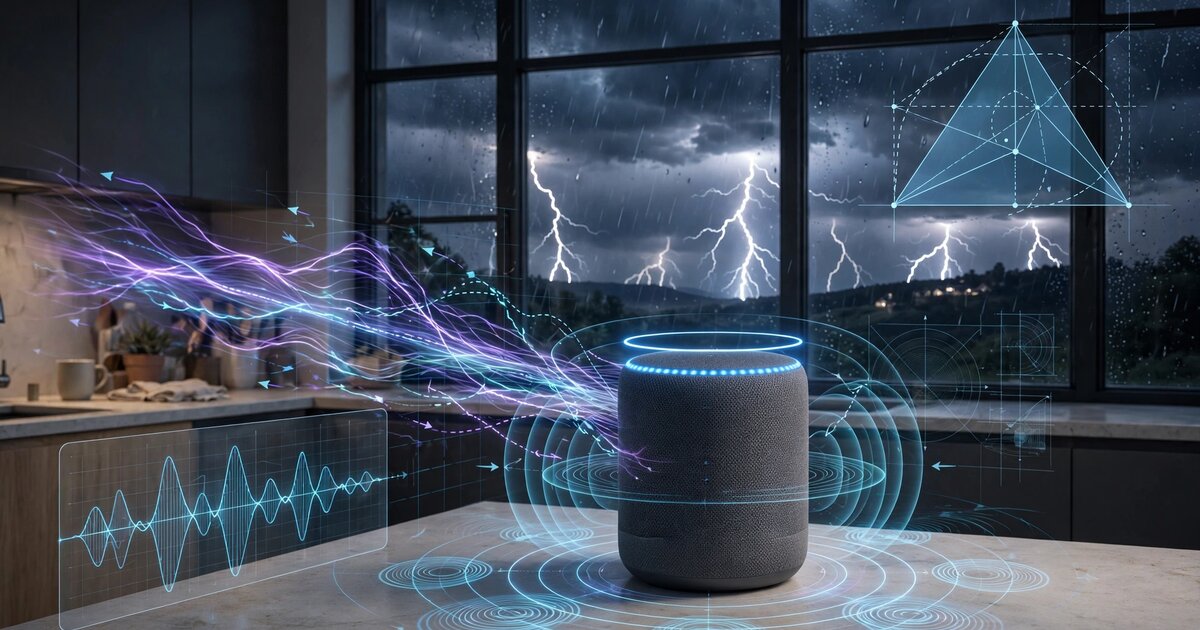
System and Method for Passive Lightning Strike Distance Estimation and Geolocation Using Consumer Smart Speaker Microphone Array Electromagnetic Pulse Artifact Detection and Acoustic Thunder Time-Difference-of-Arrival Analysis
Consumer smart speakers detect lightning return stroke electromagnetic pulses as characteristic sub-millisecond artifacts in their MEMS microphone analog front-ends, arriving at the speed of light. Seconds later, acoustic thunder arrives at the speed of sound. The flash-to-thunder interval gives per-device strike distance. When three or more geographically distributed devices detect the same EMP event, multi-device acoustic TDOA triangulates the strike location with sub-kilometer accuracy. The system creates a distributed lightning detection network from 210 million installed smart speakers at zero marginal hardware cost, enabling real-time safety alerts, wildfire ignition detection, and power grid surge correlation.

System and Method for Federated Anomaly Detection Across Heterogeneous Residential Security Camera Networks Using Privacy-Preserving Behavioral Embedding Extraction and Cross-Property Spatiotemporal Correlation
Consumer security cameras at each participating property run edge inference to extract fixed-length behavioral embedding vectors encoding trajectory shape, dwell-time distribution, approach-angle sequence, and gait periodicity for detected human subjects. A learned privacy projection destroys biometric identifiability through adversarial training while preserving behavioral discriminability. Privacy-projected embeddings are shared over an encrypted peer-to-peer mesh to a neighborhood-level graph neural network aggregator that detects cross-property anomalies no single camera system could identify: sequential reconnaissance across multiple properties, recurrent unknown visitors, and coordinated multi-actor surveillance from neighboring vantage points.
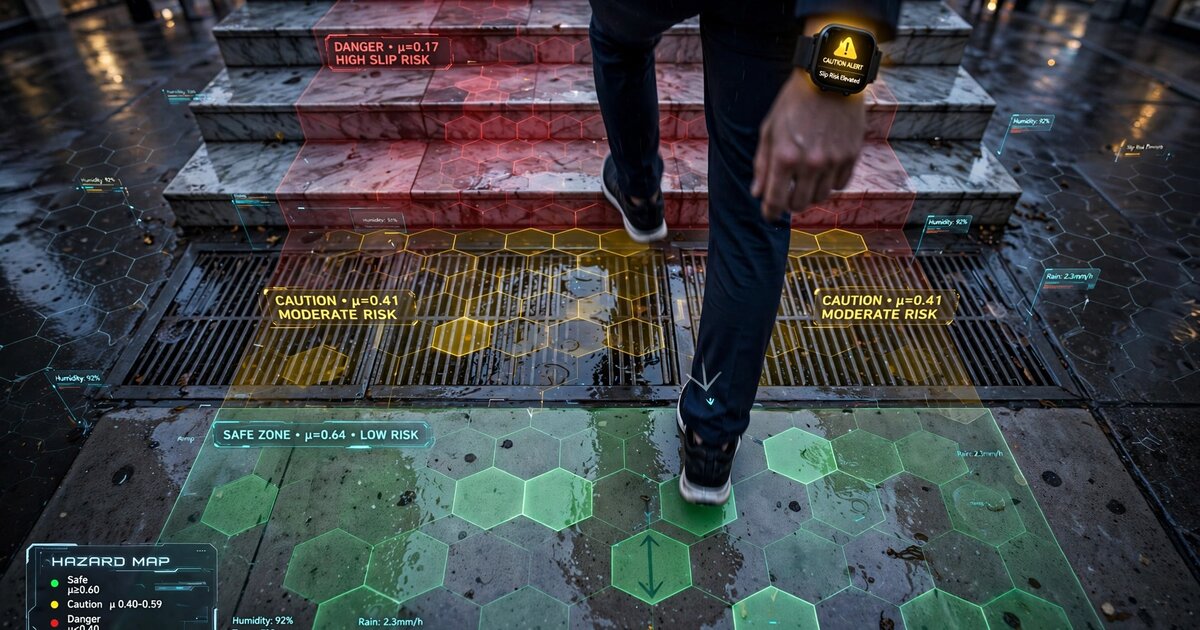
System and Method for Real-Time Pedestrian Walking Surface Friction Coefficient Estimation Using Wearable Inertial Measurement Unit Micro-Slip Gait Perturbation Analysis and Crowdsourced Geospatial Hazard Mapping
Consumer wearable IMUs in smartwatches, smart glasses, or instrumented insoles detect sub-perceptual micro-slip events during heel strike by recognizing a characteristic four-phase perturbation signature in accelerometer data. A personalized biomechanical model estimates available coefficient of friction from slip displacement, velocity arrest profile, and postural compensation magnitude. Surface material is classified from heel-strike spectral signatures. Geotagged friction estimates aggregate across users into crowdsourced hazard maps with H3 spatial indexing, hierarchical Bayesian fusion, weather conditioning, and real-time haptic/AR alerts for approaching low-friction zones.

System and Method for Early Detection of Carbon Monoxide Exposure Using Anomalous Cardiovascular Compensation Pattern Recognition from Consumer Wrist-Worn Photoplethysmographic Wearables
Consumer smartwatches with standard two-wavelength PPG sensors detect early-stage CO exposure by recognizing the "false stability signature" — falsely stable SpO2 concurrent with compensatory tachycardia, depressed HRV, increased respiratory rate, and CO-induced vasodilatory PPG waveform changes. A personalized baseline model and multi-channel anomaly detector trained on CFK-equation-derived synthetic data discriminates CO from exercise, alcohol, illness, and stress. Multi-device spatial correlation across household wearers dramatically reduces false positives. Graduated alerts escalate from ventilation advisory through automated 911 dispatch.

System and Method for Population-Scale Respiratory Illness Outbreak Detection Using Privacy-Preserving Federated Analysis of Wearable-Detected Cough Frequency Anomalies with Spatiotemporal Epidemic Clustering
Consumer wearable microphones and accelerometers detect cough events via multimodal sensor fusion with >95% specificity. Rather than transmitting raw audio, each device computes local cough frequency anomaly scores against personalized baselines and contributes only differentially private aggregate flags to a federated analytics pipeline. A cloud-based spatiotemporal clustering engine applies scan statistics, CUSUM charts, and wavelet changepoint detection to the anonymized, geographically binned cough rates, detecting respiratory disease outbreak signatures 1-3 weeks before clinical surveillance systems that depend on laboratory confirmation and physician reporting.
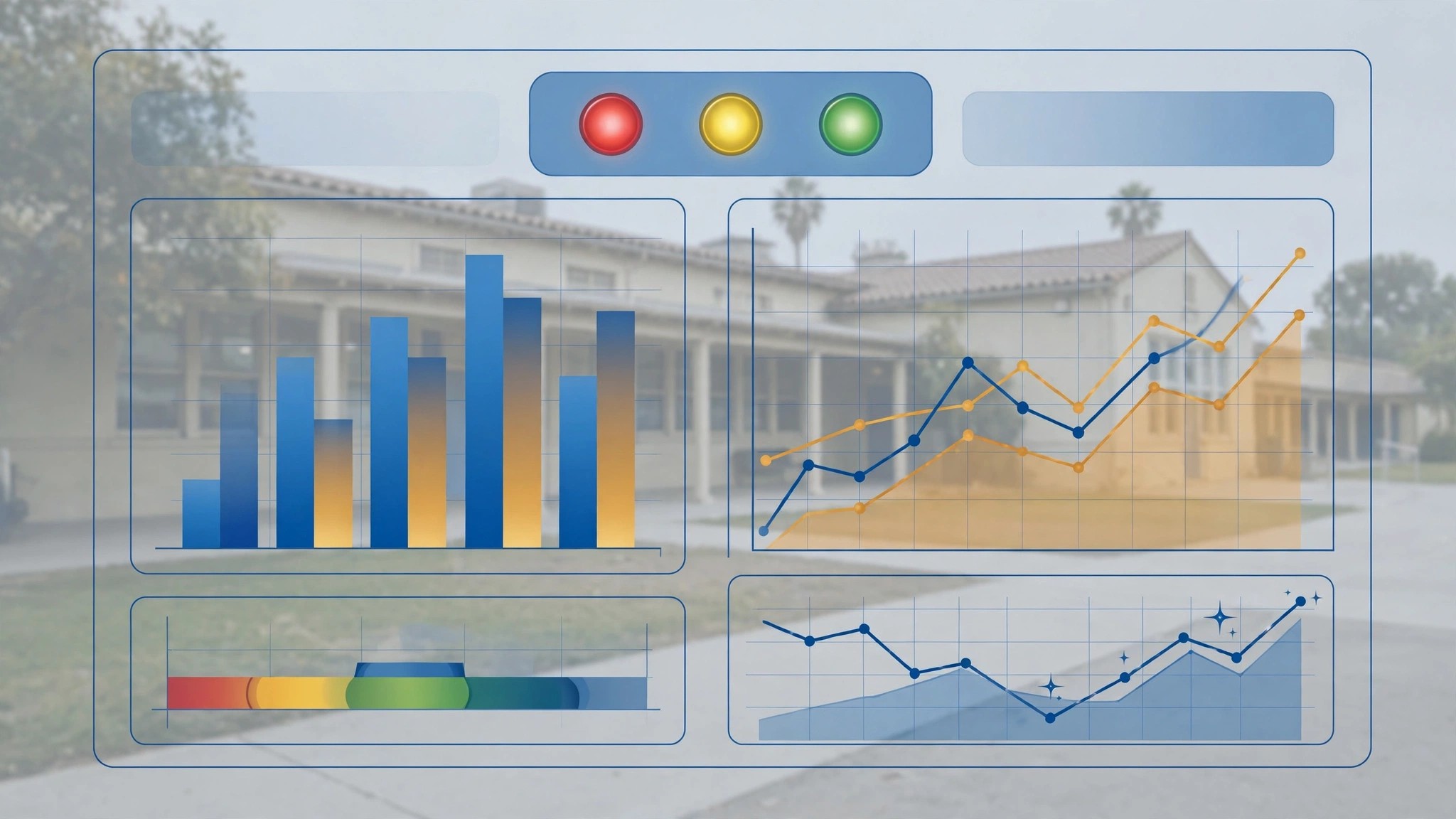
Automated "Do No Harm" Accountability System for K-12 Public Education with Outcome-Triggered Funding Portability, Subgroup-Level Threshold Enforcement, and AI-Driven Early Warning
An automated accountability system for California K-12 public education — modeled on the federal "Do No Harm" earnings test for higher education — that continuously monitors school-level outcome data (CAASPP, Dashboard, graduation, absenteeism, CCI), applies configurable failure thresholds at both aggregate and demographic-subgroup levels, and triggers automatic funding portability, parent notification with ranked alternative schools, AI-driven early warning, and evidence-based remediation when schools chronically underperform.
More entries load as you scroll.
About Publication and Prior Art
Publishing technical material online may create evidence relevant to a later patent analysis. It does not automatically make the material dispositive prior art or establish the date from which it can be used. Under 35 U.S.C. § 102, the analysis turns on the claimed invention, its effective filing date, and whether earlier material was sufficiently available to the public. For Internet material, public accessibility and the date of public posting depend on the evidence and surrounding facts.
A reference relied on for anticipation must describe the claimed invention and provide an enabling disclosure to a person of ordinary skill in the art, although non-enabling material may still be relevant to other patentability questions. Source-control history can help document versions, but a commit, SHA, or displayed timestamp does not by itself guarantee a legally effective publication date, public accessibility, permanence, or provenance. See MPEP § 2121 and MPEP § 2128.
CC0 addresses copyright and related rights in a work; it does not waive patent or trademark rights or clear third-party rights. Publication here does not establish novelty, patentability, invalidity of any claim, freedom to operate, or public-domain status.
This is general information, not legal advice. Consult qualified counsel about a specific disclosure, patent, or planned implementation.