📜 Defensive Prior Art
Technical disclosures for proposed systems, published online with dated revision history so readers can examine the disclosed material and how it changed over time.
These pages describe proposed technical systems; many are unbuilt. Whether any page qualifies as prior art, and what it discloses, depends on the facts, including public accessibility, timing, and the disclosure’s content. Publication does not establish novelty, patentability, freedom to operate, or public-domain status. This is general information, not legal advice. Source history on GitHub →
Explore disclosures
145–168 of 237 entries
Autonomous AI Agent System for End-to-End Patent Prosecution, PTAB Defense, and Multi-Jurisdictional Portfolio Management on Behalf of Independent Inventors
A multi-agent AI system that manages the complete patent engagement lifecycle — from semantic prior art search and claim drafting through USPTO office action response, PTAB defense preparation, cost-optimized prosecution strategy for micro/small entities, automated IDS management, provisional-to-nonprovisional conversion, multi-jurisdictional PCT/EP filing coordination, and agent-to-agent licensing negotiation — reducing average prosecution cost from $15,000–$25,000 to under $3,000.

System and Method for Automated Drowning Detection in Residential Swimming Pools Using Hydroacoustic Pressure Field Analysis and Edge-Deployed Temporal Convolutional Networks
Flush-mounted piezoelectric hydrophone arrays continuously capture the full underwater acoustic pressure field in residential pools. A temporal convolutional network with a 60-second receptive field classifies sequential audio windows into activity states — normal swimming, water play, active drowning struggle, passive submersion, and post-submersion silence — by exploiting four acoustic signatures: involuntary subglottal vocalization below 400 Hz, breakdown of rhythmic limb-strike periodicity into chaotic impulses, progressive descent pressure gradient without ascent, and active-to-silent transition while body presence persists. Graduated alerts escalate from advisory through critical within 10-30 seconds of drowning onset, with all processing on-device at the edge and no worn device required.

System and Method for Distributed Atmospheric Pressure Wavefront Detection and Tracking Using Consumer Barometric Sensor Networks for Mesoscale Severe Weather Nowcasting
Consumer smartphone and smartwatch barometric sensors — 280 million in the US alone — are treated as a coherent distributed sensing array rather than independent weather stations. Seismological beamforming algorithms track the propagation of atmospheric pressure wavefronts across the network, resolving gust fronts, microburst downdraft rings, tornado mesocyclone pressure deficits, gravity waves, and sea breeze fronts by their kinematic signatures: propagation velocity, curvature, amplitude, and spatial geometry. On-device edge processors extract pressure derivatives and spectral features without transmitting raw location data. Adaptive resolution concentrates bandwidth on active threat areas. Pressure-velocity inversion estimates surface wind fields from the pressure gradient, enabling per-address wind hazard alerts 2-15 minutes before damaging surface winds arrive — at sub-kilometer resolution where conventional ASOS stations are spaced 30-80 km apart.
AI Looksmaxxing: Open-Source Automated Appearance Optimization Using Iterative AI Image Generation and Vision-Model Scoring Loops
An AI agent generates variant images of a person by modifying styling parameters (glasses, hair, clothing, color palette, background), scores each variant using a vision-language model on six social perception dimensions (trustworthiness, competence, warmth, style, dominance, age vitality), ranks variants by weighted composite score, and iterates around winning combinations using evolutionary search (70% exploitation / 15% combination / 15% exploration) to converge on an optimal appearance recommendation. Validated on 48+ images across 6 batches in a real-world session. Published as defensive prior art under MIT license.
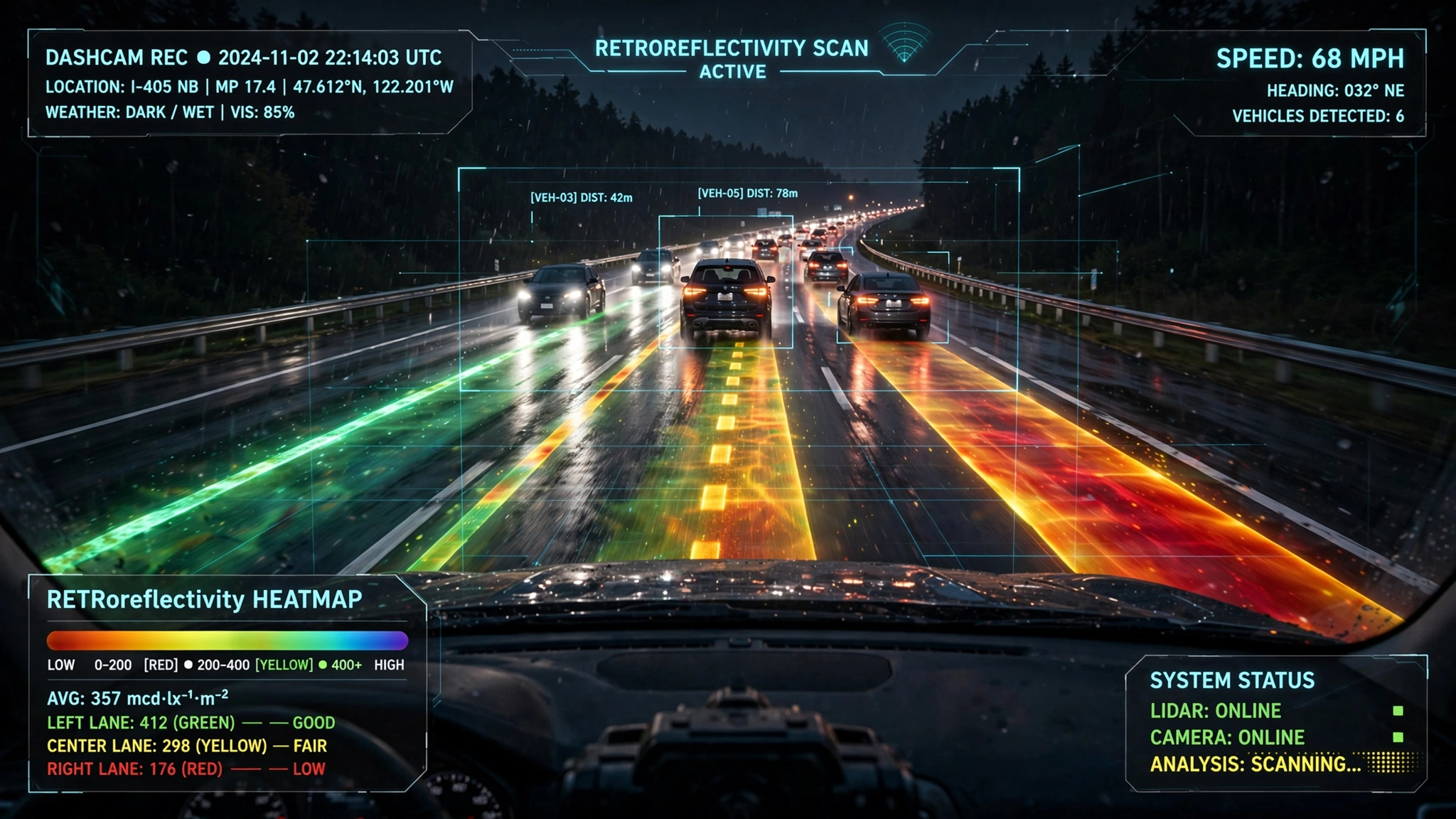
System and Method for Continuous Pavement Marking Retroreflectivity Assessment and Degradation-Aware Maintenance Prioritization Using Fleet Vehicle Headlight-Camera Photometric Calibration with Crowdsourced Temporal Degradation Modeling
Consumer dashcams and fleet cameras are computationally modeled as uncalibrated retroreflectometers by combining vehicle-specific headlight luminous intensity distributions with camera radiometric self-calibration against the road surface. A semantic segmentation model identifies pavement markings in nighttime video frames, measurement geometry is estimated from vanishing point analysis, and the coefficient of retroreflected luminance (R_L) is computed by solving the photometric equation relating pixel brightness to retroreflectivity. Fleet-scale aggregation across thousands of vehicles produces continuously updated R_L maps with Bayesian temporal degradation modeling, predicting when each marking segment will fall below MUTCD minimum thresholds. A maintenance prioritization engine generates risk-ranked restriping work orders integrating R_L deficit, traffic exposure, crash history, and road geometry — replacing annual surveys with dedicated $40K+ mobile retroreflectometers.

System and Method for Distributed Power Grid Frequency Monitoring and Anomaly Localization Using Electrical Network Frequency Extraction from Consumer IoT Device Audio Streams with Geospatially Indexed Neural State Estimation
Consumer IoT device microphones (smart speakers, security cameras, doorbells, baby monitors) passively capture the 50/60 Hz mains hum embedded in their audio input through electromagnetic coupling and acoustic radiation. An on-device neural network (under 20 KB) extracts the instantaneous grid frequency with sub-millihertz precision without transmitting raw audio. A cloud aggregation service fuses telemetry from millions of geographically distributed devices to construct a real-time, continent-scale grid frequency map, detecting generation trips, inter-area oscillations, islanding events, and inertia decline — capabilities that currently require $40K–$100K PMU hardware, with only ~2,500 deployed across North America.
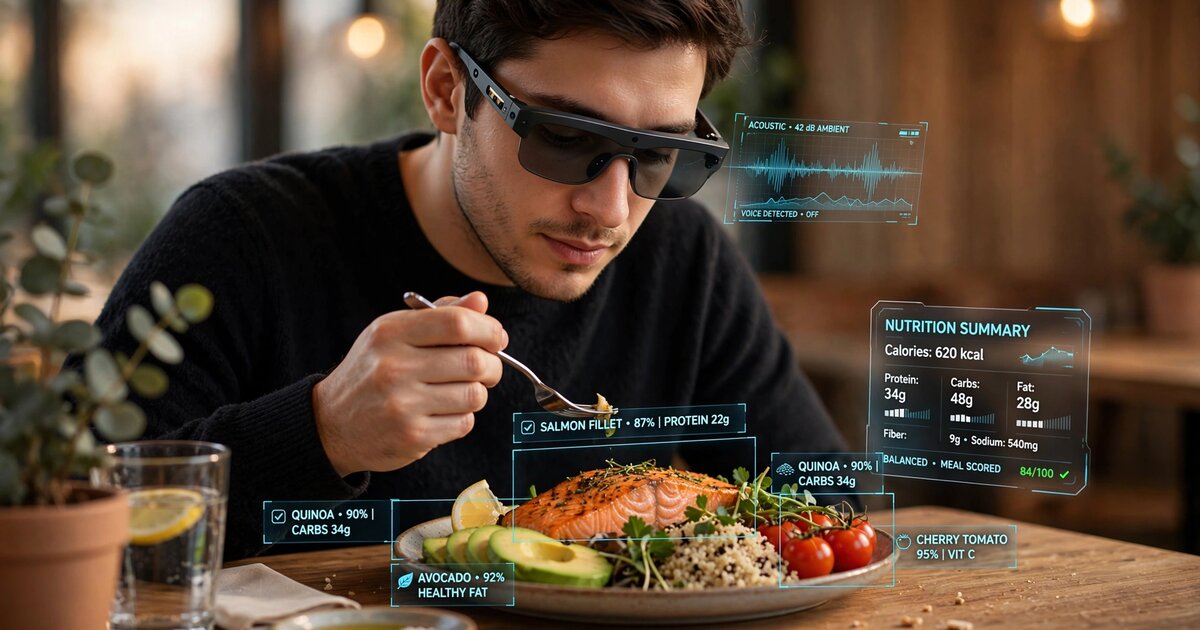
System and Method for Passive Dietary Intake Estimation via Multi-Modal Fusion of Mastication Acoustics, Jaw Kinematics, and Egocentric Visual Food Recognition in Head-Worn Devices
Smart glasses fuse bone-conducted chewing sounds (captured by temple-mounted sensors), IMU-derived jaw kinematics (bite count, chew rate, force proxy), and egocentric camera food recognition (item identification, volume estimation, plate depletion tracking) through a cross-modal attention transformer. The system solves the fundamental ambiguity that defeats single-modality approaches: cameras see the plate but not what was eaten; acoustics detect eating but not which food; IMUs count bites but not food type. Tri-modal fusion estimates per-meal macronutrient intake within ±18% of weighed food records, entirely on-device in under 12 MB.
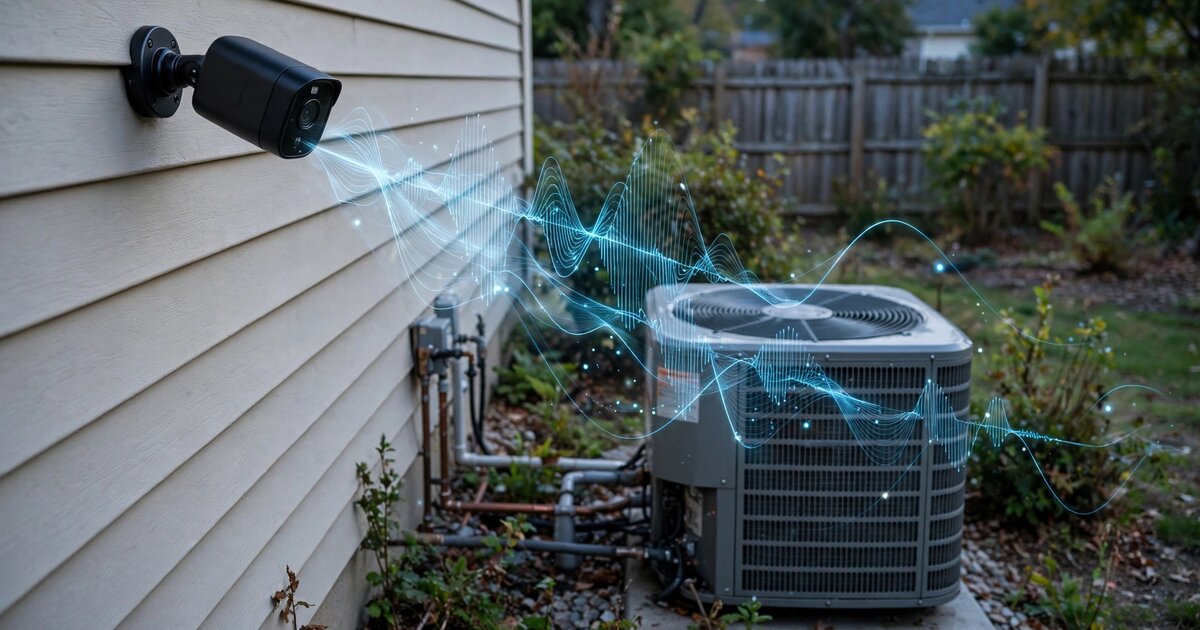
System and Method for Predictive Maintenance of Residential HVAC Compressor Units Using Ambient Audio Capture from Existing Outdoor Security Cameras and Edge-Deployed Acoustic Anomaly Detection
Existing outdoor security camera microphones continuously capture ambient audio during HVAC compressor operating cycles. The system isolates compressor events from background noise, extracts acoustic health features (spectral centroid drift, harmonic ratio degradation, startup transient changes, sub-harmonic emergence), normalizes against ambient temperature via weather API, and classifies compressor state using an edge-deployed temporal convolutional network. Six degradation modes are detected—dirty coils, low refrigerant, bearing wear, electrical faults, fan imbalance, and mechanical looseness—generating tiered maintenance alerts before catastrophic failure, with no hardware beyond the existing camera.
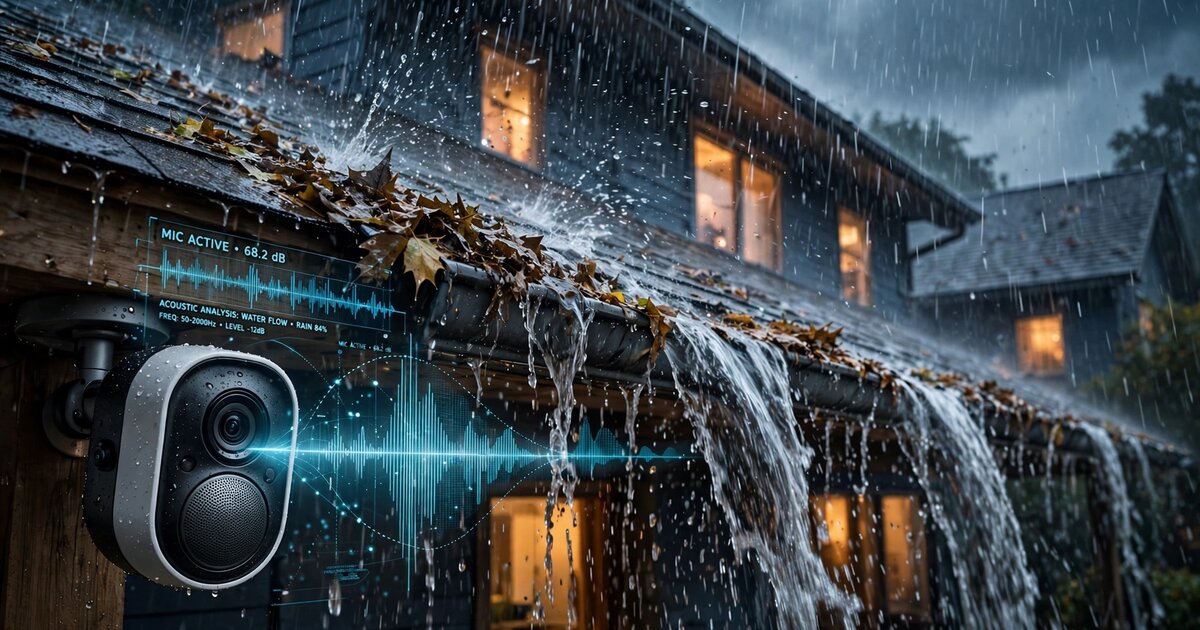
System and Method for Autonomous Detection of Roof Drainage System Failures Using Ambient Audio Analysis from Consumer Smart Home Devices and Precipitation-Correlated Acoustic Pattern Recognition
Consumer smart home device microphones (video doorbells, outdoor cameras, smart speakers) capture ambient audio during rain events. A temporal convolutional network classifies drainage system state into normal flow and five failure modes—overflow splash, partial blockage gurgle, disconnected downspout impact, ice dam backup, and sagging gutter pooling—by correlating acoustic features with precipitation intensity. Per-building baseline models track acoustic drift as gutters degrade, generating tiered alerts before water intrusion damage occurs.
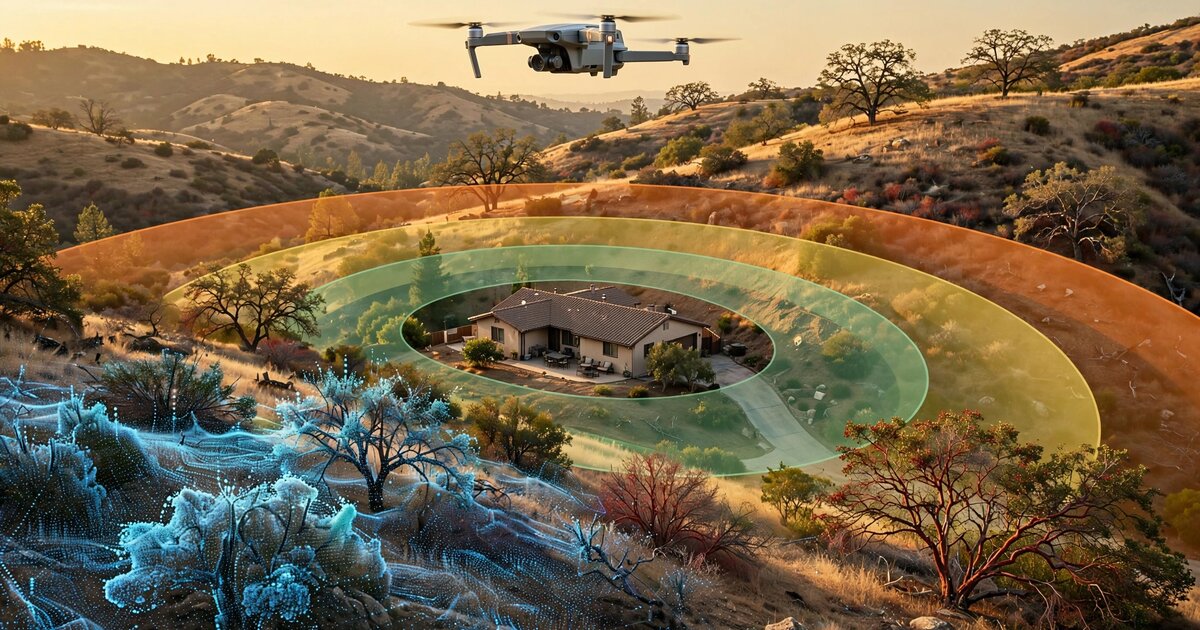
System and Method for Automated Assessment of Wildfire Defensible Space Regulatory Compliance Using Consumer Drone Photogrammetry, Semantic Vegetation Segmentation, and Edge-Deployed Structure-to-Fuel Clearance Estimation
A consumer drone acquires overlapping aerial photos during a dual-pattern flight around a structure, reconstructing a georeferenced 3D point cloud via structure-from-motion photogrammetry. An edge-deployed segmentation network classifies vegetation by fuel type and condition. The system delineates regulatory compliance zones from the detected structure footprint, computes per-zone fuel density and clearance metrics, and scores each zone against PRC § 4291 and 14 CCR § 1299.03 requirements, generating compliance reports that scale inspection capacity by an order of magnitude over manual walk-throughs.
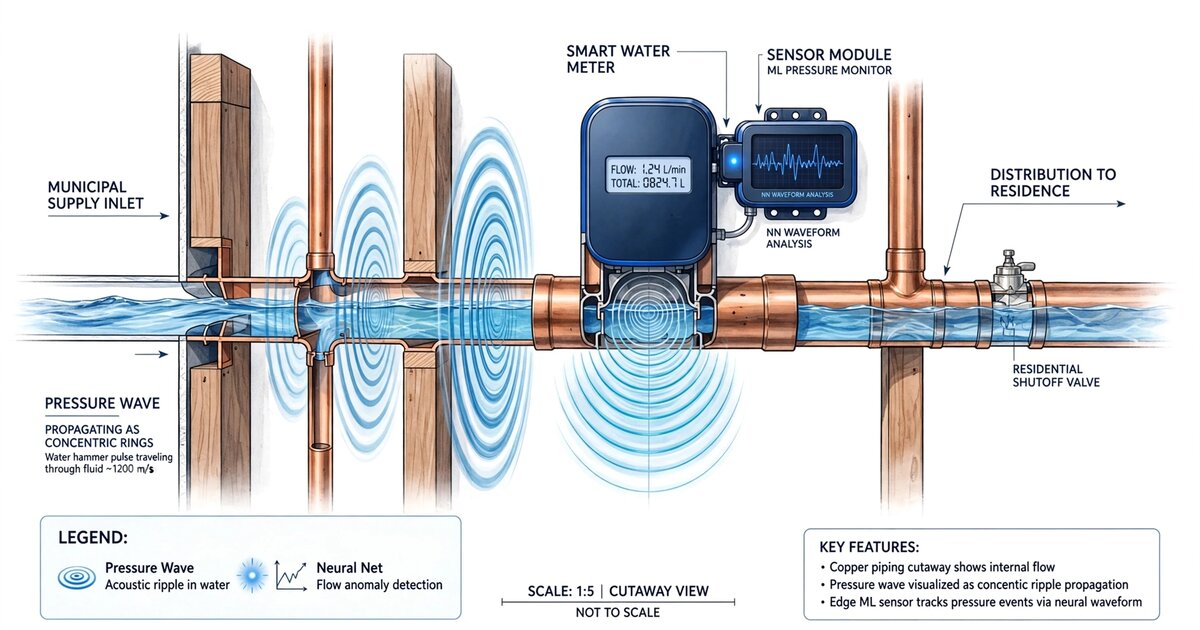
System and Method for Continuous Residential Plumbing Integrity Assessment Using Water Hammer Transient Analysis from Smart Water Meter High-Frequency Pressure Data
A piezoresistive pressure sensor at the water service entry captures naturally occurring water hammer transients from normal fixture closures at 2+ kHz. A continuous wavelet transform decomposes each transient into a scalogram encoding the plumbing network's acoustic impedance topology. An edge-deployed CNN classifies seven defect categories and tracks progressive degradation through baseline fingerprint drift detection, generating maintenance alerts weeks before catastrophic failure.
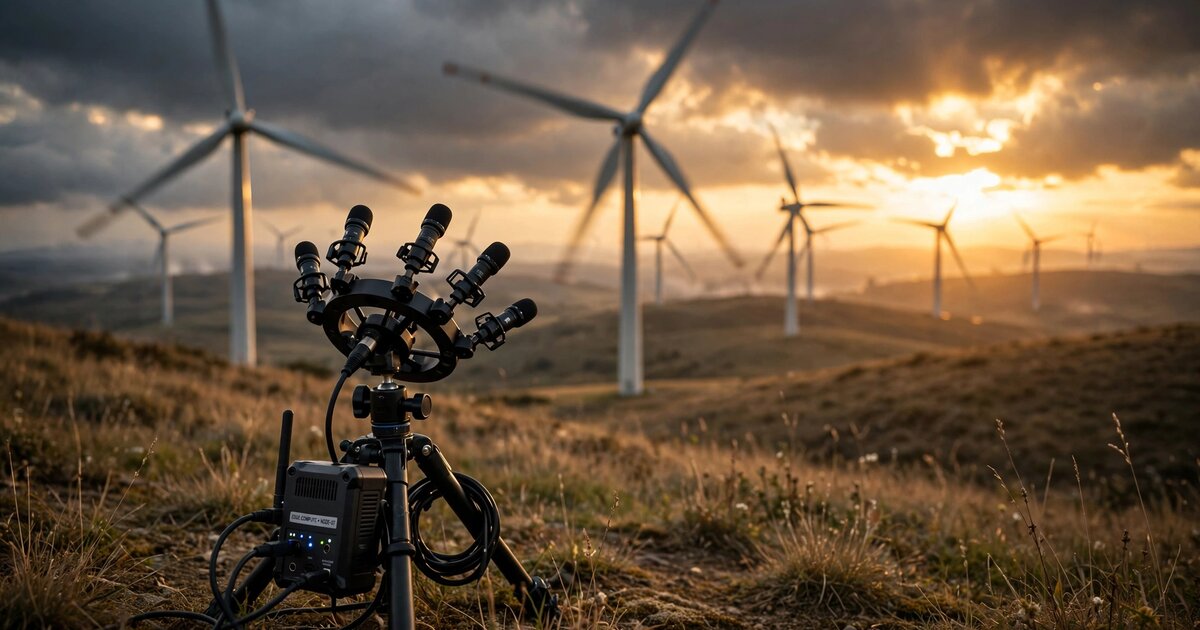
System and Method for Passive Wind Turbine Blade Structural Health Monitoring Using Ground-Level Microphone Arrays and Edge-Deployed Doppler-Resolved Acoustic Signature Classification
A ground-level microphone array at the tower base exploits Doppler frequency modulation from blade rotation to isolate each blade's aeroacoustic signature. An edge-deployed CNN-LSTM classifies blade condition across damage types including leading-edge erosion, trailing-edge delamination, and surface cracks from de-Dopplerized spectrograms, providing per-blade health scores updated every rotation cycle without turbine downtime or physical blade access.
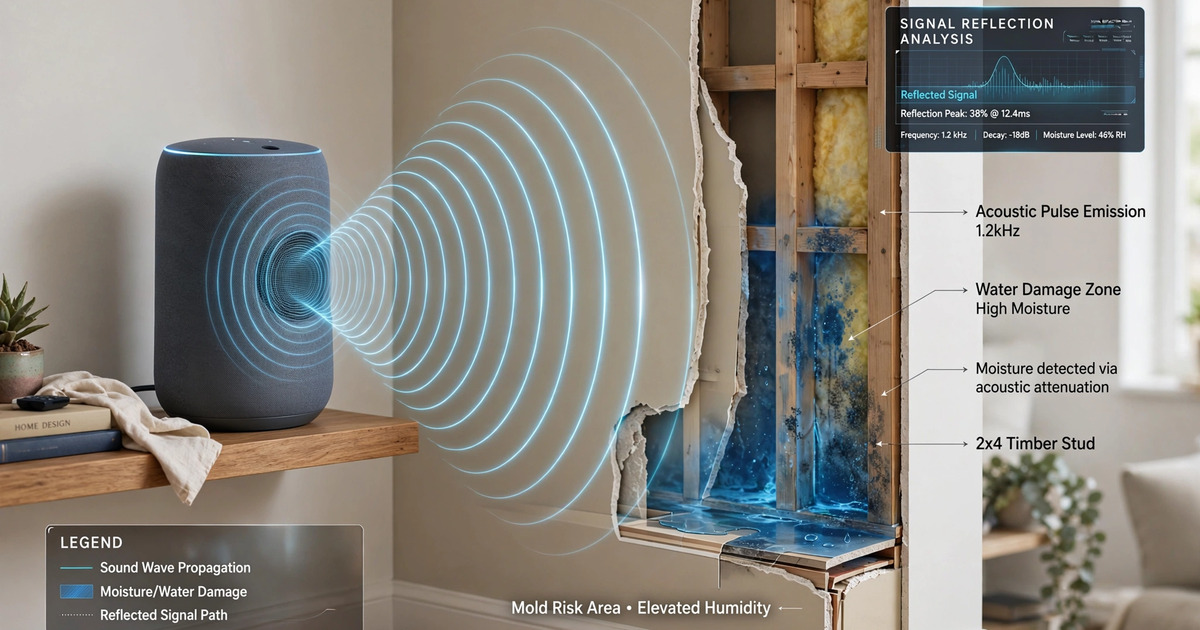
System and Method for Automated Detection of Concealed Structural Water Damage in Buildings Using Smart Speaker Acoustic Impedance Scanning and Temporal Moisture Ingress Modeling
A system that repurposes consumer smart speakers as acoustic impedance scanners, emitting calibrated swept-sine chirps and analyzing multi-microphone room impulse responses to extract per-surface impedance features. An on-device CNN-LSTM model tracks impedance deviations over time to detect concealed moisture infiltration from pipe leaks, roof failures, and condensation before visible damage occurs, while a privacy architecture ensures no intelligible audio is ever recorded or transmitted.

System and Method for Real-Time Distribution Grid Impedance Tomography Using Coordinated Electric Vehicle Charger Load Modulation and Voltage Phasor Response Measurement
A system that repurposes networked EV chargers as coordinated impedance probing instruments for low-voltage distribution grids. Each charger modulates its charging current by 2–8 A for 200–500 ms according to orthogonal PRBS schedules, while all chargers on the same transformer secondary sample their terminal voltage at ≥4,096 Hz. Correlation-based system identification extracts the full mutual impedance matrix, enabling real-time transformer health monitoring, connection fault localization, neutral conductor degradation detection, and instant hosting capacity assessment for solar and battery interconnection without manual utility studies.
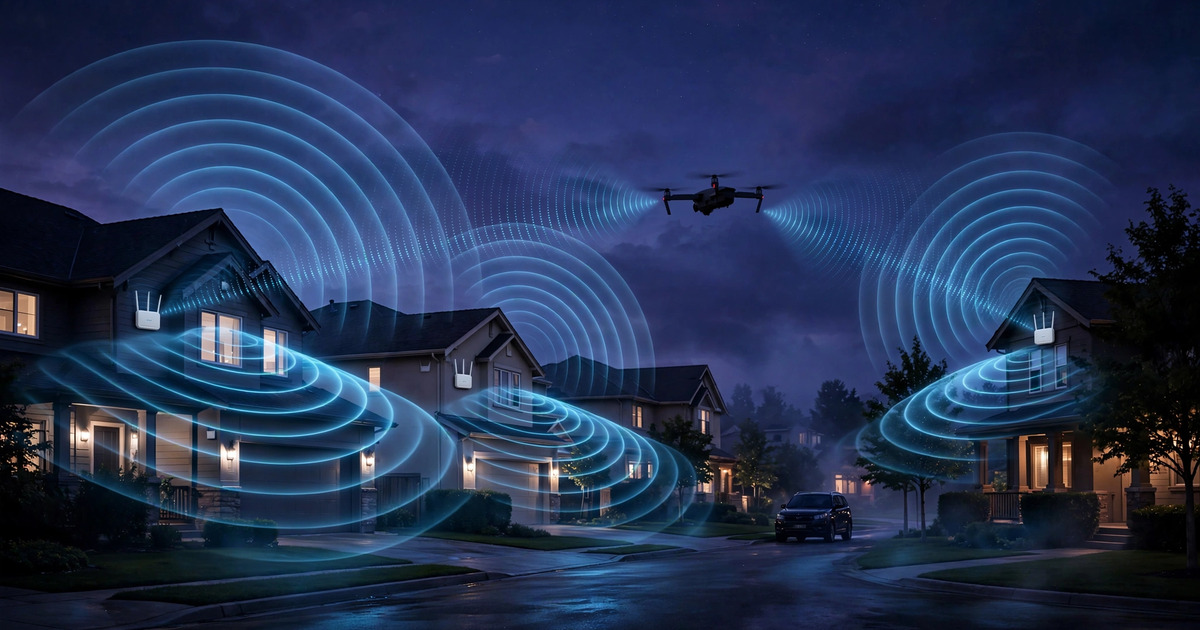
System and Method for Real-Time Detection and Trajectory Estimation of Unauthorized UAVs Using Distributed Consumer WiFi Access Point Channel State Information with Micro-Doppler Rotor Signature Classification
A system exploiting the passive bistatic radar capability inherent in consumer WiFi mesh networks to detect and classify unauthorized drones. Standard 802.11ax/be access points transmit null data packets at 500-1,000 Hz, while neighboring APs extract per-subcarrier CSI and apply STFT analysis to identify rotor blade micro-Doppler signatures at blade-pass frequencies of 150-400 Hz. A lightweight CNN discriminates quadcopters from birds, pedestrians, and vehicles using features including blade-pass frequency, harmonic ratio vectors, and rotor RPM asymmetry patterns unique to multi-rotor UAVs. Multi-AP fusion estimates 3D trajectory via bistatic ellipsoid intersection and Doppler triangulation.

System and Method for Crowdsourced Urban Noise Pollution Mapping and Real-Time Source Attribution Using Consumer Smart Glasses Microphone Arrays with Privacy-Preserving Edge Inference
A system exploiting the multi-microphone arrays on consumer smart glasses to perform real-time noise source classification into 14 urban sound event categories, direction-of-arrival estimation via GCC-PHAT across the 140 mm ear-to-ear baseline, and crowdsourced fusion of geotagged observations into city-scale noise maps at 10-meter spatial resolution. Only 36-byte aggregated metrics leave the device, preserving privacy while enabling source triangulation, municipal enforcement reporting, personal noise dose tracking, and quiet-route pedestrian navigation.
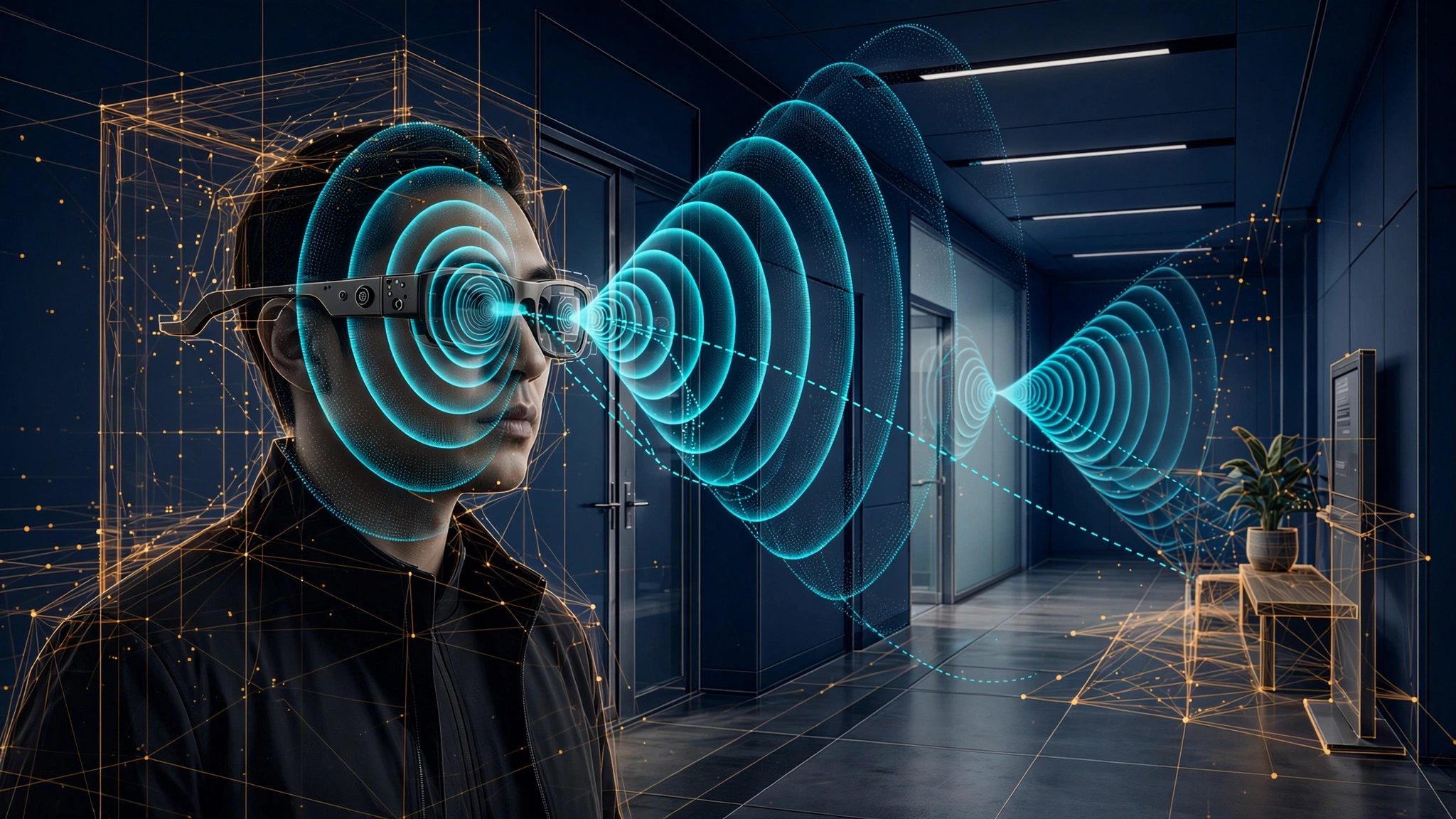
System and Method for Indoor Spatial Mapping and Obstacle Detection Using Active Acoustic Echolocation from Consumer Smart Glasses with On-Device Neural Echo Processing
A system repurposing the existing speaker and multi-microphone array hardware on consumer smart glasses to perform biomimetic acoustic echolocation for infrastructure-free indoor spatial mapping. Near-inaudible coded chirps (17–20 kHz) emitted through temple speakers are captured by the 5–6 microphone array, processed by an on-device neural network to reconstruct room geometry and detect obstacles, and fused with visual SLAM for robust navigation in visually degraded conditions including darkness, smoke, and featureless corridors.

System and Method for Real-Time Urban Thermal Comfort Mapping Using Crowdsourced Wearable Physiological Data with Privacy-Preserving Spatial Aggregation
A system using crowdsourced wearable physiological data — skin temperature, PPG-derived peripheral vasomotor tone, and electrodermal activity — to generate real-time street-level thermal comfort maps. On-device inference computes a Physiological Thermal Comfort Score without transmitting raw biometrics, differential privacy protects individual data, and a graph convolutional network fuses sparse crowd reports with environmental covariates for continuous 25-meter resolution comfort maps.

System and Method for Distributed Wildfire Ignition Risk Assessment Using Residential Solar Panel Soiling Composition Spectroscopy and Vegetation Fuel Moisture Inference from Diurnal Current-Voltage Curve Analysis
A system that repurposes residential solar panel smart inverter I-V curve data to perform angular-dependent transmittance spectroscopy on panel soiling deposits, separating organic from mineral components to infer nearby vegetation fuel moisture and dryness. A graph neural network aggregates soiling composition signals from thousands of installations to produce neighborhood-scale wildfire ignition risk maps and predictive alerts days before critical fire weather events.
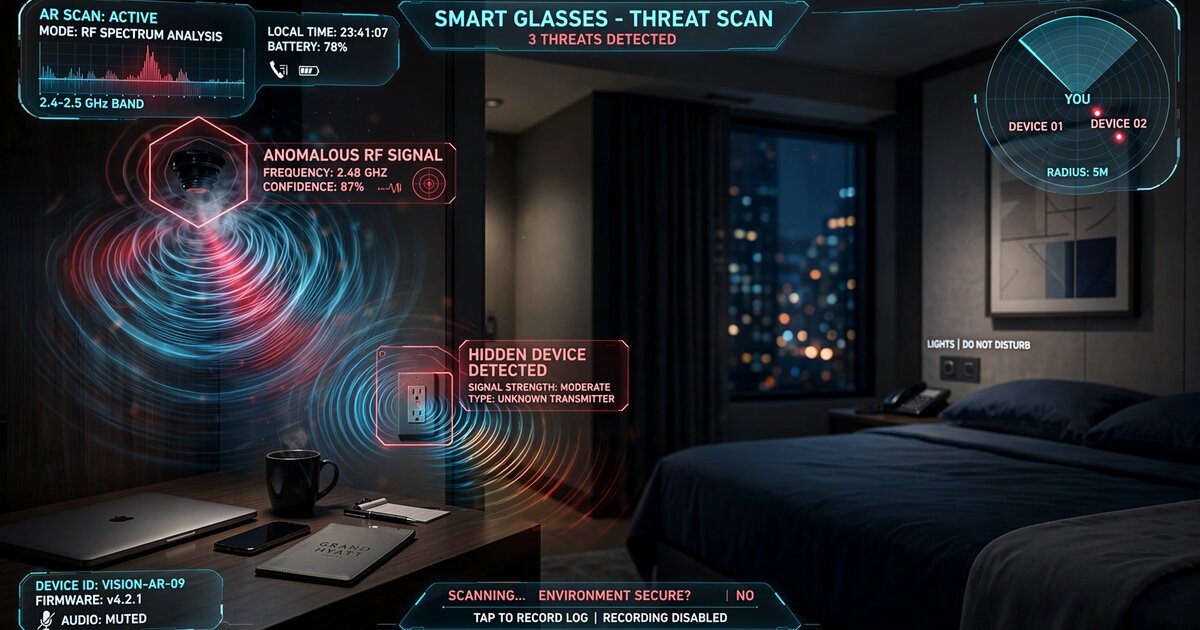
System and Method for Passive Detection and Geolocation of Covert Electronic Devices Using Wearable Multi-Antenna Radio-Frequency Emanation Analysis with On-Device Neural Classification
A system using multi-antenna arrays on consumer wearable devices (smart glasses, earbuds, watches) to passively detect, classify, and spatially locate covert electronic surveillance devices by their unintentional electromagnetic emissions. On-device neural classification distinguishes hidden cameras, audio recorders, GPS trackers, and IMSI catchers from legitimate electronics, with results rendered as AR spatial markers.
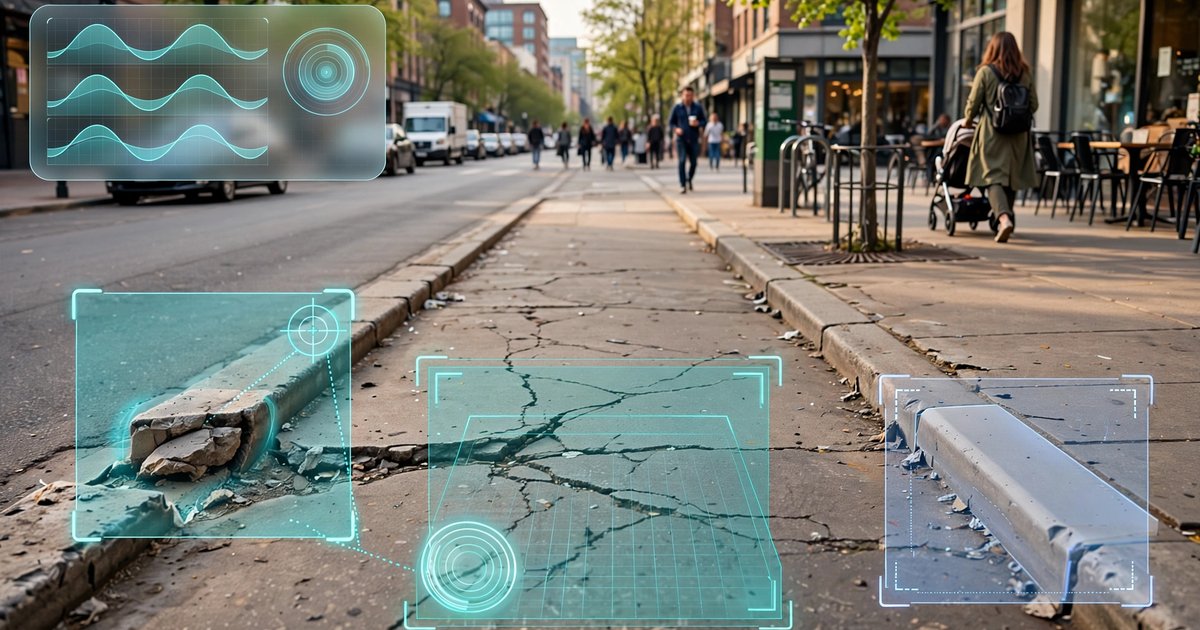
System and Method for Automatic Detection and Geolocation of Pedestrian Infrastructure Accessibility Barriers Using Wearable IMU-Camera Sensor Fusion and Crowd-Sourced Edge Inference
A system using wearable IMU gait perturbation signatures as a low-power attention trigger for camera-based visual classification of pedestrian accessibility barriers (broken sidewalks, missing curb cuts, excessive cross-slopes, obstructions), enabling passive crowd-sourced mapping of ADA compliance gaps at city scale with 85-92% power savings over continuous video analysis.
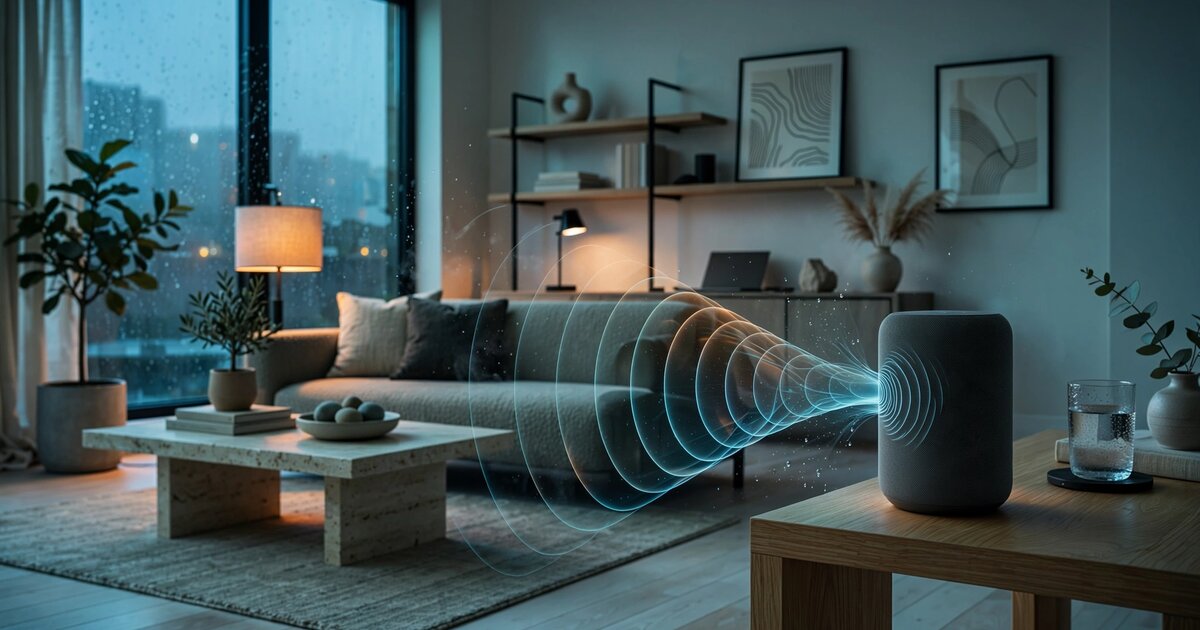
System and Method for Passive Estimation of Indoor Relative Humidity Using Smart Speaker Acoustic Reverberation Analysis and Frequency-Dependent Air Absorption Modeling
Disclosed is a system and method for continuously estimating indoor relative humidity using the built-in microphone and speaker hardware present in consumer smart speakers. The system exploits the well-characterized physical phenomenon of frequency-dependent atmospheric sound absorption caused by molecular relaxation processes in oxygen and ...
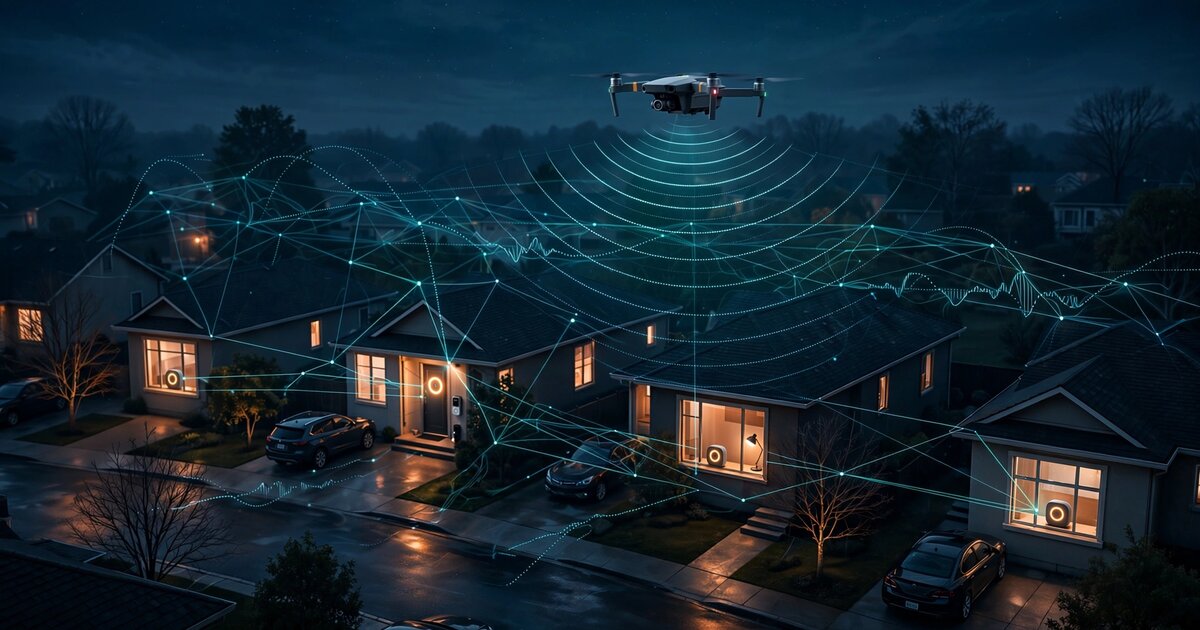
System and Method for Distributed Drone Intrusion Detection Using Heterogeneous Consumer IoT Microphone Networks with On-Device Rotor Harmonic Classification and Cooperative Acoustic Geolocation
A system that repurposes existing consumer IoT microphones in smart speakers, video doorbells, and security cameras as a distributed acoustic detection network for unauthorized drone intrusion. Each device runs an on-device CNN classifier for multi-rotor harmonic signatures, and a cooperative TDOA protocol geolocates drones across heterogeneous devices without transmitting raw audio.

System and Method for Real-Time Empathy Calibration Across AI Interaction Modalities Using Multimodal Affect Recognition and Adaptive Response Generation
Disclosed is a system and method for real-time empathy calibration across artificial intelligence interaction modalities — text-based chat, voice-based conversation, and embodied smart-display interfaces — using multimodal affect recognition and adaptive response generation. The system continuously measures user emotional state via three signal ...
More entries load as you scroll.
About Publication and Prior Art
Publishing technical material online may create evidence relevant to a later patent analysis. It does not automatically make the material dispositive prior art or establish the date from which it can be used. Under 35 U.S.C. § 102, the analysis turns on the claimed invention, its effective filing date, and whether earlier material was sufficiently available to the public. For Internet material, public accessibility and the date of public posting depend on the evidence and surrounding facts.
A reference relied on for anticipation must describe the claimed invention and provide an enabling disclosure to a person of ordinary skill in the art, although non-enabling material may still be relevant to other patentability questions. Source-control history can help document versions, but a commit, SHA, or displayed timestamp does not by itself guarantee a legally effective publication date, public accessibility, permanence, or provenance. See MPEP § 2121 and MPEP § 2128.
CC0 addresses copyright and related rights in a work; it does not waive patent or trademark rights or clear third-party rights. Publication here does not establish novelty, patentability, invalidity of any claim, freedom to operate, or public-domain status.
This is general information, not legal advice. Consult qualified counsel about a specific disclosure, patent, or planned implementation.