📜 Defensive Prior Art
Technical disclosures for proposed systems, published online with dated revision history so readers can examine the disclosed material and how it changed over time.
These pages describe proposed technical systems; many are unbuilt. Whether any page qualifies as prior art, and what it discloses, depends on the facts, including public accessibility, timing, and the disclosure’s content. Publication does not establish novelty, patentability, freedom to operate, or public-domain status. This is general information, not legal advice. Source history on GitHub →
Explore disclosures
49–72 of 237 entries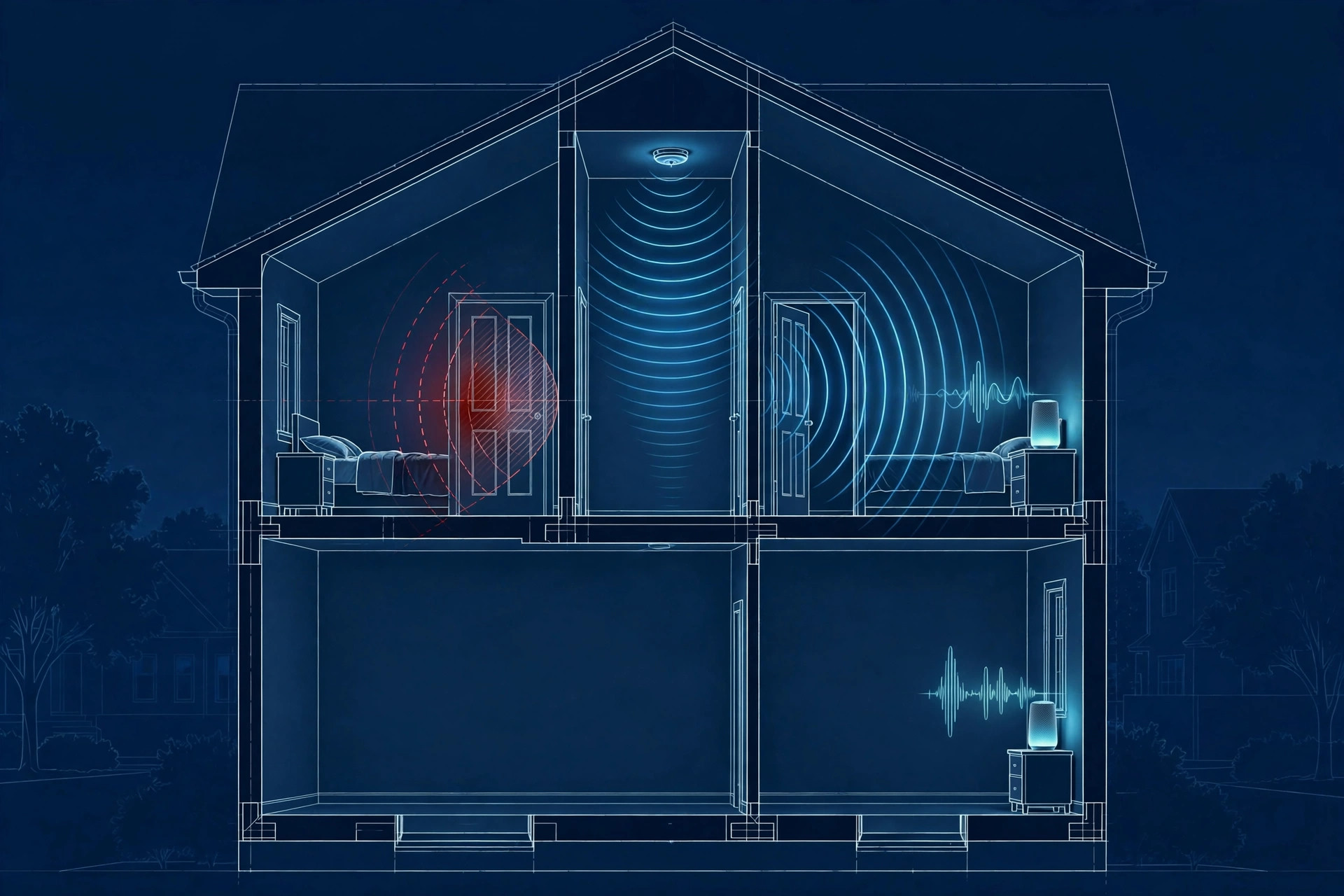
System and Method for Verifying Life-Safety Alarm Audibility Coverage in Residential Structures Using Distributed Acoustic Sensing
Code requires smoke alarms to be audible at 75 dBA at the pillow with bedroom doors closed; almost nobody verifies it. Microphones already in the home (smart speakers, phones, MEMS nodes) listen during a guided test sequence, identify the standardized T3/T4 temporal alarm patterns near 3.1 kHz, and map received sound levels to rooms. Dead zones get remediation guidance and retest workflows, a longitudinal module projects sounder end-of-life from declining output across tests, and an interconnect check confirms triggering one alarm sounds them all.
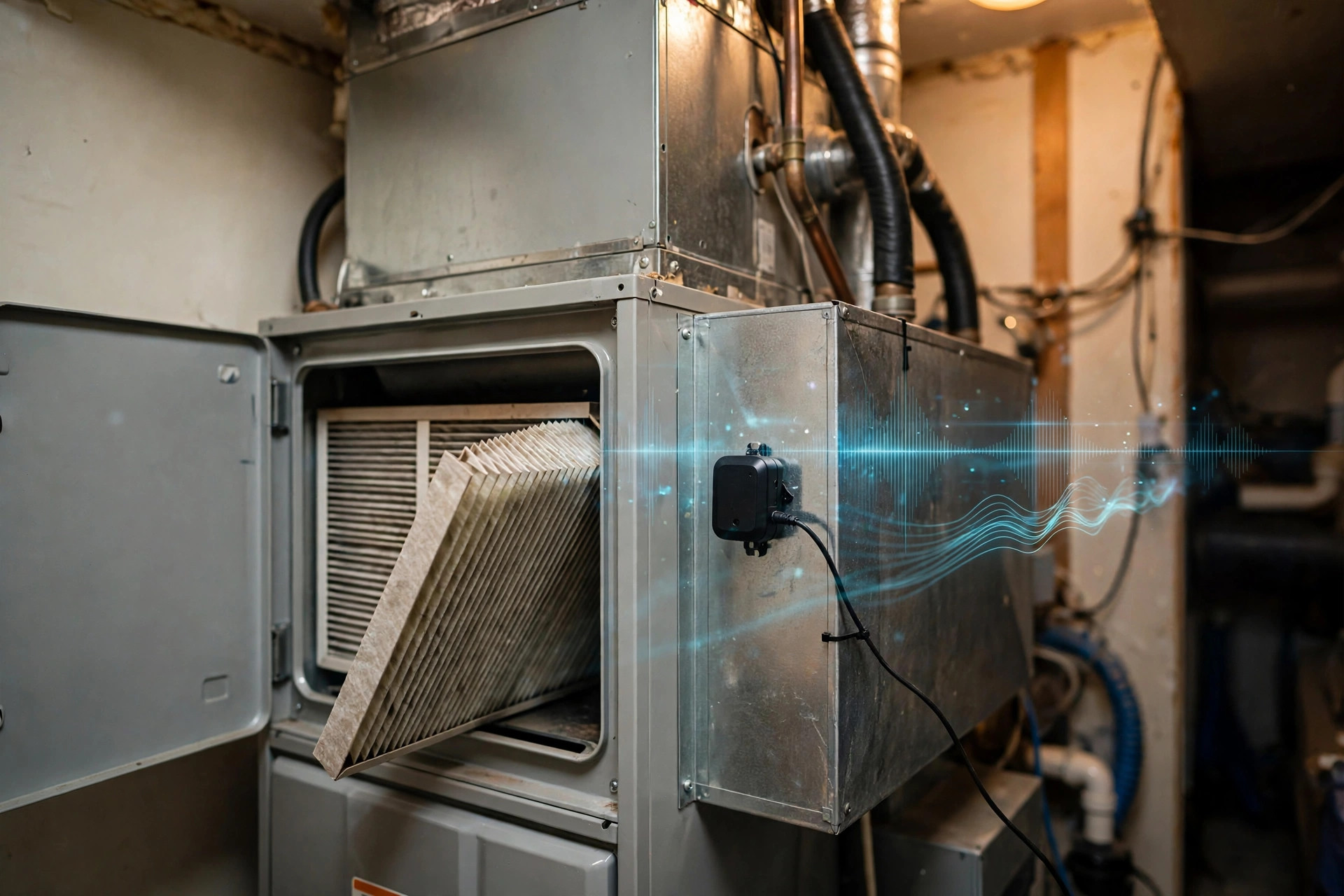
System and Method for Estimating Air Filter Loading State in Forced-Air HVAC Systems via Blower Acoustic Signature, Motor Current, and Thermostat Telemetry Fusion
A sensor-fusion system that measures how loaded a forced-air HVAC filter actually is, instead of guessing from calendar time or equipment runtime. A microphone on the air handler, a current sensor on the blower motor, and thermostat telemetry feed an edge hub that tracks acoustic and electrical drift against a per-installation clean-filter baseline, decoupling filter loading from closed dampers, blower faults, and duct blockage.
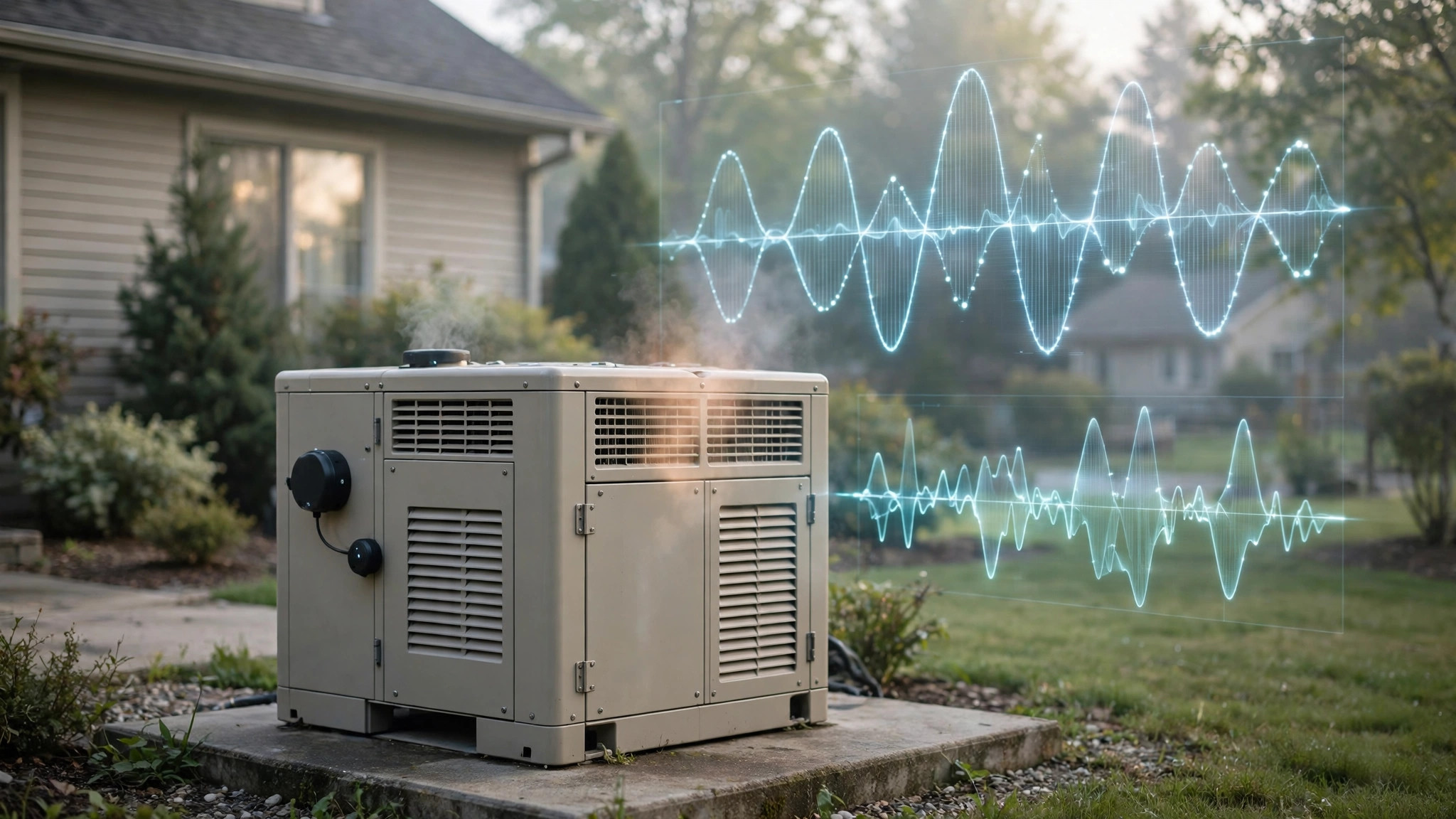
System and Method for Prognostic Health Monitoring of Residential Standby Generators Using Exercise-Cycle Acoustic, Vibration, and Electrical Signatures
A retrofit sensor kit that turns the weekly exercise cycle of a residential standby generator into a diagnostic stimulus. A weatherproof microphone, frame-mounted accelerometer, and battery voltage tap record crank-to-shutdown signatures during each self-test; an edge hub analyzes crank voltage sag, firing-frequency harmonics, and run-up timing against a per-installation baseline to predict battery, starter, ignition, fuel-delivery, and governor failures before the next outage.
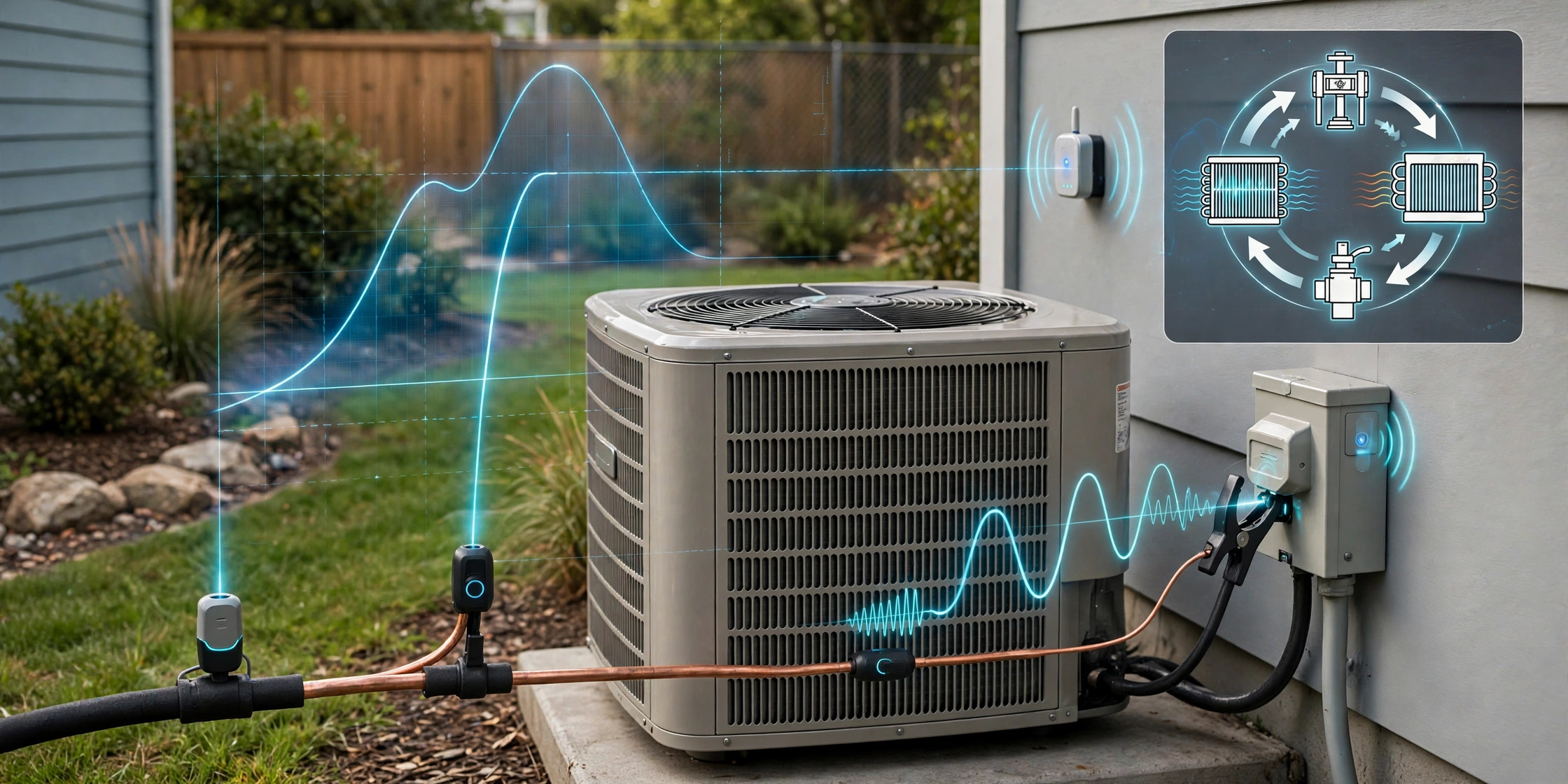
System and Method for Refrigerant Charge Loss Detection in Vapor-Compression HVAC Systems Using Non-Invasive Pipe-Surface Thermometry, Compressor Electrical Signature Analysis, and Duty-Cycle Drift Monitoring
A retrofit sensor kit that detects refrigerant charge loss in residential air conditioners and heat pumps with no pressure gauges and no intrusion into the sealed refrigerant circuit. Clip-on pipe-surface thermistors on the suction and liquid lines, a split-core current transformer on the outdoor unit feed, and thermostat runtime data feed an edge hub that computes virtual superheat and subcooling proxies, tracks steady-state compressor current, and monitors duty-cycle drift against an adaptive per-installation baseline. A fault-decoupling module separates the charge-loss signature from low airflow, fouled condenser coils, liquid-line restrictions, and expansion-valve faults, and a graduated response reports estimated energy waste, issues a technician evidence summary, and warns of compressor damage risk.
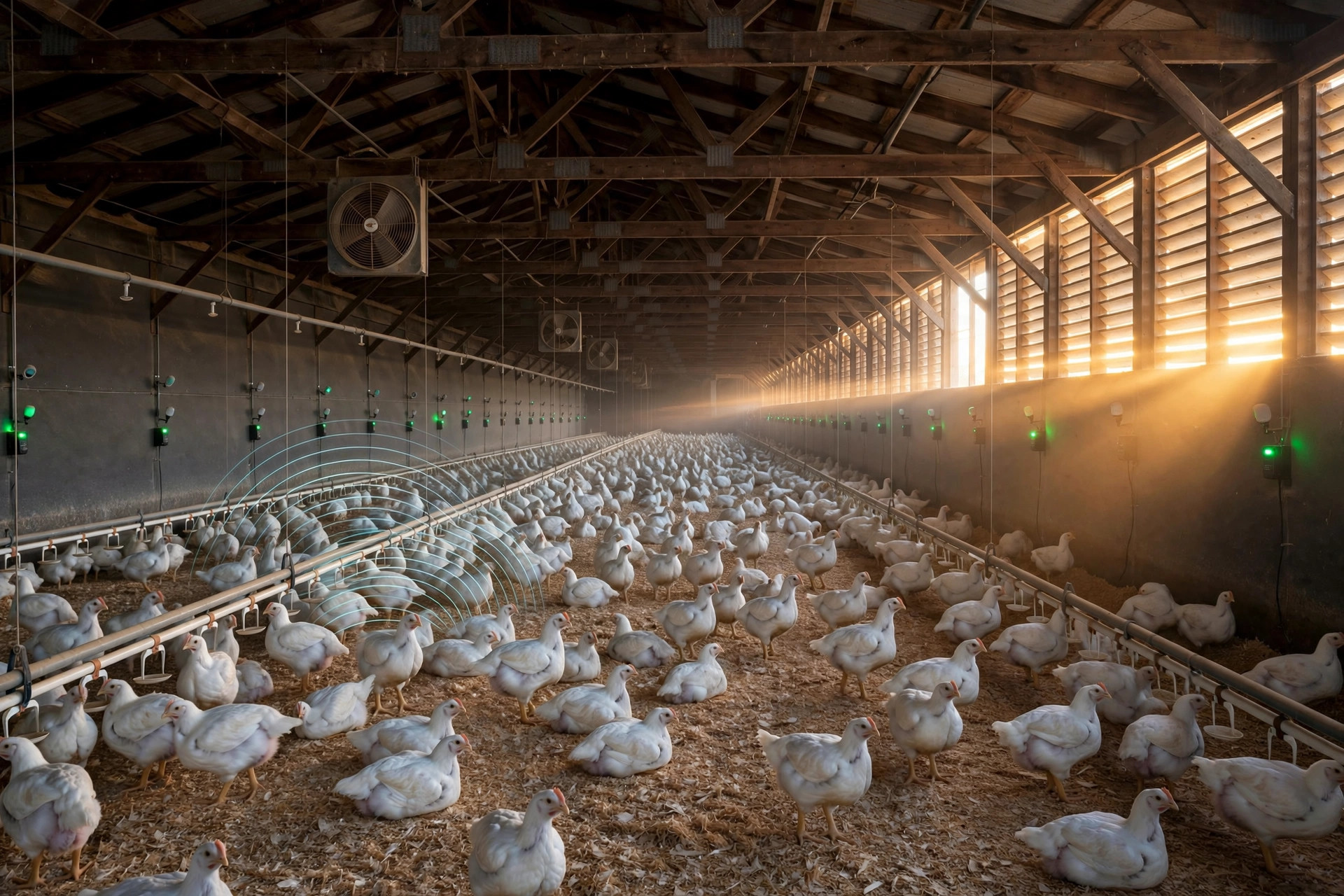
System and Method for Early Detection of Respiratory Disease in Commercial Poultry Flocks Using Distributed Acoustic Monitoring with On-Device Classification
Respiratory vocalizations rise 24-72 hours before mortality spikes: a 7-11 node MEMS microphone array per barn runs an on-device INT8 CNN over log-mel spectrograms to classify coughing, sneezing, rales, and gasping against barn confounders; STA/LTA triggering with ring-buffer replay means no continuous audio is stored. An adaptive 7-day rolling baseline tracks each flock across the grow-out cycle; Bayesian fusion of acoustic scores with ammonia, temperature, humidity, water and feed consumption, and mortality separates infectious patterns from irritant-driven sneezing; zone interpolation plus wired-embodiment TDOA localize the outbreak origin; and a graduated biosecurity response escalates from manager inspection to veterinary sampling to draft regulatory reporting packages, with explicit de-escalation criteria to defeat alert fatigue. 12 claims.
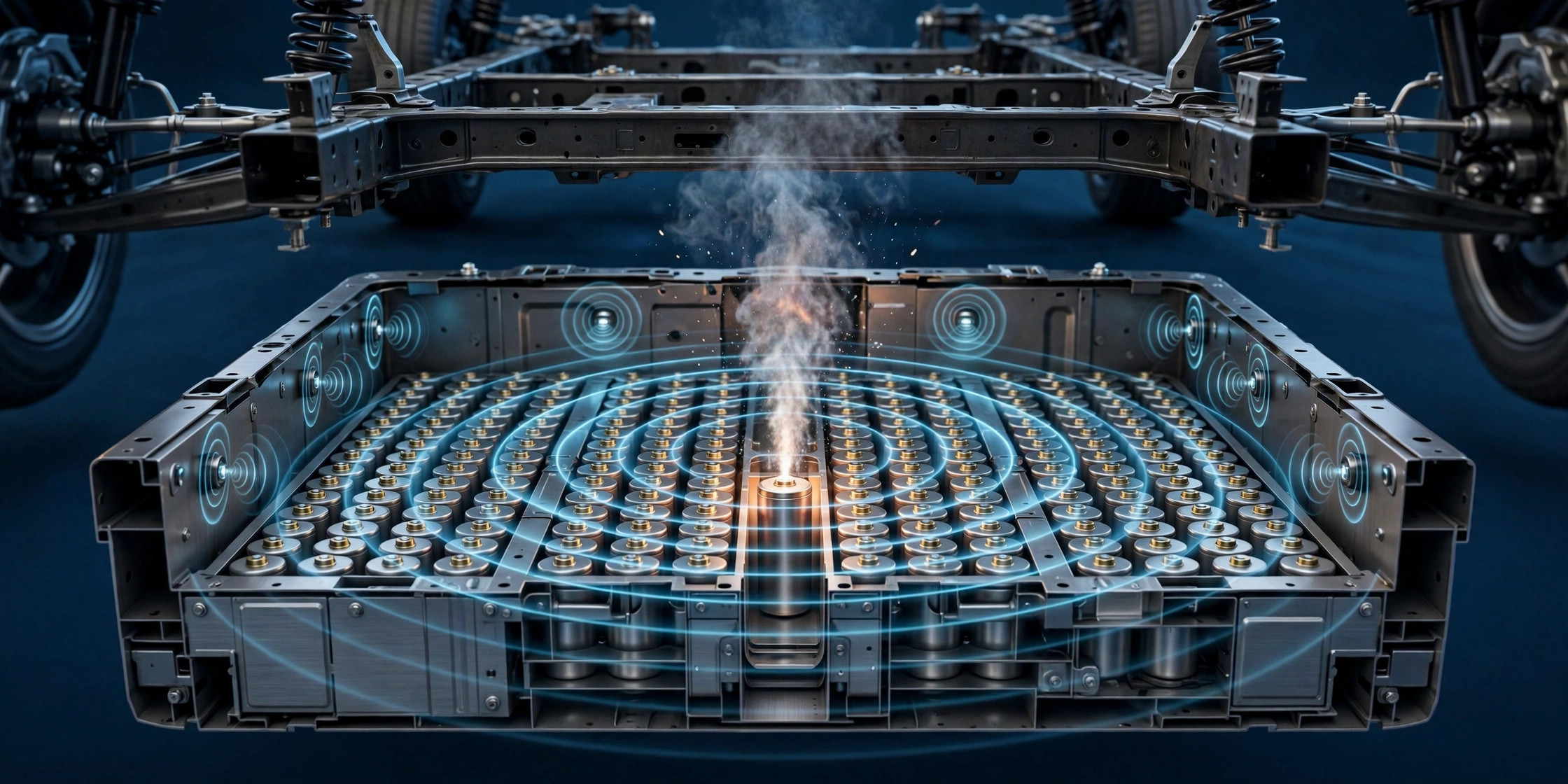
System and Method for Early Detection of Lithium-Ion Battery Cell Venting Using In-Pack Acoustic Sensing Fused with Battery Management Telemetry
Cell venting is the earliest definitive precursor of thermal runaway, and sound crosses a pack in milliseconds while gas sensors wait on diffusion and thermistors wait on heat conduction. A per-module MEMS microphone array feeds an on-device CNN trained on abuse-test vent signatures (rupture transient plus 2-8 kHz gas jet) versus confounders like contactors, potholes, and coolant pumps; STA/LTA triggering with ring-buffer replay bounds compute. Bayesian fusion with BMS voltage-dip and temperature-rise telemetry confirms the event, TDOA localizes the venting module, and a graduated response escalates from driver alert to contactor opening to emergency notification with the module map. Variants cover cabin-microphone retrofit by software update, smartphone charger-side monitoring for e-bike batteries, containerized storage per-rack localization, and a post-crash low-power acoustic watch. 12 claims.
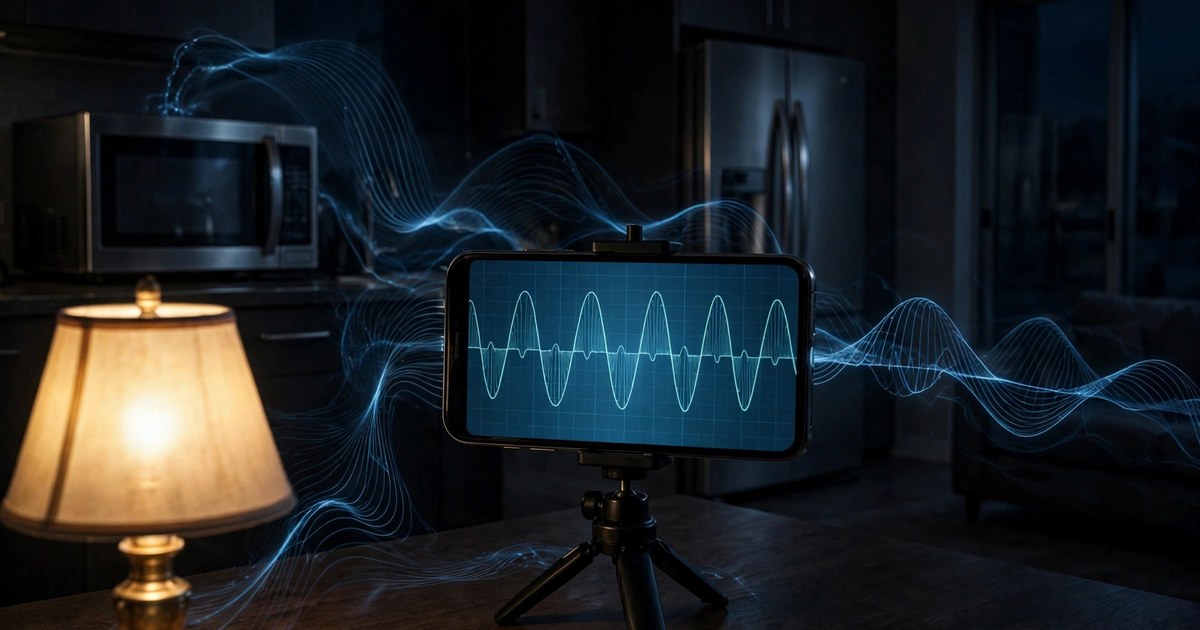
System and Method for Non-Intrusive Appliance Load Disaggregation Using Optical Flicker Signatures Captured by Consumer Camera Devices
No panel access, no plug sensors, no electrician: a consumer camera aimed at an existing lamp recovers the household appliance event stream from the 100/120 Hz flicker envelope, which tracks branch-circuit voltage. Rolling-shutter row-rate luminance at ~32 kHz effective sampling demodulates the flicker; CUSUM change-point detection plus inrush transient replay (dip depth, duration, overshoot) classify appliances against a per-household signature library; split-phase leg comparison identifies 240 V vs 120 V loads; and inrush drift over months becomes a predictive-maintenance signal. 12 claims.
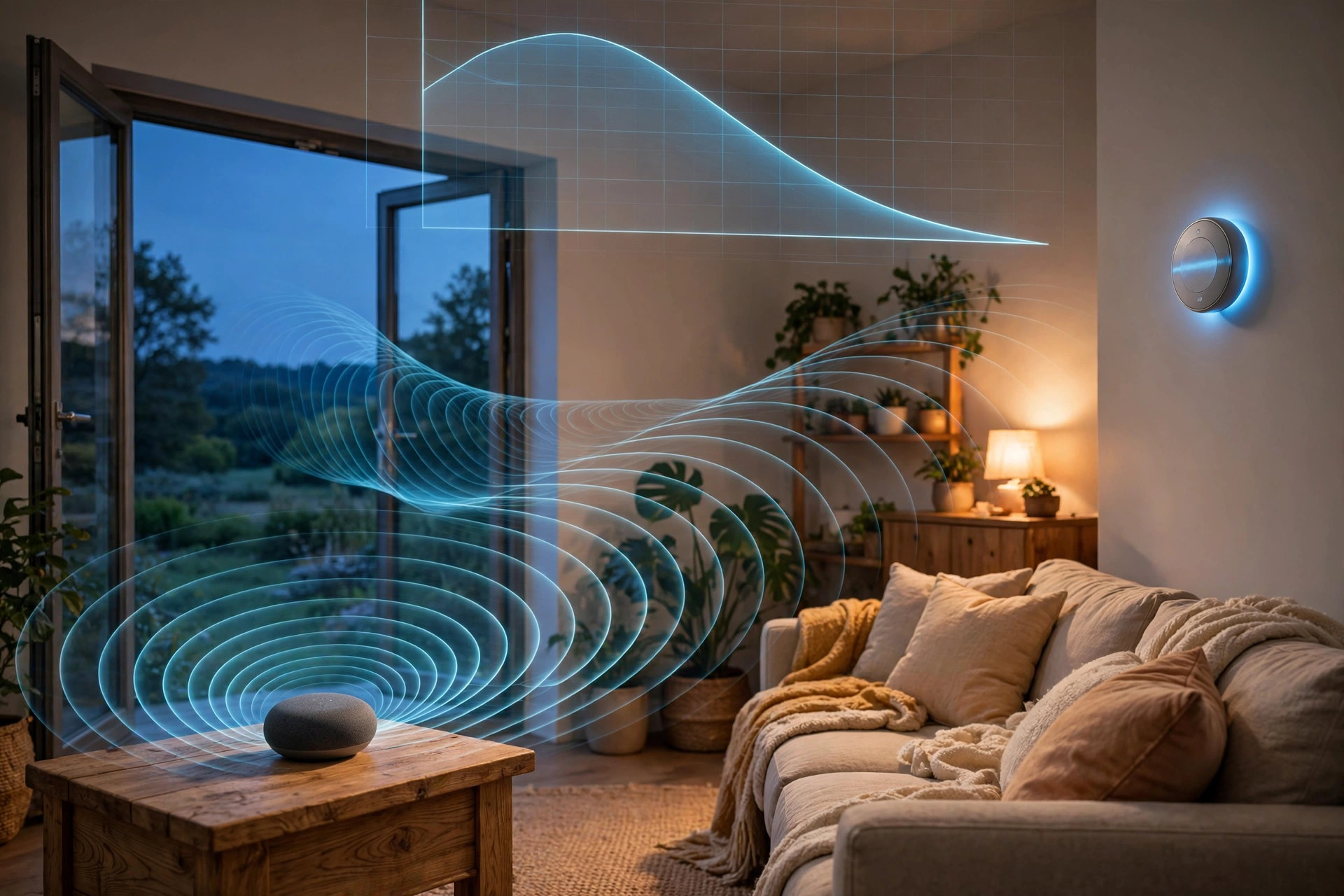
System and Method for Open-Window and Open-Door Detection via Active Acoustic Room-Response Probing on Consumer Smart Speakers with HVAC Energy-Waste Estimation
Smart speakers already contain the hardware for sonar: a loudspeaker and a microphone array. Each speaker periodically emits a short, low-level near-ultrasonic chirp during quiet moments and recovers the room impulse response by deconvolution. An open window or door changes the room's boundary conditions, cutting high-band reverberation time and erasing specific early reflections; an adaptive per-room baseline plus change-point detection flags the event, beamforming classifies window vs. exterior door vs. interior door, multi-speaker corroboration localizes it, and thermostat correlation converts open-envelope conditioning time into kilowatt-hours and dollars for a staged nudge. All processing is on-device; raw audio is discarded immediately. 12 claims.
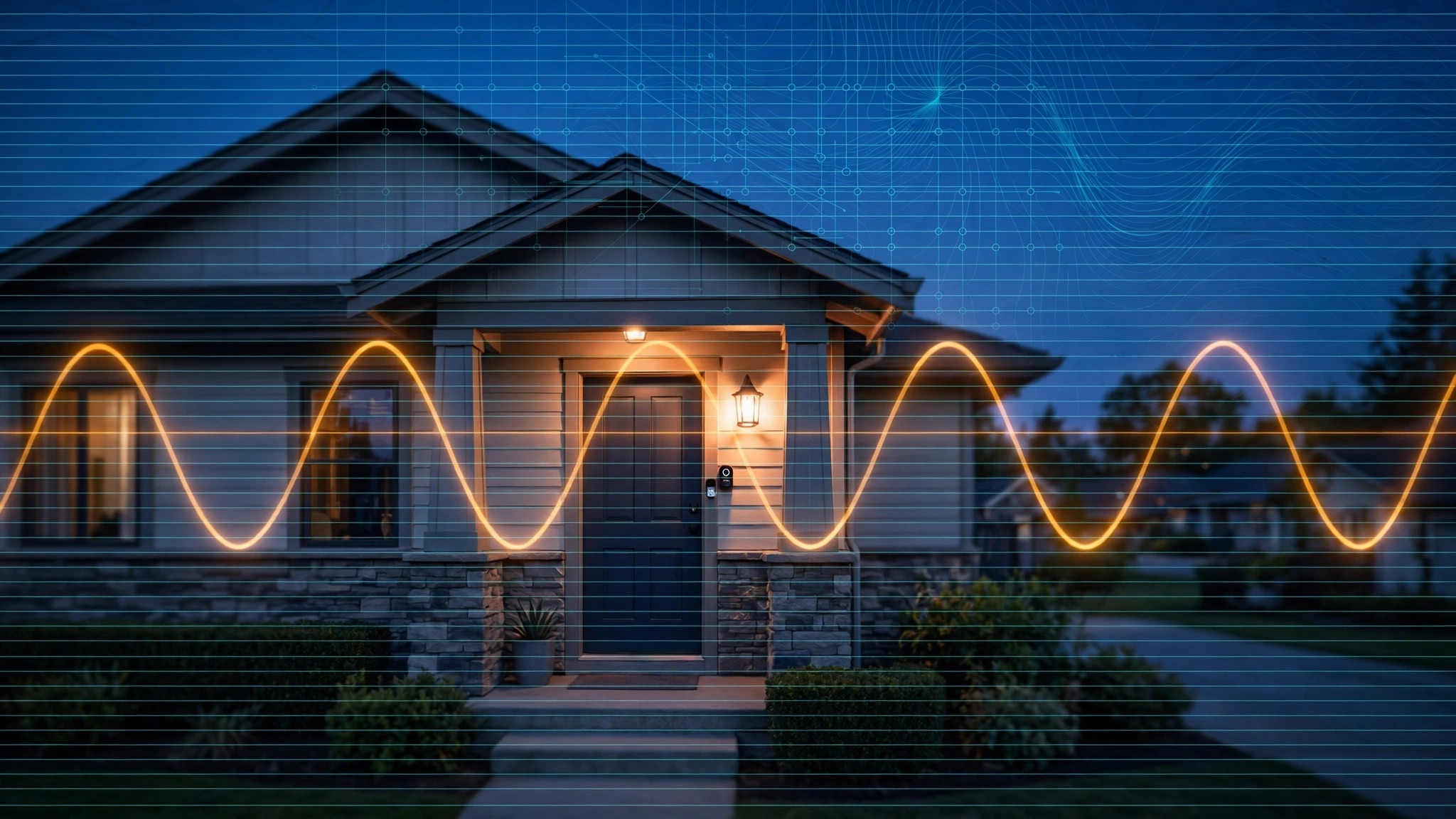
System and Method for Distributed Power Grid Frequency Monitoring Using Rolling-Shutter Flicker Analysis of Artificial Lighting in Crowdsourced Consumer Video Feeds
Mains-driven lamps flicker at twice the grid frequency, and a rolling-shutter sensor samples that flicker at tens of kilohertz within a single frame. On-device extraction turns the installed base of security cameras and video doorbells into a virtual synchrophasor network: per-row luminance time series, auto-calibrated row readout time, modulation-depth gating, interpolated spectral estimation to milli-Hertz precision, and a coordinator that builds live frequency contour maps and detects generator trips and islanding. Only scalar frequency records leave the device; no scene imagery is transmitted. 12 claims.
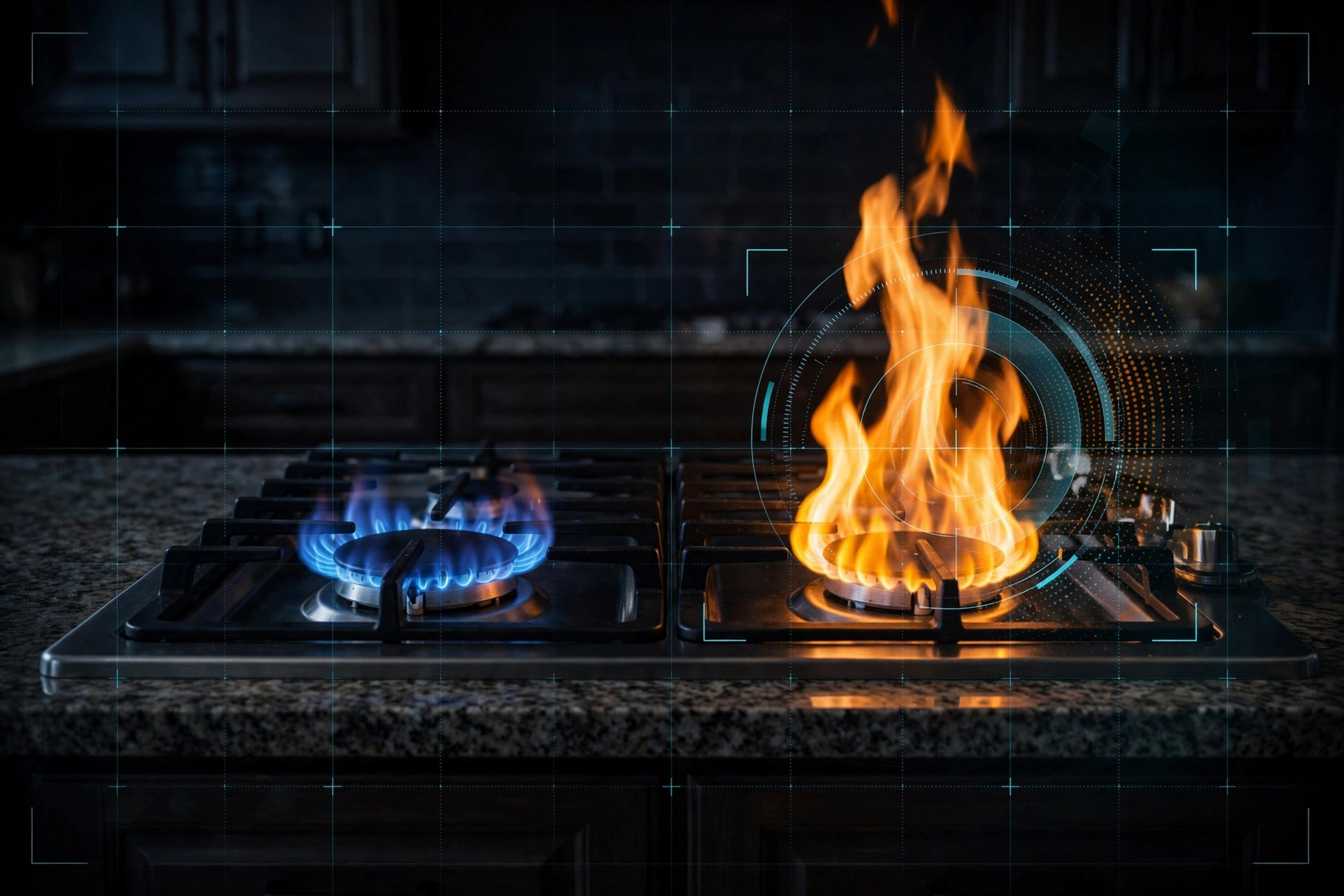
System and Method for Residential Gas Burner Incomplete-Combustion Detection via Flame Chromaticity and Flicker Analysis on Consumer Cameras
An ordinary kitchen camera watches each gas burner and measures the blue-to-yellow chromaticity balance plus flame flicker dynamics on-device. A persistent yellow-tip fraction during steady operation raises a staged per-burner advisory (clogged ports, misaligned cap, air shutter), with white-balance correction via a reference patch, transient sodium-flare rejection, multi-burner attribution, and optional CO-detector corroboration. Automated gas shutoff is explicitly excluded. 12 claims.

System and Method for Wearable-Based Danger Detection with Staged Escalation and Multi-Sensor Confirmation
A wrist-worn system that fuses accelerometer, gyroscope, barometer, microphone, PPG, and GPS to detect overdose, assault/struggle, and gunshots, with staged escalation: on-device classification, a discreet user confirmation window, then an automatic emergency call with location plus emergency-contact notification. The disclosure records the assault base-rate precision problem (roughly one real alarm in 164 at 99% specificity), gates assault dispatch on the confirmation window, requires multi-device corroboration before any gunshot dispatch, and treats the duress PIN as a UI input only. Passive coercion, abduction, and choking detection are explicitly excluded. 12 claims.
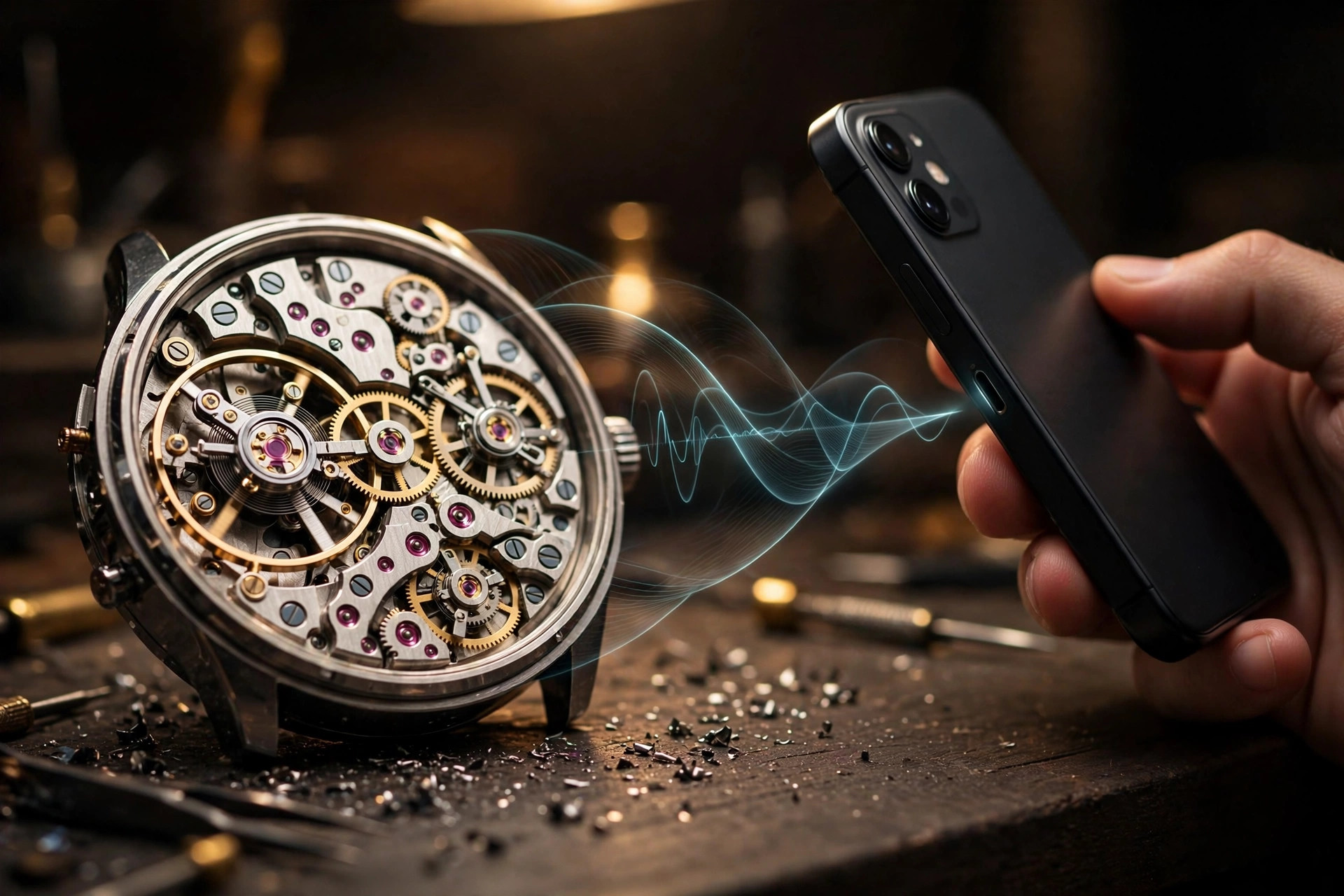
System and Method for Authenticating Mechanical Timepieces Using Smartphone Acoustic Escapement Analysis with Machine-Learned Counterfeit Detection
Every mechanical watch tick is a triplet of escapement transients that encodes the movement's geometry. This disclosure records that acoustic signature with a smartphone, extracts beat rate, beat error, and amplitude, computes a neural spectral fingerprint, and compares both against a crowdsourced, watchmaker-verified reference database keyed by caliber. A positional liveness challenge defeats replay spoofing: the watch is recorded in two orientations, and the orientation-dependent rate shift must match the genuine caliber's positional signature. 12 claims.

System and Method for Volunteer AI-Agent Execution of Verifiable Scientific Micro-Tasks via a Public Task Queue with Hash-Based Claims
A public, permissionless queue of bounded, verifiable scientific micro-tasks that any paid AI subscriber can point their own agent at, no provider permission required. Tasks ship as machine-readable manifests with verification rules; solved tasks are claimed by SHA-256 hash of the canonicalized result and verified by deterministic match, multi-party replication, spot-check against a gold table, or curator review. Verified solvers land in a public leaderboard. Results default to CC0; the framework is open source under MIT. 10 claims.
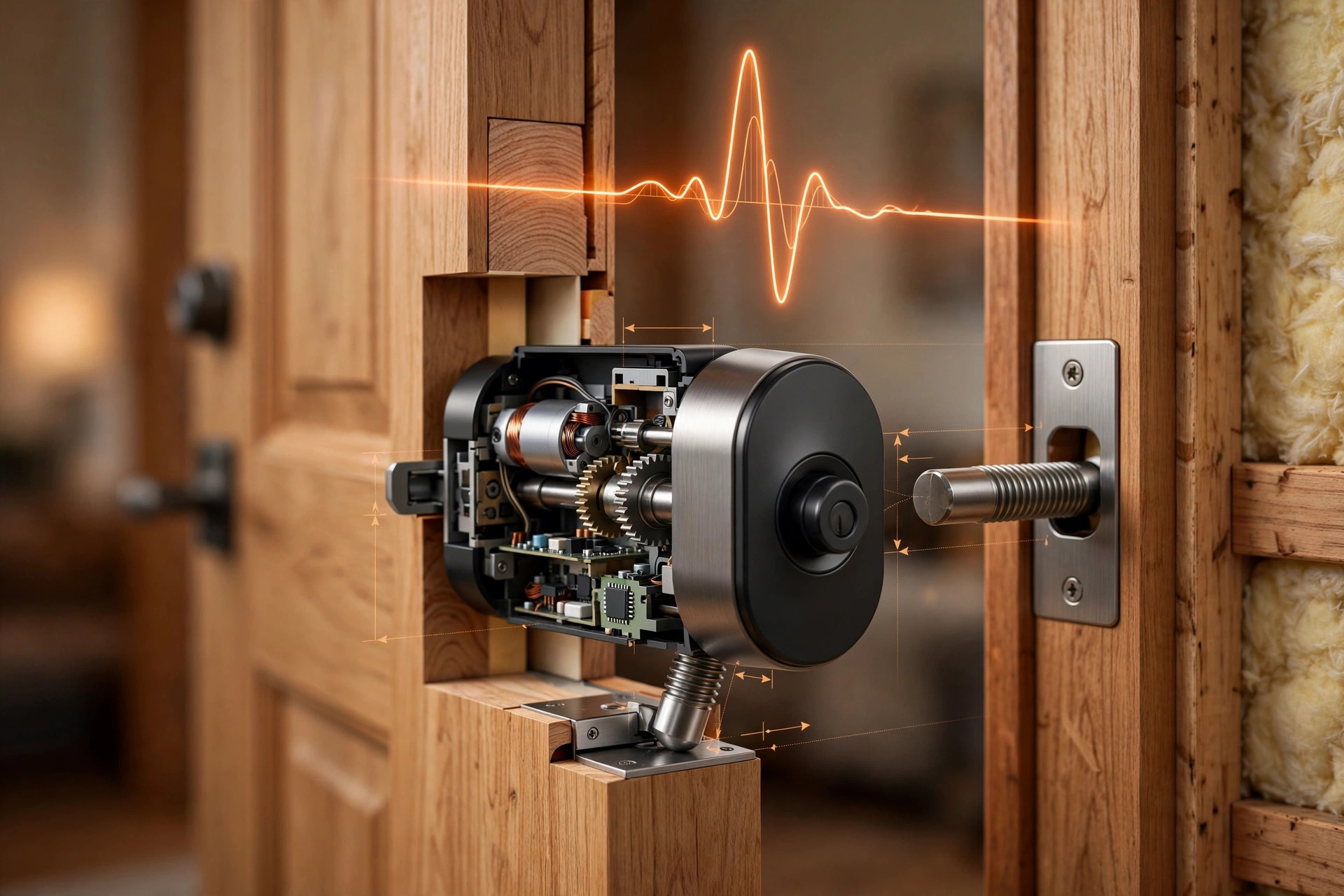
System and Method for Deadbolt Alignment Diagnostics and Predictive Lockout Prevention via Actuator Current Signature Analysis with Seasonal Frame-Movement Compensation
Smart deadbolts report "jammed" only after they fail to throw the bolt, usually at the worst possible moment. This disclosure adds a diagnostic layer that records the actuator motor's current waveform on every lock cycle, builds a per-door mechanical baseline, and splits drift into reversible seasonal frame movement (tracked against outdoor humidity) and progressive misalignment from hinge sag or settling. A position-resolved friction map pinpoints whether the drag is at the strike lip, the bore, or the mechanism, and the app tells the homeowner exactly which way to move the strike plate and by how much, weeks before a lockout. 12 claims.

System and Method for Wood Fence Post Decay Detection Using Ambient Wind-Excited Resonant Frequency Tracking with Networked Inertial Sensors
Wood fence posts rot at the ground line, invisibly, until a windstorm snaps them. This disclosure puts a clip-on inertial tag on each post and turns ordinary wind gusts into a diagnostic signal: each tag extracts the post's first-mode resonant frequency and damping on-device, and a cloud service separates reversible weather effects (soil saturation, wood moisture, temperature) from the monotonic frequency decline of decay. Neighboring posts in the same fence run serve as a built-in control group, rising damping corroborates the decay call, fleet-learned species curves estimate remaining life in months, and NWS gust forecasts trigger pre-storm alerts naming the specific posts at risk. 12 claims.

System and Method for Earthquake Early Warning Using Reverse-Electromechanical Transduction in Networked Smart Speaker Drivers
The voice-coil driver in a smart speaker works in reverse as a vibration sensor: building motion shakes the driver frame while the cone lags on its suspension, generating a measurable voltage. This disclosure turns the installed base of smart speakers into a zero-new-hardware earthquake early warning network. Idle-window sensing and back-EMF extraction during playback feed an on-device classifier that separates P-wave arrivals from door slams, subwoofers, and footfalls; only sub-20 Hz features leave the device. Fleet-level travel-time correlation confirms events, estimates the epicenter, and issues S-wave warnings seconds ahead of destructive shaking. 13 claims.
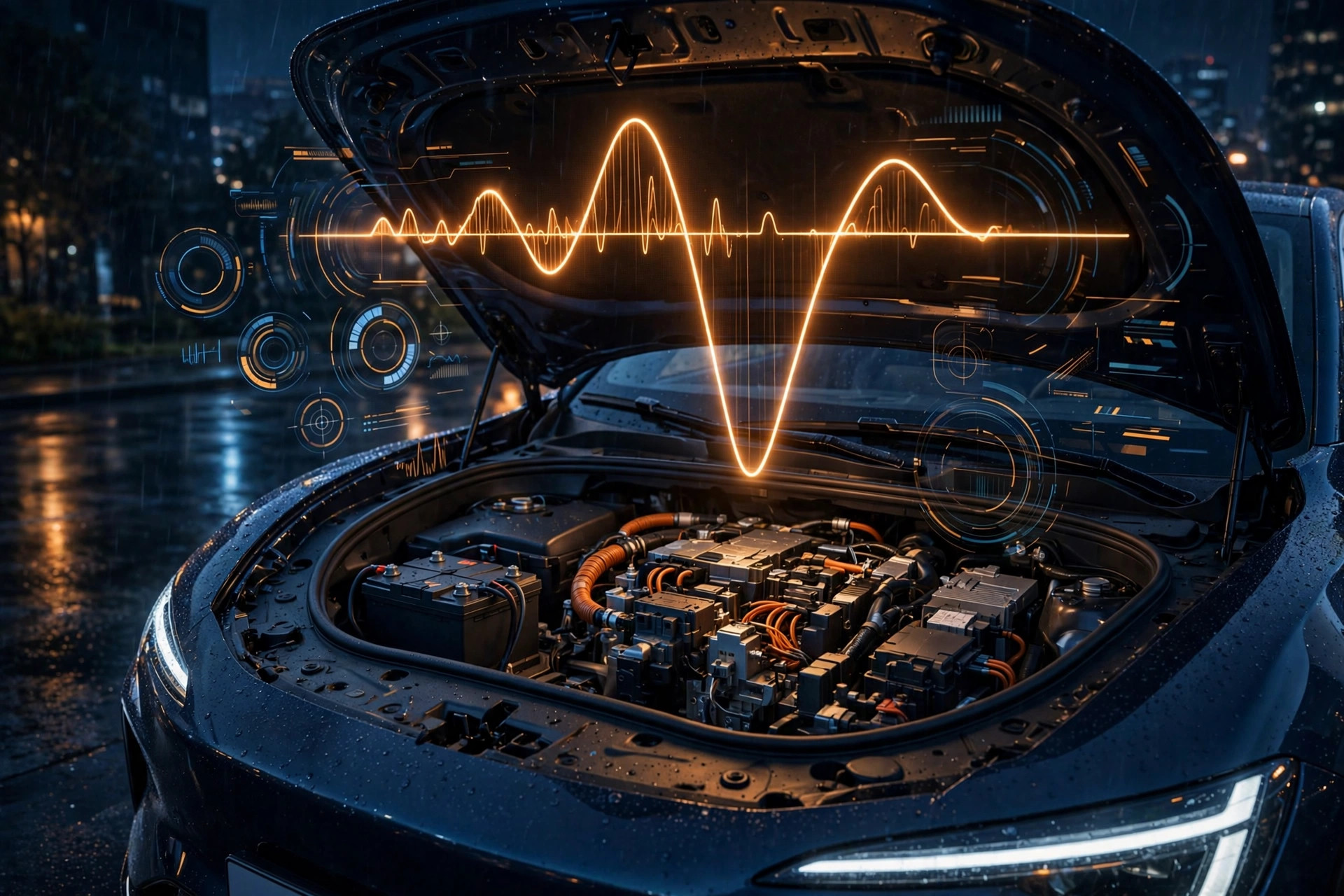
System and Method for Predicting Auxiliary Battery Failure in Electric Vehicles Using DC-DC Converter Telemetry and Quiescent Load Analysis
Electric vehicles still depend on a small 12-volt battery to close the high-voltage contactors, and when it dies the car bricks even with a full traction pack. This disclosure describes an edge diagnostics system that predicts that failure weeks ahead from electric-vehicle-specific signals: voltage sag during contactor-closure inrush (the EV analog of crank voltage, which EVs lack), DC-DC converter charge-acceptance profiling that reveals sulfation, temperature-compensated quiescent voltage decay during sleep, and shortening intervals between automatic DC-DC top-ups during parking. Per-vehicle baselines with changepoint detection drive tiered service alerts, and the fusion distinguishes genuine battery degradation from abnormal parasitic drain. 12 claims.

System and Method for Predicting Lithium-Ion Battery Thermal Runaway in Micromobility Devices Using Charger-Side Charge Curve Analysis Without Battery Management System Cooperation
The batteries that catch fire are overwhelmingly the ones nobody is watching: cheap e-bike packs with no telemetry, charged by dumb bricks that report nothing. This system inserts an in-line sensing module between any unmodified charger and pack, reading only pack-terminal voltage and current, and extracts six families of thermal-runaway precursors from the CC-CV charge waveform: premature CC-to-CV transition at low coulomb-counted state of charge revealing a weak cell group, plug-in resistance steps, charger switching-ripple impedance, post-charge open-circuit-voltage decay flagging dendrite micro-shorts, capacity fade, and thermal deviation. Each pack learns its own baseline over its first five sessions with changepoint detection instead of fixed thresholds, and anonymized fleet data catches bad production batches. Tiered responses run from inspection advisories through an 80% charge cap to automatic charge termination. 12 claims.
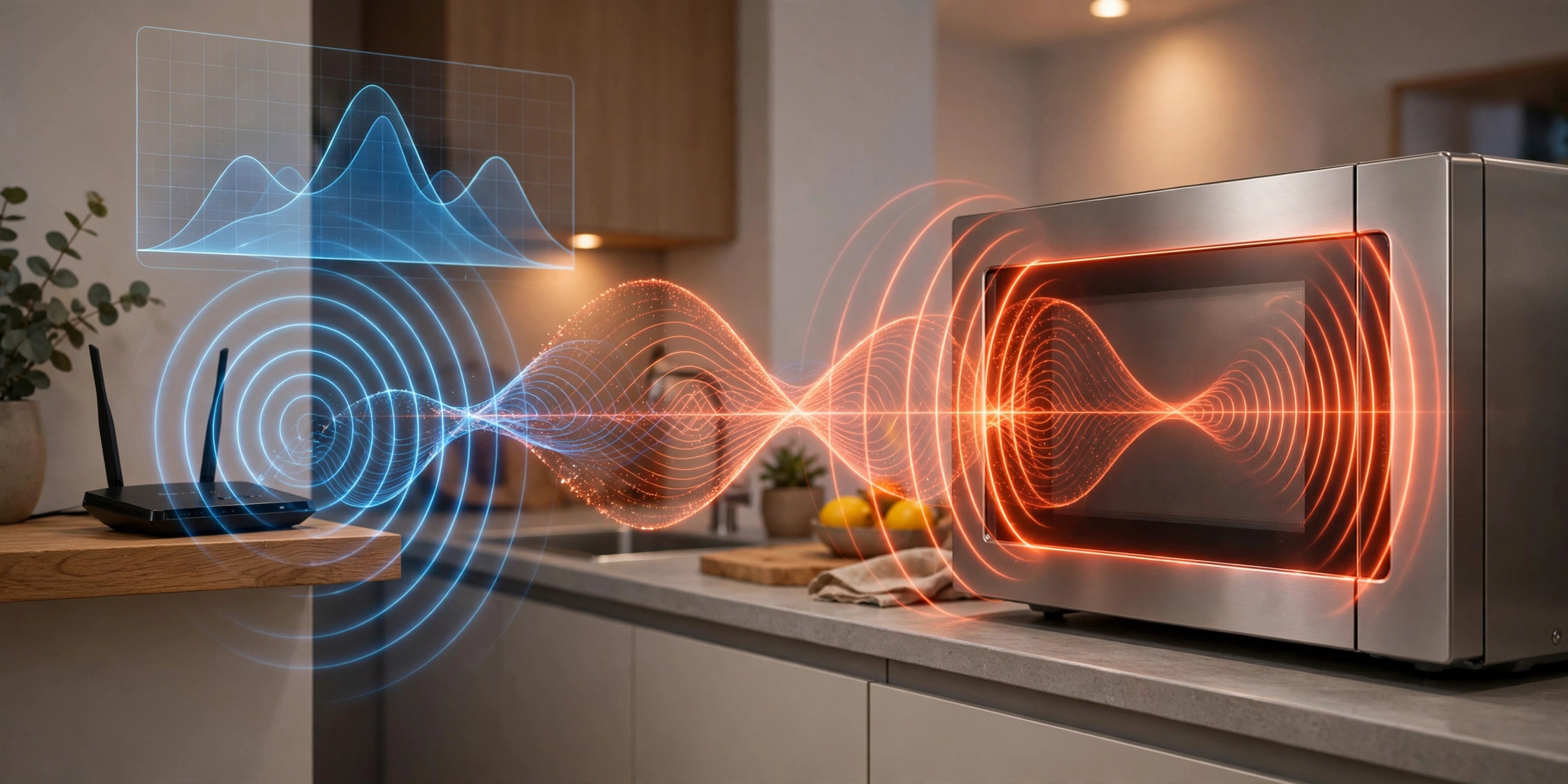
System and Method for Detecting Microwave Oven Radio-Frequency Leakage from Degraded Door Seals Using Ambient WiFi Channel State Information
Your WiFi router already knows your microwave is leaking. A magnetron radiates at 2.45 GHz, inside the 2.4 GHz WiFi band with peak energy on channel 9, and door seals degrade with age while the FDA's recommended annual leakage check is performed almost nowhere. This system samples physical-layer statistics the home's access points already measure (CSI, noise floor, retry counters), attributes interference windows to the oven from the magnetron's duty-cycle envelope, and normalizes by the oven's electrical input power to produce a leakage-per-watt metric that separates door-seal degradation from magnetron aging. Differential measurements across two or more nodes localize the source to the kitchen and reject neighbors' ovens; a 30-day installation baseline plus a guided calibration cook anchor the Seal Degradation Index, with advisory alerts at a threefold rise and action alerts referenced to the 5 mW/cm² lifetime limit of 21 CFR 1030.10 via a calibrated path-loss model. Continuous, zero-added-hardware seal monitoring from infrastructure the home already owns. 11 claims.
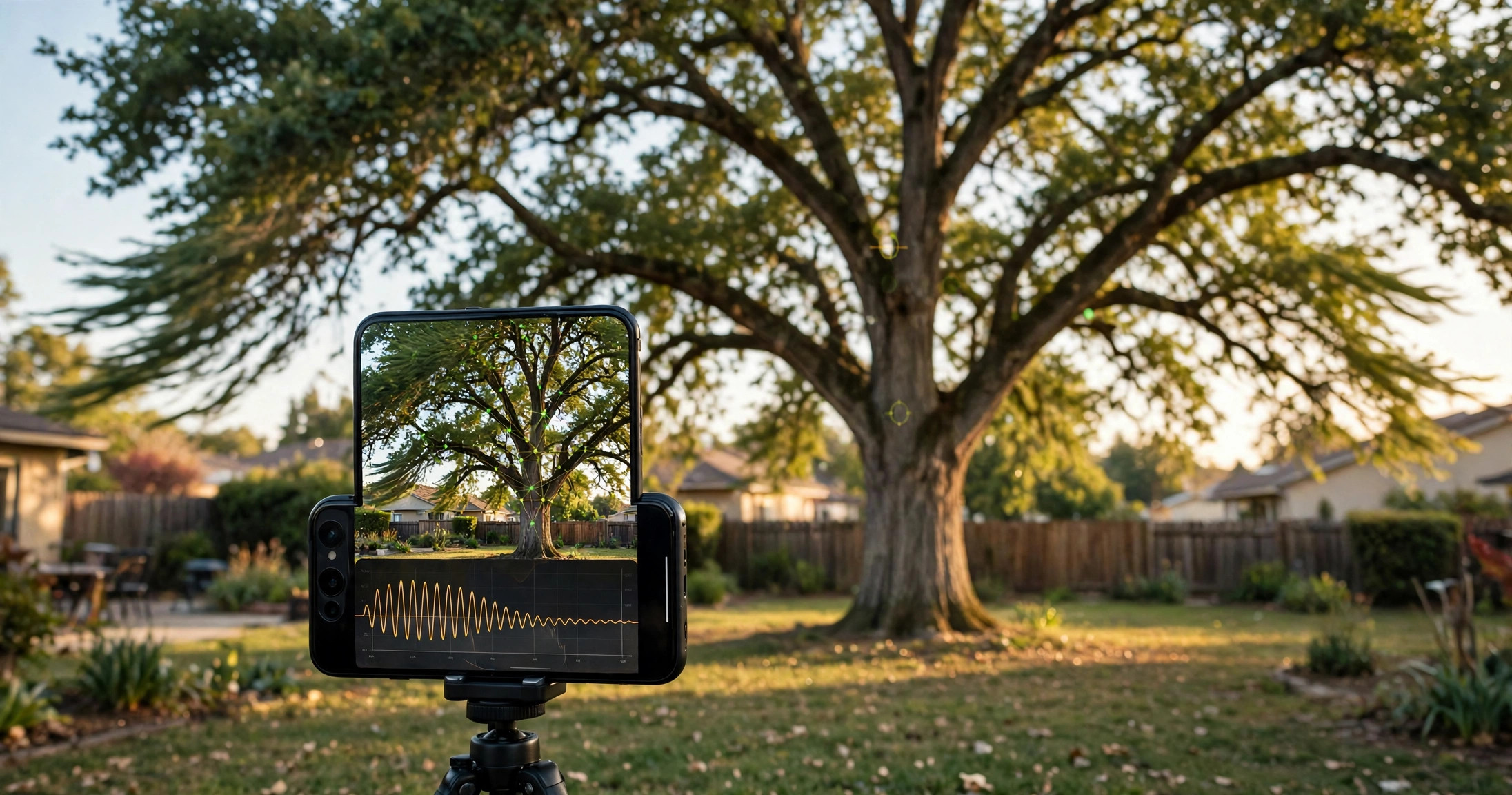
System and Method for Estimating Tree Windthrow Failure Risk from Smartphone Video-Derived Sway Dynamics
Your phone can tell which tree is likely to fall in the next storm. A smartphone on a tripod records high-frame-rate video of a tree in wind, or during a guided pull-and-release free-decay test in calm air, extracting sub-pixel trunk and crown displacement with camera-shake correction from static background features. System identification yields the first-mode natural frequency and damping ratio: a measured frequency 20% below the species-size expectation means roughly 36% of bending stiffness is gone. Local wind fused with video-segmented crown sail area gives the gust overturning moment, and species-specific failure envelopes for stem breakage and uprooting convert measured stiffness into a critical wind speed. The margin to the design-storm gust becomes a failure probability, weighted by target consequence into triage bands: monitor, inspect, mitigate. Seasonal re-measurement catches stiffness drift before visible symptoms, with leaf-state and soil-moisture corrections so spring leaf-out never reads as stiffness gain. Post-storm outcomes recalibrate the envelopes through Bayesian updating, so the system improves with each storm. 11 claims.
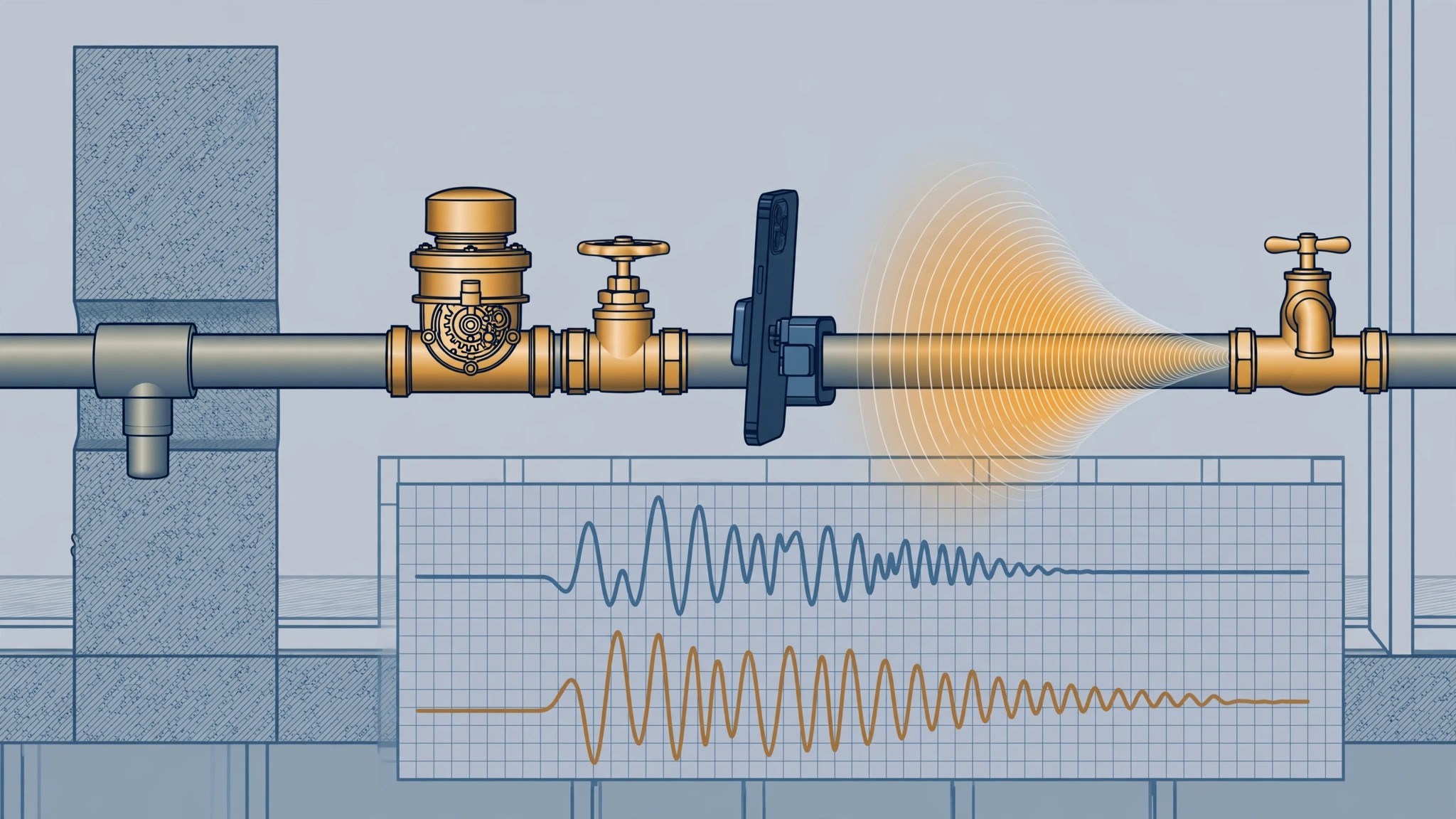
System and Method for Identifying Lead Water Service Lines Using Water-Hammer Transient Analysis with Consumer Mobile Devices and Records Fusion
An estimated 9.2 million American homes are served by lead water service lines, and federal rules require utilities to inventory and replace them, yet identification is still a subjective scratch-and-tap test or thousand-dollar excavation. This system turns the plumbing's own water hammer into the test signal: the user presses a smartphone against the exposed service pipe and closes a faucet abruptly, and the app records the pressure transient's ring-down. Lead's low elastic modulus (about 16 GPa versus 117 for copper and 200 for steel) slows the wave per the Korteweg relation, and its high internal damping kills the ring-down far faster than copper or steel, which ring with metallic sustain. Reflection timing off the curb stop separates the buried service line's signature from interior copper plumbing, and a Bayesian fusion with build-year, utility inventory, and neighborhood priors produces a per-address lead probability score with triage bands: high scores schedule replacement, medium scores get professional inspection, low scores clear the excavation backlog. Aggregated with consent, the scores build block-level lead maps so utilities replace contiguous high-probability blocks together. 11 claims.
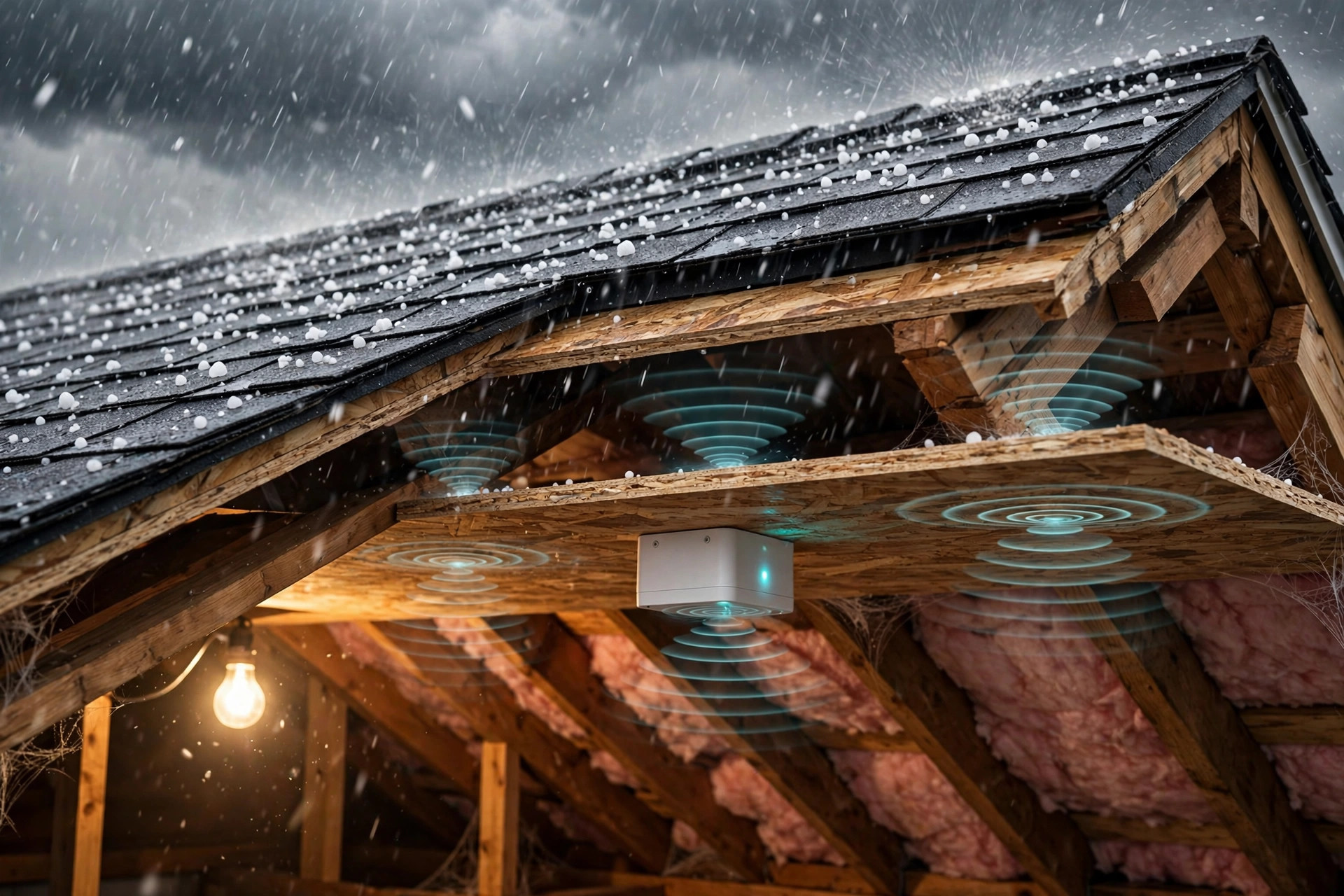
System and Method for Per-Address Hail Damage Severity Assessment of Roofing Assemblies Using Attic-Mounted Acoustic Impact Sensing with Material Fragility Fusion
Hail causes roughly half of the $25 billion in average annual U.S. severe thunderstorm insured losses, yet damage assessment is still a manual roof inspection weeks after the storm, disputed between cosmetic and functional damage. This system mounts acoustic and vibration sensors inside the attic on the underside of the roof deck, measuring each hailstorm as experienced by the actual roof assembly with no exterior work. An edge classifier isolates hailstone impacts from rain, debris, footsteps, and aircraft; per-impact kinetic energies are inverted into a hailstone size distribution via terminal-velocity scaling calibrated by an installation tap test. The distribution is fused with a roof-specific fragility model covering material and UL 2218 class, age-based weathering derate, deck construction, slope, and shingle temperature at impact, since cold asphalt embrittles and fractures at lower energies. The per-storm Roof Damage Severity Score ships within hours with confidence intervals, and a multi-home network produces address-resolution hail swath maps that verify per-property exposure for fraud-resistant claim triage and parametric insurance triggers. 12 claims.
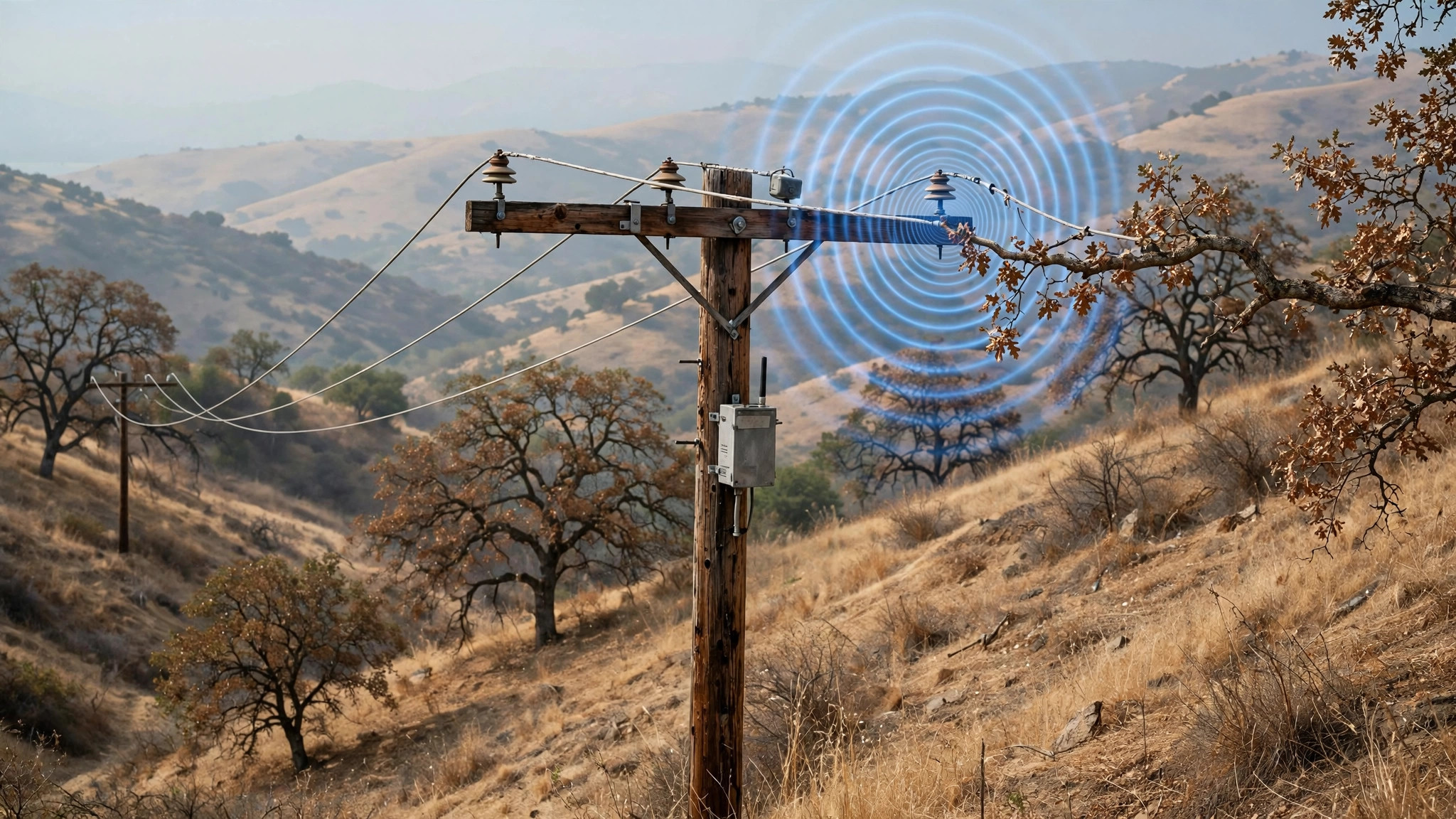
System and Method for Pre-Ignition Detection of Vegetation-Contact Faults on Overhead Distribution Lines Using Pole-Mounted Radio-Frequency Partial Discharge Sensing and Edge Classification
Vegetation touching an energized conductor is a high-impedance fault that draws 1 to 100 amps, below normal load current, so conventional overcurrent protection misses 30 to 50 percent of these events, the fault type most likely to ignite wildfires. Power line equipment has started at least 419 California wildfires since 2000, including the Camp Fire, which killed 85 people after PG&E lines contacted dry vegetation. This system closes the pre-ignition detection gap with passive RF sensor nodes banded to distribution poles, no outage required for installation. Each node listens in the 30 MHz to 1 GHz band for the broadband emissions of partial discharge at the vegetation contact point, where field distortion exceeds the breakdown threshold. An edge classifier distinguishes vegetation-contact discharge from corona, insulator contamination, switching transients, and lightning using the 120 Hz arc re-ignition modulation synchronized to the power line cycle, pulse rise time, spectral centroid, and burst persistence. GPS-disciplined arrival timestamps from adjacent poles feed a time-difference-of-arrival localizer that places the contact within a span to plus or minus 10 meters. A risk fusion module combines the detection with fire weather, fuel moisture, wind, LiDAR clearance records, and feeder loading into a pre-ignition risk score that trips the lateral or blocks reclosing within 5 seconds of contact onset, the window research shows prevents most such fires. At under $120 per node in parts, full coverage of a utility's highest-risk poles costs roughly one-tenth of per-span dedicated line sensors. 10 claims.
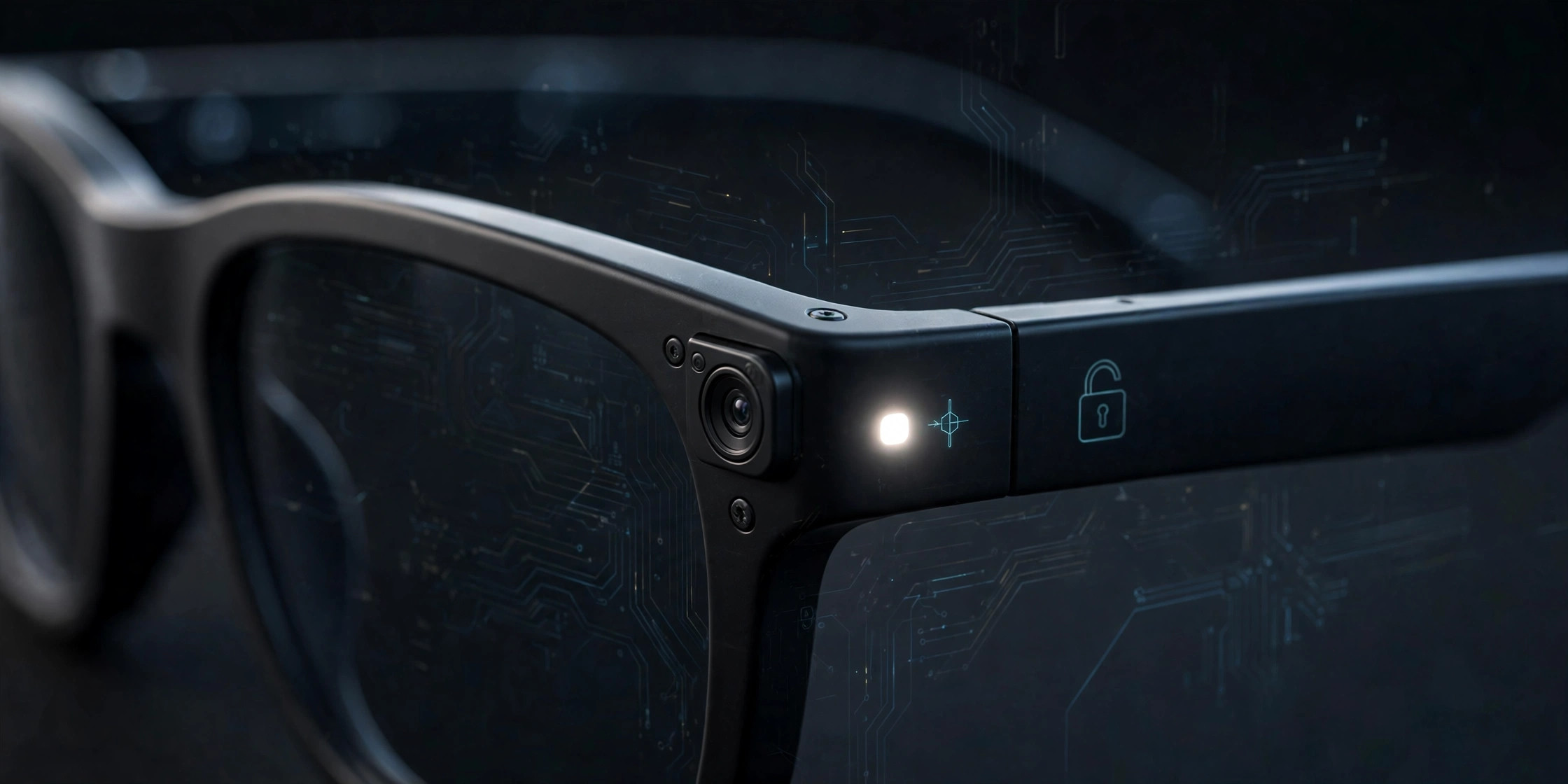
System and Method for Tamper-Evident Recording Indication in Camera-Enabled Wearable Devices Using Closed-Loop Optical Feedback and Cryptographic Attestation
Camera glasses live or die by their recording LED: a small white light that is supposed to tell bystanders when capture is happening, and that modders defeat with stickers, paint, desoldering, and dimming hacks. Manufacturer countermeasures sense ambient light at the device surface, which independent testing showed can be fooled by coverings that admit ambient light inward while blocking emission outward. This system closes the loop inside the enclosure instead. A light-pipe tap diverts a fraction of the LED's own emission to an internal photodiode, compared against measured drive current to catch disconnection, dimming, and emitter substitution; a second photodiode measures optical backscatter at the exit aperture to detect external covering; the LED carries a spread-spectrum modulation pattern the loop correlates against to reject injected light. A secure controller hardware-gates the camera sensor's power and clock on loop confirmation, rechecks 10 times per second during recording, and cuts capture within 100 ms of a fault. Every session ends with a signed attestation manifest binding the per-frame indicator timeline to frame hashes as a content-provenance assertion, so upload platforms can verify the indicator was active for every frame. 10 claims.
More entries load as you scroll.
About Publication and Prior Art
Publishing technical material online may create evidence relevant to a later patent analysis. It does not automatically make the material dispositive prior art or establish the date from which it can be used. Under 35 U.S.C. § 102, the analysis turns on the claimed invention, its effective filing date, and whether earlier material was sufficiently available to the public. For Internet material, public accessibility and the date of public posting depend on the evidence and surrounding facts.
A reference relied on for anticipation must describe the claimed invention and provide an enabling disclosure to a person of ordinary skill in the art, although non-enabling material may still be relevant to other patentability questions. Source-control history can help document versions, but a commit, SHA, or displayed timestamp does not by itself guarantee a legally effective publication date, public accessibility, permanence, or provenance. See MPEP § 2121 and MPEP § 2128.
CC0 addresses copyright and related rights in a work; it does not waive patent or trademark rights or clear third-party rights. Publication here does not establish novelty, patentability, invalidity of any claim, freedom to operate, or public-domain status.
This is general information, not legal advice. Consult qualified counsel about a specific disclosure, patent, or planned implementation.