📜 Defensive Prior Art
Technical disclosures for proposed systems, published online with dated revision history so readers can examine the disclosed material and how it changed over time.
These pages describe proposed technical systems; many are unbuilt. Whether any page qualifies as prior art, and what it discloses, depends on the facts, including public accessibility, timing, and the disclosure’s content. Publication does not establish novelty, patentability, freedom to operate, or public-domain status. This is general information, not legal advice. Source history on GitHub →
Explore disclosures
169–192 of 237 entries
System and Method for Dynamic Task Decomposition and AI-Human Hybrid Routing in Expert Service Marketplaces
Disclosed is a system and method for dynamically decomposing expert service requests into AI-automatable and human-required subtasks within a marketplace platform. The system employs a task decomposition engine that analyzes incoming service requests using a fine-tuned large language model to identify discrete work units, classify each unit's au...

System and Method for Coordinated Residential Battery Storage Arbitrage and Virtual Power Plant Grid Services via Predictive Load-Price Optimization
Disclosed is a system and method for coordinating residential battery storage arrays as a virtual power plant (VPP) that performs real-time energy arbitrage and ancillary grid services. The system predicts individual household load profiles using a recurrent neural network trained on smart meter data, forecasts wholesale electricity prices using...

System and Method for Adaptive Desirable Difficulty Calibration in AI-Powered Tutoring Using Real-Time Struggle Metrics and Spaced Retrieval Scheduling
Disclosed is a system and method for dynamically calibrating the difficulty of AI-generated tutoring interactions to maximize long-term knowledge retention using principles from cognitive science. Unlike conventional AI tutoring systems that optimize for session-level performance (maximizing correct answers and engagement time), the disclosed sy...

System and Method for Continuous Federated Fine-Tuning of Enterprise Language Models with Differential Privacy, Secure Aggregation, and Sovereignty Scoring
Disclosed is a system and method for continuous federated fine-tuning of enterprise large language models (LLMs) that captures organizational context from heterogeneous internal data sources — including email archives, document repositories, Slack workspaces, and meeting transcripts — without centralizing sensitive data on any single server or t...
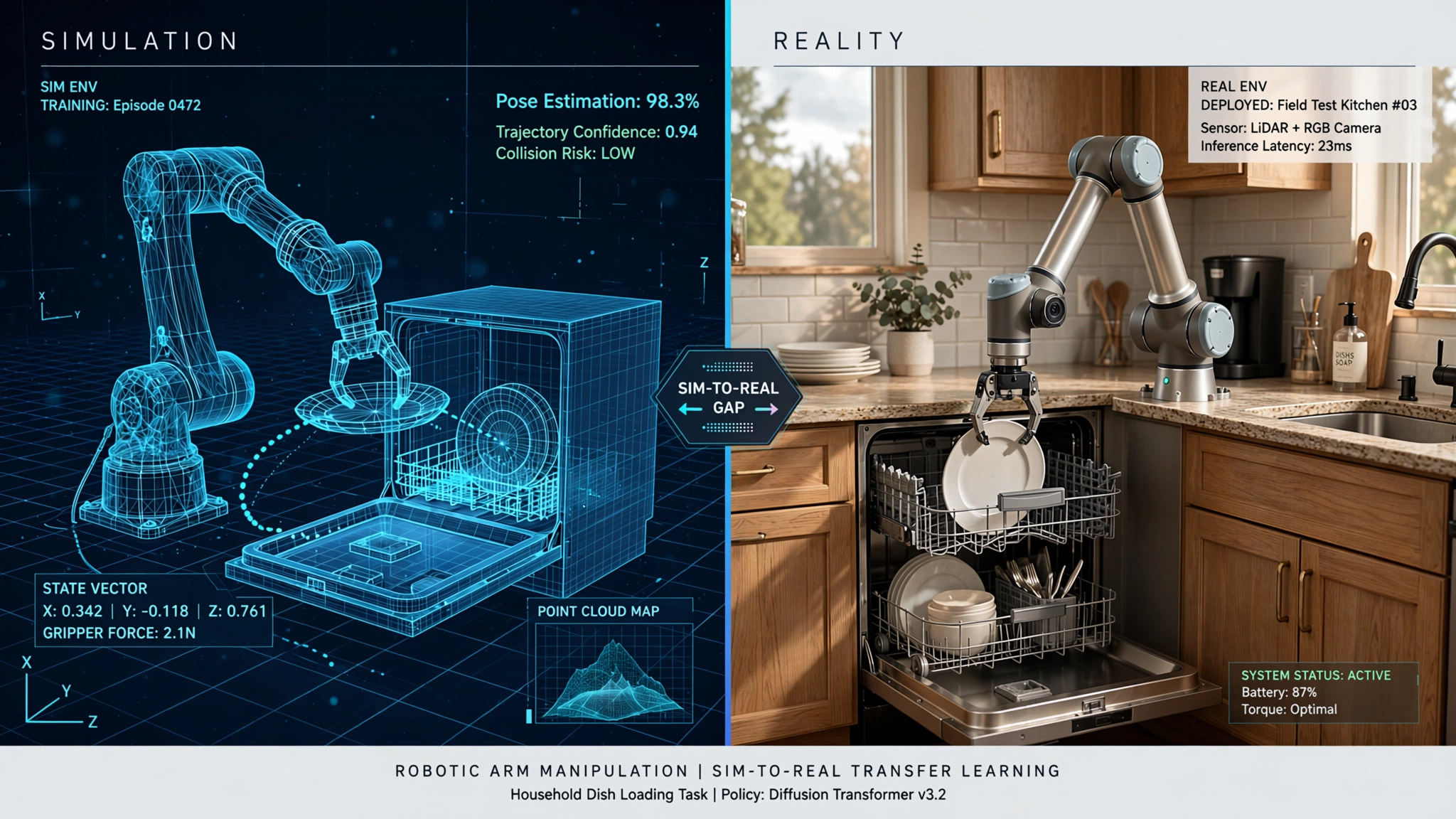
System and Method for Sim-to-Real Transfer of Household Object Manipulation Policies Using Procedural Domain Randomization with Learned Reality Gap Estimation
Disclosed is a system and method for training robotic manipulation policies on household objects using a procedurally generated simulation environment that models realistic physical properties of common kitchen and domestic items. The system employs domain randomization across object geometry, surface friction, mass distribution, deformability, ...

Open Standard for Portable Personal AI Context Encoding, Export, and Cross-Platform Import with Trust-Scored Memory Integration
Disclosed is an open standard and reference implementation for encoding, exporting, and importing personal AI context — including conversation history, learned preferences, behavioral patterns, and knowledge graphs — between AI assistants from different providers. The standard defines a portable AI Memory File format (.aim) with versioned schema...

System and Method for Continuous Multi-Sensor Health Risk Scoring Using Consumer Wearable and At-Home Diagnostic Device Fusion with Clinician-Interpretable Biomarker Attribution
Disclosed is a system for continuous health risk assessment that fuses data from consumer wearable sensors (photoplethysmography, accelerometer, skin temperature, SpO2), at-home diagnostic devices (blood pressure cuffs, continuous glucose monitors, smart scales with bioimpedance), and patient-reported outcomes into unified risk scores for acute ...

Protocol and Runtime System for Dynamic AI Inference Orchestration Across Heterogeneous Edge Devices with Context Handoff and Per-Device Privacy Enforcement
Disclosed is a protocol and runtime system for orchestrating AI inference across heterogeneous edge devices — smartphones, smart speakers, AR glasses, laptops, smart home hubs, and IoT devices — connected within a local network. The system dynamically partitions neural network computation across available Neural Processing Units (NPUs) based on ...

System and Method for Meaning-Metric Instrumentation and Optimization in Digital Community Platforms Using Validated Psychological Scales and Behavioral Signal Processing
Disclosed is a measurement and recommendation system for digital community platforms that optimizes for participant meaning and purpose rather than engagement. The system instruments user interactions with adapted versions of validated psychological scales — the Purpose in Life Test (PIL), Meaning in Life Questionnaire (MLQ), and Ikigai-9 scale ...
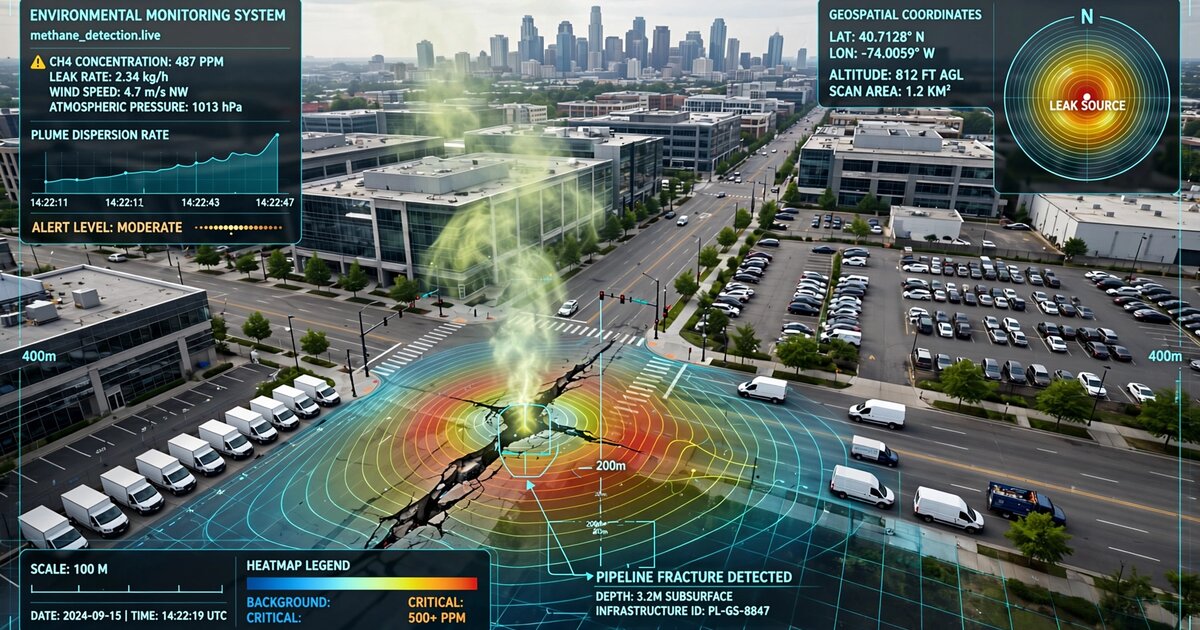
System and Method for Distributed Atmospheric Methane Source Localization and Quantification Using Fleet Vehicle Cabin Air Quality Sensor Networks and Inverse Gaussian Plume Dispersion Modeling
A system that repurposes metal-oxide semiconductor gas sensors already embedded in modern vehicle HVAC cabin air quality systems as a distributed atmospheric methane detection network. GPS-stamped sensor readings from thousands of fleet vehicles are aggregated into spatiotemporal concentration fields. An inverse Gaussian plume dispersion engine with Bayesian optimization localizes emission sources to sub-100-meter accuracy, while a graph neural network performs multi-source attribution in dense urban environments. Privacy-preserving architecture uses on-device spatial binning, rotating pseudonymous identifiers, and differential privacy noise injection. Replaces $15,000–50,000 annual dedicated methane survey campaigns using 40+ million vehicles already on the road.

System and Method for Crowd-Sourced Ground-Level Wind Speed and Direction Estimation Using Wearable Inertial Measurement Unit Gait Perturbation Analysis with Biomechanical Transfer Function Inversion
A system that estimates ground-level wind speed and direction at 10–50 meter resolution by analyzing biomechanical gait perturbations from consumer wearable IMUs. Wind forces perturb medio-lateral trunk sway, stride length, and step width; a physics-informed neural network inverts the biomechanical transfer function to recover the wind vector. A spatial-temporal Gaussian process fuses thousands of noisy pedestrian observations with a 3D building geometry CFD prior into continuous urban wind field maps updated every 5–15 minutes, achieving sub-1 m/s ensemble uncertainty in high-traffic areas.

System and Method for Signal-Responsive Adaptive Performance Gummy with Multi-Compartment Micro-Dose Array, Physiological Feedback Dosing, and Safety Interlock Architecture
A single daily edible gummy whose active ingredient composition is dynamically determined each day by a Bayesian optimization engine that fuses real-time physiological signals (HRV, sleep architecture, continuous glucose, resting heart rate) with contextual cognitive demand from calendar analysis. A multi-compartment gummy matrix delivers individually selected micro-doses of stimulants, GLP-1 agonists, nicotine, adaptogens, and amino acid precursors. Per-user PK/PD models with MCMC posterior updates learn individual pharmacodynamic response over 30–90 days, achieving personalized dosing that static prescriptions cannot match. Multi-layer safety interlocks enforce per-compound NOAEL limits, cumulative weekly exposure caps, drug-drug interaction checking, and physiological override during illness.
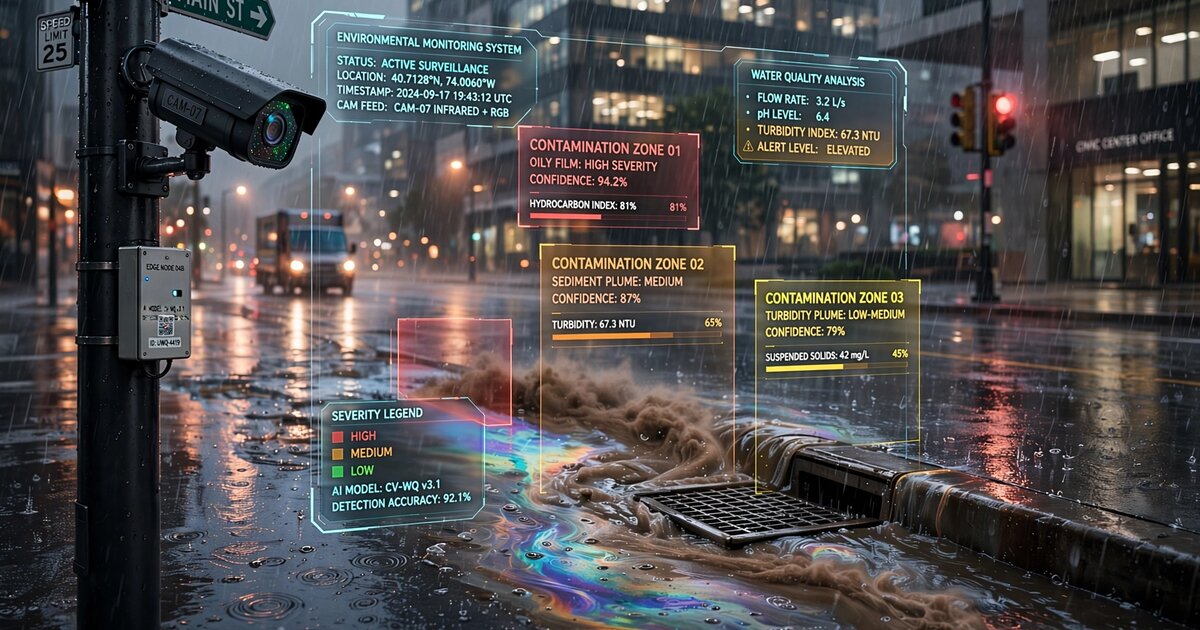
System and Method for Real-Time Urban Stormwater Runoff Contamination Estimation Using Computer Vision Analysis of Storm Drain Discharge Appearance from Municipal Camera Networks with Edge-Deployed Turbidity and Sheen Classification
A system that estimates stormwater runoff contamination in real time by applying computer vision to existing municipal surveillance camera feeds during rain events. Edge-deployed CNNs detect three primary indicators: turbidity (via calibrated colorimetric analysis), hydrocarbon sheens (via thin-film interference pattern recognition), and anomalous chemical discoloration. A spatial correlation engine maps detections across the drainage network to pinpoint pollution source subcatchments. Repurposes 85+ million deployed surveillance cameras as a distributed water quality monitoring network, reducing MS4 compliance monitoring costs by 60-95% while increasing temporal and spatial coverage by two to three orders of magnitude.
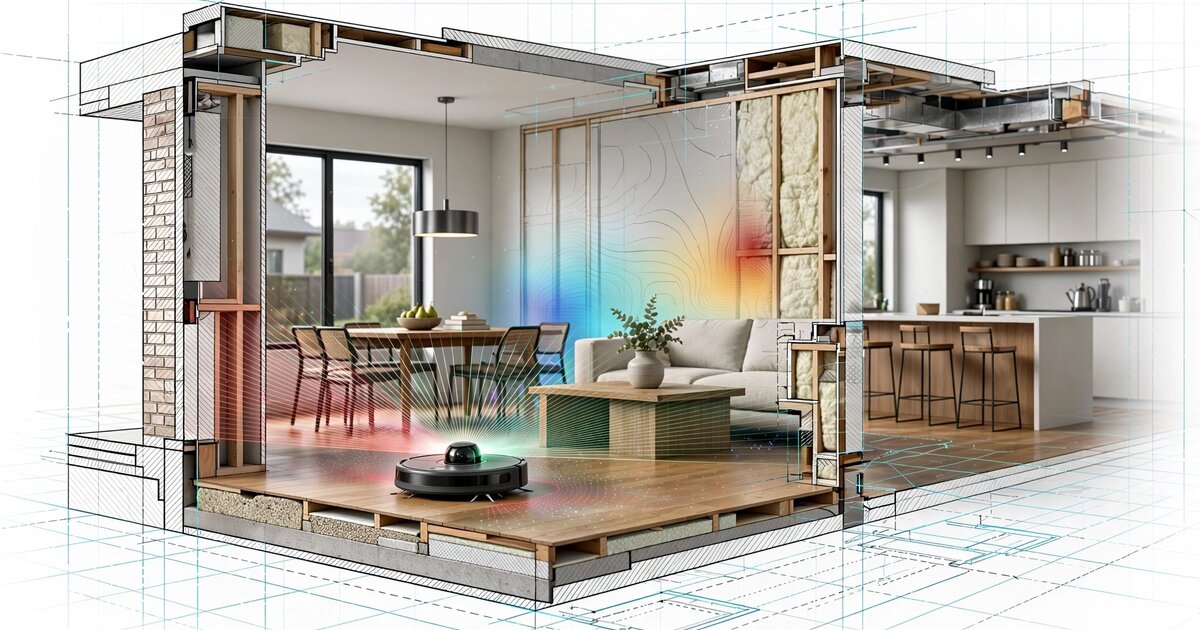
System and Method for Continuous Residential Structural Deformation Monitoring Using Temporal Differencing of Consumer Robot Vacuum LiDAR SLAM Maps with Edge-Deployed Change-Point Detection
A system that detects foundation settlement, floor warping, and wall displacement in residential buildings by computing temporal differences between sequential LiDAR SLAM maps generated by consumer robot vacuums during routine cleaning. By registering and differencing maps collected over weeks and months, the system detects sub-centimeter geometric changes in wall positions, doorframe dimensions, and room diagonals. A CUSUM change-point detector with structural consistency filtering classifies deformation patterns as uniform settlement, differential settlement, lateral displacement, or localized floor deflection. Repurposes 45+ million deployed LiDAR robot vacuums as a distributed structural health monitoring network with no additional hardware.

System and Method for Real-Time Elevator Mechanical Health Assessment Using Crowdsourced Smartphone Barometric Pressure Profile Analysis and Fleet-Level Statistical Anomaly Detection
A system that detects elevator mechanical degradation by analyzing barometric pressure profiles from passengers' smartphones during ordinary rides. Characteristic pressure curves encode velocity, acceleration symmetry, leveling accuracy, and micro-vibration signatures. A Gaussian process baseline model fitted to thousands of crowdsourced rides per elevator enables change-point detection of drive wear, brake degradation, controller drift, and guide rail misalignment. Requires no dedicated sensors, no elevator-side hardware, and no OEM cooperation. Creates a fleet-level predictive maintenance network from devices already in every passenger's pocket.

System and Method for Real-Time Inference and Continuous Tracking of Electrical Distribution Grid Topology Using Voltage Phase Angle Correlation Across Consumer Distributed Energy Resource Inverters
A system exploiting IEEE 1547-2018-compliant consumer solar and battery inverters as distributed phasor measurement units to infer and continuously track electrical distribution grid topology changes. Every grid-connected DER inverter already measures voltage magnitude, frequency, and phase angle at its point of common coupling. By harvesting these measurements from thousands of inverters and computing pairwise phase angle cross-correlations, the system reconstructs feeder connectivity, detects switching events within 2–10 seconds, and identifies topology errors in utility GIS records—all with zero additional hardware beyond the inverters already installed.
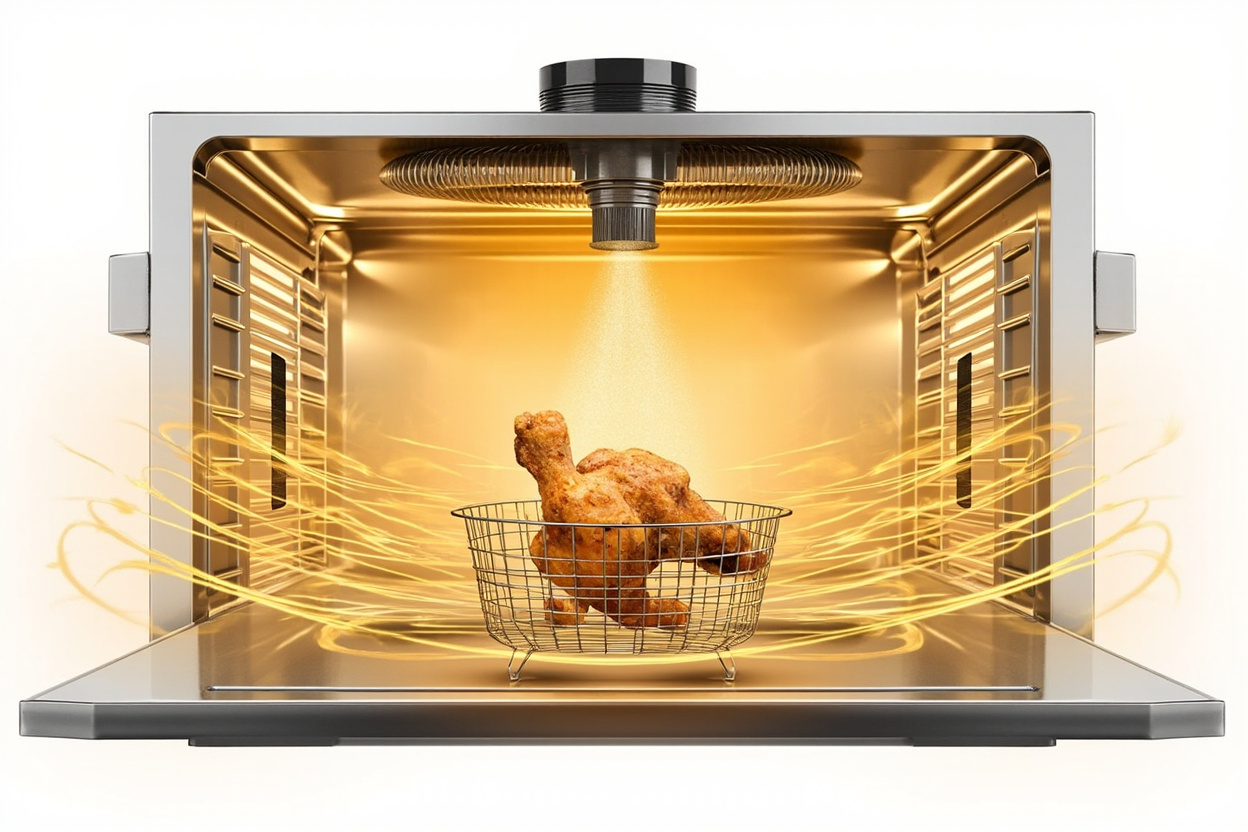
System and Method for Low-Oil Countertop Cooking via Atomized Oil Misting Combined with Forced Convection Heating for Crust Formation in Crust-Critical Foods
A countertop cooking appliance that combines high-velocity forced convection at 180-230°C with continuous atomized oil misting of a high-smoke-point oil onto the food surface, producing deep-fried texture and color using 1-2 tablespoons (15-30 mL) of oil per cook cycle instead of the 1.4-1.9 L required by submergence deep fryers. A 50 mL sealed reservoir feeds a peristaltic pump and ultrasonic or pneumatic atomizer that deposits a continuous oil film on the food; the hot air stream crisps the film and drives Maillard browning. Reduces oil absorption to 1-5% by weight (vs. 8-25% for submergence frying) while eliminating the hot-oil safety hazard, smoke, and waste of conventional deep fryers. Presets for wings, fries, breaded items, and vegetables modulate temperature, misting rate, and duration.
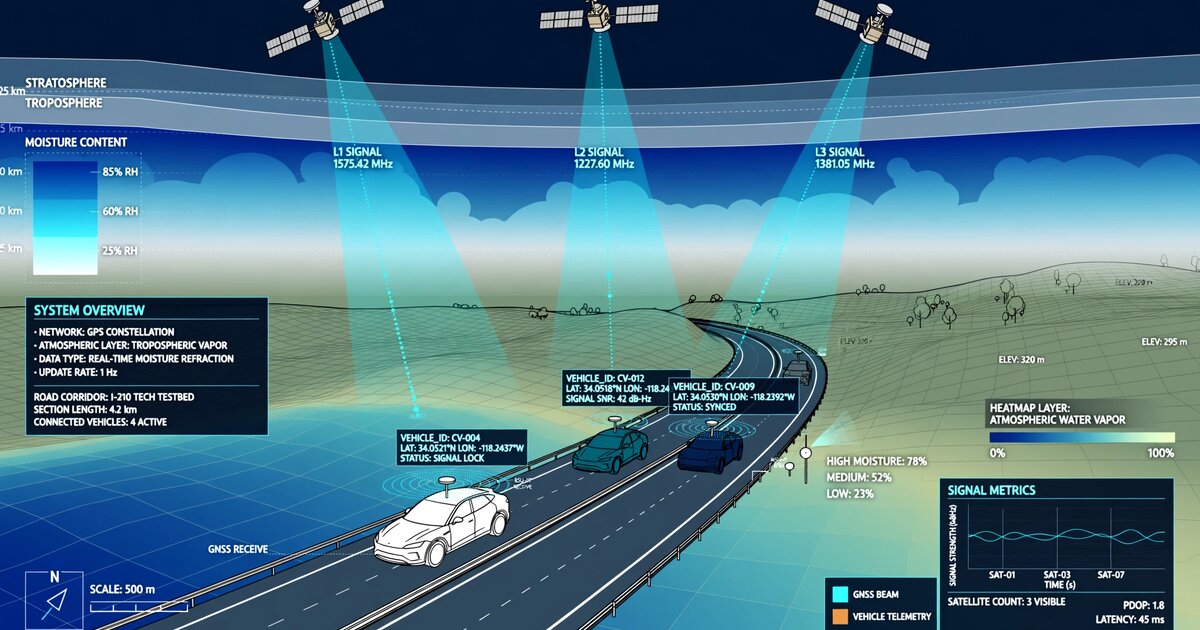
System and Method for Real-Time Tropospheric Water Vapor Mapping Using GNSS Pseudorange Residual and Signal-to-Noise Ratio Analysis from Connected Vehicle Fleet Receivers with Federated Spatiotemporal Inference
A system that maps atmospheric water vapor in real time by analyzing GNSS pseudorange residuals and signal-to-noise ratio patterns from the navigation receivers already embedded in connected vehicles. Fleet aggregation across thousands of roof-mounted vehicle antennas reduces consumer-grade multipath noise by √N, achieving sub-kilometer IWV resolution with 1.8 kg/m² RMSE against radiosonde truth. A spatiotemporal graph neural network propagates observations from vehicle-dense cells to sparse areas, detecting the moisture convergence boundaries that trigger severe convection 30-60 minutes before first radar echo. Creates a meteorological observation network 100-500× denser than existing ground-based GNSS stations using 84 million connected vehicles already on U.S. roads.
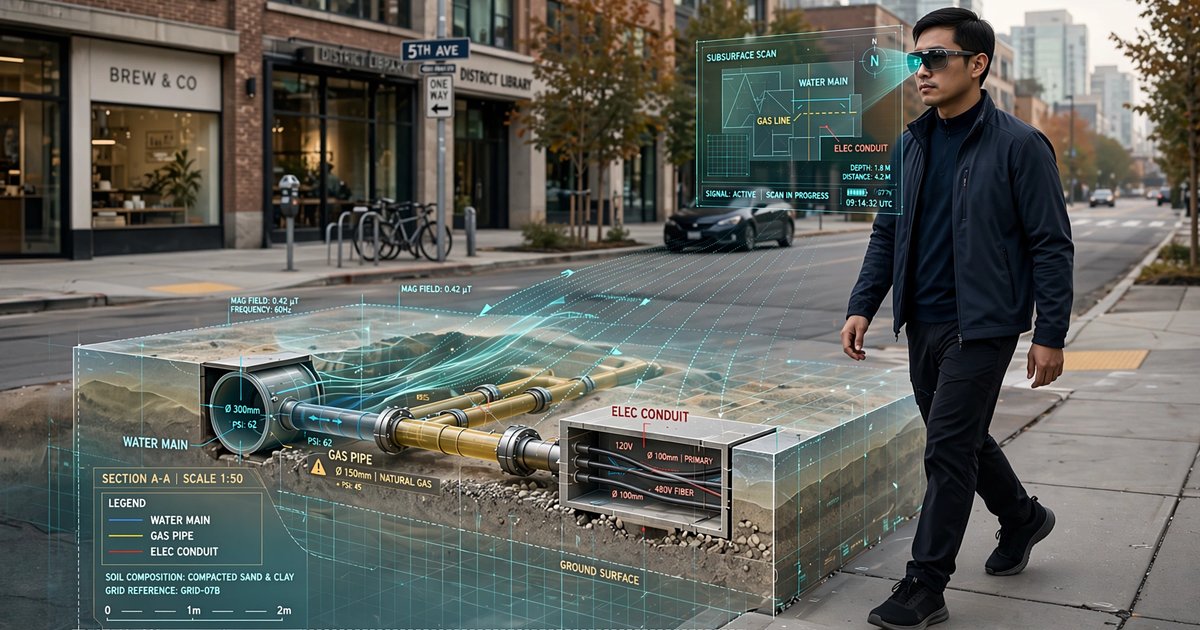
System and Method for Automated Subsurface Utility Infrastructure Mapping Using Pedestrian Smart Glasses Magnetometer Anomaly Detection with Computer Vision Surface Feature Correlation and Fleet-Aggregated Graph-Based Spatial Inference
A system that creates continuously-updated underground utility maps by fusing magnetometer anomaly signatures and computer vision surface feature detection from consumer smart glasses worn by ordinary pedestrians. Fleet aggregation across thousands of traversals pushes consumer MEMS magnetometer sensitivity from ~5 μT to ~0.15 μT, approaching professional survey grade. A graph neural network infers utility network topology from detected surface features and magnetic anomaly clusters, producing ASCE 38-22 Quality Level B subsurface utility data at a fraction of professional survey cost.
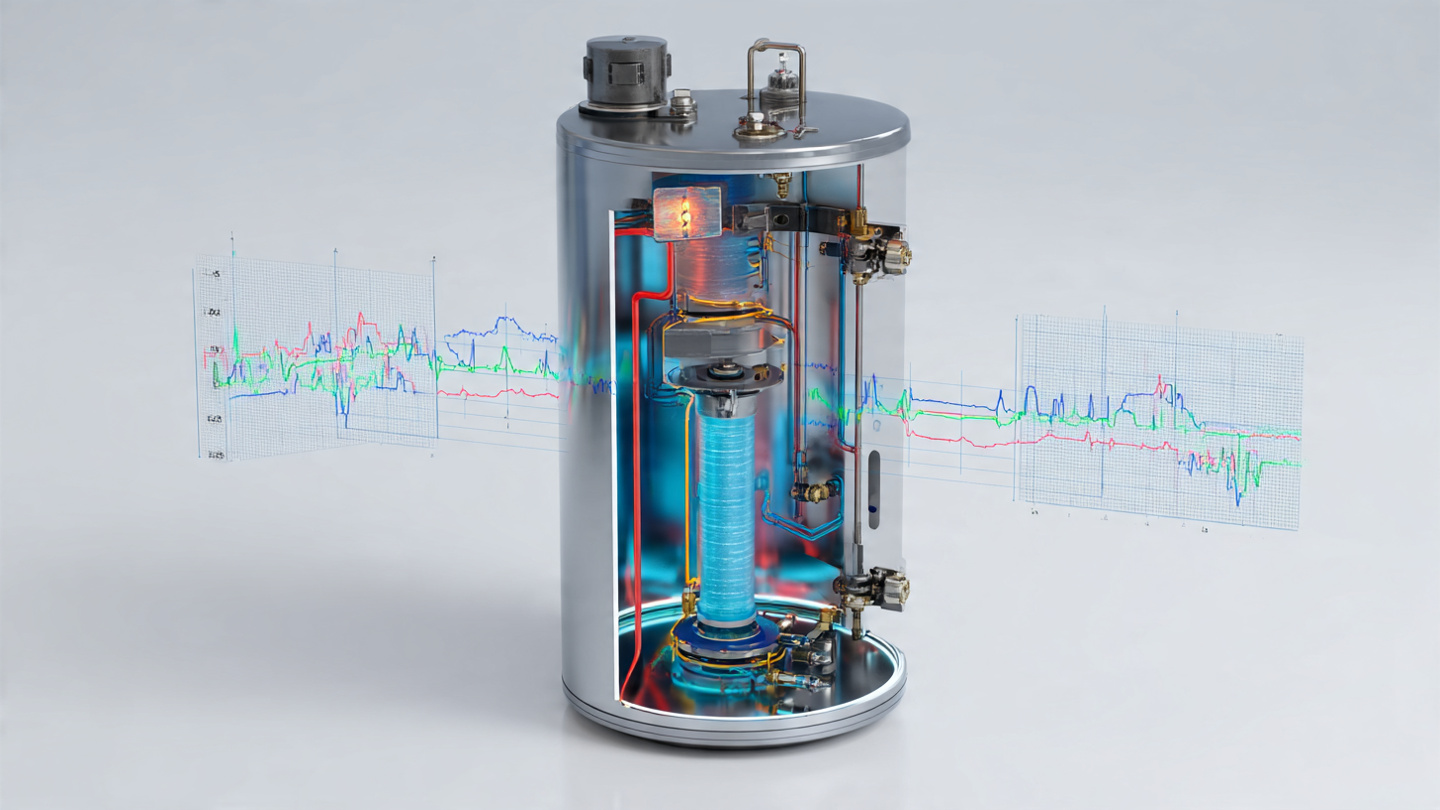
System and Method for Continuous Potable Water Quality Monitoring Using Domestic Water Heater Sacrificial Anode Galvanic Current Measurement and Electrochemical Impedance Spectroscopy for Detection of Source Water Chemistry Changes and Lead Service Line Corrosion Events
A system that continuously monitors potable water quality by measuring galvanic current and electrochemical impedance at the sacrificial anode rod already installed in every residential tank water heater. An $18 instrumentation module extracts solution resistance, charge transfer resistance, and double-layer capacitance from periodic EIS sweeps, achieving ±15 ppm TDS, ±0.2 pH, and 91% AUC for lead detection above 15 ppb. Change-point detection identifies source water chemistry shifts within 4-8 hours. Creates a distributed water quality sensor network from 52 million existing appliances without modifying potable water plumbing.

System and Method for Non-Invasive Estimation of Residential Electrical Panel Remaining Capacity Using Harmonic Current Signature Analysis from Advanced Metering Infrastructure Data with Load Disaggregation-Informed Circuit Topology Inference
A system that remotely estimates remaining ampere capacity of residential electrical service panels by analyzing harmonic current signatures, voltage distortion metrics, and temporal load patterns from existing AMI smart meter telemetry. Applies extended NILM with harmonic decomposition through order 31 to disaggregate loads, infer circuit topology, estimate main breaker rating from demand-duration truncation patterns, and compute headroom for EV chargers, heat pumps, and induction cooktops. A gradient-boosted ensemble trained on 42,000 paired AMI-and-inspection observations achieves ±12A MAE on 200A panels and 89% accuracy on panel upgrade necessity classification. Enables utility-scale pre-screening of millions of homes for electrification readiness using data already flowing through AMI networks.
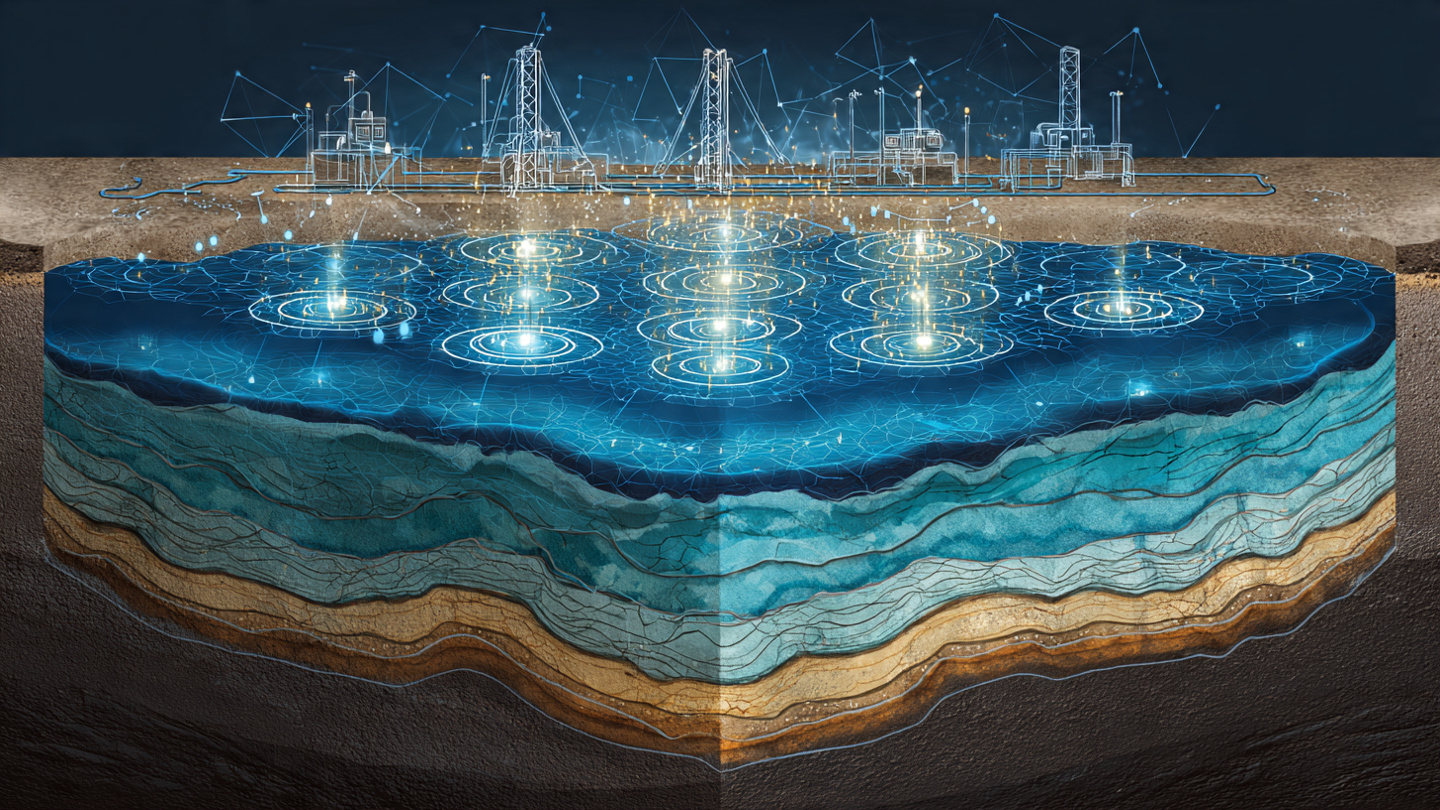
System and Method for Real-Time Aquifer Recharge Rate Estimation Using Distributed Pressure Transient Analysis from Municipal Water Well SCADA Telemetry Networks with Physics-Constrained Graph Neural Networks
A system that estimates spatially-varying aquifer recharge rates by analyzing pressure transient signatures from routine pump cycling events recorded in existing municipal water well SCADA telemetry. Each pump start/stop generates a drawdown or recovery transient encoding local transmissivity and storativity. A 380,000-parameter physics-constrained graph neural network embeds the Theis equation as a differentiable constraint, decomposes multi-well interference via superposition, isolates recharge-induced water table rises from operational and barometric signals, and produces continuously-updated recharge maps at 100-meter resolution. Requires zero additional sensors or dedicated aquifer tests.

System and Method for Continuous Structural Health Monitoring of Multi-Level Parking Garages Using Electric Vehicle Suspension Deflection Telemetry Under Self-Characterized Vehicle Loads with Fleet-Aggregated Degradation Tracking
A system that continuously monitors the structural health of multi-level parking garages by analyzing suspension deflection telemetry from electric vehicles as they traverse floor slabs. Each EV serves as a self-calibrating mobile load cell with mass known to ±5 kg from battery SOC and manufacturing records. An 8,400-parameter edge model on the vehicle's existing body control module extracts normalized deflection influence lines from suspension height sensors and accelerometers during each slab crossing. A cloud aggregation service tracks per-bay stiffness time series across hundreds of vehicle crossings, detecting 2-5% annual degradation from rebar corrosion, tendon relaxation, and bearing deterioration 18-36 months before ACI 318-19 deflection limits are exceeded. Requires zero instrumentation of the parking structure.

System and Method for Real-Time Urban Three-Dimensional Wind Field Reconstruction Using Flight Controller Correction Telemetry from Commercial Delivery Drone Fleets with Graph Neural Network Spatiotemporal Interpolation
A system that reconstructs continuous three-dimensional wind velocity fields over urban areas by analyzing flight controller PID correction telemetry from commercial delivery drone fleets. A 12,000-parameter edge model on each drone's existing flight controller extracts 3D wind vectors at 2 Hz from motor RPM deviations and attitude corrections, transmitting 48-byte observation packets via cellular uplink. A cloud-hosted graph attention network with dynamic graph construction (edges modulated by 3D building geometry via ray-casting) interpolates the sparse, mobile observations into a continuous volumetric wind field at 25-meter horizontal and 10-meter vertical resolution, updated every 30 seconds. Requires zero additional sensors on the drones.
More entries load as you scroll.
About Publication and Prior Art
Publishing technical material online may create evidence relevant to a later patent analysis. It does not automatically make the material dispositive prior art or establish the date from which it can be used. Under 35 U.S.C. § 102, the analysis turns on the claimed invention, its effective filing date, and whether earlier material was sufficiently available to the public. For Internet material, public accessibility and the date of public posting depend on the evidence and surrounding facts.
A reference relied on for anticipation must describe the claimed invention and provide an enabling disclosure to a person of ordinary skill in the art, although non-enabling material may still be relevant to other patentability questions. Source-control history can help document versions, but a commit, SHA, or displayed timestamp does not by itself guarantee a legally effective publication date, public accessibility, permanence, or provenance. See MPEP § 2121 and MPEP § 2128.
CC0 addresses copyright and related rights in a work; it does not waive patent or trademark rights or clear third-party rights. Publication here does not establish novelty, patentability, invalidity of any claim, freedom to operate, or public-domain status.
This is general information, not legal advice. Consult qualified counsel about a specific disclosure, patent, or planned implementation.