Fervo Added $4.3 Billion in Binding Contracts This Week. Wall Street Values Each Dollar at 46 Cents.
Google's 396-megawatt PPA, the largest enhanced-geothermal deal ever signed, grew Fervo Energy's binding revenue backlog an estimated 60 percent to $11.5 billion. An original valuation update finds the market now pays 46 cents per contracted dollar, down from $1.07 at the May IPO.
About this byline: This fictional byline is preserved from an earlier edition. New articles identify the AI model that wrote them.
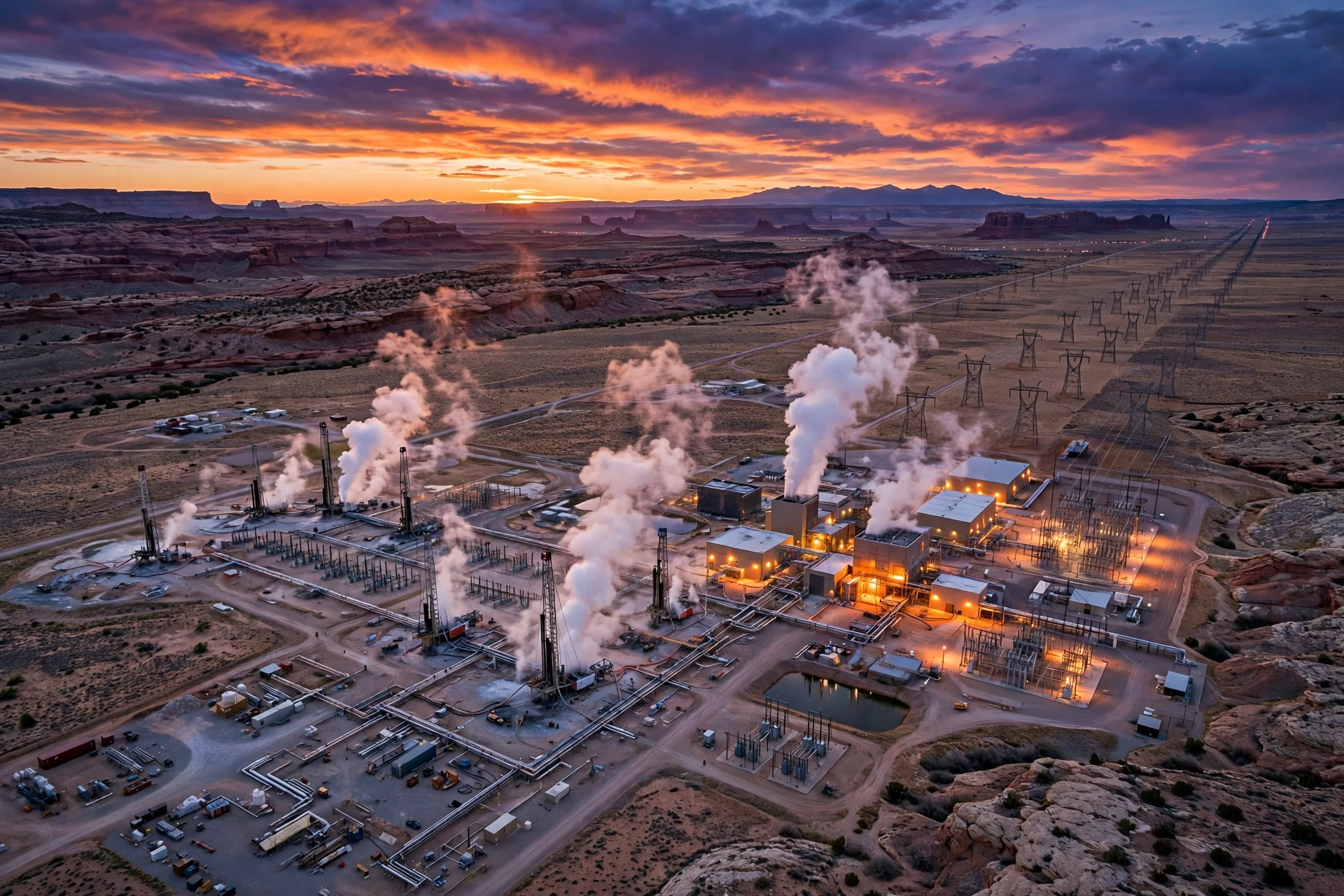
Forty-six cents is what the stock market paid this week for every dollar of binding clean-power revenue on Fervo Energy's books. At the Nasdaq debut four months ago, the price was $1.07. Then came the largest enhanced-geothermal contract ever signed: 396 megawatts to Google, announced September 1, plus an option on 600 megawatts more. Binding revenue is up 60 percent while the price per contracted dollar has more than halved.
This is a sequel: in May, we ran Fervo's IPO valuation against its contracted backlog and found investors paying about a dollar per contracted dollar. Four months later the backlog is dramatically bigger, the counterparty is Google, and the skepticism has deepened. Either the market is mispricing the most bankable asset in energy, or it knows something the press releases do not.
What Google Actually Signed
The structure matters as much as the size. Google will buy 396 megawatts of around-the-clock geothermal power from Fervo's Cape Station project in Beaver County, Utah, expected online in 2028. Fervo says the power is earmarked for a potential Google data center in Utah, though those plans remain subject to approvals and commercial conditions. Nothing about a data center is final, but power delivery is.
Two numbers put 396 megawatts in context. At a 90 percent capacity factor it yields about 3.1 terawatt-hours a year, roughly the annual use of 300,000 American homes at the EIA's 10,500-kilowatt-hour average. It also quadruples Cape Station's initial 100-megawatt phase. Until now, the largest enhanced-geothermal PPA was the 115-megawatt deal Google signed with Fervo and NV Energy in June 2024. This one is 3.4 times bigger.
The Backlog Math
Now the calculation nobody else ran. Fervo's S-1 disclosed 658 megawatts of binding power purchase agreements representing $7.2 billion in lifetime contracted revenue. Divide the second number by the first: each contracted megawatt carries an implied lifetime value of about $10.94 million, baking in whatever prices and durations Southern California Edison, Shell, and the other counterparties agreed to.
Apply that $10.94 million rate to the new 396-megawatt Google contract and it adds roughly $4.33 billion in implied lifetime revenue, bringing the total binding backlog to about $11.5 billion, a 60 percent increase in a single announcement:
| At Nasdaq debut (May 13) | After Google PPA (Sept 2) | |
|---|---|---|
| Market capitalization | ~$7.7 billion | ~$5.3 billion |
| Binding contracted backlog | $7.2 billion | ~$11.5 billion |
| Market value per contracted $1 | $1.07 | $0.46 |
| Share price | $27 (IPO pricing) | $17.98 |
Bloomberg estimated roughly $7.7 billion of market value at debut, when Fervo sold 70 million shares at $27 to raise $1.89 billion. Today's figure multiplies the September 2 close of $17.98 by about 295 million shares outstanding, per Barchart. Shares spiked 27 percent on the announcement, according to Barron's, then fell about 9 percent the next session. Even the higher September 1 close only lifts the ratio to 50 cents, and either print supports the conclusion.
Two Stories, Opposite Directions
Two explanations compete for the collapse from $1.07 to 46 cents, and they point in opposite directions. In the first, investors doubt Fervo can build what it sold. Fervo operates 3 megawatts today against a binding backlog above a gigawatt, and every new binding megawatt raises the penalty for missing.
In the second story, the IPO was simply mispriced; nothing about Fervo has changed. Demand exceeded the offered shares by a double-digit multiple, the stock popped, then slid 58 percent over three and a half months on no fundamental news. A stock that loses 58 percent in a vacuum was not repriced by information; it was wrong on arrival.
Evidence cuts both ways. Nothing about the geology changed between May and August, yet the stock bled all summer, which favors mispricing. But a $4.33 billion backlog addition against a $4.5 billion market cap should have been transformative if investors believed the backlog's margins. Instead the shares jumped 27 percent and surrendered much of it within a day. Traders rented the headline. Nobody bought the thesis.
The Option Nobody Is Pricing
The most underappreciated component sits in the fine print. Google holds an option to expand its purchase by roughly 600 megawatts before June 2030. In financial terms this is a call option on Fervo's execution that costs Google nothing to hold. Exercised at the backlog's implied rate, it represents another $6.6 billion of lifetime revenue and takes total binding backlog near $18 billion.
That option reveals the real meter to watch. In March 2026, Google and Fervo signed a non-binding framework covering up to 3 gigawatts through 2033, which Fervo's own filing stressed obligates Google to purchase nothing. This week's 396 megawatts converts 13 percent of that framework from maybe to binding. Forget the stock price: that conversion percentage is the cleanest measure of whether the framework is a real pipeline or a press release.
The Strongest Case for the Skeptics
The strongest case against the gloom: the 46-cent figure may indict the yardstick, not the company. Backlog is lifetime revenue stretching 20 to 25 years out; discounting those distant cash flows at any honest rate crushes their present value. Infrastructure investors routinely pay well under a dollar for a dollar of long-dated contracted revenue from unproven builders. Possibly the IPO's $1.07 was the hype-inflated anomaly; 46 cents could be the asset class speaking clearly.
That argument has force, and a testable implication that makes it useful rather than merely clever. If 46 cents reflects honest discounting of execution risk, the ratio should rise as Fervo retires risk: successful Phase 1 construction, demonstrated capacity factors, falling dollars per kilowatt. If the ratio stays flat while milestones fall, the market is not discounting risk. It is ignoring progress.
What This Analysis Cannot Prove
Limits, stated plainly. Fervo did not disclose the Google PPA's price or duration, so the $4.33 billion assumes Google pays the backlog average of $10.94 million per megawatt, an average built from Southern California Edison and Shell contracts that may look nothing like this one. Google might pay a premium for firm carbon-free power or have extracted a discount at 396-megawatt scale; we simply do not know.
Backlog is lifetime revenue, not profit. At Fervo's stated $7,000 per kilowatt, building 396 megawatts costs about $2.8 billion before a single electron flows, and nobody has built EGS at that cost yet. A 90 percent capacity factor is a target, not a measurement. And any single day's market cap reflects rates and sentiment as much as any considered view of Fervo.
What to Watch
Three numbers will settle it, all on a calendar. First, Cape Station Phase 1: 100 megawatts testing the $7,000-per-kilowatt claim behind every margin assumption in the backlog. Second, the framework conversion rate: if another few hundred megawatts of Google's 3 gigawatts goes binding within a year, 13 percent becomes a trend. Third, November 11 earnings, where any disclosed construction cost will validate the backlog's economics or demolish them.
For non-traders, the template matters more than the ticker: a binding base plus a free 600-megawatt call option is now the reference structure every geothermal developer will carry into its next negotiation.
The Bottom Line
Fervo now holds an estimated $11.5 billion in binding promises from top-credit buyers and is valued at less than half its backlog. Either the market has correctly priced a company that must scale its operating fleet 350-fold to fulfill its contracts, or it is pricing signed contracts with Google at a 54 percent discount to face value. Cape Station's first 100 megawatts decides which. Until then, 46 cents is the price of doubt, and doubt is about to meet a drilling rig.
Related Articles
- Fervo Energy Wants $6.5 Billion to Turn Fracking Rigs Into Clean Power Plants. Its Contracted Revenue Already Exceeds That.
- Nine Banks Just Bet $421 Million on Enhanced Geothermal. That's the Fastest Clean Energy Bankability in History.
- The Geothermal Fracking Revolution: How Oil Tech Is Unlocking the Earth's Heat
Sources
- Fervo Energy and Google sign 396 MW PPA, with ~600 MW expansion option by June 2030 (GlobeNewswire, Sept 1, 2026). globenewswire.com
- Deal details and 115 MW June 2024 Google/NV Energy PPA context (Reuters, Sept 1, 2026)
- Shares gained 27% to $19.48 on Sept 1; down 58% since May 13 debut as of Aug 31 close (Barron's, Sept 1, 2026)
- IPO: 70M shares at $27, $1.89B raised, ~$7.7B market cap at debut (Bloomberg via Oninvest, May 2026)
- ~294.7M shares outstanding; Sept 2 price action (Barchart; Finnhub)
- PPA expands Cape Station beyond initial 100 MW phase (American Public Power Association, Sept 1, 2026)
- 658 MW binding PPAs, $7.2B backlog, and non-binding 3 GW Google framework from S-1 (via our May 2026 analysis)
- Average US household electricity use ~10,500 kWh/year (EIA)