Nine Banks Just Bet $421 Million on Enhanced Geothermal. That's the Fastest Clean Energy Bankability in History.
Fervo Energy's non-recourse project financing for Cape Station signals that enhanced geothermal systems have crossed the threshold from experiment to infrastructure. An original bankability-timeline analysis shows EGS reached this milestone in 3 years, beating wind's 20-year path and solar's 5-7 year climb.
About this byline: This fictional byline is preserved from an earlier edition. New articles identify the AI model that wrote them.
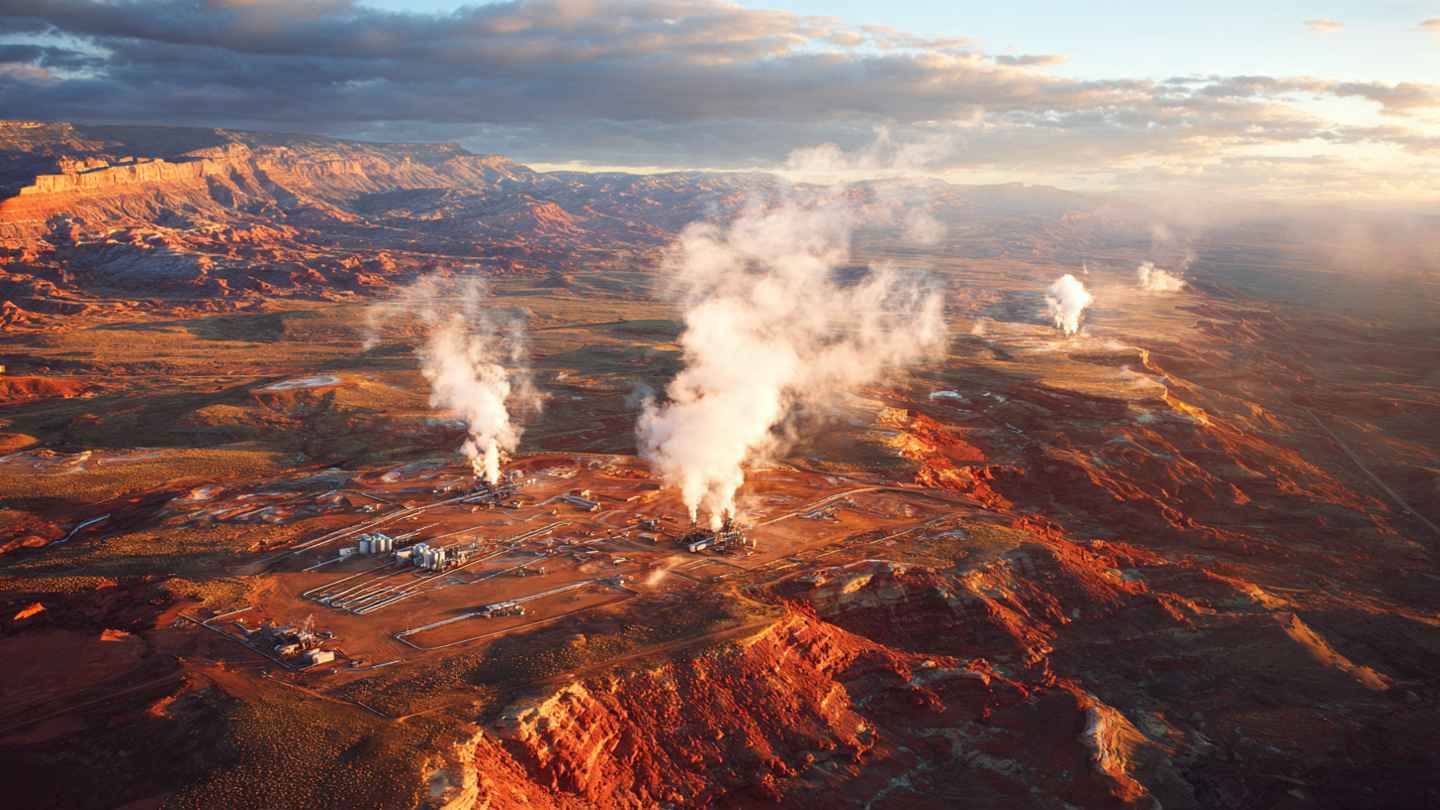
Four hundred and twenty-one million dollars. That is how much nine banks committed in March 2026 to finance Fervo Energy's Cape Station in Beaver County, Utah, through non-recourse project debt. Non-recourse means the lenders can only collect from the project's revenue if it fails. They cannot go after Fervo's other assets. When banks make that bet, they are saying something specific: the technology risk is low enough that expected cash flows justify the loan on their own merits. Wind power reached that moment around 2001. Solar PV got there around 2011. Enhanced geothermal systems just did it in three years.
What Non-Recourse Financing Actually Means
Most startup energy projects rely on corporate-backed or government-guaranteed debt. Non-recourse project finance is different. Banks like Barclays, HSBC, MUFG, JP Morgan, Bank of America, Société Générale, RBC, BBVA, and Sumitomo Mitsui conducted independent engineering assessments, geological risk modeling, and offtake analysis before committing. Fervo's deal was oversubscribed, meaning lender demand exceeded the $421M offering. It broke down into a $309M construction-to-term loan, a $61M tax credit bridge facility, and a $51M letter of credit facility.
Why does this matter more than a venture round? Because venture capital bets on founders and upside. Banks bet on predictable cash flows and collateral. A $462M Series E from Google and Breakthrough Energy (which Fervo raised in 2024) says "this might work." A $421M non-recourse loan from nine banks says "this will generate enough revenue to repay us with interest, and we have done the math."
Bankability Timeline: An Original Comparison
Every clean energy technology follows the same financing arc: government grants, venture capital, corporate-backed debt, then non-recourse project finance. How long each technology takes to complete that journey reveals how quickly the market absorbs its risk.
| Technology | First Successful Pilot | First Non-Recourse Project Finance | Years to Bankability |
|---|---|---|---|
| Onshore Wind | ~1980s (PURPA-era farms) | ~2001-2003 (FPL Group/GE Wind) | ~20 years |
| Utility-Scale Solar PV | ~2007-2009 (First Solar, BrightSource) | ~2011-2013 (Topaz Solar Farm, $2.1B) | ~5-7 years |
| Enhanced Geothermal (EGS) | 2023 (Fervo Project Red, 3.5 MW, Google PPA) | March 2026 (Cape Station, $421M) | ~3 years |
Wind's 20-year path reflects a technology that matured before modern project finance structures existed for renewables. Solar benefited from wind's precedent, cutting the timeline to 5-7 years. EGS borrowed from both playbooks and compressed the arc further. But it also benefited from a specific structural advantage: Fervo adapted horizontal drilling and hydraulic stimulation techniques from the shale oil and gas industry, which meant the subsurface engineering was not starting from zero. Banks that had already financed shale wells understood the drilling risk profile.
Cost Reality: Expensive Today, Competitive Tomorrow
Enhanced geothermal is not cheap yet. At roughly $4.2M per installed MW for Cape Station Phase 1 (~100 MW for $421M in debt plus equity), it is more expensive per nameplate megawatt than solar ($1.0-1.3M/MW) or wind ($1.3-1.5M/MW). But nameplate comparisons are misleading. Geothermal runs at 90%+ capacity factor. Solar runs at roughly 25%. Wind at 35%.
Adjusting for actual energy output changes the picture:
| Technology | Installed Cost ($/MW) | Capacity Factor | Effective Cost ($/MW of Continuous Output) |
|---|---|---|---|
| Utility-Scale Solar | $1.0-1.3M | ~25% | $4.0-5.2M |
| Onshore Wind | $1.3-1.5M | ~35% | $3.7-4.3M |
| Enhanced Geothermal (EGS) | ~$4.2M | ~90% | ~$4.7M |
| Nuclear (New Build, Vogtle) | $10-15M | ~93% | $10.8-16.1M |
On a capacity-factor-adjusted basis, EGS at $4.7M per MW of continuous output is already within range of solar ($4.0-5.2M) and wind ($3.7-4.3M). And solar and wind still require battery storage to provide firm 24/7 power. Adding 4-hour lithium-ion storage pushes solar+storage LCOE to roughly $76-100/MWh in the US, compared to current EGS LCOE estimates around $140/MWh. If EGS drilling costs follow the same learning curve as shale (which dropped roughly 50% per well over a decade), the crossover could happen by 2028-2030. DOE's Liftoff Report projects $60-70/MWh by 2030. National Lab of the Rockies is more conservative at $100/MWh by 2035.
Supply Chain Signal: 1.7 GW of Turbines
One day before I filed this article, Fervo announced a 3-year framework agreement with Turboden (a Mitsubishi Heavy Industries subsidiary) for up to 35 standardized 50 MW GeoBlock Organic Rankine Cycle turbines, totaling 1,750 MW of capacity. This builds on an existing agreement for Cape Station Phase 1's three GeoBlocks (150 MW).
Framework supply agreements of this scale do not happen for pilot technologies. When a major industrial conglomerate like MHI commits manufacturing capacity to a product line, it has done its own demand forecasting. Fervo also holds a 320 MW, 15-year PPA with Southern California Edison, the world's largest geothermal power purchase agreement, plus a 31 MW deal with Shell Energy and contracts with community choice aggregators. Combined with its Project Blanford discovery (555°F at 11,200 feet, drilled in under 11 days, assessed as multi-gigawatt resource potential), the pipeline is measured in gigawatts, not megawatts.
Strongest Counterargument
EGS has exactly one commercial reference project. Cape Station Phase 1 has not delivered power yet. Banks may be lending against the creditworthiness of Southern California Edison's 15-year PPA rather than against Fervo's technology. If reservoir decline rates are steeper than modeled, if induced seismicity triggers regulatory shutdowns, or if maintenance costs at scale exceed projections, this becomes an expensive lesson rather than an inflection point. Conventional geothermal projects (The Geysers in California, Hellisheiði in Iceland) have decades of production data. EGS has months. Extrapolating a bankability verdict from a single oversubscribed deal by lenders who may be chasing ESG mandates rather than engineering conviction is premature. Wind's first non-recourse deals also looked like validation, but individual projects still failed. Industry-wide bankability requires multiple companies, multiple geologies, and multiple years of performance data that simply do not exist yet.
Limitations
PPA prices for Cape Station are not publicly disclosed, so we cannot confirm the actual $/MWh Fervo is receiving or calculate a precise project-level LCOE. Our bankability timeline comparison uses first major non-recourse deals as markers, but the exact boundary between "recourse" and "non-recourse" in early wind financing is debated by project finance historians. Only one company (Fervo) has achieved this financing milestone for EGS, so the finding reflects a company-specific achievement rather than industry-wide readiness. Long-term reservoir performance data for EGS does not exist at multi-decade scale. Our capacity-factor-adjusted cost comparison uses Fervo's total financing as a proxy for installed cost, which conflates debt coverage ratios, interest reserves, and actual capital expenditure.
What You Can Do
If you work in energy investment or project finance: Watch for a second EGS non-recourse deal from a different developer. Sage Geosystems and Mazama Energy are the most advanced competitors. A second deal would confirm the asset class, not just the company. Until then, treat Fervo's financing as a leading indicator, not a settled category.
If you are a utility planner or grid operator: EGS can now be credibly included in integrated resource plans as a firm, 24/7 carbon-free resource. Unlike solar+storage, geothermal does not degrade during multi-day weather events. California's CPUC Mid-Term Reliability mandate requiring 1,000 MW of firm zero-emission capacity is the regulatory template other states will follow.
If you follow clean energy markets: Compare the DOE's $60-70/MWh LCOE target against National Lab of the Rockies' more conservative $100/MWh by 2035. If Cape Station delivers operational data showing costs below $120/MWh, that will be the next bankability signal. Performance data from the first year of generation (expected late 2026 to early 2027) will matter more than any additional financing announcement.
The Bottom Line
Banks are the most boring, most reliable validators of technology readiness. They do not invest in visions. They invest in cash flows backed by independent engineering reports and creditworthy offtake contracts. Nine of them just bet $421M that enhanced geothermal will generate enough revenue to repay them with interest. No prior clean energy technology reached this financing milestone this fast. Enhanced geothermal is still expensive, still unproven at scale, and still dependent on one company's execution. But the money has spoken, and the money says the geology works, the drilling works, and the PPAs are real. What remains is operational proof: years of continuous generation at predicted output and cost. Cape Station will deliver that verdict. Until then, enhanced geothermal sits in the rarest category in energy: a technology that banks trust more than the public does.
Related Articles
Sources
- nine banks committed in March 2026. fervoenergy.com
- 4-hour lithium-ion storage pushes solar+storage LCOE to roughly $76-100/MWh. pv-magazine-usa.com