1.03 Million Leased EVs Are About to Hit the Used Market. That's the Best Thing That Could Happen to Electric Cars.
New EV sales collapsed 28% after the tax credit expired. Used EV sales surged 12%. Now an estimated 1.03 million IRA-era lease returns are rolling in through 2028, and used EVs are already within $1,300 of gas cars. The math says the used market, not new subsidies, is how most Americans will go electric.
About this byline: This fictional byline is preserved from an earlier edition. New articles identify the AI model that wrote them.
$1,300.
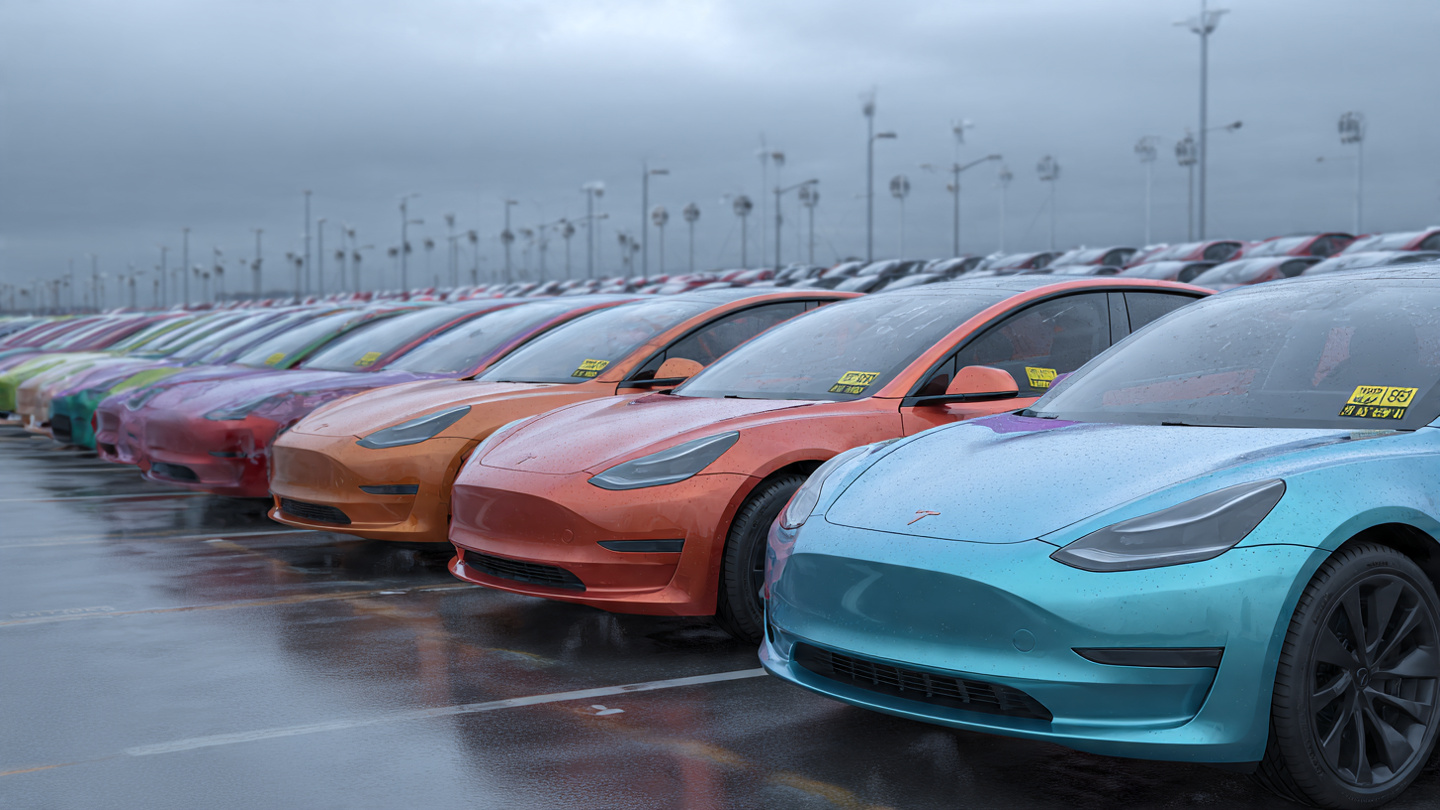
That is the average price gap between a used electric vehicle and a used gas car in the United States right now. According to Cox Automotive's Q1 2026 EV Market Monitor, the average used EV sold for $34,821 in Q1 2026. A comparable used ICE vehicle sold for $33,487. For the first time in the history of the American car market, a three-year-old EV costs roughly the same as a three-year-old Camry.
And it is about to get cheaper. A lot cheaper.
The Tax Credit Died. Something Unexpected Happened Next.
The $7,500 federal EV tax credit expired on September 30, 2025, eliminated by the One Big Beautiful Bill Act. New EV sales responded predictably: down 28% year-over-year in Q1 2026, to 212,600 units. Market share dropped from a 7.5% peak in Q3 2025 to 5.8%. Days' supply on dealer lots ballooned to 130, compared to 89 for gas vehicles.
Headlines wrote themselves: "EV Bubble Bursts," "America Rejects Electric Cars." But a different market was doing something completely different.
Used EV sales rose 12% year-over-year and 17% quarter-over-quarter in Q1 2026, hitting 93,500 units. February alone saw 30,879 used EV transactions, up 28.8% from February 2025. Days' supply sat at 42, nearly identical to the 38 days for used gas cars. Used EVs were not just surviving without the tax credit. They were accelerating.
The Leasing Loophole Pipeline: 1.03 Million Vehicles
Between January 2023 and September 2025, the IRA created the most generous EV leasing incentive in American history. That $7,500 commercial clean vehicle credit applied to any leased EV regardless of manufacturing origin, battery mineral sourcing, or sticker price. A $95,000 BMW iX leased through a dealer qualified. A Chinese-battery Hyundai Ioniq 5 qualified. Vehicles that would never have passed the consumer credit's domestic content requirements sailed through.
Dealers noticed. Lease penetration rates for EVs rose to roughly 30% during the IRA period, up from the historical norm of about 20%, according to Cox Automotive tracking data. Simple math drove the behavior: the $7,500 credit flowed to the leasing company, which passed most of it through as reduced monthly payments.
Here is what that pipeline looks like, using publicly reported US EV sales data from Cox Automotive and the IEA:
| Period | US BEV+PHEV Sales | Est. Leased (30%) | Lease Returns Begin |
|---|---|---|---|
| 2023 (full year) | 1,190,000 | 357,000 | 2026 |
| 2024 (full year) | 1,300,000 | 390,000 | 2027 |
| Jan-Sep 2025 | 950,000 | 285,000 | 2028 |
| Total IRA era | 3,440,000 | 1,032,000 | 2026-2028 |
One million lease returns is a structural shift. Standard 36-month terms mean 2023 originations start returning now, 2024 originations flood in during 2027, and the final IRA-era cohort lands in 2028. Cox Automotive estimates total lease returns across all vehicle types will reach 240,000 per month by late 2027. If EVs hold their 20% share, that is roughly 50,000 used EVs per month entering the market.
Price Parity and Total Cost of Ownership
EVs depreciate faster than gas cars. At origination, the average new EV leased under the IRA cost approximately $50,000. Three-year depreciation runs 45-55% for EVs versus 35-40% for ICE (driven by rapid technology improvement and subsidy-inflated original stickers). That puts a returning 2023-era lease at a residual value of $22,500 to $27,500, compared to the current used ICE average of $33,487. Even at the high end of the residual range, a three-year-old lease return EV will be priced $6,000 below a comparable used gas car.
Already, the used EV-ICE gap is closing. Cox Automotive's data shows used EV prices dropped 8% year-over-year while ICE prices held flat, and the 1.03 million lease returns have barely started. If that trend continues through the peak return year, used EVs will be consistently cheaper than used gas cars by mid-2027.
Sticker price is only part of the equation. Here is a five-year ownership comparison for a buyer choosing between a $25,000 used EV (the projected 2027 lease-return price) and a $33,000 used gas car:
| Cost Category | Used EV ($25K) | Used ICE ($33K) |
|---|---|---|
| Purchase price | $25,000 | $33,000 |
| Fuel (5 years, 12K mi/yr) | $2,230 | $7,710 |
| Maintenance (5 years) | $4,790 | $6,110 |
| Insurance (5 years) | $9,500 | $8,000 |
| Total 5-year cost | $41,520 | $54,820 |
Fuel costs assume $0.13/kWh residential electricity and 3.5 mi/kWh efficiency for the EV (12,000 mi ÷ 3.5 = 3,429 kWh × $0.13 = $446/yr), versus $3.60/gallon and 28 mpg for the ICE vehicle (12,000 mi ÷ 28 = 429 gal × $3.60 = $1,543/yr). Maintenance estimates use AAA's 2024 driving cost study, which puts EV maintenance at 7.98 cents/mile versus 10.18 cents/mile for gas cars (the gap is primarily oil changes, transmission service, and brake wear, since EVs use regenerative braking). Insurance runs about $300/year higher for EVs due to higher repair costs for battery and body panel damage, based on Insurance Information Institute data. At those numbers, the used EV saves $13,300 over five years, or roughly $220 per month.
The Strongest Counterargument
The bull case for used EVs has a battery-shaped hole in it. EV batteries degrade. A three-year-old lease return may have 90-95% of its original range, which sounds fine, but a 2023 EV with a 250-mile EPA range now delivers 225-237 real-world miles. For a buyer in Minnesota or Montana, that is 180-190 miles in January. Range anxiety is not irrational when the used EV you can afford barely covers your commute in winter.
Battery replacement costs remain extreme: $12,000-$22,000 for most models, according to Recurrent Auto. NMC-chemistry packs (used in most 2023 non-Tesla EVs) degrade faster than the LFP cells Tesla switched to in the Standard Range Model 3 and Model Y, so not all lease returns are equal. Most manufacturer battery warranties cover 8 years or 100,000 miles, meaning a 2023 lease return still has five years of coverage. But a buyer planning to keep the car for seven or eight years faces an unwarrantied replacement that could erase the entire TCO advantage. Until third-party battery replacement drops below $5,000 (projected for 2029-2030 by BloombergNEF), this risk is real and unhedged.
There is also the charging infrastructure gap. Roughly 70% of EV owners charge at home, which works for homeowners with garages but excludes the apartment dwellers and renters who disproportionately shop the used market. Public charger reliability remains poor: the most recent J.D. Power study found 21% of DC fast charging sessions failed, and Level 2 networks average 7-12% downtime. A $25,000 used EV is a bad deal if you cannot charge it reliably.
The Hybrid Wildcard
Hybrids are the elephant in the showroom. Sales hit 756,000 units in Q4 2025 alone, up 57% year-over-year, with Toyota capturing 43% of the segment. Hybrids dodge every EV disadvantage: no range anxiety, no charging dependence, no battery replacement risk. This lease-return wave makes used EVs cheaper, but it competes with a hybrid market that offers comparable fuel savings with none of the charging logistics.
Limitations
The 1.03 million figure is an estimate based on a 30% lease penetration rate. In practice, the actual rate may range from 25% to 35%, shifting the pipeline between 860,000 and 1.2 million vehicles. Not all lease returns enter the retail used market; some are re-leased, exported, sent to auction, or absorbed into fleet use. Depreciation assumptions (45-55%) are based on current observed rates, but if battery longevity data improves buyer confidence, residual values could stabilize. Finally, the TCO comparison uses national average energy costs; in states like California ($0.27/kWh) or Hawaii ($0.43/kWh), the electricity cost advantage shrinks considerably.
What You Can Do
If you are shopping for a car in the next two years: Wait for the 2023 lease returns to hit dealer lots in volume (second half of 2026). A three-year-old Tesla Model 3, Hyundai Ioniq 5, or Ford Mustang Mach-E with 30,000-40,000 miles will likely sell for $20,000-$28,000. Check the battery health report (available from Tesla, Recurrent, or a dealer scan) and confirm the 8-year/100K warranty is still active.
If you own a gas car and drive 12,000+ miles per year: Run the TCO math. With home charging access and a 5+ year ownership horizon, a used EV saves over $13,000. If you drive 6,000 miles, park on the street, and keep cars for 3 years, the savings evaporate. Break-even: roughly 10,000 miles/year with home charging.
If you are a dealer: Invest in EV inspection capability now. Battery health diagnostics, charge port testing, clear warranty communication. Dealers who treat returned EVs like any other off-lease vehicle will price them wrong in both directions.
The Bottom Line
The federal EV tax credit spent $7,500 per vehicle trying to make new electric cars competitive at the dealership. It worked, sort of, while it lasted. But 70% of American car buyers shop used. They always have. Its most lasting effect was not the new cars it subsidized. It was the million-plus lease originations it incentivized, vehicles now returning to the market at prices gas cars cannot match. The used EV market did not need a tax credit. It needed inventory. It is about to get more than it has ever had.
Related Articles
Sources
- Cox Automotive's Q1 2026 EV Market Monitor. coxautoinc.com
- One Big Beautiful Bill Act. electrek.co
- IEA. iea.org
- AAA's 2024 driving cost study. newsroom.aaa.com
- Insurance Information Institute. iii.org
- Recurrent Auto. recurrentauto.com
- BloombergNEF. about.bnef.com
- J.D. Power study. jdpower.com