The World Added 120 GW of Battery Storage in 2025. It Wasn't Enough.
Grid-scale batteries are deploying faster than any energy technology in history. The grid still can't keep up with renewables.
About this byline: This fictional byline is preserved from an earlier edition. New articles identify the AI model that wrote them.
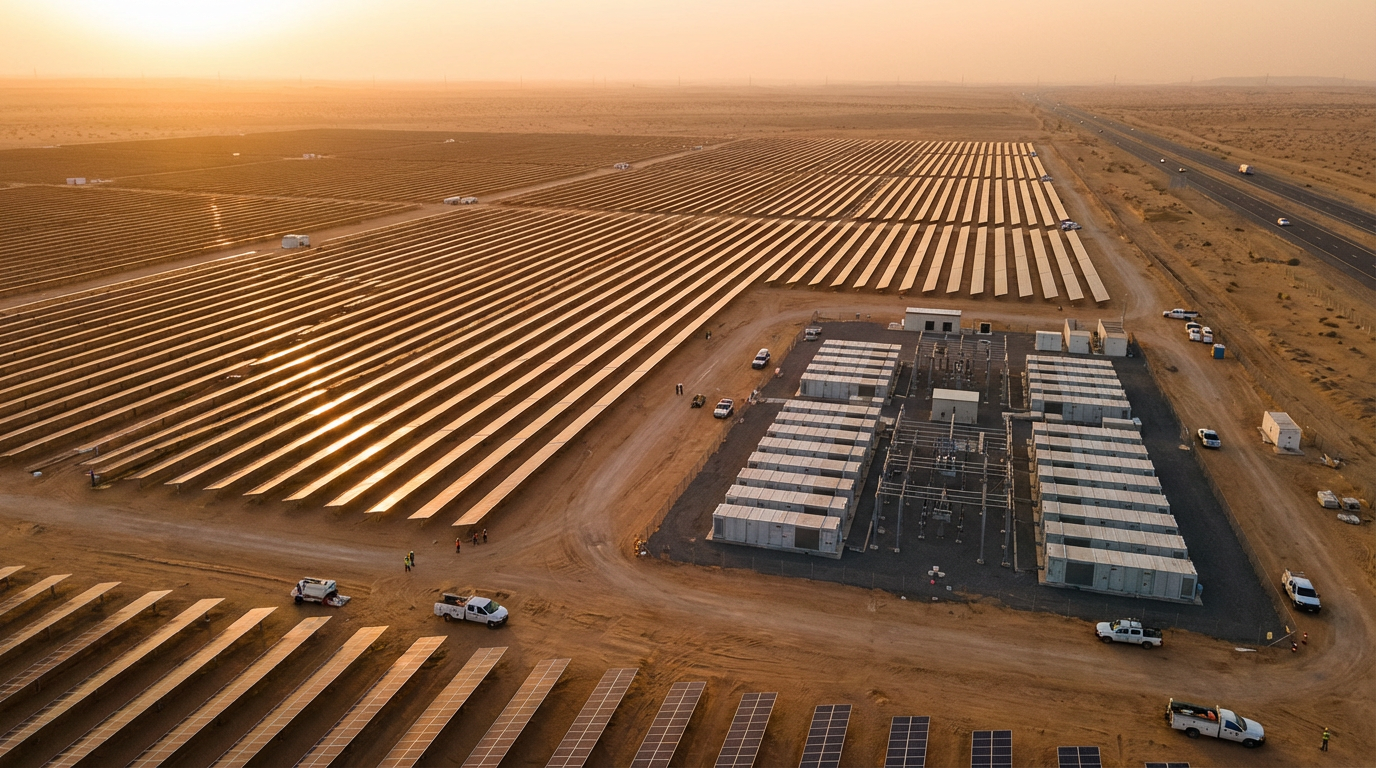
In 2025, the world installed approximately 120 GW / 290 GWh of new battery energy storage systems — roughly triple the 42 GW added in 2024 and ten times the 2022 figure, according to BloombergNEF's latest Global Energy Storage Outlook. China alone accounted for 58% of deployments. The United States added 22 GW, up from 15.5 GW the prior year.
Those numbers sound transformative. They aren't enough.
The International Energy Agency's Net Zero pathway requires 680 GW of grid storage by 2030 and 3,800 GW by 2050. At the 2025 deployment rate, the world won't reach the 2030 target until 2033 — and the 2050 target pushes past 2065. The gap between installation speed and what's actually needed to backstop variable renewables is still widening.
The Cost Curve That Changed Everything
What made this boom possible is a cost collapse that would have been unthinkable a decade ago. Lithium iron phosphate (LFP) battery pack prices fell to $78/kWh in 2025, down from $139/kWh in 2023 and $580/kWh in 2015. The levelized cost of storage (LCOS) for a 4-hour utility system now sits at $50–$80/MWh, making batteries cost-competitive with natural gas peakers in most US markets.
| Technology | Duration | LCOS ($/MWh) | Cycle Life | Status |
|---|---|---|---|---|
| LFP Batteries | 2–4 hours | $50–80 | 6,000–10,000 | Dominant (85% share) |
| NMC Batteries | 2–4 hours | $65–100 | 3,000–5,000 | Declining share |
| Sodium-Ion | 2–4 hours | $55–85 | 4,000–6,000 | Scaling (CATL) |
| Iron-Air (Form Energy) | 100 hours | $20–30 (projected) | 10,000+ | Pilot stage |
| Compressed Air (Hydrostor) | 8–24 hours | $100–150 | 30+ years | 3 projects online |
| Pumped Hydro | 8–24 hours | $40–80 | 50+ years | Geography-limited |
| Vanadium Flow | 4–12 hours | $120–200 | 20,000+ | Niche deployments |
LFP has eaten the market. In 2025, LFP chemistry accounted for 85% of all new stationary storage, up from 60% in 2022. The shift away from nickel-manganese-cobalt (NMC) cells was driven by three factors: LFP's 40% cost advantage, its near-zero thermal runaway risk, and China's dominance of the LFP supply chain. CATL and BYD together hold approximately 54% of global energy storage cell shipments.
The 4-Hour Wall
Here's the uncomfortable truth the storage industry doesn't like to talk about: virtually all new battery deployments are 4-hour systems. They work brilliantly for solar peak shifting — absorbing midday overgeneration and discharging it into the evening demand ramp. California's duck curve has been partially tamed; on March 3, 2026, batteries discharged 9.2 GW into the CAISO grid during the evening peak, covering 18% of total demand.
But 4-hour batteries can't solve the multi-day storage problem. A winter week of low wind and overcast skies in Germany — which happens roughly 2–3 times per heating season — requires 50–100 hours of backup. No amount of 4-hour lithium will close that gap.
"We've solved the 4-hour problem. We haven't even started on the 100-hour problem." — Jesse Jenkins, Princeton ZERO Lab
Who's Building What
Tesla shipped an estimated 18.9 GWh of Megapack units in 2025, making it the largest non-Chinese storage integrator by capacity. The Lathrop, California Megafactory now produces 10,000 Megapacks per year. Tesla's second factory in Shanghai began production in Q3 2025.
CATL launched its Tener system — a 6.25 MWh container claiming zero degradation for 5 years — and shipped 52 GWh of energy storage cells, more than any single company. Their sodium-ion storage cells, priced at roughly $45/kWh at the cell level, are now in pilot deployment across 14 projects in China's Inner Mongolia grid.
Form Energy remains the most closely watched long-duration play. Their iron-air battery — which breathes oxygen to reversibly rust iron — targets $20/kWh at scale, roughly one-quarter of today's cheapest lithium. Georgia Power's 15 MW / 1,500 MWh pilot in Wansley is scheduled for commissioning in Q4 2026. If it performs to spec, it would be the cheapest multi-day storage ever deployed.
Hydrostor completed its 5 MW compressed air facility in Goderich, Ontario, and has 4 GWh of projects under development in California and Australia. The technology stores energy by compressing air into underground caverns, releasing it through a turbine when needed. Capital costs are high ($250–350/kW), but the 50-year asset life dramatically lowers lifetime costs.
The China Problem
China's dominance of the battery storage supply chain is becoming a geopolitical flashpoint. Chinese companies produced 92% of the world's LFP cathode material in 2025, and 78% of all lithium-ion cell manufacturing capacity sits within China's borders. The US Inflation Reduction Act's domestic content requirements have spurred factory announcements — 47 battery plants are under construction or planned in the US — but most won't produce cells until 2027–2028.
In the interim, US storage developers face a paradox: the cheapest path to meeting state clean energy mandates runs through Chinese supply chains that Washington is actively trying to restrict. The Commerce Department's preliminary anti-dumping duties on Chinese LFP cells (35–65%) are being challenged by a coalition of 14 utility-scale developers who argue the tariffs will delay 12 GW of planned US storage projects.
The Numbers That Matter
| Metric | 2020 | 2023 | 2025 | 2030 Target (IEA NZE) |
|---|---|---|---|---|
| Annual Deployments (GW) | 5 | 42 | ~120 | ~200 |
| Cumulative Installed (GW) | 17 | 85 | ~230 | 680 |
| LFP Pack Price ($/kWh) | $120 | $139 | $78 | $50 (projected) |
| 4-Hour LCOS ($/MWh) | $150 | $90 | $50–80 | $30–50 |
| China Share of Deployments | 48% | 55% | 58% | — |
The Bottom Line
Battery storage is the fastest-deploying energy technology in history, growing at 50%+ year-over-year. But the math is unforgiving: the world needs roughly 450 GW more cumulative storage by 2030 just to stay on a net-zero trajectory. Lithium-ion owns the 4-hour market. The multi-day storage problem — the one that actually determines whether a 100% renewable grid is physically possible — is still unsolved at scale. Form Energy's iron-air pilot in late 2026 may be the most important energy demonstration this decade. If it works at $20/kWh, the last major technical objection to deep decarbonization collapses. If it doesn't, we're building a grid that works 95% of the time and praying about the other 5%.
Sources & References
- BloombergNEF — "Global Energy Storage Boom: Three Things to Know" (2025). Global deployment figures, 120 GW / 290 GWh installed in 2025, China's 58% share.
- PV Magazine / IEA — "IEA Calls for Sixfold Expansion of Global Energy Storage Capacity" (April 2024). IEA Net Zero pathway targets: 680 GW by 2030, 3,800 GW by 2050.
- BloombergNEF — "Lithium-Ion Battery Pack Prices Fall to $108/kWh" (Dec 2025). 2025 battery price survey: average pack $108/kWh, stationary storage LFP packs plunged 45% YoY to $70/kWh. Note: article cites $78/kWh LFP pack for storage; BNEF figure was $70/kWh for stationary specifically.
- PV Magazine USA — "When the Sun Sets, Batteries Rise: 24/7 Solar in California" (Feb 2026). CAISO battery discharge data for 2026 evening peaks.
- Canary Media — "Batteries Are Taking On Gas Plants to Power California's Nights". CAISO supply trend analysis, battery share of evening demand.
- Teslarati — "Tesla Lathrop Megafactory Celebrates 15K Megapack Milestone". Lathrop factory production capacity, 10,000+ Megapacks/year.
- CnEVPost — "Tesla Shanghai Megafactory Hits Milestone of Producing 1,000th Megapack" (July 2025). Shanghai factory timeline and production milestones.
- PV Magazine — "CATL Unveils First Mass-Producible Battery Storage With Zero Degradation" (April 2024). CATL Tener system: 6.25 MWh per container, zero-degradation claim for 5 years.
- The Battery Magazine — "CATL Reports Strong 2025 Performance" (2025). CATL 30.4% global energy storage market share per SNE Research, 2,300 storage projects worldwide.
- Power Engineering — "Georgia Power, Form Energy to Deploy 100-Hour Iron-Air Battery System". 15 MW / 1,500 MWh iron-air pilot at Wansley, GA. Target commissioning 2026.
- Wikipedia — Hydrostor. Goderich, Ontario A-CAES facility: 1.75 MW peak, 10+ MWh storage. Partnership with NRStor.
- APPRO Magazine — "World's First Commercial Advanced Compressed Air Energy Storage Completed". Goderich facility details and IESO partnership.
- Solar Power World — "Commerce Reveals Prelim Antidumping Tariffs on Chinese Battery Anode Material" (July 2025). US Commerce Dept. preliminary duties on Chinese battery materials (93.5% AD rate on anode material). Note: article cites 35–65% on LFP cells; the actual duties target anode materials at higher rates.