🧠 Neuro
Seven Patients Were Under General Anesthesia. Their Brains Were Predicting the Next Word of a Podcast.
Baylor College of Medicine researchers isolated 651 hippocampal neurons from seven patients under propofol and played them podcast segments. The neurons parsed grammar, distinguished nouns from verbs, and predicted upcoming words. Their accuracy matched awake control subjects. Consciousness theory has a problem.
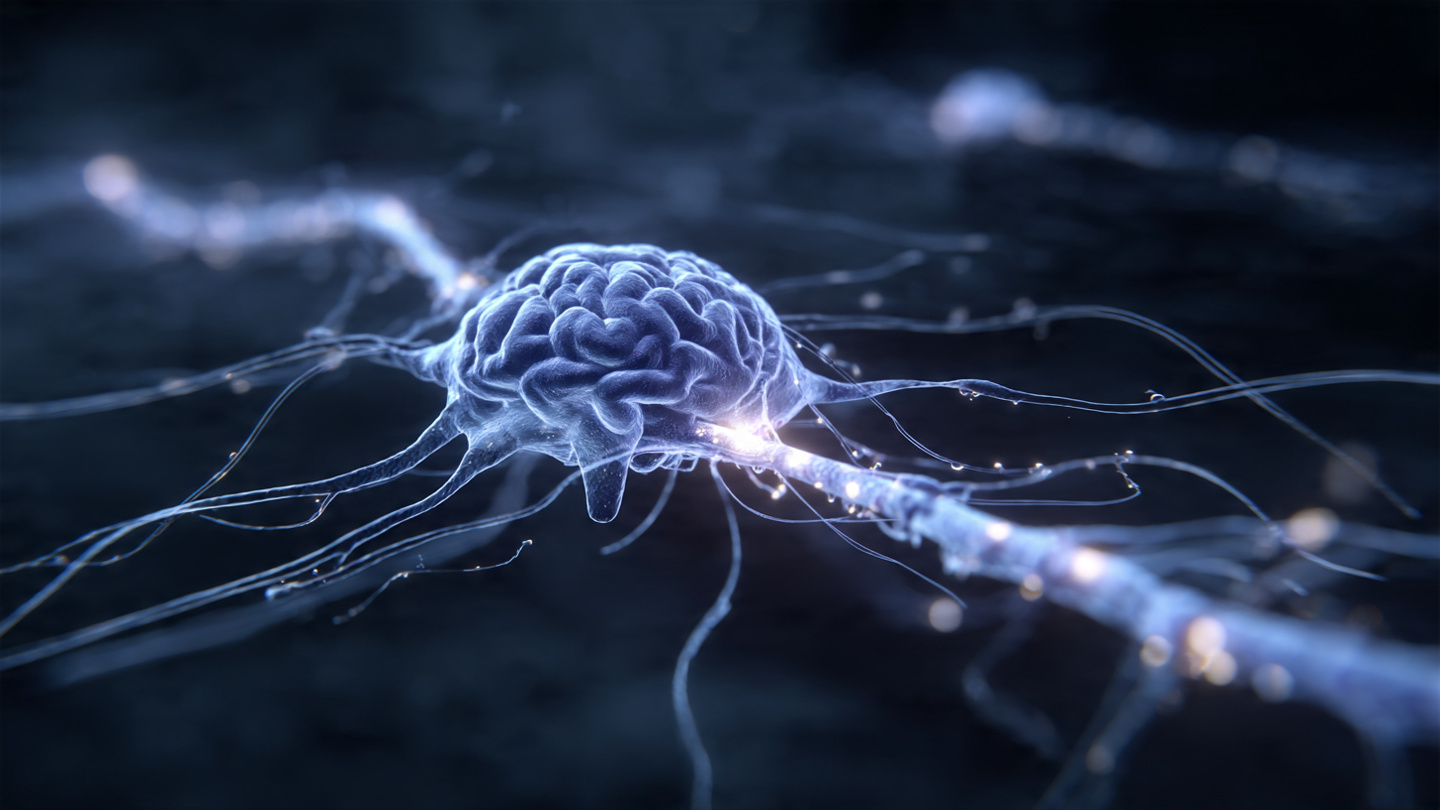
651. That is the number of hippocampal neurons that Baylor College of Medicine researchers isolated from seven patients who were unconscious under propofol anesthesia, each undergoing anterior temporal lobectomy for epilepsy, while Neuropixels microelectrodes recorded their brain activity at single-neuron resolution for the first time in the human hippocampus. Those patients heard nothing, remembered nothing, and were clinically unconscious by every standard measure. Their hippocampi were parsing language anyway.
Published in Nature on May 6, 2026, this work represents the most direct challenge in decades to the assumption that complex cognition requires consciousness, and it sends a less obvious signal to the brain-computer interface industry: the addressable patient population may be far larger than anyone has modeled.
What 651 Neurons Did While Their Owners Were Out
Elegant in its simplicity, the experimental design exploited an existing clinical moment. Seven epilepsy patients were already scheduled for surgery that required opening the skull and accessing the temporal lobe. Neurosurgeon Sameer Sheth and his Baylor team inserted Neuropixels probes, each carrying 960 recording sites on a shank thinner than a human hair, into the hippocampus while the patients were under general anesthesia, and then they played sounds.
Three patients received an oddball auditory task: repeated tones with occasional deviants. Of the 172 recorded units, 70.9% (122 neurons) showed tone-evoked responses, a striking result given that the hippocampus sits deep in the medial temporal lobe, anatomically distant from the auditory cortex where sound processing is supposed to happen. Even more striking: 22.7% of units encoded tone identity, distinguishing one pitch from another. And over approximately ten minutes of listening, the neural representations strengthened, meaning an unconscious brain was learning.
Four other patients heard something harder: podcast segments running roughly ten minutes each. Individual neurons responded to semantic and grammatical features of the speech, distinguishing nouns from verbs, and predicted upcoming words based on sentence context, a computation that requires integrating meaning across multiple preceding words, holding that meaning in some form of working memory, and generating a probabilistic expectation about what comes next. Performance was comparable to awake control subjects.
By the Numbers
| Metric | Result | Context |
|---|---|---|
| Total neurons isolated | 651 | First Neuropixels recording in human hippocampus |
| Tone-responsive units | 70.9% (122/172) | From oddball task in 3 patients |
| Units encoding tone identity | 22.7% (39/172) | Distinguishing pitch under anesthesia |
| Average firing rate (propofol) | 1.8 ± 1.1 Hz | Awake hippocampal baseline: 1-10 Hz |
| Language prediction accuracy | Comparable to awake subjects | Podcast segments, 4 patients |
| Representational plasticity | Yes, over ~10 minutes | Oddball representations strengthened with exposure |
Consider the firing rate. Under propofol, hippocampal neurons fired at 1.8 ± 1.1 Hz, while awake hippocampal firing rates typically range from 1 to 10 Hz depending on subregion and task. At the low end of that range, unconscious neurons retained essentially their full baseline rate; at the high end, they were running on 18% capacity. Yet semantic processing accuracy was comparable to awake performance, which means the hippocampus was operating in an extraordinarily efficient mode, achieving awake-level language comprehension with a fraction of its normal activity. Picture a sports car engine idling in second gear, somehow matching the speed of one running at full throttle.
Why Prior Studies Missed This
Previous research had shown that early sensory cortical areas can register simple sounds during unconsciousness. Tauber et al. (2024) in the Journal of Cognitive Neuroscience demonstrated basic tone registration in auditory cortex under anesthesia, but that cortex is anatomically built to process sound, so finding tone responses there, even in an unconscious brain, confirmed only that sensory input reaches the first processing stage. It said nothing about whether the brain could do anything meaningful with that input.
Hippocampal processing is a different beast entirely. This structure sits multiple synaptic relays downstream from sensory cortices, meaning information reaching it has already been processed through primary auditory cortex, association areas, and temporal lobe structures. For speech to arrive at the hippocampus with enough fidelity to support word prediction, the entire processing chain must remain functional under anesthesia. Katlowitz's data prove it does.
As senior author Sheth told Nature News: "The brain has developed such amazing, sophisticated mechanisms for doing all these complex tasks all day long, that it can do some of these things even without us being aware."
Consciousness Theory Has a Problem
Two dominant theories of consciousness make predictions that this study directly contradicts.
Global Workspace Theory, proposed by Bernard Baars in 1988, holds that complex cognition requires "broadcasting" information to a distributed network of cortical areas. Anesthesia is supposed to prevent this broadcasting, which is why you do not remember surgery and cannot solve math problems while unconscious. If GWT is correct, multi-step semantic processing, the kind that requires integrating words across a sentence to predict the next one, should not be possible under propofol. It happened anyway.
Integrated Information Theory, developed by Giulio Tononi, proposes that consciousness emerges from high levels of integrated information, quantified as Φ. Propofol reduces Φ dramatically, and IIT predicts that complex processing requiring integration across multiple brain regions and multiple time steps should degrade in proportion to that reduction. Those hippocampal neurons did not get the memo.
Neither theory is dead. Both could accommodate these findings through modification, perhaps by arguing that hippocampal processing is "local" rather than "global," or that Φ reduction is not uniform across brain structures. But the simplest reading of the data suggests a reframing that neither theory currently offers: consciousness may not be the enabler of complex cognition but rather the reporter of it. Your brain does the computational work, and consciousness gets the memo afterward.
What This Means for BCIs
Every commercially deployed brain-computer interface, from Neuralink's Telepathy to Synchron's Stentrode to BrainGate's Utah arrays, decodes conscious intention: a patient thinks "move cursor left" and the decoder translates motor cortex signals into action. Brilliant for patients who are conscious but physically unable to move, including people with ALS, spinal cord injuries, and locked-in syndrome with preserved awareness. Useless for patients who lack consciousness entirely.
If hippocampal neurons can parse speech and predict words without any conscious input, then in principle, a BCI could decode language-related signals from a patient who is in a vegetative state, under prolonged sedation, or experiencing severely impaired consciousness after a massive stroke. First author Kalman Katlowitz raised this possibility directly in the Baylor press release: "Can we use these signals to deploy and run a speech prosthetic for some of the parts of the brain that are damaged by stroke or injury?"
Roughly 50 people on Earth currently have implanted BCIs. For consciousness-dependent interfaces, the addressable population of patients with preserved awareness but lost motor function is measured in hundreds of thousands. But if BCIs can extract meaningful signals from unconscious brains, that addressable population expands to include the roughly 315,000 Americans living in prolonged disorders of consciousness, the millions who experience temporary unconsciousness during ICU sedation each year, and the stroke survivors whose impaired consciousness currently disqualifies them from BCI candidacy.
Nobody has demonstrated a working speech prosthetic driven by unconscious hippocampal signals. Speculative, yes. But the Baylor data establishes the necessary precondition: the signals are there, they are structured, and they encode language at a level that a decoder could, in theory, exploit.
What We Do Not Know
Seven patients is a small sample, and all seven had epilepsy severe enough to require surgery. Epileptic brains are not typical brains; years of seizure activity can reorganize neural circuits, potentially making hippocampal neurons more robust to disruption than they would be in a healthy brain. Whether the same results would hold in non-epileptic patients is unknown, and the ethical constraints of inserting electrodes into healthy brains mean we may never get that comparison directly.
Podcast segments ran approximately ten minutes each, so whether unconscious language processing degrades over longer exposure periods remains an open question. Neural responses were measured but comprehension was not demonstrated in any behavioral sense; the patients could not report what they heard, so we cannot confirm that the neural word predictions corresponded to actual understanding rather than a sophisticated pattern-matching reflex that resembles understanding at the single-neuron level.
Propofol is one anesthetic among many, with different agents suppressing consciousness through different mechanisms. Whether hippocampal language processing persists under sevoflurane, ketamine, or other common anesthetics matters enormously for both surgical practice and BCI applications, and no data exist yet to answer the question.
Finally, the "comparable to awake" accuracy claim requires careful reading, because the study compared unconscious hippocampal responses to a separate cohort of awake subjects rather than to the same patients before anesthesia. Individual variation could account for some of the similarity.
Strongest Case Against This Interpretation
Here is the most rigorous objection: hippocampal "word prediction" under anesthesia may be a statistical artifact of how the analysis was conducted rather than evidence of genuine semantic processing. Neural encoding models that test whether single-neuron activity correlates with linguistic features can produce positive results even when the underlying computation is far simpler than it appears, because natural language has deep statistical regularities that a system could exploit without anything resembling comprehension. A sufficiently sensitive recording technique applied to a sufficiently large number of neurons in any active brain region might find correlations with word-level features simply because those features correlate with acoustic properties, prosodic rhythm, or temporal patterns that the hippocampus tracks for non-linguistic reasons.
Katlowitz and colleagues used a recurrent neural network model to explain their oddball results, and that model demonstrates that learning and oddball detection are emergent properties of flexible sensory discrimination, not necessarily evidence of higher cognition. Apply the same argument to the language findings and a less dramatic picture emerges: what looks like prediction could be pattern completion, and pattern completion is not understanding.
What You Can Do
If you are scheduled for surgery under general anesthesia, the clinical implications of this study are currently zero. Standard anesthetic protocols already monitor depth of unconsciousness, and the Baylor findings do not suggest patients experience awareness or pain. However, if you are concerned about awareness under anesthesia, ask your anesthesiologist about processed EEG monitoring (BIS or similar), which tracks cortical suppression in real time; Baylor's recordings came from the hippocampus, which existing monitors do not cover, but cortical monitoring remains the clinical standard and is available at most surgical centers.
If you work in BCI research or neural decoding, the actionable finding is that hippocampal language signals persist under propofol with structured, decodable features. Katlowitz's team will almost certainly pursue the next logical experiment, training a speech decoder on these unconscious signals and measuring its output accuracy, and follow-up studies will likely appear within 12 to 18 months given that the Neuropixels recording infrastructure is already in place and subsequent recordings can be performed during scheduled epilepsy surgeries, so track Baylor's BRAIN Center publications.
If you have a family member in a prolonged disorder of consciousness, do not overinterpret this study. Some neural processing continues in some brain structures in surgical patients, but that does not demonstrate that vegetative-state patients process language, that their brains can be decoded, or that consciousness is present where clinical assessment says it is not. Between "651 neurons fired in an interesting pattern" and "we can communicate with unconscious patients" lie decades of engineering, not months.
Bottom Line
Seven people were unconscious on operating tables at Baylor College of Medicine while Neuropixels probes listened to their hippocampi. Somebody played them a podcast. 651 neurons responded, parsed the grammar, and predicted what word was coming next, matching the performance of awake brains doing the same task. This is the first single-neuron evidence that the human hippocampus conducts complex semantic processing without any conscious involvement, and it forces an uncomfortable question onto two of the most influential theories of consciousness: if the brain can do this much without awareness, what exactly is awareness for? Answering that question may reshape both neuroscience and the engineering roadmap for brain-computer interfaces, but the honest timeline is years, not months. Watch for Katlowitz's group to train a speech decoder on unconscious hippocampal signals. If they succeed, the BCI industry's patient population projections need rewriting.