The Fusion Industry Raised $10 Billion and Generated 0 Kilowatt-Hours. Now It's Going Public.
Fifty-three fusion companies have collectively raised $9.8 billion in private and public funding. Total commercial electricity delivered to any grid, anywhere: zero. An original LCOE analysis of announced reactor designs reveals what investors are actually buying.
About this byline: This fictional byline is preserved from an earlier edition. New articles identify the AI model that wrote them.
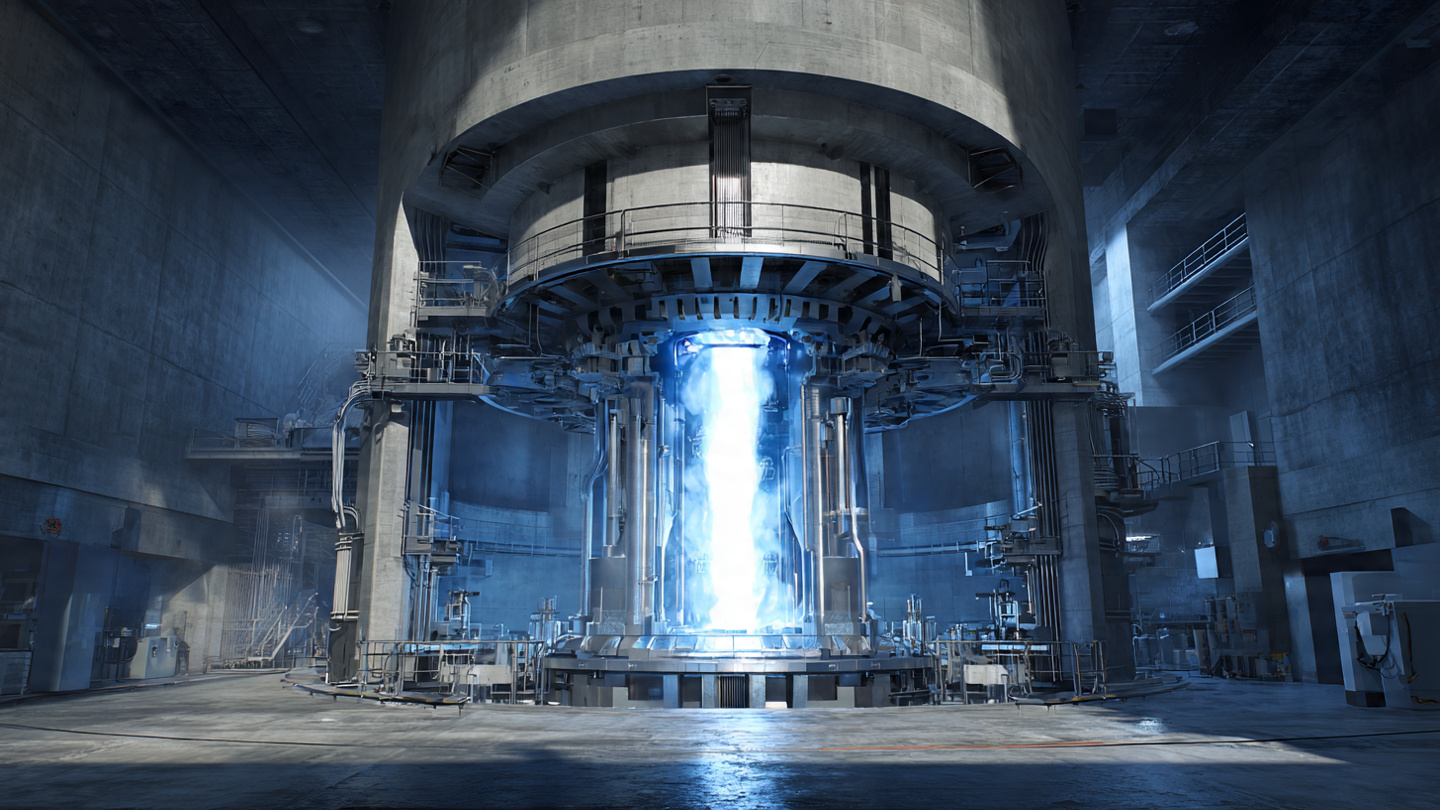
$9.766 billion. That is the total private and public funding raised by the global fusion industry through mid-2025, according to the Fusion Industry Association's 2025 Global Report. Fifty-three companies responded to the survey. Combined, they employ 4,607 people directly and support 9,300 supply chain jobs. They operate across at least six distinct confinement approaches (tokamak, stellarator, field-reversed configuration, magnetized target, inertial confinement, and laser-driven). They have produced a staggering quantity of press releases.
Commercial electricity generated and sold: 0 kWh.
That gap is not automatically damning. Aviation investors in 1903 had a similar ratio. But the fusion industry is now doing something aviation did not attempt until decades after Kitty Hawk: it is going public. In December 2025, Trump Media and TAE Technologies announced a $6 billion merger, combining a social media company with a fusion energy firm that has raised over $1.4 billion in private funding. Commonwealth Fusion Systems closed an $863 million Series B2 in 2025, bringing its total to roughly $2.8 billion. Pacific Fusion emerged from stealth with a $900 million Series A. Helion raised $425 million in its Series F.
When an industry that has delivered zero revenue attracts this kind of capital, one of two things is happening: either the physics has changed, or the money has. In fusion's case, both have.
What Actually Changed in the Physics
For most of fusion's 70-year history, the running joke was accurate: commercial fusion is always 20 years away. Three developments between 2022 and 2026 made the joke less funny.
First, the National Ignition Facility achieved ignition in December 2022. NIF's lasers delivered 2.05 megajoules to a fuel pellet, which produced 3.15 MJ of fusion energy. Scientific gain (Q) was 1.54. NIF repeated this result several times through 2023-2024. But context matters here: the laser system itself draws roughly 300 MJ from the grid per shot. Wall-plug Q is about 0.01. NIF is a weapons research facility, not a power plant prototype, and nobody at Lawrence Livermore pretends otherwise.
Second, Helion Energy announced in February 2026 that its Polaris prototype had achieved deuterium-tritium fusion at 150 million degrees Celsius, breaking its own record of 100 million degrees. Helion became the first private company with NRC regulatory approval to use tritium and the first to demonstrate D-T fusion outside a national laboratory. Construction on its Orion plant in Malaga, Washington, began in July 2025 under a power purchase agreement with Microsoft.
Third, Commonwealth Fusion Systems installed its first SPARC high-temperature superconducting magnet at CES in January 2026. HTS magnets are the engineering breakthrough that makes compact tokamaks plausible. Conventional copper magnets require a reactor the size of ITER (23,000 tons, 30 meters tall). HTS magnets achieve the same magnetic field strength at a fraction of the size. CFS targets Q > 1 with SPARC by 2027, then a 400 MW commercial reactor (ARC) in the early 2030s at a site in Chesterfield County, Virginia. Google DeepMind signed on for plasma control algorithms and a PPA for ARC's output.
An Original LCOE Calculation Nobody Asked For
Nobody in the fusion industry publishes projected levelized cost of energy (LCOE) for their reactors. This is understandable. No reactor exists. But public data lets us build a rough estimate for the most-disclosed design: CFS's ARC reactor.
Here are the inputs. ARC targets 400 MW net electrical output. Assume an 85% capacity factor, which matches the best-performing nuclear fission plants (the U.S. fleet averaged 93% in 2023, but a first-of-a-kind reactor will run lower). Assume a 30-year operating life, consistent with nuclear industry standard amortization.
Annual generation at those parameters: 400 MW × 0.85 × 8,760 hours = 2,978,400 MWh per year. Over 30 years: approximately 89.4 million MWh, or 89.4 TWh.
Total capital cost is the hard question. CFS has raised $2.8 billion so far, which covers R&D, SPARC construction, and early ARC development. SPARC is a demonstration reactor, not a power plant. ARC will require billions more. A conservative estimate for total capital cost from founding through first commercial electricity: $5-10 billion. That range is wide because nobody has built one before, and the history of first-of-a-kind energy projects suggests costs always land at the high end.
| Parameter | Low Estimate | High Estimate |
|---|---|---|
| Total capital cost | $5 billion | $10 billion |
| 30-year generation | 89.4 TWh | |
| Capital cost per MWh | $56/MWh | $112/MWh |
| Assumed O&M | $20/MWh | |
| Implied LCOE | $76/MWh | $132/MWh |
For comparison: Vogtle Units 3 and 4, the newest U.S. fission reactors, came in around $100/MWh after years of cost overruns. Utility-scale solar with 4-hour battery storage runs $45-60/MWh. Natural gas combined cycle sits at $40-65/MWh. At the low end, fusion is competitive with new nuclear fission but not with solar-plus-storage. At the high end, fusion is more expensive than almost everything except offshore wind.
But this analysis misses the point. Investors are not buying ARC plant #1. They are buying the option on plants #2 through #1,000.
Where Learning Curves Go
Every energy technology gets cheaper with deployment, but the rate varies enormously. Solar PV costs fell 99% from 1976 to 2023, one of the steepest learning curves in industrial history. Nuclear fission in France during the 1970s-1980s Messmer Plan showed 25-40% cost reductions from first reactor to fleet deployment, because France built a standardized design (the 900 MW PWR) and kept building it. Nuclear fission in the United States after Three Mile Island showed the opposite: costs increased with each plant as regulatory requirements expanded and designs proliferated.
Fusion's trajectory will depend on which model it follows. CFS is explicitly pursuing the French approach: a single standardized design (ARC) with modular HTS magnet manufacturing. If nth-of-a-kind costs drop 30% from first-of-a-kind, a $10 billion ARC #1 implies a $7 billion ARC #5 and a $5 billion ARC #15. At $5 billion capital cost, the LCOE drops to $76/MWh, competitive with Vogtle. At scale, with factory-built magnets and streamlined construction, CFS projects even lower.
If fusion follows the post-TMI American nuclear path, costs will rise with each plant, and the $10 billion estimate will look optimistic. Regulatory uncertainty is the critical variable. In January 2026, the NRC began developing fusion-specific licensing rules, a recognition that regulating fusion under fission frameworks (designed for radioactive fuel cycles and meltdown risks that fusion does not share) would be unnecessarily burdensome. Whether those rules are ready before SPARC needs them will matter.
ITER Is the Counterexample Everyone Cites
No discussion of fusion economics is complete without ITER, and no discussion of ITER is encouraging. Construction began in 2013 in Cadarache, France. First plasma was originally scheduled for 2020. It is now expected in 2033-2034. Initial cost estimates were approximately $6 billion. Current estimates range from $22 billion to $65 billion depending on which government audit you read. When ITER finally operates, it will aim for Q = 10, producing 500 MW of thermal fusion energy from 50 MW of heating power. But ITER will generate zero electricity. It has no turbine. It was designed as a physics experiment, not a power plant, and it requires 320 MW of electrical input to run its magnets and support systems.
ITER is a 35-nation government collaboration. Private fusion companies cite it primarily as evidence of what happens when you design by committee, build with sovereign politics instead of engineering schedules, and use yesterday's magnet technology (ITER uses low-temperature superconducting magnets, not the HTS magnets that CFS and others are developing).
Where the Money Is Actually Going
Fusion Industry Association data shows $2.64 billion raised in the 12 months through mid-2025, a 178% increase from the prior year. But the distribution is wildly concentrated. Five companies account for the vast majority of funding: CFS, Helion, TAE Technologies, Pacific Fusion, and General Fusion. Median additional funding needed per company to reach commercialization: $700 million. Across all 53 companies, the aggregate funding gap is approximately $77 billion.
That $77 billion number is the one to watch. It means even the most-funded companies are less than halfway to commercialization by their own estimates, and the median company is a rounding error. When TAE goes public via the Trump Media merger, retail investors will be asked to fund a significant portion of that gap. The question is whether public markets, with their quarterly earnings expectations, are the right capital structure for a technology that will not generate revenue for years.
Strongest Counterargument
Framing fusion as "$10 billion for 0 kWh" fundamentally misunderstands how deep-tech R&D works. Nobody calculated cost-per-passenger-mile for the Wright Flyer in 1903. Nobody demanded that the first transistor justify its fabrication cost per FLOP. Breakthrough energy technologies require decades of investment before any commercial return, and judging them by near-term output metrics is analytically lazy.
The physics case for fusion is stronger than at any point in history. Helion's D-T fusion, CFS's HTS magnets, and NIF's repeated ignition shots collectively moved the field from "we hope this works" to "we know the physics works, now we need to engineer it." Private-sector velocity matters here: CFS went from magnet demonstration to SPARC construction in under three years. ITER took a decade to pour its foundation. Investors are buying execution speed, not just physics.
And the comparison to solar is misleading. Solar generates electricity during daylight, requires storage for baseload, and consumes vast land area. A single 400 MW fusion plant running at 85% capacity factor generates as much electricity as a 2,000-acre solar farm with battery storage, with zero carbon emissions and no intermittency. If fusion works at scale, the LCOE comparison flips entirely by the 2040s.
Limitations
This LCOE calculation relies on assumed capacity factors for a reactor type that does not exist. An 85% capacity factor is optimistic for a first-of-a-kind machine; actual performance could be substantially lower during initial operations. Total capital cost estimates of $5-10 billion are back-of-envelope projections based on disclosed funding plus reasonable construction cost analogs; CFS has not published detailed cost projections. O&M cost of $20/MWh is borrowed from fission analogs and may not apply to a fusion power plant with different maintenance requirements (e.g., tritium breeding blanket replacement). FIA survey data is self-reported by private companies with incentives to appear further along than they are. "Total funding" figures conflate equity, debt, government grants, and in-kind contributions. Timelines from all companies should be treated as aspirational.
What You Can Do
If you are an energy investor: Understand the specific risk you are buying. The physics is increasingly de-risked. Helion and CFS have both demonstrated the core science. What remains is engineering and economics, which is a different kind of risk with a different failure mode. Physics risk is binary (it works or it does not). Engineering risk is a cost curve (it works, but at what price?). Evaluate fusion companies on their engineering milestones, not their physics claims.
If you are a grid planner or utility executive: Do not plan around fusion arriving before 2032 at the absolute earliest. CFS's ARC timeline targets the early 2030s, and first-of-a-kind projects in the energy sector are almost never early. Build your 2025-2035 capacity plans with proven technologies: solar, wind, storage, and existing nuclear. Treat fusion as an option on your 2035-2045 portfolio.
If you are evaluating the TAE-Trump Media merger as a retail investor: Read the S-4 filing carefully. Public fusion companies will face quarterly earnings scrutiny on a technology that generates zero revenue. Understand that you are buying an option on commercialization, not a stake in a revenue-generating business, and price your position accordingly.
If you are a policymaker: The $77 billion aggregate funding gap identified by FIA means public-private partnerships will determine which countries lead in fusion commercialization. NRC's fusion-specific licensing framework, currently under development, is potentially as important as the reactor engineering itself. A framework ready by 2028 enables the U.S. private sector timeline. A framework delayed until 2032 effectively cedes the field to whoever moves first.
The Bottom Line
Fusion energy has attracted $10 billion in investment on the strength of three genuine physics breakthroughs and one very old promise. The implied LCOE of announced designs is $76-132/MWh, competitive with new nuclear fission but not with solar-plus-storage at current costs. Investors are not buying plant #1. They are buying the learning curve from plant #1 to plant #1,000, and the difference between a French-model buildout and an American-model regulatory spiral will determine whether that bet pays off. For the first time in 70 years, the physics is no longer the bottleneck. The engineering, the economics, and the regulatory framework are. That is genuine progress, measured in plasma temperatures, not press releases.
Sources
- Fusion Industry Association's 2025 Global Report. fusionindustryassociation.org
- Trump Media and TAE Technologies announced a $6 billion merger. reuters.com
- $863 million Series B2 in 2025. cfs.energy
- National Ignition Facility achieved ignition. llnl.gov
- Helion Energy announced in February 2026. helionenergy.com