China’s $85 Billion Memory Chip IPO Funds the Capacity That Could Crash Its Own Valuation
CXMT doubled its DRAM market share to 8% in twelve months, posted 719% revenue growth, and is now raising $8.6 billion in Asia’s biggest IPO of 2026. Apple is testing its chips. Congress wants it blacklisted. An original supply-glut calculation reveals the paradox baked into every share.
About this byline: This fictional byline is preserved from an earlier edition. New articles identify the AI model that wrote them.
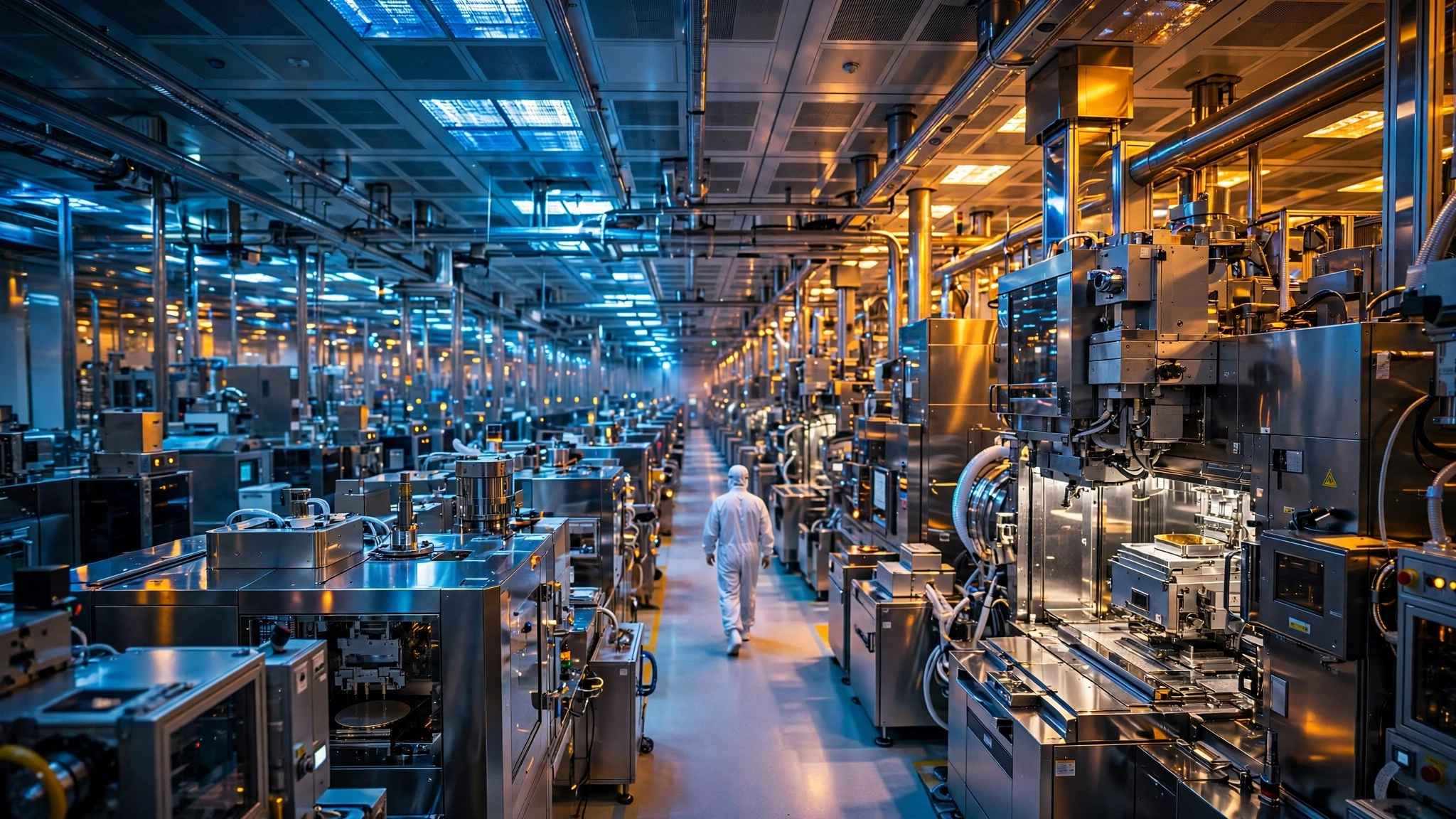
Seven hundred and nineteen percent. That is the year-over-year revenue growth ChangXin Memory Technologies posted in the first quarter of 2026, when it pulled in 50.8 billion yuan ($7.1 billion) from three fabrication plants in Hefei that were producing test chips and losing money just three years earlier. Fourth-largest DRAM manufacturer in the world, a rank that would have been unthinkable when these fabs broke ground. On July 27 it will list on Shanghai’s STAR Market at an $85.5 billion valuation, raising $8.6 billion in what will be Asia’s largest share sale this year and China’s biggest IPO since 2010.
That money has a destination: more wafers, more fabs, more capacity aimed directly at the three-company oligopoly that has controlled global memory for decades. Samsung Electronics holds 38% of the DRAM market by revenue, SK Hynix holds 29%, and Micron Technology holds 22%, according to Counterpoint Research data for Q1 2026. Together they control 89 cents of every dollar spent on DRAM anywhere on Earth.
That dominance looked permanent, and until twelve months ago it was. Then CXMT took 8% of the market in Q1 2026, up from 3% in the same quarter a year earlier. Nobody has doubled DRAM market share that fast since Samsung itself in the 1990s.
And nobody in Washington knows quite what to do about it, which is how you get a situation where Apple’s CEO is lobbying the Treasury Secretary for permission to buy chips from a company that two members of Congress want permanently blacklisted.
The story would be remarkable enough as a pure industrial narrative, but it collides with three forces that make it something else entirely: a memory shortage so severe that Apple raised MacBook and iPad prices for the first time in years, a geopolitical confrontation playing out in real time, and an original calculation we ran that reveals a paradox investors should understand before July 27.
The Paradox at the Heart of the IPO
CXMT currently operates three fabs producing roughly 300,000 wafers per month, accounting for approximately 11% of global DRAM wafer capacity according to Financial Times reporting. CXMT has stated it aims to exit 2026 at 350,000 wafers per month and reach 15% of global capacity by 2028 as new production lines in Hefei, Shanghai, and Beijing come online.
We built a model to calculate what that expansion means for DRAM pricing. None of it is flattering to anyone buying shares at $85 billion.
Start with the revenue pool. Using Counterpoint’s Q1 2026 market share data and the reported revenues of each major player, the total DRAM market is running at approximately $196 billion annualized. CXMT’s 8% share implies its $28.4 billion annualized revenue translates to roughly $3.5 billion per share point. That is higher than the market average of $2.2 billion per point, a premium explained by shortage pricing that disproportionately rewards the marginal supplier: when demand outstrips supply, the last available wafer commands the highest margin.
Now project forward. CXMT plans to add four points of global wafer capacity (from 11% to 15%) within roughly 24 months using IPO proceeds, money that lands in a market with a long and painful memory for overcapacity that has destroyed investor wealth in every previous cycle without exception.
Every previous cycle tells the same story. In 2017–2018, a supercycle driven by smartphone and data-center demand pushed DRAM prices to record highs. Samsung, SK Hynix, and Micron expanded capacity. CXMT itself began producing its first test wafers. By 2019, DRAM spot prices had fallen 47%. Margins at all three incumbents contracted by 30 to 40 percentage points within two quarters. Demand held fine. It was a supply increase of approximately 20% over 18 months, of which Chinese producers (including early CXMT output) contributed roughly 3–5 percentage points.
The investors are financing the bomb, and the deal structure suggests they know it: CXMT’s fee rate of 0.48% is one-tenth the market average for Chinese A-share IPOs, a discount that tells you the underwriters priced the deal to move fast, fill the book, and close before anyone runs the math on what 15% capacity share does to commodity DRAM pricing in a market that historically punishes oversupply within two quarters.
This is the liar’s paradox of commodity semiconductors. The IPO is attractive because DRAM prices are at multi-year highs. The proceeds fund capacity that historically crashes DRAM prices. The valuation is built on margins that the company’s own expansion strategy is engineered to destroy.
Why the Bears Might Be Wrong This Time
The strongest case against that paradox is four words long. AI broke the cycle.
SK Hynix CEO Kwak Noh-jung told Reuters in July that the global memory industry faces its “worst-ever supply shortage in 2027,” with demand continuing to exceed production capacity “well beyond 2030” despite aggressive expansion. Meritz Securities analyst Kim Sunwoo estimates that DRAM suppliers currently meet only 75% to 80% of demand, a fulfillment rate that could fall to 60% by next year. High-bandwidth memory now consumes 22–23% of total DRAM wafer starts and is projected to reach 30% by 2027, according to TrendForce, crowding out conventional DRAM production even as new fabs come online.
In that world, CXMT adding four points of capacity is not a glut trigger. It is a partial bandage on a wound that keeps widening. Standard DRAM contract prices have already surged 55–60% in early 2026, and Aletheia Capital projects another 30% jump in Q3 alone. Gavin Baker of Atreides Management, speaking on the All-In Podcast, estimated that DRAM will represent 30% to 40% of all hyperscaler capital expenditure by 2027. Memory is not just scarce; it is becoming the single largest line item in AI infrastructure budgets, a status that redefines the competitive dynamics for every company that makes it.
CXMT’s wafer output could be entirely absorbed by domestic Chinese demand, particularly if U.S. export controls continue to restrict Samsung, SK Hynix, and Micron from selling advanced products into China. In that scenario, CXMT never competes head-to-head with the incumbents on the global market at all. It simply feeds China’s own enormous appetite for consumer and server DRAM, freeing up exactly zero additional supply for the rest of the world.
The HBM Generation Gap
CXMT’s ambitions extend beyond conventional DRAM into the fastest-growing segment of the memory market, and this is where the technology gap becomes a revenue gap that may prove more durable than the commodity DRAM competition. Its roadmap calls for mass-producing HBM3 by the end of 2026.
HBM generated $3.17 billion in 2025 and is projected to reach $12.44 billion by 2031, growing at a 25.58% compound annual rate according to Mordor Intelligence. SK Hynix controls approximately 58% of HBM revenue, Micron holds 23%, and Samsung takes 21%. All three are already shipping HBM4, the next generation of high-bandwidth memory designed for Nvidia’s Vera Rubin architecture.
CXMT is targeting HBM3. Think about that. By the time it ships, HBM3 will be the previous generation, and the revenue premium will have migrated to HBM4 and beyond.
Andrew Lu, an independent chip analyst and former head of Asia Pacific semiconductor research at Barclays and Citi, told MarketWatch that CXMT’s products are “probably two to three years behind” mainstream DRAM technologies, with an even larger gap on HBM. “If CXMT wants to make it into HBM, their current technology isn’t enough,” Lu said.
The product works, but the timing cuts the other way. Launching HBM3 in late 2026 while competitors ship HBM4 is like opening a 4G network in a country where 5G handsets are already the default. It still finds buyers, because any HBM is better than no HBM in the current shortage, but it doesn’t command the margin that justifies the R&D investment to develop it.
Apple’s $13 Billion Dilemma
While CXMT prepares for its IPO, Apple is conducting technical validation on its chips. The reason is money. Lots of it.
We estimated Apple’s annual DRAM expenditure using public unit shipment data and standard memory configurations. Apple ships approximately 225 million iPhones (averaging 8 GB of LPDDR5 each), 55 million iPads (8 GB), and 25 million Macs (16 GB). That totals roughly 2.64 billion gigabytes of DRAM per year. At current LPDDR5 contract pricing of approximately $3.50 to $5.00 per gigabyte, Apple spends an estimated $9 billion to $13 billion annually on memory alone. With DRAM prices up 55–60% in 2026, Apple’s memory bill has increased by $3 billion to $5 billion compared to 2024 levels.
Those numbers explain the price hikes and the panic that followed them. Apple raised MacBook and iPad prices in late June, telling customers it could “no longer shield” them from soaring memory costs, according to Reuters. Apple’s announcement wiped billions from its market cap in a single session.
CXMT offers a potential escape valve, and the discount is substantial. Its conventional DRAM is priced at a 15–20% discount to Samsung, SK Hynix, and Micron for comparable specifications, and it has already signed orders with HP, Qualcomm, Dell, ASUS, and Acer, according to IndMoney analysis of the supplier relationships. If Apple sourced even 20% of its DRAM from CXMT, the savings could reach $500 million to $1 billion per year at current pricing.
Apple CEO Tim Cook has spoken with Treasury Secretary Scott Bessent about the arrangement. Bloomberg reported that Apple has proposed limiting CXMT-sourced chips to devices sold in the Chinese market, freeing up Samsung, SK Hynix, and Micron supply for devices sold everywhere else. Cook’s strategy is clever: it reduces Apple’s global DRAM cost while keeping Chinese-made memory out of American products, a political distinction that matters more than a technical one.
The Blacklist Question
Not everyone in Washington is receptive, and the opposition is sharpening.
Representatives John Moolenaar and George Whitesides sent a letter to Commerce Secretary Howard Lutnick urging that CXMT be placed on the Entity List, which would effectively bar U.S. companies from buying its products without a license almost certain to be denied.
“Every memory purchase by a U.S. company will directly subsidize the People’s Liberation Army’s development of this critical dual-use technology,” the letter stated.
CXMT is already on the Pentagon’s 1260H list of Chinese Military Companies, a designation applied under the Biden administration. That list carries reputational risk but not a purchase ban. The Entity List would be. If Commerce acts on the congressional push, Apple’s CXMT gambit dies immediately and the company returns to its three existing suppliers, who have every incentive to continue raising prices.
This creates a perverse incentive structure. Samsung, SK Hynix, and Micron benefit from CXMT’s blacklisting because it preserves their pricing power. They also face a class-action lawsuit filed in June 2026 in California federal court alleging that they coordinated a deliberate shift away from conventional DDR3 and DDR4 production toward higher-margin HBM products, artificially inflating conventional DRAM prices by approximately 700% over four years. That lawsuit invokes precedent: in the mid-2000s, Samsung, Hynix, and Micron were caught in a DRAM price-fixing scheme that resulted in billions in fines and criminal convictions.
If CXMT gets blacklisted and the oligopoly is found to have manipulated pricing, American consumers pay twice: once for the shortage and once for the alleged collusion.
What We Did Not Prove
Our supply-glut model uses an estimated total DRAM market size derived from Counterpoint share percentages and reported company revenues. Our estimated market size derives from pricing tiers and product mix that we cannot verify from public filings. Our Apple DRAM expenditure estimate relies on publicly reported unit shipments and standard memory configurations, not the actual bill of materials, which Apple does not disclose. The 2018–2019 DRAM cycle comparison is instructive but not deterministic: AI-driven demand is genuinely without precedent in scale and duration, and the bears’ reliance on historical cyclicality could be the wrong framework entirely. CXMT’s IPO filings are in Chinese and our analysis works from English-language press summaries. CXMT’s reported discount of 15–20% versus incumbents is an analyst estimate, not a published price list.
The Bottom Line
CXMT’s IPO is the most important listing of 2026 because it crystallizes a question that affects everyone who buys a phone, a laptop, or pays a cloud computing bill: should the global memory supply chain remain a three-company oligopoly priced for scarcity, or should China’s state-backed challenger be allowed to add supply that could drive prices down for billions of consumers?
Washington cannot answer both ways forever. Blocking CXMT protects a geopolitical interest while preserving the pricing power of an oligopoly that faces credible antitrust allegations. Permitting CXMT reduces consumer costs while funding a company the Pentagon has flagged as a military asset. The Apple compromise of China-only sourcing splits the difference, but it depends on a political class that rarely stays split for long.
What You Can Do: If you are buying a PC, Mac, or phone in the next six months, memory costs are not coming down regardless of this IPO. Budget for prices 50–80% above 2024 levels and buy sooner rather than waiting for relief that won’t arrive before mid-2027 at the earliest. If you manage enterprise IT budgets, model DRAM at 25–30% of total server cost, not the historical 10–15%, and lock in supply contracts now. If you are evaluating exposure to the memory sector, the number to watch is CXMT’s wafer output in Q4 2026 relative to its 350,000/month target: every month it undershoots, the shortage pricing thesis strengthens; every month it hits, the glut paradox gets closer. And if you hold Apple stock, the Entity List decision on CXMT matters more to Apple’s margins than any single product launch on the roadmap.