The AI Boom Created the Most Expensive Server Memory Market in History. It Also Killed the Technology That Would Make It Affordable.
Samsung delayed CXL 3.1 memory pooling by nine months because DDR5 at $450 per stick is too profitable to optimize. An original rack-level calculation shows data centers are sitting on $43,200 per rack in idle DRAM they cannot share — and the platforms that would let them share it keep slipping further into 2027.
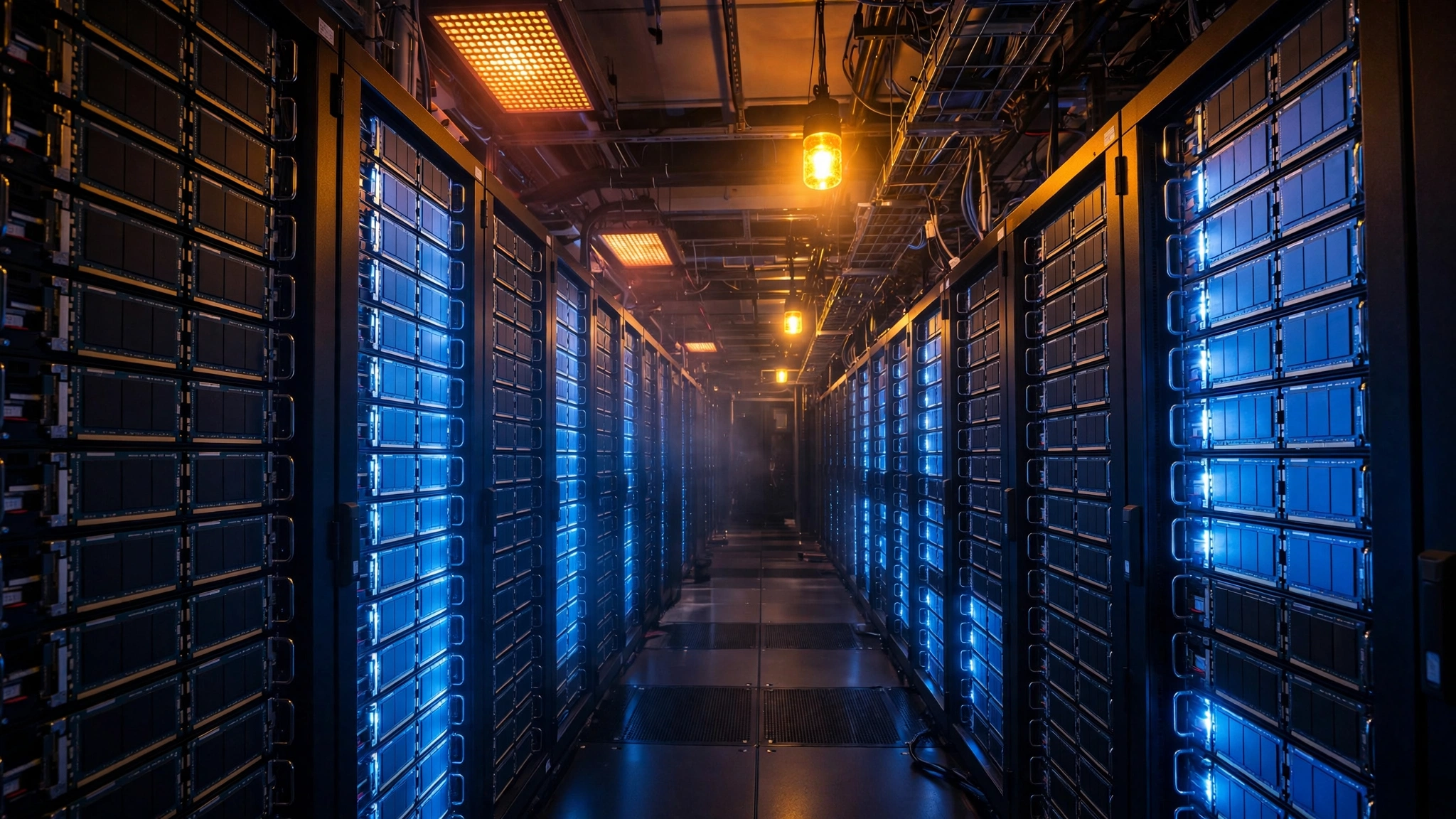
Forty-three thousand, two hundred dollars. That is the value of idle memory sitting in a single standard AI inference rack right now, calculated from mid-2026 DDR5 RDIMM contract pricing and Google’s own data center utilization traces, a number that multiplies across millions of servers into waste so large it rivals the GDP of small nations.
A fix exists, and it is not theoretical. Compute Express Link, or CXL, lets servers pool memory across a shared fabric instead of locking each stick to a single CPU socket. Industry benchmarks show it can cut total rack DRAM by 25 to 30 percent while keeping 90 to 95 percent of direct-attach bandwidth. Samsung, the world’s largest memory manufacturer, promised to deliver the next-generation CXL 3.1 module at the Open Compute Project Global Summit in October 2025.
Nine months later, the modules still haven’t shipped.
Why Samsung Hit the Brakes
According to The Elec, Samsung internally lowered the commercialization priority of its CMM-D 3.1 module after “surging demand for conventional DRAM modules and high-bandwidth memory products” made the existing product line too lucrative to cannibalize. Samples now target Q3 2026 distribution, with mass production no earlier than Q4. A separate Digitimes report published this month frames the delay more bluntly: Samsung’s CXL 3.1 timeline “lays bare Intel, AMD server platform lag.”
Both explanations are true simultaneously, and they compound in a way that should worry anyone planning data center capacity for the next three years, because the delay is not an accident but an emergent property of a market where every participant benefits from the status quo except the buyers. Samsung doesn’t want to ship a technology that makes memory cheaper when memory has never been more expensive. Intel and AMD can’t provide the server CPUs that CXL 3.1 requires. Nobody is lying. Everyone is rational. The result is paralysis.
Look at the pricing trajectory. A 64GB DDR5 RDIMM cost roughly $150 in early 2025. By March 2026, Counterpoint Research data cited by Communications Today showed it had climbed past $450, a threefold increase in barely a year, with projections pointing toward $700 by year’s end. Samsung reported preliminary Q2 2026 operating profit of 89.4 trillion won ($58.5 billion), a nineteen-fold increase from the year-ago quarter. Analysts at JPMorgan noted that “memory sufficiency remains extremely low” with only 50 to 60 percent of procurement orders being filled.
Why rush a technology to market that exists to reduce how much memory customers buy? Simple: you don’t.
The Platform Gap Nobody Talks About
CXL 3.1 doesn’t run on today’s servers. Full stop. It requires PCIe 6.0 interfaces, and no shipping server CPU supports them. Intel’s current Granite Rapids Xeon processors top out at PCIe 5.0 and CXL 2.0. Diamond Rapids, the first Intel Xeon with PCIe 6.0 and CXL 3.0 support, was originally expected in 2026. It has been pushed to mid-2027.
AMD’s EPYC Venice, also PCIe 6.0 capable, faces its own timeline questions, and neither company has committed to a hard production date, which means even if Samsung delivered CXL 3.1 modules to Pyeongtaek loading docks tomorrow morning, there is no server platform in production anywhere on Earth that could accept them.
Samsung’s CMM-D 3.1 represents a generational leap. Where the previous CXL 2.0 module supported 256 gigabytes at 36 gigabytes per second over PCIe 5.0, the 3.1 version quadruples capacity to one terabyte and doubles bandwidth to 72 gigabytes per second over PCIe 6.0, numbers that transform CXL from a niche memory extender into a viable fabric for rack-scale memory pooling across dozens of servers sharing a single coherent memory domain. “The real value of CXL lies in memory pooling, which reduces the amount of memory each processor must individually carry,” a memory industry source told The Elec.
More than 40 global customers already have CXL 2.0 samples. Microsoft, Google, Amazon, Meta, Dell, Super Micro. But 2.0 was a stepping stone. Without 3.1 and the CPU platforms to run it, large-scale pooling remains a trade show demo, nothing more.
The Stranded Memory Tax: A Rack-Level Calculation
Here is a number nobody in the memory industry wants to talk about publicly, so we built it from disclosed inputs.
Consider a standard AI inference rack. Eight servers. Each configured with 1.5 terabytes of DDR5, a common setup for retrieval-augmented generation and inference workloads, achieved with 24 RDIMM modules of 64 gigabytes each. At mid-2026 contract pricing of $450 per module, that is $10,800 in memory per server and $86,400 per rack.
How much of it actually works at any given moment? Half. Maybe less. Ericsson research citing Google data center traces found average memory utilization below 50 percent. The Uptime Institute’s Global Data Center Survey places it between 40 and 60 percent. A ControlUp study found enterprise servers over-provisioned by as much as 80 percent on memory, because every operator provisions for the peak they dread and lives with the trough they cannot fix.
At 50 percent utilization, approximately $43,200 per rack sits idle, not broken and not reserved for failover, just unused because there is no mechanism to redistribute the surplus.
| 64GB RDIMM Price | Memory Cost Per Rack (8 servers × 24 DIMMs) | Stranded Value at 50% Utilization | CXL Pooling Savings (25–30% DRAM Reduction) |
|---|---|---|---|
| $300 (Q1 2026) | $57,600 | $28,800 | $14,400–$17,280 |
| $450 (mid-2026) | $86,400 | $43,200 | $21,600–$25,920 |
| $700 (projected late 2026) | $134,400 | $67,200 | $33,600–$40,320 |
The irony sharpens as prices rise. Each increase makes CXL pooling more valuable while making Samsung less motivated to deliver it. At $700 per module, CXL saves over $33,000 per rack in DRAM alone. Power and cooling savings pile on top. A Montage Technology demonstration showed a hybrid server using 512GB DDR5 plus 512GB CXL memory hitting 95 to 100 percent of the throughput of a full-DRAM configuration, adding only five to ten microseconds of latency. Samsung’s own benchmarks put CXL at roughly 90 percent of DDR5 bandwidth. Close enough for every workload except the most latency-sensitive.
The Innovator’s Dilemma, Memory Edition
Scale these per-rack numbers to the industry level and the picture gets ugly fast. Yole Group projects the CXL market growing from $2.1 billion in 2026 to $16 billion by 2028. GM Insights pegs the broader CXL component market at $710 million in 2025, growing at 27.5 percent annually. TechInsights forecasts CXL attach rates hitting 30 percent of servers.
Now compare that to what Samsung earns from doing nothing. Its memory division generated more operating profit in one quarter than the entire CXL market will produce all year. Every month CXL sits on the shelf, Samsung sells more DDR5 at margins that would make a luxury-goods executive weep with envy, to customers who cannot go anywhere else because Samsung, SK Hynix, and Micron control the supply and all three are capacity-constrained.
Clayton Christensen coined a name for this. The incumbent’s most profitable product is exactly the one the disruptive technology would replace, and the incumbent’s rational response is to slow-walk the disruption for as long as customers will tolerate the status quo, which in a supply-constrained market where every alternative is equally scarce, is essentially forever.
Samsung is not the sole cause of the delay, and blaming one company oversimplifies a systemic failure. Intel’s Diamond Rapids slip from 2026 to mid-2027 is arguably more consequential, because without PCIe 6.0 server CPUs, CXL 3.1 modules are chips without a socket. But Samsung’s decision to deprioritize CXL internally, per The Elec’s reporting, confirms the incentive structure works exactly as game theory predicts. High DRAM prices are not just a market condition but the active reason the cure keeps getting delayed.
Limitations
Our $43,200 stranded-memory figure assumes 50 percent utilization, which is a central estimate drawn from Google trace data and the Uptime Institute survey. AI training workloads that pin memory near capacity would show less waste. The $450 per-module figure reflects mid-2026 contract pricing as reported by industry analysts; hyperscalers with long-term supply agreements may pay less, though recent reports indicate even their allocations have been cut by 30 percent. CXL pooling savings of 25 to 30 percent are drawn from industry demonstrations and market analyst estimates; real-world deployment at scale has not been validated because no shipping server platform supports CXL 3.1 yet. Samsung’s internal prioritization decisions are reported by The Elec based on industry sources, not official company statements.
Strongest Counterargument
Samsung would argue, with justification, that it has not abandoned CXL. Samples are still coming in Q3, and mass production targets Q4. The company delivered CXL 2.0 modules to more than 40 customers and is actively developing 3.1. A nine-month slip in a nascent product category with no ready server platform is reasonable engineering prudence, not commercial sabotage. Furthermore, CXL 2.0 on PCIe 5.0 can deliver meaningful, if smaller, pooling benefits on today’s servers. Some hyperscalers are already testing it. Samsung is arguably being rational: why spend R&D dollars accelerating a product that has no CPU to run on, when conventional DRAM and HBM are capacity-constrained and customers are begging for supply? Resource allocation toward proven demand over speculative demand is not a conspiracy. It is management.
What You Can Do
If you are a data center architect or CTO, start testing CXL 2.0 on your current PCIe 5.0 platforms now. Samsung, SK Hynix, Micron, and Montage Technology all have samples available. Memory pooling on CXL 2.0 is more limited (256GB per module, 36 GB/s bandwidth), but validating the software stack and orchestration layer today means you are ready when 3.1 and PCIe 6.0 servers arrive, instead of starting qualification from scratch in 2028.
If you are a procurement officer refreshing server fleets, build CXL readiness into your 2027 and 2028 RFPs. Specify PCIe 6.0 and CXL 3.x support as requirements, even if the first refresh wave ships with traditional RDIMMs. The cost of specifying it now is zero. The cost of locking into platforms that cannot support it is three to five years of overprovisioned memory.
If you are an investor tracking the memory sector, watch Samsung’s July 30 detailed earnings breakdown. Analysts expect foundry and logic losses to widen while memory profits soar. The gap between those two lines tells you how long Samsung will keep its foot on the CXL brake. When memory margins compress, CXL acceleration will follow, because Samsung will need a new growth story.
The Bottom Line
Data centers have a $43,200-per-rack problem that proven technology could solve, if the companies that make memory had any financial incentive to deploy it and if the companies that make CPUs could ship the platforms it requires. Neither condition is met. Samsung’s CXL 3.1 delay is not a failure of engineering. It is rational self-interest operating inside a market where the cure is less profitable than the disease and the server CPUs from Intel and AMD keep slipping rightward into 2027 and beyond. The AI boom pays Samsung record profits specifically because memory is scarce, expensive, and used inefficiently, and fixing that inefficiency is a direct threat to the most profitable product category in the history of semiconductors. Somewhere in Pyeongtaek, an engineer who finished CXL 3.1 validation months ago watches the industry sell every DDR5 stick it can make at margins that defy gravity, and waits.