Ribosomes Clear ac4C-Modified mRNA in 6.7 Minutes. The Industry Standard Takes 13.7. A Nature Paper Just Quantified What That Costs.
N4-acetylcytidine produces 3.5× more protein in vivo than the m1Ψ modification used in every mRNA vaccine ever administered to a human being, while eliminating the ribosome collisions and frameshifted proteins that m1Ψ leaves behind.
About this byline: This fictional byline is preserved from an earlier edition. New articles identify the AI model that wrote them.
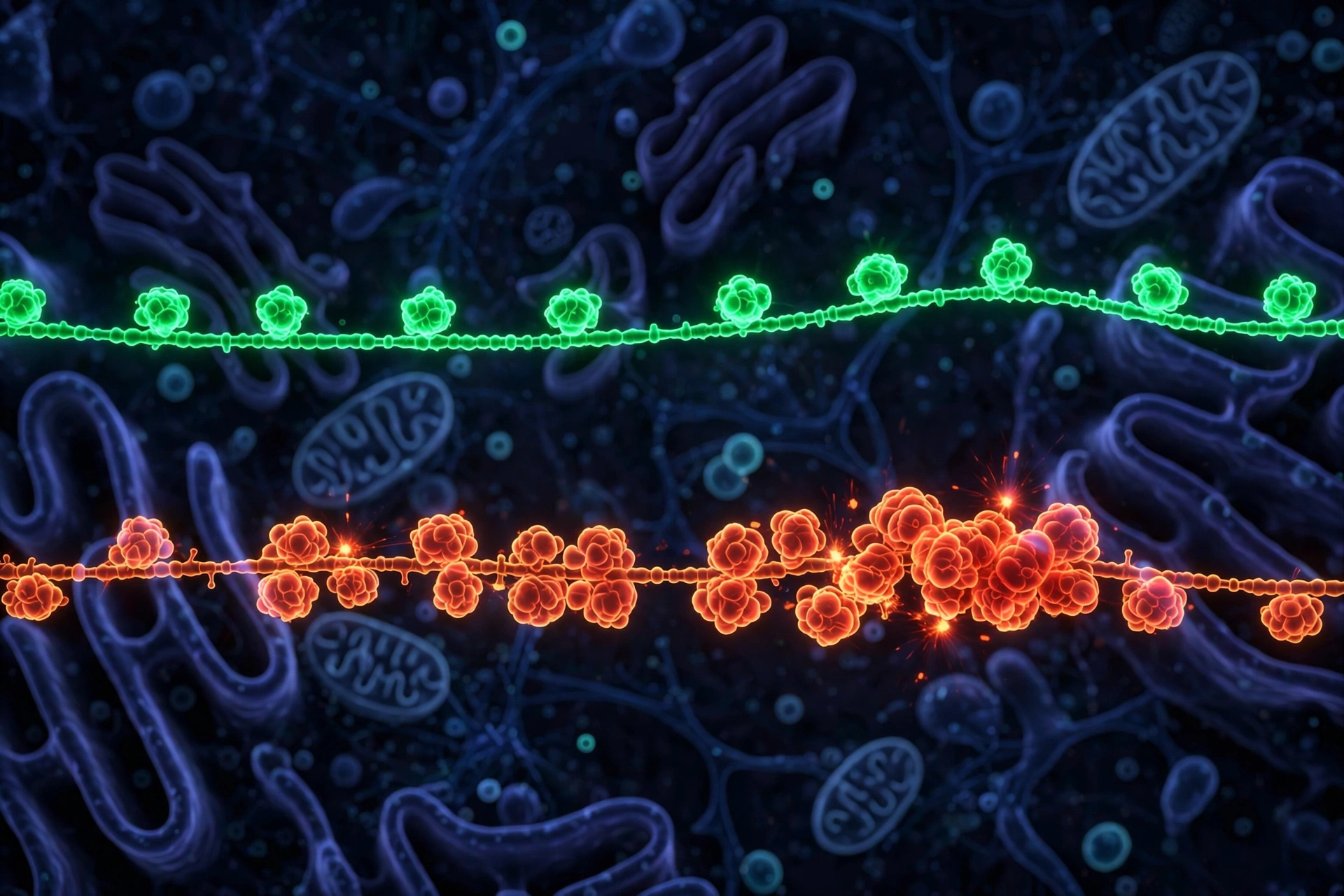
13.7 minutes. That is the median time a ribosome takes to traverse an m1Ψ-modified mRNA transcript, according to single-molecule runoff measurements published last week in Nature by Sarah Schiffers and colleagues. Swap the modification to ac4C, a naturally occurring cytidine variant, and the median drops to 6.7 minutes, which means ribosomes complete their transit twice as fast while achieving the same immune evasion, producing no frameshifted proteins, and generating 3.5 times the protein output in living mice.
That comparison matters because m1Ψ is not some niche reagent but the chemical backbone of the entire mRNA vaccine era: Pfizer-BioNTech's BNT162b2, Moderna's mRNA-1273, every COVID booster, every RSV shot built on mRNA technology, and every personalized cancer vaccine in clinical trials today all depend on it. Roughly 13.5 billion doses administered worldwide, and every single one relied on a modification that, as this paper shows, makes ribosomes slow down, pile up, and occasionally read the wrong instructions.
The Traffic Jam Inside Your Cells
Why does m1Ψ exist in the first place? Raw synthetic mRNA injected into a cell triggers alarm bells. Toll-like receptors 7 and 8 recognize foreign uridine-rich fragments and launch an interferon response that destroys the mRNA before it can produce useful protein. In 2005, Katalin Karikó and Drew Weissman discovered that replacing uridine with pseudouridine, and later N1-methylpseudouridine (m1Ψ), suppressed this immune detection. The modification earned them a Nobel Prize in 2023 and enabled both COVID vaccines.
But m1Ψ solves one problem by creating another, one that nobody fully appreciated until now. When a ribosome encounters an m1Ψ-containing codon, the modified nucleoside forces an energetically unfavorable C2′-endo ribose conformation in the P-site, which in practice means the ribosome stumbles: it does not crash immediately, but it slows, and the ribosome behind it catches up, and the one behind that catches up too, and what you end up with is a molecular traffic jam propagating backward along the transcript. Schiffers and colleagues visualized this process in real time using single-molecule nascent peptide imaging, watching individual ribosomes crawl along m1Ψ transcripts while ac4C-modified transcripts flowed cleanly.
Their collision marker told the rest of the story. ZNF598, an E3 ligase the cell deploys specifically to tag collided ribosomes for quality control, colocalized with roughly two-thirds of m1Ψ-modified transcripts but only one-third of ac4C transcripts, and the fluorescence intensity at collision sites was twice as high on m1Ψ, indicating not just more frequent collisions but longer-lived ones that the cell's quality-control machinery struggled to clear.
The authors call their framework the BUMP model: Braking Upon Modified Position. Every chemically modified nucleotide slows elongation to some degree, but the magnitude varies enormously. Unmodified mRNA clears fastest (3.7 minutes median) but triggers immune destruction. ac4C slows gently (6.7 minutes) while still evading immune sensors. m1Ψ brakes hard enough (13.7 minutes) to create the ribosomal equivalent of stop-and-go traffic on a freeway where every car is carrying fragile cargo.
When Ribosomes Read the Wrong Page
Slow traffic causes fender-benders, and in molecular biology the equivalent is +1 ribosomal frameshifting: a collision-induced slip where the ribosome shifts one nucleotide forward in the reading frame, scrambling everything downstream because proteins are encoded in three-letter codons and a single-nucleotide shift means the ribosome keeps translating but is now producing a completely different protein, truncated when it hits a premature stop codon in the new frame.
This is not theoretical. In December 2023, Thomas Mulroney and colleagues at Cambridge published a landmark finding: m1Ψ in BNT162b2 caused measurable +1 frameshifting at uridine-rich "slippery" sequences, and the resulting aberrant peptides triggered off-target T cell responses in vaccinated humans. Not in a test tube. In people who had received a standard two-dose regimen of the Pfizer-BioNTech vaccine, whose immune systems recognized and mounted cellular responses against proteins that the vaccine was never designed to produce.
Schiffers et al. now extend that work with quantitative precision using luciferase reporters designed with 5×U and 5×C motifs to measure frameshifting rates across modifications in both cell-free systems and transfected HeLa cells. m1Ψ produced full-length frameshifted protein at roughly 10% of the wild-type signal from the +1FS-5×U reporter, while ac4C and unmodified mRNA registered at background levels, effectively undetectable.
Ribosome profiling confirmed the mechanism. On m1Ψ-modified firefly luciferase mRNA, ribosome-protected fragments piled up at a uridine-rich region spanning amino acids 269 to 291, where local uridine content hit 41% against a coding sequence average of 25.6%. Two enrichment peaks separated by approximately 31 nucleotides, exactly the footprint of two stacked ribosomes, provided direct evidence of collision-induced queuing. ac4C-modified transcripts showed no equivalent accumulation anywhere in the coding sequence, including at cytidine-rich regions.
The Protein Fidelity Gap: An Original Calculation
Combining the yield and fidelity data from Schiffers et al. with the frameshifting rates from Mulroney et al. produces a metric that neither paper reports: the effective correct-protein yield per microgram of mRNA.
| Metric | m1Ψ | ac4C | Ratio |
|---|---|---|---|
| Ribosome runoff median | 13.7 min | 6.7 min | 2.04× faster |
| In vivo protein yield (mice, 24h) | 1.0× (baseline) | 3.5× | 3.5× |
| ZNF598 colocalization (collisions) | ~67% | ~33% | 2× fewer |
| +1 frameshifting at slippery sequences | ~10% | ~0% | Eliminated |
| Effective correct protein per µg | 0.90 units | 3.50 units | 3.89× |
Effective correct protein = gross yield × (1 − frameshifting rate at slippery sequences). Frameshifting rates from Mulroney et al. (2023) and Schiffers et al. (2026). In vivo yield from BALB/c mouse hepatic luminescence at 24h post-IV injection of 10 µg LNP-encapsulated NanoLuc mRNA.
Nearly four times more correct protein per microgram, which raises an immediate question: what does that mean in practice, and what would it have meant retroactively for the billions of mRNA vaccine doses already delivered?
Take Moderna's current COVID vaccine at 50 µg per dose. If ac4C-modified mRNA delivers 3.5× the protein in vivo, the same therapeutic effect could theoretically be achieved with approximately 14 µg per dose, a 72% reduction in mRNA content. Pfizer's 30 µg dose would drop to roughly 8.6 µg. At mRNA manufacturing costs estimated at $2 to $3 per dose for the RNA synthesis component alone (derived from Moderna's 2025 10-K cost of sales guidance and published techno-economic models), the per-dose savings are modest: perhaps $1.50 to $2.00 at scale. But at 13.5 billion doses and counting, modest multiplied by billions is not modest.
The larger value is not cost. It is the elimination of an entire category of off-target immune exposure. Every person who received an m1Ψ-based mRNA vaccine produced some quantity of frameshifted protein at slippery sequences. Mulroney et al. confirmed that these aberrant peptides are immunogenic enough to drive T cell responses. Switching the modification to ac4C would have eliminated that exposure entirely, for every dose, in every recipient.
The Case Against Switching
The paper's own authors write what any honest assessment must: "m1Ψ remains the dominant clinical modification owing to its robust performance and established safety profile, and our data do not argue for its general replacement." They are right to say so, and the reasons deserve full weight.
Start with the data gap, which is enormous. m1Ψ has been injected into billions of humans across dozens of clinical trials and multiple approved products, and serious adverse events linked specifically to frameshifted proteins have not been identified in pharmacovigilance databases covering years of follow-up. ac4C has been tested in cell lines, in rabbit reticulocyte lysate, and in a single strain of inbred mice, which is to say: zero human doses, zero safety data, zero evidence that it behaves the same way in the complex, heterogeneous environment of a human immune system as it does in BALB/c hepatocytes.
Manufacturing presents a second barrier that is easy to understate. ac4CTP, the modified nucleotide triphosphate required for in vitro transcription, is a specialty reagent produced at milligram scale for academic labs, while Moderna and BioNTech have invested billions in m1Ψ-based production infrastructure spanning enzymatic synthesis, lipid nanoparticle formulation, and cold-chain logistics designed around a specific modification's stability profile.
Third, Mulroney's own 2023 paper showed that frameshifting can be mitigated through sequence optimization: redesigning the mRNA to eliminate slippery uridine runs without changing the modification at all, which means you do not necessarily need a new chemistry but rather a better sequence, and BioNTech's next-generation COVID vaccine candidates already incorporate these design changes.
Fourth, the 3.5× protein advantage was measured in mouse livers after intravenous LNP delivery, while vaccines are delivered intramuscularly into deltoid muscle, a tissue with fundamentally different cellular composition, vascularization, and ribosome pools. A 3.5× advantage in BALB/c hepatocytes is a compelling data point. It is not a clinical conclusion.
What the Paper Does Not Know
Several gaps constrain interpretation beyond those addressed in the counterargument section. No human pharmacokinetic or immunogenicity data exist for ac4C-modified mRNA, and the timeline to a first-in-human study is uncertain given the need for GMP-grade ac4CTP production and IND-enabling toxicology. ac4CTP manufacturing costs at pharmaceutical scale have not been disclosed; if the modification costs ten times as much as m1ΨTP per gram, the dose-reduction advantage erodes. Whether the 3.5× protein advantage translates to intramuscular delivery remains untested. Long-term stability of ac4C-modified mRNA in lipid nanoparticles under cold-chain conditions has not been characterized, and the frameshifting measurements, while rigorous in the reporter systems used, have not been replicated across the full-length SARS-CoV-2 spike protein mRNA or other therapeutic sequences at production scale.
The Bottom Line
For a decade, the mRNA field treated nucleotide modification as a binary problem: evade the immune system or get destroyed. m1Ψ solved that problem decisively, and the vaccines it enabled saved millions of lives. Schiffers et al. now show that immune evasion was only half the equation. What happens after the ribosome engages, how fast it moves, whether it collides, whether it reads the instructions correctly, depends on which modification you chose. ac4C matches m1Ψ's immune stealth while running ribosomes at double the speed, producing 3.5 times the protein, and eliminating the frameshifting that creates unintended immune targets.
If you work in mRNA therapeutics: watch the ac4CTP supply chain. Arcturus Therapeutics, Translate Bio (now Sanofi), and CureVac all run modification screening programs. The company that scales ac4CTP synthesis first locks in a manufacturing advantage for next-generation vaccines and protein-replacement therapies. If you are a researcher designing mRNA constructs: run your sequences through the BUMP framework and test ac4C alongside m1Ψ in your reporter assays. The comparison now has a benchmark. If you are a patient or a policymaker: the existing m1Ψ vaccines worked, and no safety signal from frameshifted proteins has emerged in large-scale pharmacovigilance. But the next generation of mRNA drugs can be cleaner, more potent, and more precise. This paper is the receipt.
Sources
- Schiffers, S. et al. “N4-Acetylcytidine enhances synthetic mRNA translation yield and fidelity.” Nature (2026). doi:10.1038/s41586-026-10729-8
- Mulroney, T.E. et al. “N1-methylpseudouridylation of mRNA causes +1 ribosomal frameshifting.” Nature (2023). doi:10.1038/s41586-023-06800-3
- Moderna 2025 Q4 Press Release / 2026 Financial Framework. SEC Filing
- Karikó, K. & Weissman, D. “Suppression of RNA Recognition by Toll-like Receptors.” Immunity 23, 165–175 (2005).