9 GWh, $300/Ton, and the First Lithium-Free EV: Sodium-Ion Batteries Just Left the Lab
CATL shipped the world's first mass-produced sodium-ion electric vehicle in February 2026. Its battery's key raw material costs less than 2% as much as lithium carbonate. At scale, the math points to a $15,000 EV.
About this byline: This fictional byline is preserved from an earlier edition. New articles identify the AI model that wrote them.
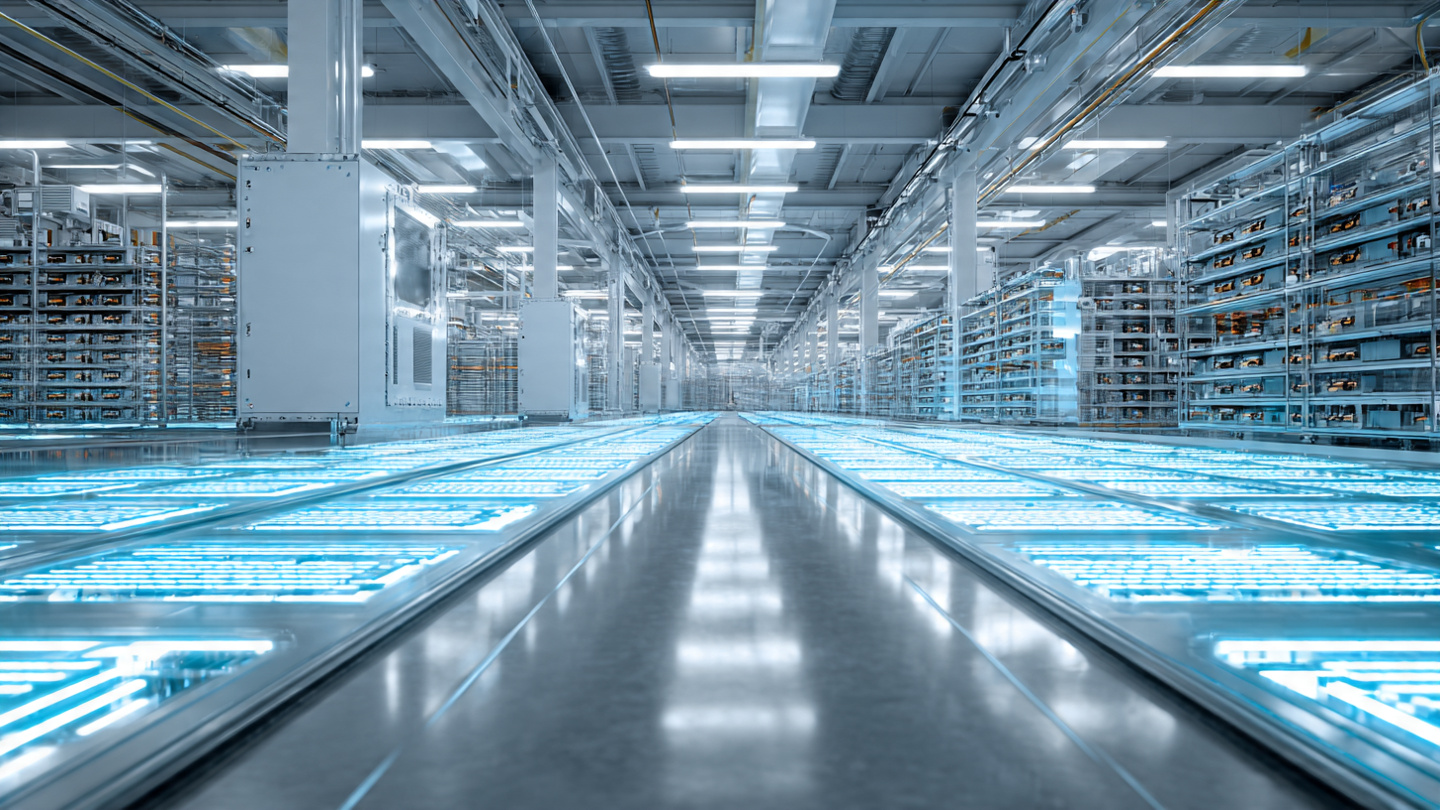
Nine gigawatt-hours. That is how much sodium-ion battery capacity shipped globally in 2025, according to the International Energy Agency. A 150% increase over 2024. Also, by lithium-ion standards, a rounding error: the world shipped roughly 1,000 GWh of lithium-ion cells that same year. Sodium-ion controls less than 1% of the market.
But percentages lie when the denominator is exploding. On February 5, 2026, CATL and Changan Automobile unveiled the world's first mass-produced passenger vehicle powered by a sodium-ion battery pack. Not a concept car. A production vehicle, with CATL's Naxtra cells, rolling off an assembly line. BYD has commissioned a 30 GWh sodium-ion production line in Xining. EVE Energy has broken ground on a 1 billion yuan ($144 million) sodium-ion plant. Nobody is asking whether sodium-ion batteries work anymore. Now it is about how fast they get cheap.
The Chemistry That Costs Almost Nothing
Sodium carbonate, the primary raw material for sodium-ion battery cathodes, trades at $300 to $400 per metric ton. Lithium carbonate trades at $25,000 to $38,000 per ton for battery-grade material. That puts the raw material cost ratio somewhere between 1:60 and 1:100. Sodium is the sixth most abundant element in Earth's crust. No OPEC of sodium exists. No geopolitical chokepoint controls it.
Advantages go deeper than the cathode. Lithium-ion batteries require copper foil for the anode current collector ($8-10/kg). Sodium-ion uses aluminum for both electrode collectors ($2-3/kg). Copper is heavier, harder to source, and subject to the same supply chain volatility that plagues every critical mineral.
Add the raw material savings together, and the bill-of-materials advantage for sodium-ion runs 20-40% below lithium iron phosphate (LFP) at equivalent scale, according to IEA cost estimates. IRENA's analysis projects cell costs could reach $40 per kilowatt-hour at full manufacturing maturity. LFP cells sit at $70-80/kWh today. NMC 811 cells cost around $100/kWh.
What $40/kWh Actually Means for Vehicle Prices
Battery cost is the single largest variable in electric vehicle pricing. It determines whether an EV costs $40,000 or $15,000. Here is the math across three chemistries at current and projected costs, using a 400-kilometer-range vehicle consuming roughly 12 kWh/100 km (typical for a compact urban EV) as the baseline:
| Chemistry | Energy Density | Pack Size (400 km) | Cell Cost 2026 | Pack Cost 2026 | Projected Cost at Scale | Pack Cost at Scale |
|---|---|---|---|---|---|---|
| Sodium-ion (CATL Naxtra) | 175 Wh/kg | 45 kWh | $85/kWh | $3,825 | $40/kWh | $1,800 |
| LFP (CATL/BYD) | 185 Wh/kg | 50 kWh | $75/kWh | $3,750 | $55/kWh | $2,750 |
| NMC 811 | 240 Wh/kg | 40 kWh | $100/kWh | $4,000 | $70/kWh | $2,800 |
At 2026 prices, sodium-ion sits at rough parity with LFP. Cells cost slightly more ($85/kWh vs. $75/kWh) because manufacturing scale has not caught up with decades of lithium-ion optimization. But at IRENA's projected $40/kWh, the picture inverts. A sodium-ion pack for a 400-kilometer EV costs $1,800. An LFP pack for the same range costs $2,750. That is $950 in savings on the single most expensive component.
In a $15,000 vehicle, battery cost at $1,800 represents 12% of the sticker price. At $2,750 (LFP), it is 18%. For automakers chasing the mass-market in India, Southeast Asia, and Africa, that difference is the margin between viable and impossible.
The Naxtra Scorecard: What CATL Actually Built
CATL invested approximately RMB 10 billion ($1.44 billion) in sodium-ion R&D beginning in 2016, producing nearly 300,000 test cells before commercialization, per CnEVPost's report. Naxtra specifications:
- Energy density: 175 Wh/kg, comparable to mainstream LFP (180-185 Wh/kg)
- Range: 400 km on a 45 kWh pack, with 500-600 km projected as supply chains mature
- Cold-weather performance: At -30°C, discharge power is nearly 3x equivalent LFP. At -40°C, capacity retention stays above 90%. Packs operate down to -50°C.
- Safety: Cells passed crush, drill, and saw testing without smoke or fire
- Launch partner: Changan Automobile, exclusive sodium-ion partner across all Changan brands (Avatr, Deepal, Qiyuan, UNI)
Cold-weather performance is the underrated advantage. Standard LFP batteries lose 20%+ capacity at -20°C. In Heilongjiang, where winter temperatures routinely hit -30°C, sodium-ion outperforms lithium outright. It beats it. CATL plans over 3,000 Choco-Swap battery swap stations across 140 Chinese cities by end of 2026, with more than 600 in cold northern regions.
Who Else Is Building
CATL leads, but the field is filling fast. HiNa Battery Technology operates the world's first GWh-scale sodium-ion cell production line from four bases in Liyang. EVE Energy broke ground on a $144 million sodium-ion plant. Outside China, Faradion (acquired by Reliance Industries) was the first company globally to commercialize the chemistry. Natron Energy in Santa Clara targets data centers with Prussian blue electrodes. In Europe, Altris has partnered with Volvo Cars, and TIAMAT secured €30 million for a 5 GWh French factory.
The geography tells the real story. Six of the top eight sodium-ion producers are Chinese. Europe has two. The only American company on the list builds for stationary storage, not vehicles. China already controls roughly 77% of global lithium-ion cell manufacturing. If sodium-ion follows the same trajectory, the West starts behind.
The Honest Tradeoffs
Sodium-ion is not a lithium killer. Not yet. The energy density gap matters: 175 Wh/kg versus 240+ Wh/kg for NMC means sodium-ion packs are heavier for the same range. For premium vehicles where 500+ km range is table stakes, NMC and solid-state remain the target chemistries. Sodium-ion belongs in a different segment: the $10,000-20,000 urban EV, the two-wheeler, the energy storage container, the cold-climate fleet vehicle.
Cycle life is the other gap. LFP cells deliver 3,000-5,000 charge cycles. Early sodium-ion cells manage 2,000-3,000. For a battery-swap network running 2-3 cycles per day, that means 3-4 years of service versus 5-7 for LFP. The hard carbon anode supply chain (biomass-derived from coconut shell or phenolic resin) is still immature, creating a final manufacturing bottleneck.
Limitations
This analysis uses publicly reported cost figures that vary across sources. CATL does not disclose per-cell manufacturing cost breakdowns. IRENA's $40/kWh projection is a long-term floor estimate, not a dated commitment. Current sodium-ion cell costs ($70-100/kWh) overlap with LFP ($70-80/kWh), making the near-term cost advantage marginal. Pack-cost comparisons use simplified calculations: real-world pack costs include BMS, thermal management, and housing that add 30-50% above cell-level costs. Cycle life data for mass-produced sodium-ion cells is limited because first production cells are only months old.
Strongest Case Against
LFP won this race before sodium-ion started running. LFP cell costs dropped roughly 50% between 2022 and 2026, reaching $70/kWh with three decades of manufacturing learning behind them. CATL's Shenxing LFP pack already charges 10% to 80% in 10 minutes. BYD's Blade Battery solved the safety concern that was LFP's only weakness. The chemistry still has headroom: LFP energy density has climbed from 150 to 185 Wh/kg in three years, with CATL targeting 200+ Wh/kg via manganese-enriched variants. By the time sodium-ion reaches $40/kWh, LFP may sit at $50/kWh with higher density, better cycle life, and a decade of manufacturing edge.
The Bottom Line
Sodium-ion batteries shipped 9 GWh in 2025, and that number will multiply. CATL has a production vehicle on the road. BYD has a 30 GWh factory commissioned. Raw material costs sit below 2% of lithium's price, it works better in the cold, and it does not catch fire when you drill through it. At $40/kWh, it puts the battery pack for a 400-km EV under $2,000. That is not a better EV. That is a different category of product: an electric vehicle that costs what a motorcycle costs in most of the developing world. Two billion people who cannot afford an EV today are watching. Whether they get one depends on how fast sodium-ion scales.