A Bankrupt French Startup Sold Its Eye Chip for $4.7 Million. It Just Became the First Brain-Computer Interface to Reach Patients.
Science Corporation acquired the PRIMA retinal implant from a liquidation court for €4 million in 2024. Forty-seven surgeries and one New England Journal of Medicine paper later, 80% of blind patients can read again, the company is valued at $1.5 billion, and it is on track to become the first BCI with a product in market — ahead of Neuralink, Synchron, and every other player in the field.
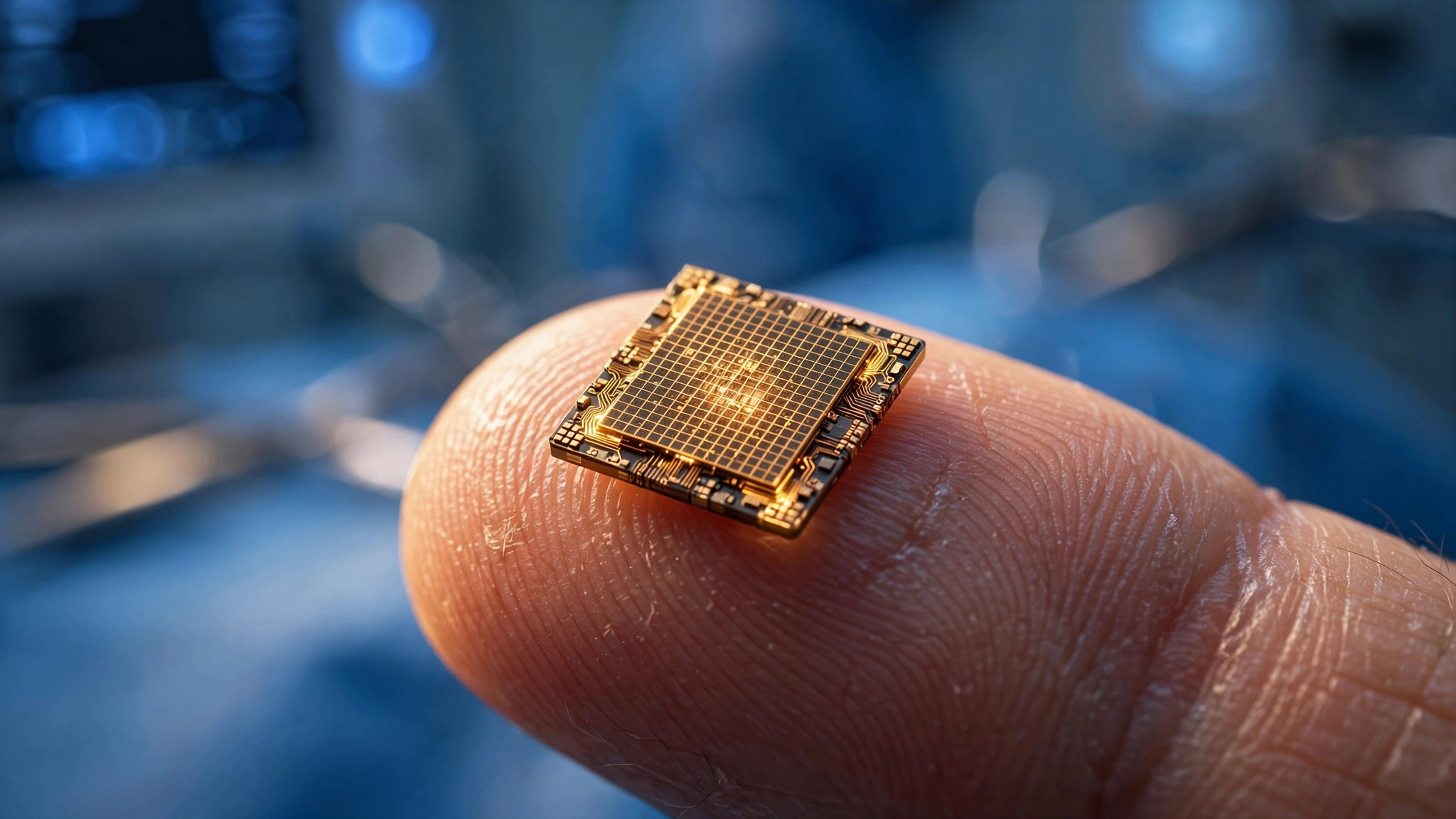
Four million euros. That is what a French bankruptcy court accepted for the entire asset portfolio of Pixium Vision in 2024, including its lead product: a 2×2-millimeter photovoltaic chip containing 378 light-powered pixels, designed to be implanted beneath the retina and restore central vision to people blinded by age-related macular degeneration. Science Corporation was the buyer, an Alameda-based neural engineering startup founded by Max Hodak, who left his position as co-founder and president of Neuralink in 2021. Price tag: roughly equivalent to a two-bedroom apartment in the 16th arrondissement. Within two years, the technology it purchased would produce the strongest clinical data ever published for a retinal prosthesis and position Science Corp as the first brain-computer interface company in history to bring a product to patients.
PRIMA is the device's name. Its results from a European clinical trial are now published in The New England Journal of Medicine. Of 32 patients who completed 12 months of follow-up, 26 showed clinically meaningful improvement in visual acuity. That is an 81% response rate. An accompanying NEJM editorial ran under the title "The First Treatment to Restore Vision" in patients with advanced geographic atrophy due to AMD. Among those who responded, 84% reported using the device at home to read letters, numbers, and words. One participant improved by 59 letters on a standard eye chart. Fifty-nine. Roughly 12 lines of vision gained from a chip smaller than a grain of rice.
How 378 Pixels Rebuild Sight
PRIMA has two components. First, the implant: a silicon disc containing 378 photovoltaic pixels, each 100 micrometers across, surgically placed beneath the retina in the zone where photoreceptor cells have died. No battery. No wiring. No internal electronics that need external power. Its counterpart is a pair of augmented-reality glasses fitted with a camera and a processing unit. A camera captures the visual scene, the processor converts it to a pattern of near-infrared light, and the glasses project that light onto the implant through the pupil. Each pixel absorbs the infrared energy and converts it to an electrical pulse, much like a miniature solar panel, stimulating the inner retinal neurons that remain intact above the atrophied layer. Those neurons relay the signal to the brain through the optic nerve, and the patient perceives a form of vision.
"It's basically like solar panels," Stanford professor Daniel Palanker, who invented the device, told Stanford News. "Every pixel is a little solar panel in the eye." Palanker, an ophthalmologist and electrical engineer, designed the chip to use near-infrared light specifically because the remaining healthy photoreceptors in the retina's periphery cannot see infrared. Prosthetic central vision and natural peripheral vision coexist without interference, a design choice that turned out to be as important as the chip itself because it means the implant augments rather than replaces whatever sight the patient still has.
Native resolution sits at approximately 20/400 Snellen equivalent, the threshold for legal blindness in the United States. But the glasses contain a zoom function that digitally magnifies the projected image, and with this feature, patients achieved corrected acuity up to 20/42, well above the threshold for reading large print. On average across the trial, patients gained 25.5 letters on the Early Treatment Diabetic Retinopathy Study (ETDRS) chart, a standardized measure used in nearly every ophthalmology clinical trial. For context, the previous best-in-class assistive technologies for geographic atrophy, such as extraocular magnifiers and implantable miniature telescopes, deliver a mean improvement of 0.24 logMAR, or roughly 12 letters. PRIMA more than doubled that, at 0.51 logMAR. Not incremental. Twelve letters of improvement lets you squint at a menu. Twenty-six letters lets you read a book.
How €4 Million Became $1.5 Billion
How this technology reached Science Corp is a case study in the disconnect between scientific merit and startup survival. Pixium Vision, a Paris-based company co-founded by retinal surgeon José-Alain Sahel, had been developing the PRIMA system since 2013. By 2024, it had enrolled patients, secured clinical trial sites across five European countries, and was generating data that would end up in the most prestigious medical journal in the world. Then the money ran out. French court filings show the liquidation price for Pixium's entire asset portfolio was approximately €4 million, or about $4.7 million at the time.
Science Corporation swept in. Hodak, who had raised roughly $260 million for his own BCI research program since leaving Neuralink, acquired the Pixium assets, absorbed the ongoing clinical trial, and published the results under Science Corp's banner. "Science was able to buy it for very cheap just when the study was coming out, so it was good timing for them," Sahel told MIT Technology Review. "They could quickly access very advanced technology that's closer to the market, which is good for a company to have."
Returns on that €4 million purchase are extraordinary. In February 2026, Science Corp closed a $230 million Series C round led by Lightspeed Venture Partners, Khosla Ventures, Y Combinator, and IQT, the investment arm of the U.S. intelligence community. A source close to the company told TechCrunch the round valued Science Corp at $1.5 billion post-money, bringing total capital raised to approximately $490 million. PRIMA, bought at liquidation, is the centerpiece of that valuation, representing a roughly 375-fold markup in less than two years.
For perspective on that arbitrage: Google acquired Android Inc. in 2005 for a reported $50 million, a purchase that now underpins an operating system running on 3.9 billion devices. PRIMA may not reach those heights, but the ratio of acquisition cost to current company value is in a different category entirely. Android was a 20,000x return over two decades. PRIMA is 375x in two years, and the product has not even reached market yet.
Cost per Letter, Break-Even Against Blindness
What will PRIMA cost when it reaches patients? Science Corp has not disclosed pricing, but the most informative analog is the cochlear implant, the only other sensory prosthesis to achieve widespread clinical adoption. A cochlear implant procedure runs $40,000 to $50,000 including the device, surgery, and rehabilitation. If PRIMA lands in the same range, we can calculate an original metric: cost per letter of visual acuity restored.
| Technology | Mean Vision Gain (letters) | Estimated Procedure Cost | Cost per Letter Restored |
|---|---|---|---|
| PRIMA retinal implant | 25.5 | $40,000–$50,000 (projected) | $1,569–$1,961 |
| Extraocular magnifiers | ~12 | $2,000–$5,000 | $167–$417 |
| Implantable miniature telescope | ~12 | $15,000–$25,000 | $1,250–$2,083 |
On a per-letter basis, PRIMA looks expensive compared to magnifiers, but the comparison is misleading because magnifiers and PRIMA do fundamentally different things: a magnifier enlarges the image so that surviving peripheral photoreceptors can resolve it, while PRIMA creates new photoreceptor function where none exists. For patients with geographic atrophy severe enough to qualify for the trial, their central vision is gone and magnification produces diminishing returns. PRIMA is the only option that works by replacing the dead cells rather than routing around them.
Where the economics become compelling is the break-even against societal costs of blindness: according to the CDC, vision loss and blindness cost the United States $134.2 billion annually, or $16,838 per affected person per year, a figure that includes direct medical costs, nursing home care, lost productivity, and informal caregiving. For geographic atrophy specifically, a systematic review published in Ophthalmology estimated total annual per-patient costs ranging from $7,721 to $38,665 in US purchasing power parity, depending on disease severity and methodology.
Run the numbers: if PRIMA costs $50,000 as a one-time procedure and the patient avoids $16,838 per year in blindness-related costs, the device pays for itself in 2.97 years, and using the higher GA-specific estimate of $38,665, break-even arrives in 1.29 years. Over a decade, at a 3% discount rate, the net present value of avoided costs is approximately $143,700, yielding a net benefit of roughly $93,700 per patient after subtracting the procedure cost. And this calculation does not include the quality-of-life gains from restored reading ability, reduced fall risk, or avoided nursing home admission, each of which would push the numbers further in PRIMA's favor.
From Reading to Driving: A Resolution Roadmap
PRIMA's 378 pixels in a 2×2-millimeter array produce a native resolution of approximately 20/400 Snellen, the legal blindness threshold. With the built-in zoom function, patients reached up to 20/42, enough to read large print. But the question for the next decade is how far the pixel count can scale, and what each step makes possible.
| Target Acuity | Estimated Pixels Needed | What It Enables | Timeline Estimate |
|---|---|---|---|
| 20/400 (current) | 378 | Shape recognition, large text with zoom | Now |
| 20/200 | ~750 | Large-print reading without zoom | Near-term (next-gen) |
| 20/80 | ~1,900 | Independent daily living, normal print | 3–5 years |
| 20/40 | ~3,800 | Legal driving in most US states | 5–10 years |
| 20/20 | ~150,000 | Normal human vision | Decades, if ever |
Science Corp researchers have publicly stated they are targeting a five-fold improvement in resolution for the next-generation device, which would put pixel count around 1,900 and native resolution near 20/80, the threshold at which most daily tasks become manageable without assistive technology. Getting to 20/40, the legal driving standard in most U.S. states, would require roughly 3,800 pixels, a challenging but plausible engineering target within the existing form factor. Beyond that, the gap to normal human vision is enormous: the fovea alone contains approximately 200,000 cones per square millimeter, and matching that density with an implanted electronic device is a different order of problem entirely.
For now, clinical relevance is clear at the current resolution: reading is the single most important functional gain for patients with central vision loss, enabling medication management, financial independence, and social participation in ways that no amount of peripheral vision can substitute.
A Warning and a Roadmap: Cochlear Implants
History's most instructive precedent for PRIMA is not another BCI but the cochlear implant. Parallels are almost uncanny: a sensory prosthesis that directly stimulates surviving neural tissue, bypasses damaged receptor cells, requires months of patient training, and initially produces a crude version of the sense it restores. FDA approval came in 1984, and a 1989 paper in the New England Journal of Medicine documented how Medicare's prospective payment system systematically underpaid hospitals for the procedure, causing rationing that nearly killed the technology. Production stopped because so few patients could access it.
It took roughly 40 years from FDA approval to a 2022 Medicare coverage expansion that finally aligned reimbursement with clinical indications. Even now, fewer than 10% of eligible adults with moderate-to-profound hearing loss receive one, according to the American Cochlear Implant Alliance. Evidence is overwhelming, insurance coverage has improved, and adoption is still stuck in single digits.
PRIMA faces the same structural challenge: an 80% response rate, publication in the strongest possible journal, European regulatory approval expected this summer, and none of it matters if the insurance bureaucracy does not follow. A CE mark is not insurance coverage. An FDA humanitarian device exemption is not Medicare reimbursement. History shows that the gap between "clinically proven" and "widely available" can span decades, and the bottleneck is almost never the technology.
Limitations
PRIMA's trial was an open-label, single-group study with no sham-surgery control arm. No control group means placebo effects and patient expectations cannot be fully excluded, though the magnitude of the visual acuity gains makes a purely placebo explanation implausible. Three of the 38 enrolled patients died during follow-up, and though none of the deaths were attributed to the device or procedure, the sample is small enough that any attrition affects the statistical analysis. A multiple imputation estimate adjusts the 80% response rate for these missing data, but imputation introduces its own uncertainty.
Not every blind patient qualifies, because PRIMA works only for those whose optic nerve and visual cortex are intact and cannot treat congenital blindness, diabetic retinopathy, glaucoma, or any condition where the signal pathway from retina to brain is disrupted. For those patients, cortical prostheses like Neuralink's Blindsight or the Intracortical Visual Prosthesis Project would be needed, and those technologies are years behind PRIMA in clinical development.
Our break-even calculations use cochlear implant costs as an analog, which is a reasonable but unverified assumption, and if Science Corp prices PRIMA significantly higher, perhaps positioning it as a premium BCI product rather than a medical device, the cost-effectiveness analysis shifts substantially.
Durability is the final unknown: twelve months is the longest follow-up in the published trial. Whether photovoltaic pixels maintain their electrical output over five or ten years, and whether surrounding retinal tissue remains healthy over that period, are open questions that only time will answer.
Strongest Counterargument
Here is the strongest case against the PRIMA narrative: restoring 20/400 vision with a zoom feature is not the transformative breakthrough the headlines suggest. Twenty-over-four-hundred is, by definition, legal blindness. A patient who starts with no central vision and ends with legally blind central vision has gained something meaningful, but "restoration" implies a return to something approximating normal sight. PRIMA does not deliver that, because the maximum unaided resolution is the size of an eye chart's largest letter. Zoom improves practical acuity to 20/42, but only in a small central window while the patient holds their head perfectly still and wears specialized glasses with a visible camera. This is not seeing but rather using an assistive device that interfaces with the retina rather than sitting on a desk. A patient who can read the morning paper with PRIMA is genuinely better off than one who cannot, but calling this "the first treatment to restore vision" stretches what restoration means in ways that even the NEJM editorial does not fully acknowledge. Remember Second Sight. Its Argus II was also called a vision restoration device before the company went bankrupt in 2020 and left patients with unsupported implants in their eyes. Whether PRIMA's superior clinical results insulate it from the same category of overpromise remains to be demonstrated by years of real-world use.
What You Can Do
If you or a family member has geographic atrophy due to age-related macular degeneration with loss of central vision, Science Corporation maintains a patient registry for people interested in PRIMA, with European commercial availability expected later in 2026 pending CE mark approval and an FDA humanitarian device exemption being pursued in the United States that would allow marketing before a full PMA approval process is complete.
If you are an ophthalmologist or retinal specialist, the PRIMAvera trial results are published in the NEJM (DOI: 10.1056/NEJMoa2501396). Study design, patient selection criteria, and outcome measures are well-documented enough to evaluate whether PRIMA is appropriate for your patient population. Note the inclusion criteria: participants needed geographic atrophy larger than 2.4 mm in diameter in the study eye with visual acuity of at least 1.2 logMAR, meaning the device targets patients with the most severe central vision loss.
If you are evaluating BCI investments or market sizing, update your models: PRIMA's path to market is ahead of every cortical BCI in the field, the geographic atrophy population alone represents over 5 million patients worldwide, and at a cochlear-implant-comparable price point the total addressable market exceeds $200 billion over the device's lifetime. Cochlear implant history suggests that actual penetration will be a fraction of that, but even single-digit adoption rates in a population this large produce meaningful revenue.
Bottom Line
A bankruptcy court in Paris sold a photovoltaic retinal implant for the price of a small apartment, and in doing so transferred what may be the most clinically advanced brain-computer interface on Earth to a startup run by the man who helped build Neuralink. Twenty-six out of 32 blind patients can now read again. It works. Data is in the strongest journal in medicine, and commercial launch is imminent. What stands between PRIMA and millions of patients is not the science, which is settled, and not the engineering, which is proven. It is the insurance reimbursement bureaucracy and the decade-long slog of getting a new device class into standard clinical practice, the same forces that nearly killed the cochlear implant before it became one of the most successful medical devices in history. If that is the precedent, PRIMA will change millions of lives, though it will take longer than anyone wants it to.