$997 Million Buys 30 AI Fighter Drones or 2 Million FPV Kamikazes. The Pentagon Chose the 30.
The Air Force wants nearly $1 billion to buy its first Collaborative Combat Aircraft in FY2027. In Ukraine, autonomous drones costing less than a laptop are destroying armored vehicles worth thousands of times more. China just demonstrated a 200-drone swarm controlled by a single soldier. Three competing models of autonomous warfare are emerging simultaneously, and the cost math is uncomfortable for all of them.
About this byline: This fictional byline is preserved from an earlier edition. New articles identify the AI model that wrote them.
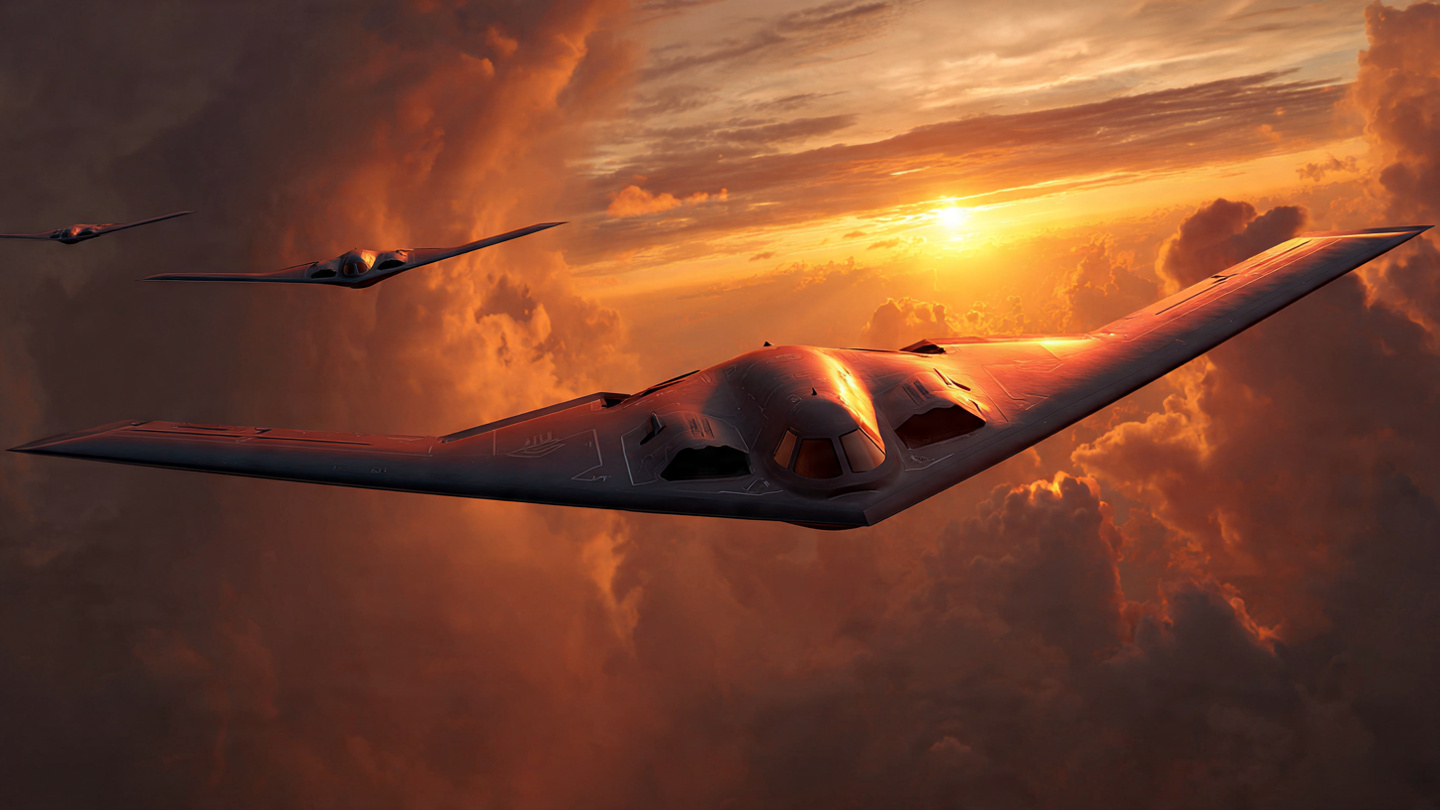
Nine hundred and ninety-seven million dollars. That is how much the Air Force asked Congress in April to spend on its first production buy of Collaborative Combat Aircraft, the autonomous drone wingmen designed to fly alongside F-35s and future sixth-generation fighters. The Center for Strategic and Budgetary Assessments estimates that buys roughly 30 aircraft, at about $30 million each.
For the same money, Ukraine could purchase approximately 2 million first-person-view kamikaze drones at current battlefield prices of roughly $500 per unit.
That is not a rhetorical comparison. It is the central tension in military procurement right now: the world's three largest military powers are pursuing fundamentally different theories of autonomous warfare, and the cost ratios between them are staggering.
Premium Warfare: CCA as Fighter-Class Wingman
For the first time, Congress is being asked to fund actual production of autonomous combat aircraft. Including an additional $1.3 billion for continued research and development, total CCA spending in fiscal year 2027 would exceed $2.3 billion. All of it sits inside a record-breaking $1.5 trillion defense budget proposal, the largest in American history.
Two companies are competing for the production contract. General Atomics has its YFQ-42A, which began flight tests in August 2025. Anduril has its YFQ-44A Fury, which entered production in March 2026 at Arsenal-1, a newly operational factory near Columbus, Ohio. Both aircraft are flying. A production decision comes this summer.
Unit economics are designed to be favorable relative to manned fighters. Former Air Force Secretary Frank Kendall originally set the CCA cost target at roughly $30 million per airframe, about one-third of an F-35A's $82.5 million fly-away price. Col. Timothy Helfrich, portfolio acquisition executive for fighters and advanced aircraft, said in March that they are beating that target. "Not only have we met it, we are doing much better than that," Helfrich told Defense One.
If past estimates hold, over 100 Increment 1 CCA drones could be in service by 2029. Each one is a semi-autonomous fighter-class aircraft designed to conduct ISR, electronic warfare, and offensive strikes. Gen. Dale White, director of critical major weapon systems, said at March's McAleese Defense Programs Conference that scaling production above that baseline is under active discussion.
Commodity Warfare: Ukraine's $500 Revolution
While Pentagon engineers design autonomous aircraft for Mach-speed operations, Ukraine has been running the world's largest live experiment in commodity drone warfare since 2022. Asymmetry defines the numbers.
A standard FPV kamikaze drone, built from commercial components, costs between $400 and $500. A Russian T-72 tank costs approximately $3 million. That is a 6,000-to-1 cost ratio. Both sides are now deploying hundreds of thousands of drones per month. Ukraine is estimated to have produced roughly 4 million drones across 2025.
But pilot-controlled FPV drones have a critical vulnerability: the radio link between operator and drone can be jammed or spoofed. Russia has invested heavily in electronic warfare capabilities that cause drones to veer off course or crash. This is forcing the next evolutionary step.
"Autonomous operation means a drone is not being flown by a remote pilot, and therefore there is no communications link to that pilot that can be severed or spoofed," IEEE Spectrum reported in March, profiling Ukrainian autonomy companies working to solve this problem.
Yaroslav Azhnyuk, who left his role as CEO of pet camera company Petcube to found defense AI startup The Fourth Law, has deployed "more than thousands" of autonomy modules to Ukrainian forces. These modules give drones the ability to navigate and strike targets without any operator input during the final approach, the phase where Russian jamming is most intense. His company also founded Odd Systems to produce thermal cameras for target recognition in GPS-denied environments.
"I moved from making devices that throw treats to dogs to making devices that throw explosives on Russian occupants," Azhnyuk told IEEE Spectrum.
Mass Autonomy: China's 200-Drone Swarm
In January 2026, Chinese state television broadcast a demonstration of the PLA's Swarm I system, also called the High Mobility Swarm Weapon System. A single soldier controlled 200 fixed-wing drones launched simultaneously from multiple ground vehicles. Each vehicle can fire 48 drones at once.
"Each drone is equipped with an intelligent algorithm," National University of Defence Technology researcher Xiang Xiaojia told CCTV. "Through interconnection and autonomous negotiation, they can form a powerful, collaborative intelligent swarm." The drones maintain formation, divide tasks, and continue operating even after losing contact with their human controller, using an autonomous anti-jamming algorithm.
China is not choosing between the premium model and the commodity model. It is trying to achieve both: mass quantity with genuine autonomy.
Cost Math Nobody Wants to Do
Here is the comparison that makes procurement officials uncomfortable:
| Model | Unit Cost | Units per $1B | Autonomy Level | Mission Type |
|---|---|---|---|---|
| US CCA | ~$30M | ~33 | Semi-autonomous wingman | Air superiority, ISR, strike |
| Ukraine FPV | ~$500 | 2,000,000 | Pilot-controlled, autonomy emerging | Ground attack, recon |
| China Swarm I | Undisclosed | Unknown | Fully autonomous coordination | Multi-target recon and strike |
| US Swarm Forge | TBD (June 2026) | TBD | Autonomous swarm, human oversight | Find, Fix, Finish |
For the price of a single CCA drone at $30 million, Ukraine could theoretically field 60,000 FPV drones. That arithmetic has a seductive simplicity, but it obscures a genuine complexity: FPV drones and CCAs solve different problems. A $500 kamikaze drone cannot fly at transonic speeds alongside an F-35, penetrate integrated air defenses over the Taiwan Strait, or loiter for hours conducting electronic warfare. Comparing them is like comparing a bayonet to a cruise missile. Both kill. They are not substitutes.
A more revealing comparison sits between the Pentagon's own two autonomous programs. One buys 30 premium drones for $1 billion. Another, Swarm Forge, run by the Chief Digital and AI Office, wants to validate autonomous swarms of cheap drones deployable in 90 days. One program lives in the Air Force's traditional procurement structure. Its counterpart lives in the Pentagon's tech-forward innovation office. They are funding different theories of how autonomous warfare works.
An Admission in Plain Text
Perhaps the most revealing document in this story is not the CCA budget request. It is the Swarm Forge solicitation published by the CDAO in March, which states:
"The United States currently lacks the inventory and the doctrine to deploy massed, coordinated, low-cost robotic systems. Legacy platforms and slow acquisition cycles constrain operational adaptability and limit the ability to generate massed effects."
That is the Department of Defense admitting, in a public procurement document, that it does not know how to fight with cheap autonomous drones. While spending $2.3 billion on 30 premium ones.
Swarm Forge's "Crucible" exercise is scheduled for June 22-26, 2026. Minimum requirement: four drones operating simultaneously. China demonstrated 200 five months ago. At Camp Blanding, Florida, in January 2026, the Pentagon conducted its first kinetic drone swarm on American soil, where drones detonated inflatable tanks. Officials call for "end-to-end autonomous completion" of find-fix-finish missions, with "minimal operator intervention" but "meaningful human command."
That last phrase contains the hardest unsolved problem in autonomous warfare. "Meaningful human command" over a swarm of drones moving at combat speed, making targeting decisions faster than a human can process, is not a technical specification. It is a legal and ethical aspiration that no military has operationalized.
Why the Pentagon May Be Right
A straightforward counterargument exists: the Pentagon is not choosing the wrong approach. It is solving a different problem than Ukraine.
Ukraine's drone war is a ground war fought over relatively short distances, against an adversary with limited air defense integration. Pacific theater requirements, which drive most of the Pentagon's force-structure planning, present an entirely different operating environment. Contested airspace over the Taiwan Strait, long over-water distances, integrated Chinese air defense networks, and the need to operate alongside fifth-generation fighters all demand capabilities that a $500 FPV drone cannot deliver.
A CCA flying alongside an F-35 can carry sensors, weapons, or electronic warfare payloads into environments where the manned aircraft would be at risk. It extends the fighter's sensor range, absorbs risk, and provides magazine depth. At one-third the cost of an F-35, economics make sense within the air superiority mission. Thirty million dollars is not cheap in absolute terms. It is cheap for a reusable fighter-class aircraft.
Whether the Pentagon needs both capabilities and is investing enough in the mass end remains the open question. Its own Swarm Forge solicitation suggests the answer is no.
What the Numbers Do Not Capture
This analysis relies on publicly available budget figures and estimated unit costs. Several limitations apply. CCA unit costs below the $30 million target are claimed by Air Force officials but not independently verified; actual production costs will depend on economies of scale, which depend on congressional appropriations, which depend on the program surviving the budget process. Ukraine drone production numbers are battlefield estimates with significant uncertainty. China's Swarm I demonstration was conducted on state television, and the gap between a controlled demonstration and combat-ready capability is unknown. Swarm Forge's solicitation sets a floor of four drones but has not disclosed what scale is ultimately envisioned or how much per-unit cost will be tolerated.
Most importantly, no military has tested autonomous swarms in a contested environment where both sides deploy them simultaneously. Ukraine is the closest approximation, and both sides are still primarily using pilot-controlled drones. Autonomous warfare has been announced. It has not yet arrived.
What You Can Do
If you work in defense procurement or policy: Read the Swarm Forge solicitation in full. A gap between stated ambition for massed autonomous systems and the actual minimum requirement of four simultaneous drones is the single most important procurement data point of 2026. Advocate for parallel investment in commodity-class autonomous systems alongside CCA.
If you are a defense investor: Watch two companies: Anduril (private, Arsenal-1 now operational in Ohio, CCA competitor and Lattice platform for autonomous coordination) and General Atomics (private, YFQ-42A in flight test). This summer's CCA production decision will create a winner and a consolation-prize winner. Both will benefit from the broader autonomous systems buildout regardless. Publicly traded defense primes Lockheed Martin ($LMT), Northrop Grumman ($NOC), and L3Harris ($LHX) are positioned in adjacent autonomous programs.
If you are a technologist considering defense work: Swarm Forge Crucible is an open solicitation. CDAO is explicitly seeking multi-vendor interoperability, meaning startups can compete alongside established defense contractors. Computer vision, decentralized coordination, GPS-denied navigation, and real-time target recognition constitute the autonomy stack, all built on commercial AI capabilities. Pentagon officials have stated publicly that they cannot do this alone.
The Bottom Line
The United States is simultaneously buying 30 autonomous fighter drones for $1 billion and admitting it lacks the inventory and doctrine to deploy cheap autonomous swarms. Ukraine is proving that $500 drones can reshape a battlefield but discovering that autonomy is the only path through electronic warfare. China is demonstrating 200-drone swarms controlled by a single soldier while the Pentagon sets a Crucible minimum of four. These are three bets on the same technology with radically different cost structures, timelines, and theories of victory. The CCA bet may be correct for the Pacific. The Swarm Forge bet may be correct for everything else. What is certain is that the era of autonomous warfare is being priced in three currencies, and nobody yet knows the exchange rate.
Sources
- asked Congress in April. defensescoop.com
- estimates that buys roughly 30 aircraft. airandspaceforces.com
- entered production in March 2026. aerospaceglobalnews.com
- $3 million. researchgate.net
- IEEE Spectrum reported in March. spectrum.ieee.org
- demonstration of the PLA's Swarm I system. tomshardware.com
- Swarm Forge solicitation. tradewindai.com