Microsoft Has Had 5 Quantum Papers Questioned. They Say They'll Have a Working Computer by 2029.
In twenty years and more than $1 billion of research, every major Microsoft quantum milestone paper has been retracted, corrected, or formally challenged. Google and IBM have zero retractions. Microsoft says it will match their timeline anyway.
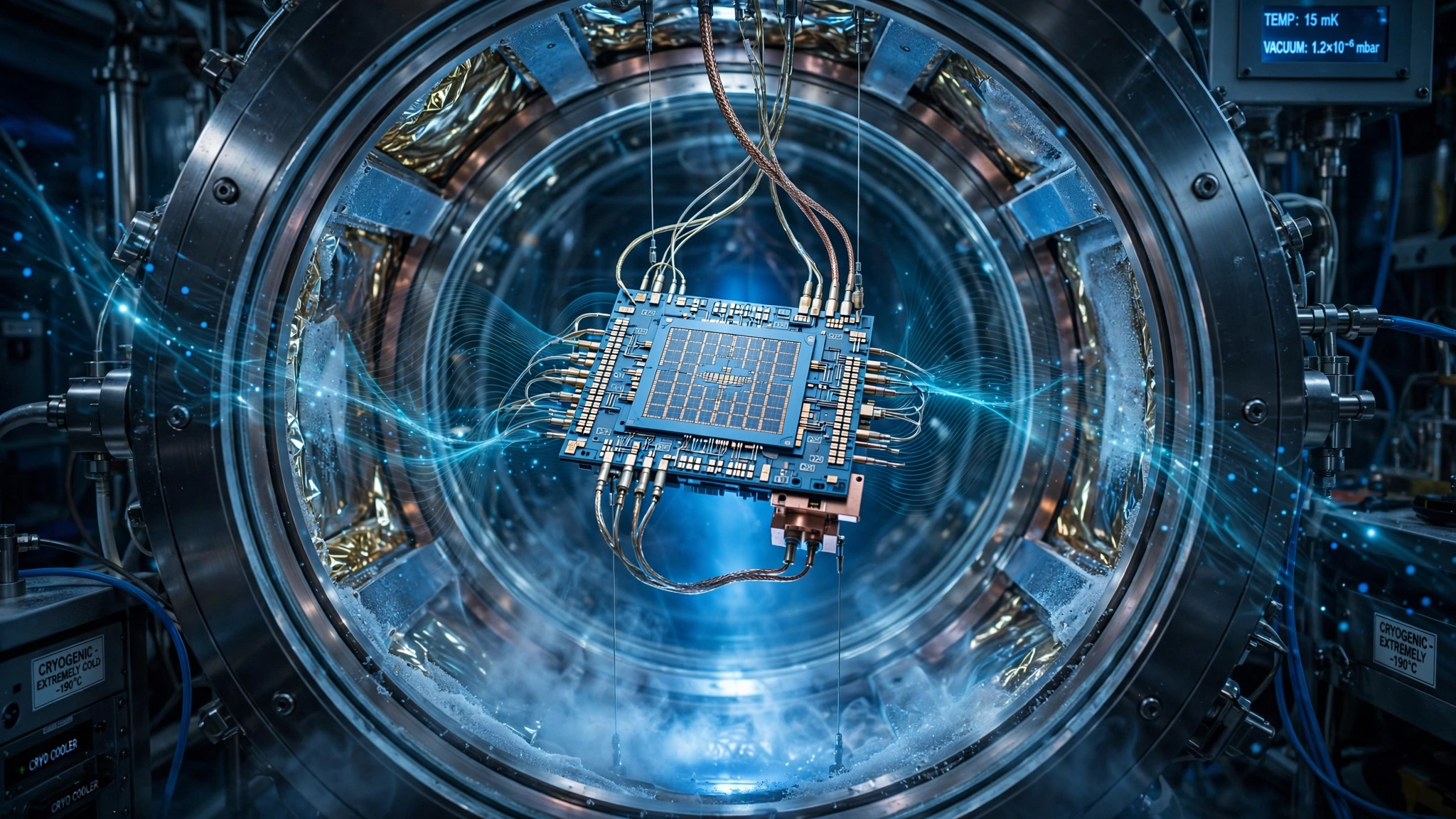
Zero. That is the number of verified, functional qubits Microsoft has demonstrated in public after twenty years and more than $1 billion of investment in topological quantum computing. Not zero useful quantum computers. Zero qubits. The company says it will have a commercially useful quantum machine by 2029, the same year IBM is targeting, the same neighborhood as Google. Both of those rivals have working hardware running real quantum operations right now.
On June 24, a formal critique published in Nature by University of St Andrews physicist Henry Legg challenged the foundational paper behind Microsoft's entire quantum program, arguing that the company's software for identifying topological signatures "yielded inconsistent and misreported outcomes" and that broader datasets showed nothing but random noise. It is the fifth Microsoft-backed quantum paper to face retraction, correction, or formal challenge.
Five for five.
The Publication Reliability Index
We compiled every major quantum milestone paper associated with Microsoft's topological qubit program and tracked its status. No other quantum hardware company has had a single major paper retracted or formally challenged. We call this metric the Publication Reliability Index: the percentage of a company's major quantum milestone papers that have survived without retraction, correction, or formal challenge.
| Paper | Journal | Year | Status |
|---|---|---|---|
| "Quantized Majorana conductance" | Nature | 2018 | Retracted 2021 |
| Second Delft lab Majorana paper | Nature | Pre-2021 | Retracted |
| Nanowire Majorana observation | Science | 2020 | Expression of concern, corrected 2025 |
| Majorana 1 interferometric measurement | Nature | 2025 | Editorial note: "do not represent evidence for MZMs" |
| Topological gap protocol | Nature | 2025 | Formal critique by Legg, June 2026 |
Microsoft's PRI: 0%. Google's PRI across its landmark Sycamore (2019) and Willow (2024) papers: 100%. IBM, Quantinuum, IonQ: also 100%.
Microsoft says the retracted papers "were done outside its labs" and it "did not review the data in them before publication." That is a remarkable statement for a program that has spent two decades and a billion dollars on this exact line of research.
What Everyone Else Has Built
Context matters. Here is what the quantum computing landscape looks like as of mid-2026, comparing demonstrated hardware to Microsoft's claims:
| Company | Approach | Qubits Demonstrated | Best Gate Fidelity | Coherence | Papers Challenged |
|---|---|---|---|---|---|
| Google (Willow) | Superconducting | 105 | ~99.5% | 20-40 µs | 0 |
| IBM (Condor) | Superconducting | 1,121 | ~99.5% | ~100 µs | 0 |
| Quantinuum H2 | Trapped Ion | 56 | ~99.9% | >1 s | 0 |
| IonQ Aria | Trapped Ion | 21 | 99.6% | ~1 s | 0 |
| Microsoft | Topological | 0 verified | Theoretical | Claimed 20 s | 5 |
Google achieved below-threshold quantum error correction in December 2024, cutting error rates in half each time qubits were added from a 3×3 grid to 5×5 to 7×7. That was a result thirty years in the making, and it landed in Nature without a whisper of controversy. Microsoft, by contrast, has not publicly demonstrated a single qubit that the broader physics community accepts as topological.
The Billion-Dollar Physics Experiment
Microsoft founded Station Q at UC Santa Barbara in 2006 under Fields Medalist Michael Freedman, betting that topological qubits built from Majorana zero modes would leapfrog conventional approaches. Chetan Nayak, who now leads the program, joined Microsoft in 2005. Twenty years of salaries for teams across Santa Barbara, TU Delft, the Niels Bohr Institute in Copenhagen, and the University of Sydney, plus fabrication costs, equipment, and Azure Quantum infrastructure, put total spending above $1 billion according to Science.
What has that investment produced? A February 2025 chip called Majorana 1, whose Nature paper was published with an editorial note explicitly stating the results do not demonstrate the particles Microsoft claimed to have found. A June 2026 follow-up chip called Majorana 2, built with AI-designed lead-based materials, claiming 1,000-fold reliability improvement and 20-second mean qubit lifetimes. Those are impressive engineering numbers if the underlying physics is real. That is the if on which everything hangs.
"If you're looking into something which is essentially just random physics, eventually you will find the Jesus in your toast," Legg told Reuters.
The Catch-Up Math
Microsoft's 2029 target originally sat at 2033. Nayak told a press conference that improvements to Majorana 2 "can bring that into 2029." To meet that target, Microsoft must demonstrate, in three years, what Google spent seven years building with proven physics: a verified qubit, multi-qubit entanglement, error correction below threshold, and scale to commercial utility. Google already runs quantum error correction on 105-qubit chips. IBM already operates chips with more than a thousand qubits. Microsoft is starting from zero verified qubits using particles whose existence remains disputed.
Winfried Hensinger, a quantum physicist at the University of Sussex, told Physics World that topological quantum computing is "probably 20 to 30 years behind the other platforms."
Strongest Case For
If topological qubits work, they change everything. Conventional qubits need thousands of physical qubits to encode a single logical qubit because errors accumulate so fast. Topological qubits encode information in global properties of the system that are inherently resistant to local noise, which would collapse the overhead ratio from thousands-to-one down to potentially dozens-to-one, a difference that could make million-qubit quantum computers feasible on a single chip rather than requiring warehouse-scale infrastructure with hundreds of millions of physical qubits.
"I am optimistic that in time, theory will be fully validated by experiments because, unlike in many other situations, we do understand the underlying mechanisms extremely well," theoretical physicist Marcel Franz of the University of British Columbia told IEEE Spectrum. Jason Alicea of Caltech agrees the approach is worth pursuing: "Building topological qubits is a worthwhile goal, and we should all root for it." DARPA moved Microsoft to the final phase of its Quantum Benchmarking Initiative after independently evaluating both public and proprietary results.
That is a real signal from a serious evaluator. It does not resolve the physics question, but it suggests Microsoft may have internal evidence it has not shared publicly.
What We Don't Know
This analysis relies on publicly available papers, statements, and independent expert assessments. Microsoft's DARPA evaluation included proprietary data that has not been published or peer-reviewed in any public journal. It is possible that this internal evidence addresses the concerns raised by Legg, Frolov, and other critics. The $1 billion spending estimate comes from Science and represents a reasonable inference from headcount, lab locations, and program duration, but Microsoft has never disclosed its quantum R&D budget. We cannot independently verify Majorana 2's claimed 20-second coherence times because the data has not been published in a peer-reviewed journal as of this writing. Our PRI metric counts only major milestone papers; Microsoft may have published supporting research that has not been challenged, but we focused on the papers the company itself highlighted as breakthroughs. Finally, the history of science includes cases where controversial claims proved correct despite years of skepticism, and topological quantum computing could still be one of them.
The Bottom Line
Microsoft is asking the world to trust a 2029 timeline built on physics that no independent expert has verified, published in papers that keep getting challenged, while every competitor with a working quantum computer got there using approaches Microsoft chose not to pursue. The federal government just committed $2 billion to the Quantum Genesis Initiative targeting 2028, and IBM is building quantum chip foundries with federal backing. If you are a corporate decision-maker evaluating quantum computing vendors for future workloads, weight demonstrated hardware over roadmap promises. If you are an investor, ask Microsoft a direct question: why should anyone believe the sixth paper when the first five all had problems? If you are a physicist, this story is a reminder that extraordinary claims about extraordinary particles require extraordinary evidence, and "We stand by our results" is not it.