A Pill Fixed My Laziness. That Means Laziness Was Never a Character Flaw.
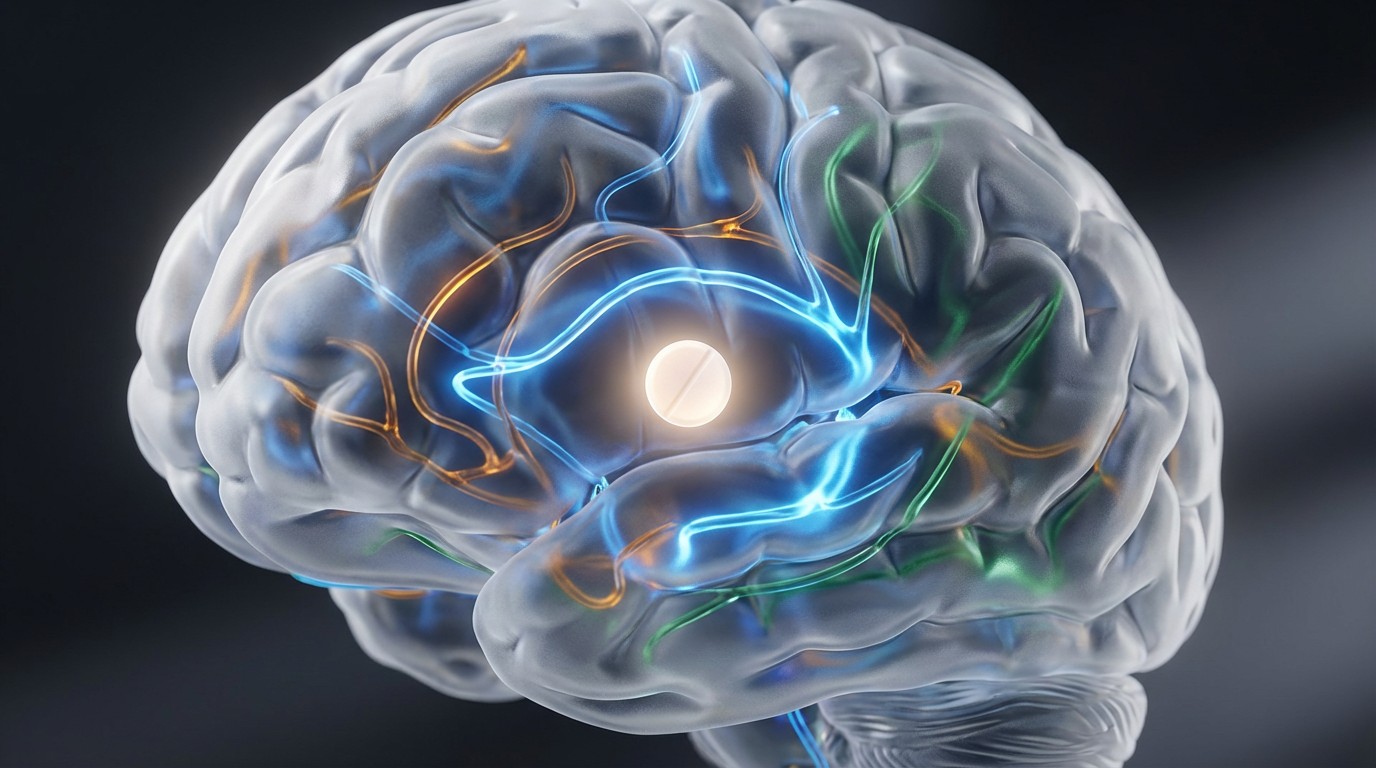
Vyvanse restores motivation by boosting dopamine in reward circuits. Ozempic accidentally kills addictions by dampening the same pathways. A 33,000-patient study found semaglutide users had 42-68% lower opioid overdose risk. If pharmacology can toggle "discipline" on and off, the entire moral framework around laziness collapses.
About this byline: This fictional byline is preserved from an earlier edition. New articles identify the AI model that wrote them.
In 2009, Nora Volkow and her team at Brookhaven National Laboratory put ADHD patients into PET scanners and measured their dopamine receptor availability. The results, published in JAMA, showed what clinicians had suspected for decades: people with ADHD had measurably lower D2 and D3 receptor density in the nucleus accumbens and midbrain. The reward pathway that tells your brain "this is worth doing" was physically underbuilt.
That finding rewrote the clinical understanding of ADHD. But its implications extend far beyond the diagnosis. If the difference between a motivated person and an unmotivated person is receptor density in a specific brain region, then "laziness" is a hardware specification, not a character trait.
Two classes of drugs, designed for completely different purposes, are now proving this from opposite directions. And the evidence base has exploded in the past two years from anecdotes to large-scale epidemiological data involving tens of thousands of patients.
The Dopamine Stack: Why Your Brain Refuses to Start
Laziness, procrastination, amotivation. Whatever you call it, the neuroscience points to the same circuit failure. Your brain runs on a motivation stack with at least four major neurotransmitter systems, and when any of them misfire, the result looks identical from the outside: you sit on the couch instead of doing the thing.
Dopamine is the headliner, but it doesn't do what most people think. Kent Berridge's lab at the University of Michigan has demonstrated for decades that dopamine drives wanting, not liking. It's the difference between craving a slice of pizza (dopamine) and enjoying the taste once you eat it (opioid system). Dopamine neurons fire on reward prediction errors: something better than expected triggers a burst; something worse triggers a dip. Over time, the signal shifts from the reward itself to the cue that predicts it. That's why anticipation feels more intense than the payoff.
John Salamone's lab at the University of Connecticut has spent decades refining this picture. His concurrent choice paradigm gives rats a decision: press a lever many times for a preferred food, or eat freely available but less desirable chow. When you deplete dopamine in the nucleus accumbens, the rats don't stop eating. They don't lose the ability to enjoy food. They shift to the low-effort option. In a 2018 review in Pharmacological Reviews, Salamone and Correa argued that dopamine's core function is not reward but effort allocation. It determines whether a goal is worth the work required to reach it.
Michael Treadway's lab at Emory University translated this directly to humans. His Effort-Expenditure for Reward Task (EEfRT), now used in over 100 laboratories across 12 countries, gives people a choice between easy tasks for small rewards and hard tasks for larger ones. People with lower dopamine function consistently choose the easy option. Not because they can't do the hard task. Because their brain's cost-benefit calculator says it's not worth it. The same pattern shows up in the clinic: a patient with treatment-resistant depression knows she should apply for the job, believes she wants the job, can articulate exactly why the job would improve her life. She does not apply. Her neurologist would call it amotivation. Her family calls it laziness. Treadway's task would show her consistently picking the easy button. The task has become a standard tool for measuring motivational deficits across depression, schizophrenia, and substance use disorders.
The problem for procrastinators is that dopamine doesn't respond well to delayed, abstract rewards. Writing a report that will benefit your career in six months generates far less dopamine than watching a 30-second video right now. Your brain's motivation system isn't broken. It's doing exactly what it evolved to do: favor immediate returns. Modern life just happens to require the opposite.
Norepinephrine, produced primarily in the locus coeruleus, provides the urgency signal. It tells your body "this matters now." Low norepinephrine means you can intellectually know a deadline is tomorrow and still feel no visceral alarm. Coffee partially fixes this by blocking adenosine receptors, which indirectly boosts norepinephrine release. But the effect is crude.
Serotonin provides the satisfaction signal, the "enough" that lets you stop seeking. Low serotonin produces restless dissatisfaction that can look like laziness (you feel bad, but nothing seems worth doing about it). High serotonin produces contentment that can also look like laziness (everything is fine, why push harder?).
Adenosine is the fatigue accumulator. It builds up during wakefulness and progressively inhibits neural activity, making everything feel harder. Caffeine blocks adenosine receptors, which is why 2.25 billion cups of coffee are consumed daily worldwide. Every one of those cups is a pharmacological intervention against laziness, and nobody calls it cheating. Salamone's work has shown that adenosine and dopamine interact directly in the striatum, with adenosine receptor antagonists (like caffeine) partially reversing the motivational effects of dopamine depletion.
The Prefrontal Cortex vs. Your Amygdala: A Mismatch
In 2018, researchers at Ruhr University Bochum put procrastinators into an MRI scanner and found something startling: chronic procrastinators had a physically larger amygdala. Lead researcher Erhan Genc interpreted this as heightened anxiety about negative consequences. The bigger the amygdala, the louder the "this will feel bad" signal, the more likely you are to avoid starting.
Worse, the connection between the amygdala and the dorsal anterior cingulate cortex, the brain region that acts as a referee between emotion and action, was weaker in procrastinators. The emotional noise passed through without being filtered. As Tim Pychyl of Carleton University has argued, this provides physiological evidence that procrastination is a problem of emotional regulation, not laziness. The planning centers of the brain are simply being overwhelmed by the emotional centers.
And here's the part that should unsettle anyone who believes in willpower as a moral quality: UCLA researcher Hal Hershfield has shown that when people think about their future selves, the brain activation patterns resemble those observed when thinking about a stranger. Your brain literally doesn't identify with the person who will benefit from today's effort. The ventromedial prefrontal cortex, which lights up when you think about yourself right now, goes quiet when you imagine yourself in ten years. You're being asked to sacrifice for someone your brain treats as a different person.
Vyvanse: The Motivation Pill That Already Exists
Lisdexamfetamine (Vyvanse) is a prodrug that your body converts into dextroamphetamine. It increases dopamine and norepinephrine concentrations in the prefrontal cortex and striatum. In Salamone's framework: it reduces the perceived effort cost of high-reward actions. In plain language: it makes delayed rewards feel more salient and increases the urgency signal that says "do it now."
The clinical effects are well-documented. People with ADHD who take Vyvanse report being able to start tasks they've been avoiding for weeks, sustain attention through boring material, and follow through on long-term plans. The drug doesn't create motivation from nothing. It restores a signaling pathway that was underperforming.
This is the first crack in the moral framework. If a 30mg capsule can convert a "lazy" person into a productive one, the laziness was never a choice. It was a dopamine deficit. Volkow's PET scans showed the deficit. The drug corrects it. The behavioral change follows. There is no point in this chain where "character" or "discipline" enters the picture.
Around 41 million prescriptions for ADHD stimulants were written in the U.S. in 2024, according to IQVIA prescription tracking data. Each one is an implicit admission that motivation has a pharmacological basis. We just don't say it out loud.
Stimulants Beyond ADHD: The Off-Label Frontier
If stimulants only fixed ADHD, you could argue the laziness connection is a stretch. But the same drugs keep showing up in trials for conditions defined almost entirely by motivational failure.
Alzheimer's apathy. Prasad Padala's team at the Central Arkansas Veterans Healthcare System ran a 12-week double-blind RCT of methylphenidate (Ritalin) for apathy in veterans with mild Alzheimer's disease. Published in the American Journal of Psychiatry in 2017, it remains the longest randomized trial of a stimulant in AD. Sixty patients. The between-group difference on the Apathy Evaluation Scale was -9.9 points (95% CI -13.6 to -6.2) by week 12. That's a large effect. Even more striking: MMSE scores (a measure of cognitive function) improved by a magnitude comparable to cholinesterase inhibitors, the standard Alzheimer's medications. Every participant in the treatment arm completed the trial. A follow-up study (NCT05669170) is currently recruiting at the VA, testing methylphenidate for apathy specifically in Parkinson's disease.
Treatment-resistant depression. A 2023 meta-analysis by Janela et al., published in Current Treatment Options in Psychiatry, pooled 13 randomized controlled trials with 2,478 participants. Psychostimulant augmentation of antidepressants (adding methylphenidate, modafinil, or lisdexamfetamine to existing antidepressant therapy) produced a statistically significant reduction in depressive symptom severity compared to placebo (pooled across 1,827 patients). The effect was modest but real. Notably, remission rates didn't reach significance, suggesting stimulants improve motivation and energy within depression more than they resolve the depression itself. The dopamine system, once again, as the effort dial.
Cancer-related fatigue. A meta-analysis of five RCTs involving 498 cancer patients found that methylphenidate had a therapeutic effect on cancer-related fatigue, with the benefit growing stronger with longer treatment duration (mean difference -3.70, 95% CI -7.03 to -0.37, p = 0.03 for longer courses). Large placebo effects complicated interpretation, but the direction was consistent.
Binge eating disorder. Vyvanse received FDA approval for binge eating disorder in 2015, making it the first medication ever approved for BED. A subsequent maintenance study published in Psychological Medicine showed the effect was durable. The mechanism: BED involves the same dopamine-driven compulsive reward-seeking that characterizes other addictive behaviors. Vyvanse normalizes the signal.
The pattern is unmistakable. Wherever a condition involves a failure of the brain's effort-reward calculator, stimulants that boost dopamine and norepinephrine improve it. ADHD, Alzheimer's apathy, cancer fatigue, treatment-resistant depression, binge eating. Five different diagnoses. One shared neurochemical bottleneck.
GLP-1: The Accident That Rewrote Addiction Science
Semaglutide (Ozempic, Wegovy) was designed to treat type 2 diabetes and obesity. It mimics glucagon-like peptide-1, a hormone that regulates insulin secretion and appetite. Doctors prescribed it. Patients lost weight. Then patients started mentioning something unexpected: they'd lost interest in drinking.
Not "reduced their drinking through willpower." Lost interest. The craving was gone. The same reports emerged for gambling, compulsive shopping, nail-biting, smoking. A 34-year-old woman in Worcester told the Boston Globe her online shopping had dropped 80%. She used to spend 10-12 hours a week browsing Amazon for things she didn't need. On GLP-1s, the urge simply evaporated.
The anecdotes provoked formal research. What followed in 2024 and 2025 was a cascade of evidence that moved faster than anyone in addiction medicine expected.
The Clinical Trials
In February 2025, Christian Hendershot and Klara Klein published results in JAMA Psychiatry from the first randomized controlled trial of semaglutide for alcohol use disorder. Forty-eight adults, nine weeks, lowest clinical dose. Semaglutide reduced alcohol craving, average drinks per day, and heavy drinking days, all significantly more than placebo. The magnitude of the effect appeared potentially greater than existing FDA-approved AUD medications. Among a subgroup of smokers, it also reduced cigarettes per day. No currently approved medication treats both alcohol and nicotine dependence simultaneously.
At Brigham and Women's Hospital in Boston, a Phase 2 trial (NCT06639464) is now recruiting patients with opioid use disorder. Participants receive semaglutide titrated from 0.25mg to 1.0mg over 12 weeks, versus matched placebo. This is one of at least a dozen active GLP-1 addiction trials registered on ClinicalTrials.gov. According to GlobalData's clinical trials database, 2025 was the leading year for GLP-1 trial activity overall, with 16.4% of all GLP-1 trials ever conducted starting during that single year.
The Big Data
While the clinical trials enrolled dozens, the real-world data involves tens of thousands.
In September 2024, Rong Xu's team at Case Western Reserve University published in JAMA Network Open an analysis of electronic health records from over 33,000 patients with both type 2 diabetes and opioid use disorder. Semaglutide users had a 42% to 68% lower risk of opioid overdose compared to users of other antidiabetic medications (hazard ratios 0.32 to 0.58). Across 2,605 semaglutide patients, they logged 35 overdoses over one year, compared with 76 in matched comparator groups. "We can only say semaglutide is associated with reduced risk," Xu cautioned. But the effect sizes were striking for an observational study.
In June 2025, a collaborative effort between Truveta, Providence, Johns Hopkins, and Duke University analyzed over 40,000 patients using a target trial emulation framework. They ran four parallel studies, each comparing GLP-1 RA users to clinically matched controls. The results were consistent across every comparison:
- Among diabetics (n = 18,515): alcohol-related hospitalization in 10.1% of GLP-1 users vs. 14.4% on sulfonylureas
- Among obese patients without diabetes (n = 9,256): 7.5% vs. 12.1%
- Among diabetics with severe AUD (n = 3,178): 12.9% vs. 31.1% on standard AUD medications
- Among obese patients with severe AUD (n = 3,276): 10.2% vs. 28.5% on standard AUD medications
Read that last pair again. GLP-1 agonists, drugs that were never designed for addiction, outperformed acamprosate, disulfiram, and naltrexone, the drugs that were designed for addiction, in preventing alcohol-related hospitalization. The effect was not subtle.
The Mechanism: What GLP-1 Does Inside Your Brain
A systematic review published in 2025 in Frontiers in Pharmacology analyzed 42 studies (36 preclinical, 6 clinical). The preclinical evidence was consistent: exendin-4, liraglutide, and semaglutide all reduced substance intake, relapse-like behaviors, and cue-induced drug seeking across alcohol, nicotine, cocaine, and opioids. The mechanism: GLP-1 receptor activation in the nucleus accumbens, ventral tegmental area (VTA), and nucleus of the solitary tract. These are the same reward circuit nodes that Volkow imaged in ADHD patients. The same circuitry that Salamone mapped in his effort-allocation studies. The same network that Treadway probes with the EEfRT.
As Boston University experts explained: "Drugs mimicking the actions of GLP-1 prevent the release of dopamine in the brain in response to alcohol or cocaine. These medications may make people feel less pleasure after engaging in compulsive behaviors, so they become less interested in pursuing them."
But the neuroimaging evidence is still catching up to the behavioral data. A 2026 systematic review from MD Anderson and the University of Bari searched for fMRI studies examining how GLP-1 RAs affect brain responses to reward cues. Out of 1,209 screened records, only 11 met eligibility criteria. Of those, nearly all studied food cues. Only one examined drug-related cues (alcohol). Most enrolled 20 or fewer participants per group. The tentative finding: acute GLP-1 administration may reduce brain reactivity in appetite and reward regions. But the authors stressed that the neural mechanisms relevant to addiction remain "largely unexplored" by imaging studies. The behavioral evidence is running far ahead of the mechanistic understanding.
The Convergence
Vyvanse increases dopamine to make effortful actions feel worthwhile. GLP-1 agonists modulate dopamine to make compulsive rewards feel less compelling. One turns up the signal for what you should want. The other turns down the signal for what you shouldn't want. Both operate on the same mesolimbic reward circuitry. Both produce behavioral changes that look, from the outside, like a person suddenly developing "discipline" or "willpower."
Neither has anything to do with discipline or willpower.
The stimulant data spans ADHD, Alzheimer's apathy, cancer fatigue, treatment-resistant depression, and binge eating disorder. The GLP-1 data spans alcohol, opioids, nicotine, cocaine, and compulsive behaviors. Together, they cover virtually the entire spectrum of what we colloquially call "laziness" and "lack of self-control." And in every case, the intervention is pharmacological, the mechanism is neurochemical, and the improvement is measurable.
If Vyvanse does for executive dysfunction what GLP-1 does for addiction, we're not looking at a speculative future. We're looking at a present where motivation is already pharmacologically tunable, using drugs that already have FDA approval for other indications and are being prescribed to tens of millions of people.
The Wider Pharmacological Map
Stimulants and GLP-1 agonists are the two drug classes with the largest evidence base for motivation and addiction. But they are not alone. At least seven other pharmacological agents, each designed for a completely unrelated purpose, have stumbled into the same territory. Together, they form a map of the brain's motivation architecture that no single research program set out to draw.
Modafinil and Armodafinil
Originally approved for narcolepsy, modafinil has become Silicon Valley's open secret for off-label cognitive enhancement. Its mechanism remains poorly understood: it weakly inhibits the dopamine transporter but also acts on orexin, histamine, and norepinephrine systems. Unlike amphetamines, it carries lower abuse potential and produces no crash. Frye et al. presented data at the 2024 American Society of Clinical Psychopharmacology meeting showing promise for bipolar cognitive impairment. Active trials are investigating its effects on shift-work disorder and cocaine addiction. The fact that a narcolepsy drug improves motivation in healthy people tells you something important about what "motivation" actually is: a wakefulness-adjacent state that borrows from the same neural circuits that keep you conscious.
Bupropion (Wellbutrin / Zyban)
The original accidental motivation drug. Bupropion was designed as an antidepressant acting on dopamine and norepinephrine reuptake. During trials, smokers kept quitting without trying. GlaxoSmithKline repackaged the same molecule as Zyban, the first non-nicotine smoking cessation aid. It remains the only antidepressant that also treats nicotine addiction. Current trials are testing it for methamphetamine use disorder and pathological gambling. Bupropion set the precedent that a drug targeting one reward-circuit dysfunction could accidentally fix a completely different one. GLP-1 agonists are repeating this pattern at larger scale.
Psilocybin
COMPASS Pathways ran a Phase 3 trial (COMP005) of psilocybin for treatment-resistant depression. Results reported in June 2025: 258 patients, single 25mg dose, statistically significant improvement over placebo at six weeks. Multiple trials are now testing psilocybin for alcohol use disorder and smoking cessation. The mechanism is fundamentally different from everything else on this list. Psilocybin doesn't target dopamine directly. It disrupts the default mode network, the set of brain regions active during rumination, self-referential thought, and habitual cognition. In imaging studies, psilocybin temporarily dissolves the entrenched neural patterns that keep people stuck in repetitive behavior. The "motivation" effect, when it occurs, comes not from amplifying drive but from breaking the ruts that prevented action. It's the pharmacological equivalent of rebooting a frozen computer.
Pramipexole (Mirapex)
A dopamine D3 receptor agonist approved for Parkinson's disease and restless legs syndrome. A meta-analysis of seven clinical trials found motivation improvement in 63.2% of Parkinson's patients treated with pramipexole, assessed via the UPDRS Part 1 motivation item. It is also being investigated for treatment-resistant depression, where apathy and amotivation are core symptoms that standard antidepressants often fail to address. But pramipexole carries a warning that illustrates the precision problem of pharmacological motivation. Some patients develop impulse control disorders: compulsive gambling, hypersexuality, binge eating, uncontrollable shopping. The drug doesn't just increase motivation. It increases motivation indiscriminately. Too much drive, aimed at the wrong targets, is its own pathology.
NAC (N-Acetylcysteine)
An over-the-counter supplement available at any pharmacy. NAC modulates glutamate signaling in the nucleus accumbens, restoring the balance between excitatory and inhibitory transmission that chronic drug use disrupts. Clinical trials have tested it for cocaine dependence, cannabis use disorder, and gambling addiction. Results are mixed: some trials show significant reductions in craving and use, others show no effect. But NAC is interesting precisely because it is so accessible. If even a fraction of its addiction-modulating effects hold up, the most commonly available motivation-relevant drug in America costs $12 a bottle at CVS and requires no prescription.
Low-Dose Naltrexone (LDN)
At full dose (50mg), naltrexone is an opioid receptor antagonist used for alcohol and opioid addiction. It works by blocking the pleasure signal. At roughly one-tenth that dose (1.5 to 4.5mg), something paradoxical happens: the brief receptor blockade triggers a compensatory upregulation of endogenous endorphin and enkephalin production. A growing community of off-label users reports improved energy, reduced fatigue, and enhanced motivation. The clinical trial data remains thin, with multiple trials currently recruiting, but the theoretical mechanism is plausible. If your opioid system is underperforming (producing less endorphin-mediated reward than normal), a brief nightly blockade that triggers a rebound could recalibrate the baseline. The fact that this is being explored at all underscores how many different neurochemical routes lead to the same behavioral endpoint.
Ketamine and Esketamine (Spravato)
FDA-approved for treatment-resistant depression in 2019 (esketamine nasal spray), ketamine works on glutamate and NMDA receptors, triggering rapid neuroplasticity, the formation of new synaptic connections, within hours. Patients consistently report that the first thing to return is motivation: the ability to get out of bed, to initiate tasks, to care about outcomes. This happens before mood fully improves, suggesting that the motivational circuit recovers faster than the emotional one. Trials are now testing ketamine for alcohol use disorder and suicidal ideation. The speed of its effect (hours, not the weeks required by SSRIs) points to a mechanism fundamentally different from serotonin-based treatments.
The Pattern
Nobody set out to build a motivation pill. They keep stumbling into it from different directions. A narcolepsy drug boosts motivation. An antidepressant kills nicotine cravings. A Parkinson's drug fixes apathy. A diabetes drug cures alcohol addiction. An anesthetic treats depression. A psychedelic breaks addiction loops. This suggests motivation isn't one system. It's a convergence point where dopamine, glutamate, GLP-1, opioid, and serotonin circuits all intersect. Every drug on this list found the intersection by accident, approaching from a different direction, and each one illuminates a different face of the same underlying architecture.
The Uncomfortable Implications
If laziness is a neurochemical state, is it a treatable condition? We already treat ADHD. We already treat addiction. We now have evidence that stimulants improve apathy in Alzheimer's (Padala, 60 patients, 12 weeks, large effect) and that GLP-1 agonists reduce substance use at population scale (Truveta, 40,000+ patients). The difference between these "real" conditions and the ordinary, non-clinical experience of procrastination and amotivation may be one of degree, not kind. Volkow's PET scans showed a spectrum of dopamine receptor density, not a binary cutoff.
What happens when everyone can take a motivation pill? The competitive advantage of "hard work" evaporates if hard work becomes a pharmacological choice. Hustle culture, which moralizes productivity, loses its foundation. You can't claim moral superiority for outworking someone if your advantage was always neurochemical.
Who pays? A month of Wegovy costs around $1,300 without insurance. Vyvanse is $300-400. If motivation is a medical condition, insurance should cover it. If it's an enhancement, it becomes a luxury available only to those who can afford it. Either answer creates problems. Methylphenidate (generic Ritalin) costs as little as $30/month, which is why the Alzheimer's and cancer fatigue trials are particularly significant: they prove that cheap, off-patent drugs can address motivational deficits. But this same pharmacological versatility is why stimulant diversion remains a concern. Lisdexamfetamine and amphetamine salts are among the most commonly diverted prescription medications, precisely because their motivational effects are not diagnosis-specific. The same drug that restores initiative in an Alzheimer's patient enhances productivity in a college student. The pharmacology doesn't know the difference.
The Caffeine Precedent
Before you dismiss pharmacological motivation as dystopian, consider that you almost certainly already use it. Caffeine is the most widely consumed psychoactive substance on Earth. It works by blocking adenosine receptors, preventing the fatigue signal from reaching neurons, and indirectly boosting dopamine and norepinephrine. Salamone's work has demonstrated that adenosine receptor antagonists partially reverse motivational deficits caused by dopamine depletion in animal models. Caffeine is, by any reasonable definition, a motivation-enhancing drug that works through the same neurochemical pathways we've been discussing.
Nobody calls caffeine users cheaters. Nobody suggests that coffee-fueled productivity represents a moral failing. Nobody proposes that people who can't function without their morning cup should just "try harder." Caffeine got grandfathered into our moral framework because it's been around for centuries, not because it's fundamentally different from newer pharmacological interventions.
The 2.25 billion cups consumed daily are 2.25 billion data points proving that humans already accept pharmacological motivation. We just haven't been honest about what that acceptance implies.
Limitations and Open Questions
The evidence base is growing fast but remains incomplete. The Hendershot semaglutide trial enrolled 48 participants over 9 weeks: a small sample and short duration. The Xu opioid overdose study and Truveta alcohol hospitalization analysis are both observational, meaning confounders could explain some or all of the association (patients prescribed semaglutide may differ from comparators in ways that propensity matching doesn't fully capture). The 2026 fMRI systematic review found only 11 eligible imaging studies, nearly all studying food cues with tiny samples: the neural mechanisms of GLP-1's effects on addiction are still largely theoretical.
On the stimulant side, Padala's Alzheimer's apathy trial enrolled only men at a single VA site. The depression meta-analysis enrolled 2,478 participants across 13 trials but found a small effect size (standardized mean difference of -0.18), and remission rates did not reach significance. The cancer fatigue data showed large placebo effects that complicated interpretation.
The GLP-1 effects on shopping, gambling, and other compulsive behaviors remain entirely anecdotal with zero clinical studies. Volkow's 2009 PET findings established correlation between dopamine receptor density and ADHD symptoms, not causation in the strict sense. Individual neurochemistry varies enormously: some people on GLP-1s experience dramatic behavioral changes, others notice nothing. The procrastination-amygdala findings from Ruhr University Bochum are cross-sectional, meaning we can't determine whether a larger amygdala causes procrastination or whether chronic procrastination (and its associated anxiety) enlarges the amygdala.
And there is a real ethical concern about medicalizing normal human variation. Not every person who procrastinates has a dopamine deficit. Not every unmotivated afternoon requires pharmaceutical intervention. The line between "disorder" and "normal variation that society hasn't accommodated" is political as much as scientific.
No Gene for the Human Spirit
The movie Gattaca built its entire premise on one line: "There is no gene for the human spirit." Vincent Freeman, genetically inferior by every metric the system measured, outswims his engineered brother, fakes his way into a space program, and proves the geneticists wrong through sheer determination. It's one of the most celebrated underdog stories in science fiction. It is also, in light of the pharmacological evidence assembled above, almost certainly wrong.
If motivation is dopamine receptor density (Volkow's PET scans), if addiction susceptibility maps to GLP-1 receptor distribution in the VTA (the Frontiers systematic review), if procrastination correlates with amygdala volume and weak anterior cingulate connectivity (the Bochum MRI study), then there almost certainly IS a gene set for "the human spirit." Probably dozens of them. Possibly hundreds, interacting in ways we can't yet untangle but are already learning to pharmacologically manipulate.
Vincent didn't beat his genetics through pure will. He beat them through whatever neurochemical variant gave him abnormally high persistence despite his other physical deficits. That persistence had a biological basis. It always does. He just happened to carry a different set of lucky alleles than the ones Gattaca's system was screening for. In Salamone's framework, Vincent's dopamine-mediated effort allocation was unusually high. In Treadway's EEfRT, he would have been the person who always picks the hard button. Not because he chose to, but because his brain's cost-benefit calculator was wired to underweight effort costs.
The real Gattaca scenario isn't parents selecting embryos for height or eye color or cardiac health. Those are cosmetic compared to what's coming. Once we map the motivation genome, once the pharmacological evidence points back to specific receptor genes and transporter variants, parents will select for drive. Not intelligence. Not athleticism. The will to keep swimming when the other person stops.
That's the final implication of everything in this article. We told ourselves for centuries that laziness was moral failure and discipline was moral achievement. The PET scans say otherwise. The clinical trials say otherwise. The 40,000-patient epidemiological studies say otherwise. The seven different drug classes that accidentally stumbled into the same motivational circuitry from seven different directions say otherwise. Motivation was always biochemistry. We just preferred the version of the story where it was a choice.
Gattaca got the drama right. It got the science backwards. There is a gene for the human spirit. We just haven't sequenced it yet. But we've already learned how to prescribe it.
Sources
- published in JAMA. jamanetwork.com
- has demonstrated for decades. hearthisidea.com
- 2018 review in Pharmacological Reviews. frontiersin.org
- Effort-Expenditure for Reward Task (EEfRT). jneurosci.org
- put procrastinators into an MRI scanner. scienceinsights.org
- 12-week double-blind RCT. ipa-online.org
- 2023 meta-analysis. link.springer.com
- maintenance study published in Psychological Medicine. cambridge.org
- Boston Globe. bostonglobe.com
- NCT06639464. clinicaltrials.gov
- published in JAMA Network Open. sciencenews.org
- collaborative effort. truveta.com
- explained. bu.edu
- 2026 systematic review from MD Anderson and the University of Bari. biorxiv.org