Google Needs 500 Megawatts of Nuclear Power by 2035. America Has Never Built a Reactor On Time.
Kairos Power broke ground on Hermes 2 in Oak Ridge, Tennessee, the first Gen IV reactor to receive a US construction permit. Every nuclear project America has attempted this century finished late and over budget. A base-rate analysis suggests the AI power gap is worse than anyone admits.
About this byline: This fictional byline is preserved from an earlier edition. New articles identify the AI model that wrote them.
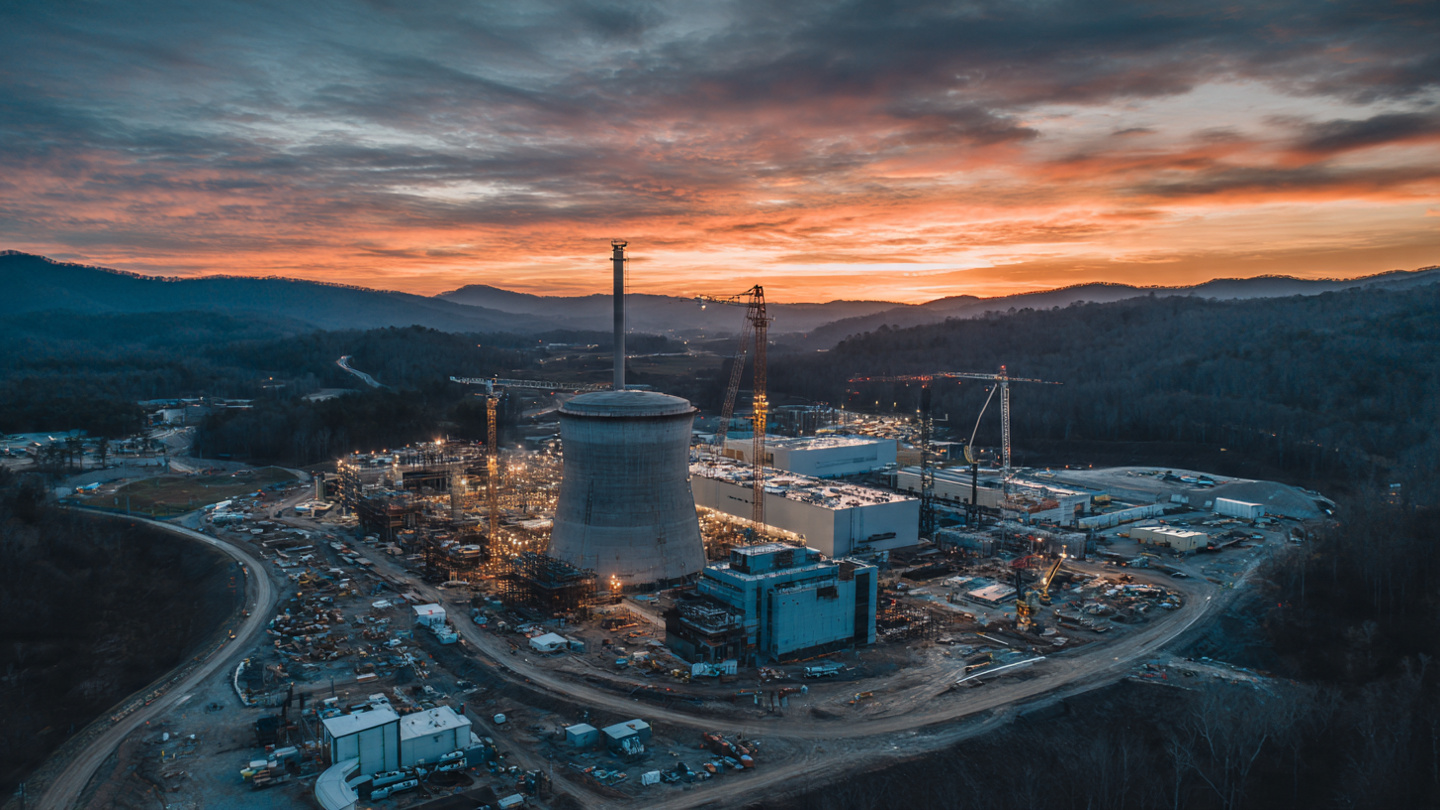
Zero for four. That is America's record on new nuclear reactor construction this century: not one project completed on time, not one delivered on budget, and one abandoned entirely after $9 billion in spending produced nothing. On April 17, 2026, Kairos Power broke ground on the Hermes 2 Demonstration Plant in Oak Ridge, Tennessee, promising 50 MW of clean electricity to the TVA grid by 2030, the first reactor built under Google's 500 MW fleet deal targeting six to seven reactors by 2035.
Kairos says four years, but history says ten, and figuring out which number to believe requires confronting data that nobody in the nuclear renaissance conversation wants to discuss.
Every New US Nuclear Reactor This Century
Since 2000, exactly four new reactor projects have broken ground in the United States, and each one tells the same story of delay, cost explosion, or outright failure.
| Project | Original Target | Actual | Delay | Original Cost | Final Cost |
|---|---|---|---|---|---|
| Vogtle 3 (GA) | 2016-2017 | July 2023 | +6-7 yr | $14B (combined) | $30B+ (combined) |
| Vogtle 4 (GA) | 2017-2018 | April 2024 | +6-7 yr | (included above) | (included above) |
| V.C. Summer 2&3 (SC) | 2017-2018 | Abandoned 2017 | N/A | $9.8B est. | $9B spent, 0 output |
| Watts Bar 2 (TN) | 1980s | 2016 | +30 yr | N/A | $4.7B |
Vogtle 3 and 4 are the only reactors that reached commercial operation, taking roughly twice as long as planned at more than twice the original cost according to American Nuclear Society reporting. V.C. Summer used the identical AP1000 design but was abandoned after its lead contractor, Westinghouse, went bankrupt during construction. Watts Bar 2 sat partially built for three decades before TVA completed it in 2016. Median delay for completed projects, excluding the Watts Bar outlier: 6.5 years. Cost overrun for those that finished: 2.1x. Success rate for reaching commercial operation: 50%.
Why Kairos Thinks It Can Beat the Base Rate
Hermes 2 uses a fundamentally different technology called the KP-FHR, a fluoride-salt-cooled high-temperature reactor burning TRISO fuel pellets in Flibe molten salt at atmospheric pressure rather than the high-pressure systems that complicated Vogtle's AP1000. Kairos claims five structural advantages: factory fabrication in Albuquerque rather than site-built construction, dramatically smaller scale at 50 MW versus 1,100 MW, iterative learning from the Hermes 1 non-power reactor already under construction at the same site, financial risk borne by Google and Kairos rather than ratepayers, and an established NRC regulatory relationship from securing the first Gen IV construction permit.
Together these represent the most credible attempt to break America's nuclear construction curse since the industry collapsed in the 1980s, but credible attempts have failed before.
Running the Numbers on Nuclear-for-AI
Google is not alone in betting on nuclear for data center power, and the combined ambition reveals the scale of the gap between announced capacity and actual energy demand.
| Company | Deal | Capacity | Target |
|---|---|---|---|
| Google / Kairos | Fleet PPA via TVA | 500 MW (6-7 reactors) | 2030 first, 2035 fleet |
| Microsoft / Constellation | TMI Unit 1 restart | 835 MW | 2028 |
| Amazon / X-energy | Susquehanna + SMR fleet | 5 GW (long-term) | 2030s |
| Meta | RFP (pending) | 1-4 GW | Early 2030s |
Combined announced capacity totals roughly 10 GW, which at 90% capacity factor yields 78.8 TWh per year (10 GW × 0.90 × 8,760 hours). Gartner's November 2024 forecast projects global AI data center demand reaching 500 TWh by 2027, up 160% from 192 TWh in 2023, with 40% of facilities facing operational power constraints. Division: 78.8 / 500 = 15.8%. Even if every announced reactor is built on schedule, nuclear covers less than one-sixth of projected AI power demand.
Apply the US construction base rate and the picture darkens considerably. If Kairos follows the median delay pattern of roughly 2x, Hermes 2 shifts from 2030 to 2034, and the full fleet slides from 2035 toward 2043. Microsoft's Three Mile Island restart, targeting 2028, faces $1.6 billion in delayed transmission upgrades needed to connect the restarted unit. AI training clusters are being built now, in 2026 and 2027, but even the most optimistic nuclear timeline delivers first power in 2030, a minimum four-year gap that natural gas, grid purchases, and battery storage will fill.
Strongest Counterargument
Comparing Kairos to Vogtle may be fundamentally unfair, because Vogtle used first-of-a-kind AP1000 technology built by utilities with zero recent nuclear construction experience under cost-plus structures that rewarded delays, and Westinghouse went bankrupt midway through. Kairos operates at 1/22nd the scale with startup execution culture and a Google PPA that eliminates utility bureaucracy.
But NuScale had a novel design, strong backers, and a completed NRC certification before its flagship project collapsed in November 2023 when cost estimates jumped 75% and its utility partner walked away. Novel designs do not automatically escape the gravitational pull of US nuclear construction economics, a problem rooted in supply chain atrophy, workforce gaps, and the irreducible complexity of building anything that splits atoms under regulatory oversight. Until Hermes 2 produces electrons on time, the base rate stands.
Limitations
This analysis relies on four US projects, two using the same AP1000 design, making historical base rates an imperfect predictor for technology never before constructed here. Kairos cost data is unavailable because Google's PPA terms are confidential, and we use Gartner's 2024 forecast for AI power demand, which may already be outdated. International data from South Korea, China, and the UAE shows significantly better nuclear timelines, suggesting the delay problem may be US-specific rather than inherent to the technology.
What You Can Do
If you procure energy for data centers: Do not plan capacity around nuclear timelines without a 2x delay buffer, and structure PPAs with milestone-based payments rather than upfront commitments. Build your 2026-2032 capacity plan around solar, battery storage, and grid contracts, treating nuclear as a 2033+ resource.
If you evaluate nuclear investments: Ask for the construction schedule, then ask what happens to unit economics if delivery takes twice as long, because NuScale had structural advantages over V.C. Summer and still failed when costs escalated beyond the tolerance of its utility partner. Demand evidence of factory fabrication throughput, not just design elegance.
If you shape energy policy: Nuclear construction delays are not primarily regulatory: Vogtle's NRC license was issued in 2012, yet the project still took eleven more years to complete, so focus on construction execution, supply chain readiness, and workforce training rather than assuming faster permitting alone solves the problem.
The Bottom Line
Kairos Power is building something genuinely new, a factory-fabricated, modular, passively safe Gen IV reactor at a scale never before attempted commercially, and it might break the pattern. But the pattern is brutal: four projects, zero on-time deliveries, one complete abandonment, $50 billion in combined spending. Big Tech has announced 10 GW of nuclear capacity that, even on schedule, covers less than 16% of projected AI power demand. Apply the historical delay factor and most of that capacity arrives in the 2040s, a decade after AI needed it. America's nuclear renaissance is real, and so is its construction record, and investors, executives, and policymakers who ignore the base rate are making the same mistake that cost Georgia ratepayers $16 billion at Vogtle.
Sources
- Kairos Power breaks ground on Hermes 2 Demonstration Plant (USA News Hour, April 17, 2026)
- Google, Kairos Power, and TVA collaborate to meet America's growing energy needs (Kairos Power)
- Hermes 2 construction permit documents (US Nuclear Regulatory Commission)
- Price tag for new Vogtle reactors climbs past $30 billion (IEEFA)
- Vogtle cost likely to top $30 billion (American Nuclear Society)
- V.C. Summer Nuclear Station abandonment analysis (Stanford University)
- Watts Bar Unit 2 construction history (NRC)
- Power shortages to restrict 40% of AI data centres by 2027 (Gartner via Digitalisation World, November 2024)
- Nuclear power for AI data centers: Microsoft, Google, Amazon deals summary (Introl, 2025)
- NuScale and client terminate US small nuclear reactor project (Reuters, November 2023)