The FDA Called This Gene Therapy a ‘Failed Product.’ Then Its Leadership Changed.
In 18 months, the FDA issued three contradictory rulings on the same Huntington’s disease gene therapy using the same clinical data from 29 patients. The company’s Phase I/II trial showed 75% slowing of disease progression. What changed between “approved pathway” and “failed product” and back again wasn’t the science. It was the people reading it.
Twenty-nine patients. That is the entire clinical dataset on which the FDA just reversed itself for the third time in 18 months. On June 17, the agency told Amsterdam-based uniQure that three-year data from a Phase I/II trial of AMT-130 would be acceptable as the primary basis for a Biologics License Application under the accelerated approval pathway. The company plans to submit in Q3 2026, and its stock surged 78% in a single session, closing at $48.16.
The data did not change between the rejection and the acceptance: not one patient was added, not one endpoint re-measured, not one follow-up visit extended. The same 29 patients (17 high-dose, 12 low-dose) with the same 36-month follow-up showing a 75% slowing of disease progression on the composite Unified Huntington’s Disease Rating Scale (cUHDRS, P = .003) were evaluated by three different FDA leadership configurations and received three different answers.
The Timeline
In 2024, the FDA told uniQure that its Phase I/II data could support a BLA submission without a Phase 3 trial, and the agency granted AMT-130 three of its most powerful designations: Breakthrough Therapy, Fast Track, and Regenerative Medicine Advanced Therapy. Clear runway.
Then it vanished. In November 2025, the FDA reversed its position, declaring the data insufficient, and a senior regulator described AMT-130 as a “failed product.” By March 2026, the agency was recommending something far more aggressive: a prospective, randomized, double-blind, sham surgery-controlled trial.
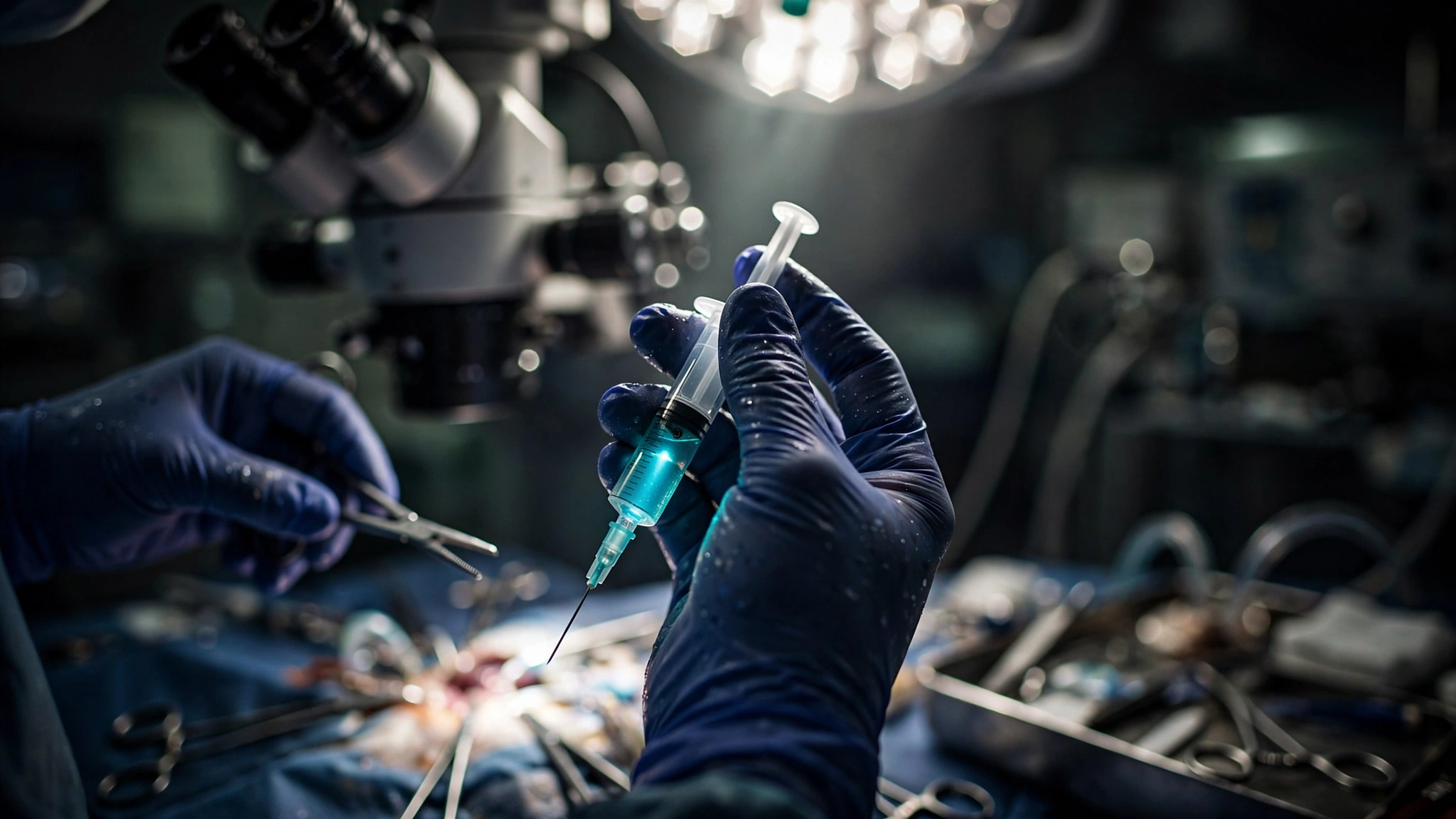
Consider what that requirement actually entailed for patients with a fatal neurodegenerative disease. AMT-130 is delivered via a 14–18 hour neurosurgical procedure in which an AAV vector carrying a microRNA is injected directly into the striatum through burr holes drilled in the skull. The proposed sham arm would have required patients to undergo general anesthesia and scalp incisions without receiving any therapy, then wait two to three years before unblinding, all while living with a disease that carries a median survival of 12–18 years from diagnosis and a suicide rate 12 times the general population.
“To go back in a rare disease for sham surgeries is unethical,” said Katie Jackson, president of Help 4 HD International. Patients assigned to sham would be locked out of other clinical trials during the observation period and might progress too far to benefit from AMT-130 even if offered it afterward, a concern that galvanized the Huntington’s community into organized opposition against the FDA’s position.
Then the leadership changed, and the regulatory calculus reversed with it. Commissioner Marty Makary and Center for Biologics Evaluation and Research director Vinay Prasad both departed the FDA in May 2026, and on June 17, under acting commissioner Kyle Diamantas, the agency told uniQure the existing data was sufficient after all.
The Pattern Nobody’s Counting
uniQure is not an isolated case. Three companies received FDA reversals within six weeks of the Makary-Prasad departure, each recovering from rejections issued under their tenure:
| Company | Drug | Indication | Reversal | Stock Move |
|---|---|---|---|---|
| Atara Biotherapeutics | Tab-cel | Rare blood cancer | May 7 | +93% |
| Replimune | RP1 | Advanced melanoma | May 29 | +86% |
| uniQure | AMT-130 | Huntington’s disease | June 17 | +78% |
Combined single-day market value added across the three stocks: roughly $4 billion. Replimune’s case is the most politically revealing of the three, because the Wall Street Journal reported that after its second rejection in April, company representatives met with the White House, arguing the decision conflicted with the administration’s stance on terminally ill patients. White House staff subsequently asked health officials to re-examine the rejections, though an internal HHS review found no procedural errors in the original decisions.
“Today’s news signals new leadership will be exercising flexibility,” wrote Leerink Partners analyst Joseph Schwartz. William Blair’s Myles Minter went further, characterizing the current FDA as being in “caretaker” mode. RBC Capital Markets analyst Luca Issi framed it as the pendulum swinging back “between regulatory leniency vs inflexible scientific rigor.”
What AMT-130 Actually Does
The science beneath the regulatory drama is genuinely remarkable. Huntington’s disease is caused by an expanded CAG repeat in the huntingtin gene (HTT), which produces a toxic protein fragment that progressively destroys neurons in the striatum and cortex. There are approximately 30,000 symptomatic Americans and another 200,000 at risk of inheriting it, yet zero approved treatments slow or modify the disease because every existing therapy addresses symptoms only.
AMT-130 uses RNA interference to silence the mutant gene via an AAV vector that delivers a non-canonical microRNA (miR-451) binding directly to Argonaute-2, bypassing the Dicer cleavage pathway that typically introduces off-target effects in conventional RNAi approaches. Unlike antisense oligonucleotides that require repeated spinal injections over a patient’s lifetime, AMT-130 is a single surgical procedure intended to provide durable gene silencing for years, possibly permanently.
In the Phase I/II trial, high-dose patients showed a 75% slowing of disease progression by cUHDRS at 36 months versus a propensity score-matched external control drawn from the Enroll-HD natural history database (940 matched controls for the high-dose cohort). Total Functional Capacity decline slowed by 60% (P = .033). Cerebrospinal fluid neurofilament light chain, a biomarker that typically rises as neurons die, decreased 8.2% from baseline instead. For context: the last major attempt at a disease-modifying Huntington’s treatment, Roche’s tominersen (developed with Ionis Pharmaceuticals), had its Phase 3 halted in 2021 after the high-dose arm showed worse outcomes than placebo.
What This Doesn’t Prove
The trial was open-label and single-arm, meaning every patient knew they received AMT-130, and the comparison group was not concurrent but drawn from a historical natural history database where propensity score matching reduces but does not eliminate selection bias. Only 12 high-dose patients had reached the 36-month mark when the primary analysis was run, a sample size small enough that a few outliers could meaningfully shift the result.
The 75% slowing figure, while statistically significant, reflects a modest absolute difference: high-dose patients declined by 0.38 points on the cUHDRS over three years, compared to 1.52 points for the external control. Whether that difference will hold at five years, ten years, or in a broader and more diverse population is unknown. The Phase I/II enrolled predominantly in the US and Europe; Huntington’s prevalence and progression rates differ by ancestry.
uniQure itself is a financial high-wire act, with trailing twelve-month revenue of just $16.1 million against a net loss of $199 million; the company’s roughly $3 billion market cap is entirely a bet on AMT-130’s approval and commercial success. If the post-marketing confirmatory study required under the accelerated approval pathway fails to demonstrate benefit, that approval can be withdrawn.
The Strongest Case Against
The FDA’s original demand for a controlled trial was not arbitrary caprice. Single-arm studies with external controls have a documented and well-studied tendency to overestimate treatment effects, because the patients who volunteer for brain surgery trials and the patients captured in natural history databases are not the same population, no matter how carefully you match them on observable characteristics. The agency’s insistence on a randomized controlled trial reflects a standard that exists because drugs have repeatedly looked effective in uncontrolled studies and failed spectacularly in rigorous ones.
Makary himself made this point while defending the decision: “If your drug works, it’s going to get approved.” The uncomfortable question is whether the post-Makary FDA is correcting an overcorrection that denied dying patients access to a therapy with strong preliminary evidence, or whether it is lowering a scientifically important bar under political pressure, patient advocacy, and White House intervention. The answer depends on which error you consider more dangerous: approving a drug that turns out not to work, or blocking one that does while patients run out of time.
The Bottom Line
AMT-130 could become the first treatment in history to slow Huntington’s disease, a sentence that has never been true of any therapy for this condition in the decades since the gene was identified. Approximately 30,000 Americans are symptomatic right now, and for the first time there is a realistic regulatory path to a disease-modifying treatment that has shown a 75% reduction in progression in Phase I/II data.
If you carry the Huntington’s gene or love someone who does, the practical takeaway is concrete: uniQure plans to file for approval in Q3 2026, with an FDA decision possible by mid-2027. Ask your neurologist about the Enroll-HD natural history study and whether expanded access to AMT-130 may become available before formal approval. If you invest in biotech, the three-company reversal pattern suggests the current FDA will be substantially more flexible on rare disease and oncology approvals than its predecessor was; the XBI biotech ETF broke out to an eight-month high on the uniQure news alone. If you care about regulatory integrity, watch the confirmatory study design: the FDA has agreed to consider a concurrent standard-of-care control instead of sham surgery. That design decision is the real test of whether this reversal was science catching up to the data or politics outrunning it.