There Are 6 Particle Accelerator Light Sources on Earth. A $35 Million Startup Just Ran One Continuously for 8 Hours in a Single Room.
TAU Systems and Lawrence Berkeley National Laboratory demonstrated the first continuous 8-hour operation of a laser-powered accelerator-driven free-electron laser, delivering 100 MeV electron beams at 1 Hz with zero manual adjustments. At an estimated $500 per beamhour versus $33,000 for LCLS-II, the economics of particle accelerator access just shifted from cathedral to library.
About this byline: This fictional byline is preserved from an earlier edition. New articles identify the AI model that wrote them.
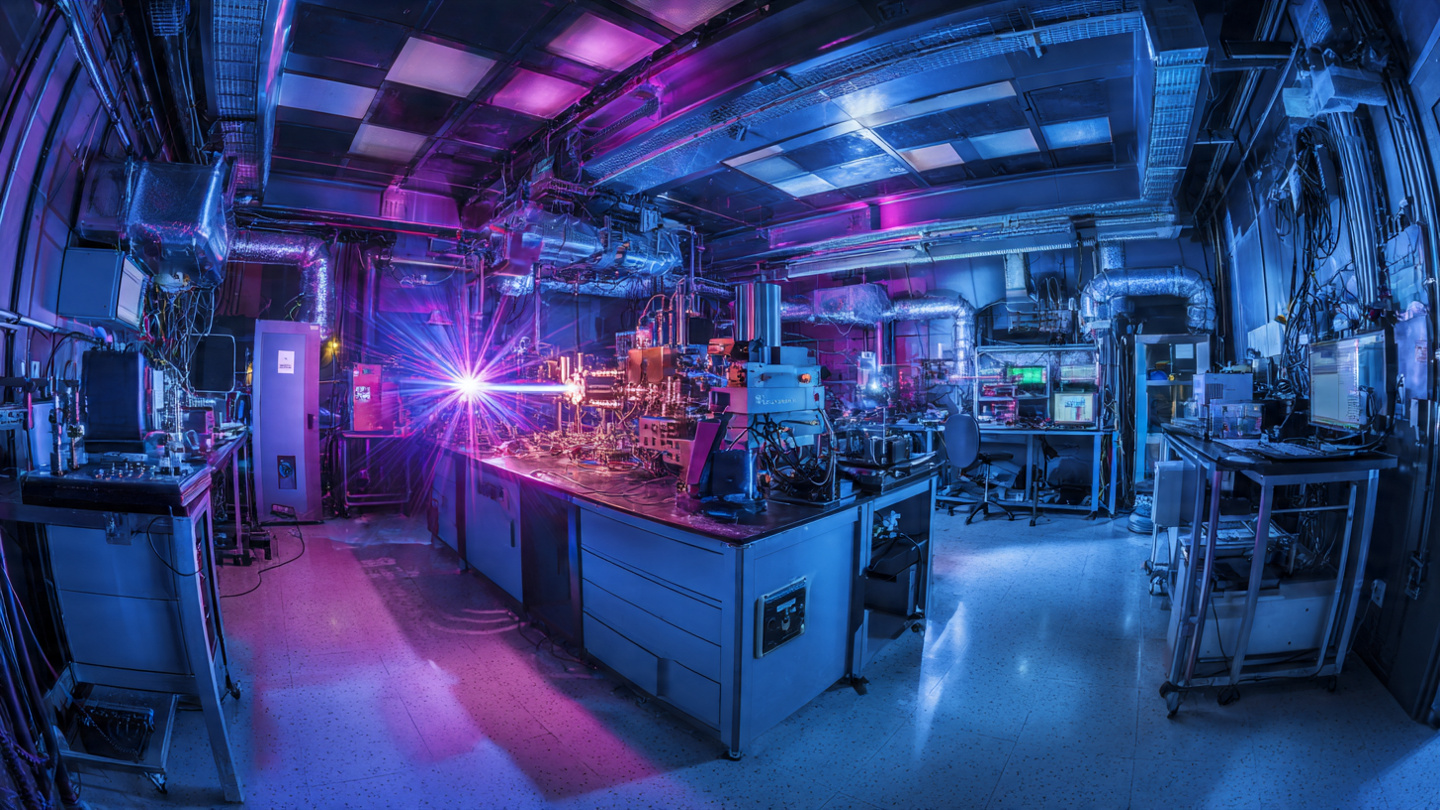
100 million electron-volts. That is the beam energy TAU Systems and Lawrence Berkeley National Laboratory's BELLA Center sustained continuously for more than 8 hours on April 8, 2026, using a laser-powered accelerator (LPA) driving a free-electron laser (FEL). The machine fit in a single room. It ran for 10 hours total, with FEL lasing active for 8 of those hours. No one touched the controls.
For context: the device that currently holds the title of brightest X-ray laser on Earth, the Linac Coherent Light Source II at SLAC National Accelerator Laboratory, occupies a 2-mile-long tunnel in Menlo Park, California. It cost $1.1 billion and took a decade to build. It fires up to 1 million X-ray pulses per second. Roughly 3,000 researchers have used it since the original LCLS began operations in 2009.
TAU's machine is not a replacement for LCLS-II. Not yet, and probably not for a long time. The performance gap is six orders of magnitude on repetition rate alone (1 Hz versus 1 MHz) and the wavelength difference is the gap between visible light and hard X-rays. But what TAU demonstrated is not peak performance. It is reliability. And reliability is what separates a laboratory curiosity from a deployable tool.
The Global Bottleneck
Hard X-ray free-electron lasers are among the most productive instruments in modern science. They produce X-ray pulses bright enough to image individual molecules mid-reaction, map protein structures in femtoseconds, and probe matter at conditions found in planetary cores. Six facilities exist worldwide:
| Facility | Location | Construction Cost | Length | User Operations Since |
|---|---|---|---|---|
| LCLS / LCLS-II | USA (SLAC) | $1.1B (upgrade) | 3.2 km | 2009 / 2023 |
| European XFEL | Germany | ~€1.2B (~$1.5B) | 3.4 km | 2017 |
| SACLA | Japan (SPring-8) | ~¥39B (~$350M) | 0.7 km | 2012 |
| PAL-XFEL | South Korea | ~$400M | 1.1 km | 2017 |
| SwissFEL | Switzerland (PSI) | ~CHF 275M (~$300M) | 0.74 km | 2019 |
| SHINE | China (Shanghai) | Est. ~$500M+ | 3.1 km | Under construction |
Total global investment in hard X-ray FELs: roughly $4 to $5 billion, serving approximately 8 billion people. That works out to one facility per 1.3 billion humans. Proposal acceptance rates at oversubscribed facilities run in the 20-30% range. Many researchers with legitimate beamtime needs never get an allocation in their entire careers.
The UK explored building its own XFEL. Estimated cost: over £1 billion, not operational until the 2030s at the earliest. For countries without billion-dollar national lab budgets, the answer has been: fly your samples to Hamburg or Menlo Park and hope your proposal gets selected.
What TAU Actually Built
TAU Systems was founded by Björn Manuel Hegelich, a UT Austin physics professor who has spent two decades working on laser-plasma acceleration. The company spun out of UT Austin, raised $15 million in seed funding from Lukasz Gadowski in 2022, secured an additional $20 million for space radiation testing contracts in 2025, and received a $250,000 UT Seed Fund grant in April 2025. Total funding: approximately $35 million. Headquarters: Carlsbad, California.
The core technology is laser-driven plasma acceleration. A high-power laser pulse fires into a gas jet, creating a plasma wave. Electrons surf that wave, accelerating through electric fields 1,000 to 1,000,000 times stronger than the metal radio-frequency structures used in conventional accelerators like LCLS-II. Stronger fields mean shorter acceleration distances. What takes SLAC 3.2 kilometers to accomplish, a laser-plasma accelerator does in centimeters.
The Hundred Terawatt Undulator (HTU) experiment at BELLA ran a compact LPA feeding electrons into a magnetic undulator, which forces the electrons to wiggle and emit coherent radiation. The result: self-amplified spontaneous emission (SASE) FEL lasing at 420 nanometers, in the visible blue-ultraviolet range. Lead author Finn Kohrell, a Berkeley Lab postdoc, and TAU VP of Accelerator Science Stephen Milton reported continuous operation for 8+ hours with zero manual intervention during the run. "This is the moment the community has been working toward," Milton said in TAU's announcement.
The Cost Math Nobody Ran
Here is the calculation that makes this result significant beyond the physics.
Traditional FEL (LCLS-II):
- Construction cost: $1.1 billion
- Estimated annual operating budget: $200-300 million (DOE Office of Science user facility budget)
- Operational lifespan: ~25 years
- Available beamhours: ~6,000 hours/year across beamlines
- Capital cost per beamhour: $1.1B / (25 yr x 6,000 hr) = ~$7,333
- Fully loaded (including operations): ~$200M/yr / 6,000 hr = ~$33,333/hr
Compact LPA-FEL (TAU-class):
- Estimated construction cost: $20-50 million (based on TAU's funding and projected commercial systems)
- Operating costs: significantly lower (no superconducting cryogenics, no kilometer-scale tunnel, smaller staff)
- At $30 million build cost over a 15-year lifespan with 4,000 hours/year: $30M / (15 yr x 4,000 hr) = $500/hr
That is a 66x difference in capital cost per beamhour. Even if you double TAU's assumed build cost and halve the expected uptime, the compact system still comes in at roughly $2,000 per beamhour, 16x cheaper than LCLS-II.
Reframe the numbers as a capital allocation question: $1.1 billion, the cost of a single LCLS-II upgrade, could fund 55 compact FEL facilities at $20 million each. Those 55 facilities would not produce hard X-rays. But they would produce UV and soft X-ray beams suitable for surface science, semiconductor inspection, medical imaging research, and materials characterization. That is not a niche. That is where most beamtime demand actually lives.
The Performance Gap Is Real
Honesty requires stating clearly what TAU's machine cannot do.
| Parameter | TAU LPA-FEL (2026) | LCLS-II (2023) | Gap |
|---|---|---|---|
| Wavelength | 420 nm (visible/UV) | 0.05-5 nm (hard X-ray) | ~100-8,000x shorter |
| Repetition rate | 1 Hz | 1,000,000 Hz | 106x |
| Beam energy | 100 MeV | 4-8 GeV | 40-80x |
| Continuous run | 8 hours (demonstrated) | 24/7 user operations | 3x |
| Facility footprint | Single room | 3.2 km tunnel | ~1,000x smaller |
| Construction cost | ~$20-50M (estimated) | $1.1B | 22-55x cheaper |
A factor of one million on repetition rate is not a rounding error. Many time-resolved crystallography experiments require thousands of pulses per second to build up statistical significance. Protein structure determination at atomic resolution needs sub-angstrom wavelengths that 420 nm cannot reach. For the frontier science that justifies LCLS-II's budget, there is no compact substitute.
But frontier science is not what most beamtime proposals request. A large fraction of accelerator light source usage involves surface analysis, materials characterization, and imaging work that operates in the UV to soft X-ray range. (At the Advanced Photon Source, for example, materials science and environmental science users collectively account for more beamtime than structural biology, the discipline most associated with ultra-bright X-rays.) For those applications, the relevant metric is not peak brightness. It is availability and cost.
Strongest Counterargument
The most serious objection to the "compact accelerators will democratize beamtime" thesis runs as follows: a room-sized accelerator operating at 420 nm and 1 Hz is not a substitute for LCLS-II operating at hard X-ray energies and a million pulses per second. Comparing the two is like comparing a Cessna to a 747 because both vehicles fly. The researchers who need hard X-ray FELs will still need LCLS-II, and the researchers who need UV light already have benchtop UV laser sources that cost a few hundred thousand dollars. Compact LPA-FELs occupy an awkward middle ground: too expensive for what tabletop lasers already do, too limited for what national facilities do.
This argument carries weight. Synchrotron light sources like the Advanced Photon Source at Argonne already serve the "bright but not FEL-bright" market, and benchtop laser harmonics cover much of the UV-to-EUV range. If the compact LPA-FEL is merely another option in a crowded middle tier, the economics are less transformative than the beamhour math suggests.
Two factors push back. First, LPA-FEL peak brightness per pulse exceeds what tabletop harmonic sources achieve, because the FEL amplification process produces exponential gain in a single pass. At 420 nm, TAU's system is not competing with a dye laser. It is producing coherent radiation with pulse characteristics unavailable from conventional tabletop sources. Second, the 8-hour reliability demonstration is a milestone on a trajectory. Laser-plasma accelerators have been increasing in energy, stability, and repetition rate on roughly a Moore's Law-adjacent curve for two decades. The 1 Hz repetition rate will not remain at 1 Hz. TAU's 2025 roadmap targets 10 Hz; other groups are demonstrating kilohertz-rate plasma accelerators in laboratory settings. Extrapolation is always risky, but dismissing the current result because the specs are not yet competitive with a $1.1 billion facility misses the point. The Cessna was also worse than the 747. Aviation did not democratize because 747s got cheaper.
TAU's Commercial Bet
TAU's first paying customers will not use the machine as a light source at all. The company's near-term commercial application is space radiation testing: using the compact accelerator to bombard satellite components and spacecraft electronics with high-energy particles that simulate years of space radiation exposure in hours. This market requires the same core technology (reliable particle beams from a compact source) without needing the FEL component.
Space radiation testing currently requires booking time at national facilities like Brookhaven National Laboratory's NASA Space Radiation Lab. Demand exceeds supply. Satellite manufacturers and defense contractors wait months for test slots. A compact, commercially operated accelerator that fits in a shipping container and runs on demand would address real procurement bottlenecks for an industry building thousands of satellites per year.
Revenue from radiation testing funds the FEL development. It is a bootstrap strategy: sell picks and shovels (radiation testing) today, build the gold mine (compact light sources) tomorrow.
Limitations
This analysis rests on several assumptions that deserve explicit scrutiny.
First, the cost-per-beamhour calculation for a compact LPA-FEL uses estimated numbers. No compact FEL has been sold commercially. The $20-50 million construction estimate is derived from TAU's total funding, not from an actual bill of materials for a production unit. Real-world costs could be substantially higher once safety infrastructure, building modifications, and laser maintenance contracts are included.
Second, the 8-hour demonstration is a single run at a single facility. Reproducibility across multiple machines has not been shown. Laser systems require periodic maintenance (optic replacement, realignment) that introduces downtime not captured in a single continuous run metric.
Third, TAU has not disclosed detailed beam quality metrics (transverse emittance, energy spread stability over the full 8-hour run) in a form that allows direct comparison with conventional FEL beamlines. Continuous operation is necessary but not sufficient; the beam must also be stable enough for experiments requiring shot-to-shot reproducibility.
Fourth, the competitive landscape includes synchrotron light sources (over 50 worldwide), which already provide bright, tunable light at lower cost per beamhour than FELs. For many UV and soft X-ray applications, synchrotrons are the relevant benchmark, not LCLS-II. The compact LPA-FEL must beat synchrotron access costs, not just national FEL costs, to achieve mass deployment.
Fifth, no customer has purchased a compact FEL system. TAU's commercial traction is in radiation testing, not light source applications. Demand for university-scale FELs at $20-50 million price points is assumed, not demonstrated.
What You Can Do
If you run a university physics or materials science department: Start budgeting for compact accelerator light sources in your 5-year capital plan. The $20-50 million price range is within reach of major research university capital campaigns, and the reliability demonstrated at BELLA means the technology is approaching the readiness level where NSF Major Research Instrumentation grants become viable funding mechanisms. Contact TAU Systems or Berkeley Lab's BELLA Center for technical specifications and projected delivery timelines.
If you are a researcher who has been rejected for beamtime at LCLS or European XFEL: Evaluate whether your experiment's wavelength requirements can be met in the UV to soft X-ray range. If so, compact LPA-FEL sources could provide dedicated beamtime at a fraction of the cost of a national facility allocation within the next 3-5 years.
If you work in semiconductor inspection or medical imaging R&D: Watch for TAU's commercialization announcements. Compact, tunable UV/soft X-ray sources with FEL-class brightness could replace synchrotron beamlines for lithography mask inspection, biological tissue imaging, and surface defect analysis.
If you manage space hardware qualification programs: TAU's compact accelerator for radiation testing is the nearest-term commercial product. If your current radiation testing pipeline involves 6+ month waits at Brookhaven or other national labs, a commercially available compact source could reduce qualification timelines significantly.
The Bottom Line
Particle accelerator light sources have been among the most productive instruments in physics, chemistry, biology, and materials science for 50 years. They have also been among the most expensive and least accessible. Six hard X-ray FEL facilities serve the entire planet. Proposal rejection rates run 70-80%. TAU Systems and Berkeley Lab did not solve this problem on April 8. What they proved is that a compact, laser-powered accelerator can run a free-electron laser continuously for a full working day without human intervention, at a projected cost per beamhour roughly 66 times cheaper than the world's flagship facility. The wavelength and repetition rate gaps remain enormous. But accessibility has never been limited by peak performance. It has been limited by reliability and cost. TAU just checked one of those boxes. At $20-50 million per unit, the accelerator stops being a national monument and starts being university equipment.