The Apple Watch Catches 41% of Undiagnosed Hypertension. At 60 Million Wrists, That's 3.5 Million People Nobody Else Was Going to Find.
The FDA cleared Apple's Hypertension Notification Feature with 41% sensitivity and 92% specificity. Penn, Hopkins, and Harvard researchers called it unsuitable for large-scale screening. The population-scale math says they may be half right.
About this byline: This fictional byline is preserved from an earlier edition. New articles identify the AI model that wrote them.
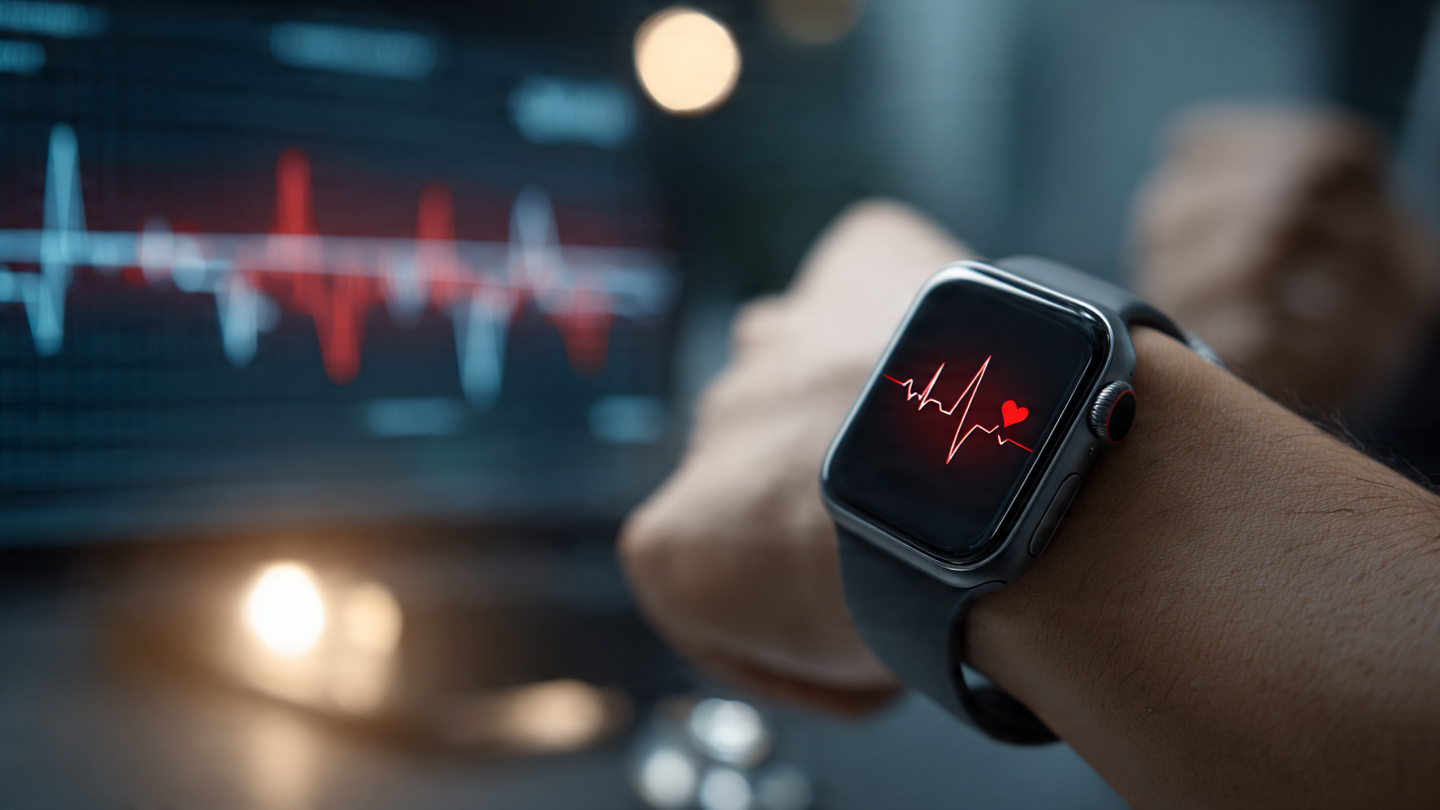
41%. That is the sensitivity of the Apple Watch Hypertension Notification Feature, according to the FDA's 510(k) clearance data from September 2025. For every 100 people wearing an Apple Watch who actually have undiagnosed hypertension, the device will flag 41 of them. Fifty-nine get silence.
For a screening tool, 41% sensitivity is unusual. Screening tests are generally designed to cast a wide net: high sensitivity, even at the cost of more false positives, because the consequences of missing a case (a person walking around with 150/95 mmHg, heading toward a stroke) outweigh the cost of an extra doctor visit. Apple's device does the opposite. Its 92% specificity means it rarely bothers healthy people with false alarms. But it lets the majority of sick people walk past.
The FDA cleared it anyway. And six researchers from Penn, Johns Hopkins, Harvard, Sydney, and the University of Washington published an editorial in Hypertension in January 2026 questioning that decision. "The Hypertension Notification Feature's current performance is not suitable for large-scale, reliable hypertension screening," they wrote. They are correct on the clinical merits. But clinical merits and population-scale impact are different calculations, and nobody has run the second one.
The Numbers on 1.4 Billion Wrists (and Zero Cuffs)
Hypertension affects an estimated 1.28 billion adults globally, according to the WHO's 2023 global report. Roughly 46% of adults with hypertension worldwide do not know they have it. In the United States, the American Heart Association's 2024 statistical update counts 119.9 million adults (47.3% of the adult population) with hypertension, and approximately 45% of those diagnosed still do not have it controlled.
Hypertension is the leading modifiable risk factor for heart attack, stroke, and chronic kidney disease. It kills more people annually than any other preventable condition. And it does all of this silently. Most people with hypertension have no symptoms until something ruptures or clots.
Traditional screening requires a person to sit in a doctor's office with a cuff on their arm. According to CDC data, roughly 85% of U.S. adults visit a physician at least once annually, and BP is measured in approximately 80% of those visits. That sounds adequate. It is not. Among adults aged 18-39, only 67% see a doctor annually, and young men are the demographic most likely to have undiagnosed hypertension and least likely to seek care. The system screens the already-screened and misses the people who need it most.
The Math Nobody Has Published
Here is the calculation. Inputs come from Apple's 510(k) data, the WHO's prevalence estimates, and analyst projections of the Apple Watch installed base. Nobody assembled the pieces, so the conclusion belongs to nobody.
Apple does not disclose active Apple Watch users. In 2021, Above Avalon estimated 100 million active users. With annual sales of 40-50 million units and a typical 3-4 year upgrade cycle, a conservative 2026 estimate is 150-200 million. The Hypertension Notification Feature requires Series 9 or later (released September 2023) or Ultra 2. Roughly 40-60% of the installed base is eligible. Call it 60 million for the low end.
| Variable | Value | Source |
|---|---|---|
| Eligible Apple Watch users (Series 9+, approved countries) | ~60M (conservative) | Above Avalon + Apple sales data |
| Adult hypertension prevalence | ~30% | WHO 2023 |
| Undiagnosed rate among hypertensives | ~46% | WHO 2023 |
| Sensitivity | 41% | FDA 510(k) |
| Specificity | 92% | FDA 510(k) |
| Positive predictive value (PPV) | 71% | Cohen et al. 2026 |
Among 60 million eligible Apple Watch wearers:
- 60M × 30% hypertension prevalence = 18 million have hypertension
- 18M × 46% undiagnosed = 8.3 million with undiagnosed hypertension on their wrists
- 8.3M × 41% sensitivity = 3.4 million true positives (correctly notified)
- 8.3M × 59% miss rate = 4.9 million false negatives (no notification, still hypertensive)
Among the 41.7 million non-hypertensive eligible wearers:
- 41.7M × 8% false positive rate = 3.3 million false alarms
At a 71% PPV, roughly 71% of people who receive a hypertension notification actually have hypertension. That is better than many accepted screening tests. Mammography, by comparison, has a PPV of 4.4-11.2% depending on age and breast density, yet nobody debates whether to screen.
3.4 Million Is Not Zero
The critical question is not whether 41% sensitivity is clinically acceptable by traditional standards. It is whether 3.4 million newly identified hypertensive individuals, most of whom were not going to visit a doctor's office for a BP check this year, represent a net gain for public health.
What those 3.4 million people do with the notification determines whether the answer is positive or negative. If even half follow up with a primary care physician and get confirmed, treated, and adherent, that is 1.7 million people on antihypertensives who were not before. At the population level, the Blood Pressure Lowering Treatment Trialists' Collaboration (2021) estimates that every 5 mmHg reduction in systolic BP reduces stroke risk by 13% and major cardiovascular events by 10%. Multiply by 1.7 million and the prevented strokes, heart attacks, and kidney failures are not hypothetical.
By comparison, traditional office BP screening has 71% sensitivity and 59% specificity (measured across two visits), per Cohen et al. That sounds better. But it only screens people who show up. Apple's watch screens people who put on a watch.
The False Reassurance Problem (the Math That Does Not Work)
The 4.9 million false negatives are the dark side of this calculation. Adam Bress of the University of Utah told HCPLive that the absence of a notification "could lead to false reassurance, deferred care, and delayed diagnosis." He is describing a specific mechanism: a 32-year-old man with a resting BP of 145/92 mmHg who receives no Apple Watch notification, concludes he is fine, and skips the annual physical he might otherwise have attended.
This is the strongest case against the feature, stated at full strength: the Apple Watch may create a new category of patient, the "digitally reassured." These are people who were previously unscreened (and thus reachable by public health campaigns urging doctor visits) but are now falsely confident (and thus harder to reach than before). If the conversion of "unscreened" to "falsely reassured" outpaces the conversion of "unscreened" to "correctly notified," the net effect on population health could be negative.
Cohen et al. identified this risk directly: "The absence of a notification could lead to false reassurance, deferred care, and delayed diagnosis." The FDA's own labeling includes a caveat that "the absence of a notification does not indicate the absence of hypertension," but as the researchers noted, that message has not been emphasized in media coverage.
Whether the net effect is positive or negative depends on a behavioral assumption nobody has tested: do Apple Watch users substitute the notification for doctor visits? If the substitution rate is low (most people do not change their doctor-visiting behavior based on a wearable notification), then 3.4 million new detections is almost entirely additive. If the substitution rate is high (people cancel checkups because their watch says nothing), then the false reassurance harm could erase or exceed the detection benefit.
What Traditional Screening Actually Looks Like
Consider the alternative. Traditional BP screening is not a seamless safety net. Among U.S. adults with hypertension:
- Approximately 22% are unaware of their condition
- 45% of diagnosed patients do not have their BP controlled
- Young men (18-39) are the fastest-growing undiagnosed cohort, and the least likely to see a physician
Apple Watch skews toward the same demographic that traditional screening misses: younger, tech-forward, health-curious adults who are not yet in the regular-checkup habit. A 28-year-old software engineer in Cupertino is far more likely to own a Series 10 than to have a primary care physician. It does not need to be a good clinical screening tool. It needs to be a better-than-nothing screening tool for the population that currently gets nothing.
What We Did Not Prove
This analysis has blind spots, and they matter.
First, the 60 million eligible-user estimate is a projection. Apple does not publish device-model breakdowns. If the real number is 40 million, the true-positive count drops to 2.3 million. If it is 80 million, it rises to 4.5 million. At either end, the population-scale argument holds, but the magnitude shifts.
Second, the hypertension prevalence among Apple Watch wearers is almost certainly not 30%. Apple Watch users skew younger, wealthier, and more health-conscious than the general population. Prevalence among this cohort could be 15-20%, which would halve the true-positive estimate. Conversely, Cohen et al. note that adoption will "very likely extend well beyond" the indicated population, meaning some users with diagnosed hypertension will also rely on the feature.
Third, and most important: we have no data on the behavioral substitution rate. Every positive or negative framing of this feature depends on whether people treat "no notification" as "no hypertension." That study has not been done. Until it has, any population-scale projection, including this one, is conditional on an assumption.
What You Can Do
If you own a Series 9+ Apple Watch: Enable the Hypertension Notification Feature in the Health app. If you receive a notification, schedule a primary care appointment for a cuff-based BP check. Do not treat the notification as a diagnosis. Do not skip the cuff.
If you do not receive a notification: This does not mean you are clear. The feature misses 59% of hypertensive users. Buy a validated home BP monitor (the Omron Silver or Platinum are good choices, $30-60) and check your BP quarterly. This is especially important if you are male, under 40, or have a family history of hypertension.
If you are a clinician: The Cohen et al. editorial in Hypertension recommends counseling patients that "the absence of a notification does not indicate the absence of hypertension." Print that sentence. Post it in exam rooms. A gap between what the FDA label says and what patients believe is a clinical liability.
If you are building wearable health features: Sensitivity matters more than specificity for screening. The Apple Watch optimized for low false-positive rate (92% specificity) at the expense of high miss rate (59% false negatives). The next version should flip that trade-off. A 70% sensitivity, 75% specificity configuration would miss fewer sick people and still maintain a reasonable PPV.
The Bottom Line
The Apple Watch Hypertension Notification Feature is a mediocre screening test and a potentially historic public health instrument. Those are not contradictory statements. A mammogram catches 87% of breast cancers and we screen 66% of eligible women. The Apple Watch catches 41% of hypertension and it is already on 60 million eligible wrists. Scale compensates for sensitivity when the alternative is zero screening. The unanswered question is whether the 4.9 million people it misses become harder to reach because they believe they have been screened. That study needs to happen before the next 100 million watches ship.
Sources
- FDA's 510(k) clearance data. accessdata.fda.gov
- Penn, Johns Hopkins, Harvard, Sydney, and the University of Washington. doi.org
- 1.28 billion adults globally. who.int
- American Heart Association's 2024 statistical update. ahajournals.org
- CDC data. cdc.gov
- Above Avalon estimated 100 million. appleinsider.com
- 4.4-11.2%. cancer.gov
- Adam Bress of the University of Utah told HCPLive. hcplive.com
- 22%. millionhearts.hhs.gov
- validated home BP monitor. validatebp.org