💻 Technology
The U.S. Government Paid $8.9 Billion for 10% of Intel. Ten Months Later, Apple Validated the Bet.
On June 18, Trump announced that Apple has agreed to design and manufacture chips at Intel's U.S. foundries using the 18A-P process. The government's 9.9% stake, acquired by converting CHIPS Act grants into equity at $20.47 per share in August 2025, is now worth over $52 billion on paper. An original return-on-investment analysis shows this is the most profitable government equity position in modern American history, with a higher return percentage than every major government bailout since 2008.
Four hundred and ninety-one percent. That is the return the United States government has earned on its Intel stake in ten months. It got bigger this morning. President Trump posted on Truth Social on June 18 that "Apple has agreed to work with Intel to design and build its Chips in America," sending Intel shares up 9.2% in premarket trading and extending a stock price rally that has turned the government's $8.9 billion bet into the most lucrative equity position Washington has held since it started bailing out companies in 2008.
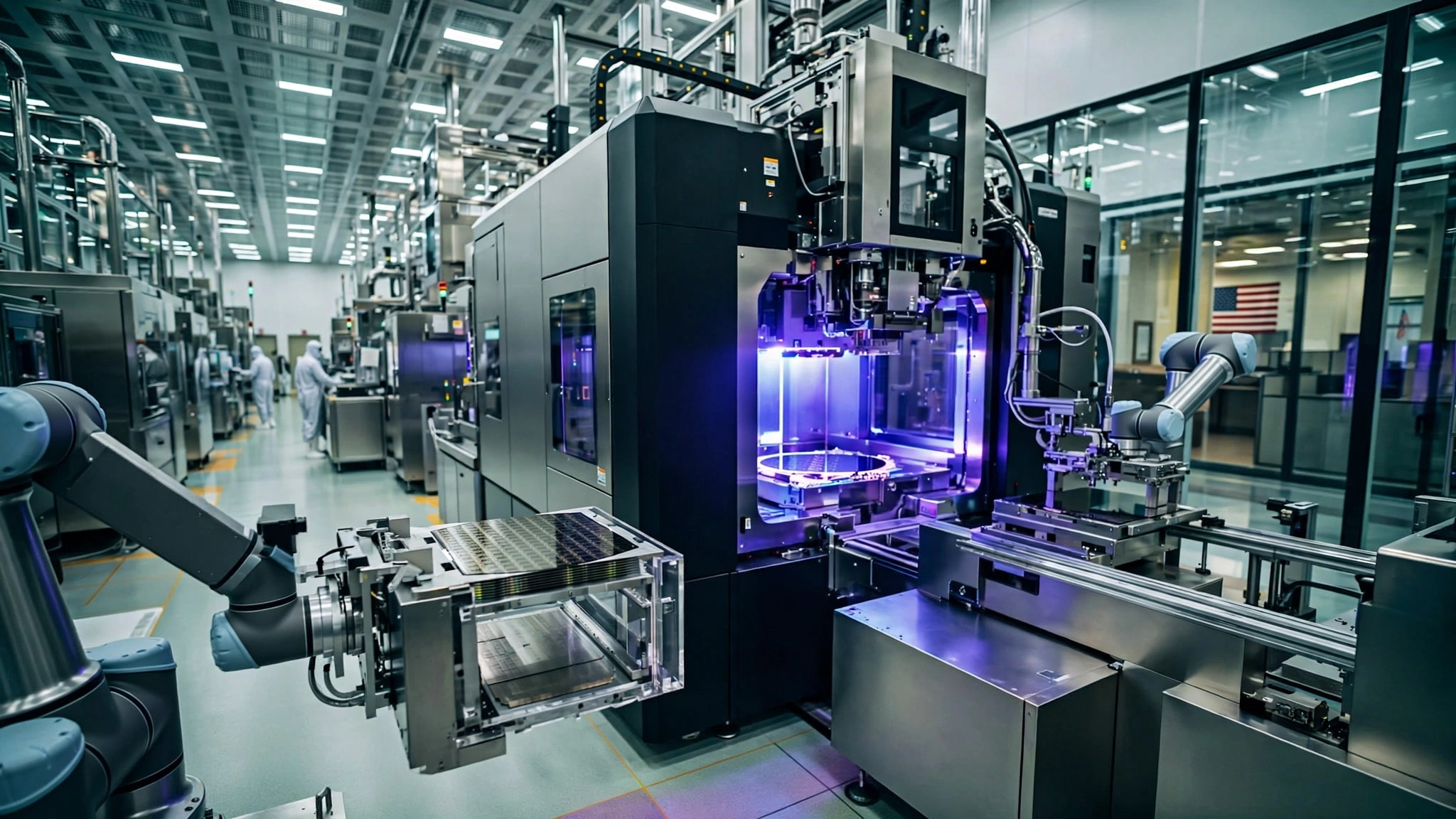
The Apple partnership, which the Wall Street Journal first reported as a preliminary deal in May after more than a year of discussions, would have Intel manufacture Apple-designed ARM chips on its 18A-P process node, a technology that entered risk production just one day earlier at the VLSI Symposium in Honolulu. Counterpoint Research analysts believe Apple will likely test the process for its next-generation M7 processor for Mac and iPad. If yield rates hold, it would be the first time Apple has used a non-TSMC foundry for its custom silicon since it stopped using Samsung in 2016.
The Government's Trade
On August 22, 2025, the Trump administration converted $8.87 billion in CHIPS Act grant money into 433.3 million Intel shares at $20.47 per share, acquiring a 9.9% stake. Additionally, the government received warrants to purchase an additional 5% at $20 per share, exercisable if Intel's ownership of its foundry unit drops below 51% within five years. This money was originally allocated as construction subsidies for Intel's U.S. fab buildout (money Intel was supposed to receive without giving up equity), and the conversion was, depending on your perspective, either a savvy investment or a legally dubious maneuver that diluted existing shareholders to serve a political narrative.
Here is what happened next. Intel's stock went from $20.47 to $121 as of Wednesday's close. That 433.3 million shares is now worth $52.4 billion. The warrants, which let the government buy another 5% at $20 when the stock trades at $121, carry an additional intrinsic value of roughly $21.9 billion. Trump claimed the position is worth "more than $60 billion." The real number is higher. The floor is $52 billion. The ceiling, warrants included, is north of $74 billion.
How It Compares to Every Other Government Bet
We ran the numbers on every significant U.S. government equity investment since 2008. No serious comparison exists in the financial press, because nobody expected a CHIPS Act grant conversion to outperform every bailout the Treasury Department has ever executed. Here is the table:
| Government Investment | Capital Deployed | Returned / Current Value | Gain/Loss | Return % | Timeframe |
|---|---|---|---|---|---|
| Intel Stake (CHIPS Act) | $8.87B | $52.4B | +$43.5B | +491% | 10 months |
| AIG Bailout | $182B | $204.7B | +$22.7B | +12.5% | 4 years |
| TARP (all recipients) | $441B | $456.3B | +$15.3B | +3.5% | 6 years |
| Citigroup (TARP + guarantees) | $45B | $57.4B | +$12.4B | +27.6% | 5 years |
| GM Bailout | $51B | $39.7B | −$11.2B | −22% | 4 years |
| Chrysler (TARP) | $12.5B | $11.2B | −$1.3B | −10.4% | 3 years |
The Intel position has generated more absolute dollar gain ($43.5 billion) in ten months than TARP's entire $441 billion program generated in six years ($15.3 billion). On a percentage basis, it is not close. AIG's 12.5% return, which the Treasury counted as a success, is one-fortieth of Intel's. GM's bailout cost taxpayers $11.2 billion. Against Intel's $43.5 billion gain, a rounding error. And the Intel position is unrealized: the government has not sold a single share. Locking in these gains requires selling into a market that would notice a 433-million-share block hitting the tape.
Why 18A-P Matters More Than the Headline
The Apple announcement grabs attention, but the technology underneath it is what determines whether Intel's foundry can actually deliver. Intel's 18A-P variant, unveiled at VLSI 2026, introduces key improvements over the standard 18A process: a dual-contact transistor architecture Intel calls "Power Boost" that is an industry first, 10–30% lower via resistance and 20–40% better thermal resistance through materials and design co-optimization, and overall improvements that deliver 9% more speed at the same power or 18% less power at the same speed. Separately, Intel demonstrated at the same conference a next-generation interconnect approach using subtractive ruthenium wiring with an airgap, achieving up to 35% capacitance reduction and up to 50% lower via resistance versus copper on a research test chip, a promising path for future nodes, though not yet part of the 18A-P production process.
These are not incremental numbers. An 18% power reduction at matched performance means Apple could ship the same M7 chip in a thinner, lighter MacBook with longer battery life. Or push clock speeds higher without redesigning the thermal solution. The dual-contact transistor directly attacks the contact resistance problem that degrades performance as gate lengths shrink below 2nm, and the 10–30% via resistance improvement and 20–40% thermal resistance gains address real bottlenecks for power-dense AI and server workloads.
Intel also announced that its Diamond Rapids Xeon server processor will be manufactured on 18A-P, which matters because the company's highest-margin, highest-volume server chip line will use the same process it is offering to Apple. Foundry customers watch whether the foundry trusts its own technology. Intel just answered that question.
The Yield Question Nobody Can Dodge
Here is where the optimism collides with physics. As of mid-2025, KeyBanc Capital Markets reported Intel's 18A yields at approximately 55%, with 7-8% monthly improvement from the 50% levels reported the prior quarter. TSMC's competing N2 process was at roughly 65%, and Samsung's SF2 trailed both at 40%.
A 10-percentage-point yield gap sounds small until you do the wafer math. On a 300mm wafer producing 114mm² dies, like Intel's Panther Lake compute tile, 55% yield means approximately 297 good dies per wafer. At 65% yield, you get 351. That is 54 extra usable chips per wafer, and at Apple volumes of tens of millions of units, it translates directly into per-chip cost. Counterpoint Research put it plainly: "Yield matters more than nodes. Matching TSMC's manufacturing consistency will be the make-or-break factor."
Intel's yields have presumably improved in the year since that mid-2025 measurement, and the 18A-P variant includes process refinements specifically designed to improve patterning accuracy and reduce defectivity. But Intel has not disclosed current yield numbers, and the gap may persist. TSMC has been running advanced nodes at volume for two decades, while Intel Foundry has been serving external customers for barely two.
What Apple Actually Gets
Apple's deal with Intel is not a divorce from TSMC. It is a hedge. Apple's iPhone 18 Pro, expected in September 2026, will use TSMC's 2nm N2 process. The 2028 iPhone models are already targeted for TSMC's 1.4nm A14 node, which promises 15% better performance or 30% power savings over N2. Tim Cook said during Apple's last earnings call that iPhone 17 models had been supply-constrained because Apple could not get enough A19 Pro chips from TSMC, and when your sole supplier cannot make enough chips to meet demand, diversification is not a strategic luxury. It is an operational necessity.
Intel's role, at least initially, is to manufacture Mac and iPad processors, devices where Apple ships tens of millions of units rather than hundreds of millions. If Intel 18A-P yields prove competitive, the volume could expand, but if they do not, Apple has lost nothing but test wafers, because TSMC's capacity remains the primary channel.
Other foundry customers are lining up behind similar logic. Google ordered three million TPUs to be manufactured on Intel 18A, but production does not begin until 2028, giving Intel two years to prove yields at scale. Nvidia invested $5 billion but has not committed to using the foundry, and SpaceX and TeraFab have been mentioned as customers without confirmed production timelines. None of these commitments are irrevocable, and all of them are contingent on Intel delivering chips that work as well as what TSMC makes.
The Foundry's Financial Hole
Intel Foundry is still bleeding money. The unit posted a $2.4 billion operating loss in Q1 2026, continuing a pattern that saw $13.4 billion in operating losses on $17.5 billion in revenue for fiscal 2024. Intel's total capital expenditure in 2025 was $17.7 billion, down 29% from 2024, and management guided flat-to-down capex for 2026. For comparison, TSMC's capex in 2024 alone exceeded $35 billion, roughly double Intel's total.
Unforgiving math follows. External customer revenue has to arrive fast enough to offset those losses. Apple's Mac and iPad chip volumes could contribute $2-4 billion annually to Intel Foundry revenue, based on estimated unit volumes and per-chip pricing for advanced-node processors. That alone would not close a $9.6 billion annualized loss gap. But Apple as a customer does something financial statements cannot capture: it proves that the world's most quality-obsessed chip designer trusts your process enough to ship it in products with their name on it. That proof of concept is what brings the next ten customers, and the ten after that.
The Performance Gap Is Real, but It Cuts Both Ways
On raw transistor performance, Intel 18A actually leads. TechInsights benchmarked Intel 18A at 2.53 on its performance scale, versus 2.27 for TSMC N2 and 2.19 for Samsung SF2. Intel's backside power delivery network, a first-in-class technology that routes power through the back of the wafer, frees the front side almost entirely for signal interconnects and logic transistors. This architectural advantage delivers 5-10% better layout efficiency and up to 4% better power performance versus traditional front-side routing, though on transistor density TSMC still leads with 313 million transistors per square millimeter in high-density standard cells versus Intel's 238 million. But this comparison is misleading because Intel's backside power delivery eliminates the need for power-gating header and footer switches, ESD structures, MOS decoupling capacitors, and on-die regulators on the front side. The effective usable transistor density is closer than the headline numbers suggest, though Intel has not published adjusted figures.
Cost is the trade-off. Flipping a wafer and fabricating a power delivery network on the back side requires additional lithography steps, bonding, and wafer-thinning processes that add to manufacturing expense. Intel's 18A is likely more expensive per wafer than TSMC's N2. For premium products like Apple's M-series or Intel's Xeon line, that cost premium can be absorbed by higher selling prices. For commodity chips, it cannot.
Limitations
The government ROI analysis uses Intel's closing price as of June 17 ($121) and does not include the Apple-news premarket surge. The position is unrealized; actually selling 433 million shares would likely move the market and reduce the realized return. The warrant valuation assumes they could be exercised at current market price, but their terms may restrict timing. TARP and bailout return figures are from the U.S. Treasury's final accounting and Congressional Budget Office estimates; some sources report slightly different numbers depending on whether dividends, interest, and warrants are included.
Intel's current 18A yield figures are not publicly disclosed. The 55% and 65% figures cited for Intel 18A and TSMC N2 respectively are from a mid-2025 KeyBanc Capital Markets report and may not reflect current production. The yield gap could have narrowed significantly in the intervening year, or it could have widened if 18A-P introduced new process complexity.
Apple has not confirmed the deal, and neither has Intel. The partnership was announced by Trump on Truth Social and corroborated by Reuters and prior WSJ reporting, but no public statement from either company existed as of this writing.
The Strongest Counterargument
The strongest case against celebrating the Intel investment is that the government did not actually make a smart trade. It converted $8.9 billion in subsidies that Intel was already legally entitled to receive into equity, diluting existing shareholders without their consent and at a price ($20.47) that represented near the stock's all-time low. The "return" exists only because the stock recovered from a historic trough. Any investor who bought Intel at $18.97, the 52-week low, would have earned a 538% return without the power of the federal government behind them.
The more uncomfortable question is what happens when the government tries to exit a 9.9% stake in a $614 billion company, $60 billion worth of stock. Selling it requires either a carefully managed secondary offering that depresses the price, a private block sale to a sovereign wealth fund or institutional buyer, or holding indefinitely and becoming a permanent government shareholder in a private company, a model more common in Singapore and Saudi Arabia than in the United States. The unrealized gain is impressive. Realizing it without cratering the stock is a problem nobody in Washington has solved yet.
And Intel Foundry is still losing $2.4 billion per quarter. Apple's test wafers do not change that trajectory. Google's TPUs are two years away. Nvidia has not committed. The stock price reflects a future that has not yet arrived, and Intel has a long history of promising futures that took longer than expected or never materialized at all. The 10nm debacle, which delayed production by four years and cost Intel its process leadership, happened to the same company with the same fabs.
The Bottom Line
The U.S. government owns 10% of the company that Apple just chose to manufacture its next-generation computer chips. Whether that makes you optimistic about industrial policy or uncomfortable about state capitalism depends on priors that this article cannot resolve. What the data shows is a $43.5 billion unrealized gain on a $8.9 billion investment, a 491% return in ten months, and a customer pipeline that includes four of the five largest technology companies on Earth. If Intel delivers on yield, the government's bet pays for itself many times over. If it does not, the government owns 10% of a foundry that is still losing $10 billion a year, and Apple goes back to TSMC as if nothing happened, and that is the entire bet.
What You Can Do
If you hold Intel stock: The Apple deal is a validation of the foundry strategy, but the stock has already priced in significant optimism at a 400%+ gain over 12 months. Watch Q2 2026 earnings for foundry revenue guidance and any disclosed yield metrics on 18A-P. The government's 9.9% overhang plus warrants for another 5% represents a potential supply of 650 million shares that could enter the market at any time. That is not a risk to ignore.
If you are in the semiconductor supply chain: Intel 18A-P's risk production milestone means the process design kits are available for external customers to begin tape-outs. If you are evaluating foundry options for a 2nm-class chip, Intel is now a viable second source alongside TSMC, with the added benefit of U.S.-based manufacturing for export-controlled or defense-adjacent applications.
If you care about industrial policy: The Intel deal set a precedent: CHIPS Act grants can be converted to equity. You should watch whether other CHIPS Act recipients, including TSMC's Arizona fabs and Samsung's Texas expansion, face similar conversion pressure, because the government's willingness to take equity stakes in semiconductor companies changes the calculus for every future subsidy negotiation.