69 U.S. Jurisdictions Have Banned New Data Centers. The Grid's Watchdog Just Explained Why.
In a single week, North America's grid reliability authority issued its most urgent warning in years, Maryland sued to stop $1.6 billion in AI infrastructure costs from landing on homeowners, and prediction markets priced a federal data center moratorium at 93 percent. The political economy of the AI buildout has inverted: the backlash is now more certain than the buildout itself.
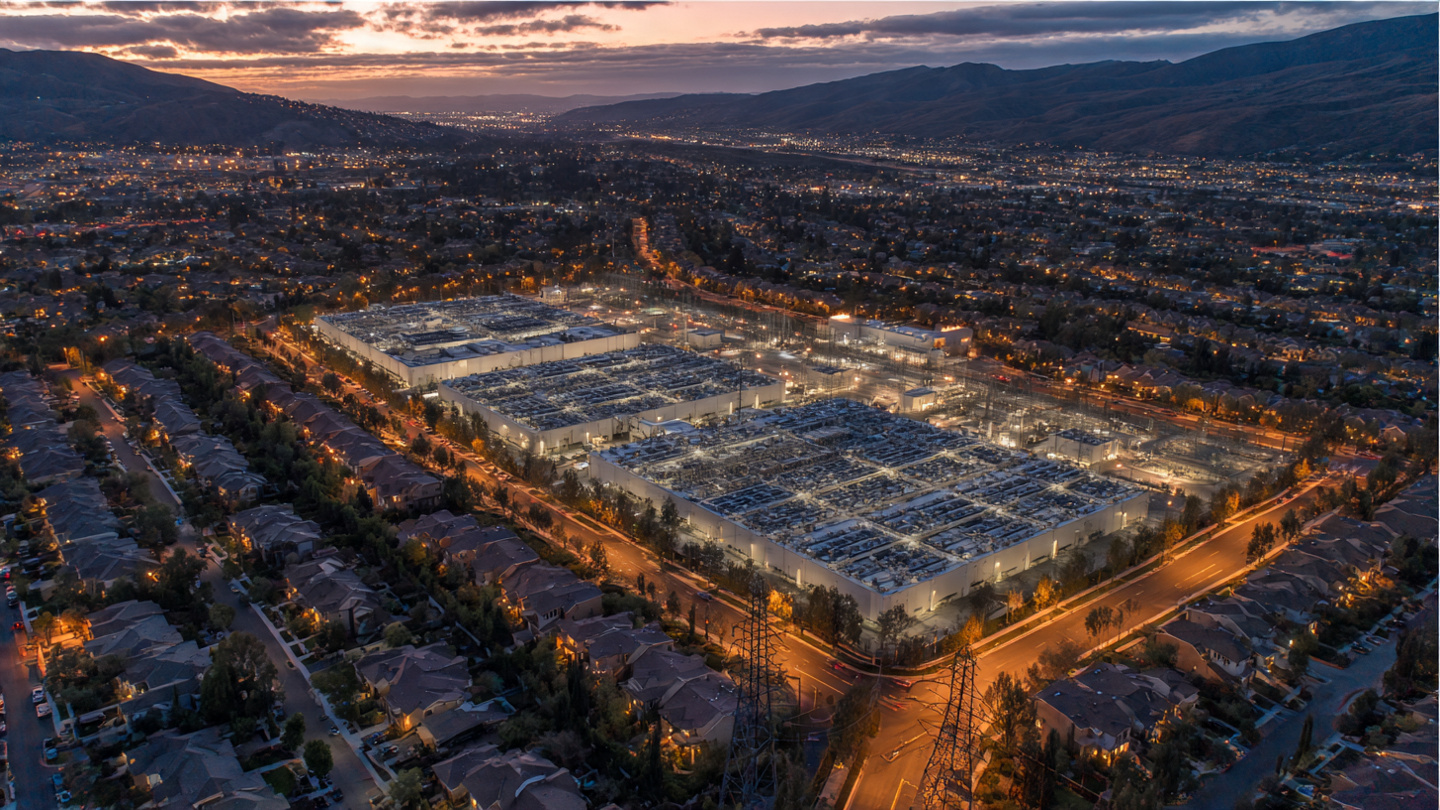
Sixty-nine. That is how many U.S. jurisdictions have now moved to block new AI data center construction, according to a Tom's Hardware tally published this month — four of them permanent. A separate DataCenterBans.com tracker puts the broader count at 78 active or proposed moratoriums. A year ago, the number was approximately eight.
That is a 763 percent increase in twelve months.
None of this happened in isolation. On May 4, the North American Electric Reliability Corporation issued a Level 3 Essential Action Alert, its highest urgency classification, warning that computational loads from data centers pose "immediate risks" to the bulk power system. Days later, Maryland's Office of People's Counsel filed a complaint with the Federal Energy Regulatory Commission arguing that PJM Interconnection's $22 billion transmission upgrade plan would force Maryland homeowners to pay $1.6 billion over the next decade to subsidize out-of-state data center infrastructure they will never use. On Polymarket, the contract asking whether a federal AI data center moratorium will pass before 2027 sat at 93 percent YES, up 62.7 percentage points in a single month.
Three signals in one week. One message: the political cost of AI infrastructure now exceeds the political benefit, and the correction is accelerating faster than the buildout.
What 1,500 Megawatts Dropping in 82 Seconds Looks Like
NERC's alert did not emerge from abstract risk modeling. It emerged from disaster.
In July 2024, a lightning arrestor failed on a 230 kV transmission line in Northern Virginia, the densest concentration of data center capacity on Earth, a place where server farms outnumber shopping malls and electricity flows toward computation the way rivers flow toward the sea. Within 82 seconds, six successive system faults cascaded through the grid. Between 40 and 70 data centers simultaneously disconnected. Gone. Roughly 1,500 megawatts of load vanished in what NERC's incident review described as "customer-initiated large load reductions." PJM Interconnection and local utilities scrambled to prevent cascading blackouts across a grid serving 65 million people. They succeeded. Barely. NERC's point is that the margin keeps shrinking.
When a gigawatt of load vanishes in seconds, two things happen at once: frequency spikes because generation now exceeds demand, and voltage surges because less current is flowing through the transmission network, stressing equipment in ways that resemble catastrophic mechanical failure rather than anything a customer is supposed to be able to cause. Generators trip offline and transformers sustain damage that takes weeks to repair. If operators cannot intervene fast enough, blackouts cascade far beyond the data centers that caused them, reaching hospitals, homes, and transit systems that had nothing to do with training a language model.
Seven essential actions outlined in the Level 3 alert require grid operator responses by August 3, 2026. Among them: transmission operators must install high-speed fault-recording devices at data center interconnection points, planning coordinators must revise their definitions of what constitutes a "qualified change" triggering new reliability studies, and transmission owners must establish commissioning processes specifically for computational loads. NERC also announced plans to register any company operating 20 or more megawatts of computational load and eventually subject them to reliability standards comparable to those governing power plants.
Amazon, Google, Meta, and Microsoft are not accustomed to being regulated like utilities. Too bad.
Maryland's $345-Per-Household Invoice
"PJM's cost allocation rules are broken," David S. Lapp, Maryland's People's Counsel, wrote in the FERC complaint. "Maryland customers have neither caused the need for these billions in new transmission projects nor will they meaningfully benefit from them."
The math behind the complaint is straightforward. Damning, too. PJM approved $22 billion in transmission upgrades to accommodate surging data center demand concentrated in Virginia, Ohio, Pennsylvania, and Illinois, and under existing cost allocation rules, $2 billion of that total lands on Maryland ratepayers over the next decade, despite the state hosting almost none of the facilities creating the demand in the first place. Break it down by customer class:
| Customer Class | 10-Year Cost | Per-Customer Cost |
|---|---|---|
| Residential | $823 million | $345 |
| Commercial | Not disclosed separately | $673 |
| Industrial | Not disclosed separately | $15,074 |
The complaint carries a pointed subtext. In March 2026, hyperscalers including Amazon, Google, and Microsoft signed the White House's Ratepayer Protection Pledge, a voluntary commitment that data center developers would pay for new power delivery infrastructure so those costs would not flow to ordinary households. Maryland's argument is that PJM's existing rules make that pledge meaningless before its ink dries. Under that formula, transmission expenses spread across the entire PJM footprint based partly on regional demand, regardless of which specific facilities caused the need for the upgrade. By the time the pledge becomes enforceable policy, if it ever does, Maryland families will already be paying.
Virginia, the epicenter of the demand surge, has seen a 660 percent increase in data center energy consumption since 2013. PJM projects that regional peak load could double to 60 gigawatts by 2030. Data centers accounted for $9.3 billion of a recent $12.5 billion capacity market price spike, according to PJM's own analysis. In the 2026/2027 capacity auction, prices jumped 22 percent, prompting PJM to launch an emergency auction targeting 15 gigawatts of new generation capacity.
Fifteen gigawatts. That is roughly the output of fifteen large nuclear reactors. Built in under three years. There is no historical precedent for this rate of grid expansion, no guarantee the demand materializes as projected, and no mechanism to refund ratepayers if the facilities that justified the upgrades never connect or connect at lower capacity than planned. Ratepayers absorb the overbuilding risk while utilities and data center operators capture the upside.
The Moratorium Map
On May 27, the Warren Hood Building in northwest Jackson, Mississippi was so packed that residents stood shoulder-to-shoulder, holding signs that read "No Data Centers," "Can't Drink Data," and "Jackson Is Our City." They had come for a Planning Board meeting on a rezoning request for 190 acres of industrial land filed by Saxum Investment Group. Three times, chants of "No data centers!" drowned out officials. "We are the city and our guidelines are no data centers," one resident shouted. Board members voted to postpone until June 24. The city council, meanwhile, is preparing a separate hearing on a proposed 183-day moratorium on all new data center development.
Jackson is not an outlier; it is the pattern.
Maine became the first state to pass a legislative moratorium, freezing new data center construction above 20 megawatts until November 2027. New York has proposed a three-year ban. In Minnesota, Inver Grove Heights paused its own proposed one-year moratorium after developers threatened legal action — a preview of the escalation cycle now playing out across the country: communities try to ban, industry threatens to sue, and the resulting legal standoff delays everything. Twenty-seven states are now advancing some form of data center legislation, ranging from cost disclosure mandates to outright construction freezes. In Q1 2026 alone, a record 20 data center projects were cancelled nationwide, with $41.7 billion in planned investment stalled or abandoned.
Consider the political geography. Rural counties that were initially receptive to data center tax revenue have discovered what the deals actually entail: industrial-scale electricity consumption that dwarfs everything else on the local grid, water withdrawals for cooling systems that compete with agricultural and municipal supply, transformer farm noise that carries for miles, and property value uncertainty that makes neighboring parcels harder to sell. Urban and suburban ratepayers, meanwhile, are discovering through filings like Maryland's that they are subsidizing facilities in other states, paying for infrastructure they will never see and electricity they will never use. Both constituencies are arriving at the same conclusion from different directions.
Michigan's attorney general challenged DTE Energy's power arrangements for a large Oracle-OpenAI data center development, arguing that secret reviews and fast-tracked approvals denied customers meaningful oversight. Utah's governor imposed phased approval requirements and new environmental scrutiny on a massive Box Elder County project backed by Kevin O'Leary. Georgia legislators introduced bills to limit tax breaks and prevent data center power costs from flowing to residential customers after Georgia Power announced plans to add nearly 10 gigawatts of capacity, overwhelmingly to serve server farms.
Bipartisan opposition is the defining pattern. Conservatives object to subsidizing out-of-state corporations with local ratepayer dollars. Progressives object to environmental externalities and grid reliability degradation. Both sides have a number they can point to, and the numbers keep getting larger.
The Three-Layer Problem
The Arc of Power, an independent energy analysis publication, framed the convergence as a three-layer ledger. At the top layer, hyperscaler capex is locked in: $700 billion in AI infrastructure spending planned for 2026 alone. At the middle layer, the companies building AI systems are simultaneously shedding workers. Cloudflare cut 1,100 employees on May 7, twenty percent of its workforce, while reporting record Q1 revenue of $640 million, up 25 percent year-over-year. Cloudflare explicitly framed the layoffs as a transition to an "agentic AI-first operating model." Internal AI usage at Cloudflare grew 600 percent in three months.
At the bottom layer, the communities where AI infrastructure physically sits are bearing costs they never agreed to: grid strain that degrades reliability for everyone, rate hikes that compound year over year, water drawdowns that compete with agriculture and municipal supply, construction noise that carries for blocks, and disruption to neighborhoods that were never consulted about hosting industrial-scale computation. They are watching their electricity bills climb, with the average residential rate hitting 18.05 cents per kilowatt-hour in April 2026, up 31 percent since 2020, while reading that the companies responsible for the demand surge are cutting human payroll at record pace.
Even the equipment suppliers are noticing. On May 28, GE Vernova CEO Scott Strazik told a Bernstein conference that data center customers "are struggling to get projects across the line" as "more and more states" push back. He described lease cancellations and project delays as "quite normal," adding that customers show Vernova "many, many more projects than they are securing equipment for" because "externalities beyond their own control will make it difficult to make happen." When the company supplying $163 billion in backlogged equipment is publicly acknowledging that its customers cannot build where they want to build, the constraint is no longer theoretical.
That juxtaposition is politically lethal. No company can simultaneously argue that AI is so productive it justifies eliminating twenty percent of its workforce and that the infrastructure powering that AI should be subsidized by the households whose occupants just lost their jobs. Pick one.
Limitations
PJM's demand projections are forecasts, not commitments, and actual load growth may fall short, which would reduce both the infrastructure needed and the costs allocated to ratepayers in ways that could make the current alarm look overblown in hindsight. Maryland's $1.6 billion figure assumes current cost allocation rules persist unchanged for a full decade, but FERC could revise those rules in response to exactly this complaint. Additionally, the 69-jurisdiction count may include overlapping or redundant local measures, and some moratoriums are temporary study periods rather than permanent bans. Polymarket? Thinly traded. It reflects speculative sentiment, not policy analysis. PJM's own $9.3 billion attribution to data centers within the capacity auction price spike has not been independently audited.
The Strongest Counterargument
Shared cost allocation is how interconnected grids have always worked. Every participant in the PJM system benefits from transmission upgrades because reliability improvements propagate across the network, not just to the facilities that triggered the investment. Moratoriums push AI development to jurisdictions with less environmental oversight or offshore entirely, achieving worse outcomes for climate and governance. Data centers generate property tax revenue, construction employment, and long-term operational jobs in communities that often have few alternative sources of economic development. Voluntarily signing the ratepayer protection pledge signals genuine intent to internalize infrastructure costs as regulations catch up. And NERC's alert, far from proving the grid cannot handle data centers, is the system working as designed: identifying risks early and mandating mitigation before failures occur.
This argument has real force. If FERC mandates cost-causation rules that assign transmission expenses directly to the zones creating the demand, and if NERC's reliability standards for computational loads are adopted and enforced, the political pressure could dissipate before any federal moratorium materializes. But can regulators move faster than the backlash?
What You Can Do
If you live in a PJM state (Delaware, Illinois, Indiana, Kentucky, Maryland, Michigan, New Jersey, North Carolina, Ohio, Pennsylvania, Tennessee, Virginia, West Virginia, or Washington D.C.), check your utility's most recent rate case filing with your state public utility commission. Look for line items related to PJM transmission charges. These have been rising sharply, and your utility is required to disclose the components of your bill upon request. If the transmission component has grown faster than your actual consumption, data center demand is likely a contributing factor.
If your local government is considering a data center proposal, ask three questions before the planning board votes. First: what is the facility's projected peak electrical load, and what percentage of the local grid's current capacity does that represent? Second: who pays for transmission and distribution upgrades if the facility's load exceeds existing infrastructure? Third: does the development agreement include a performance bond or clawback provision if the promised tax revenue or employment fails to materialize? Most proposals collapse under the weight of that last one.
If you are an investor in hyperscaler stocks, factor in regulatory risk that is not priced into consensus estimates. On Polymarket, the 93 percent probability of a federal moratorium before 2027 is a leading indicator. Earnings models that assume uninterrupted data center expansion in the U.S. may need revision.
The Bottom Line
Sixty-nine jurisdictions have now rejected that bargain. NERC has told the industry that its facilities pose immediate risks to the grid that powers everyone else. Maryland has quantified the subsidy and filed suit. Prediction markets have priced the political outcome at near-certainty. None of these signals, taken alone, would halt a $700 billion investment cycle. Taken together, though, they describe a political environment in which the next gigawatt of AI compute will be harder, slower, and more expensive to bring online than any model currently projects, and the companies planning to build it are only now discovering that the most constrained resource in the AI supply chain is not chips, not power, not water, but consent.