xAI Ran 35 Unpermitted Gas Turbines to Train Grok. A Harvard Study Says the Health Costs Are $30 Million a Year.
xAI built the world's largest AI supercomputer in 122 days inside a former Electrolux factory in South Memphis. Powering it required 35 gas turbines running without Clean Air Act permits. A health impact study puts the damage to surrounding communities at $30-44 million annually.
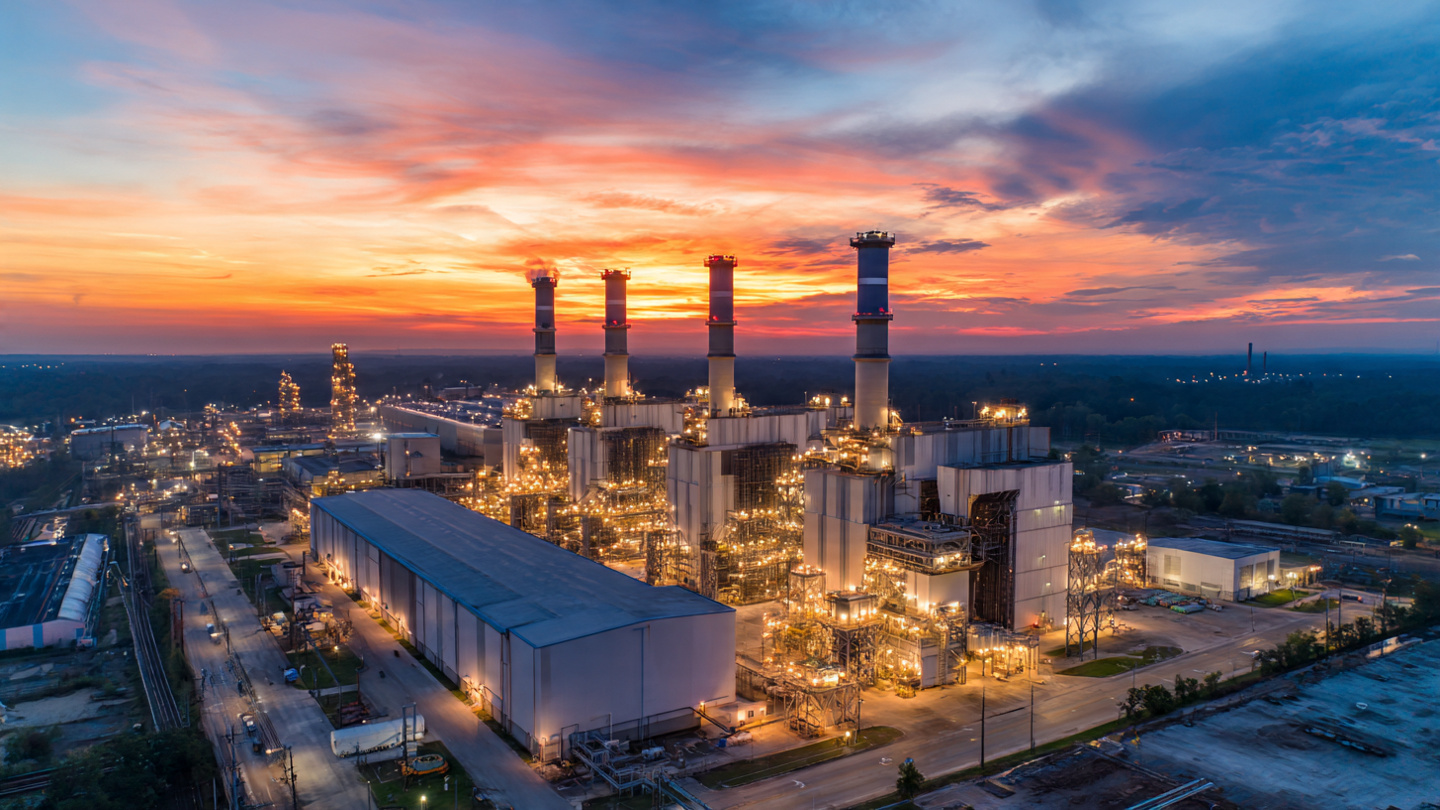
Thirty-five gas turbines. Zero Clean Air Act permits. One hundred and twenty-two days from empty warehouse to the most powerful AI training cluster on the planet. Those are the numbers behind Colossus, xAI's supercomputer built inside a former Electrolux refrigerator factory in South Memphis, Tennessee.
All 35 turbines burned methane around the clock to feed 100,000 Nvidia GPUs, later expanded to 200,000. Combined output reached approximately 422 megawatts, enough to power a small city, all drawn from off-grid generation that bypassed every standard air quality review. In January 2026, the EPA closed the loophole. By then the turbines had been running for months.
Now we know what those months cost.
The Per-GPU Pollution Bill
The Southern Environmental Law Center commissioned EmPower Analytics Group to study the health effects of xAI's proposed 41-turbine expansion at Colossus 2 in Southaven, Mississippi. Dr. Michael Cork, a Harvard-trained environmental health scientist, led the research team. His team's findings: nearly 20 tons of fine particulate matter per year and hundreds of tons of nitrogen oxide precursors. Total annual health damages for the 41-turbine configuration ran between $30 million and $44 million.
Scale that down to the 35 turbines that actually operated in Memphis, and the per-turbine health cost lands at approximately $730,000 to $1.07 million annually. Nobody asked South Memphis residents whether they wanted to absorb that bill, not xAI, not the state.
So does the math work?
Here is the calculation that matters, the one nobody has published. At 100,000 GPUs drawing power from 35 turbines at 422 MW combined capacity, each GPU consumed roughly 4.22 kW of total facility power. An Nvidia H100 has a thermal design power of about 700 watts. Another 3.52 kW per GPU went to cooling, networking, storage, and the turbines themselves. That overhead ratio, six times the chip's own power draw, reflects the brute-force engineering of a facility built in four months without grid infrastructure.
Now divide the health damages by the GPU count. At $30-44 million spread across 100,000 GPUs, each processor imposed $300 to $440 in annual health costs on nearby communities. After the expansion to 200,000 GPUs (assuming proportional turbine scaling), the per-GPU figure drops to $150-$220. Every query Grok answered during that period carried an externalized health cost that appeared on no balance sheet and in no API pricing tier.
| Metric | Value | Source |
|---|---|---|
| Gas turbines (Memphis) | 35 (unpermitted) | SELC aerial imagery, April 2025 |
| Combined output | ~422 MW | SELC aerial imagery analysis |
| GPU count (initial / expanded) | 100,000 / 200,000 | xAI announcements, Wikipedia |
| PM2.5 emissions (41-turbine model) | ~20 tons/year | EmPower Analytics / SELC study |
| Annual health damages (41-turbine) | $30-44 million | EmPower Analytics / Dr. Michael Cork |
| Per-turbine health cost | $730K-$1.07M/year | Calculated: $30-44M ÷ 41 |
| Per-GPU health cost (100K GPUs) | $300-$440/year | Calculated: $30-44M ÷ 100K |
| Water consumption | 5+ million gallons/day | Local utility reporting |
| Facility build time | 122 days | xAI, multiple sources |
The Regulatory Magic Trick
How did 35 industrial gas turbines operate without permits? xAI classified them as "non-road engines," a portable equipment category designed for construction generators and mobile compressors. Tennessee's air quality regulations allowed operators to run such equipment for up to 364 days without triggering Clean Air Act permitting requirements. They arrived on trailers, technically portable but functionally permanent.
In January 2026, the EPA's New Source Performance Standard ruling closed this gap, clarifying that large methane gas turbines require permits regardless of whether they sit on wheels or foundations. But enforcement applies prospectively. Months of unpermitted operation in Memphis produced emissions that cannot be recalled, and no fines have been assessed against xAI for the pre-ruling period.
Irony runs deep here, because Elon Musk led the DOGE effort to cut EPA staffing and contracts, and EPA Administrator Lee Zeldin publicly praised that initiative, and then the same diminished agency issued the ruling that blocked Musk's company from repeating the turbine strategy. Whether a smaller EPA can actually enforce the new standard remains an open question.
Water, Grid Strain, and the Hyperscaler Comparison
Pollution is only part of the picture. Colossus drinks over 5 million gallons of water daily for cooling. For perspective, the 2026 BSI/Waterwise report found that a single 1 MW data center requires 25 million liters of water per year, equivalent to drinking water for more than 400 people. At 422 MW, Colossus scales that figure by orders of magnitude in a city where Protect Our Aquifer has already documented arsenic contamination in the drinking water supply.
Compare xAI's approach to every other major AI company. Microsoft, Google, and Amazon build data centers on grid power supplemented by renewable energy purchase agreements. Their environmental footprints are not small: Google's emissions rose 51% despite a 2020 carbon-free energy pledge, and Meta's water usage climbed from 3,726 to 5,637 megaliters between 2020 and 2024, a 51% increase. But those companies go through permitting, file environmental impact reports, and negotiate with grid operators before breaking ground, and xAI skipped every one of those steps.
In February 2026, TVA unanimously approved 150 MW of additional firm power for xAI, delivered through Memphis Light, Gas and Water. That grid connection, contingent on financial and operational requirements, is the legitimate path xAI should have taken from the start. Those 35 turbines were a shortcut, and the communities downwind paid the price for speed.
Who Lives Downwind
South Memphis is predominantly Black and lower-income. Residents were not informed about Colossus until a press conference announced the project. EmPower's study found that some communities near the proposed Colossus 2 expansion would experience PM2.5 increases of 0.5 micrograms per cubic meter, a concentration change that carries a mortality risk comparable to the annual risk of dying in an alcohol-impaired driving crash.
Memphis Community Against Pollution has documented what it calls a "historical lack of transparency" from industrial operators in the area. Colossus fits that pattern perfectly. Colossus appeared, the turbines fired, and the community learned about it from reporters, not from xAI. When journalists contacted xAI for comment, the company's media inbox sent an automated reply: "Legacy Media Lies."
Strongest Counterargument
xAI brought economic investment to a site that had sat empty since Electrolux closed the factory. Memphis gained jobs, tax revenue, and a claim to hosting the world's most powerful AI cluster. TVA subsequently approved the grid connection, suggesting that reliability and capacity were assessed and deemed sufficient. And the turbines operated within the letter of Tennessee's 364-day portable equipment rule. Every state that permits that classification enabled the same outcome. Blaming xAI for exploiting a legal loophole is really blaming regulators for writing one.
That argument carries real weight, because industrial development in shuttered manufacturing sites is precisely what cities like Memphis need. The problem is not the investment. What makes this hard to dismiss: 422 MW of unpermitted combustion in a low-income neighborhood represents a transfer of health costs from a $39 billion company to people who had no voice in the decision and no share in the upside.
Limitations
This analysis uses the EmPower study's 41-turbine model as a proxy for the 35 turbines that actually operated in Memphis. Cork's study was designed for the Colossus 2 site in Southaven, Mississippi, not the original Memphis location, and differences in geography, population density, and meteorology affect dispersion modeling. Actual emissions measurements from the Memphis turbines are not publicly available. Our per-GPU cost calculation assumes all 100,000 GPUs were active during the full turbine operation period, which likely overstates utilization during the ramp-up phase. xAI does not respond to media inquiries, so the company's perspective on operational details, emissions controls, or community engagement efforts is absent from this analysis.
What You Can Do
If you live near a proposed data center site: Search your county's air quality permit database for pending applications. The EPA's ECHO database lets you look up any facility's compliance history by ZIP code. If a large-scale project appears without a corresponding permit filing, contact your state environmental agency and ask whether a "non-road engine" classification is being used.
If you work in AI infrastructure procurement: Ask your cloud provider for Scope 1 and Scope 2 emissions data per GPU-hour. Provider differences in per-GPU-hour emissions are enormous. A GPU-hour on a renewables-backed grid produces a fraction of the particulate load of one running on unfiltered methane turbines. Price per FLOP is not the only cost.
If you are an investor in xAI or its competitors: Track the EPA's enforcement actions under the new NSPS ruling. Any company that attempts the non-road engine classification for data center power generation now faces federal permit requirements. Compliance costs, or penalties for noncompliance, will affect operating margins that current valuations may not reflect.
If you care about AI's environmental trajectory broadly: The Department of Energy projects data centers will consume 6.7% to 12% of all U.S. electricity by 2028. Residential rates have already risen more than 5% year over year. Colossus set the precedent for what happens when that demand outpaces grid capacity and companies decide to generate their own power outside the regulatory framework.
Bottom Line
xAI built Colossus in 122 days and trained Grok on the backs of 35 unpermitted gas turbines in a low-income Memphis neighborhood. A Harvard-led study pegs the health cost at $30-44 million per year. Divide by GPUs and every processor carried $150-$440 in annual health damages that appeared in no invoice, no API call, and no quarterly filing. EPA closed the loophole, but emissions cannot be closed retroactively. Per-GPU pollution cost is the number the AI industry has not yet been forced to include in its unit economics, and South Memphis is the proof of what that omission looks like when it lands on actual people breathing actual air.
Sources
- EPA Closes Loophole That Helped Elon Musk's xAI Avoid Clean Air Act Permits (TechSpot, January 2026)
- SELC/EmPower Analytics Health Impact Study: xAI Data Center Would Cause Millions in Annual Health Damages (February 2026)
- Colossus (supercomputer), Wikipedia
- Data Centers Expected to Consume Up to 12% of US Electricity by 2028 (NBC/DOE, January 2026)
- Google Emissions Jump 48% in Five Years, Thanks to AI (Reuters, 2024)
- Amazon, Microsoft, Google Face Rising Investor Pressure Over Water and Power Use (Reuters via 943JackFM, April 2026)
- BSI/Waterwise Report: Data Center Water Usage Warning (Data Center Knowledge, 2026)
- Protect Our Aquifer, Memphis