No Match, No Pay: Ohio Denies Home Care Claims Without a Verified Visit
New York's Comptroller found the state paid $14.5 billion for Medicaid personal care without verifying the services occurred. States answered by flipping billing to no-match-no-pay, and now one GPS glitch can freeze a small agency's entire payroll cycle.
The Problem
Electronic Visit Verification, or EVV, is a federal requirement with a simple premise: before Medicaid pays for a home care visit, the state must have electronic proof the visit happened. Section 12006 of the 21st Century Cures Act, signed in December 2016, ordered every state Medicaid program to verify six data points for each personal care or home health visit: the type of service, the person receiving it, the date, the location, the caregiver's identity, and the start and end times. Personal care services faced a January 1, 2020 deadline, home health care services followed on January 1, 2023, and states that missed those deadlines faced cuts to the federal match on personal care and home health spending, stepping up to a full percentage point. The personal-care penalty already reached the full point in 2023; for home health services, the penalty reaches 0.75 points in 2026 and the full point in 2027.
For years, enforcement was mostly theoretical, because states collected EVV data and paid claims anyway, since the alternative was cutting off care for frail people over paperwork, and nobody in a state Medicaid office wanted to be the person who denied a home health visit over a timestamp. That era ended in 2025. Ohio's Department of Developmental Disabilities turned on hard claim edits on October 1, 2025, denying claims in its waiver programs without a matching EVV record, then extended the same rule to its PASSPORT and Home Care waivers on January 1, 2026 and to MyCare Ohio on March 1, 2026. Michigan moved managed care home health services to hard edits on January 1, 2026, so an incomplete EVV record never becomes a claim in the first place. Hawaii has denied unmatched claims since October 1, 2021, and since April 1, 2024 it can withhold 15 percent of an agency's payments when manually edited visits exceed 15 percent of its monthly total, though the withholding was paused after the Maui wildfire and Maui County is excluded from the threshold.
| State | The rule | What it measures |
|---|---|---|
| Ohio | Hard claim edits in three programs: DODD waivers (Oct 1, 2025), PASSPORT and Home Care waivers (Jan 1, 2026), MyCare Ohio (Mar 1, 2026). No matching visit, no payment. | Claim-to-visit match, per claim |
| Michigan | 85 percent EVV compliance threshold under MDHHS bulletin MMP 26-10, issued Feb 27, 2026 and effective Apr 1, 2026. Managed care home health moved to hard edits Jan 1, 2026. | Share of visits with complete EVV records |
| Hawaii | Manual edits capped at 15 percent of monthly visits; above the cap the state can withhold 15 percent of the agency's payments. Unmatched claims denied since Oct 1, 2021. | Two different 15 percents: share of visits edited, and share of payments withheld |
| Pennsylvania | EVV Value Based Program pays a rate increase only above 70 percent EVV compliance with a missed-visit rate under 0.5 percent. | Share of visits verified, and share of scheduled visits missed |
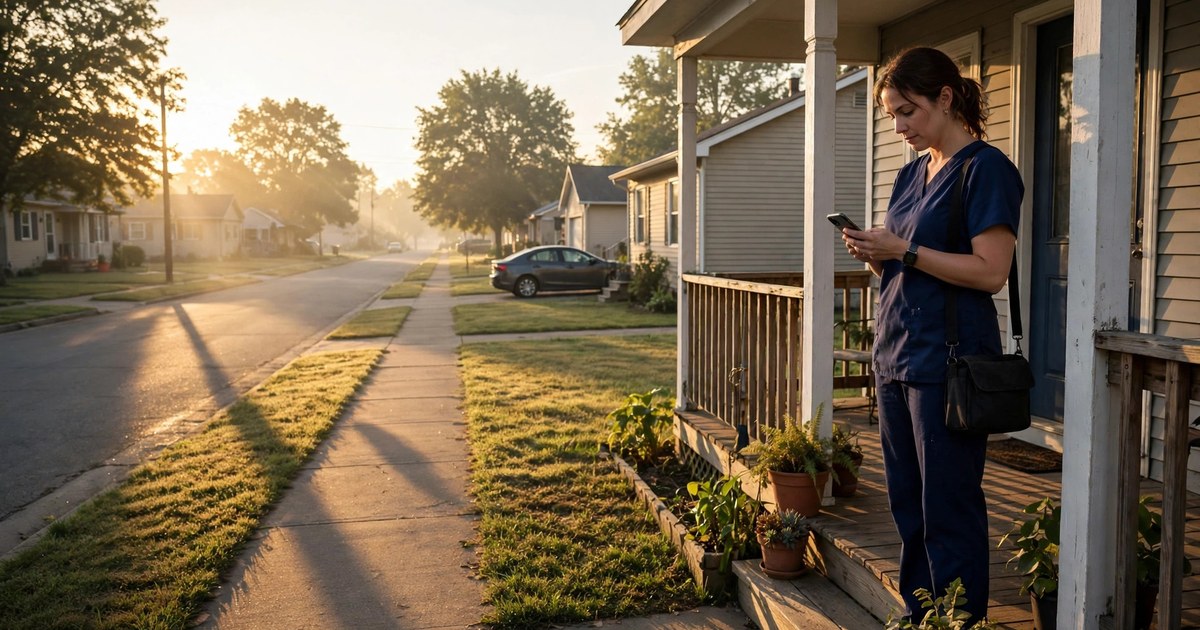
A caregiver arrives at a client's house and forgets to clock in until they are already inside. Their phone's GPS puts them 300 feet from the address because the house sits behind a hill. Or they clock in from the driveway, drive to a second client, and the first visit's clock-out never registers because the app crashed. Or a new hire on their third day bills under the wrong procedure code. Each of those visits lands in an exception queue.
Nobody looks until billing day, which is when the agency discovers that a week of already-delivered care has no payable claim attached to it. Caregivers still get paid on Friday, and payroll does not wait for Medicaid to finish its 30-to-60-day correction cycle. One bad month does not bankrupt the agency. It forces the owner to choose between the payroll account and the rent.
The agency is not the only party that pays when a claim fails. When a small agency cannot collect on a month of visits, hours get cut, Medicaid patients get dropped from rosters, and in the worst cases the agency closes and its clients scramble for a new provider while sitting on a waiting list that already holds 607,000 people. A denied claim is a billing problem for the agency and a care problem for the person at the other end of the visit, and any product built for this market has to serve the second party first, because the first party's revenue depends on the second party still receiving care.
The Scale of the Market
Home care is no longer a cottage industry. It is big and fragmented, and the people doing the work earn under $17 an hour on average. IBISWorld puts the US home care market at $113 billion in 2026, and Medicaid spent $145.9 billion on home and community-based services in 2023, which was 63.8 percent of all Medicaid long-term care spending. These figures measure different universes: $113 billion is the all-payer home care market, and $145.9 billion is Medicaid-only spending on home and community-based services. The rest of this piece uses the Medicaid figure, because EVV enforcement applies to Medicaid claims. KFF counts 5.1 million people using Medicaid home care in 2023, and another 607,000 people sit on waiting lists for those services, which is roughly one in eight users' worth of people waiting.
Supply is fragmented: roughly 12,251 agencies hold Medicare certification, another 20,000 to 25,000 non-medical providers operate alongside them, and most have no compliance department, no in-house counsel, and no margin for a billing mistake. That puts the national total near 33,000 to 35,000 agencies. Meanwhile the workforce turns over at a brutal rate: the Bureau of Labor Statistics counts 4.68 million home health and personal care aide jobs and projects 760,500 openings a year through 2035, about 16 percent of the workforce every year, and nearly nine in ten of those openings replace a worker who left. Industry reporting puts annual aide turnover above 60 percent. Every new hire is a fresh chance to clock in wrong, and every departure takes the memory of how the last denial got fixed out the door with it.
Regulators are tightening from both sides: an enforcement wave on one hand, a statutory cap on administrative spending on the other. CMS finalized the Ensuring Access to Medicaid Services rule (CMS-2442-F) in April 2024, which will require states to ensure that at least 80 percent of Medicaid payments for homemaker, home health aide, and personal care services goes to compensation, wages plus benefits, for direct care workers, with compliance phased in through 2030. It is a future constraint, not a current one, but it sets the direction: agencies will not be able to hire their way out of a paperwork problem, because the administrative share of revenue is capped by rule, just not yet. CMS is also evaluating state EVV data for program integrity purposes, with a report expected in 2026. And the 2025 reconciliation law is projected to cut federal Medicaid spending by $911 billion over a decade, roughly 14 percent of federal Medicaid spending over that period, which means states will audit harder with less money to spare. Those cuts mean fewer people covered and less care delivered, not just tighter audits; the audit pressure is a consequence of the cuts, not a justification for them.
The Gap in the Market
Incumbent software captures visits. Nobody triages the visits that fail.
| Provider Type | What They Do | What's Missing |
|---|---|---|
| State Aggregators (Sandata, HHAeXchange) | Run the state-contracted EVV systems that receive visit data. Sandata covers roughly 25 states and HHAeXchange roughly 10, with overlap after the acquisition; together they hold about 30 state Medicaid programs. HHAeXchange says it serves more than 32,000 providers, a count that spans agencies, payers, and individual caregivers, so it is not comparable to the 33,000-agency figure. | No exception ranking. No edit-budget tracking. No correction drafting. |
| Home Care Platforms (AlayaCare, KanTime, WellSky) | Scheduling, caregiver mobile apps, billing, and EVV capture in one suite. Published pricing runs about $1,000 a month for AlayaCare and an estimated $2,000 for KanTime, for a full operating suite. | EVV is a checkbox inside a scheduling product. Exception reports are raw lists. None of them rank exceptions by dollars at risk or track an agency's manual-edit budget against its state cap. |
| EVV-Native Startups (AveeCare, BridgeCare OS, CareTap) | Lightweight tools that export cleanly to all 50 state aggregators. AveeCare charges $6 per active client per month, which is $600 a month for a 100-client agency. | They solve the export problem, which is real, but they stop at submission. A visit that exports cleanly and still fails the payer's matching edit is outside their scope. |
| Office Staff and Spreadsheets | The default for most small agencies: a biller works the exception queue by hand, calling caregivers to reconstruct what happened days after the fact. | Slow, unscalable, and hostage to turnover. When the biller quits, the entire exception workflow leaves with them. |
Every existing tool treats EVV as a data capture problem. Capture is solved. Getting paid for the visits that were captured imperfectly is the unsolved part.
The Solution
1. Exception Triage Desk ($299/month base): The platform ingests the agency's daily exception feed from its state aggregator, whether Sandata, HHAeXchange, or Netsmart, and sorts every failed visit into three buckets, fixable in under two minutes, fixable with caregiver input, and dead on arrival, with each exception carrying its dollar value, its filing deadline, and the exact correction the payer expects, including the reason and action codes Michigan requires and the Code 99 Ohio added for manual edits in April 2026. A biller opens the desk each morning and works the highest-value exceptions first instead of scrolling a raw list. The buckets sort by verifiability as well as fixability: a visit that cannot be verified as having occurred belongs in dead on arrival, not in the resurrection queue, because recovering payment for care that did not happen is exactly what EVV exists to prevent.
2. Manual-Edit Budget Tracker: States cap how much an agency may fix by hand, and the caps are measured differently in each state, as the table above shows. The platform tracks the agency's edit rate in real time against each applicable cap and warns the office before a routine correction pushes it over, because in Hawaii, 14 percent of monthly visits edited means getting paid in full and 16 percent means losing 15 percent of the month's payments to a withholding. It also flags which exceptions are worth a manual edit and which should be written off, because spending an edit on a $28 visit while a $400 visit waits is a budgeting error.
3. Caregiver Nudge Loop: Most exceptions are born in the field, not the office, in the thirty seconds between a caregiver parking the car and walking through the client's front door, which is exactly the window no billing software has ever watched. The platform watches clock-in patterns as they happen and texts the caregiver while the visit is still in progress: GPS shows you 300 feet from the client's address, confirm you are on site; you clocked in but never selected a service code; your last visit ran 22 minutes over the authorized window. Catching the error during the visit costs a text message. Catching it at billing time costs a phone call, a reconstruction, and a manual edit against the cap. Location data is used only for visit verification, never for performance discipline, and is deleted on a stated schedule; caregivers opt in when they join, and the nudge is a prompt that helps them get paid correctly, not a command from the office.
4. Claim Resurrection Queue: Denied claims are not dead claims until the filing window closes, which is why the platform holds every denied or never-created claim with its deadline, the reason code the payer returned, and the corrected record ready to resubmit, escalating automatically as deadlines approach, because a rejected visit sitting untouched for five months is quietly burning through a 12-month fee-for-service window while managed care windows are often shorter. This is the queue that keeps a denial from becoming a loss.
5. Multi-State Rules Engine ($99/month per extra state): Agencies operating across state lines face a different aggregator, different edit codes, and different caps in each state, so the platform keeps a rulebook per state, updated when states re-bid their EVV contracts every 5 to 10 years or publish new bulletins, and routes each visit to the right aggregator with the right codes. A 200-location franchise group should not need a different billing process in each state it serves.
The Math: What One Bad Week Costs
Take a typical 40-caregiver agency billing Medicaid in Ohio. A full-time caregiver works about 40 hours a week, and a standard personal care visit runs four hours, so each caregiver averages 10 visits a week. That is 400 visits a week for the agency, or about 1,730 visits a month. The 2025 national median home care rate was $35 an hour, so each visit bills $140.
| Line item | Monthly | Annual |
|---|---|---|
| Visits billed | 1,730 | 20,800 |
| Agency revenue (1,730 × $140) | $242,200 | $2,906,400 |
| First-pass exceptions (4%) | 69 visits | 828 visits |
| Delayed revenue (69 × $140) | $9,660 | n/a |
| Permanently lost revenue (1 in 5 exceptions × $140) | $1,932 | $23,184 |
| Office time (69 × 20 min = 23 hrs × $25/hr) | $575 | $6,900 |
| Total annual cost of exceptions | n/a | $30,084 |
| Cost of the product ($299 × 12) | $299 | $3,588 |
| Net saving if half the lost revenue is recovered and office time is halved | n/a | ~$15,000 |
The 4 percent exception rate is an assumption, not a measurement: no public dataset reports first-pass EVV exception rates nationally. It is deliberately far below the only observed figure available, which comes from the New York audit in the lede: between January 2021 and March 2023, $14.5 billion of $31.5 billion in New York personal care claims, 46 percent, lacked a matching EVV record. That was before enforcement, and a missing record does not prove the service never happened; the state health department disputed aspects of the finding. But it sets the scale of the pre-enforcement gap, and 4 percent sits far below it. The caps in the table above bound the plausible range below 15 percent; they do not imply a typical rate, and this piece does not claim they do.
Against the agency's own revenue, the loss is small in percentage terms and large in cash terms. Delayed revenue of $9,660 is 4.0 percent of monthly revenue. Lost revenue of $1,932 a month is 0.8 percent. The total annual cost of $30,084 is 1.0 percent of annual revenue. One percent sounds trivial until it is the difference between making payroll and not, which for a business netting 5 to 8 percent, it often is.
Cost of the exceptions: about $30,000 a year. Cost of the product: $3,588. That is the pitch.
Now scale the loss. Medicaid spent $145.9 billion on home and community-based services in 2023. EVV applies only to personal care and home health services, a subset of that total, so applying an exception rate to the full $145.9 billion produces an upper bound, not a point estimate. At the agency-scale assumptions, 4 percent of billable value hitting a first-pass exception and one in five exceptions never recovered, the upper bound is $145.9 billion × 0.04 × 0.20 = $1.17 billion a year. The honest way to present that number is as a sensitivity table, because both rates are assumed:
| Exception rate | 10% never recovered | 20% never recovered | 30% never recovered |
|---|---|---|---|
| 2% | $292M | $584M | $875M |
| 3% | $438M | $875M | $1.31B |
| 4% | $584M | $1.17B | $1.75B |
Even the most forgiving cell in that table, $292 million a year, is hundreds of millions of dollars in delivered care that never becomes a dollar of revenue, because a timestamp was wrong.
Market Size
| Segment | Agencies | Price | Annual revenue |
|---|---|---|---|
| TAM | 33,000 | $299/month | $118.4M |
| SAM | 20,000 | $299/month | $71.8M |
| SOM (year 3) | 1,200 | $350/month blended | $5.04M ARR + ~$2.2M recovery fees |
TAM: Roughly 33,000 to 35,000 home care agencies operate in the United States; using the conservative 33,000 low end, full penetration at $299 a month is $118.4 million a year in SaaS revenue, before recovery fees. Say it plainly: this is a roughly $120 million market, not a $10 billion one. It is also a market where the customer can calculate the return on a napkin.
SAM: Agencies that bill Medicaid for personal care or home health services, which is the population subject to EVV enforcement. About 12,251 agencies hold Medicare certification, and if roughly a third of the 20,000 to 25,000 non-medical providers bill Medicaid waiver programs, that adds about 7,000 to 8,000 more, for a conservative estimate of 20,000 Medicaid-billing agencies. At $299 a month: $71.8 million a year.
SOM (year 3): 1,200 agency locations at a blended $350 a month, which assumes roughly half of customers pay the $99 multi-state add-on on top of the $299 base, equals $5.04 million ARR, plus roughly $2.2 million a year in recovery fees as the per-agency fee falls to about $1,800 in year three. That is 6 percent penetration of the serviceable market, 3.6 percent of the total agency base, concentrated in Ohio, Michigan, Pennsylvania, New York, and Florida, where enforcement is strictest and the pain is freshest.
Revenue Model
| Revenue Stream | Amount | Notes |
|---|---|---|
| Exception Triage Desk (core SaaS) | $299/month | Per agency location. Includes aggregator ingestion, triage, edit-budget tracking, caregiver nudges. |
| Multi-state add-on | $99/month per extra state | Additional state rulebooks and aggregator routing. High attach rate for franchise groups and border agencies. |
| Recovery contingency | 20% of dollars recovered | Charged only on claims the platform's resurrection queue brings back from denied or never-created status, and only for visits verified as delivered. Average agency recovers $10,000-$15,000 in year one through the queue, falling as prevention improves. |
| Franchise and MCO channel | $499/month per group | White-label desk for home care franchisors and managed care organizations that want their network's exception rate visible in one dashboard. Phase 2 product. |
Unit economics on a typical 40-caregiver agency: Annual SaaS revenue: $299 × 12 = $3,588. Average recovery fee in year one: $3,000 (20 percent of $15,000 recovered). Total first-year revenue per customer: $6,588. Customer acquisition cost via state home care association partnerships, aggregator marketplace listings, and referrals, estimated: $1,200. Lifetime value at 4-year average retention: SaaS $3,588 × 4 = $14,352, plus recovery fees that decline as prevention works, $3,000 in year one, $2,400 in year two, $1,800 in year three, $1,200 in year four, for $8,400, totaling $22,752, or about $22,800. LTV:CAC ratio: about 19x. The ratio is high because $299 is small next to a single recovered week of denied visits. If that holds in the pilot, churn should stay low. The pilot has to prove it.
Why Now
Enforcement flipped from warning to denial in 2025 and 2026. The dates are in the table above; the consequence is what matters here. For a decade, EVV was a compliance exercise with a distant deadline. It is now a cash-flow event with a monthly cadence. No tool exists for the new regime.
The federal penalty reaches its maximum in 2027, when the home-health FMAP cut hits a full percentage point, so states will tighten enforcement rather than loosen it, because the penalty is measured in tens of millions per state. Every tightening creates more exceptions and more demand for triage.
The 80/20 rule will remove the hire-more-billers option. Once CMS-2442-F is fully phased in, with compliance due in 2030, 80 percent of Medicaid payments for homemaker, home health aide, and personal care services must go to direct-care compensation, leaving 20 percent for administration, profit, and everything else. Software is the only option left that does not need headcount.
Turnover above 60 percent is a pay problem before it is a training problem. At under $17 an hour, caregivers leave, and every departure takes the memory of how the last denial got fixed out the door with it. A system that catches errors in the field, while the visit is happening, does not depend on any individual caregiver remembering the procedure. It depends on software that is still there the morning after the caregiver quits.
Investors have noticed the space, but not this problem. Abby Care raised $82 million in Series C funding in 2026 to convert family members into certified, Medicaid-reimbursed caregivers. Conventional programs fill only 65 percent of authorized shifts, according to the same reporting. Money is flowing into home care staffing and family caregiving, yet nobody has funded the billing layer that determines whether any of those visits get paid.
Startup Costs
| Category | Cost | Notes |
|---|---|---|
| Aggregator integrations (Sandata, HHAeXchange, Netsmart; 6 months) | $240K | 2 backend engineers. Each aggregator has its own API, auth flow, and visit-status vocabulary. Must handle closed-model states where the aggregator is mandatory. |
| Exception engine and state rulebooks (5 states to start) | $90K | 1 engineer + 1 domain expert (former agency biller or state EVV program staffer). Rules cover edit caps, reason codes, filing windows, and payer-specific quirks. |
| Caregiver mobile app (offline-first, iOS and Android) | $110K | 1 mobile developer. Must capture clock-in/out with GPS when connectivity is absent and sync when it returns, because rural clients often have no signal. |
| HIPAA compliance (BAA, SOC 2 Type I, penetration test) | $45K | External auditor and counsel. Non-negotiable: the product handles protected health information on every visit. |
| Pilot program (50 agencies, subsidized) | $30K | Free triage desk for the first 50 agencies in Ohio and Michigan in exchange for feedback and case-study rights. Target agencies with 20-80 caregivers. |
| State rules research and legal review | $35K | Healthcare attorney to review state-by-state EVV bulletins, manual-edit rules, and timely filing requirements. Rules change when states re-bid contracts. |
| Channel and association presence (year 1) | $40K | State home care association conferences, aggregator marketplace listings, referral partnerships with billing services that already serve small agencies. |
| Operating buffer (12 months) | $30K | Cloud hosting, SMS costs for caregiver nudges, customer support, legal entity formation. |
| Total | $620K |
Limitations
No public dataset reports first-pass EVV exception rates nationally, so the 4 percent agency exception rate and the 20 percent never-recovered rate in the math above are modeled assumptions, not measured facts. The state caps in the table bound the plausible range below 15 percent; they do not imply a typical rate. A pilot with 50 agencies would measure the real rate within a quarter. Any honest pitch leads with that number once it exists.
The market estimate is an upper bound, not a point estimate. EVV applies only to personal care and home health services, a subset of the $145.9 billion in total Medicaid HCBS spending, so applying the exception rate to the full $145.9 billion overstates the addressable loss. The sensitivity table shows how the figure moves with the assumptions; the true number is lower by however much of HCBS spending falls outside the EVV-subject categories, a share this piece could not verify from public data.
The $35-an-hour visit price is the 2025 national median private-pay home care rate, not a Medicaid reimbursement rate. Medicaid rates vary by state and are often lower, so the worked example likely overstates revenue per visit for a purely Medicaid agency. The percentages, 4.0 percent delayed, 0.8 percent lost, 1.0 percent of annual revenue, are the portable part of the calculation; the dollars scale down with the rate.
Medicaid home and community-based services spending of $145.9 billion is a 2023 figure, and the 2025 reconciliation law's $911 billion in projected federal Medicaid cuts could shrink the market the product serves. A smaller Medicaid program means fewer billable visits, which means fewer exceptions to triage, though it also means states audit the remaining dollars harder.
Closed-model states force agencies to use the state-contracted aggregator, so this product is a layer on top of Sandata or HHAeXchange, never a replacement for them. If an aggregator changes its API or restricts third-party access, the integration breaks until it is rebuilt. The product's moat is the state rulebook and the resurrection workflow, not the data pipe, and the rulebook has to be maintained state by state as contracts re-bid every 5 to 10 years.
The $299-a-month price assumes small agencies will pay for a tool that saves them money they currently lose silently. Many agencies do not know how much they lose to EVV exceptions, because the losses show up as delayed revenue and unrecovered claims rather than a line item. Selling the product requires teaching the buyer to measure a loss they have never measured, which is a longer sales cycle than selling to a buyer who already feels the pain.
Three parties have a stake in every visit this product touches: the patient receiving care, the caregiver delivering it, and the agency billing for it. The product serves the agency first, because the agency is the customer, but it must not serve the agency at the other two's expense. That means the triage desk sorts by verifiability before it sorts by dollars, the nudge loop never uses location data for discipline, and the 20 percent contingency fee is charged only on visits verified as delivered, so the vendor's cut comes out of money owed for real care, not out of money the state paid by mistake. If the product ever recovers payment for a visit that did not happen, it has become the fraud EVV was built to stop.
Strongest Counterargument
HHAeXchange already serves more than 32,000 providers and owns the data pipe. It can add an exception triage module as a feature, ship it to every customer at once, and price it at zero to kill a startup that charges $299 a month. Sandata, now under the same ownership, can do the same. The aggregators have the visit data, the payer relationships, and the distribution. A standalone triage desk is a feature waiting to be absorbed.
That case is strong. It deserves a direct answer. First, aggregators are paid by states and payers, not by agencies, so their product roadmap serves the buyer who signs the contract. Exception triage serves the agency, which is the aggregator's user but not its customer. The incentives point the other way: an aggregator that makes denials easy to fix is a vendor that helps agencies get paid more from the state program it also administers, which is a conflict no state procurement officer wants to explain. Second, the aggregator's exception reporting is deliberately generic, because each state wants its own edit codes and thresholds, and the aggregator cannot take a position on which exceptions an agency should prioritize. A neutral third party can. Third, the right move is to build the multi-aggregator rulebook and the agency relationships now, while enforcement is fresh and the incumbents are still shipping their own compliance updates, and to become the acquisition target. A startup that owns the exception workflow for 1,200 agencies is worth more to HHAeXchange as a purchase than as a competitor.
There is a second, quieter counterargument worth stating plainly. Agencies' real problem is staffing: conventional programs fill only 65 percent of authorized shifts, and turnover exceeds 60 percent a year. A billing tool does not put a caregiver in a client's living room. If the visit never happens, there is nothing to verify and nothing to bill. The answer is that the two problems compound rather than compete: an agency short on caregivers cannot afford to lose the revenue from the visits its remaining staff do complete, and every dollar recovered from the exception queue can, in principle, fund a wage increase or a retention bonus under the 80/20 rule, though the rule sets a floor on the wage share, not a guarantee that recovered revenue reaches caregivers. Fixing billing does not fix staffing. It funds the fix for staffing.
And there is a third counterargument the pitch rarely hears, because it cuts against the timing thesis itself. The product's own success shrinks its market. Exception rates should fall as enforcement matures, caregivers adapt, and aggregators improve their own tooling, so the addressable loss decays over time. The business survives its own success only by expanding into adjacent compliance workflows once it owns the agency relationship: authorization tracking, timely filing, payer-specific edits, and the next mandate after EVV. A triage desk that stays a triage desk has a five-year window, not a twenty-year one.
What You Can Do
If you run a home care agency billing Medicaid: Pull your aggregator's exception report for the last 90 days and count three numbers: your first-pass exception rate, your manual-edit rate against your state's cap, and the dollar value of claims denied or never created. If you cannot produce those three numbers in an afternoon, that is the finding. Then fix the three error types that show up again and again in state guidance first, GPS location mismatches, visits outside the authorized service window, and procedure-code mapping errors, because those three commonly account for the majority of exceptions.
If you are a caregiver: Clock in at the client's door, not from the car, and keep location services on until you clock out. A GPS reading taken from the driveway of a house set back from the road is one of the most commonly reported exception triggers, and it often comes down to terrain, not to anything you did wrong. If the app crashes mid-visit, screenshot the time and call the office the same day; that call is work, and it is worth doing the same day, because a same-day record is easier to verify than a reconstruction at the end of the week.
If you are a developer considering this space: Start with one state and one aggregator. Ohio plus Sandata is the best beachhead: enforcement is live, the hard-edit dates are public, the error codes are published, and the agency base is large. Your MVP is a read-only dashboard that ingests the daily exception feed, ranks exceptions by dollars at risk, and drafts the correction with the right reason code. Skip the mobile app and the multi-state engine for version one. If you can reliably tell an agency owner which ten exceptions to fix before lunch, and how much each one is worth, you have a product.
The Bottom Line
No matching record, no payment.
Medicaid paid $145.9 billion for home and community-based services in 2023, and the federal government spent a decade building a verification system to make sure that money bought real visits. The system works now, in the bluntest possible way. Ohio, Michigan, and Hawaii have all flipped the switch, and the home-health penalty for states that lag reaches its full percentage point in 2027, so more states will follow. Around 33,000 to 35,000 agencies bill into this system, most of them small, most of them running weekly payroll on monthly revenue, most of them losing about 1 percent of annual revenue to exceptions nobody triages. The incumbents capture the visits. Nobody rescues the ones that fail. A triage desk that ranks exceptions by dollars, tracks the manual-edit budget, nudges caregivers while the visit is still happening, and resurrects denied claims before the filing window closes is a $620,000 build for a $72 million serviceable market, with a customer who can see the return in the first month. It is not a glamorous business. It is a business that gets paid for finding money owed for care already delivered.
Related
📰 Hospice SFP Risk Intelligence SaaS: the same Medicaid enforcement wave, applied to hospice special focus facilities instead of home care visits
📰 Aging-in-Place Home Modification Concierge: the private-pay side of the same aging-at-home shift, where the customer is the family instead of Medicaid
📰 340B Audit Readiness Registry Monitor SaaS: another compliance layer where the penalty arrives as denied revenue, not a fine