A 600,000-Lumen Security Light Is Probably Legal. Here's the Math.
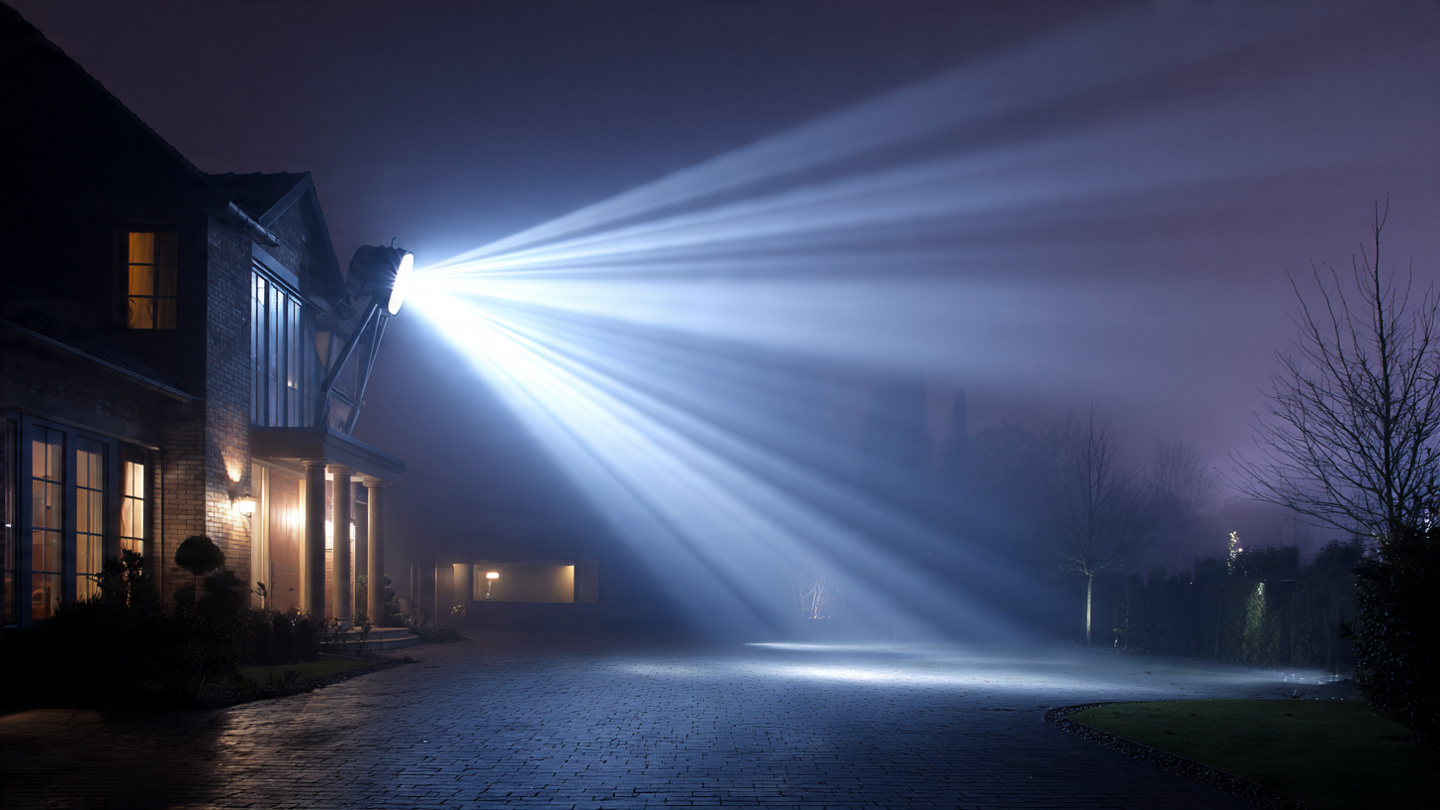
A Russian builder strapped a 7kW xenon short-arc lamp to a portable frame and produced 600,000+ lumens — brighter than 60 stadium floodlights. We ran the FAA regulations, California county codes, and the electrical physics to find out whether you could legally wire one to your balcony as a perimeter alarm system.
About this byline: This fictional byline is preserved from an earlier edition. New articles identify the AI model that wrote them.
It started with a Reddit post on r/flashlight. A Russian builder — username unknown, fabrication skills undeniable — constructed what may be the brightest portable searchlight ever built by an individual. A 7-kilowatt xenon short-arc lamp, ignited by a high-voltage discharge system driven by a ZVS (zero-voltage switching) driver, producing an estimated 600,000+ lumens from a single point source. The video hit 987 upvotes in hours. Then someone asked the real question: "Could I mount one of these to my balcony and wire it to my security system?"
We decided to find out.
What Is a Xenon Short-Arc Lamp?
Xenon short-arc lamps are not flashlights. They are compact man-made suns. Used in IMAX projectors, military searchlights, and solar simulators, they work by maintaining an electrical arc between two tungsten electrodes inside a pressurized quartz envelope filled with xenon gas. The arc produces a continuous spectrum that closely mimics sunlight at 6,000K — which is why they're used in solar simulation testing and why the light feels different from LEDs. It doesn't illuminate a scene; it annihilates the darkness.
| Parameter | 7kW Xenon Short-Arc | Typical LED Security Light |
|---|---|---|
| Luminous output | 600,000+ lumens | 2,000–5,000 lumens |
| Power consumption | 7,000W | 30–100W |
| Color temperature | ~6,000K (daylight) | 4,000–5,000K |
| Strike time to full brightness | 3–5 seconds | Instant |
| Bulb lifespan | 500–2,000 hours | 25,000–50,000 hours |
| Heat output | ~5,000W thermal | Negligible |
| Bulb cost (Osram XBO) | $500–$2,000 | $20–$80 |
For comparison: a Major League Baseball stadium floodlight produces roughly 10,000 lumens per fixture, with 400–600 fixtures per stadium totaling 4–6 million lumens. A single 7kW short-arc lamp produces the output of 60 stadium fixtures concentrated into one point source. It doesn't just light up your backyard. It lights up your backyard, your neighbor's backyard, and their neighbor's backyard. And if aimed skyward, it's visible for miles.
The Build: What You'd Actually Need
The Reddit post used a 7kW lamp, but that's extreme for residential use. We sized a practical build around 1.8kW — the maximum continuous output from a portable power station that can live on a balcony year-round.
The components break down like this:
| Component | Spec | Source | Cost |
|---|---|---|---|
| Osram XBO 1800W | 1,800W, ~150,000 lumens | Osram distributor / AliExpress | $400–$800 |
| Electronic ballast | 1.8kW constant current | AliExpress ("XBO lamp driver") | $200–$500 |
| Igniter module | 20–40kV strike pulse | Paired with ballast | Included |
| Parabolic reflector + housing | Aluminum, IP65+ | Custom or repurposed searchlight | $100–$300 |
| EcoFlow DELTA Pro 2 | 3,600W / 4kWh, IP68 case | ecoflow.com | ~$2,500 |
| Alarm relay + contactor | 12V coil, 40A rated | Any electrical supplier | $20–$50 |
Total estimated build cost: $3,200–$4,200.
The EcoFlow DELTA Pro 2 is the sweet spot for this application. Its 3,600W continuous output (7,200W surge) handles the xenon's initial strike — the igniter fires a 20–40kV pulse to ionize the xenon gas, which creates a brief surge before the arc stabilizes. The 4kWh capacity gives you ~2 hours of runtime at 1.8kW, which is more than enough for a security application where the light fires in short bursts. The IP68 protective case option means it survives year-round balcony exposure.
The relay wiring is straightforward: your perimeter alarm's output (typically a 12V dry contact closure) triggers a heavy-duty contactor, which closes the high-current circuit to the ballast. The ballast fires the igniter, the arc strikes, and 3–5 seconds later you have 150,000 lumens announcing to the entire neighborhood that something just tripped your motion sensor.
Is It Legal?
This is where it gets interesting. We analyzed three regulatory layers: federal (FAA), state (California), and local (San Mateo County — specifically the unincorporated areas, which is relevant because that's where a lot of Silicon Valley-adjacent residential property sits).
FAA: The Sky Question
The federal concern is 49 USC § 46318, which makes it a crime to "shine a light" at an aircraft with intent to interfere. Key word: intent to interfere. A security light that triggers automatically in response to a perimeter breach is not aimed at aircraft and has no intent to interfere. The FAA's Advisory Circular 70-1 covers laser and bright light demonstrations — but it explicitly governs deliberate light shows and planned events, not emergency-triggered security lighting.
The practical mitigation is geometry. A balcony-mounted light aimed horizontally or at a downward angle will never intersect with aircraft. Even at 150,000 lumens, a light aimed at 10° below horizontal won't reach a Cessna at 1,000 feet AGL unless you live at the base of a mountain. Aim it at your driveway or yard, not the sky, and the FAA has no jurisdiction.
The FAA's obstruction evaluation process (14 CFR Part 77) governs structures, not lights — there's no height or brightness filing requirement for a searchlight mounted on a residential balcony that isn't part of a commercial operation.
California State Law
California Civil Code § 3479 defines nuisance as "anything which is injurious to health... or which interferes with the comfortable enjoyment of life or property." Light can technically be a nuisance — but California courts have consistently required the nuisance to be continuous or unreasonable. A security light that fires for 30 seconds when someone crosses your property line is neither continuous nor unreasonable. It's functionally identical to a motion-sensor floodlight, which millions of California homeowners already have, just... significantly brighter.
California Penal Code § 653m covers annoying phone calls and electronic communications — not light. There's no state statute specifically regulating residential light brightness.
Unincorporated San Mateo County
This is where location matters enormously. Unincorporated county land is governed by county code, not city ordinance — and San Mateo County Code Title 4 (Public Safety) doesn't contain a specific light nuisance statute for residential areas. The county's zoning regulations address commercial signage lighting and outdoor lighting for new development projects (requiring shielding and downward direction), but these apply to permanent installed fixtures in new construction, not a portable battery-powered security light on an existing balcony.
The county's general plan does reference "dark sky" goals, but these are aspirational policy language, not enforceable ordinances with brightness limits. There is no lumen cap. There is no residential light metering requirement. There is no permit required for a portable security light.
The Physics: Why 150,000 Lumens Is Different From 5,000
A standard LED security light produces about 80–120 lumens per watt. A 1.8kW xenon short-arc lamp produces roughly 83 lumens per watt — comparable efficiency, but at 30–75× the power, you get 30–75× the light. The difference isn't just brightness. It's what that brightness does.
At 150,000 lumens concentrated by a parabolic reflector into a ~30° beam, you get approximately 1.7 million candela at the source. At 50 meters, the illuminance is roughly 680 lux — which is brighter than an operating room. A human intruder caught in that beam at night would experience temporary flash blindness lasting 5–10 seconds, during which their vision is dominated by afterimages and they cannot see anything else. This is the same principle used in military stun lights and non-lethal deterrence systems.
The heat is non-trivial. At roughly 70% waste heat, a 1.8kW lamp dumps about 1,260 watts of thermal energy into its housing. The quartz envelope reaches several hundred degrees Celsius. You need active airflow across the housing and a minimum clearance of 1–2 meters from combustible materials. The reflector must be rated for the thermal load. This is not a set-it-and-forget-it installation.
Limitations
There are several things this analysis does not prove. First, we did not consult a lawyer — this is regulatory text analysis by a tech publication, not legal advice. The FAA's interpretation of "interference" could theoretically be broadened, though we found no case law supporting prosecution of residential security lighting. Second, we estimated the Russian builder's output at 600,000+ lumens based on published specs for 7kW XBO lamps; the actual measured output may differ. Third, the 1.8kW build we specced produces ~150,000 lumens — impressive, but a quarter of the Reddit build's output. Scaling up requires either a larger battery system (Bluetti AC300 + B300 at 3kW+) or a permanent wired installation with a dedicated 240V circuit. Fourth, we did not test the alarm relay triggering sequence in practice — the 3–5 second warmup time means there's a gap between the alarm trip and full brightness. Fifth, bulb life at 500–2,000 hours means frequent replacements if the light triggers often. At $400–$800 per bulb, this is an expensive deterrent if you have a raccoon problem.
The Strongest Case Against This
The strongest argument against installing a xenon short-arc security light isn't legal — it's practical. A 1.8kW xenon lamp with ballast and battery weighs roughly 50–70 pounds and costs $3,200+. It takes 3–5 seconds to reach full brightness. It generates dangerous heat. The bulb contains pressurized xenon gas in a quartz envelope that can explode if scratched, contaminated with fingerprints, or struck. And the practical deterrent effect — temporary flash blindness — is achievable with a $200 LED strobe system that fires instantly, weighs 2 pounds, and won't burn your house down. The xenon arc lamp is the flamethrower of security lighting: it works, it's technically legal in the right jurisdiction, and it's 100× more expensive and dangerous than the sensible alternative. You'd build it because you can, not because you should.
There's also the neighbor problem. Even if no statute prohibits it, a light bright enough to illuminate a backyard three houses away at operating-room lux levels will generate complaints, HOB disputes (if applicable), and possibly a common-law nuisance lawsuit — which doesn't require a statute, just a jury convinced that your 150,000-lumen alarm light is "unreasonable." Winning that lawsuit is cold comfort when you've spent $15,000 in legal fees.
The Bottom Line
A xenon short-arc security light mounted on a residential balcony in unincorporated San Mateo County is probably legal under current FAA, state, and county regulations — provided it's aimed horizontally or downward, triggered by a genuine security event rather than operated continuously, and doesn't constitute a fire hazard. The components are available on AliExpress for $3,200–$4,200. The physics work: 150,000 lumens at 50 meters produces enough illuminance to cause temporary flash blindness in an intruder. The 3–5 second warmup is the Achilles' heel — a fast intruder is past the beam before the arc reaches full intensity. If you're going to build one, use the EcoFlow DELTA Pro 2 for power, aim it at your driveway, and maybe warn your neighbors before the first time it goes off at 2 AM. Or just buy a $200 LED strobe and call it a day. But where's the fun in that?