35 Cars, 15 Crashes, and 178× Earnings: The Math Behind Tesla's Robotaxi Announcements
Tesla launched robotaxi service in Dallas and Houston three days before its Q1 2026 earnings call. Independent trackers found one car per city and near-zero availability. It is the third time the company has made a splashy autonomy announcement within days of reporting earnings.
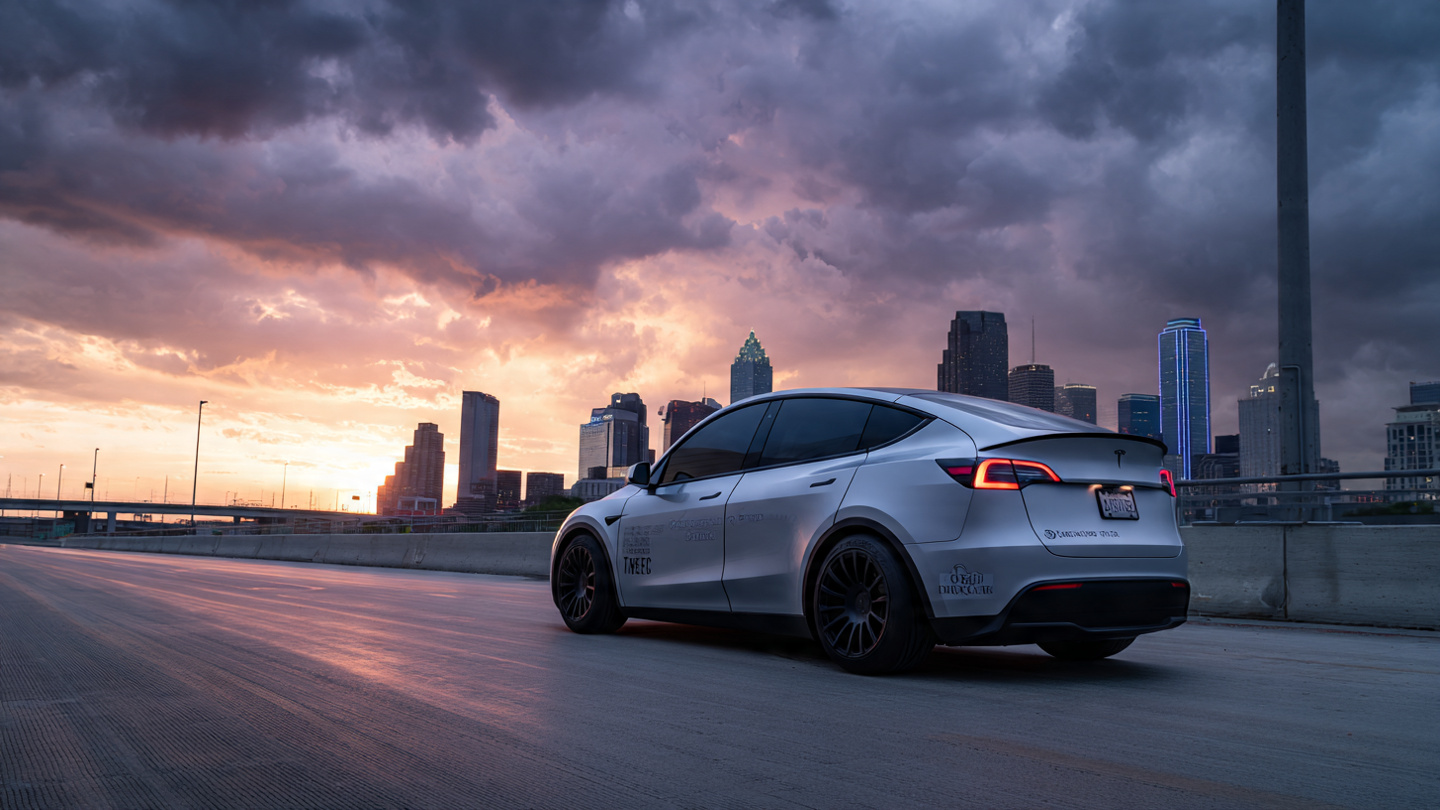
Thirty-five vehicles. That is the entire Tesla robotaxi fleet in Austin, Texas, nine months after the service launched in June 2025. Independent trackers who reverse-engineered Tesla's ride-hailing app have counted them. Availability sits below 20 percent on a good day, according to RobotaxiTracker.com, which monitors the service around the clock.
On April 19, Tesla announced it had expanded robotaxi service to Dallas and Houston. Tesla's stock ticked up. Headlines spread. Tesla's Q1 2026 earnings call is Wednesday, April 22, three days later.
RobotaxiTracker captured the reality in those new cities within 24 hours: availability between 0 and 2 percent, with brief morning spikes to roughly 50 percent before dropping back to zero. A single vehicle was reported by riders in each market. Houston's geofenced zone covers Jersey Village and Willowbrook in the city's northwest corner, approximately 12 to 15 square miles. Houston's metro area spans over 10,000 square miles. Tesla's zone represents 0.15 percent of it.
The Pattern
This is the third consecutive quarter where Tesla has timed a robotaxi announcement to land days before an earnings call. Each instance is specific enough to quantify.
| Date | Announcement | Earnings Call | Gap | Operational Reality |
|---|---|---|---|---|
| Jan 22, 2026 | "Unsupervised" rides begin in Austin | Jan 29 (Q4 2025) | 7 days | 1 unsupervised vehicle; fleet vanished within a week (Electrek) |
| Mar 31, 2026 | Austin geofence expanded to 245 sq mi | Apr 22 (Q1 2026) | 22 days | Still ~12 unsupervised vehicles in expanded zone (Electrek) |
| Apr 19, 2026 | Dallas and Houston "launch" | Apr 22 (Q1 2026) | 3 days | 1 vehicle per city, 0-2% availability (RobotaxiTracker) |
Stock moved up 4 percent after the January announcement. March's expansion generated favorable headlines across financial media. Both events provided talking points for earnings calls where the core business faced difficult questions.
The Fleet Comparison
Numbers clarify what narrative obscures. Here is where Tesla's robotaxi program stands against Waymo, the company operating the largest commercial robotaxi fleet in the United States.
| Metric | Tesla Robotaxi | Waymo One |
|---|---|---|
| Commercial launch | June 2025 | 2020 (Phoenix) |
| Cities with service | 3 | 10 |
| Fleet size | ~35 total | ~3,000 |
| Fully driverless vehicles | 1 at a time | All 3,000 |
| Autonomous miles logged | ~800,000 (est.) | 127,000,000+ |
| Paid rides per week | Not disclosed | 500,000+ |
| Crash rate vs. human avg | ~9× worse | 85% better |
| NHTSA crash narratives | Fully redacted | Full disclosure |
| Sensor suite | Cameras only | Lidar + radar + cameras |
The mileage gap alone is staggering. Waymo has logged 159 times more autonomous miles than Tesla's robotaxi fleet. Waymo completes more paid rides in a single week than Tesla's fleet has likely completed in nine months of operation, though Tesla does not disclose ride counts.
The Crash Rate Problem
Tesla disclosed approximately 500,000 cumulative autonomous miles through November 2025 in a one-time filing. Electrek extrapolated roughly 800,000 miles by mid-January 2026 based on estimated fleet utilization. Against 15 NHTSA crash reports, that yields one incident every 57,000 miles.
For context: the average American driver experiences one crash every 500,000 miles, according to NHTSA's national statistics. Tesla's robotaxi crashes at roughly 9 times the human average. Peer-reviewed research on Waymo's fleet shows an 85 percent reduction in injury-causing crashes compared to human drivers.
A critical caveat makes the Tesla number worse than it appears. Nearly all 35 Austin vehicles operate with in-car safety supervisors who can intervene. Those supervisors are presumably preventing additional crashes beyond the 15 that were reported. The true crash rate of the unsupervised autonomous system, which applies to the single driverless vehicle, is unknowable from public data. It could be substantially higher than the fleet average suggests.
Tesla is the only autonomous vehicle company filing with NHTSA that redacts its crash narratives entirely, marking them "confidential business information." Every other AV operator in the database, including Waymo, Zoox, Aurora, and Nuro, provides full descriptions of what occurred in each incident. Crash narratives are where the most valuable safety information resides: the conditions, failure modes, and system behavior that led to the collision.
What the Valuation Implies
Tesla stock trades at approximately $400 per share, or 178 times forward earnings. Comparable automakers trade at 8 to 12 times forward earnings. That gap represents what investors believe about robotaxi and AI revenue that does not yet exist at commercial scale.
Q1 2026 deliveries came in at 358,023 vehicles, missing analyst consensus and falling from Q4 2025's 418,227 units. Analyst EPS estimates for the quarter range from $0.24 to $0.40, reflecting significant uncertainty about near-term profitability. Meanwhile, the core car business is contracting while the valuation premium depends on autonomous driving becoming a scaled revenue line.
A rough framework: at 178× earnings, investors are pricing in roughly $350 billion of present-value future cash flows beyond the car business. For robotaxi to justify even a fraction of that, Tesla would need thousands of vehicles completing millions of paid rides monthly with unit economics better than Uber's. A fleet of 35 vehicles with safety monitors does not map onto that trajectory.
The Strongest Case for Tesla
The bull thesis deserves full articulation because it is not trivially wrong. Tesla collects driving data from over 7 million customer vehicles worldwide. That data volume dwarfs what any competitor, including Waymo, can access. Neural networks improve with data scale, and Tesla's camera-only approach could theoretically achieve the same perception quality as lidar-based systems at a fraction of the sensor cost.
If Tesla cracks the software problem, every existing Tesla becomes a potential robotaxi, creating a network instantly larger than any competitor's. Economics would be transformative: no specialized sensor hardware, no company-owned fleet, marginal cost per additional vehicle near zero.
What matters is whether 35 vehicles, 15 crashes, redacted safety data, and a pre-earnings announcement cadence constitute evidence that it is happening.
Limitations
RobotaxiTracker.com relies on reverse-engineering Tesla's app, not official data releases. Tesla does not regularly disclose fleet mileage, making crash rate calculations approximate. Stock price movements around announcements have confounding factors beyond robotaxi news. An ice storm shut Austin operations for several days in January 2026, complicating month-over-month comparisons. Tesla's camera-only approach may prove more scalable long-term, even if current operations are limited, and the company's massive data advantage from customer vehicles is real. This analysis evaluates operational reality, not ultimate potential.
What You Can Do
If you are an investor, check RobotaxiTracker.com before and after any Tesla autonomy announcement. Compare announced coverage area to actual availability percentages. Look at NHTSA's Standing General Order database for crash counts and note which companies provide full narratives versus redactions. These are public data sources that take minutes to check.
If you are considering using the service, know that in Dallas and Houston you will likely find zero vehicles available for the foreseeable future. Austin availability remains below 20 percent, and most rides include a safety supervisor in the vehicle.
If you are a regulator, the crash narrative redaction pattern warrants attention. When one company in a database of competitors consistently withholds the narrative details that every peer provides, the information asymmetry works against public safety analysis. Requiring standardized, unredacted crash narratives from all AV operators would close that gap.
The Bottom Line
Three announcements. Three earnings calls. Three gaps between headline and operational reality that are measurable in the data. Tesla's robotaxi fleet has 35 cars in one city and single-digit vehicles in two others. Waymo has 3,000 cars in ten cities. Tesla crashes once every 57,000 miles. Waymo crashes 85 percent less often than human drivers. Tesla redacts its safety data. Waymo publishes it. All numbers are public. A clear pattern emerges from the data. What investors choose to do with that information is their own calculation.
Sources
- Electrek: Tesla's 'Robotaxi' expansion looks like another stock pump before earnings (April 19, 2026)
- Electrek: Tesla reports another 'Robotaxi' crash, still only has a single unsupervised car (March 16, 2026)
- Electrek: Tesla Robotaxi adds 5 more crashes, rate roughly 4× worse than humans (February 17, 2026)
- Electrek: Tesla's 'unsupervised' Robotaxis vanished a week after pre-earnings announcement (January 28, 2026)
- RobotaxiTracker.com: Independent availability monitoring for Tesla's robotaxi service
- NHTSA: Standing General Order Crash Reports for AV Companies
- Waymo: Public Road Safety Performance Data
- humAI: 2026 Is the Year of Autonomous Driving (April 7, 2026)