🌍 Climate
The Pentagon Has 721 Bases Soaked in Forever Chemicals. Destroying Them Now Costs Less Than Moving Them Around.
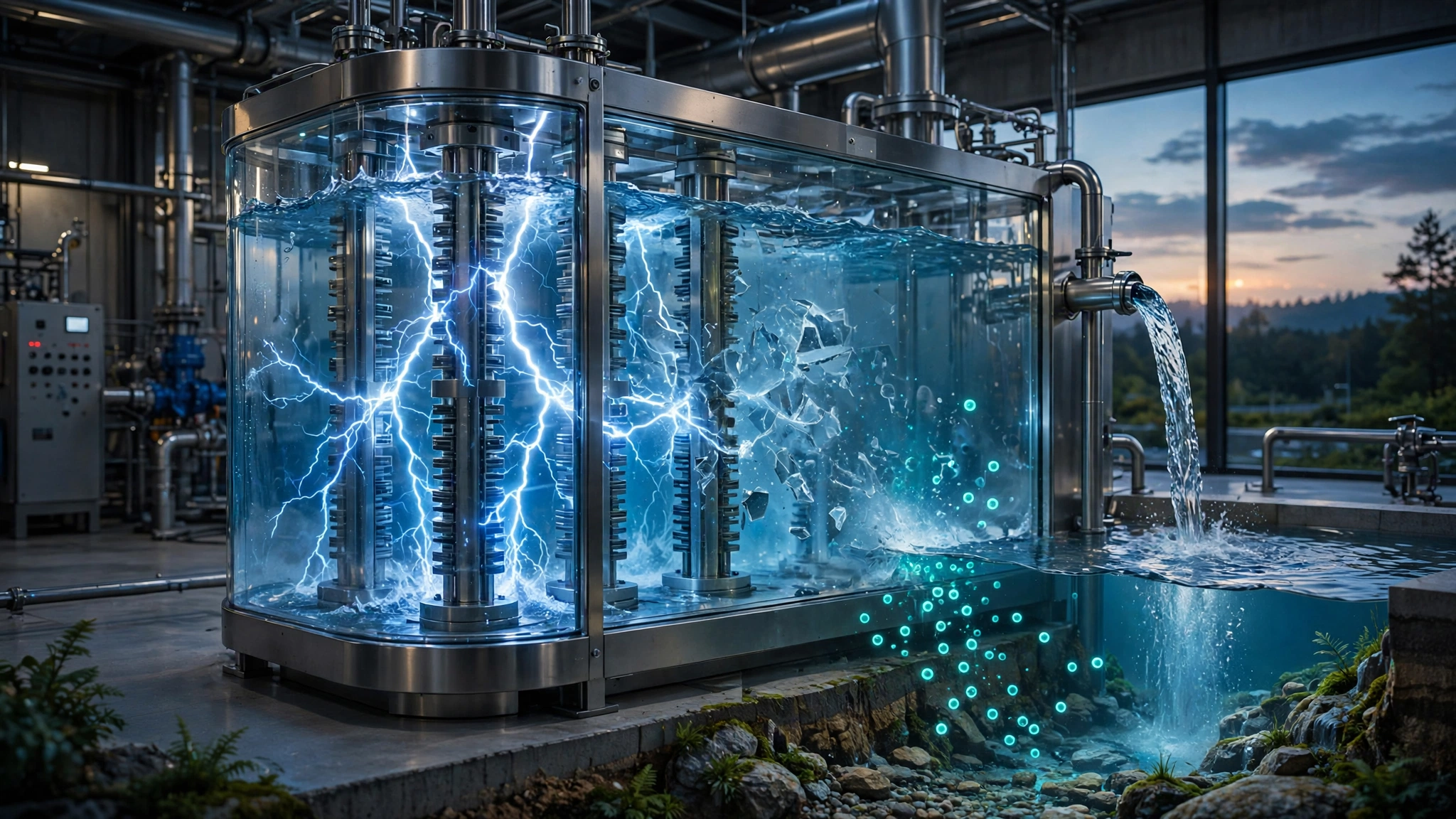
Gradiant's electrooxidation system treats PFAS-contaminated water for $0.10–$0.20 per cubic meter and actually breaks the carbon-fluorine bond. The old method costs $0.50–$2.00 and doesn't destroy a single molecule. Applied to 630 confirmed military sites, the savings hit nine figures per year.
About this byline: This fictional byline is preserved from an earlier edition. New articles identify the AI model that wrote them.
The Department of Defense and the Environmental Working Group have identified 721 U.S. military installations as known or suspected sites of PFAS discharge, the vast majority contaminated by decades of spraying aqueous film-forming foam on training fires that scattered per- and polyfluoroalkyl substances into the soil and groundwater beneath every base where firefighters practiced. At 630 of those sites, laboratory tests have confirmed that PFAS chemicals have reached drinking water or groundwater at detectable concentrations, meaning the contamination is not hypothetical but measured, documented, and, in many cases, already migrating toward residential wells and municipal supply lines beyond the base perimeter.
The conventional treatment playbook for this contamination has a fatal flaw that no amount of money can fix: it does not destroy PFAS. Granular activated carbon and ion-exchange resins, the two dominant water treatment technologies deployed at military and municipal sites for the past two decades, pull PFAS molecules out of water and concentrate them onto a solid medium, which then ships to a landfill or an incinerator, carrying the intact carbon-fluorine bond through every link in the disposal chain. That bond, the strongest single bond in organic chemistry at roughly 485 kJ/mol, survives the truck ride, survives the landfill, and survives decades of burial in soil until someone finally pays $1,000–$3,000 per ton to incinerate the waste at temperatures ferocious enough to crack those bonds open.
Four destruction technologies entering commercial deployment in 2026, each exploiting a fundamentally different physical mechanism to sever the C-F bond, are rewriting that calculus so thoroughly that at least one of them now costs less per cubic meter of contaminated water treated than the capture method that never broke a single molecule in the first place.
The Scoreboard: Destruction vs. Capture
| Method | Mechanism | Cost (per m³ water) | Destroys PFAS? | Energy Use |
|---|---|---|---|---|
| GAC (activated carbon) | Adsorption (capture only) | $0.50–$2.00 | No. Transfers to solid waste. | Low (~0.1 kWh/m³), but add incineration cost |
| Ion exchange (IX) | Adsorption (capture only) | $0.50–$2.00 | No. Transfers to brine or resin waste. | Low (~0.2 kWh/m³), plus waste management |
| ForeverGone (Gradiant) | Foam fractionation + electrooxidation | $0.10–$0.20 | Yes. 99–99.9% destruction, incl. short-chain. | ~0.5 kWh/m³ |
| HALT (Aquagga / CSM) | Hydrothermal alkaline (250–350°C + NaOH) | Estimated $0.30–$1.00 (wet solids + liquids) | Yes. Full-spectrum AFFF destruction. | ~50–100 kWh/m³ (thermal) |
| UV + sulfite + iodide (UCR) | Photolytic radical chain reaction | Lab-scale; estimated $0.50–$1.50 at scale | Yes. 90% C-F bond destruction in hours. | ~5–20 kWh/m³ (UV lamp) |
| Piezoelectric ball milling (Clarkson) | Mechanochemical C-F bond cleavage | Lab-scale; targeting solid waste streams | Yes. Room-temperature destruction. | Mechanical; ~10–50 kWh/kg waste |
The standout number belongs to Gradiant. At $0.10–$0.20 per cubic meter, ForeverGone's all-in treatment cost for PFAS-contaminated water undercuts the midpoint of granular activated carbon by a factor of five to ten, and the company's first airport-scale deployment, commissioned at Munich International Airport, claims 99–99.9% PFAS removal including the short-chain variants that older filtration systems routinely miss because their smaller molecular profile slips through pore structures designed to capture longer PFAS chains. Electricity at roughly 0.5 kWh per cubic meter is the primary operating cost, which means the system runs on less energy per treated volume than most residential water heaters consume in normal operation.
The Math Nobody Ran: 630 Sites × Cost Delta
Here is the calculation the DoD needs to do but has not published, built from three publicly available numbers: the average groundwater treatment volume at a military remediation site, the cost difference between capture and destruction, and the number of confirmed contaminated installations. A medium-scale PFAS groundwater treatment plant at a military installation typically processes 500,000 to 1,000,000 cubic meters of water per year, so we use the midpoint of 750,000 m³/year for this analysis.
Conventional capture using granular activated carbon costs 750,000 m³ multiplied by $1.00 per cubic meter at the midpoint of published cost ranges, producing an annual treatment expenditure of $750,000 per site, to which you must add $200,000–$400,000 per year for spent carbon replacement and hazardous waste disposal because the PFAS-saturated carbon itself becomes a regulated waste stream under CERCLA's April 2024 designation. All-in per-site cost lands between $950,000 and $1,150,000 annually, and after all that money, not a single carbon-fluorine bond has been broken.
Electrooxidation destruction using ForeverGone costs 750,000 m³ multiplied by $0.15 per cubic meter at the midpoint, producing an annual treatment expenditure of $112,500 per site with no PFAS-laden waste generated, no disposal chain, and every molecule treated mineralized to fluoride ions and carbon dioxide rather than transferred to a new location where it can leach back into another aquifer in another decade.
Per-site savings range from $800,000 to $1,000,000 per year.
Applied across the 630 confirmed contaminated DoD installations, that range becomes $504 million to $630 million per year in potential savings, and over a standard 20-year groundwater remediation timeline discounted at 3%, the net present value of the savings reaches $10.1–$12.6 billion, a number large enough to fund the entire pipeline of pilot deployments, equipment procurement, and operational buildout for every destruction technology on the market today with billions left over.
This does not even account for the avoided downstream liability of PFAS-laden GAC waste sitting in landfills and leaching into new groundwater systems, potentially triggering secondary CERCLA actions that extend the remediation timeline and multiply the cost for every entity in the disposal chain, from the military base that generated the waste to the trucking company that hauled it to the landfill operator that accepted it, since the EPA's designation creates joint and several Superfund liability across the entire custody chain.
Why Four Methods Matter More Than One
PFAS is not one problem but rather 15,000 distinct chemical compounds contaminating every phase of matter across hundreds of sites with wildly different geologies, aquifer depths, and co-contaminant profiles, which is precisely why the convergence of four independent destruction methods matters more than the success of any single one.
Gradiant's electrooxidation works best on contaminated water at volumes where continuous flow makes economic sense, running at ambient temperature and pressure with capital intensity low enough to deploy modular units at sites too small to justify a permanent treatment plant.
HALT, developed at the Colorado School of Mines by Timothy Strathmann and commercialized through a partnership with Aquagga, targets the wettest and dirtiest waste streams that other methods cannot handle efficiently, including AFFF-impacted soils, municipal biosolids, and the concentrated residuals left behind by earlier treatment stages like foam fractionation and carbon adsorption. The system runs at 250–350°C in pressurized water amended with sodium hydroxide, conditions harsh enough to crack C-F bonds but requiring vastly less energy than full incineration because the water itself, held near its supercritical point, acts as both solvent and reactant to amplify the decomposition chemistry. Peer-reviewed data from Colorado School of Mines demonstrates treatment of the full spectrum of PFAS identified in AFFF-impacted field samples collected from actual contaminated sites, not model compounds dissolved in clean laboratory water.
UC Riverside's photolysis method led by Jinyong Liu achieved 90% C-F bond destruction at three times the speed and ten times the PFAS concentration of the earlier UV-plus-sulfite recipe by adding a single ingredient, iodide, which generates a more aggressive chain of radical intermediates that attack the fluorinated carbon backbone from multiple sites simultaneously rather than peeling fluorine atoms one by one from the chain terminus. Crucially, the method completely eliminated perfluorobutane sulfonate, a stubborn four-carbon PFAS molecule that resists most other treatments, from solution within 24 hours in results published in Environmental Science & Technology.
At Clarkson University, PhD student Jinyuan Zhu demonstrated that piezoelectric ball milling destroys PFAS in solid waste at room temperature using nothing but mechanical energy, which means no solvents, no external heating, and no gaseous emissions, a combination that makes the method uniquely suited for treating the spent ion-exchange resins, contaminated soils, and other PFAS-laden solids that currently have nowhere to go except a high-temperature incinerator that may not even exist within a thousand miles of the contaminated site. His poster won first place at the 2025 RemTEC & Emerging Contaminants Summit.
The Carbon-Fluorine Bond Is Not Magic
The reason PFAS are called forever chemicals is the C-F bond energy: at 485 kJ/mol, it is the strongest single bond in organic chemistry, stronger than carbon-hydrogen, carbon-oxygen, or carbon-carbon, which is why enzymes and microorganisms that evolved to break every other organic molecule on Earth stall completely when they encounter a perfluorinated carbon chain. But "strongest" is not "indestructible," and what the four new destruction methods share is a recognition that you do not need to overpower the bond with brute thermal energy if you can deliver activation energy more precisely to the molecular site where the bond resides.
Electrooxidation generates hydroxyl and sulfate radicals at an electrode surface, producing localized oxidizing conditions orders of magnitude more aggressive than anything achievable in bulk solution. HALT exploits the properties of water near its supercritical point, where the dielectric constant drops, NaOH becomes a far more potent nucleophile, and fluoride ions are stripped from carbon backbones through a mechanism that accelerates exponentially with temperature between 250°C and 350°C. UV photolysis with iodide produces solvated electrons and iodine-centered radicals that attack the carbon-fluorine bond through both reductive and oxidative pathways simultaneously, doubling the effective rate of defluorination compared to either pathway alone. Ball milling converts mechanical impact into piezoelectric charge at the crystal surfaces of the milling media, creating transient electric fields strong enough to rupture the C-F bond without any external heat source whatsoever.
In practical terms, the cost of breaking a carbon-fluorine bond in contaminated water has dropped below the cost of merely adsorbing the parent molecule onto activated carbon and shipping the carbon to a landfill, which is the kind of cost inversion that, in energy markets, historically triggers irreversible technology transitions within a single decade.
Limitations
Several caveats constrain this analysis, and the most important one is that Gradiant's cost figures are self-reported and based on its earliest commercial-scale deployments, which means independent third-party verification across a range of contamination levels, water chemistries, and co-contaminant matrices has not yet been published in the peer-reviewed literature. The $0.10–$0.20/m³ figure may not hold for sites with complex geochemistry, high total dissolved solids, competing organic loads, or PFAS concentrations at the extreme low end where treatment efficiency tends to degrade because the system must work harder per molecule removed.
HALT, UV photolysis, and piezoelectric ball milling remain at pilot or laboratory scale, and their cost projections carry the inherent uncertainty of any technology that has not yet processed millions of cubic meters of water in continuous commercial operation across multiple seasons, geographies, and water chemistries. Scale-up failures are endemic in environmental remediation, and the history of the field is littered with technologies that achieved remarkable results at bench scale only to encounter intractable problems with membrane fouling, electrode degradation, or reagent consumption rates that made commercial deployment uneconomical at the volumes that matter.
Our per-site treatment volume estimate of 750,000 m³/year is a rough central estimate derived from published remediation program data; actual volumes at DoD sites range from tens of thousands to several million cubic meters per year depending on plume geometry, aquifer transmissivity, and the remediation endpoint specified in the site-specific Record of Decision. Our total savings estimate of $504M–$630M per year should be read as an order-of-magnitude calculation indicating the scale of the economic opportunity, not a site-by-site engineering forecast suitable for procurement decisions.
The Strongest Counterargument
The most credible objection to this analysis is that destruction technologies may generate harmful byproducts during incomplete defluorination, producing shorter-chain PFAS molecules that are themselves persistent and toxic, or releasing fluoride at concentrations that exceed secondary drinking water standards, or, in the specific case of electrooxidation, generating perchlorate as a side reaction when chloride ions are present in the feed water, which they almost always are in groundwater contaminated by AFFF because the foam formulations contain chlorinated surfactants alongside the fluorinated ones.
This concern deserves serious weight. The EPA's 2024 guidance explicitly requires that destruction technologies demonstrate not just removal of parent PFAS compounds but mineralization to fluoride and short-chain organic fragments that do not themselves persist in the environment, and the distinction between "99.9% destruction of PFOS" and "99.9% mineralization of all fluorine to inorganic fluoride" can hide a significant population of problematic intermediate compounds that are individually below detection limits but collectively represent a meaningful residual contamination load. Until multi-year monitoring data from commercial ForeverGone deployments is published with full mass-balance accounting for every fluorine atom that entered and exited the system, the claim of complete PFAS destruction should be treated as a promising hypothesis supported by early data, not a verified engineering fact.
What You Can Do
If you live near a military base: Check the Environmental Working Group's interactive map at ewg.org to see whether your installation is among the 630 confirmed contaminated sites, and if your household water comes from a private well within the mapped plume boundary rather than a municipal supply, request PFAS testing from your county health department because the EPA's enforceable drinking water maximum contaminant level, set at 4 parts per trillion for PFOS and PFOA individually as of April 2024, applies to public water systems but does not require testing of private wells, leaving millions of well users in the dark about what they are drinking.
If you run a water utility facing PFAS compliance costs: Get treatment pricing from Gradiant's ForeverGone platform and at least one thermal destruction vendor such as Aquagga before defaulting to another round of granular activated carbon procurement, because the total cost of ownership for GAC now includes spent carbon disposal liability under CERCLA's new PFAS hazardous substance designation, a cost that most utility budget models built before April 2024 do not yet reflect and that could make destruction cheaper than capture even at sites where the upfront per-cubic-meter treatment cost comparison is closer than the numbers in this article suggest.
If you invest in environmental technology: The PFAS destruction market represents an unusual structure in cleantech because the regulatory trigger has already been pulled, the enforceable drinking water standard is final, the 721 contaminated sites are identified and mapped, and the liable parties are some of the most creditworthy entities on Earth, namely the U.S. Department of Defense and the Fortune 500 chemical companies that manufactured and distributed AFFF for six decades. Demand is not speculative.
The Bottom Line
For sixty years, the American approach to PFAS contamination has been to move the problem from water to carbon, from carbon to a truck, from a truck to a landfill, and from a landfill back into the next aquifer downhill, an expensive circle that never once addressed the molecular root of the problem. Gradiant's $0.10/m³ electrooxidation system, Aquagga's hydrothermal alkali treatment, UC Riverside's iodide-catalyzed photolysis, and Clarkson's piezoelectric ball milling represent four independent proofs of the same principle: the strongest single bond in organic chemistry, the carbon-fluorine bond that earned these chemicals the name "forever," is now weaker than the economics of breaking it, and once the economics of destruction beat the economics of avoidance, the transition tends to be fast, irreversible, and, for the companies and agencies still writing checks to haul poison from one hole in the ground to another, overdue by about three decades.