Eli Lilly Built a $1.5 Billion Stockpile of Weight-Loss Pills. The Math Shows Why.
Foundayo drew 1,390 prescriptions in its first two capture days. It delivers 37% less weight loss than injectable Wegovy for the same monthly price. And it might still win.
One thousand three hundred and ninety. That is how many prescriptions IQVIA captured for Eli Lilly's Foundayo (orforglipron) in its first two days of retail tracking, ending April 10. For context, Novo Nordisk's Wegovy pill drew 3,071 prescriptions in its first four days of capture back in January. Adjust for time window and the launch velocities look nearly identical.
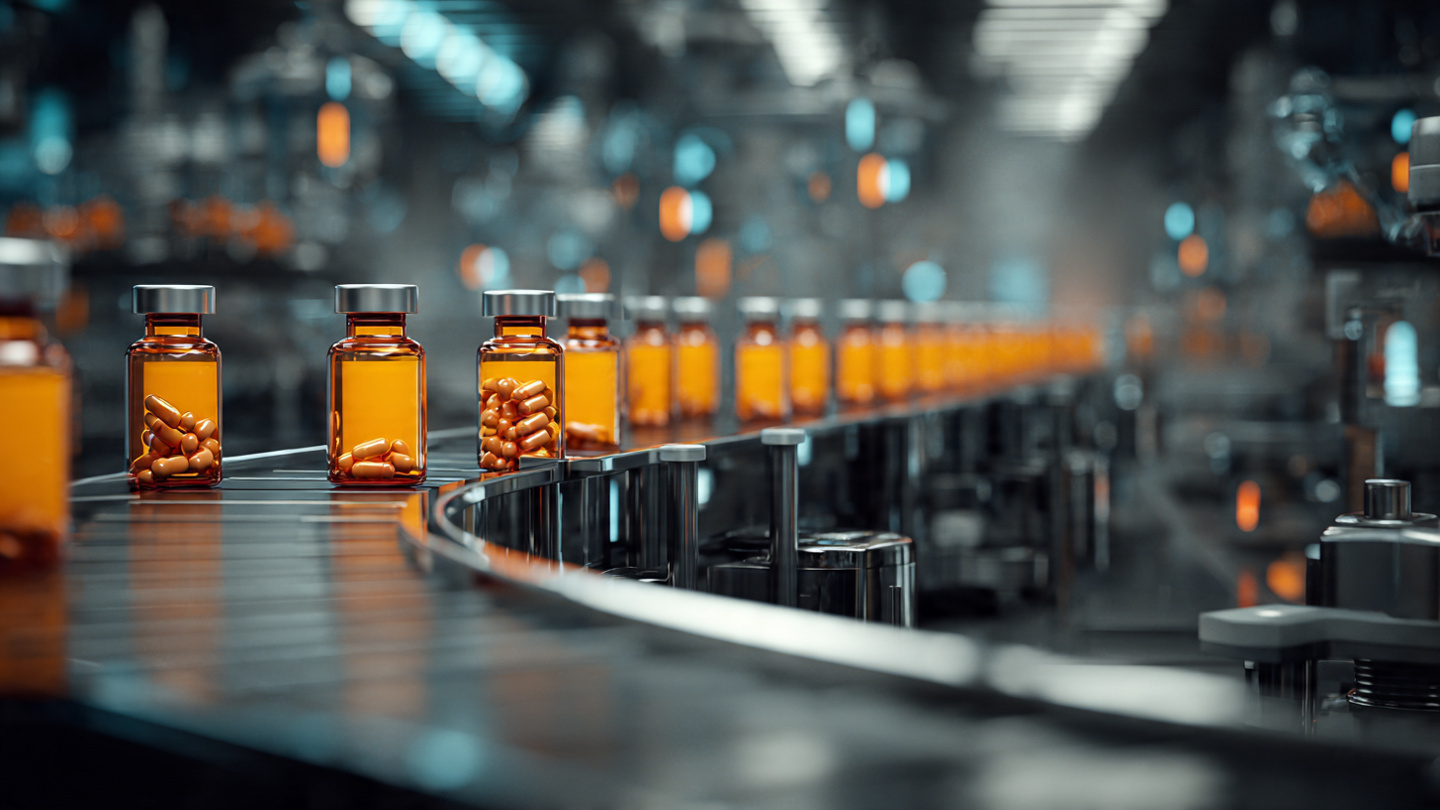
But here is what makes Foundayo different from every other GLP-1 drug on the market: it is not a peptide. It is a small molecule. A pill you swallow. No needles. No refrigeration. No sterile fill-and-finish manufacturing. No $8 pen device per dose. Lilly spent $1.5 billion building a pre-launch stockpile and broke ground on a $3 billion manufacturing facility in Pennsylvania. That level of capital deployment, before a single commercial prescription, tells you everything about the bet they are making.
What the Trial Data Actually Shows
ATTAIN-1, the Phase 3 trial that earned Foundayo its FDA approval, enrolled 3,127 adults with obesity or overweight. Over 72 weeks, the 36mg dose produced 12.4% mean weight loss, or about 27.3 pounds, versus 0.9% for placebo. Nearly 60% of participants lost at least 10% of body weight. High-sensitivity C-reactive protein, a cardiovascular inflammation marker, dropped 47.7%.
Impressive numbers in isolation. Less impressive next to the injectable competition.
| Drug | Type | Weight Loss | Cash Price/Month | Efficacy per $ |
|---|---|---|---|---|
| Foundayo 36mg | Oral pill | 12.4% | ~$349 | 0.036%/$ |
| Wegovy 2.4mg | Injection | ~17% | $349 | 0.049%/$ |
| Zepbound 15mg | Injection | ~22.5% | $449 | 0.050%/$ |
On pure efficacy-per-dollar, injectable Wegovy delivers 37% more weight loss at the same $349 monthly price. Zepbound, Lilly's own injectable, produces 22.5% weight loss for $449. If all you care about is the number on the scale, the needles win.
So why did Lilly stockpile $1.5 billion worth of pills?
Calculating the Needle Aversion Gap
About 110 million American adults are obese, per the CDC's 42.4% prevalence figure. Roughly 33 million meet clinical eligibility for GLP-1 therapy (BMI ≥30, or ≥27 with comorbidities, after failing lifestyle intervention). Current injectable uptake for obesity hovers around 6 to 7 million patients. That leaves 26 million eligible non-adopters.
Published research on trypanophobia, the clinical term for needle fear, puts significant injection aversion at 20-30% of adults (Hamilton, 1995). Conservatively, assume 20% of the 26 million non-adopters actively decline injectable GLP-1 therapy because of needle anxiety. That is 5.2 million people who want the drug but will not take it through a syringe.
At $349 per month, those 5.2 million patients represent $21.8 billion in annual revenue. From a single behavioral barrier removed.
Even if the real number is half that estimate, $10.9 billion justifies a $1.5 billion stockpile and a $3 billion factory. It justifies it comfortably.
Manufacturing Economics Nobody Is Discussing
Small-molecule oral tablets have a fundamentally different cost structure than peptide injectables. Typical small-molecule cost of goods sold runs $0.50 to $5.00 per pill. Peptide injectable COGS, including sterile fill-and-finish, cold chain logistics, and the pen device itself, run $30 to $100 per monthly dose.
Foundayo eliminates three expensive line items simultaneously. Cold chain logistics costs $0.50 to $2.00 per unit shipped. Pen devices add $2 to $8 per dose. Sterile manufacturing requires specialized facilities with far higher operating costs than standard tablet compression.
Conservative estimate: Lilly's gross margin on Foundayo exceeds 85%, compared to roughly 70-80% on injectable biologics. At identical retail pricing, Lilly earns more per patient on the "less effective" pill than competitors earn on their injections. Pricing it at $349 is not a concession. It is a profit-maximizing strategy that happens to look like value.
A Market About to Split in Two
Watch the GLP-1 market bifurcate. Premium tier: injectable tirzepatide (Zepbound) and semaglutide (Wegovy) for patients chasing maximum efficacy, supervised by endocrinologists and obesity medicine specialists. Mass tier: oral orforglipron prescribed by primary care physicians who were never going to teach injection technique anyway.
Primary care already handles 80% of obesity management in the United States. Most PCPs do not stock injectable GLP-1s or maintain the patient education infrastructure for self-injection training. A daily pill fits into existing workflows without friction. That is not a minor logistical detail. It is a distribution moat.
Lilly's ACHIEVE-3 trial data adds another dimension: orforglipron showed superiority to semaglutide for Type 2 diabetes, and Lilly plans to file for that indication by the end of Q2 2026. If approved, the same pill treats both obesity and diabetes. One prescription, two markets, no needles.
Strongest Counterargument
For patients with BMI above 40, the difference between 12.4% and 22.5% weight loss is not a rounding error. It can determine whether someone resolves Type 2 diabetes, reduces sleep apnea severity, or avoids bariatric surgery. Physicians who specialize in severe obesity will rightly argue that steering these patients toward a less effective oral option, purely for convenience, is clinically irresponsible. ATTAIN-1 enrolled participants with a mean BMI of 37.4. For the sickest patients, the convenience argument weakens considerably, and the injectable efficacy premium becomes a medical necessity.
Limitations
ATTAIN-1 provides 72 weeks of data. No long-term outcomes beyond two years exist for oral small-molecule GLP-1 agonists. Needle aversion estimates derive from general population surveys, not GLP-1-specific patient populations. Manufacturing cost comparisons use published industry averages because Lilly does not disclose actual COGS. Early prescription data captures two days of IQVIA tracking and may reflect pent-up demand rather than steady-state adoption. Head-to-head trials of orforglipron versus tirzepatide may never happen because both are Lilly products, creating a self-cannibalization problem the company has no incentive to quantify publicly.
FDA has also required post-approval studies for heart attack, stroke, drug-induced liver injury, and delayed stomach emptying. A 15-year thyroid cancer monitoring program is mandatory. Foundayo's long-term safety profile remains genuinely unknown.
What You Can Do
If you are currently on injectable GLP-1 therapy and tolerating it well: Do not switch. Foundayo delivers less weight loss at comparable cost. Convenience upgrades do not justify sacrificing efficacy when the injection is already working for you.
If needle anxiety has kept you from starting GLP-1 therapy: Talk to your primary care physician about Foundayo. It is available via LillyDirect starting at $149 per month for the lowest dose. Ask about the refill incentive program that caps most patients at $299.
If you are a primary care physician: Oral orforglipron removes the injection training barrier that has kept GLP-1 prescriptions concentrated among specialists. You can prescribe it within existing workflow. Start patients on lower doses and titrate per the label.
If you invest in pharma or biotech: Model the oral GLP-1 market as additive, not substitutive. Lilly is not cannibalizing Zepbound. It is expanding the addressable population by removing the needle barrier entirely. Factor in the ACHIEVE-3 diabetes filing timeline when valuing the oral franchise.
Bottom Line
Foundayo is not better than injectable GLP-1 drugs at making people lose weight. It is better at reaching people who would never take an injectable in the first place. Lilly did not build a $1.5 billion stockpile because a daily pill delivers 12.4% weight loss. They built it because 5.2 million Americans want a GLP-1 drug and refuse to pick up a needle. At $349 per month with gross margins exceeding 85%, the math works even if the pills are 37% less effective. Sometimes the less powerful drug wins because it is the only one patients will actually take.
Sources
- Eli Lilly Weight-Loss Pill Foundayo Early Prescription Data (Reuters, April 2026)
- Eli Lilly ATTAIN-1 Phase 3 Trial Results (Lilly Investor Relations)
- Eli Lilly $1.5 Billion Foundayo Pre-Launch Stockpile (Reuters, February 2026)
- Hamilton JG. Needle phobia: a neglected diagnosis. J Fam Pract. 1995;41(2):169-175.
- Adult Obesity Prevalence Maps (CDC, 2024)
- LillyDirect Foundayo Pricing and Availability
- FDA Post-Approval Requirements for Foundayo (FDA, April 2026)