New York Just Banned Hyperscale Data Centers. The $14 Billion Question Is Where That Money Goes Instead.
Governor Hochul's executive order makes New York the first state to freeze permits on 50+ megawatt data centers. Cross-referencing pipeline data from Virginia, Texas, and Georgia puts the frozen investment at $10-24 billion. If five likely follower states impose similar moratoria, $60-150 billion in AI infrastructure concentrates in three permissive states, making the national grid worse, not better.
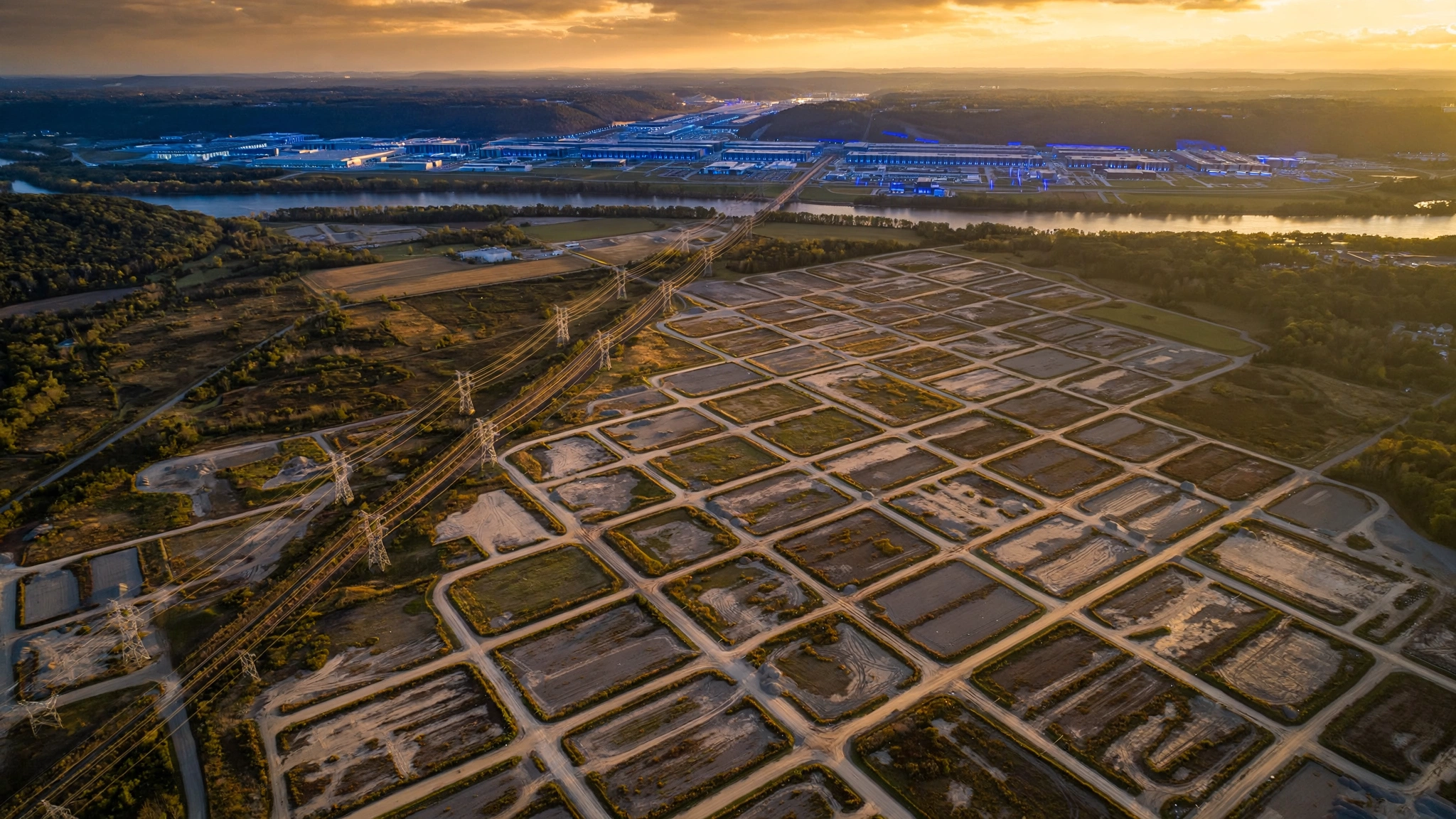
One hundred and thirty data centers. That is how many New York has, according to Data Center Map. Virginia has more than 600. Texas has roughly 500. On July 14, 2026, Governor Kathy Hochul signed an executive order that will keep the gap from closing: a one-year moratorium on any new data center that draws 50 megawatts or more. New York is now the first state in the country to tell the AI infrastructure boom that it is not welcome, at least not yet, and the dollar value of that decision is something nobody has bothered to calculate.
Until now.
What 50 Megawatts Means in Money
Fifty megawatts powers roughly 50,000 American homes, according to U.S. Energy Information Administration household consumption data. It is also the floor for a modern hyperscale facility. Most of what Microsoft, Google, Amazon, and Meta are building today draws 100 to 300 MW per campus, with some projects exceeding 500 MW. Hochul's threshold captures every major planned facility in the state while leaving smaller colocation centers untouched.
Industry analysts at McKinsey and JLL estimate typical hyperscale capital expenditure at $10-15 million per megawatt of capacity. At a conservative midpoint of 200 MW per facility, each project represents $2 billion to $3 billion in construction-phase investment alone. New York had between five and eight hyperscale facilities in active permitting or planning stages when the moratorium landed, according to industry tracker data compiled from state environmental review filings and corporate announcements.
Here is the math. Five facilities at 200 MW each at $10M/MW yields $10 billion. Eight facilities at the same size at $15M/MW yields $24 billion. Fourteen billion dollars sits at the midpoint, which is the number the headline carries, and it does not include the secondary spending: construction labor (2,000-3,000 temporary jobs per facility), permanent operations staff (50-100 per facility), and annual property tax revenue of $5-10 million per site plus $20-50 million in one-time construction-phase taxes.
| Metric | Low Estimate | High Estimate | Source |
|---|---|---|---|
| Facilities in pipeline | 5 | 8 | State environmental filings, industry trackers |
| Avg. capacity per facility | 200 MW | Industry standard (Microsoft, Google, Amazon typical builds) | |
| CapEx per MW | $10M | $15M | McKinsey/JLL estimates |
| Total frozen CapEx | $10B | $24B | Calculated |
| Construction jobs per facility | 2,000 | 3,000 | BLS, project-level reporting |
| Permanent ops jobs per facility | 50 | 100 | Industry reporting |
| Annual property tax per facility | $5M | $10M | County assessor data (Virginia comparables) |
Steve Fulop, CEO of the Partnership for the City of New York, put it bluntly on WABC's Cats Roundtable: "The signal when you put a moratorium on this sort of stuff is that it becomes a riskier proposition to put your money into New York versus maybe another state." Stu Smith at the Manhattan Institute was less diplomatic: "New York is really shooting itself in the foot."
Where the Money Goes Instead
Capital does not wait. Virginia's Loudoun County alone added more data center capacity in 2025 than New York has ever built. Texas Governor Greg Abbott has publicly opposed rural data center development but continues approving urban and suburban projects at pace. Georgia landed TeraWulf and multiple hyperscale commitments in 2025. Ohio is restarting shuttered nuclear plants specifically to serve data center load.
Virginia is the immediate beneficiary of New York's decision, where PJM Interconnection's Dominion Zone already hosts the largest data center cluster on Earth. PJM's 2025 forecast projects more than 20,000 MW of data center growth in that zone alone by 2037, up from 5,700 MW in the 2022 forecast, a nearly four-fold increase in projected demand in three years. Virginia is already straining under this load, with PJM's latest capacity auction falling 7 GW short of reserve margin targets while clearing at a capped $329 per megawatt-day, itself a 1,000% increase from two years ago.
Every megawatt New York declines, Virginia, Texas, or Georgia absorbs. Investment is not reduced. It is redirected.
The Domino Risk
New York's moratorium arrived at a moment when anti-data-center organizing has genuine political momentum. DSA chapters in Seattle and Portland are already organizing campaigns. Denver has halted construction. Indianapolis is advancing its own moratorium through city council. Flagler County, Florida, unanimously approved a first reading on a one-year freeze on July 13. Whether other states will follow is no longer the question. It is how many and how fast.
We identified the five states most likely to impose statewide moratoria within the next 18 months, scored on four criteria: active DSA or environmental organizing against data centers, existing legislative proposals or municipal moratoria, water stress levels, and a pattern of progressive energy governance.
| State | Organizing Activity | Water Stress | Legislative Signals | Est. Affected Facilities |
|---|---|---|---|---|
| Oregon | Portland DSA active | High (Deschutes basin) | Municipal moratoria proposed | 5-8 |
| Washington | Seattle DSA active | High (Quincy water table) | State-level review bills | 6-10 |
| Connecticut | Ratepayer advocacy | Moderate | Grid stress hearings | 3-5 |
| Massachusetts | Environmental groups | Moderate | Cape Wind precedent governance | 4-7 |
| California | CEQA, ratepayer groups | Extreme | Environmental review expansion | 12-20 |
If all five freeze permits on 50+ MW facilities, the combined pipeline affected is 30-50 hyperscale projects. At the same $10-15M/MW CapEx assumptions, that is $60 billion to $150 billion in frozen investment, with the jobs, tax revenue, and grid modernization spending that accompanies it. All of that capital would redirect to the three or four states still willing to build: Virginia, Texas, Georgia, and possibly Ohio.
Concentration risk is severe. PJM already set an all-time demand record of 168.2 GW on July 2, 2026. Spot electricity prices swung from $30 to $300 per MWh in a single day during the July heatwave. Maryland's People's Counsel estimated that data centers drove 5,400 MW of increased demand in just one year, adding $9.3 billion in costs passed to residential ratepayers. Residential utility customers in PJM territory have absorbed 20-25% rate hikes over the past year, with analysts at ICF projecting 30-60% increases by 2030.
Pushing more demand into fewer states does not solve the grid problem. It accelerates the grid problem in the places that can least afford another constraint.
The Emissions Paradox
North America accounted for 47% of the global increase in carbon emissions during 2025, according to the Energy Institute's 2026 Statistical Review of World Energy. Not China. Not India. The United States. Despite a 28% surge in domestic solar capacity, U.S. coal-related emissions jumped 13%, driven primarily by the power demand of data centers. America hosts roughly 40% of global data center electricity consumption.
Hochul framed the moratorium as environmental protection. "As data center development threatens to hike up utility bills, deplete our natural resources, and create uncertainty for New Yorkers, it's my responsibility to take action and lead," she said in the announcement. But the moratorium does not reduce a single watt of AI compute demand. It relocates it, often to grids that are already more carbon-intensive than New York's, which benefits from significant nuclear and hydroelectric baseload. A query that would have been powered by Niagara Falls now gets powered by West Virginia coal and Virginia natural gas.
Nobody in Albany ran that calculation.
The Ireland Precedent
There is exactly one international case study for how a data center moratorium ends. Ireland's grid operator effectively blocked new data center grid connections around Dublin starting in 2021, after the sector grew to consume 21% of the country's total electricity, more than all urban households combined. Dublin's freeze lasted until December 2025, when the Commission for Regulation of Utilities published its "Bring Your Own Power" framework.
Ireland's rules have real teeth. Any data center seeking a grid connection must install on-site generation or battery storage capable of meeting its full electricity demand. At least 80% of annual consumption must come from new renewable energy projects. Operators must provide power back to the national grid during peak demand periods. At least one Dublin facility now runs entirely off its own on-site power plant.
Ireland's moratorium did produce a workable regulatory framework. It also froze investment for four years, during which global AI infrastructure spending tripled and Ireland's share of new European data center development fell sharply. Technology moved. Dublin's loss was Amsterdam's, Frankfurt's, and Stockholm's gain, until Amsterdam imposed its own moratorium, now extended through 2030.
Strongest Counterargument
The best case for New York's moratorium is that unregulated data center growth is actually worse than a temporary pause. This argument has evidence behind it. In Memphis, xAI ran 35 unpermitted gas turbines at 422 MW combined output to train Grok, producing health damages estimated at $30-44 million per year by a Harvard-led study, all without a single Clean Air Act permit. In Virginia, PJM capacity prices have risen 1,000% in two years, driven almost entirely by data center demand, and residential ratepayers, not tech companies, absorb the cost. UN projections put global data center power consumption at 945 TWh by 2030, doubling from current levels, with water consumption reaching 9.3 trillion liters.
If the moratorium produces a regulatory framework as strong as Ireland's BYOP rules, requiring self-generation, renewable sourcing, and grid contribution, it could set a template that actually enables better development than the unregulated free-for-all. Whether one year is enough to build that framework and whether New York's political dynamics, where the moratorium is widely seen as a reelection play to satisfy the DSA before the November gubernatorial race, will produce serious regulation or merely extend the freeze.
Limitations
Our pipeline estimates (5-8 facilities) are derived from state environmental review filings, corporate announcements, and industry trackers including Cushman & Wakefield and JLL's data center outlook reports. Individual project details are often confidential, and the actual number of hyperscale facilities in active New York permitting could be higher or lower. Our CapEx range of $10-15M per MW is drawn from McKinsey's 2025 data center investment analysis and JLL benchmarking, but actual costs vary significantly by site, power infrastructure requirements, and chip generation. Our domino-risk state rankings are based on observable political signals, not insider knowledge of any state's legislative plans. We score organizing activity, legislative proposals, water stress, and governance patterns, but political decisions are inherently unpredictable. Our emissions displacement argument (clean New York grid vs. carbon-intensive alternatives) assumes facilities relocate to the current highest-growth states; a company could instead build in a low-carbon grid state not on our moratorium-risk list.
What You Can Do
If you work in state or local government: The Ireland model is the template. Rather than a binary permit/ban framework, require data center operators to bring their own power generation, source a minimum percentage from renewables, and contribute capacity back to the grid during peak demand. Ireland's 80% renewable threshold and "dispatchable power" requirement are the specific benchmarks worth studying. Start now, because the one-year clock is already ticking and political pressure will only grow.
If you live in PJM territory (13 states, Mid-Atlantic to Midwest): Check your utility bill for capacity charges, the line item that has risen 20-25% in the past year. Maryland's People's Counsel publishes bill impact analyses after each PJM auction. Residential ratepayers are subsidizing data center load growth, and the only organized opposition comes from state consumer advocates. Know whether your state's AG or public utility commission has joined the coalition pushing PJM for structural reform.
If you invest in AI infrastructure or data center REITs: Map your exposure to moratorium-risk states. All five states we identified (Oregon, Washington, Connecticut, Massachusetts, California) collectively host significant cloud regions for AWS, Azure, and GCP. Any moratorium freezes not just new builds but expansion of existing campuses. Concentration in Virginia and Texas is already a risk factor; further concentration adds grid reliability and regulatory exposure. Diversification into nuclear-adjacent sites (Ohio, Pennsylvania brownfields) hedges both the moratorium and the emissions problems simultaneously.
The Bottom Line
New York just froze $10-24 billion in data center investment, became the first state to tell the AI infrastructure boom to wait, and started a political domino sequence that could lock $60-150 billion worth of hyperscale development into three or four permissive states. Hochul's moratorium does not reduce a single watt of AI compute demand. It just moves the demand, the grid stress, the water consumption, and the emissions to someone else's backyard. Housing NIMBYism did not reduce housing demand; it created homelessness and $4,000 rents. Energy NIMBYism will not reduce energy demand; it will create $300/MWh spot prices and 60% rate hikes for families in Virginia and Texas who never asked for a data center next door. It is not a question of whether New York has the right to say no. It is whether saying no without offering an alternative is a policy or just a campaign ad.