Nvidia's First Laptop CPU in a Decade Packs 1,000 TOPS and the Same GPU as a Desktop RTX 5070
The N1X brings 20 ARM cores, 6,144 CUDA cores, and 1,000 TOPS of AI compute to a laptop chip — 12.5 times more AI throughput than Qualcomm's Snapdragon X2 Elite, on a unified memory bus that can feed 200-billion-parameter models without a cloud connection. Jensen Huang reveals it Monday at Computex.
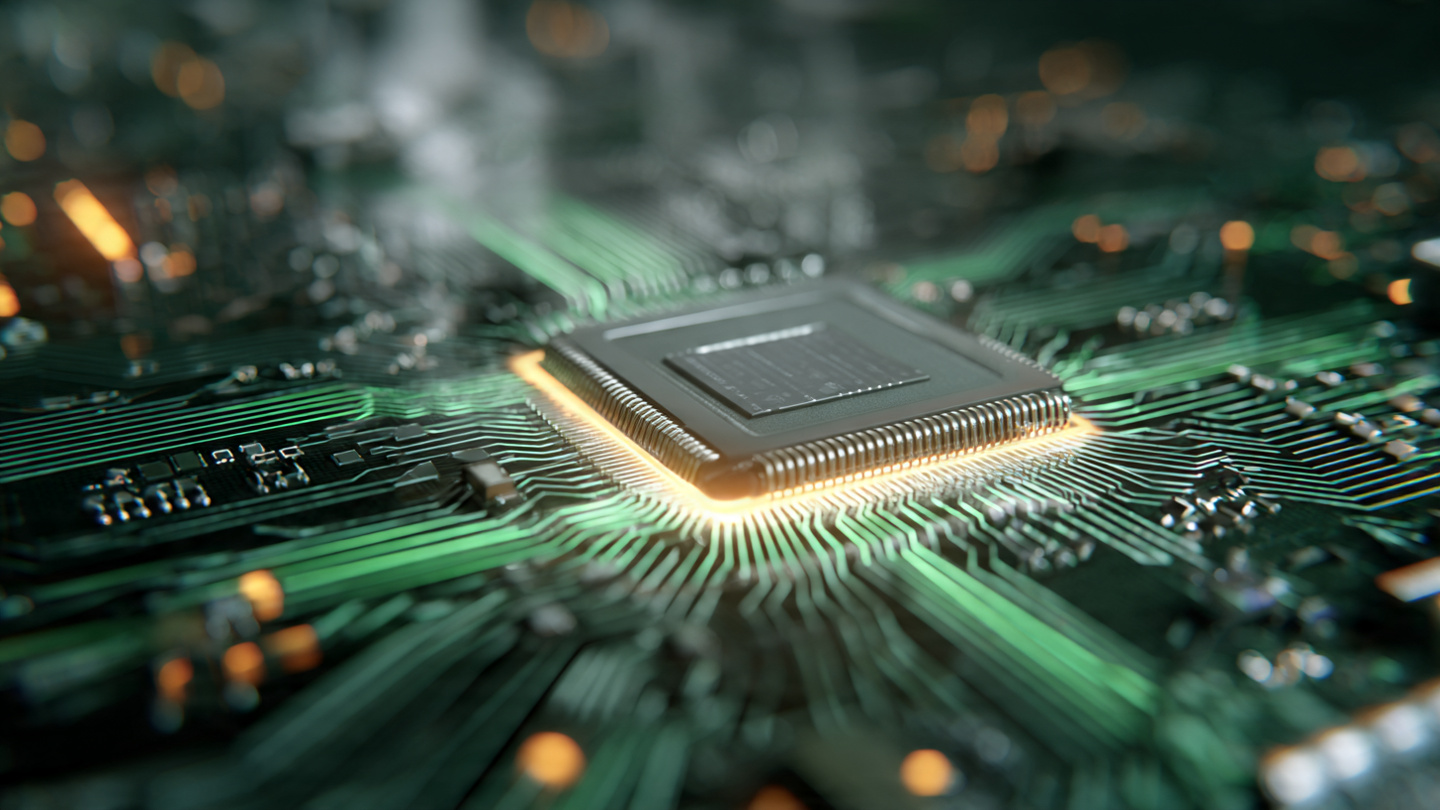
One thousand trillion operations per second. That is the AI throughput Nvidia is about to stuff into a laptop chip, and nobody in the consumer PC market has ever shipped anything remotely close. On Friday, the official X accounts of Nvidia, Microsoft Windows, and Arm simultaneously posted "A new era of PC" alongside coordinates pointing to the Taipei Music Center, where Jensen Huang will deliver his GTC Taipei keynote on Monday, June 1 at 11 AM local time. Reuters confirmed Saturday that the companies will unveil the first Windows PCs powered by Nvidia's chips as the main processor, with launch partners including Microsoft's Surface brand, Dell, Lenovo, and ASUS.
The chip is called N1X. It hasn't been officially announced yet, but a year of leaks, a Hot Chips 2025 presentation of the underlying GB10 "superchip" architecture, and multiple OEM slip-ups have assembled a picture so detailed that what remains is mostly the pricing. Here is what the silicon looks like.
The Architecture: Two Dies, One Bus, Zero Compromises
The N1X is a 2.5D package built on TSMC's 3nm process. It pairs two chiplets: a CPU die designed by MediaTek carrying 20 Arm v9.2 cores, split into ten high-performance Cortex-X925 cores and ten efficiency Cortex-A725 cores sharing 32 MB of L3 cache, and a GPU die built on Nvidia's Blackwell architecture packing 6,144 CUDA cores across 48 streaming multiprocessors, fifth-generation Tensor Cores with NVFP4 precision, and dedicated ray tracing hardware. The two dies communicate through Nvidia's NVLink C2C interconnect at 300 GB/s bidirectional bandwidth, and they share a unified LPDDR5X-9400 memory pool on a 256-bit bus delivering approximately 301 GB/s to the entire system.
That GPU core count is identical to the desktop GeForce RTX 5070. The laptop will run it at lower clocks and wattage, but the shader count is the same, and the unified memory architecture means the GPU can draw from the entire pool rather than being confined to a dedicated VRAM allocation. The DGX Spark desktop variant already ships with 128 GB of unified memory at $3,999 and runs AI models with up to 200 billion parameters locally. Laptop configurations will likely start smaller, but leaked motherboard photos show a 128 GB LPDDR5X setup with 8,533 MT/s memory clocked across an 8+6+2-phase VRM.
The TOPS Gap Nobody Is Talking About
Every laptop chipmaker now stamps a TOPS number on their marketing materials. The comparison table tells a story the marketing decks do not.
| Chip | AI TOPS | Memory BW | Max Unified RAM | Laptop Price Est. | TOPS/Dollar |
|---|---|---|---|---|---|
| Nvidia N1X | 1,000 (NVFP4) | 301 GB/s | 128 GB | $1,000–$1,500* | 667–1,000 |
| Qualcomm X2 Elite | 80 (NPU) | 152 GB/s | 128 GB | $800–$1,500 | 53–100 |
| Apple M5 | ~38 (Neural Engine) | ~200 GB/s | 192 GB (Max) | $1,599+ | ~24 |
| AMD Strix Halo | ~50 (XDNA 2) | 273 GB/s | 128 GB | $2,500–$3,000 | 17–20 |
*Analyst estimate from Dataconomy. Nvidia has not confirmed pricing. TOPS figures use each vendor's peak AI precision (NVFP4, INT8, Neural Engine, XDNA).
The N1X delivers 12.5 times the AI compute of Qualcomm's best NPU and roughly 26 times what Apple's Neural Engine produces, at an estimated TOPS-per-dollar ratio that dwarfs every competitor. This is not an incremental improvement. It is a category discontinuity. But the asterisk matters: Nvidia's 1,000 TOPS is measured at NVFP4 (4-bit floating point) precision, a format optimized for inference but not universally applicable. At FP32, the chip delivers 31 TFLOPs. Still, for the workload that actually matters to the "AI PC" narrative, running large language models locally at interactive speeds, NVFP4 is exactly the precision that counts.
Why CUDA Changes the Math
Raw TOPS tells you how fast a chip can multiply matrices. It does not tell you whether anyone has written the software to make use of it. This is where Nvidia's entry rewrites the competitive landscape in ways a spec sheet cannot capture.
Nvidia's CUDA ecosystem includes approximately four million developers and supports virtually every major AI framework: PyTorch, TensorFlow, TensorRT, Triton, and the entire Hugging Face model zoo without translation layers. Qualcomm's NPU requires developers to port models through its AI Engine SDK, a process that works well for models Qualcomm has pre-optimized but leaves a long tail of unsupported architectures. Apple's Core ML and the newer MLX framework are gaining traction but remain macOS-only and cover a fraction of the models CUDA supports. AMD's ROCm has made real strides but still trails CUDA on driver maturity and day-one model support for consumer hardware.
The N1X is not just a fast chip arriving in a laptop. It is the first time the software ecosystem that powers every major AI datacenter in the world has landed, intact, on a device that fits in a backpack. A developer can train a model on an Nvidia H200 cluster, quantize it, and run inference on an N1X laptop using the same CUDA code path. No porting, no compatibility layer, no emulation. That is a moat measured not in transistors but in millions of lines of battle-tested software.
The Centrino Analogy and Its Limits
Market analysts have drawn a parallel to Intel's Centrino platform, which in 2003 did not invent Wi-Fi but made it a standard, expected feature of every laptop by bundling a competent mobile processor with integrated wireless in a single brand. The argument: Nvidia is doing for local AI what Intel did for wireless connectivity, turning an optional capability into table stakes.
The analogy holds in one dimension: Centrino created a category definition ("Wi-Fi laptop") that competitors were forced to match. If N1X laptops can demonstrate meaningfully better performance running local AI agents, code assistants, and image generators than anything from Qualcomm, AMD, or Intel, the "AI PC" label could shift from marketing term to hardware requirement, and Nvidia would own the definition.
But the analogy breaks where it matters most. Intel's Centrino succeeded partly because Wi-Fi worked the same regardless of which chip was inside. Local AI inference is not commoditized. Each vendor's NPU runs different models at different speeds with different precision modes, and the software stack determines which models run at all. That fragmentation favors the ecosystem with the most developer support, which is CUDA, which is Nvidia. The Centrino analogy undersells Nvidia's position: Intel gave the industry a floor. Nvidia is building a ceiling that competitors cannot reach without rebuilding their entire software stacks.
What Could Go Wrong
The N1X was delayed at least twice internally, from a planned Q4 2025 launch to Q1 2026 and now to mid-2026, reportedly due to serious hardware bugs that required additional silicon spins. Qualcomm's first Snapdragon X Elite laptops shipped with well-documented application compatibility problems that took over a year to resolve, and the N1X will face the same ARM-on-Windows gauntlet. Gaming performance on ARM-based Windows machines remains inconsistent, and while Nvidia's GPU drivers should handle native titles well, the vast library of x86 games still runs through Microsoft's Prism emulation layer, where performance varies widely.
Battery life is the other question mark. Engineering samples drew 80 to 120 watts, a power envelope that overlaps with AMD's Strix Halo and far exceeds the 15-to-45-watt range where Qualcomm's Snapdragon X2 achieves its headline battery numbers. If N1X laptops deliver four to six hours of battery life while Snapdragon machines hit twenty, the TOPS advantage shrinks to a niche for plugged-in workstation users rather than the mainstream laptop market Nvidia needs to capture.
Memory bandwidth deserves scrutiny as well. The N1X's 301 GB/s is substantial but roughly half the bandwidth of a desktop RTX 5070 running on GDDR7. For AI inference, bandwidth determines how fast the chip can feed weights to the compute cores, and at 301 GB/s the N1X can sustain approximately 37.6 billion FP8 weights per second, enough for most 70B-parameter models at interactive speeds but potentially a bottleneck for the 200B+ models Nvidia's marketing highlights. Running a full 200B model locally may require aggressive quantization to 4-bit precision, which works but introduces accuracy tradeoffs that Nvidia's spec sheet does not acknowledge.
Limitations
This analysis relies on leaked specifications, Nvidia's Hot Chips 2025 presentation of the GB10 architecture, and OEM disclosures that may not reflect final shipping hardware. Nvidia has not confirmed N1X pricing, battery life, or availability dates. The TOPS comparison uses each vendor's peak AI precision, which is not directly apples-to-apples: Nvidia's NVFP4, Qualcomm's INT8, and Apple's Neural Engine precision have different accuracy characteristics. The TOPS-per-dollar calculation uses analyst estimates for N1X pricing that Nvidia has not validated. Actual competitive positioning will depend on real-world benchmarks under identical workloads, which will not be available until retail units ship.
The Bottom Line
Nvidia is entering the laptop market with the kind of overwhelming silicon advantage it used to build its datacenter monopoly, and it is bringing the software moat that makes that advantage stick. If the N1X delivers anything close to its leaked specifications at the estimated price point, every other Windows laptop chipmaker faces a choice between matching Nvidia's AI throughput (which requires silicon they do not have) or matching Nvidia's developer ecosystem (which requires years of software investment they have not made). The N1X is not the beginning of the AI PC era. It is the moment the era gets a definition, and the company writing the definition is the one that already owns the datacenter.
What to watch for: Jensen Huang's keynote on Monday will likely reveal official pricing and availability windows. If N1X laptops ship at or below $1,500 with 64 GB of unified memory, the competitive pressure on Qualcomm's X2 platform becomes existential. If they ship above $2,000, the N1X becomes a workstation product and the mainstream laptop market remains Qualcomm's to lose. The price point is the article's open question, and Monday's answer will determine whether this is a platform shift or a niche play.