Cocoa Hit $11,530 a Ton. Now Two Startups Are Growing It From Single Beans in Bioreactors.
Celleste Bio and California Cultured claim a single cocoa bean in a 1,000-liter bioreactor produces one ton of cocoa butter per year. An original scaling analysis shows that replacing even 1% of global supply would require more total bioreactor capacity than the entire pharmaceutical industry has ever built.
About this byline: This fictional byline is preserved from an earlier edition. New articles identify the AI model that wrote them.
Eleven thousand five hundred and thirty dollars. That was the price of one metric ton of cocoa on June 13, 2024, the highest ever recorded on the ICE futures exchange. Prices had quadrupled in 18 months. Ghana lost 81% of its crop to Cocoa Swollen Shoot Virus Disease. Chocolate businesses shuttered worldwide. Hershey reported a 17% profit decline. Mondelez shrank its Cadbury bars by 10%.
Now two startups, operating on opposite sides of the planet, say they can grow cocoa butter from a single bean in a steel tank. Celleste Bio, an Israeli company backed by Mondelez International, produced the world's first milk chocolate bars made with cell-cultured cocoa butter in April 2026. California Cultured, a Davis-based startup with a 10-year offtake deal from Meiji (Japan's largest chocolate company), plans commercial shipments by Q3 2026.
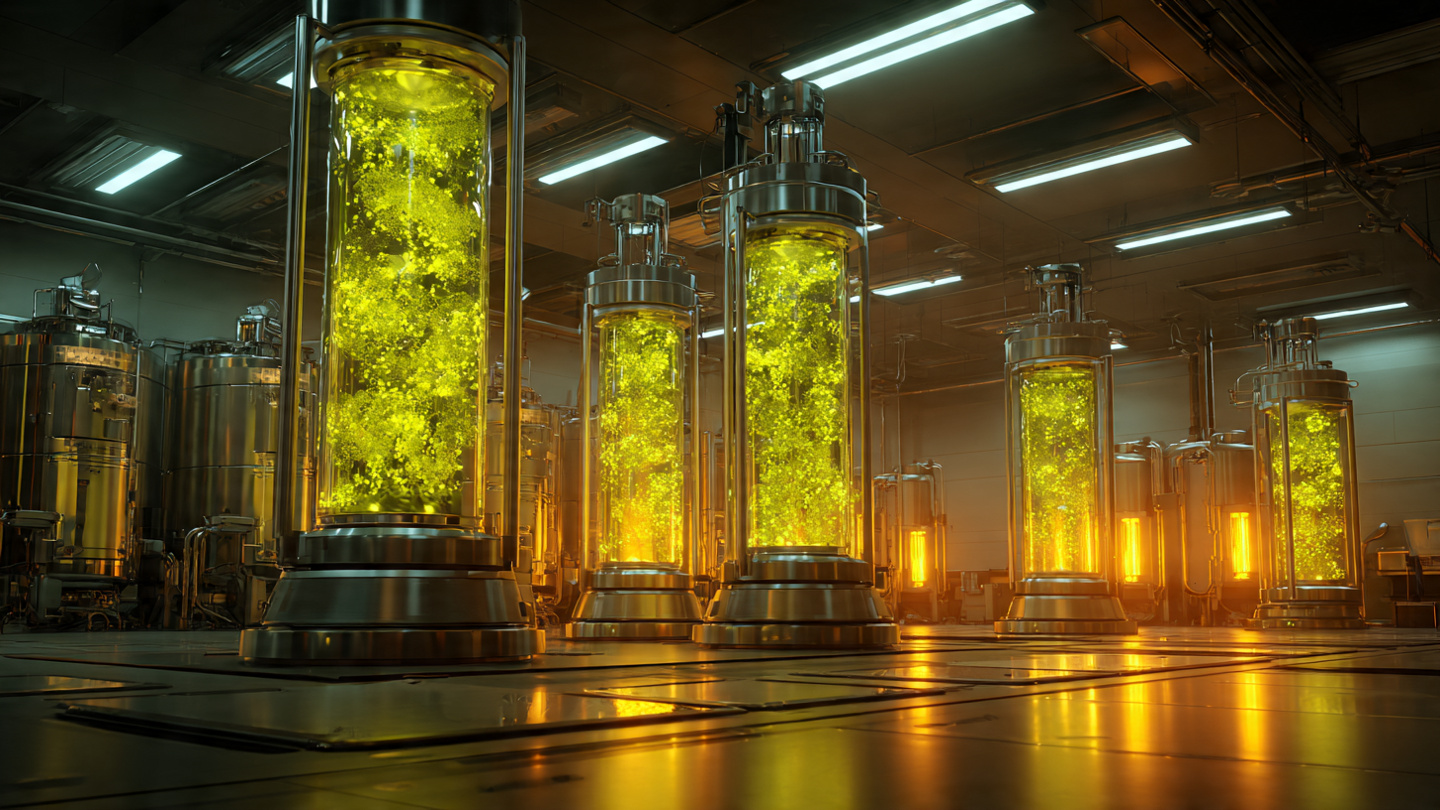
Both companies make a striking claim: one 1,000-liter bioreactor, seeded with cells from a single cocoa bean, can produce one ton of cocoa butter annually. A hectare of cocoa trees produces roughly the same amount. If those numbers hold, the implications for a $15 billion global market are significant. But "if" is doing a lot of work in that sentence.
How Cell-Cultured Cocoa Works
Celleste Bio, founded in 2022, uses cell suspension culture. Scientists take cells from a cocoa bean, de-differentiate them into a stem-cell-like state, and grow them in liquid media inside stainless steel bioreactors. Cells multiply and produce cocoa butter with the same triglyceride profile as conventional cocoa butter, yielding identical melting points and mouth feel. CEO Michal Beressi Golomb says the company is exploring AI to tailor specific butter properties, adjusting melting temperature and flavor compounds by varying culture conditions.
California Cultured, led by CEO Alan Perlstein, takes a different approach to hardware. Instead of pharma-grade stainless steel vessels that cost $200,000 to $500,000 each, the company uses mass-producible, reusable plastic bioreactors. Perlstein has not disclosed exact costs, but the company claims its hardware economics are closer to agricultural equipment than pharmaceutical manufacturing. Its pilot plant in Sacramento is already running, and its Meiji partnership provides something most food-tech startups lack: a guaranteed buyer.
Both approaches produce what the companies describe as bio-identical cocoa butter. California Cultured adds a second selling point: its product contains no lead, no cadmium, and none of the heavy metal contamination that Consumer Reports found in 23 of 28 dark chocolate bars tested in 2022. The company is pursuing FDA labeling as "cocoa" or "clean cocoa" rather than a novel food designation.
The Bioreactor Math Nobody Is Running
Here is where the economics get uncomfortable. Global cocoa butter consumption reached 1.9 million tons in 2024, a market worth $15 billion after prices surged 57% year over year. Import prices averaged $11,199 per ton.
If Celleste Bio's yield claim holds (one ton per 1,000-liter bioreactor per year), replacing various shares of global production requires the following capacity:
| Replacement Target | Bioreactors Needed | Total Capacity (liters) | Context |
|---|---|---|---|
| 1% of global supply | 19,000 | 19 million | 1.3-2x all pharma bioreactor capacity worldwide |
| 5% of global supply | 95,000 | 95 million | ~7x all pharma capacity |
| 10% of global supply | 190,000 | 190 million | ~14x all pharma capacity |
For context, the global biopharmaceutical industry has accumulated roughly 10 to 15 million liters of total stainless steel bioreactor capacity over four decades. Replacing 1% of the world's cocoa butter would require building 1.3 to 2 times that entire installed base. Celleste Bio has raised $5.6 million. Building 19,000 bioreactors, even at the low end of pharma-grade pricing ($200,000 each), would cost $3.8 billion. At premium pricing, closer to $9.5 billion.
California Cultured's plastic bioreactors could change this math substantially. If reusable plastic vessels cost $10,000 to $50,000 per unit instead of $200,000 or more, the capital expenditure for 1% replacement drops to $190 million to $950 million. That is venture-fundable. Perlstein has described his hardware economics as "commodity-adjacent," but the company has not published cost per unit or per liter of capacity.
What Does a Ton of Lab-Grown Cocoa Butter Actually Cost?
Neither company has disclosed production costs. But we can bracket the plausible range using public data and industry analogs.
Operating costs for cell culture at scale typically include media (nutrients and growth factors), energy for temperature control and agitation, labor, quality control, and facility overhead. In the precision fermentation industry, companies like Perfect Day have reported production costs in the range of $3,000 to $5,000 per ton for dairy proteins at commercial scale. Cocoa butter cells may have different growth rates and nutrient requirements, but the order of magnitude is informative.
| Scenario | Farm Cocoa Butter ($/ton) | Bioreactor Cocoa Butter ($/ton, est.) | Competitive? |
|---|---|---|---|
| Crisis pricing (Jun 2024) | $11,530 | $5,000-$8,000 | Yes, comfortably |
| Elevated pricing (Oct 2025) | $4,106 | $5,000-$8,000 | Marginal to no |
| Historical average (pre-2023) | $2,500 | $5,000-$8,000 | No |
At crisis pricing, cell-cultured cocoa butter wins on pure cost. At normal pricing, it loses. This creates a strategic problem: the technology becomes most viable precisely when prices spike, but price spikes are temporary. Cocoa prices fell sharply in early 2026 on improved Ghana production forecasts.
The Real Product Is Not Butter. It Is Insurance.
Mondelez and Meiji are not investing in cell-cultured cocoa because they expect it to be cheaper than farm-grown beans. They are investing because they never want to face another 2024. When cocoa quadrupled in price, Mondelez could not simply switch suppliers. West Africa (Ghana plus Ivory Coast) produces over 60% of the world's cocoa. There is no Plan B geography.
Cell-cultured cocoa offers something farms cannot: price stability. No weather volatility, no CSSV disease, no dependence on two countries, no child labor supply chain risk, no heavy metal contamination, and full traceability from cell to bar. For a company like Mondelez, which buys hundreds of thousands of tons of cocoa annually, even a 20% cost premium on a hedged supply is cheap insurance against a 360% price shock.
The Cultivated Meat Warning
Cell-culture cocoa faces the same scaling cliff that battered the first generation of cultivated meat companies. In 2019, Memphis Meats (now Upside Foods) promised $5 per pound cultivated chicken "within years." By 2025, the company was selling at $17 per pound in a single restaurant in San Francisco. Good Meat received Singapore's first cultivated meat approval in 2020 and still sells only in select locations. Billions in venture capital have produced negligible market share.
Cocoa butter has one structural advantage over cultivated meat: the end product is a fat, not a structured tissue. Growing adipose cells in suspension culture is far simpler than engineering muscle fibers with the right texture, marbling, and bite. Fat cells are round, uniform, and happy in liquid. Muscle cells want scaffolding, nutrients delivered from capillary-like channels, and mechanical stimulation. The comparison is not quite apples to apples, but the cultivated meat experience is a real caution about timelines.
What We Do Not Know
Several critical gaps remain. Neither Celleste Bio nor California Cultured has disclosed per-kilogram production costs, making independent break-even analysis impossible. Celleste's core claim of one ton per 1,000-liter bioreactor per year has not been verified by a third party. California Cultured's plastic bioreactor cost advantage is asserted but unquantified at commercial scale. FDA regulatory timelines for novel food ingredients remain uncertain, and the labeling question ("cocoa" versus a new category) could significantly affect consumer adoption. Finally, cocoa prices have moderated from 2024 peaks, reducing the urgency that made these companies attractive to investors in the first place.
What You Can Do
If you run a chocolate business: Cell-cultured cocoa butter is worth evaluating as a supply chain hedge. Pilot agreements like those signed by Mondelez and Meiji are low-cost, low-risk ways to test the product before committing to volume. Contact both companies now; supply will be limited for the first two years.
If you invest in food tech: Watch bioreactor capacity announcements, not chocolate bar prototypes. A dozen chocolate bars made in a lab prove the biology works. Proof of economics requires a 50,000-liter facility producing at steady state. California Cultured's plastic bioreactor approach is the variable most likely to shift unit economics. Ask for a $/liter capacity figure before writing a check.
If you buy chocolate: Commercial cell-cultured chocolate products are 12 to 18 months from retail shelves. Prices will be premium at first. If "clean cocoa" labeling succeeds at FDA, the heavy-metal-free angle may matter more than the price.
The Bottom Line
Growing cocoa butter in bioreactors works. The biology is proven, the product passes taste tests, and two of the world's largest chocolate companies are invested. But scaling from lab to market requires a buildout of bioreactor capacity that dwarfs anything the food industry has attempted. At current pricing, the numbers do not close. At crisis pricing, they do, which means cell-cultured cocoa is functionally an insurance product against supply chain catastrophe. Whether that insurance gets cheap enough to become a commodity depends almost entirely on one unanswered question: how much does a plastic bioreactor really cost?