The Most Important Number in the $82 Billion Obesity Market Comes From 10 Patients
Fractyl Health says a single outpatient gut procedure locks in 84% of GLP-1-induced weight loss after patients stop the drugs. The finding could save payers billions, but the entire claim rests on a post-hoc subgroup of ten people.
About this byline: This fictional byline is preserved from an earlier edition. New articles identify the AI model that wrote them.
Seventy percent. That is the share of GLP-1 patients who quit within a year. They stop because of nausea, because the $1,300 monthly bill arrives, because insurance denies the refill, because life intervenes. And when they stop, the weight floods back: two-thirds of every pound lost, gone within 18 months, dragging cardiovascular risk markers up with it. The GLP-1 revolution has an exit-door problem, and nobody has built the offramp.
Until, possibly, now.
On July 15, Fractyl Health (GUTS) released one-year data from the randomized, sham-controlled REMAIN-1 Midpoint Cohort showing that a single outpatient endoscopic procedure called Revita maintained up to 84% of tirzepatide-induced weight loss after patients stopped the drug. The sham group kept 46%, with no procedure-related serious adverse events and an FDA Breakthrough Device designation already in hand. De Novo marketing application targeted for late Q4 2026.
Shares surged and analysts called the results transformative. Fractyl's CEO declared it the beginning of post-GLP-1 medicine. And buried in the supplementary tables, in the footnotes that separate pharmaceutical hope from pharmaceutical reality, sat the denominator that should make everyone pause before committing capital or credulity.
N equals ten.
What Revita Actually Does
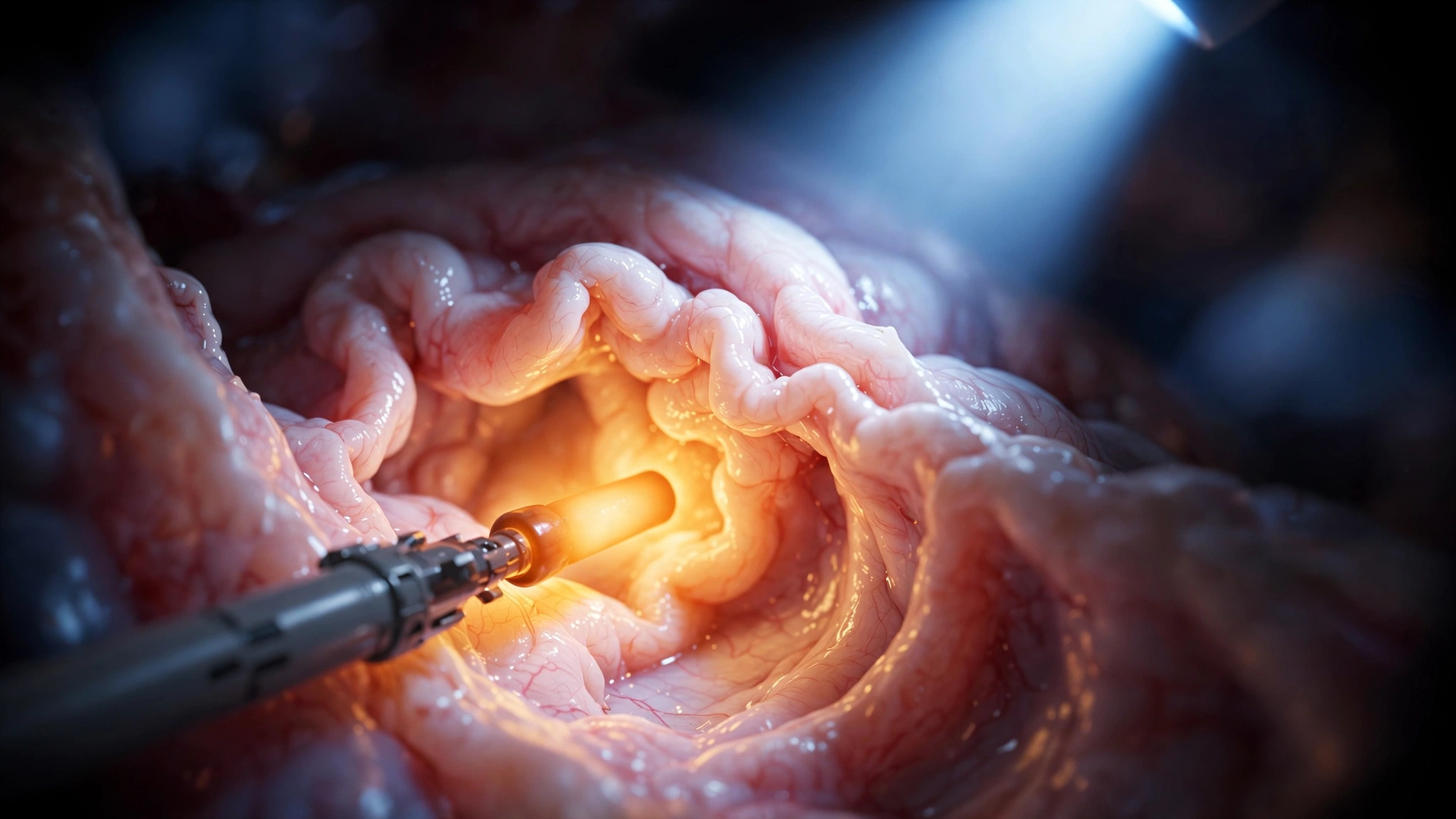
The procedure takes about 45 minutes and requires no general anesthesia. A gastroenterologist threads an endoscope through the mouth, past the stomach, and into the duodenum, the first 25 centimeters of small intestine where food meets bile and pancreatic enzymes. A specialized catheter inflates a balloon against the intestinal wall and delivers thermal energy to ablate the mucosal lining, and the damaged tissue sloughs off over days as new, healthier mucosa regenerates in its place.
The theory, developed over a decade of Fractyl's preclinical work, holds that chronic exposure to high-fat and high-sugar diets physically remodels the duodenal mucosa in ways that perpetuate metabolic dysfunction (insulin resistance, disrupted gut-hormone signaling, altered nutrient sensing) even after the diet changes or the weight comes off. Ablating that damaged tissue, Fractyl argues, resets the metabolic circuitry at the intestinal level, creating a durable anchor that GLP-1 drugs alone cannot provide because the drugs treat symptoms while the duodenum keeps broadcasting the old metabolic signal underneath.
It is an elegant biological hypothesis, elegant enough that the FDA granted Breakthrough Device designation. Whether it replicates at scale remains an open question that precisely ten human beings have answered so far.
The Numbers, Honestly
REMAIN-1 enrolled 45 adults with BMI 30–45 who had achieved at least 15% total body weight loss on tirzepatide, and all of them stopped the drug. Twenty-nine received Revita; sixteen got a sham procedure.
In the full modified intention-to-treat population, Revita patients regained 7.8% of body weight versus 13.0% for sham at one year, a 40% reduction in weight regain that was meaningful and drawn from a reasonable sample. But 84% is not 40%, and the distance between those numbers matters enormously. The headline number comes from a post-hoc optimized subgroup: patients who received complete duodenal ablation (more than 14 centimeters of treated tissue) and who had lost at least 17.5% of body weight during the tirzepatide run-in. That filter yielded ten Revita patients versus eight sham patients, and in that sliver, weight regain was 4.1% versus 13.5%.
| Population | Revita (n) | Sham (n) | Revita Weight Regain | Sham Regain | % Maintained |
|---|---|---|---|---|---|
| Full mITT | 29 | 16 | 7.8% | 13.0% | ~60% vs ~40% |
| Complete ablation (>14 cm) | 17 | 16 | 4.8% | 13.0% | ~81% vs ~48% |
| Optimized subgroup | 10 | 8 | 4.1% | 13.5% | ~84% vs ~46% |
Pharma veterans will recognize this playbook: you run a mid-stage trial, segment results by dose, completeness, or baseline severity until a subgroup emerges that produces the best number, and then you make that number the headline while the full-population result, which the FDA actually evaluates, sits one click deeper. Fractyl is not doing anything unusual, but the distance between 40% less regain (honest, full population) and 84% maintenance (optimized, ten patients) is the distance between a promising clinical signal and a stock-moving press release.
The Break-Even Math Nobody Has Run
Assume, for the sake of the calculation, that Revita works exactly as the mITT data suggest: a 40% reduction in weight regain from a single procedure. What does that mean for the economics of GLP-1 therapy?
Globally, the GLP-1 receptor agonist market hit $82 billion globally in 2026, projected to reach $185 billion by 2033 at a 12.4% compound annual growth rate, according to Grand View Research. Tirzepatide alone, sold as Mounjaro and Zepbound by Eli Lilly, is forecast to generate $45 billion this year. Novo Nordisk's semaglutide franchise (Ozempic plus Wegovy plus Rybelsus) adds another $39.5 billion. Combined, two companies account for $84.5 billion in annual revenue built almost entirely on the assumption that patients keep refilling prescriptions indefinitely.
But they don't. Twelve percent of American adults are currently taking a GLP-1, roughly 30 million people, per a KFF survey. At a 70% annual discontinuation rate, that means approximately 21 million people per year stop the drugs and begin regaining weight.
Run the numbers: Revita is not yet priced, but comparable outpatient endoscopic procedures suggest a plausible range: endoscopic sleeve gastroplasty runs $10,000 to $15,000, standard upper endoscopy $2,000 to $5,000, placing a reasonable estimate at $8,000 to $15,000 per procedure. Continuous GLP-1 therapy costs $2,940 per year under the new Medicare cap ($245/month), $9,600 to $17,000 at negotiated commercial rates, or $15,600 to $16,800 at Wegovy and Zepbound list prices.
| Payer Type | Annual GLP-1 Cost | Revita (est. $10K) | Break-Even |
|---|---|---|---|
| Medicare Bridge Program | $2,940 | $10,000 | 3.4 years |
| Commercial (negotiated) | $9,600 | $10,000 | 12.5 months |
| Commercial (list price) | $15,600 | $10,000 | 7.7 months |
At commercial rates, a single Revita procedure pays for itself in under 13 months of avoided GLP-1 prescriptions, and even at Medicare's capped pricing, break-even arrives within four years, well within the treatment horizon CMS modeled when it approved the Bridge Program.
Scale that across even a fraction of the discontinuation population. If 5% of annual GLP-1 dropoffs, roughly 1.05 million people, opted for Revita instead of resuming chronic therapy or simply regaining weight, the addressable market reaches $10.5 billion annually at a $10,000 procedure price. That revenue comes almost dollar-for-dollar from Lilly and Novo Nordisk's recurring prescription base.
The Strongest Case Against
The most persuasive counterargument is not that the science is wrong. It is that this is exactly how promising early-stage results collapse.
Post-hoc subgroup selection is the oldest trick in clinical development. You slice data until a subgroup sparkles, promote that number, raise capital, run the pivotal trial, and discover that the effect attenuates toward the full-population mean when you can no longer choose your patients after the fact. Fractyl's 84% came from selecting the ten patients who received the most complete ablations and who had the highest baseline weight loss, precisely the patients most likely to respond well to any intervention, including placebo. The FDA's pivotal evaluation will use the co-primary endpoints from the full Pivotal Cohort, not from this retroactively optimized subset, and the relevant performance goal is whether more than 50% of Revita patients maintain at least 5% total body weight loss at one year. That bar is lower than 84%, and it is also the only bar that matters.
Moreover, the trial excluded patients with diabetes. GLP-1 drugs originated as diabetes treatments, and the diabetic population represents their largest and most chronic user base. Whether duodenal mucosal resurfacing produces similar metabolic benefits in patients whose duodenal dysfunction coexists with pancreatic beta-cell failure is an entirely separate question that REMAIN-1 did not and could not answer.
What This Analysis Did Not Prove
All break-even calculations use estimated procedure pricing since Fractyl has not disclosed Revita's commercial cost. If priced like bariatric surgery ($20,000 to $25,000), break-even at Medicare rates extends to 7 to 8.5 years, substantially weakening the value proposition for government payers. Durability beyond one year is unknown, and the procedure may require repeat ablation, converting a one-time cost into a recurring one. That 70% discontinuation rate includes patients who stop GLP-1s for medical reasons (nausea, pancreatitis risk) who may not be candidates for Revita either, shrinking the true addressable market below the 21 million figure used above. No head-to-head data exist comparing Revita to the cheaper and better-studied intervention of structured lifestyle modification after GLP-1 cessation. And our addressable-market projections assume stable GLP-1 pricing; the arrival of GLP-1 biosimilars expected in 2027 to 2028 could halve chronic therapy costs, doubling Revita's break-even period overnight.
What You Can Do
If you're on a GLP-1 and thinking about stopping: Do not stop based on this article. Revita is not approved, not available, and not priced. Talk to your prescriber about structured discontinuation plans that include resistance training, high-protein nutrition (1.2–1.6 g/kg/day), and a six-month monitoring window. Revita's data are reason for long-term optimism, not near-term action.
If you're a payer evaluating GLP-1 formulary strategy: Model the discontinuation cost explicitly. Right now, most pharmacy benefit models treat GLP-1 attrition as a cost savings, one less prescription to fill, but that framing ignores the downstream costs of weight regain: cardiovascular events, joint replacements, metabolic syndrome management. Whether Revita or a competing offramp technology proves durable, the economic case for a one-time procedural anchor is strong enough to track now and budget for by 2028.
If you're an investor: Watch the Pivotal Cohort six-month data, expected early Q4 2026. If the co-primary endpoint (more than 50% of Revita patients maintaining 5%+ weight loss) hits with statistical significance in a properly powered sample, the FDA pathway accelerates. If the effect size regresses toward the mITT mean of 40% reduced regain rather than the optimized 84%, that is still a commercially viable and potentially blockbuster outcome, and the difference between those two numbers is whether GUTS is a $2 billion company or a $20 billion one.
Bottom Line
Somewhere inside this data is a genuine medical breakthrough: a single gut procedure that could free millions of people from lifelong injections, save payers billions in chronic drug costs, and solve the weight-regain problem that has haunted obesity medicine for decades. A 40% reduction in weight regain from the full trial population is real, statistically significant, and clinically meaningful. But Fractyl chose to lead with 84%, a number extracted from ten carefully selected patients in a post-hoc analysis, because that is the number that moves stock prices and analyst sentiment and magazine covers. Until the Pivotal Cohort delivers its verdict later this year, the most important number in the $82 billion obesity market remains exactly what it sounds like: a ten-person promise, waiting to be kept or broken at scale.