Cultivated Meat Investment Fell 93% in Four Years. Every Company Still Raising Money Sells to Dogs.
Cultivated meat funding peaked at $989 million in 2021. By 2025 it had collapsed to roughly $65 million, a 93% decline that killed three of the sector's most capitalized startups and left three more in varying states of crisis. Yet a handful of companies are still closing rounds, hiring engineers, and building bioreactors. They share one trait: none of them sell food for humans, because every single one makes pet food using the same cells, same bioreactors, and same growth media as the companies that went bankrupt. Different customer, radically different survival rate.
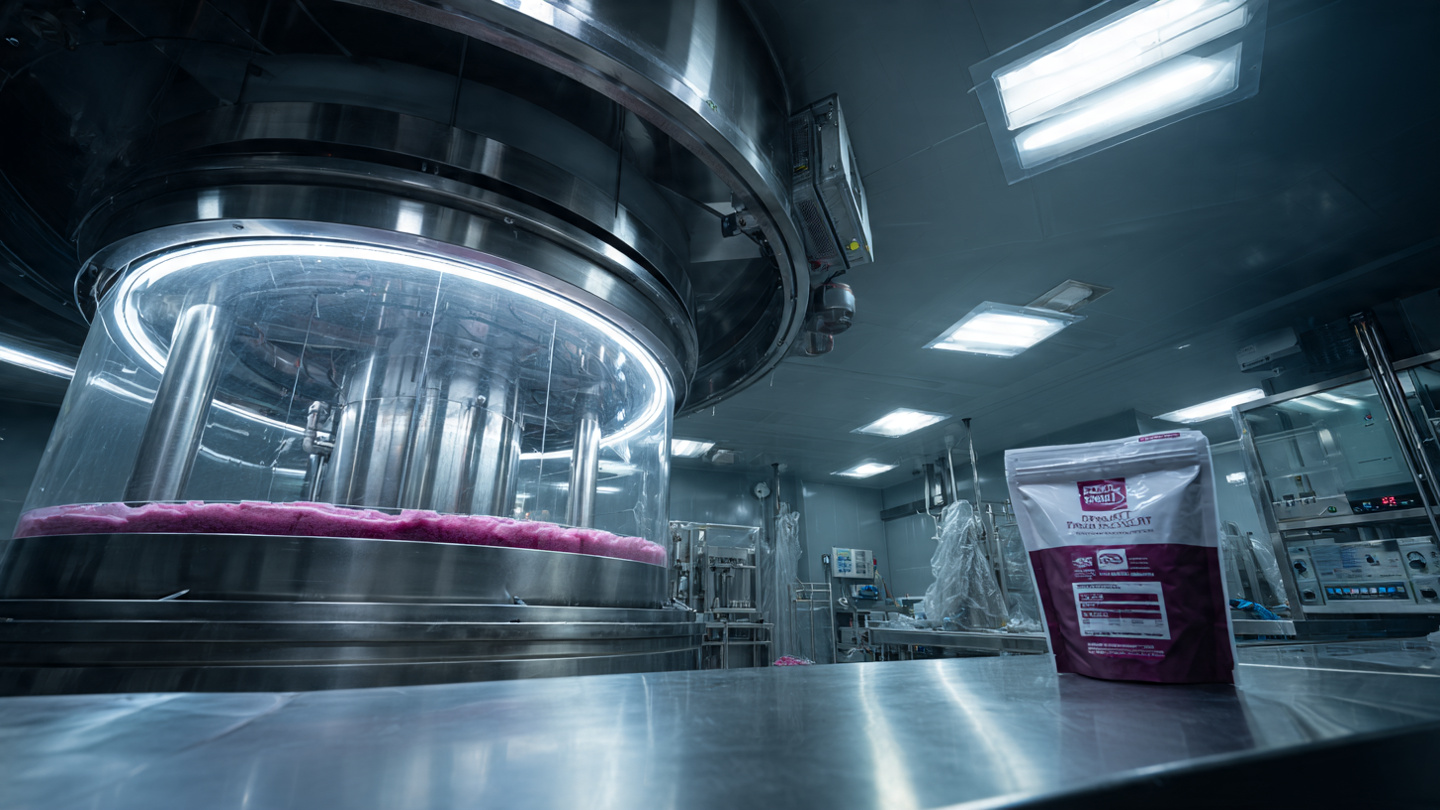
Nine hundred and eighty-nine million dollars. That was the high-water mark for cultivated meat investment in 2021, when Believer Meats, UPSIDE Foods, Eat Just, Aleph Farms, and Meatable were all scrambling to build the world's first cell-cultured protein factories at scale. Investors who had watched plant-based meat companies like Beyond Meat reach a $14 billion market capitalization in 2019 convinced themselves that growing real animal cells in steel vats was the next logical step, an upgrade from plant imposters to genuine meat without slaughter.
By 2025, the annual figure had dropped to approximately $65 million, according to the Good Food Institute's tracker. The industry contracted by 15%, falling to roughly 140 active companies worldwide, and the body count was rising.
Eight Companies, $1.5 Billion Raised, Mostly Dead
Believer Meats filed for bankruptcy in December 2025 with $225 million in debt. Founded in Israel as Future Meat Technologies, it had raised $390 million from investors including Tyson Foods and built a $154 million production facility in North Carolina capable of processing 12,000 tonnes of cultivated chicken per year. It became the first foreign company to secure US regulatory approval for cultivated meat. None of that mattered when the money stopped.
Meatable dissolved the same month after raising a hundred and five million dollars for Dutch cultivated pork that would never reach market. SCiFi Foods had already closed in 2024. CellRev, a Newcastle University spin-out that made growth media rather than meat itself, shut down in August 2025 after failing to deliver commercial milestones fast enough to secure a Series A. Upstream Foods, a Dutch cultivated fish-fat startup, lasted three years before its CEO posted a farewell message on LinkedIn.
UPSIDE Foods raised $608 million and mothballed its Glenview, Illinois plant, while Eat Just, which had raised over $800 million, paused its human-food scale-up entirely. Aleph Farms cut its workforce and pivoted toward a partnership with Mitsubishi for the Japanese market. In March 2026, Meati Foods faced sudden collapse after a lender withdrew funding, threatening 150 jobs at a company once valued at $450 million.
Jeff Tripician, the former CEO of Meatable, summarized the situation in January 2026 with three words: "Cultivated meat is broken."
One Variable Separates the Living from the Dead
While the human-food companies were dying, a parallel set of cultivated meat companies kept raising rounds and kept hiring. On May 7, 2026, London-based Meatly closed a £10.4 million Series A led by Oyster Bay Venture Capital and Clean Growth Fund, bringing total funding to £17.5 million. The money will build a 20,000-litre bioreactor facility in London, which the company describes as Europe's largest cultivated meat plant.
Meatly makes chicken for dogs, and it is not alone. Bene Meat Technologies, a Czech startup, registered as an EU feed material in November 2023 and is targeting a 2026 pet food launch. BioCraft Pet Nutrition cleared the EU feed pathway in March 2025 and continues to raise. Bond Pet Foods inked a partnership with Hill's, the pet food subsidiary of Colgate-Palmolive. Friends & Family secured Singapore regulatory approval in 2025, and Magic Valley is moving through Australia's voluntary framework. Mars Petcare and Big Idea Ventures launched a 2026 Global Pet Food Innovation Program in partnership with AAK, Bühler, Givaudan, and Ingredion, explicitly seeking alternative protein ingredients for animals.
All of these companies grow real animal cells in bioreactors using growth media and centrifugal harvesting, with identical unit operations to the dead human-food companies and overlapping investors: Agronomics backed both Meatly and the now-dissolved Meatable. The variable that separates survival from bankruptcy is not the technology. It is the customer.
Regulatory Arbitrage: Months vs. Years
Pet food in the UK is regulated as animal feed by Defra and the Animal & Plant Health Agency. Meatly received authorization on July 17, 2024, becoming the first cultivated meat product approved for sale in any European country and the world's first cultivated meat product cleared for pet food. The process took roughly two years from founding to regulatory clearance.
Human food runs through the Food Standards Agency's novel-foods process. In March 2025, the FSA launched its Cell-Cultivated Products Regulatory Sandbox with eight participating companies. As of mid-2026, not a single cultivated product has been approved for human consumption in the UK. Live applications target completion around February 2027 at the earliest. In the United States, Florida and Alabama have passed outright bans on cultivated meat sales for human consumption, and additional states are considering similar legislation.
Meatly's CEO Owen Ensor did not stumble into pet food as a fallback. He pre-registered the company's legal entity as "Good Dog Food Limited" on April 30, 2021, more than a year before any public mention of the venture. His prior career at Sanergy in Nairobi, where he built one of the world's first industrial insect-protein facilities for animal feed, gave him direct experience navigating the animal-feed regulatory pathway. When he founded Meatly, the pet food thesis was deliberate from day one.
The Math That Makes It Work at 4% Inclusion
Cultivated meat for human consumption needs to compete with commodity chicken breast at roughly $3-5 per pound. At current production costs, that remains impossible. But pet food operates under entirely different economics, and Meatly exploits them with a move that is either brilliant or desperate, depending on your time horizon.
Meatly's first commercial product, "Chick Bites by The Pack," launched at Pets at Home in Brentford on February 7, 2025. A 50-gram pouch retails for £3.49. Cultivated chicken comprises approximately 4% of the formulation.
At 4% inclusion in a 50g pouch, only 2 grams of cultivated chicken is required per unit. Even at a hypothetical production cost of $100 per kilogram (dramatically above conventional chicken but within range for pilot-scale cultivated meat), the cultivated ingredient adds roughly £0.14 to the product cost. Premium pet food carries margins that absorb that differential without blinking. Pet owners who spend $70 per bag on grain-free, human-grade kibble from brands like Farmer's Dog or Ollie will pay a modest premium for real chicken grown without antibiotics or slaughter.
Meatly's cost reduction story deepens the picture. Traditional cell culture media, loaded with albumin, transferrin, insulin, and recombinant growth factors, costs approximately £700 per litre. Meatly developed a chemically defined, protein-free formulation that costs £0.22 per litre today, with an industrial-scale target of £0.015. Their patented bioreactor design costs £12,500 for a 320-litre vessel, compared to £200,000-£250,000 for a pharmaceutical-grade equivalent at the same scale, a 95% reduction achieved by stripping sterility specifications that food production does not require.
Original Analysis: A Survival Study by Market Entry
Mapping every major cultivated meat company by their primary market entry reveals a pattern too clean to be coincidental:
| Company | Entry Market | Total Raised | Status (May 2026) |
|---|---|---|---|
| Believer Meats | Human food | $390M | Bankrupt |
| Meatable | Human food | $105M | Dissolved |
| UPSIDE Foods | Human food | $608M | Plant mothballed |
| Eat Just | Human food | $800M+ | Scale-up paused |
| Aleph Farms | Human food | $118M+ | Workforce cuts |
| SCiFi Foods | Human food | ~$25M | Closed (2024) |
| CellRev | Human food (media) | ~$5M | Closed |
| Upstream Foods | Human food | ~$8M | Closed |
| Meatly | Pet food | £17.5M ($24M) | Series A, building |
| BioCraft | Pet food | ~$15M | EU cleared, raising |
| Bene Meat | Pet food | ~$10M | Launching 2026 |
| Bond Pet Foods | Pet food | ~$20M | Hill's partnership |
Human-food companies raised a combined $2.06 billion and produced three bankruptcies, two paused scale-ups, one mothballed plant, and two closures. Zero are thriving. Pet-food companies raised a combined $69 million and produced zero closures. All four are actively growing. Dollar-for-dollar, the pet food companies have been approximately 30 times more capital-efficient at survival.
Strongest Counterargument
Pet food is a $57 billion global market. The global meat market is $1.8 trillion. If cultivated meat can only serve animals, it has captured 3% of addressable protein demand and abandoned the other 97%. Inclusion rates of 4% cultivated chicken in premium treats do not prove that the technology can produce affordable protein at the volumes required for supermarket chicken breast. A hundred pet food pouches at 4% inclusion contain as much cultivated meat as a single chicken breast sold at a grocery store. The gap between a proof-of-concept ingredient in a £3.49 treat and a price-competitive product on the shelf at Tesco is not a scaling problem alone. It requires roughly a 100x cost reduction from current production levels, and no cultivated meat company has demonstrated that trajectory at any scale.
Limitations
All cost-per-kilogram figures for cultivated meat production are self-reported by companies. No third-party audit of Meatly's £0.22-per-litre media cost or £12,500 bioreactor design has been published. Survival data is drawn from public reporting and may miss companies operating in stealth or funded through unreported channels. Several state-level bans on cultivated meat apply specifically to human consumption, and their legal impact on pet food sales remains untested.
The Bottom Line
Cultivated meat did not fail because the science was wrong. Real animal cells do grow in bioreactors. Real chicken protein does come out the other end. What failed was the go-to-market assumption that the first customer would be a human standing in a grocery aisle, comparing a cultivated chicken breast at $12 per pound against a conventional one at $3.49, in a regulatory environment that takes years to navigate and is actively hostile in several US states.
Pet food flips every one of those constraints. Regulatory clearance takes months instead of years. Price sensitivity drops by an order of magnitude. Inclusion rates of 4% make current production costs viable. And pet owners, who already spend $92.74 billion annually on their animals' food, represent a customer base that buys on emotional commitment rather than price-per-calorie math.
If you are following cultivated meat as an investor, a policymaker, or someone who cares about how humanity will feed 10 billion people by 2050, the signal is clear. Do not watch the human-food pipeline for progress. Watch the pet bowl. That is where the technology is being refined, the costs are being driven down, and the production data is being generated. Whether those economics ever transfer to human food remains the trillion-dollar question. But Fido is going to find out first.
What You Can Do
If you are a pet owner: Meatly's Chick Bites are available at Pets at Home in the UK for £3.49. Buying the product generates sales data that funds further cost reduction. Look for cultivated meat pet food labels from BioCraft and Bene Meat later in 2026.
If you are an investor: Track the pet-food cultivated meat pipeline. Meatly, BioCraft, Bene Meat, and Bond Pet Foods are all raising or recently closed. Mars Petcare's 2026 innovation program with Big Idea Ventures is an institutional signal that major pet food incumbents consider cultivated ingredients investable.
If you are in food policy: The regulatory gap between pet food approval (months) and human food approval (years) is the single largest variable determining which cultivated meat companies survive. Accelerating novel food pathways would change the survival calculus.