🤖 Robotics / 💼 Labor & AI
Boston Dynamics Makes 4 Robots a Month. Hyundai Wants 30,000 a Year. The C-Suite Left.
An original cost-per-task-hour analysis shows Atlas is already 3.3 times cheaper than a U.S. auto worker. But the 625-fold production increase Hyundai demands has no precedent in complex electromechanical manufacturing, the entire C-suite just walked out, and competitors are selling humanoids at one-tenth the price.
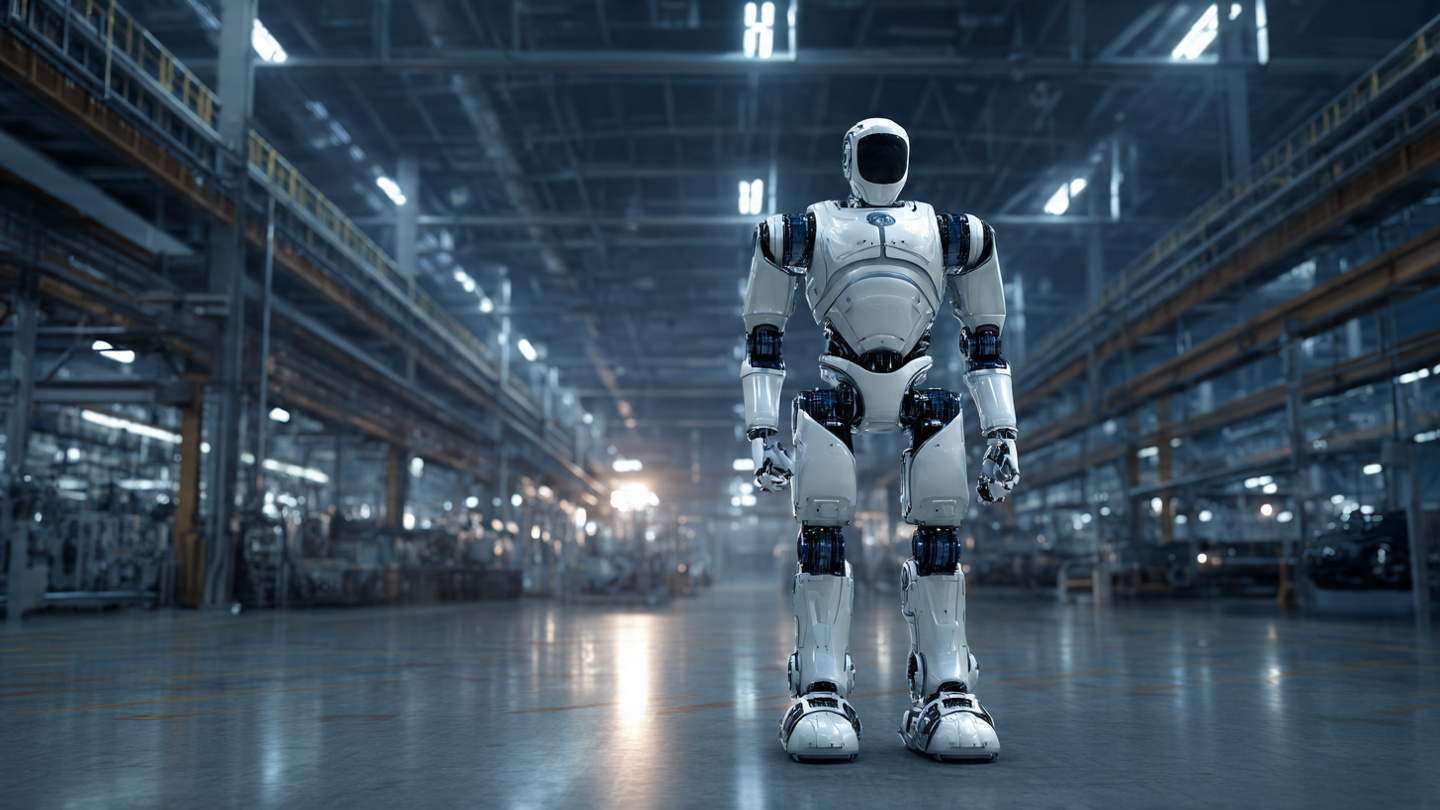
Four. That is the number of Atlas humanoid robots Boston Dynamics manufactures each month, according to reporting by Semafor and corroborated by Gizmodo, for a total of forty-eight per year. At CES 2026 in January, Hyundai Motor Group, which acquired a controlling stake in Boston Dynamics in 2021, announced plans to build a robotics factory capable of producing 30,000 Atlas units annually by 2028. That target requires a 625-fold increase in production volume within roughly two years, starting from a company that has never mass-manufactured anything.
Then the leadership left, all of them. CEO Robert Playter retired in February after 30 years at the company, and within weeks both the chief operating officer and chief strategy officer departed, reportedly forced out by a board frustrated with the pace of production scaling, and senior researchers and engineers followed them out. The CFO is acting as interim CEO, and nobody has been named as permanent replacement.
Here is what the numbers actually say about the gap between economic promise and manufacturing reality.
The Economics Already Work, but the Manufacturing Does Not
Atlas currently costs approximately $300,000 per unit to manufacture, according to analyst estimates reported by NotebookCheck. Hyundai Mobis, which is developing automotive-grade actuators to bring that cost down, has targeted $130,000 per unit by 2030 through a projected 70% reduction in actuator costs, which currently constitute more than half of the total build price. Hyundai's stated economic goal is specific: price Atlas below the cost of employing two U.S. manufacturing workers for two years, or roughly $320,000, according to Korea JoongAng Daily.
Run the math they haven't published and the picture gets interesting.
| Metric | Atlas ($300K) | Atlas ($130K target) | U.S. Auto Worker |
|---|---|---|---|
| Annual operating hours | 5,840 (16 hr/day) | 5,840 | 2,000 |
| Lifetime hours (5 yr) | 29,200 | 29,200 | 10,000 |
| Total lifetime cost | $357,500 | $187,500 | $400,000 |
| Cost per task-hour | $12.24 | $6.42 | $40.00 |
| Cost ratio vs. human | 3.3x cheaper | 6.2x cheaper | Baseline |
Atlas lifetime cost includes the purchase price plus $9,500 annual maintenance (drawn from Hyundai union filings) and approximately $2,000 per year in electricity. A U.S. auto manufacturing worker earns roughly $80,000 in total compensation for 2,000 hours annually. At full utilization, Atlas is 3.3 times cheaper per task-hour at today's manufacturing cost and 6.2 times cheaper at the 2030 target price. Even at 50% utilization, which accounts for learning time, maintenance windows, and the limited range of tasks a humanoid can currently perform, the cost per task-hour comes to $24.49. Still cheaper.
So the economics work. Production does not.
What 625x Actually Means
No company in the history of complex electromechanical manufacturing has achieved a 625-fold production increase in two years, not in automotive, not in aerospace, not in medical devices, not in any domain where tolerances are measured in fractions of a millimeter and a single misaligned actuator means a catastrophic failure mode. Consider the closest analog: Tesla's Model 3 ramp went from zero to 145,000 units in 2018, 367,000 in 2019, and 500,000 in 2020. Elon Musk described the experience as "production hell," and that was for a product category with established supply chains, proven manufacturing techniques, and a CEO who spent months sleeping on the factory floor. It still took three years. Atlas has none of that established infrastructure to lean on.
Boston Dynamics has manufactured Spot, its quadruped robot, at a rate of hundreds per year, never thousands. Spot is mechanically simpler than Atlas: four legs instead of two plus arms, fewer degrees of freedom, no manipulation requirements. Atlas has 56 degrees of freedom, IP67 environmental sealing, and a 50-kilogram lifting capacity. Each unit is closer in mechanical complexity to a jet engine than to a car, which is precisely the kind of product that resists manufacturing shortcuts and punishes attempts to skip validation steps.
Meanwhile, the competition has figured out how to build. Fast. Figure AI's BotQ facility went from producing one Figure 03 humanoid per day to one per hour in 120 days, a 24-fold increase, with over 350 units shipped and a target of 50,000 annually. 1X, the Norwegian robotics company, is targeting 10,000 NEO units in 2026 and 100,000 by 2027 at $20,000 per robot or $499 per month. Chinese manufacturers shipped 18,000 humanoid units in 2025 with total sales exceeding $400 million. Unitree's H1 sells for roughly $90,000 and Gen-3 AI's robot lists at $24,760.
Atlas at $300,000 is between 4 and 12 times more expensive than every major competitor.
A Research Lab Wearing a Hard Hat
Boston Dynamics was founded in 1992 as an MIT spinoff. For three decades it operated as a research laboratory, producing some of the most mechanically sophisticated robots on Earth while generating almost no commercial revenue. Google acquired it in 2013 and sold it to SoftBank in 2017 after concluding it had no near-term product. SoftBank sold its stake to Hyundai in 2021 for approximately $1.1 billion, and Hyundai has since valued the company at over $20 billion, according to Korea JoongAng Daily, a valuation that implies an 18-fold return on paper for a company that has yet to prove it can manufacture at scale.
Playter's departure, however voluntary, removed the person who led BD's commercial transition from YouTube demonstration videos to actual product shipments. A company that has never manufactured at scale is attempting the most ambitious production ramp in robotics history while simultaneously replacing its entire leadership team. Boston Dynamics' own statement acknowledged this tension: "These changes are designed to help us prepare for the next chapter, where we will need a structure that supports our ability to mass manufacture robots and rapidly drive scale."
Hyundai's $26 billion U.S. investment, anchored at its Metaplant America facility in Georgia, includes the Robotics Metaplant Application Center (RMAC), which serves as a training data factory where Atlas units learn manufacturing tasks. All 2026 Atlas production is committed to Hyundai's internal factories and a Google DeepMind partnership for AI integration. Hyundai's timeline calls for parts sorting by 2028 and full assembly line deployment by 2030.
Hyundai's Union Has Already Done the Math
In January 2026, Hyundai's largest labor union in South Korea issued a public statement: "Not a single robot without agreement." Union analysts calculated that each Atlas unit costs approximately 300 million won ($220,000) per year to operate while displacing three workers, according to TechSpot. They demanded a formal labor-management agreement before any factory deployment. Hyundai's Georgia operations face different labor dynamics, but the underlying tension is universal: a robot that runs 16 hours a day at $12.24 per hour directly competes with a human earning $40 per hour for 8 hours. Multiply that gap by 30,000 robots and the labor implications are measured in tens of thousands of displaced positions.
What We Don't Know
No publicly available data exists on Atlas task completion rates or uptime in factory environments. The $300,000 manufacturing cost is an analyst estimate, not a disclosed figure. Whether the 30,000-unit target represents actual committed production plans or aspirational investor-facing projections remains unclear, and Hyundai has already revised some timelines from "2028" to "2030" for full assembly deployment. Maintenance cost data originates from union sources, which may be politically motivated. We don't know what Google DeepMind is paying per unit or what revenue terms structure that partnership. The 5-year lifespan assumption in the cost analysis above is standard for industrial equipment, but Atlas has zero years of longitudinal operational data to validate it. And the question of whether Hyundai's vertical integration actually translates to robotics manufacturing competence, as opposed to automotive manufacturing competence applied optimistically, has no answer yet.
Strongest Case Against This Narrative
The C-suite exodus may be exactly the right move. Hyundai's vertical integration means it does not need Boston Dynamics to function as a standalone company. It needs BD's IP integrated into Hyundai's existing manufacturing infrastructure. Replacing research-culture leadership with manufacturing-culture leadership is arguably what the transition demands: you do not need the people who built the prototype, you need the people who can stamp out 30,000 copies. Hyundai Motor Group has seven decades of manufacturing expertise, Hyundai Mobis already mass-produces automotive-grade actuators, and the RMAC creates a proprietary data pipeline that Chinese competitors cannot easily replicate. Critically, Hyundai does not need Atlas to compete with $20,000 Chinese robots in the open market. It only needs Atlas to be cheaper than its own factory workers on specific tasks inside its own plants. That is a much lower bar, and the cost-per-task-hour analysis shows Atlas already clears it at current prices.
What You Can Do
If you work in automotive manufacturing or logistics and want to understand your exposure, track two numbers: Hyundai's quarterly Atlas deployment count (expected in earnings reports starting late 2026) and Figure AI's BotQ output rate, which is the leading indicator of whether humanoid manufacturing follows a software scaling curve or a hardware one. If you are an investor evaluating the humanoid sector, the critical variable is not capability demonstrations but cost-per-unit-produced at volume; Figure's $20,000 price target versus Atlas's $300,000 reality is the spread that determines market structure. If you are in a manufacturing role that involves repetitive physical tasks in structured environments, the honest assessment is that your timeline is 3 to 5 years, not 10, based on the rate at which competitor companies are achieving production scale. If you are a Hyundai union member, the Georgia deployment data will establish the precedent for global labor negotiations. Watch it closely.
The Bottom Line
Boston Dynamics built the most capable humanoid robot on Earth and cannot make more than 48 of them per year. Its parent company wants 625 times that number, is spending $26 billion to get it, and just watched three C-suite executives leave during the most critical manufacturing transition in the company's history. Competitors are already producing humanoids at one robot per hour for one-tenth the price. Atlas's economics work at $12.24 per task-hour, but economics have never been the constraint. Manufacturing culture is. Hyundai is betting it can inject seven decades of automotive manufacturing discipline into a 34-year-old research lab fast enough to matter. If it fails, the humanoid market still arrives. It just arrives wearing a Chinese label or a Figure logo instead of an Atlas badge. The first real data point drops when Hyundai reports Atlas unit deployments at its Georgia plant, expected in the first half of 2027. That filing will tell us whether 625x was a plan or a fantasy.