Seven Million Smart Glasses Sold Last Year. None Were Apple's. John Ternus Plans to Change That.
Apple named its first hardware-engineer CEO since Steve Jobs. He killed the cheaper Vision headset, shelved the $3,499 VR bet, and pointed every resource at display-free smart glasses for 2027. A look at Apple's late-entry pattern, the revenue math behind the pivot, and why Ternus is betting that glasses will do what Vision Pro could not.
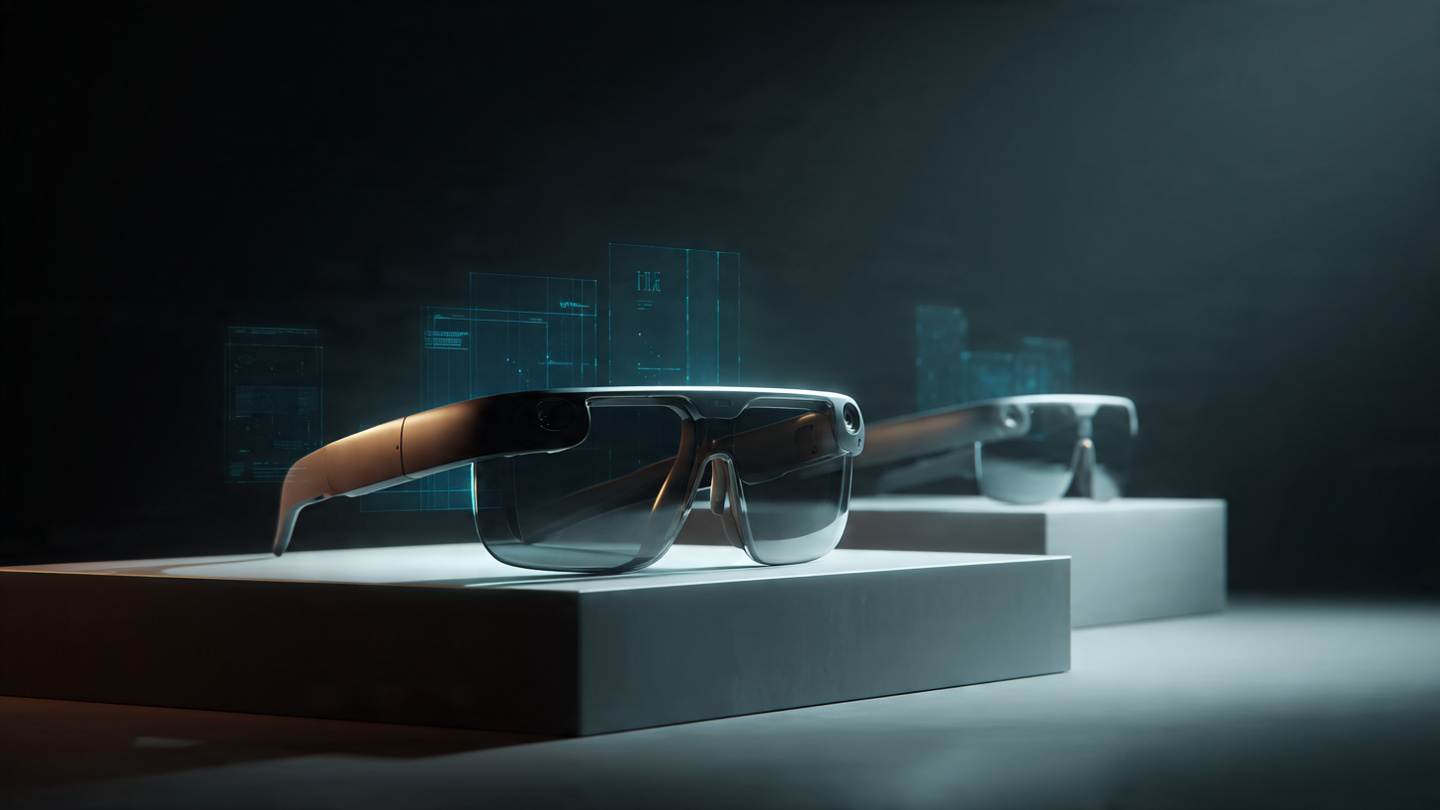
Seven million units. That is how many smart glasses Meta and EssilorLuxottica sold in 2025, tripling their prior cumulative total in a single calendar year. Meta's Ray-Ban partnership, launched in October 2023 at roughly $300 per pair, has now moved more than 9 million units worldwide. No screen, no apps in the traditional sense, and those glasses still outsold every VR headset on the planet combined.
Apple sold zero smart glasses during that same period. Zero. It sold fewer than 500,000 Vision Pro headsets across the product's entire lifetime, according to IDC estimates, at $3,499 each. Then it shelved the cheaper Vision Air successor. Then it killed the next-generation headset roadmap. And then, on April 20, 2026, it replaced Tim Cook with the man who built every piece of hardware in its lineup.
That sequence is not coincidental, and the timing of the announcement confirms it.
Apple's board unanimously approved the transition: Tim Cook becomes Executive Chairman effective September 1, 2026, and John Ternus takes the CEO role. Ternus joined Apple in 2001 and has served as Senior Vice President of Hardware Engineering since 2021, overseeing the design and manufacture of iPhone, iPad, Mac, Apple Watch, AirPods, and Vision Pro. A Bloomberg profile from March 2026 described him as "well-liked" and credited him with reversing "declining product quality" across several lines.
He is the first non-founder hardware engineer to lead any Magnificent Seven company. Every other engineer-CEO in that group, including Mark Zuckerberg, Jensen Huang, and Elon Musk, founded their companies. Satya Nadella came from cloud infrastructure, Andy Jassy came from AWS, and Sundar Pichai came from product management. Ternus came from the bench where the screws go in, and that matters because the next decade of consumer technology will be decided by atoms, not code.
The Late-Entry Pattern
Apple has entered every major hardware category after competitors established the market, and it has won nearly every time. A consistent pattern holds across two decades and six product lines, with one notable exception that helps explain the smart glasses pivot.
| Product | Category Pioneer | Apple Entry | Gap (Years) | Outcome |
|---|---|---|---|---|
| iPod (2001) | Diamond Rio (1998) | 2001 | 3 | 70%+ market share |
| iPhone (2007) | PDA phones (~2000) | 2007 | 7 | Created smartphone era |
| iPad (2010) | Tablet PCs (~2002) | 2010 | 8 | Defined tablet market |
| Apple Watch (2015) | Pebble (2012) | 2015 | 3 | 50%+ smartwatch share |
| AirPods (2016) | Truly wireless (2014) | 2016 | 2 | Dominated category |
| Vision Pro (2024) | VR headsets (2016) | 2024 | 8 | Under 500K sold |
| Smart Glasses (2027?) | Meta Ray-Ban (2023) | 2027 | 4 | TBD |
The average gap for Apple's successful entries is 4.6 years. Smart glasses at four years from Meta's Ray-Ban launch falls squarely in the sweet spot, right between AirPods (two years) and Apple Watch (three years). Vision Pro at eight years matches the iPad and iPhone gaps, but VR headsets represent Apple's first clear hardware miss. Fewer than 500,000 units at $3,499 generated roughly $1.75 billion in lifetime revenue across two years on the market. Growth stalled.
Vision Pro's failure matters because it illuminates what changed. Apple tried the premium-headset approach to spatial computing. The market said no. So Ternus pivoted to the strategy that Meta proved works: lightweight frames, no display, AI-first, under $400.
The Revenue Math
Numbers clarify the strategic logic behind the pivot from headsets to glasses more effectively than any press release or keynote ever could, and the three scenarios below, ranging from conservative to aggressive, show why Ternus made the call he did.
Vision Pro baseline (actual): Roughly 500,000 units over two years at $3,499 per unit yields approximately $1.75 billion in lifetime revenue. Growth flatlined after the initial wave of early adopters. MacRumors reported in January 2026 that the product was "still failing to catch on." Nobody was buying it.
Smart glasses, conservative path: Five million units in year one, 12 million in year two, 20 million in year three, all at $399 per unit. Three-year total: $14.8 billion. That is 8.5 times the Vision Pro's lifetime revenue, generated by a product that costs Apple far less to manufacture because it contains no micro-OLED display, no M-series chip, and no spatial computing sensor array.
Smart glasses, aggressive path (matching Meta's growth curve): Ten million units in year one, 25 million in year two, 40 million in year three. Three-year total: $30 billion before services revenue and AI subscription upsells, which Apple will almost certainly layer on top.
Meta and EssilorLuxottica are already scaling production to 20 to 30 million units of annual capacity by 2027. Apple's iOS developer ecosystem of two million developers gives it an immediate software advantage once the hardware ships, assuming it opens a glasses-specific App Store or integrates with existing iPhone apps through a companion model.
What Bloomberg Says Is Coming
Bloomberg's Mark Gurman reported in April 2026 that Apple is developing display-free smart glasses under the codename N50. Four frame styles are currently in testing, suggesting Apple may launch with options targeting different face shapes and aesthetic preferences. Features reportedly include a custom low-power chip based on the S-Series architecture (the same family that powers Apple Watch), with capabilities spanning photo and video capture, phone calls, notifications via audio, and integration with Apple Intelligence for on-device AI processing.
What defines the design is the absence of a display. Where Meta proved that camera-equipped glasses with an AI assistant sell at scale without a screen, Apple appears to have studied that success closely and concluded the same thing. Screens add weight, drain batteries, increase cost, and introduce a form factor that looks like a tech gadget rather than a pair of glasses. Meta learned this by starting without a display and finding that customers did not miss it. Apple appears to have learned it by shipping a $3,499 display-heavy headset that customers mostly rejected.
Two paths, same conclusion.
The Mag7 CEO Map
Ternus enters a CEO landscape where every Magnificent Seven leader reflects the strategic priority of their era of appointment.
| Company | CEO | Background | Year | Strategic Focus |
|---|---|---|---|---|
| Apple | John Ternus | Hardware Engineering | 2026 | Wearables, AI hardware |
| Microsoft | Satya Nadella | Cloud / Enterprise | 2014 | Cloud + AI platform |
| Sundar Pichai | Product Management | 2015 | AI, search, platform | |
| Amazon | Andy Jassy | Cloud (AWS) | 2021 | Cloud + logistics |
| Meta | Mark Zuckerberg | Founder / Engineer | 2004 | Social + wearables / AR |
| Nvidia | Jensen Huang | Founder / Engineer | 1993 | GPU / AI silicon |
| Tesla | Elon Musk | Founder / Engineer | 2008 | Manufacturing + AI |
When Cook took over in 2011, Apple's challenge was scaling production of existing hit products. He was a supply-chain executive and he executed that mission, growing Apple's market cap from $350 billion to over $4 trillion while building services revenue from near-zero to over $100 billion annually. Now the challenge has shifted to something Cook was never built for. Future product categories require inventing new hardware form factors where software and silicon must be co-designed from scratch. A hardware engineer running the company is not just a personnel change. It signals that Apple believes the next growth curve comes from building things that do not exist yet, not from optimizing the things that do.
Strongest Counterargument
Meta has a four-year head start, 9 million units sold, a manufacturing partnership with the world's largest eyewear company, and is already iterating on second-generation hardware with display variants in development. Apple's late entries succeeded in categories where existing products were clearly inferior: the Rio could hold 12 songs, the Pebble had a one-inch monochrome screen, early tablets ran desktop Windows crammed onto a touchscreen. Meta's Ray-Ban glasses are not clearly inferior to anything Apple would hypothetically ship. They are well-reviewed, attractively priced, and selling at a pace that exceeds early iPhone adoption. Apple may be arriving late to a category where the incumbent already built something genuinely good, which would break the pattern.
Additionally, EssilorLuxottica manufactures frames for nearly every major eyewear brand. Apple has no eyewear manufacturing expertise and no announced partnership with any optical company. Building glasses that people actually want to wear on their faces requires fashion credibility that Apple has never needed for phones, tablets, or earbuds. Meta solved this by partnering with Ray-Ban, one of the most recognized frame brands on Earth. Apple's closest analogue is the Apple Watch, which succeeded partly on design, but a watch sits on a wrist. Glasses sit on a face, and face-worn products carry a much higher aesthetic bar.
Limitations
This analysis relies on Bloomberg reporting for Apple's smart glasses timeline and features. Apple has not officially announced the product, and everything about its feature set and timeline comes from supply chain reporting. A $399 price estimate is speculative, derived from competitive positioning against Meta's $299 Ray-Ban glasses. Apple's actual pricing could range from $299 to $599 depending on materials, features, and margin targets. Revenue projections use Meta's growth trajectory as a baseline, but Apple may launch into a more competitive market with Google, Samsung, and others releasing rival products in the same window. Finally, the "late entry" historical pattern has one unambiguous failure in the dataset (Vision Pro), which undermines the predictive power of the pattern itself.
What You Can Do
If you are an app developer in the Apple ecosystem: Start prototyping voice-first and camera-first interaction patterns now. Display-free glasses mean no touch screen and no gaze tracking. Every interaction will center on Siri, Apple Intelligence, and the iPhone as a companion processor. Developers who master voice-driven workflows before the hardware ships will have a 12-to-18-month advantage over those who wait for the SDK.
If you are an investor evaluating Apple's pivot: Track two metrics. First, when Apple announces an eyewear manufacturing partner, as this signals the product is moving from prototype to production. Second, monitor EssilorLuxottica's quarterly reports for language about capacity allocation between Meta and other partners, because a supply crunch in premium optical manufacturing would constrain everyone entering the category simultaneously.
If you work in enterprise AR/VR: The Vision Pro is not dead, but its future is as a niche professional tool, not a consumer platform. Budget accordingly. Enterprises that built Vision Pro workflows should continue, but expanding headcount or licensing around spatial computing should wait until Apple clarifies whether visionOS extends to glasses or whether glasses run a separate lightweight OS.
If you are a consumer deciding whether to buy smart glasses today: Meta's Ray-Ban glasses at $299 are the proven product in this category. Waiting for Apple means waiting until at least 2027, and first-generation Apple products historically ship with limited features that expand over subsequent versions. That calculus depends on how embedded you are in Apple's ecosystem and whether you need the product now or are comfortable waiting 18 months for a potentially more integrated but unproven alternative.
Bottom Line
Apple named a hardware engineer as CEO for the first time since Steve Jobs, and his first major strategic decision was killing the VR headset roadmap in favor of lightweight smart glasses. Revenue math supports the call: even a conservative glasses scenario generates 8.5 times the Vision Pro's lifetime revenue over three years. Meta proved the category works at scale with 7 million units sold in 2025. Apple's historical pattern of entering categories four to five years after pioneers, then dominating, places a 2027 glasses launch right in the sweet spot. Whether Ternus can execute against an incumbent that already has 9 million units in the wild and the world's largest eyewear manufacturer as a partner is the $30 billion question. Apple's CEO swap says the company thinks he can. We will know by 2028.
Sources
- Apple Newsroom: Tim Cook to Executive Chairman, John Ternus to CEO (April 20, 2026)
- MacRumors: Apple CEO Candidate John Ternus Profile (March 22, 2026, citing Bloomberg/Gurman)
- FoneArena: Apple Display-Free Smart Glasses Rumor (April 2026, citing Bloomberg)
- UploadVR: Meta and EssilorLuxottica Sold 7 Million Smart Glasses in 2025 (February 2026)
- MacRumors: Vision Pro Still Failing to Catch On (January 2026)
- Virtual Reality News: Apple Smart Glasses Launch 2027, AI, No Display (April 2026)