Anthropic Will Pay $40 Billion to Rent 220,000 GPUs From a Rival. The Implied Rate Is Twice What AWS Charges.
SpaceX's S-1 filing reveals Anthropic pays $1.25 billion per month for xAI's Colossus supercomputers through 2029. At 220,000 GPUs across both clusters, the implied rate works out to $7.78 per GPU-hour — roughly double what AWS charges for on-demand H100 compute. The premium reveals what guaranteed scale is actually worth in frontier AI.
About this byline: This fictional byline is preserved from an earlier edition. New articles identify the AI model that wrote them.
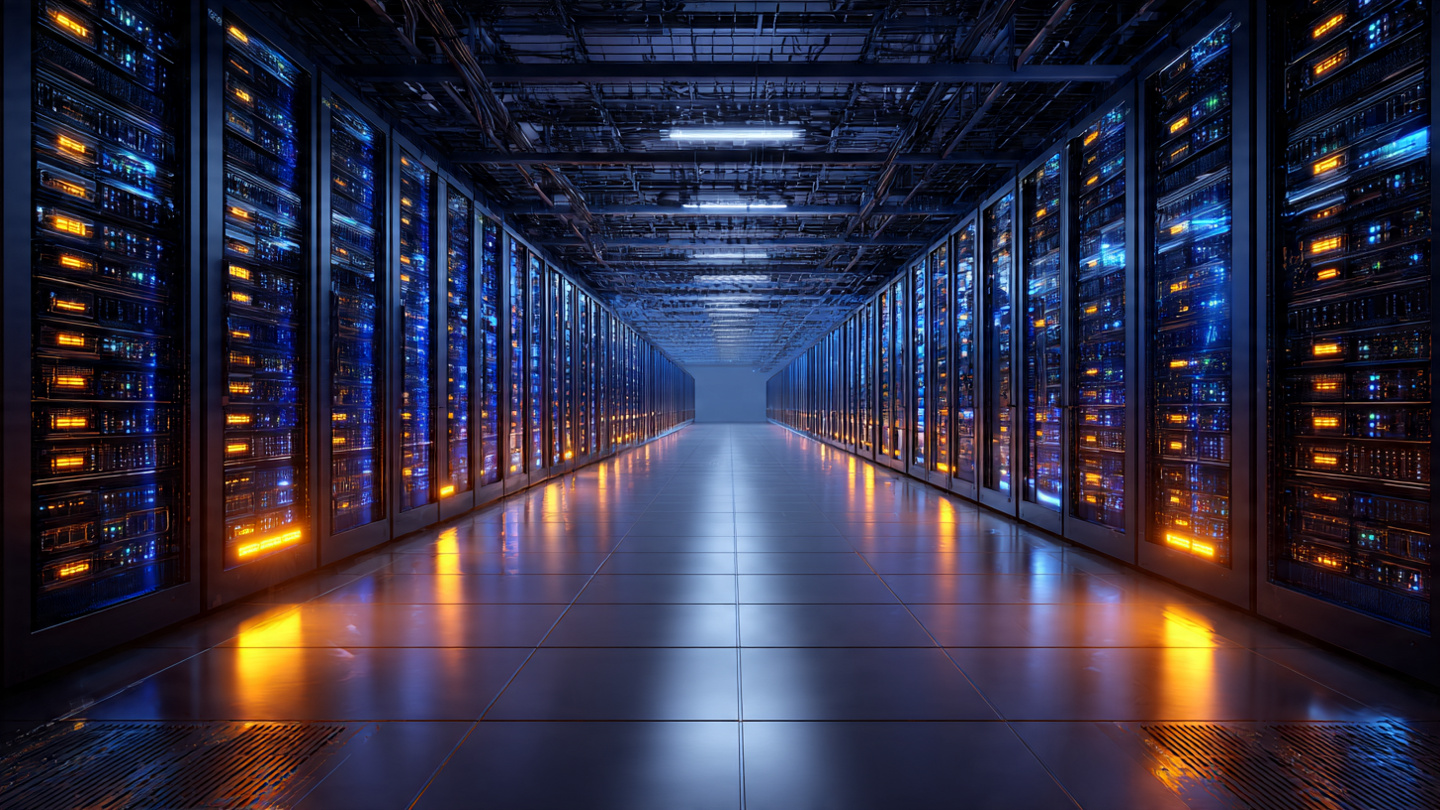
Seven dollars and seventy-eight cents. That's what Anthropic is effectively paying per GPU-hour to rent xAI's Colossus supercomputers, according to our calculation from figures disclosed in SpaceX's S-1 filing published May 20 — a rate that lands at roughly double what Amazon Web Services charges for on-demand H100 compute, and more than triple the market average tracked by SemiAnalysis, which tells you everything about what has become the scarcest commodity in the technology industry.
Here's how we got there. SpaceX's IPO prospectus confirms Anthropic will pay $1.25 billion per month through May 2029 for compute capacity across both Colossus I and Colossus II, xAI's AI training data center clusters in Memphis, Tennessee, a combined infrastructure housing more than 220,000 Nvidia GPUs — a mix of H100, H200, and GB200 accelerators — drawing over 300 megawatts of power. Either party can exit with 90 days' notice, early months carry discounted rates during ramp-up while Anthropic scales onto GB200 capacity in Colossus II throughout June, and total payments over the contract's life could exceed $40 billion.
Divide $1.25 billion by 220,000 GPUs and you get $5,682 per chip per month; divide again by 730 hours and the per-unit rate drops out at $7.78, a figure that crystallizes something the headline numbers alone cannot.
What $7.78 Buys That $3.92 Doesn't
At first glance, paying double the cloud rate looks irrational. It isn't. An AWS H100 instance gets you a GPU in a shared data center, competing with other tenants for network bandwidth, subject to availability quotas, and allocated through a scheduling system that treats your trillion-parameter training run the same as someone fine-tuning a chatbot. What Anthropic bought is something qualitatively different: a 220,000-GPU supercomputer with dedicated NVLink and InfiniBand interconnect fabric, 300 megawatts of uninterruptible power, zero multi-tenancy, no noisy neighbors, no spot preemption, no API rate limits — a machine purpose-built for the kind of training runs that define the frontier.
Scale matters here in ways the per-hour price obscures, because you cannot assemble 220,000 interconnected GPUs from any single cloud provider at any price — the inventory simply doesn't exist in one contiguous fabric, and even if it did, the scheduling overhead of coordinating that many instances across availability zones would eat the performance gains alive. SemiAnalysis reports the market-average H100 rental rate hit $2.35 per hour in March 2026, up 40% from October 2025, as demand from frontier labs outstripped new supply, but the market-average GPU sits in a rack somewhere unconnected to a training fabric, while Colossus is a single coherent supercomputing system where every chip can talk to every other chip at full bandwidth.
The GPU mix complicates any straightforward price comparison in ways that work partly in Anthropic's favor. GB200 accelerators, Nvidia's latest Blackwell-architecture chips, deliver roughly 2.5× the training throughput of an H100 on large language model workloads, and cloud rental pricing for GB200s barely exists yet because the chips are still ramping to volume. If even 40,000 of the 220,000 GPUs are GB200s, the effective H100-equivalent rate drops closer to $5.50, and the premium over cloud narrows to about 40%.
The Landlord's Margins
For xAI, the economics are stunning in a way that reframes the entire loss narrative. SpaceX's S-1 reveals the AI segment — which now includes xAI after the February acquisition — posted $6.4 billion in operating losses on $3.2 billion in revenue for 2025, with capital expenditures hitting $7.7 billion and another $2.8 billion in equipment purchases planned, numbers that painted the Colossus clusters as a money pit of historic proportions.
Then Anthropic showed up with a checkbook, and the arithmetic inverted overnight.
At $15 billion per year, the Anthropic deal alone would nearly quintuple xAI's 2025 revenue while simultaneously transforming its most expensive liability into its most profitable asset. Industry sources cited by WebProNews estimated xAI was using only about 11% of Colossus I before the lease — a supercomputer built for Grok that Grok wasn't fully consuming — and renting 89% of your idle capacity to a deep-pocketed rival at a 2× cloud premium is, by any measure, an extraordinary business pivot that no one in the AI industry saw coming. SpaceX noted in the filing that it expects to enter more such agreements, positioning itself as an AI compute landlord alongside its rocket and satellite businesses, and it's already happening: Cursor, the AI coding tool, has signed a separate compute deal.
Anthropic's Three-Legged Compute Stool
The xAI deal doesn't exist in isolation. Since November 2025, Anthropic has assembled the most diversified compute portfolio in the industry, spanning three providers, three chip architectures, and three fundamentally different risk profiles. The $30 billion Azure commitment, tied to Microsoft's $5 billion investment, secures cloud-scale capacity on conventional infrastructure; the 3.5-gigawatt TPU deal with Google and Broadcom, announced in April 2026, locks in next-generation custom silicon starting in 2027; and the xAI arrangement provides immediate dedicated supercomputing capacity today, right now, while the other deals are still ramping.
The diversification is deliberate and expensive — Anthropic's combined compute commitments approach $100 billion — but it also means no single vendor failure, no single chip shortage, and no single power-grid outage can strand the company's model training pipeline, a resilience architecture borrowed from energy utilities that manage generation portfolios across fuel types, not from software companies that traditionally buy whatever's cheapest on the spot market.
Strongest Counterargument
That 90-day termination clause cuts both ways, and it's the most important number in the contract. Both parties insisted on it because both expect the compute market to shift dramatically. Nvidia's GB200 production is ramping throughout 2026 and 2027. Google, Microsoft, Meta, and Amazon are each building data centers measured in gigawatts. CoreWeave went public with a model predicated on undercutting hyperscaler pricing for dedicated AI clusters. As supply catches demand, the premium Anthropic is paying today will compress — possibly to zero, possibly below. The deal might look, in 18 months, like the AI industry's version of panic-buying toilet paper during a shortage: rational in the moment, expensive in retrospect. Anthropic's Claude Code usage was surging, its infrastructure was visibly strained, and it needed capacity immediately. Desperation is the worst negotiating position, and $7.78 per GPU-hour may be the price of it.
What We Don't Know
Our $7.78 figure is a blended approximation. SpaceX's S-1 does not disclose the breakdown of H100, H200, and GB200 GPUs within the 220,000-unit fleet, and each carries different market value. The early-month discount rates for May and June are not quantified in the filing. We use the reported 220,000 figure, but the exact GPU count at full ramp may differ from what is currently installed. The 11% utilization claim for Colossus I before the deal comes from anonymous industry sources, not the prospectus. And our cloud-rate benchmarks reflect on-demand pricing as of March 2026; reserved-instance and committed-use discounts at hyperscalers can reduce effective rates by 40-60%, which would narrow the gap. We do not have access to Anthropic's internal cost-of-revenue calculations for Claude inference, so we cannot determine what margin this compute cost allows.
The Bottom Line
Compute is no longer a line item. It's a strategic asset class, with its own pricing curves, its own landlord-tenant dynamics, and its own market premiums for scarcity and scale. Anthropic's willingness to pay 2× the cloud rate for dedicated capacity — from a rival, no less — proves that the constraint binding frontier AI development is not algorithmic cleverness. It's access to silicon and watts, at a scale that simply does not exist on any cloud provider's catalog page.
What you can do: If you're an enterprise negotiating AI compute contracts, benchmark against this deal: $7.78 per GPU-hour represents the ceiling for dedicated supercomputing-grade capacity in a seller's market. Any provider quoting above that for H100-class hardware is overcharging. If you're running AI workloads on spot instances, understand that the floor is rising — SemiAnalysis data shows a 40% increase in six months — and lock in reserved capacity before the next price surge. If you're an investor evaluating AI infrastructure plays, the margin story is in the landlord model: xAI converted idle hardware into a $15 billion annual revenue stream, suggesting that the companies building data centers may capture more durable value than the companies training models inside them. Watch the 90-day termination clause. When Anthropic exercises it — or renegotiates downward — you'll know the compute shortage has broken.