Anthropic’s Revenue Grew 422% in 5 Months. Three Trillion-Dollar IPOs Are Betting the Curve Doesn’t Break.
The Claude maker hit a $47 billion run rate and filed its S-1. But gross-vs-net accounting hides a $14 billion gap, the growth curve would surpass Apple by mid-2027, and $3.7 trillion in simultaneous IPOs are about to stress-test a market that has never absorbed anything close to this.
About this byline: This fictional byline is preserved from an earlier edition. New articles identify the AI model that wrote them.
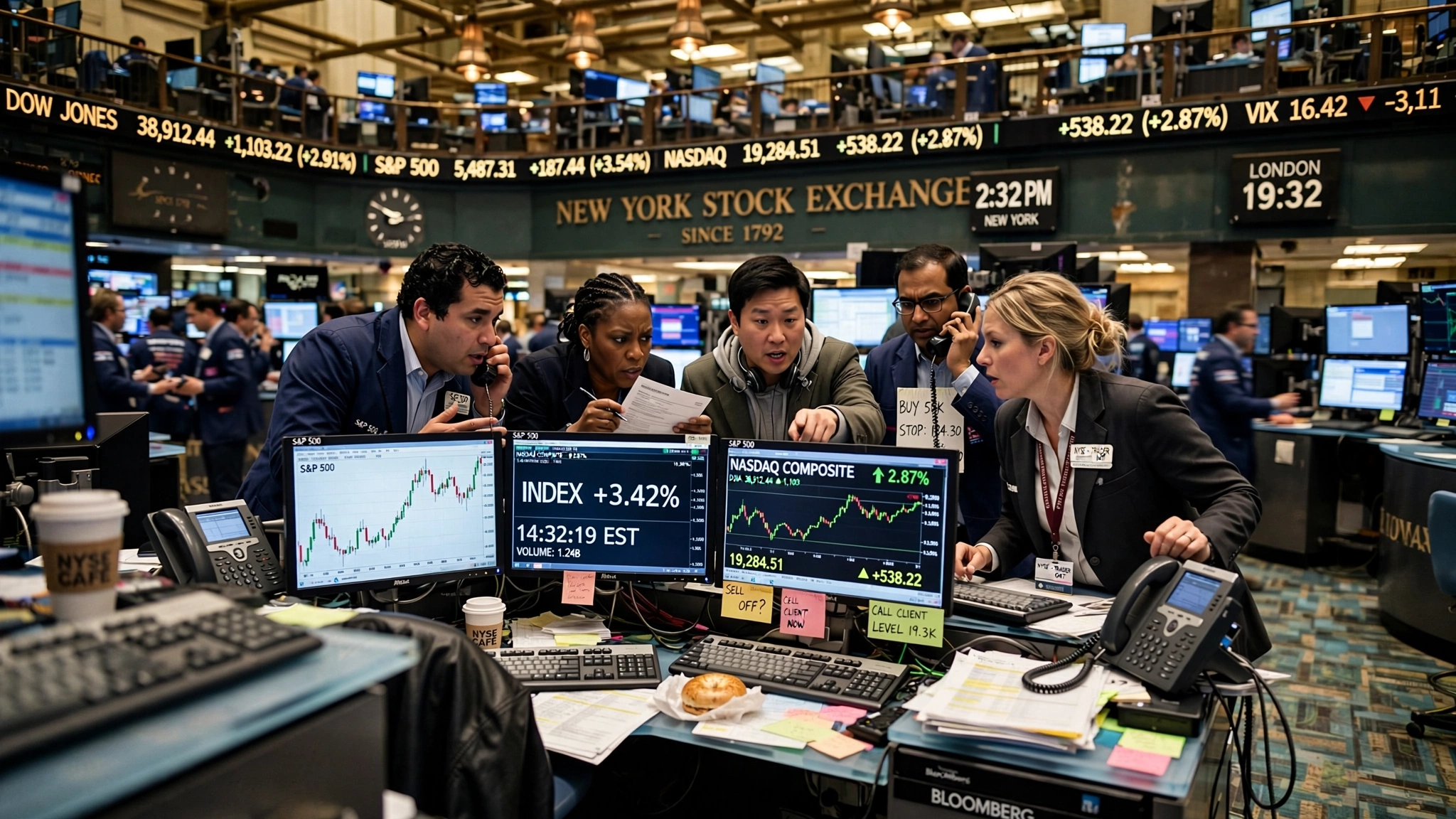
Four hundred twenty-two percent. That is how much Anthropic’s annualized revenue grew between December 2025 and May 2026 — from $9 billion to $47 billion in five months. Last week the company closed a $65 billion Series H at a $965 billion post-money valuation, eclipsing OpenAI’s $852 billion. Days later it filed a confidential S-1 with the SEC. SpaceX lists around June 12 at $1.8 trillion. OpenAI targets fall. Three companies, $3.7 trillion, one calendar year.
Never in the history of capital markets have three companies worth this much attempted to go public in the same calendar year. The last comparable event was the 2012 Facebook IPO at $104 billion, which repriced the entire social media sector. This is 35 times that, compressed into six months, landing on a market that Goldman Sachs says mutual funds are already hoarding cash to absorb.
But the number underneath it all — $47 billion — deserves a closer look than anyone is giving it. Much closer.
The $14 Billion Asterisk
Reuters Breakingviews flagged the accounting difference that most coverage buried. Anthropic reports gross revenue: the full amount billed before distribution partner cuts. OpenAI reports net revenue: what remains after Microsoft takes its share. These are not comparable numbers — they are different measurements wearing the same label, and every headline that places them side by side without noting the distinction is misleading its readers.
Cloud resellers typically retain 20–30% of gross billings. Do the math. Apply a conservative 30% distribution margin to Anthropic’s $47 billion and the net run rate drops to roughly $33 billion. Apply it to Q1 actual revenue of $4.8 billion, and Anthropic’s net quarterly figure falls to about $3.4 billion — below OpenAI’s $5.7 billion net Q1 revenue.
Read that again. On a net basis, OpenAI may still be larger than the company that just surpassed it in headline valuation.
The $47 billion headline is not wrong, and it is not a lie. It is a measurement choice that happens to produce a number 42% higher than the one you’d get using OpenAI’s method, reported at the precise moment Anthropic needed to justify the most aggressive private valuation in history. Anthropic’s distribution partner revenue-sharing terms are not publicly disclosed, so the exact gap is unknowable. But the direction is not: the headline overstates the comparison, and by a lot.
The Curve That Must Break
Plot Anthropic’s monthly revenue on a chart and you get something that looks less like a business and more like a phase transition:
| Month | Monthly Revenue | Annualized | MoM Growth |
|---|---|---|---|
| Dec 2025 | ~$750M | $9B | — |
| Feb 2026 | ~$1.17B | $14B | ~24% |
| Mar 2026 | ~$1.6B | $19.2B | ~37% |
| Apr 2026 | ~$2.5B | $30B | ~56% |
| May 2026 | ~$3.9B | $47B | ~56% |
Average month-over-month growth since February: roughly 40%. Extrapolate:
- December 2026 at 40% MoM: $33 billion/month, or $396 billion annualized
- June 2027 at 40% MoM: $201 billion/month, or $2.4 trillion annualized
That last number exceeds Apple’s entire 2025 revenue of $391 billion. It would make Anthropic — a company that did not exist five years ago — larger than any enterprise on Earth. Obviously, this will not happen — the curve must inflect, because every hypergrowth company in history has hit this wall: Zoom, Peloton, Shopify. The question is not whether but when and where.
If growth decelerates to 10% month-over-month (still torrid by any normal standard), Anthropic reaches $83 billion annualized in six months and $148 billion in twelve. HSBC analyst Stephen Bersey projects $241 billion by 2030, implying sustained 4.5% monthly growth — aggressive but at least in the realm of mathematical possibility.
The valuation math is exquisitely sensitive to where the curve lands, because the difference between “overpriced hype machine” and “generational bargain” collapses to a single variable: the terminal growth rate. At $47 billion run rate, Anthropic trades at 20.5 times revenue. At a decelerated $83 billion, the forward multiple shrinks to a more digestible 11.6 times. At the $148 billion twelve-month target, it drops to 6.5 times. Value territory. The entire investment thesis rests on which number materializes, and right now nobody has enough data to know.
The Trillion-Dollar Comparison Table Nobody Made
Eleven companies in the S&P 500 currently carry market capitalizations above $1 trillion. Here is how the three upcoming IPOs compare:
| Company | Valuation | Revenue (TTM) | Price/Sales | Profitable? |
|---|---|---|---|---|
| Amazon | $2.4T | $638B | 3.8x | Yes |
| Apple | $3.6T | $391B | 9.2x | Yes |
| Microsoft | $3.4T | $262B | 13.0x | Yes |
| Nvidia | $3.2T | $130B | 24.6x | Yes |
| Upcoming IPOs | ||||
| Anthropic | $965B | $47B* | 20.5x (gross) | Q2 ’26 (est.) |
| SpaceX | $1.8T | $18.7B | 96.3x | No |
| OpenAI | $852B–$1T+ | ~$25B | 34–40x | No (est. 2030) |
*Anthropic’s $47B is gross run-rate revenue. Net of distribution margins (~30%), comparable figure is ~$33B, yielding ~29x price/sales. SpaceX revenue includes legacy SpaceX + xAI ($818M Q1 run rate). Sources: S&P Global, Reuters, WSJ, company disclosures.
SpaceX at 96 times revenue is in a category of its own — investors are paying for Starlink’s monopoly position in satellite internet, Mars colonization optionality that cannot be modeled with a discounted cash flow, and orbital data centers that do not yet exist but that three hyperscalers have already signed letters of intent to lease. Anthropic at 20–29 times (depending on gross vs. net) looks almost reasonable by comparison, which is either a sign of genuine value or a sign of how distorted the reference frame has become. When the best argument for a $965 billion valuation is “at least it’s not SpaceX,” the anchoring effect is doing more work than the fundamentals.
The Absorption Problem
PitchBook estimates that the combined capital raised by SpaceX, Anthropic, and OpenAI could match all US venture-backed IPOs of the past decade. This is not a colorful comparison — it is a structural warning, and index providers are already scrambling to accommodate it. FTSE Russell changed its rules to fast-track inclusion within five days of listing, Nasdaq adopted similar fast-entry provisions in March, and the S&P launched a consultation in April on the same issue — all because passive funds tracking these indices will be forced to buy shares at whatever price exists in the first week, and the bigger the company at listing, the bigger the forced buy, the bigger the selling required elsewhere to fund it.
Goldman Sachs equity strategist John Flood warned in a May 22 note that mutual funds are increasing cash balances ahead of these listings — meaning less capital deployed in existing holdings right now, which creates a quiet drag on the broader market that nobody attributes to IPO preparation because the mechanism is invisible until it isn’t.
Three trillion-dollar listings in six months, forced index buying, mutual fund cash hoarding, passive rebalancing selling — the chain reaction is already priced into the behavior of institutional capital even if it is invisible to retail investors scrolling through IPO hype on social media. If one of these companies stumbles on its first earnings call, the contagion risk to the other two is non-trivial. They share investors (Sequoia is in both Anthropic and SpaceX), they share narratives (AI and frontier technology), and they share the assumption that hypergrowth justifies the absence of profits.
The Strongest Case for Buying Anyway
Coding automation alone is a $500 billion-plus total addressable market. Claude Code — Anthropic’s primary growth engine — is generating reported 3–10x developer productivity gains at enterprise customers. If those gains are real, the ROI for enterprises is enormous, and the revenue is sticky in a way that consumer AI subscriptions are not. This is not crypto speculation, and it is not Peloton selling stationary bikes during a pandemic. Enterprises paying for measurable productivity improvement is how Salesforce went from “overvalued CRM startup” to $330 billion, and it is how AWS went from “Amazon’s expensive side project” to a $100 billion run-rate business that underwrites the rest of the company’s operations. If the TAM is genuinely $500 billion and Anthropic captures even 10%, we are talking about $50 billion in sustainable net revenue — and suddenly the valuation does not look aggressive at all.
Anthropic also expects its first adjusted operating profit of $559 million on $10.9 billion in Q2 2026 revenue. That is thin — a 5.1% margin, and it excludes stock-based compensation — but it places Anthropic on a fundamentally different trajectory from OpenAI, which does not expect profitability until 2030, and SpaceX, which is not profitable at the consolidated level. Among the three IPO candidates, Anthropic is the only one with a near-term path to self-sustaining economics. That matters. Investors tend to remember that distinction when sentiment turns and the narrative shifts from “who is growing fastest” to “who can survive a downturn without another capital raise.”
What This Analysis Cannot Prove
Run-rate revenue and annualized figures are self-reported by a private company with no auditor sign-off. The 30% distribution margin applied to estimate net revenue is an industry standard, not a disclosed figure; Anthropic’s actual margin split could be 15% or 40%, and the difference swings the net revenue estimate by $7 billion in either direction. Revenue breakdown by product — what percentage comes from Claude Code versus API access versus consumer subscriptions — is not public. SpaceX’s financials are only partially visible through SEC filings associated with xAI’s pre-merger disclosures, and the consolidated entity has not yet published audited results. The index rebalancing impact is modeled by Goldman and FTSE Russell but has no precedent at this scale.
The Bottom Line
Anthropic is a genuinely impressive company growing at a historically unprecedented rate, filing to go public at a moment when two other near-trillion-dollar companies are doing the same thing. The revenue is real, the product works, and the enterprise demand is measurable. None of that changes three uncomfortable facts: the headline revenue figure uses a methodology that inflates the comparison to its primary rival by roughly 42%; the growth curve, if sustained for 13 more months, would produce a company larger than Apple, which it will not; and the combined $3.7 trillion in IPOs landing this year will force structural rebalancing across passive funds at a scale no market has ever absorbed. When the S-1 goes public, read the revenue recognition footnotes before the headline.
If you are a retail investor eyeing these IPOs: wait for the first quarterly 10-Q filing, which will reveal actual net revenue, customer concentration, and margin structure. The private-market valuation is not your price — the public-market opening print is, and the two can diverge dramatically. If you must act before audited financials, buy Anthropic over SpaceX: 20x gross revenue is aggressive but at least grounded in a company approaching profitability, versus SpaceX’s 96x multiple on a company that is not.