Altera’s CEO Says FPGAs Are the “Nervous System” of Robotics and Projects a $100B Market. The Math Needs 500 Million Robots.
Spun out of Intel at a $8.75 billion valuation, Altera is growing 20% a year and pitching FPGAs as the indispensable silicon layer between GPUs and the physical world. CEO Raghib Hussain told Reuters that $100 to several hundred dollars of FPGA content per robot creates a market worth “100 billion to several hundred billion dollars.” We ran the numbers against every credible robot forecast we could find. The gap is 25×.
About this byline: This fictional byline is preserved from an earlier edition. New articles identify the AI model that wrote them.
Five hundred million. That is how many robots would need to ship over the next decade, each carrying $200 worth of programmable silicon, to deliver the $100 billion FPGA robotics market that Altera CEO Raghib Hussain described to Reuters this week. The International Federation of Robotics counted 542,000 industrial robot installations worldwide in 2024. The most aggressive humanoid-robot forecasts, from firms like Smart Analytics Global and Omdia, project cumulative shipments in the single-digit millions by 2035, which means that between Hussain’s projection and the observable robot market sits a factor of roughly twenty-five.
That gap does not necessarily make Hussain wrong. It makes his definition of “robot” the most important variable in the equation. And it makes the difference between a genuine semiconductor growth story and a private-equity IPO narrative worth pulling apart before anyone buys into either one.
The Altera Turnaround, in Numbers
Altera became operationally independent last September when Silver Lake acquired a 51% stake for $4.46 billion, valuing the company at $8.75 billion while Intel retained the other 49%. The price represented a brutal markdown from the $16.7 billion Intel paid in 2015, but the business Hussain inherited was, by his own account, already in recovery. Under Intel, Altera’s revenue had cratered from $2.9 billion in 2023 to $1.5 billion in 2024 as customers diverted budgets toward GPUs for generative AI and AMD’s Xilinx division ate market share in communications and defense.
Hussain, formerly of Marvell Technology, told Reuters that Altera grew more than 20% in 2025 and expects mid-20% growth in 2026, with operating income more than doubling. If we take those claims at face value against the $1.5 billion base, Altera’s 2025 revenue was roughly $1.8 billion and its 2026 run rate approaches $2.25 billion, a trajectory that would not reclaim the company’s 2023 peak until late 2027 at the earliest.
The product execution story is more concrete, and frankly more interesting than the revenue line. Altera produced working prototypes of six new chips in 2025. It slashed its dependency on Intel transition-service agreements from 125 down to 15, which is genuine operational independence rather than a press-release talking point. It is the only FPGA vendor in full production with DDR5 memory interfaces for mid-to-high-end devices and claims to have built a DDR5 stockpile that insulates it from the shortages hammering memory markets. It now fabs on both Intel Foundry and TSMC, with new products in development on TSMC’s 2-nanometer and 3-nanometer nodes.
The $100 Billion Claim, Disassembled
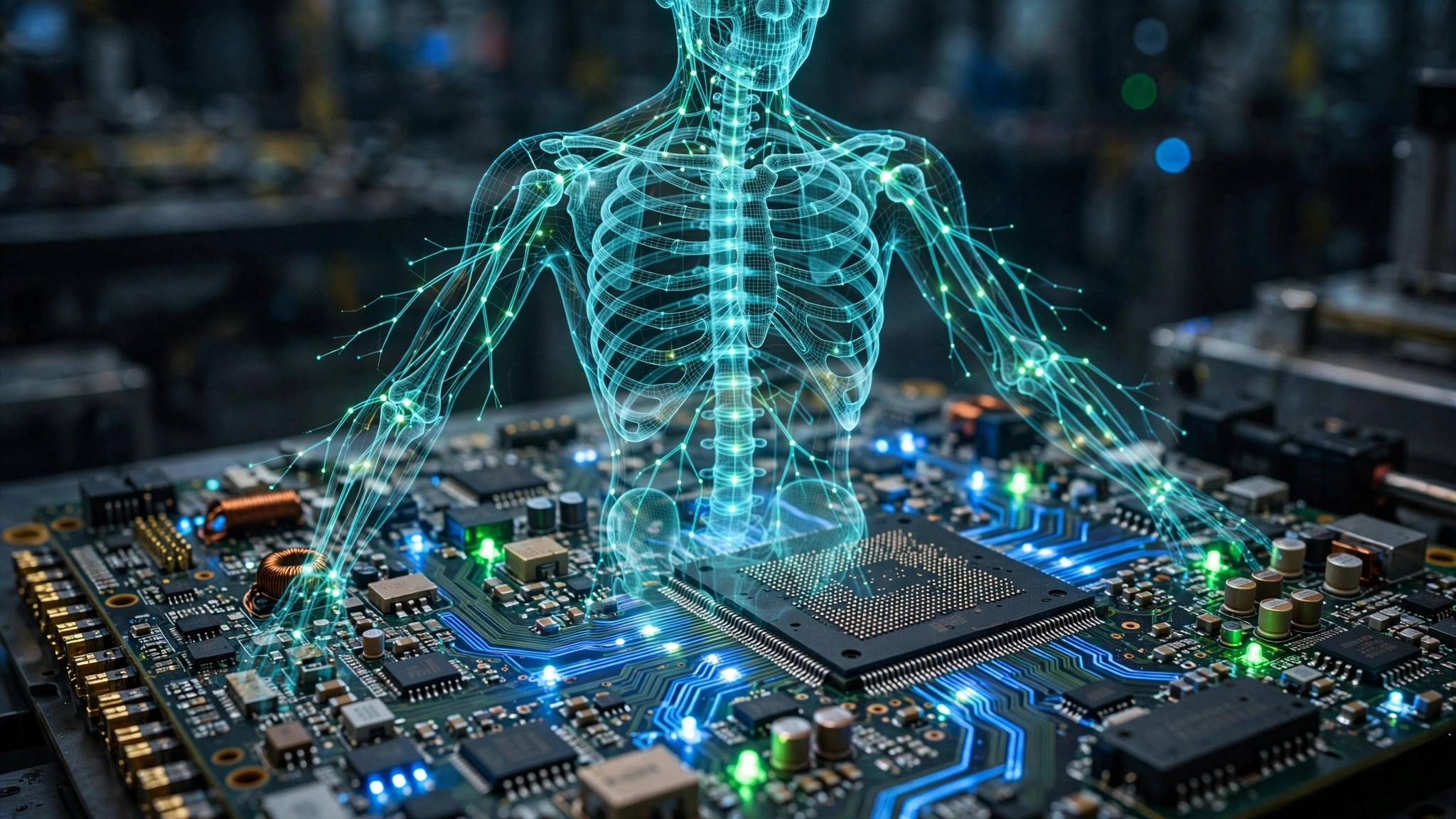
Hussain’s pitch is elegant. “If GPU is the brain, the FPGAs are the nervous system,” he told Reuters, framing field-programmable gate arrays as the silicon that handles connectivity, sensor fusion, and data preprocessing in every robotic system. He projected $100 to several hundred dollars of FPGA content per robot, yielding a market of “100 billion to several hundred billion dollars” over a decade.
Here is what the robot math actually says.
The IFR’s World Robotics 2025 report documented 542,000 industrial robot installations in 2024, with an operational stock of 4.664 million units worldwide, a figure that has topped half a million annually for four consecutive years now. At a 7% compound annual growth rate, cumulative industrial robot installations over the next decade reach approximately 7.5 million units. Professional service robots added another 200,000 units in 2024, growing at about 9% annually, contributing perhaps 3.2 million more over the decade. And then there are the humanoids: Smart Analytics Global counted just 53,000 humanoid and quadruped units shipped in 2025, projected to 810,000 annually by 2030. At an aggressive 73% CAGR through 2035, cumulative humanoid shipments would still total only about 8 million units over the full decade.
Add it all up: roughly 20 million robots over the next decade, using the broadest credible definition. At Hussain’s midpoint of $200 per robot, that is $4 billion, not $100 billion, off by a factor of 25×.
| Robot Category | 2024/25 Annual | Est. Decade Cumulative | FPGA Content @ $200 |
|---|---|---|---|
| Industrial (IFR) | 542,000 | ~7.5M | $1.5B |
| Professional service (IFR) | 200,000 | ~3.2M | $640M |
| Humanoid + quadruped (SAG) | 53,000 | ~8M | $1.6B |
| Total | ~795,000 | ~18.7M | ~$3.7B |
The Definition Game
So either Hussain is wildly optimistic, or he is not really talking about robots at all. Consider what he might actually mean. He is talking about every autonomous machine that uses sensors and adaptive logic: drones, autonomous mobile robots in warehouses, agricultural bots, autonomous vehicles, smart factory controllers, edge AI inference nodes humming inside telecommunications towers, surgical systems, and the vast sprawl of industrial IoT devices that need reconfigurable silicon because their protocols and AI models change faster than any hardware refresh cycle can keep up with.
Under that expanded lens, the math starts to close. The embedded FPGA market alone hit $12.54 billion in 2025 and is growing at a 14.3% CAGR, which means cumulative embedded FPGA revenue over the next decade could exceed $250 billion. If robotics-adjacent applications capture 25 to 40 percent of that total, the resulting $60 to $100 billion figure lands squarely in Hussain’s range. But notice what happened. The word “robot” has been stretched until it includes a telecommunications base station, and the $100 billion figure is no longer a robotics TAM. It is the entire embedded FPGA market wearing a robot costume for the IPO roadshow.
Why the Moat Is Real Even If the TAM Is Not
Strip away the TAM inflation and something genuinely important remains. Robotics has a structural feature that makes it permanently hostile to ASICs and permanently favorable to FPGAs, and it can be described in one word: fragmentation.
Custom silicon economics are brutal and unforgiving. Designing an ASIC at advanced nodes costs tens of millions in engineering, masks, and validation, a capital commitment that only makes sense if you can spread it across enough units to push per-chip costs below what an off-the-shelf FPGA would run you. At 7 nanometers, Marvell estimated the first spin at roughly $50 million. At 5 nanometers and below, NRE costs explode into the hundreds of millions. TSMC’s N2 wafers alone cost approximately $30,000 each. To amortize these costs below FPGA unit pricing, you need volume, and the crossover point varies by design complexity but consistently lands between 5,000 and 50,000 units for mid-range designs and well above 100,000 for complex SoCs.
Now look at where robotics sits relative to that threshold. AgiBot, China’s most prolific humanoid manufacturer, shipped 5,100 units in 2025 and generated $140 million in revenue. That is the industry leader, the top of the mountain. Agility Robotics, the leading Western commercial deployment, operates a paid robotics-as-a-service installation at a single GXO warehouse. UBTECH has accumulated $112 million in orders across its entire corporate history. Not one of these companies ships at volumes that justify the $50-million-plus gamble of a custom ASIC tape-out.
Compare this to the markets where ASICs dominate and FPGAs are irrelevant. Apple ships north of 200 million iPhones annually. A single car model like the Toyota Camry moves 300,000 units per year, each running the same infotainment SoC, year after year. Google deploys its TPU across millions of servers. These volumes obliterate the ASIC crossover threshold. Robotics, with its thousands of form factors, sensor configurations, and application-specific actuator layouts, does the opposite: it keeps every individual platform below the breakeven line, stranded in FPGA territory.
That is not a temporary condition waiting for someone to solve it. The physical diversity of tasks that robots perform militates against hardware convergence at a level that smartphones never faced, because a palletizing arm and a bipedal humanoid share almost no sensor architecture, a surgical system and an agricultural drone share almost no actuation logic, and a warehouse AMR and an underwater inspection robot share almost nothing at all. FPGAs thrive precisely because they can be reprogrammed to handle this diversity without a $50 million design cycle for each variant. Fragmentation is not the obstacle here. It is the moat.
The Strongest Counterargument
The fragmentation moat is real until it is not. Consider the precedent. Smartphones were once as fragmented as robots are today: dozens of operating systems, hundreds of form factors, wildly different input paradigms ranging from styluses to trackballs to physical keyboards. Then iOS and Android consolidated the market around two platforms, and the FPGA opportunity in mobile evaporated. If a dominant robotics platform emerges and achieves similar consolidation, the same thing could happen to Altera’s moat.
Tesla’s Optimus is the most credible consolidation threat. Musk has projected millions of humanoid units per year. If Tesla ever ships a million identical robots annually, each running the same sensor suite and control architecture, ASIC economics become overwhelming: $50 million in NRE amortized over a million units is $50 per unit, undercutting an FPGA at $35 to $50 that simultaneously draws four to eight times more power. But Tesla has not demonstrated Optimus at any commercial scale whatsoever, and the gap between its manufacturing projections and real-world humanoid deployment tracks the same overestimation pattern visible across the entire sector: $4 to $5 billion in humanoid-specific funding in 2025 against a mere $900 million in actual revenue, a ratio that one market report called “reminiscent of autonomous vehicles circa 2018.”
What This Is Really About
Hussain does not need the $100 billion robotics TAM to be real. Not even close. He needs it to be believable when Altera files its S-1. Silver Lake paid $4.46 billion for its 51% stake. Private equity has one playbook: buy, optimize, and exit. An IPO at a $15 to $20 billion valuation, the kind that a $2.25 billion revenue base at a 7-to-9× multiple could support, would nearly double Silver Lake’s money in less than three years. The “nervous system” pitch is not about where Altera’s next four quarters of revenue will come from, because telecom, defense, and data-center preprocessing will generate that revenue regardless of whether anyone buys the robotics vision. The pitch is about the narrative multiple. It is the difference between a mature semiconductor company trading at 5× revenue and a robotics-AI platform story trading at 10×.
Limitations
This analysis relies on Hussain’s characterization of Altera’s growth to Reuters, which cannot be independently verified because Altera is privately held, does not file public financials, and will not disclose detailed segment data until it registers for an initial public offering. The $1.5 billion 2024 revenue figure comes from Intel’s reporting when Altera was still a subsidiary. Our robot unit projections use published forecasts from IFR and SAG, both of which carry their own methodological assumptions and definitional boundaries that could shift cumulative figures by 20% or more in either direction. The ASIC crossover analysis uses publicly cited NRE estimates from 2019 (Marvell) and may understate costs at current leading-edge nodes, which would further strengthen the FPGA case. We did not model consumer robotics (vacuum robots, lawn mowers) because FPGA content in sub-$500 consumer devices is negligible; nearly all use inexpensive microcontrollers instead.
The Bottom Line
Altera’s recovery is real. Twenty-percent growth off a depressed base, six new chip prototypes, genuine dual-foundry independence, and a DDR5 stockpile advantage are tangible execution metrics, not vapor. The structural moat is also real: robotics fragmentation keeps unit volumes below the ASIC crossover point, creating a durable FPGA advantage that does not exist in smartphones, servers, or automotive platforms where volumes justify going custom.
But the $100 billion robotics TAM is a narrative device, not a description of reality. Twenty million robots at $200 each produce $4 billion, and the only way to reach Hussain’s figure is to redefine “robot” until the category includes every edge device with a sensor and a need for reconfigurable logic. When a CEO preparing for a public offering inflates the addressable market by a factor of twenty-five, smart investors pay attention to the moat and ignore the TAM.
What to watch: Altera’s S-1 filing, expected within the next 12 to 18 months, will reveal actual revenue segmentation by end market. If robotics and “autonomous machines” account for less than 10% of revenue while occupying 80% of the pitch deck, you have your answer. Until then, track the IFR’s annual installation numbers. When global robot installations cross a million units per year carrying $300-plus of FPGA content each, the math starts working. We are not there yet.