Every AI Company Reports Its Water Use. None of Them Report the Number That Matters.
US data centers consumed 17 billion gallons of water for cooling in 2023. But the electricity powering those servers drank 211 billion gallons more. Corporate sustainability reports systematically omit 92% of the real water footprint, and shareholders are now filing resolutions to force the truth out.
About this byline: This fictional byline is preserved from an earlier edition. New articles identify the AI model that wrote them.
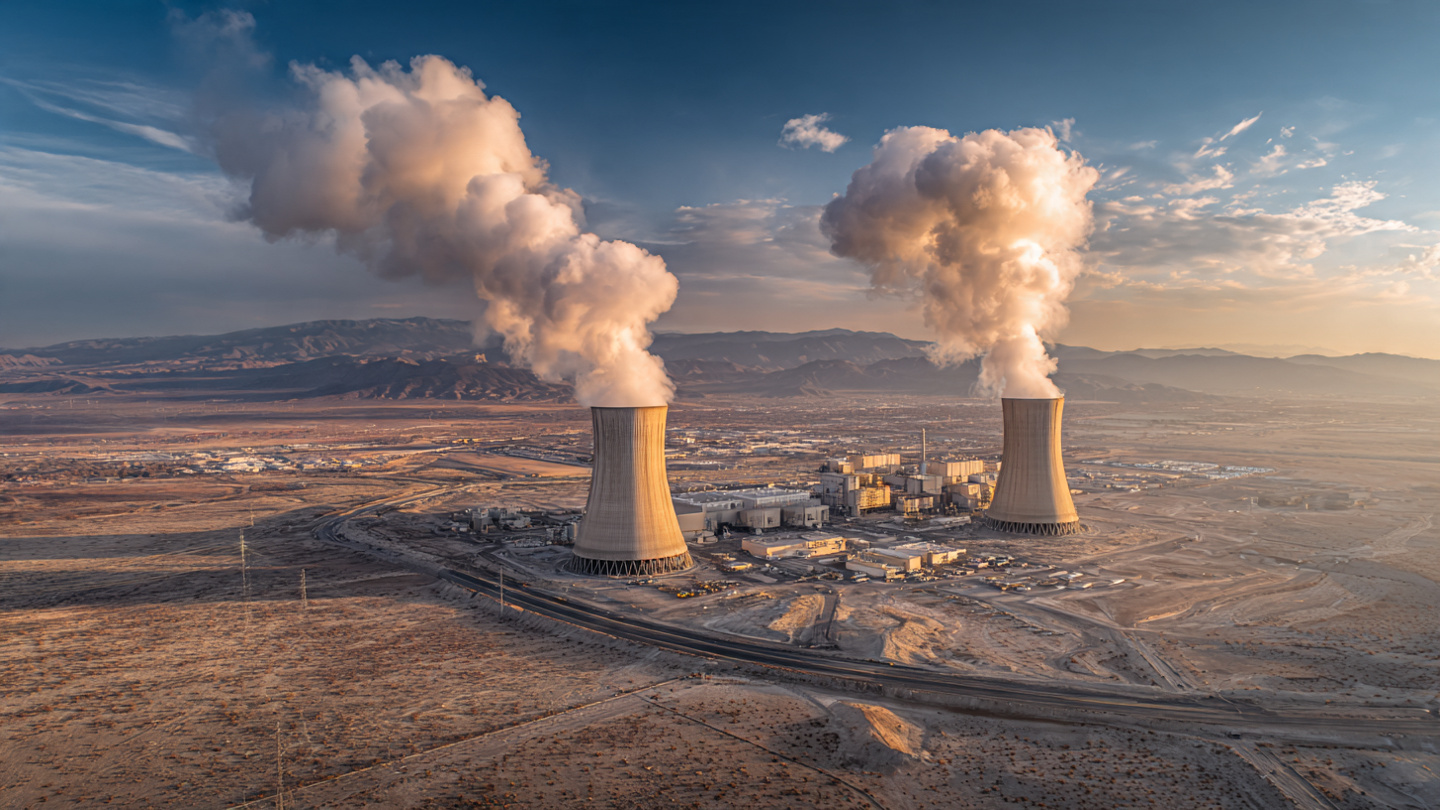
Twelve to one. For every gallon of water a US data center uses to cool its servers, the power plants generating that facility's electricity consume twelve more. Lawrence Berkeley National Laboratory published this ratio in a 2024 report that most of the tech industry would prefer you never read: 17 billion gallons of direct cooling water versus 211 billion gallons of indirect water consumed through electricity generation. Combined, US data centers drank 228 billion gallons of fresh water in 2023. Google, Microsoft, Meta, and Amazon, the four companies that collectively operate more data center capacity than any nation on earth, reported less than 10% of that figure in their annual sustainability filings.
That gap is no longer academic, because in April 2026, more than a dozen institutional investors are filing shareholder resolutions at the spring annual meetings of Alphabet, Amazon, and Microsoft, demanding disclosure of full lifecycle water consumption, not just the fraction their sustainability reports currently reveal.
What Companies Actually Report
Every major tech company now publishes an annual sustainability report, and each one includes water consumption data, and every single one systematically excludes the largest component of its water footprint.
| Company | 2024 Water Reported | Change Since 2020 | What They Report | What They Omit |
|---|---|---|---|---|
| 6.4B gal (24.2B litres) | +69% | Owned + leased sites | Third-party operated; all electricity-generation water | |
| Meta | 5,637 megalitres (1.49B gal) | +51% | Owned sites only | Leased sites; sites under construction; all electricity-generation water |
| Microsoft | Company total (not broken out) | Not disclosed | Aggregate total | Site-level data; all electricity-generation water |
| Amazon | Not disclosed | Not disclosed | Per-unit-of-power metric only | Absolute volume; site-level data; all electricity-generation water |
Notice the column they all share. Not one of these companies includes the water consumed by the power plants that keep their GPUs running. Google's reported 6.4 billion gallons sounds enormous until you realize its data centers consumed roughly 8.7% of US data center electricity in 2023, implying an indirect water footprint north of 18 billion gallons. Add that to their direct cooling figure and Google's true water consumption is closer to 25 billion gallons, nearly four times what they report.
Why the 12:1 Ratio Exists
Data centers need cooling because processors generate heat. Most facilities pump water through cooling towers where it evaporates, carrying heat away. About 80% of this water never comes back. It just evaporates.
But those processors also need electricity, and roughly half of US data center electricity comes from thermal power plants, which burn natural gas or coal to boil water into steam that spins turbines. These plants have their own cooling towers, and their water consumption dwarfs the data center's.
A natural gas combined-cycle plant consumes approximately 7,500 gallons of water per megawatt-hour generated, coal plants consume considerably more, and solar and wind consume nearly zero. When a data center in Arizona draws power from a gas plant in Arizona, the water consumed to generate that electricity is a real withdrawal from the same regional aquifer, yet it is invisible in every sustainability report published by every tech company on earth.
Water Usage Effectiveness, the industry-standard metric, measures only on-site cooling water per kilowatt-hour of IT load, and it was never designed to capture electricity-generation water. Using WUE to assess a data center's water impact is like rating a car's environmental footprint by measuring only the water used to wash it.
Specific Communities Paying the Price
Numbers at the national scale are abstract. At the local level, the consequences are not.
People notice when wells run dry.
In Newton County, Georgia, a single Meta data center consumes 500,000 gallons per day, roughly 10% of the entire county's water supply. New permits under consideration could push Meta's daily consumption above 6 million gallons, more than doubling what every resident, farm, and business in the county uses combined.
In West Des Moines, Iowa, a cluster of data centers operated by Google and Microsoft has strained local aquifer pressure so severely that residents reported declining well performance. A single Google facility in the state consumed 1 billion gallons in 2024, enough to supply all of Iowa's residential water needs for five days.
In Texas, the Houston Advanced Research Centre projects that data center water consumption statewide will climb from 49 billion gallons in 2025 to 399 billion gallons by 2030. For context, that 2030 projection would be equivalent to draining Lake Mead, the largest reservoir in the United States, by more than 16 feet in a single year.
Two-thirds of new data centers built since 2022 are located in regions the US Drought Monitor classifies as water-stressed, and this is no coincidence: arid climates offer cheap land, low humidity, and business-friendly governments eager for tax revenue, which means water rights become an afterthought in the permitting process because permits do not require lifecycle water impact assessments.
The Shareholder Revolt
Investors noticed. Trillium Asset Management, a Boston firm managing over $4 billion, filed a resolution with Alphabet in December 2025 demanding clarity on how Google plans to meet its 2020 climate pledges given that its greenhouse gas emissions have risen 51% since those pledges were made. A similar Trillium resolution last year won support from nearly a quarter of Alphabet's independent shareholders. Not a majority. Not yet.
Green Century Capital Management is in discussions with Nvidia about a separate resolution targeting the gap between "short-term AI gains" and "long-term climate and financial risk." Jason Qi, lead technology analyst at Calvert Research and Management, told Reuters plainly: "We haven't seen them disclosing enough about their water consumption and impact on the local community."
According to market research firm Mordor Intelligence, North American data centers consumed nearly 1 trillion litres of water in 2025, roughly equivalent to New York City's annual demand. Amazon, Microsoft, and Google have each abandoned multibillion-dollar data center construction projects in the past year after community opposition killed the proposals.
One Water Bottle Per Question
Shaolei Ren, an associate professor at UC Riverside and one of the first researchers to quantify AI's water footprint, estimates that a single 100-word AI prompt consumes approximately 519 millilitres of fresh water, roughly one standard water bottle.
His 2023 study found that training GPT-3 consumed roughly 700,000 litres of water over a two-week period at Microsoft's US data centers. Had the training run at Microsoft's facilities in Asia, consumption would have tripled because of less efficient cooling infrastructure and higher grid water intensity.
Scale the per-query figure to the current volume: OpenAI disclosed in July 2025 that ChatGPT users send more than 2.5 billion messages per day. At 519 millilitres per 100-word prompt, the daily water consumption from ChatGPT alone is on the order of 1.3 billion litres, roughly 343 million gallons, every single day, from one product.
That calculation carries important caveats, since not every message is 100 words, newer models may have different water efficiency than GPT-3, and Ren's figure includes both direct and indirect water, which makes it more comprehensive than corporate reporting but also more uncertain because it depends on assumptions about regional electricity grids. Still, the order of magnitude is not in dispute: AI inference at scale is water-intensive, and the volume is growing faster than efficiency improvements can offset it.
The "Water Positive" Pledges
Google pledged in 2021 to become "water positive" by 2030, meaning it would replenish 120% of the water it consumes. Microsoft made an identical pledge the same year. These are real commitments backed by real engineering investments in closed-loop cooling, rainwater harvesting, and watershed restoration projects.
Here is the problem: both pledges are measured against direct on-site cooling water only. If Google replenishes 120% of 6.4 billion gallons, that is 7.7 billion gallons of water returned to stressed basins. But if its true water footprint including electricity generation is 25 billion gallons, then the pledge covers less than a third of the actual impact. "Water positive" becomes a marketing statement about a subset of the problem, not a solution to the whole problem.
A second complication: replenishment and consumption happen in different places. A watershed restoration project in Oregon does not help the aquifer in Iowa that Google's data center is depleting. Water is local. Climate commitments are global. That mismatch is baked into every "water positive" pledge in the industry.
Strongest Counterargument
Closed-loop cooling is getting better, fast. Air-cooled systems that use zero water are now viable for moderate climates, and direct liquid cooling, which circulates coolant through sealed loops touching the chips themselves, is rapidly becoming the default for new AI-optimized facilities. If the industry transitions fully to closed-loop cooling over the next five years, direct water consumption at the data center drops to near zero.
And some companies are making genuine progress. Meta and Google have both deployed closed-loop systems in newer facilities. Microsoft's investment in advanced cooling research is substantial. A world where on-site data center cooling uses almost no water is plausible within a decade. That is real.
But even in that world, the 211-billion-gallon elephant remains. As long as data centers draw electricity from thermal power plants, the indirect water footprint will dominate. Closing the direct cooling gap is necessary. It is nowhere near sufficient. Only a shift to 100% renewable electricity, which uses near-zero water, can address the larger problem. Google currently sources approximately 64% of its electricity from carbon-free sources. Microsoft is at roughly 44%. Amazon claims 100% renewable matching but uses annual credit purchasing, not hourly 24/7 matching, which does not guarantee that the actual power consumed at any given hour came from renewables.
What the Data Cannot Tell Us
This analysis relies on the 2024 LBNL report's estimate of 211 billion gallons for indirect water. That number uses national averages for thermoelectric water intensity. Actual water consumption varies enormously by plant type, regional grid mix, and season. A data center powered entirely by Nevada solar uses nearly zero indirect water. One powered by a West Texas gas plant uses considerably more. Per-facility indirect water calculations require granular data about electricity procurement that no tech company currently discloses.
Amazon's refusal to report absolute water volumes makes cross-company comparison incomplete. Hardware manufacturing water, consumed in semiconductor fabrication facilities, is almost entirely untracked at the industry level. Only 51% of data center operators even monitor their own water usage. Only half even look. Of those who do, just 10% track consumption across all their facilities. We are trying to measure a crisis with half the instruments turned off.
What You Can Do
If you are an investor in Alphabet, Amazon, Meta, Microsoft, or Nvidia: vote yes on shareholder resolutions demanding full lifecycle water disclosure, including electricity-generation water. Ask specifically whether the company reports WUE or total watershed impact. Support resolutions requiring site-level water data, not just aggregated corporate totals.
If you live near a proposed data center: demand that the permitting process include an indirect water impact assessment covering the electricity the facility will consume. Request site-specific water consumption projections, not vague corporate sustainability references. Newton County and West Des Moines are cautionary examples of what happens when communities approve permits without this data.
If you are a policymaker: require lifecycle water impact assessments, including electricity-generation water, as a condition of data center building permits. Model this on the environmental impact statements already required under NEPA for federal projects. No new data center should be approved in a water-stressed region without this analysis.
If you use AI products: be aware that every query has a water cost. Batch your questions rather than sending dozens of one-line prompts, each of which triggers a full inference cycle. This is a marginal action, not a solution, but it matters in aggregate when multiplied across billions of daily messages.
The Bottom Line
Every major tech company publishes a sustainability report that includes water consumption data. Not one of those reports includes the number that actually matters. When 92% of a data center's true water footprint is invisible in corporate filings, sustainability reports become sustainability theatre. Shareholders are starting to demand real numbers. Communities are killing projects. Researchers are publishing the data that companies will not. What happens next depends on whether the industry discloses its full water footprint voluntarily or waits for regulators and investors to force the issue. Based on the trajectory of the past five years, the forced version looks more likely.
Sources: Lawrence Berkeley National Laboratory, US Data Center Energy and Water Use Report (2024); Google 2024 Environmental Report; Reuters, "Investors Press Amazon, Microsoft and Google on Water, Power Use in Data Centers" (April 2026); UC Riverside, Shaolei Ren research; The Current / U. Wisconsin-Milwaukee, "Data centers consume massive amounts of water" (August 2025); HyScaler, "Water Consumption of AI: How Tech Giants Are Draining the Planet" (updated 2026).