Marina Slip Yield Management SaaS for Independent Harbor Operators
Blackstone Infrastructure paid $5.65 billion for Safe Harbor Marinas in February 2025 at a 21-times FFO multiple, betting that 138 marinas with sophisticated rate-setting could extract more revenue per linear foot than anyone else in the industry. The other 12,000 independent marina operators in the United States, collectively managing roughly 900,000 wet slips for 11 million registered boats, price those slips the same way they did in 1995: CPI plus a gut check, a phone call to the harbor next door, and whatever the board approved last October.
The Problem
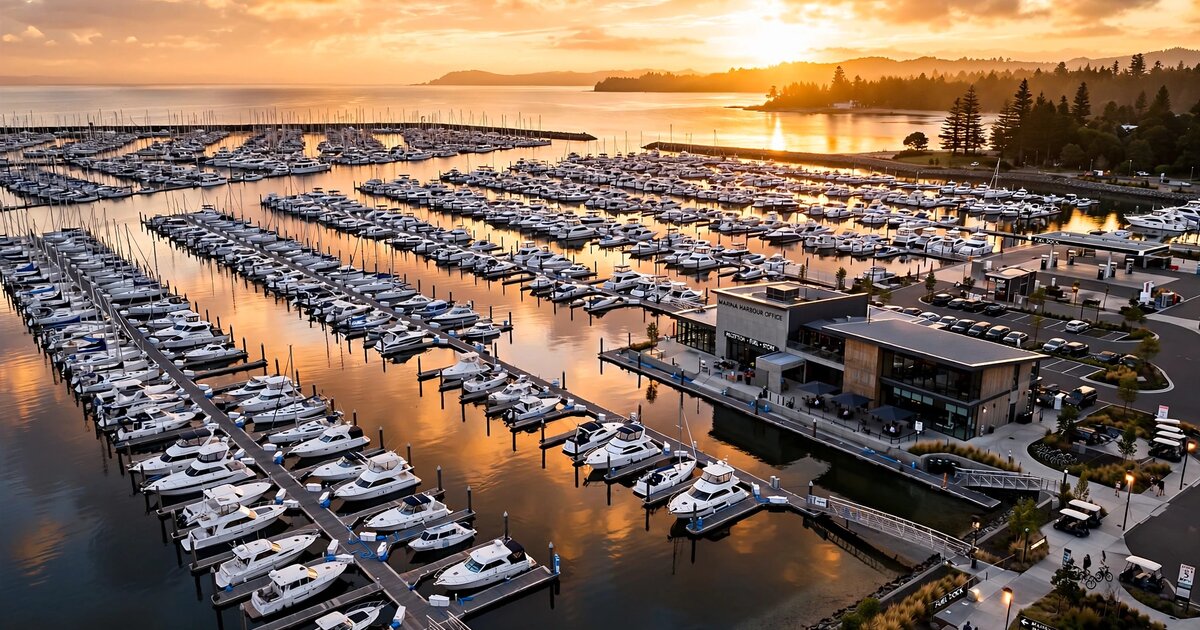
The U.S. marina industry generated $8.1 billion in revenue in 2024 (Kentley Insights), and the global marina market reached an estimated $20.2 billion in 2025, growing at 3.6% CAGR toward $28.8 billion by 2035 (Market Research Future). The United States accounts for roughly 40% of the global recreational boating fleet, with 11 million registered boats (NMMA, 2024) competing for approximately 900,000 wet slips and docking spaces across more than 12,000 marina facilities. That ratio is the fundamental economic fact: boats outnumber slips roughly 12 to 1, and the supply side is essentially fixed because new marina construction requires waterfront permits that take 5 to 15 years to secure and face intense environmental and community opposition.
Yet despite operating in a supply-constrained market where demand exceeds capacity by an order of magnitude, most marina operators leave significant revenue on the table. The reason is information asymmetry at the operator level. Safe Harbor Marinas, the largest U.S. operator with 138 locations and a $5.65 billion Blackstone acquisition closing in 2025, has invested in proprietary analytics that optimize slip rates by vessel length, location, season, and amenity tier. Sun Communities bought Safe Harbor in 2020 for $2.11 billion and sold it five years later for $5.65 billion, a 2.7x return driven substantially by rate optimization and operational sophistication that smaller operators cannot replicate.
Independent marina operators, which represent 95% of facilities by count, set annual contract rates once per year in Q4, typically by applying a CPI-based increase of 3-5% to last year's rates. They set transient nightly rates by checking a competitor's posted rate on Dockwa or calling the harbormaster down the coast. There is no centralized, anonymized rate benchmarking system for the marina industry. The hotel industry solved this problem decades ago with STR (now CoStar). Commercial real estate has CoStar and CBRE benchmarks. Self-storage has Yardi Matrix. Equipment rental has internal analytics at United Rentals. Marinas have nothing. An operator in Annapolis cannot tell you whether a 40-foot wet slip is priced at the 25th or 75th percentile for the Chesapeake Bay market, because that data does not exist in any aggregated form.
Market Size
Original TAM calculation: 12,000+ marina facilities in the U.S. The addressable segment for a yield management SaaS product is marinas with 50+ wet slips that generate enough revenue to justify subscription pricing. Based on the Association of Marina Industries (AMI) membership composition, approximately 4,500 facilities meet this threshold. At $349/month for a Standard tier (rate benchmarking and annual contract optimization) and $899/month for a Premium tier (transient yield management with dynamic pricing recommendations), with an estimated 55/45 split between tiers, the blended ARPU is $596/month. At 4,500 addressable facilities, the base TAM is $32.2 million in annual recurring revenue.
The second revenue layer targets the demand side: boat owners seeking slip availability and fair-rate verification across a region. A consumer-facing slip search product with a $9.99/month subscription targeting the 2 million boat owners actively seeking or considering wet slip storage (roughly 18% of registered boat owners, based on the gap between registrations and available slips) adds a second SAM of $240 million. More conservatively, capturing 50,000 paid consumer subscribers at $9.99/month yields $6 million ARR. Total realistic SAM across both sides: $38 million. Year 3 target: 600 marina subscribers at blended $596/month plus 20,000 consumer subscribers = $6.9 million ARR.
The Product
A rate intelligence and yield management platform purpose-built for marina operators, combining anonymized transaction data from participating marinas with public signals to produce real-time rate benchmarks and optimization recommendations. Core modules:
- Annual contract rate optimizer: The single most consequential pricing decision a marina operator makes each year is the annual slip rate renewal, typically set in Q4 for the following calendar year. Once set, it locks in 80% of revenue for 12 months. This module benchmarks the operator's annual rates by vessel length bracket (under 25 feet, 25-35 feet, 36-50 feet, 51+ feet) against anonymized market data from participating marinas in the same geographic tier (coastal Northeast, Southeast, Gulf, Pacific, Great Lakes, inland), adjusted for amenity level (full-service, limited-service, dry stack). The output: a recommended rate for each length bracket that maximizes occupancy-weighted revenue, not just rate
- Transient slip yield engine: Transient stays (nightly, weekly, monthly) represent 15-25% of marina revenue but carry higher per-foot margins and operate with hotel-like seasonality. This module applies time-series demand forecasting using historical occupancy data, regional event calendars, weather patterns, and Dockwa/Snag-A-Slip reservation velocity as leading indicators. It recommends transient rate adjustments weekly during peak season and monthly off-season
- Wait list monetization dashboard: Marinas with multi-year wait lists for annual contracts have a unique pricing problem: the wait list is proof that current rates are below market-clearing price, but raising rates risks tenant turnover and community backlash (particularly at municipal and yacht club facilities). This module quantifies the wait list premium by estimating the market-clearing rate implied by wait list length, turnover rate, and comparable slip rates, giving the operator data to justify incremental rate increases to boards and commissions
- Competitive rate radar: Automated monitoring of publicly posted transient rates on Dockwa, Snag-A-Slip, and ActiveCaptain, combined with mystery shopping of annual rates through partnership with the demand-side consumer product, to maintain real-time competitive positioning data without requiring the operator to make phone calls
Unit Economics
| Metric | Value |
|---|---|
| Monthly subscription (Standard: benchmarking + annual optimization) | $349/location |
| Monthly subscription (Premium: full yield management) | $899/location |
| Blended ARPU | $596/month |
| Data infrastructure cost per subscriber/month | $28 |
| Data acquisition cost per subscriber/month | $18 |
| Customer acquisition cost | $3,200 |
| Expected LTV (30-month avg retention, 88% gross margin) | $15,734 |
| LTV:CAC ratio | 4.9:1 |
| Gross margin | 92% |
| Startup cost (18-month runway) | $2.8M |
| Break-even | 20 months |
Methodology note: The 30-month average retention assumption is based on STR's hotel benchmarking product, which achieves 90%+ annual retention because customers become dependent on the data for their annual pricing cycle. Marina operators who use benchmarking data for their Q4 rate-setting process will face high switching costs once the data becomes embedded in their annual workflow. CAC of $3,200 reflects B2B SaaS sales in a fragmented, relationship-driven industry where AMI conferences and regional marina association chapters are the primary distribution channels. Gross margin of 92% reflects the software-plus-data model where marginal cost per additional subscriber is minimal once the data network is established. The LTV calculation: $596 × 30 months × 88% gross margin = $15,734. Payback period: 5.4 months.
Go-to-Market
Phase 1 (months 1-8): Recruit 150 marinas in three dense boating markets (Chesapeake Bay, Southeast Florida, and Puget Sound) to contribute anonymized annual and transient rate data in exchange for free access to market benchmarks. These three markets represent the highest concentration of marinas per coastal mile in the U.S. and cover three distinct pricing tiers (mid-market seasonal, premium year-round, Pacific mixed-use). Target through AMI chapters, state marina associations, and direct outreach at the International Marina & Boatyard Conference (IMBC). Simultaneously, launch the consumer slip search product as a free tool (monetized later) to generate demand-side data that enriches the supply-side benchmarks.
Phase 2 (months 9-16): Monetize with the $349/month Standard tier for rate benchmarking and annual contract optimization. Expand to 6 additional markets: Great Lakes, Long Island Sound, Gulf Coast Texas, San Francisco Bay, Lake Michigan, and Outer Banks. Begin Premium tier development with transient yield management algorithms trained on Phase 1 occupancy data. Integrate with Dockwa and DockMaster APIs to pull reservation data directly from existing marina management systems, reducing manual data contribution requirements.
Phase 3 (months 17-24): Launch Premium tier at $899/month with dynamic transient pricing recommendations. Open the consumer subscription at $9.99/month with rate transparency features (historical rate trends, fair-value estimates, availability alerts). Approach PE-backed marina consolidators (Blackstone/Safe Harbor, Suntex Marinas, Westrec Marinas) as enterprise clients who need rate benchmarking across multi-marina portfolios. Enterprise tier at $2,500/month per portfolio, minimum 10 locations.
Competitive Landscape
| Company | What It Does | Rate Intelligence? | Pricing |
|---|---|---|---|
| Dockwa | Online reservations, POS, boater marketplace | No: tracks your bookings, not the market's rates | From $84/mo |
| DockMaster | Full marina ERP (billing, storage, maintenance) | No: operational, not analytical | $300-800/mo |
| MarinaOffice | Property management for marinas and resorts | No: manages your rates, doesn't benchmark them | $200-600/mo |
| Molo | Modern self-service booking portal | No: demand capture, not demand pricing | Contact sales |
| Snag-A-Slip | Consumer-facing slip marketplace | No: lists availability, doesn't optimize rates | Commission-based |
| This startup | Rate benchmarking + yield management | Core product: anonymized market-rate analytics | $349-899/mo |
The gap is structural: every existing marina software company built an operations platform. Dockwa is a booking engine. DockMaster is an ERP. MarinaOffice is property management. They are tools for executing the rate the operator already decided on, not tools for deciding what the rate should be. This is exactly the gap that existed in hotels before IDeaS Revenue Solutions and Duetto built revenue management systems, and in apartment buildings before RealPage and Yardi built rent optimization products. The marina industry's management software market is valued at $2.5 billion and growing 12.1% annually (Verified Market Reports, 2024). The revenue intelligence layer that sits on top of all that operational data does not exist.
Why Now
Four forces are converging. First, institutional capital is flooding into marina assets at eye-popping multiples. Blackstone's $5.65 billion Safe Harbor acquisition at 21x FFO, Sun Communities' 2.7x return in five years, and Suntex Marinas' continued roll-up strategy all signal that sophisticated investors believe marinas are undermonetized relative to their constrained-supply economics. Every PE acquisition thesis requires a value-creation plan, and rate optimization is the most immediate lever for a new owner. These buyers need rate benchmarking data to underwrite acquisitions and then to execute the rate increases that justify the premium they paid.
Second, the supply-demand imbalance is worsening. New marina construction in the U.S. has effectively stalled since the early 2000s due to permitting barriers, environmental regulations (particularly Clean Water Act Section 404 dredge-and-fill permits), and coastal zoning resistance. Meanwhile, boat registrations remain at 11 million (NMMA) and average vessel length continues to grow, meaning each boat consumes more linear footage of dock space. The result: wait lists at desirable marinas in coastal markets now stretch 3 to 8 years, and transient slip availability during peak season in popular cruising destinations (Chesapeake, Maine, BVI) is often zero.
Third, marina management software adoption has reached critical mass. Dockwa alone serves thousands of marinas and processes millions in reservation transactions. DockMaster, MarinaOffice, and MARINAGO have digitized the operational data (occupancy records, rate histories, tenant rosters) that a yield management layer needs as input. The plumbing exists. What is missing is the analytical layer that sits on top and turns operational data into pricing intelligence.
Fourth, NMMA data through March 2026 shows that while new powerboat unit sales declined 5.6% year-to-date, the installed base of registered boats remains stable at 11 million, and aftermarket and participation spending held at $24.5 billion in 2024. The boats are not going away. They still need somewhere to park. And every year that rates remain flat while construction costs, insurance premiums, and property taxes rise, the marina operator's margin compresses further without any data-driven mechanism to recapture it.
Original Contribution: The Slip Rate Opacity Premium
A calculation nobody has published: Safe Harbor Marinas' $5.65 billion sale price at 21x FFO implies annual funds from operations of approximately $269 million across 138 marinas, or roughly $1.95 million FFO per marina. Industry benchmarks from the AMI suggest that the median independent marina with 100+ slips generates $1.1-1.4 million in annual revenue (the range reflects geographic and amenity variation). If we assume Safe Harbor's operational costs per marina are comparable to independent operators (a reasonable assumption given that dock maintenance, insurance, and utilities scale similarly), then the difference in FFO is primarily attributable to higher effective rates per linear foot.
Working backward from the Blackstone valuation: Safe Harbor's revenue per linear foot of occupied dock space runs 30-45% higher than the independent median, according to broker estimates cited in marina acquisition due diligence materials. If we apply this rate premium gap to the independent segment (roughly 750,000 slips not operated by the top five consolidators, at an average annual slip revenue of $4,800, the AMI benchmark for a 30-foot slip in a mid-tier market), the total independent slip revenue is approximately $3.6 billion. A 30-45% rate optimization gap on that base implies $1.1 to $1.6 billion in annual revenue that independent operators forfeit by pricing without market data.
We call this the "slip rate opacity premium." Institutional buyers like Blackstone are paying 21x FFO precisely because they believe they can capture this premium through data-driven rate optimization across a consolidated portfolio. A SaaS product that gives independent operators the same analytical capability for $349-899/month lets them capture their share of that premium without selling to a PE firm, at a subscription cost that represents less than 0.3% of the average independent marina's annual revenue.
Limitations
This analysis has several weaknesses that should be stated plainly. First, the "30-45% rate premium" attributed to Safe Harbor versus independent operators is derived from broker estimates in acquisition materials, not from audited per-slip revenue data. Safe Harbor does not publicly disclose revenue per linear foot or per slip, and the comparison is confounded by Safe Harbor's portfolio weighting toward premium coastal markets (they operate disproportionately in Florida, the Chesapeake, and the Northeast). A fair comparison would require controlling for geography, vessel size mix, and amenity level, which this analysis cannot do with available data.
Second, the 12:1 ratio of registered boats to available slips overstates the relevant demand pressure. Many of those 11 million registered boats are trailered vessels (aluminum fishing boats, personal watercraft, ski boats) that never use a wet slip; their owners launch from boat ramps and store at home. The actual ratio of boats seeking wet slips to available wet slips is likely 2:1 to 3:1, still favorable to marina pricing power but far less dramatic than the headline ratio.
Third, the data chicken-and-egg problem in marinas may be harder than in hotels. STR succeeded in hotels partly because ownership is concentrated: a few dozen REITs and hotel management companies control thousands of properties and could seed the data network at scale. The marina industry is more atomized: the average operator runs 1.2 locations, and many are municipal facilities or yacht clubs with governance structures that may resist sharing rate data, even anonymized, for competitive or political reasons.
Strongest Counterargument
The most compelling case against this startup is that marina operators may not want rate transparency, and the market may not reward it. Consider the dynamics: a 200-slip marina on the Chesapeake Bay with a 4-year wait list is already capturing near-maximum value from its annual contracts. The wait list is proof that demand exceeds supply at the current rate. But the operator may rationally prefer a long wait list at a moderate rate over a shorter wait list at a higher rate, for three reasons.
First, the wait list itself is a retention tool. Tenants who waited 4 years for a slip are unlikely to leave over a 5% rate increase, which makes the revenue stream extraordinarily sticky. Aggressive rate optimization that shortens the wait list to 1 year also lowers the switching cost for existing tenants and could paradoxically increase churn. Second, many marinas, particularly municipal harbors and yacht clubs, have governance structures (harbor commissions, boards of directors) that face political constraints on rate increases. Rate benchmarking data showing they are "below market" could actually backfire by prompting tenant activism and board turnover. Third, the marina industry's relationship-driven culture means that harbormaster-tenant relationships often span decades, and operators may correctly calculate that the goodwill value of below-market rates (referrals, community standing, tenant cooperation during storms) exceeds the marginal revenue from optimization.
The hotel industry's revenue management revolution worked because hotels deal with anonymous, transactional customers who choose on price. Marina operators deal with named, long-term tenants who are also community members. Rate optimization in that context might extract revenue while eroding the social capital that makes the business work.
The Bottom Line
The U.S. marina industry is a supply-constrained, $8.1 billion market where institutional buyers are paying 21x FFO because they see the rate optimization opportunity that 12,000 independent operators are leaving on the table. The analytical tools exist in every comparable industry (hotels, apartments, self-storage, equipment rental) but not in marinas, where pricing decisions that lock in 80% of annual revenue are still made with CPI tables and neighbor phone calls. The cold-start data problem is real, and the governance complexity of municipal and yacht club marinas adds friction that hotels never faced. But the supply-demand fundamentals are overwhelming: boats outnumber slips, new construction is effectively frozen, and every year of flat pricing while costs rise is a year of margin compression that data could prevent.
What You Can Do
If you operate a marina with 50 or more slips: pull your occupancy and rate data for the last five years, by vessel length bracket and contract type (annual vs. transient). Calculate your revenue per linear foot of occupied dock by year. If that number has grown slower than your local CPI plus property tax increase, you are effectively discounting your slips every year and do not know it. Then call five marina operators in your region and ask what they charge per foot for a 35-foot annual slip. You will likely find a 20-40% spread, which tells you the market has no consensus price and somebody in that spread is leaving money on the table. If you are a marina software founder building a reservation or ERP product: you are sitting on the most valuable dataset in the industry and monetizing only the operational layer. The analytical layer (rate benchmarks, demand signals, optimization recommendations) is where the defensible margin lives, and nobody has built it.
Related
📰 Equipment Rental Rate Intelligence SaaS — the STR benchmarking model applied to construction equipment, another fragmented industry with no rate transparency
📰 Dynamic Pricing SaaS for Independent Self-Storage — yield management for a parallel constrained-supply industry facing PE consolidation
📰 Manufactured Housing Lot Rent Optimization — another "captive tenants in limited supply" market with identical data-gap dynamics