Heat Pump Quotes for the Same House Differ by $10,000. The $2,000 Federal Credit Just Expired.
Heat pumps have outsold gas furnaces for four consecutive years, and in September 2025 they outsold central air conditioners for the first time. Roughly 4 million units ship per year into a buying process that is functionally broken: quotes for the identical 2,000-square-foot home differ by more than $10,000, over 65% of systems are installed incorrectly, and the federal tax credit that anchored every quote expired on December 31, 2025. What remains is a 50-program patchwork of state and utility rebates that changes quarterly. Nobody has built the marketplace that standardizes the bid, files the rebate, and independently verifies the install.
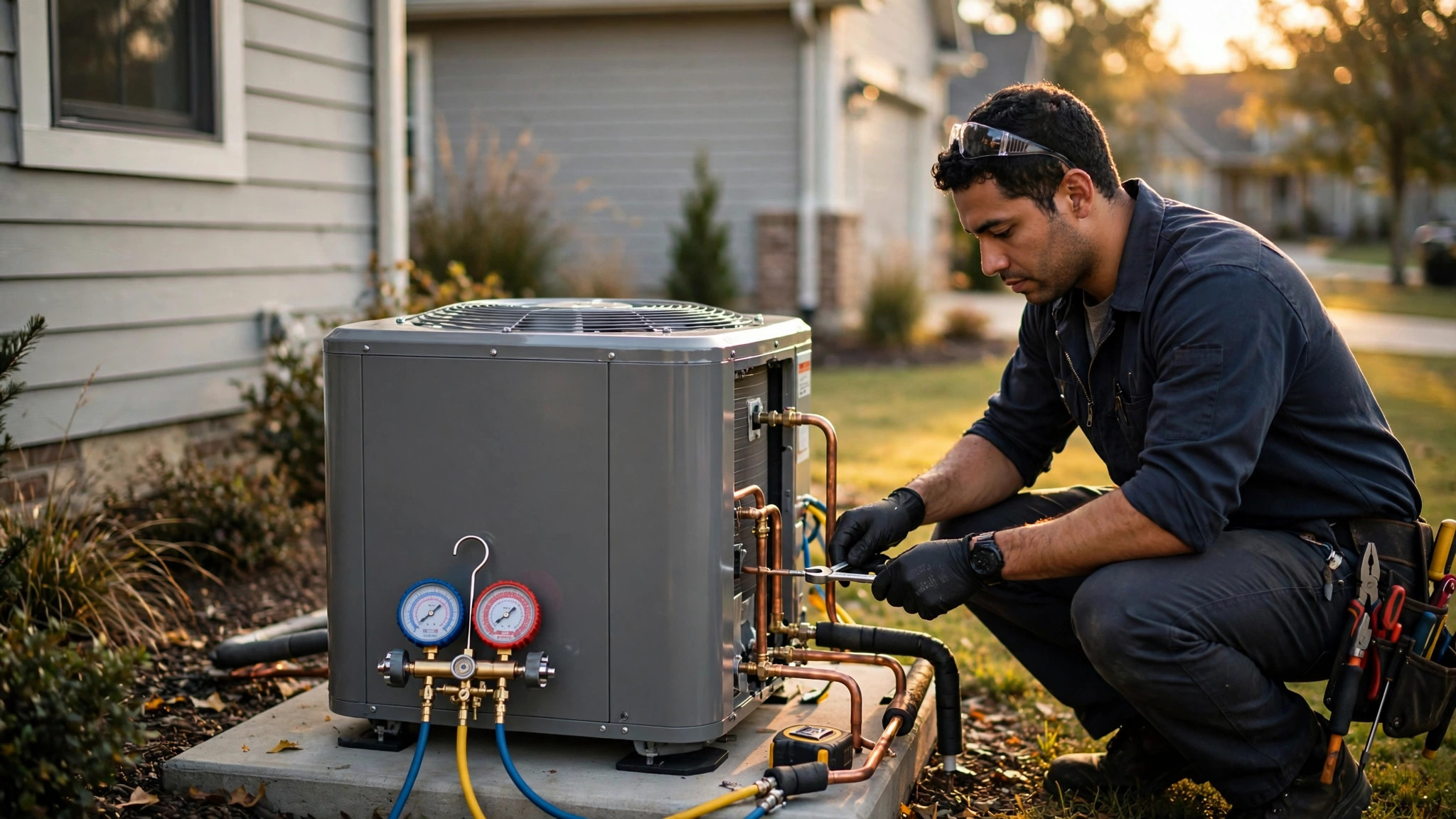
The Problem
The heat pump has won the equipment war and lost the buying experience. Canary Media's analysis of AHRI data shows heat pumps outselling gas furnaces for four years running, and in September 2025 heat pump sales beat central air conditioners for the first time ever. Through April 2026 the gap narrowed further: heat pump sales up about 1% while AC sales fell nearly 8%. A decade ago, two conventional ACs sold for every one heat pump. The technology crossed over. The transaction did not.
Buying a heat pump in 2026 means entering one of the most information-asymmetric transactions in American homeownership. Rewiring America estimated the 2024 median cost of a central heat pump system at $25,000 for a medium-size home, roughly double a comparable gas furnace plus AC. Worse, the price is effectively random: the heat pump research firm Laminar Collective found that installer quotes for the same 2,000-square-foot Boston home differed by more than $10,000. Most homeowners collect one or two quotes, have no way to compare equipment tiers or scope line items, and sign the bid from whoever answered the phone first.
Then the work itself is usually wrong. A U.S. Department of Energy review estimates that more than 65% of residential HVAC systems have been improperly installed or are performing sub-optimally, consuming 20 to 30% more energy than necessary. NREL researchers quantified just two common faults, indoor airflow and refrigerant charge, at 20.7 terawatt-hours per year of wasted energy across U.S. single-family homes, a 9% increase over fault-free operation costing homeowners approximately $2.5 billion annually in utility bills. Heat pumps, the study notes, account for a disproportionate share because they run more hours and their heating-mode performance is more sensitive to faults. The industry's own installers know it: EnergySage's 2024 contractor survey found installers recommend heat pumps only about half the time, citing cost, complexity, and fit concerns.
And the incentive math that justified the purchase just broke. The federal 25C energy-efficient home improvement credit, worth up to $2,000 per year on a qualifying heat pump, expired on December 31, 2025. What remains is the federal Home Electrification and Appliance Rebates program (HEEHRA/HEAR): $4.5 billion flowing through state energy offices, up to $8,000 per heat pump for income-qualified households, capped at $14,000 per household, running through September 30, 2031. But in mid-2026 the Department of Energy issued guidance ending rebates for fuel-switching, so the money now covers electric-to-electric upgrades only, with implementation varying by state. Layer on 50-plus utility rebate programs, each with its own equipment lists, participating-contractor requirements, and reservation windows. California's statewide heat pump incentives periodically pause reservations when funding fills. As one rebate-tracking startup put it: "A contractor quote that still assumes the 25C credit overstates the savings." A large share of quotes in circulation right now are wrong by $2,000, and neither the homeowner nor, often, the contractor realizes it.
The Gap in the Market
Every player touches one piece of the transaction. Nobody owns the whole thing, and the pieces actively conflict: the contractor who quotes the job is the same party responsible for sizing it correctly and filing the rebate paperwork, which is like letting the fox run the henhouse audit.
| Company | What They Do | What's Missing |
|---|---|---|
| EnergySage | The trusted solar marketplace (770,000+ homeowners). Launched a heat pump marketplace in select states in 2022 and expanded it in H2 2025. Its H2 2025 report shows median post-incentive costs from $9,471 in North Carolina to $22,550 in Nevada, with California at $18,944 and Massachusetts at $20,362. | Solar DNA and solar economics: the heat pump section is a quote-comparison add-on, not the core product. No rebate filing service, no standardized scope (quotes remain apples-to-oranges), no post-install verification. Coverage is still select states, and the incentive data in its reports is retrospective pricing analysis, not a live filing engine. |
| Local HVAC contractors (~100,000+ shops) | Do the actual installs. The good ones perform Manual J load calculations, pull permits, and handle utility rebate forms for their territory. | Quotes vary by $10,000+ for identical work (Laminar). Most shops operate in one utility territory and cannot navigate rebate programs two counties over. Rebate paperwork is pure cost to them, so it gets done sloppily or not at all. Their incentive is to sell the equipment they stock, not the system the house needs. |
| Utility rebate programs (Mass Save, NYS Clean Heat, TECH Clean California, etc.) | Fund the incentives. Some, like New York's, publish contractor guidance tying equipment tiers to credit eligibility. | Fragmented by design: 50+ programs, 50+ equipment lists, 50+ contractor enrollment processes. No cross-program engine tells a homeowner in a border ZIP code which stack applies. Reservation pauses and rule changes (like the 2026 fuel-switching reversal) propagate by PDF, not API. |
| Pearl Certification | National home-performance certification; launched an Electrified Home badge to document and reward fully electrified homes for resale value. | Certification is a point-in-time badge for the listing, not a transaction platform. It does not source contractors, standardize bids, file rebates, or verify the install met spec. Useful at sale; silent at purchase. |
| Dandelion Energy (geothermal) | Vertically integrated geothermal heat pump installer, owns the whole job. | Geothermal only (a single-digit share of the market), and vertically integrated installation is exactly the model the market just rejected: see BlocPower below. Cannot scale across climates or housing stock that needs air-source systems. |
| BlocPower | The Biden-era electrification darling: raised $154 million in 2023, signed city-scale retrofit deals, financed installs directly. | Liquidating as of August 2026. Co-founders resigned in 2024. The full-stack model (originate, finance, install, own the asset) collapsed under interest rates, frozen federal funds, and unit economics that never worked. Its death is the cautionary tale that defines what not to build, and it leaves a vacuum in structured electrification delivery. |
| Rebate calculators (DuloCore et al.) | Free ZIP-code tools that estimate which utility, state, and income-qualified programs a household can claim. | Estimation is not execution. They do not match installers, do not file paperwork, do not track reservation windows, and do not verify the install qualifies. A calculator tells you money exists; it does not get it into your bank account. |
| Angi / HomeAdvisor / Thumbtack | Generic lead generation for home services, including HVAC. | They sell homeowner contact info to contractors, which misaligns every incentive: the platform is paid by the contractor, not the homeowner. No heat pump specialization, no scope standardization, no incentive data, no quality verification. The contractor who buys the most leads wins, not the one who sizes the system correctly. |
The structural gap: quoting, incentive capture, and quality verification are currently performed by the same party with a financial interest in all three being sloppy. Marketplaces compare quotes but don't file rebates. Rebate programs fund installs but don't police quality. Certifiers badge outcomes but don't touch transactions. The dead company in the table is the most instructive: BlocPower proved that owning the install is fatal, which means the winning structure is asset-light, earns the transaction through paperwork nobody else will do, and verifies quality independently.
The Solution
A transaction platform for residential heat pump installs that separates the three jobs currently done badly by one party: bid against a standardized scope, capture every incentive dollar, and verify the install independently.
1. Standardized quote engine (free to homeowner): The homeowner enters their address and answers ten questions. The platform pulls assessor records (square footage, vintage, stories), IECC climate zone, and utility territory, then generates a standardized scope of work: Manual J-style load estimate range, equipment tier options (cold-climate vs. standard), ductwork assumptions, electrical panel status, and permit requirements. Three pre-screened, heat-pump-specialist contractors bid against the identical scope, line item by line item. The $10,000 Laminar spread collapses because bidders can no longer hide margin in scope ambiguity. Contractors pay per matched project, not per lead, so they only pay when they are actually competing.
2. Rebate and incentive orchestration ($299 flat or 5% of rebate secured): The actual wedge. A live 50-state engine tracks HEEHRA/HEAR state programs, utility rebates, and state tax incentives: eligibility rules, equipment lists, participating-contractor requirements, reservation windows, and funding pauses. It verifies the homeowner's income tier against AMI tables, confirms the quoted equipment qualifies, pre-fills every application, files on the homeowner's or contractor's behalf, and tracks payout. When DOE reverses the fuel-switching rule mid-program, the engine updates overnight; the contractor's quote template does not. This is paperwork contractors hate and homeowners cannot do, which is precisely why it earns the transaction.
3. Independent commissioning verification ($249): The trust layer the DOE data demands. After install, a certified third-party tech (not the installer) performs a commissioning check: refrigerant charge, static pressure, indoor airflow, duct leakage, and controls setup, measured against the quoted scope. The homeowner gets a commissioning report; the installer gets a quality score that feeds their marketplace ranking. Several utility rebate programs already require documented commissioning for the higher incentive tiers, so this product doubles as a rebate unlock. Over 65% of systems have faults; the platform that documents the 35% that don't becomes the quality standard the industry lacks.
4. Contractor OS ($249/month per contractor): The B2B SaaS that makes the marketplace sticky. Quoting tool with the live incentive engine built in (every quote shows accurate, current rebates, never the dead 25C), rebate paperwork automation, Manual J integration, and financing pre-qualification. A two-truck shop in Worcester cannot build a 50-state incentive database; renting it for $249/month is an easy sell, and every contractor on the OS is a supply-side node for the marketplace.
5. Point-of-sale financing attach (1-2% referral): At a $20,000 ticket, most buyers finance. The platform pre-qualifies buyers and routes them to heat-pump-friendly lenders (the solar industry's Mosaic/GoodLeap playbook, applied to HVAC). The lender pays the referral fee; the homeowner gets one application instead of a contractor's captive finance desk.
The Math: The Quote-Variance Tax
This analysis assembles an original calculation nobody has published: the annual consumer cost of heat pump price opacity, built from the three hardest numbers in the space.
Start with volume. AHRI data shows U.S. heat pump shipments running near 4 million units per year (3.43 million through November 2025, a down year; 3.90 million in the same period of 2024). Assume roughly 3.5 million residential installs per year after inventory and light-commercial use.
Now the spread. Laminar Collective measured a greater-than-$10,000 gap between the highest and lowest quote for one identical 2,000-square-foot Boston job, against Rewiring America's $25,000 median system cost. That is 40% price uncertainty on a five-figure purchase. Most homeowners collect one or two quotes and cannot normalize scope, so a large share of buyers pay well above the competitive price.
Be conservative. Assume standardized three-bid competition on identical scope saves the average buyer just $2,500 relative to the status quo, only one-quarter of the observed Laminar spread. Across 3.5 million annual installs, the addressable overpayment is $8.75 billion per year. If a marketplace moved even 10% of buyers onto standardized competitive bids, that is $875 million per year in consumer surplus created, against which a 10% take rate is trivially defensible.
The quality side has its own math. NREL's $2.5 billion per year in fault-driven utility waste covers central ACs and heat pumps together, with heat pumps responsible for what the researchers call a disproportionate fraction. Attribute half to heat pumps: $1.25 billion per year in avoidable energy bills from bad installs alone, before counting comfort complaints, shortened equipment life, and warranty disputes. A $249 commissioning check that catches even a fraction of the 65%-fault rate pays for itself in under two years on energy savings, which makes it sellable both to homeowners and to the utility programs funding the rebates.
Revenue Model
| Revenue Stream | Amount | Notes |
|---|---|---|
| Marketplace take rate | 8-12% of installed contract (~$1,600-2,400/job) | Paid by contractor per won project, not per lead. Blended ~$2,000 at a $20K ticket. |
| Rebate filing service | $299 flat or 5% of rebate secured | Homeowner or contractor pays. On an $8,000 HEEHRA rebate, 5% = $400. |
| Commissioning verification | $249 per install | Third-party tech network. Doubles as rebate-tier unlock for utility programs. |
| Contractor SaaS | $249/month per contractor | Quoting + live incentive engine + paperwork automation. The supply-side lock-in. |
| Financing referral | 1-2% of financed amount | Paid by lender. ~$300 on a $20K financed job at 1.5%. |
Unit economics per facilitated install: Blended revenue of ~$2,400 ($2,000 take + $160 expected rebate fee at 40% attach + $62 commissioning at 25% attach + $300 financing at partial attach, rounded). Customer acquisition via high-intent search ("heat pump installation cost [city]"): estimated $350-450 per booked install. Payback is immediate; the business is contribution-positive from the first job. Contractor SaaS adds $2,988/year per contractor in high-retention recurring revenue once the quoting tool becomes the shop's system of record.
Market Size
TAM: ~3.5 million U.S. residential heat pump installs per year (derived from AHRI shipment data running near 4M units annually) at a ~$20,000 blended installed ticket (between Rewiring America's $25,000 median and EnergySage's $9,471-$22,550 post-incentive state medians): ~$70 billion per year in residential heat pump installation spend. For context, GM Insights values the total U.S. residential HVAC equipment market at $15.4 billion in 2024 with heat pumps at $7.4 billion, but equipment is a fraction of the installed ticket; the install labor, ductwork, electrical, and permitting are where the dollars concentrate.
SAM: Installs in rebate-active, high-cost, high-variance markets (Northeast, California, Pacific Northwest), where the quote-standardization and rebate-filing wedge has the most leverage and where state plus utility programs are live. Roughly 40% of national installs: ~$28 billion per year.
SOM (year 3): 30,000 facilitated installs (2.1% of SAM unit volume) at $2,400 blended revenue = $72M. Contractor SaaS: 1,500 shops × $249/mo × 12 = $4.5M. Total year 3 revenue: ~$76M. EnergySage's 770,000-homeowner base in solar suggests the demand-aggregation playbook works; heat pump tickets run higher, so the take-rate math is more forgiving.
Why Now
The $2,000 credit died and quotes haven't caught up. The 25C expiration on December 31, 2025 created a systematic $2,000 error in the quote stock. Every contractor template, every utility bill insert, and every "what will it cost" calculator built before 2026 overstates savings. A platform whose quotes are incentive-accurate by construction has an immediate, legible advantage over every incumbent quoting process, and the error compounds every month stale templates circulate.
The rebate patchwork is at maximum complexity. HEEHRA's $4.5 billion is flowing through state programs with different rules, reservation pauses, and a mid-2026 federal reversal on fuel-switching that redefined eligibility after programs launched. Complexity is the moat: a static PDF guide is obsolete quarterly, while a live filing engine gets more valuable with every rule change.
Demand has crossed into the mainstream. Heat pumps outsold furnaces four years running and beat ACs head-to-head in September 2025. The buyer is no longer the early adopter who enjoys researching SEER2 ratings; it is the furnace-replacement buyer who needs three trustworthy bids by Friday. That buyer is exactly who a standardized marketplace serves.
BlocPower's corpse cleared the field. The August 2026 liquidation ended the debate about whether the full-stack model works. It doesn't. The capital, talent, and utility partnerships assembled for asset-heavy electrification are now stranded, and the asset-light marketplace that learns from that failure has an open lane and a cautionary tale for every pitch deck.
The quality crisis is becoming a financial crisis. At 65%+ fault rates and $2.5 billion per year in waste, bad installs are scaling with the market. Utility rebate programs are tightening verification requirements, manufacturers are watching warranty claims, and homeowners are discovering their $25,000 system performs like a $15,000 one. Independent commissioning stops being a nice-to-have when the money behind the rebates demands proof.
Refrigerant transition confusion. The AIM Act phase-down has the industry mid-switch from R-410A to R-454B equipment, which Canary Media cites as one of the temporary headwinds suppressing 2025 sales. Equipment availability, pricing, and contractor familiarity are all in flux, which widens the information gap between contractors and homeowners and increases the value of a neutral scope.
Startup Costs
| Category | Cost | Notes |
|---|---|---|
| Marketplace web app + standardized quote engine (6 months) | $280K | 2 full-stack devs + 1 designer. Scope generator, contractor bidding, homeowner comparison view, payments. |
| Live incentive engine + filing operations (50-state) | $200K | 1 backend dev + 2 ops researchers. Program database, eligibility logic, application automation, reservation tracking. The moat; budget for continuous updates. |
| Contractor SaaS (quoting + incentive lookup) | $150K | 1 dev + UX. Manual J import, live rebate display in quotes, paperwork automation. |
| Commissioning tech network | $120K | Certification program, QA tooling, scheduling/dispatch. Recruit from NATE-certified techs and retired installers. |
| Legal and regulatory | $80K | State contractor-referral and lead-gen regulations vary; some states restrict pay-per-project fees. Structure review in launch states. |
| Pilot (2 metros, 500 installs) | $120K | Boston + Sacramento: high variance, live rebate programs, cold-climate and mild-climate coverage. Subsidized commissioning to seed quality data. |
| Operating buffer (12 months) | $100K | Cloud, incentive data subscriptions, support tooling, insurance. |
| Total | $1.05M |
Limitations
AHRI shipments are not installs. The ~4M annual unit figure includes distributor inventory swings, some light-commercial units, and replacement parts channels; the 3.5M residential install assumption could be off by 15-20% in either direction, and 2025 was a down year (shipments fell 12% year-to-date through November), so a multi-year average would be more robust than any single year.
EnergySage's state medians are post-incentive prices in select states, not national pre-incentive costs, and its heat pump marketplace is still young; using them to triangulate a $20,000 blended ticket mixes methodologies. Rewiring America's $25,000 median is a modeled 2024 figure for central systems specifically.
The Laminar Collective finding is a single Boston home. Quote variance in Phoenix or Atlanta, where installs are simpler and competition denser, is likely smaller; the $2,500 assumed savings from standardized bidding is an assumption, not a measurement, and the 40% price-uncertainty framing should not be quoted as a national average.
NREL's $2.5 billion fault-waste figure is modeled from field fault distributions, not metered, and attributing "about half" to heat pumps is our allocation based on the study's "disproportionate fraction" language, not the authors' number.
Rebate program rules are the business's foundation and its fragility: a federal administration change already rewrote fuel-switching eligibility mid-stream in 2026, and HEEHRA funding depends on appropriations politics through 2031. The engine must be rebuilt continuously, which is both the moat and the treadmill.
BlocPower's failure is read here as a verdict on the full-stack model, but it is also consistent with a weaker-demand story: if homeowners fundamentally won't pay electrification premiums at scale, a marketplace has a demand problem no take rate fixes. The 4M-unit shipment base argues against that, but shipments measure replacement need as much as enthusiasm.
Strongest Counterargument
Contractors own the customer, and they will disintermediate any marketplace the moment it works. This is the Angi story: lead-gen platforms start as matchmakers, contractors learn to hate the toll, the best shops stop buying leads, and the platform is left with the desperate and the unlicensed. HVAC contractors are famously independent, relationship-driven, and hostile to middlemen. A heat pump marketplace is one bad review cycle away from becoming a lead-gen toll booth with a nicer website.
There are three answers, and the honest version is that two of them are partial. First, EnergySage already proved homeowners will use a neutral marketplace for a five-figure energy purchase: 770,000 homeowners and a documented 20% savings claim in solar, a transaction with the same trust dynamics. Heat pump tickets match or exceed solar tickets, so the acquisition economics are at least as good. Second, the rebate-filing wedge is not lead-gen: it is paperwork the contractor loses money doing and the homeowner cannot do, which earns the transaction rather than taxing it. A contractor who gets a pre-qualified buyer with rebates pre-filed is buying a closed deal, not a phone number.
Third, and least comfortable: the disintermediation risk is real, and the defense is the commissioning network. An independent quality score, built from third-party verification data no contractor can self-issue, becomes the credential homeowners ask for by name. Contractors can route around a lead fee; they cannot route around the buyer demanding the commissioning report their utility rebate requires. The marketplace survives by owning the trust asset, not the introduction.
What You Can Do
If you're buying a heat pump: Get three quotes against a written scope you control, not three scopes from three salesmen. Require a Manual J load calculation in the contract, not a rule-of-thumb tonnage. Check your state's energy office and DSIRE for current rebate programs before you sign, and strike any quote that still lists the 25C federal credit: it expired December 31, 2025, and a contractor quoting it is working from a stale template. Ask for a commissioning report (refrigerant charge, static pressure, airflow) as a contract line item.
If you're an HVAC contractor: Rebate paperwork is becoming a competitive weapon. The shops that file HEEHRA and utility incentives accurately will close more jobs at higher tickets than the shops quoting stale credits. Get on your utility's participating-contractor list now, before the reservation windows tighten, and consider that a $249/month quoting tool with a live incentive engine is cheaper than one lost job.
If you're building this: Start with the rebate engine, not the marketplace. Filing incentives for existing contractor partners generates revenue from day one, builds the program database that becomes the moat, and creates the contractor relationships that seed marketplace supply. Launch in Massachusetts and California: highest quote variance, live state programs, and contractors already drowning in paperwork. The marketplace is the second act; the filing service is the business.
The Bottom Line
Four million heat pumps a year flow through a buying process with 40% price uncertainty, a 65% installation fault rate, and an incentive system that just lost its federal anchor and replaced it with a 50-program patchwork that changes quarterly. EnergySage proved the marketplace model in solar but treats heat pumps as a side project. BlocPower proved the full-stack model dies. What remains is the asset-light structure nobody has built: standardized competitive bids that collapse the $10,000 spread, a live rebate engine that files the $8,000 HEEHRA checks homeowners are currently leaving behind, and independent commissioning that turns the DOE's damning quality data into a trust asset. The equipment won. The transaction is still up for grabs, and the company that owns it collects a toll on $70 billion a year of installs.