1.36 Billion Parcels, $47 Each: Duty Compliance for the Importers De Minimis Left Behind
For a decade, more than a billion small parcels a year crossed the US border duty-free under the $800 de minimis exemption. The exemption is gone: suspended worldwide in August 2025 and repealed by statute starting July 2027. Every parcel now needs a 10-digit tariff classification, a declared country of origin, an importer of record, and a customs bond. The 221,000 small and mid-size American businesses that import goods never built a customs department, because they never needed one. Now the paperwork costs more than the parcel, and nobody sells them the software to survive it.
The Problem
Picture a seller on Amazon who moves replacement vacuum filters. She buys them from a factory in Shenzhen for $1.10 a unit, sells them for $14.99, and until last year the parcels crossed the border under the de minimis exemption: $800 or less per person per day, duty-free, minimal paperwork, a system CBP says grew from 134 million shipments in 2015 to 1.36 billion in fiscal 2024, more than four million packages a day. Her entire business was designed around the assumption that customs was someone else's problem. It was a good assumption. For ten years, it was true. Then, on August 29, 2025, an executive order suspended duty-free de minimis treatment for all countries. Shipments from China and Hong Kong had already lost it on May 2. The One Big Beautiful Bill Act then repealed the statutory basis entirely, effective July 1, 2027. The exemption is not paused. It is being erased. A federal court has already upheld the closure against challenge, and Congress wrote the repeal date into statute, which means no importer is planning around a reversal that no legislator is proposing.
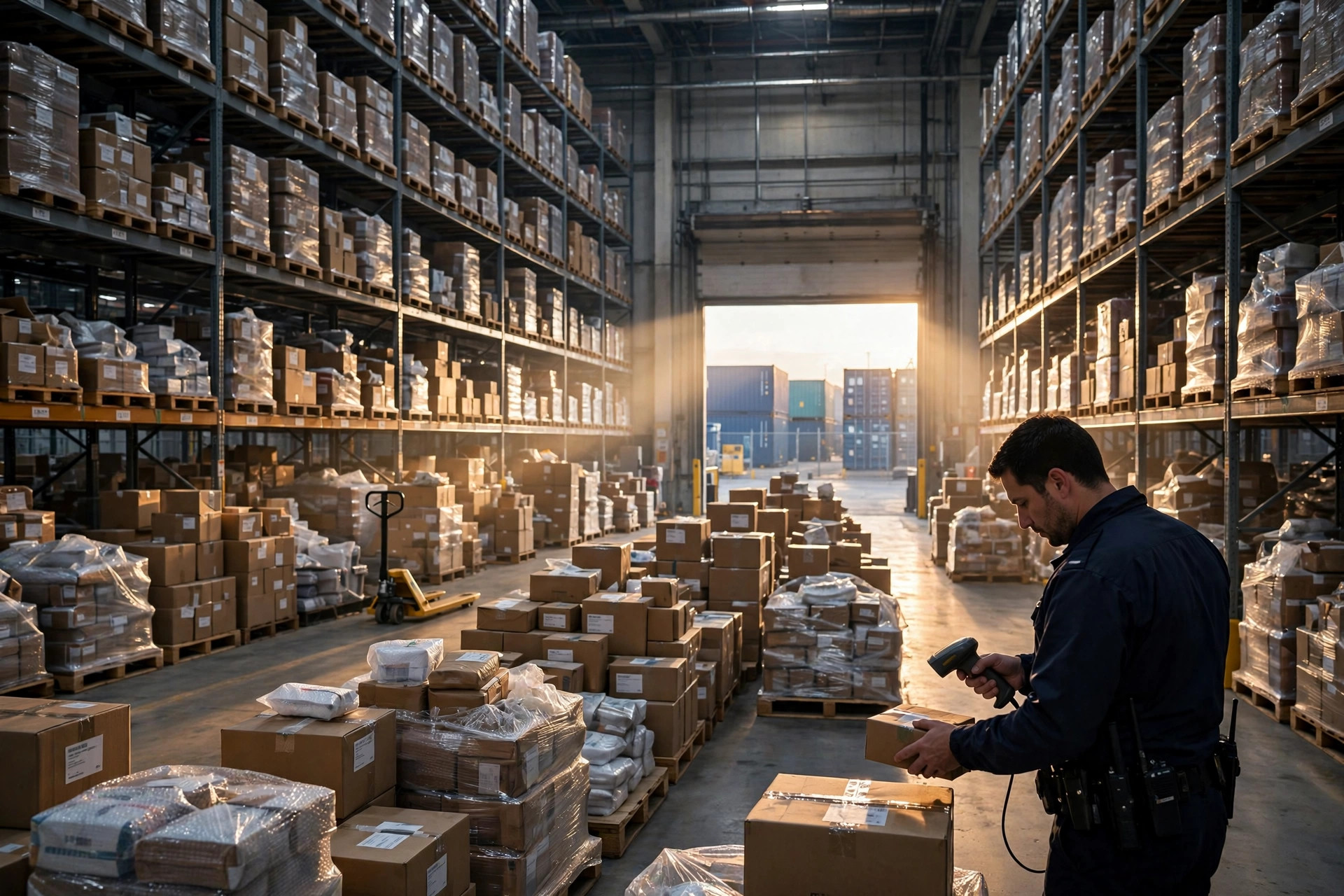
What replaced it is the full apparatus of US customs law, applied to a $47 parcel. Under CBP's new interim entry process, every covered low-value shipment must now carry an identified importer or broker, a declared country of origin and value, a 10-digit Harmonized Tariff Schedule classification, a calculated duty, a customs bond, and monthly duty payment through CBP's designated process, which is to say that the entire compliance apparatus previously reserved for container freight now applies, line by line, to a poly mailer full of vacuum filters. Read that list again from the perspective of the vacuum-filter seller. She does not know what a 10-digit HTSUS code is. She has never posted a customs bond. She is not registered as an importer of record, and until eighteen months ago there was no reason on earth she should have been. Neither are the roughly 221,000 small and mid-size US importers the Census Bureau counts, businesses that built their supply chains in the decade when the border was, for their purposes, invisible. CBP has collected more than $1 billion in duties on 246 million low-value shipments since the phaseout began, which tells you the machine is running. It does not tell you who is supposed to feed it.
The express-courier channel that carried this trade is buckling under a burden it was never designed to carry. Entry Type 86 filings, the expedited low-value process built for a duty-free world, fell from nearly 948 million in fiscal 2024 to about 635 million in fiscal 2025, a drop of more than 300 million filings in a single year, and every one of those missing filings represents a shipment that now needs the full treatment. Total de minimis volumes fell from 1.36 billion shipments worth $64.6 billion to about 942.5 million worth $48.1 billion. Some of that is demand destruction: Temu's US daily active users fell 52 percent after the China cutoff. But hundreds of millions of shipments did not disappear. They moved onto entry types that demand data the old pipeline never collected, which is the quiet crisis underneath the headline numbers: the manifests, the product descriptions, the SKU-level detail that a formal entry requires simply do not exist for most of these shipments, and somebody has to create them. A Canadian parts supplier sending a $150 replacement component across the border now faces, in one trade publication's words, an administrative process that is no longer necessarily small, even though the product still is.
The $47 Parcel vs. the $75 Entry: An Original Calculation
Start with the declared value. CBP's fiscal 2024 figures put de minimis imports at $64.6 billion across 1.36 billion shipments. Divide. The average parcel that crossed under the exemption was worth $47.50. That number is the whole story, because the customs-broker channel was built for a different universe, one of containers and pallets and bills of lading, not poly mailers worth less than a tank of gas. Industry-typical broker fees run roughly $25 to $50 for an informal entry and $75 to $200 or more for a formal entry, before disbursements, bond fees, and merchandise processing fees. On a $47.50 parcel, the cheapest human-filed entry costs about as much as the goods. The formal entry costs more than the goods. Nobody is paying a broker $75 to clear a $47 parcel. The broker channel cannot be the compliance path for this trade. The unit economics forbid it, which is precisely why the compliance path has to be software: only code has a marginal cost near zero, and only a near-zero marginal cost fits inside a $47.50 parcel.
Now scale it. The Census Bureau's 2021 profile of importing companies counts 226,662 identified US importers, of which 220,980 are small and mid-size businesses. These are not the Fortune 500 firms with in-house trade compliance teams and standing broker relationships. They are the Amazon sellers, the Etsy wholesalers, the regional distributors, the repair-parts shops, the DTC brands with a factory in Vietnam, the hundreds of thousands of businesses that treated the border as a solved problem because, for the only decade that mattered to them, it was. Suppose a platform charges a blended $129 a month for the software layer: catalog classification, live duty-rate engine, importer-of-record and bond vault, filing API to broker partners. 220,980 businesses times $129 times 12 is $342 million a year in software revenue, before a single per-shipment fee. The per-shipment layer is the multiplier: if the platform processes even 5 percent of the roughly 900 million annual low-value shipments at $2 a filing, that is another $90 million. The software is the wedge. The filing volume is the business.
Finally, the data bottleneck. The 313-million-filing collapse in Entry Type 86 is not just a volume story; it is a data story. Every one of those shipments now needs a 10-digit HTSUS code, and HTSUS classification is the single hardest data problem in trade compliance. There are roughly 19,000 tariff lines, the difference between two adjacent codes can be the difference between a 0 percent and a 25 percent duty, and misclassification is the most common customs violation in the country. The importers who need these codes the most have product catalogs of 500 SKUs and no trade staff. Whoever owns the classification step owns the customer. Every downstream action depends on it: the filing, the bond, the duty payment, the audit defense. Get the code right and everything else is plumbing. Get it wrong and everything else is a penalty.
The Gap in the Market
| Company / Channel | What They Do | What's Missing for the SMB Importer |
|---|---|---|
| Zonos | Cross-border landed-cost calculation, Shopify Duty and Tax app, HS classification API. The best-known independent player, priced around $208 to $333 a month. | Built for the reverse direction: US merchants selling outbound to foreign shoppers. It quotes duties a US store owes abroad. It does not register you as a US importer of record, post your bond, or file your entries with CBP. The de minimis crisis is an inbound problem. |
| FedEx Global Trade Navigator (Shopify Duty and Tax app) | Launched September 2026. HS code lookup, duty estimates, customs document prep, in-transit tracking. Free to FedEx shippers. | Carrier-locked. It works on FedEx parcels and nobody else's. The 2026 FedEx Small Business Trade Index found 68 percent of SMBs see customers surprised by duties at delivery, and most of those SMBs ship multi-carrier. A FedEx app does not help the DHL, UPS, or postal parcels. |
| UPS Global Checkout | Guaranteed landed cost at checkout for cross-border buyers, launched 2025. | Same carrier lock-in, and oriented toward the buyer's checkout experience rather than the importer's compliance stack. Knowing the duty is not the same as filing the entry. |
| Traditional customs brokers | Licensed professionals who file entries, post bonds, and handle CBP audits. The only parties legally permitted to transact customs business on an importer's behalf. | Unit economics. At $25 to $200 per entry, the broker channel is priced for container freight, not $47 parcels. Brokers are also manual and relationship-driven: email, phone, PDFs. An SMB importing 400 parcels a month cannot run that workflow, and most brokers do not want the account. |
| Flexport, Avalara | Enterprise trade compliance, duty drawback, global logistics orchestration. Real products, serious companies. | Priced and staffed for companies with trade compliance departments. The 221,000 SMB importers are below their sales threshold. This is the Cority-and-Intelex pattern from every other regulated vertical: the enterprise tools exist, the long tail gets nothing. |
| Hurricane Commerce, SimplyDuty | HS classification data and duty calculation APIs. Genuinely good at the code-lookup step. | Classification is one input to a filing, not a filing. They sell the data feed; nobody wires it to the importer-of-record registration, the bond, the ACE entry, and the monthly duty payment. The last mile, the part CBP actually requires, is unbuilt. |
The pattern will be familiar to anyone who has watched a regulated vertical digitize. The carriers built tools that keep you inside their network. The enterprise vendors built for the top of the market. The data companies sell one ingredient. And the 221,000 businesses in the middle, the ones whose parcels just went from duty-free to fully dutiable overnight, have no system of record for the thing that now determines whether their goods clear customs. The incumbents each own a slice of the workflow. Nobody owns the importer's file.
The Solution
DeMinimis: the customs-ops platform for the 221,000 US importers the $800 exemption left behind. Not a calculator, not a broker directory. The system of record that takes a product catalog in and produces compliant entries out: classification, valuation, origin, bond, filing, payment, audit trail. Five modules, priced for businesses that count in parcels, not containers.
1. Catalog classifier ($129/month base): The importer uploads a product catalog, a Shopify export, an Amazon listing dump, a spreadsheet, and the engine assigns a 10-digit HTSUS code to every SKU using product descriptions, images, and materials data, with human trade-specialist review on low-confidence codes. Reclassification runs automatically when CBP rulings or tariff schedules change, which in the current environment happens constantly, sometimes weekly, sometimes because a court ruled and sometimes because an executive order landed overnight. The classifier is the daily-use product and the moat. Once 50,000 SKUs are coded in your system, the importer is not leaving. Per-SKU one-time classification for non-subscribers at $8 a SKU AI-assisted, $35 human-reviewed.
2. Live duty-rate engine ($49/month add-on): A duty table is a photograph; the tariff environment is a video. Section 122 actions carry 150-day statutory limits, IEEPA-derived duties are in active litigation, and country rates move on executive action. The engine maintains the effective rate per HTSUS-country pair, flags SKUs whose duty changed this week, and recomputes landed cost across the catalog. For the DTC brand deciding whether to absorb the duty or raise prices, this is the pricing input, the number that determines whether the business still works. For everyone else, it is the difference between an accurate entry and a penalty.
3. Importer-of-record and bond vault ($29/month add-on): The unglamorous part that blocks everyone, and the reason most SMB importers stall before they ever file anything: they do not know what an importer of record is, they have never seen a power of attorney, and the phrase "continuous import bond" sounds like something from a heist film. Guided IOR registration, power-of-attorney management for broker partners, and continuous import bond placement through surety partners, typically $275 to $500 a year for the bond itself, with the platform taking a referral commission. The vault holds the documents CBP asks for in an audit: entry summaries, classification records, valuation support. When CBP comes knocking, the importer produces a file, not a shoebox.
4. Filing rail ($2 per shipment, volume tiers to $1.25): The platform does not hold a broker license, and it should not try, because the licensing regime is the moat and the moat belongs to the partners. Instead it contracts with a network of regional licensed customs brokers as filing rails and routes entries through an API: the importer sees one dashboard, the broker's license does the legal work, the platform takes the software margin. This is the TurboTax model applied to customs: the credentialed professional is in the loop, but the software does the volume. At 400 shipments a month, the importer pays $800 in filing fees plus the platform subscription. The broker alternative for the same volume at $25 an informal entry is $10,000 a month.
5. Duty float ($1.5% of duties advanced): The fintech kicker. Duties are now due on every parcel, which means importers face a new working-capital line item they never budgeted. The platform advances duties at clearance and settles weekly, charging 1.5 percent of the advanced amount. On $48 billion in annual low-value import value at an average 10 percent effective duty, the float pool is enormous; even a small share of it is a serious revenue line, and it makes the platform the importer's bank, which is the stickiest position in the stack.
Revenue Model
| Revenue Stream | Amount | Notes |
|---|---|---|
| Catalog classifier (per importer/month) | $129 | Core product. HTSUS classification, reclassification on ruling changes, audit file. ~90% software margin. |
| Live duty-rate engine (add-on) | $49/month | Effective-rate tracking per HTSUS-country pair, landed-cost recompute, change alerts. |
| IOR and bond vault (add-on) | $29/month | IOR registration guidance, POA management, bond placement, audit document store. |
| Full compliance bundle (per importer/month) | $179 | All three modules at 14% discount. Expected take rate: 65%+ of subscribers. |
| Filing rail (per shipment) | $2.00, tiers to $1.25 | Via licensed broker partners. The volume line: 400 shipments/month is $800 at list. |
| One-time SKU classification | $8 AI / $35 human-reviewed | Acquisition wedge for non-subscribers; converts to the subscription. |
| Bond referral commission | $40-$75 per bond | Surety partner commission on $275-$500/year continuous bonds. |
| Duty float | 1.5% of duties advanced | Weekly settlement. Working-capital product; the stickiest line in the model. |
Unit economics for a mid-size Amazon seller: 400 shipments a month, average parcel value $47.50, average effective duty 12 percent. Platform: $179 bundle plus 400 filings at $2 is $979 a month, $11,748 a year. Duty float on $22,800 in monthly parcel value at 12 percent duty is $2,736 advanced monthly; at 1.5 percent that is $41 a month in float revenue, another $492 a year to the platform. The importer's alternative is a broker at $25 an informal entry: $10,000 a month, $120,000 a year, roughly ten times the platform cost. That assumes a broker would even take the account. Most will not. Parcel-scale importers are the accounts brokers decline politely and forget. Customer acquisition runs through the Shopify app store, Amazon seller forums, and trade associations at roughly $600 per logo; the entire buyer universe is already searching for what to do about the rule change. At 3-year retention: LTV about $36,700 against a $600 CAC. The ratio survives even aggressive skepticism about retention.
Market Size
TAM: The Census Bureau counts 220,980 small and mid-size US importing companies. These are the businesses that imported through the de minimis decade without building customs infrastructure. At a blended $129 a month for the software layer: 220,980 x $129 x 12 = $342M a year in recurring SaaS revenue. Add the filing rail: roughly 900 million low-value shipments a year at current volumes, and if software-mediated filing captures even 10 percent of them at $2 a shipment, that is $180M a year in transaction revenue, of which the platform keeps the software margin after the broker rail's cut. Total addressable: on the order of $400M+ a year. The duties themselves, roughly $4.8 billion a year at a 10 percent effective rate on $48 billion in value, flow through the platform as the float base.
SAM: Not every SMB importer moves parcels. The sharpest pain sits with e-commerce-heavy importers: Amazon and Shopify sellers, DTC brands with overseas factories, parts distributors, the businesses whose goods arrive as parcels rather than containers. Call it 40 percent of the SMB importer base, about 88,000 businesses, at a blended $149 a month including add-ons: $157M a year in software, plus their disproportionate share of the filing volume.
SOM (year 3): 1,500 importers on the platform at $179 a month average is $3.2M in ARR, plus filing revenue: 1,500 importers averaging 200 shipments a month is 3.6 million shipments a year at $2, another $7.2M. Year-3 revenue: ~$10.4M at roughly 80% blended gross margin. That is under 2% penetration of the SAM, achievable through the Shopify app store, Amazon seller communities, and three anchor broker partnerships covering the major ports.
Why Now
The suspension is permanent and the repeal is statutory. The August 2025 executive order did the immediate damage, but the One Big Beautiful Bill Act's July 1, 2027 repeal date does the strategic damage: it removes the snapback scenario. No importer is waiting this out. Every sourcing and pricing decision made from here forward assumes duties on every parcel, forever. Software bought against a permanent rule change has a different retention profile than software bought against a scare. One renews. The other churns the month the news cycle moves on.
The old pipeline cannot absorb the volume. Entry Type 86 was the pressure valve for low-value trade, and it lost 313 million filings in a year. The express carriers built their networks around a world where a parcel needed a manifest line, not a 10-digit classification. That world is gone, and the replacement infrastructure, data collection at the SKU level, broker capacity for parcel-scale entries, does not exist yet. The company that builds the data layer becomes the default route for the volume.
Tariff volatility made static compliance obsolete. When duty rates were stable for years, a spreadsheet of HTS codes was a durable asset. Now Section 122 actions expire on 150-day clocks, IEEPA-derived duties sit in active litigation, and country rates move by executive action. An importer with 500 SKUs cannot maintain the rate table by hand. A live duty-rate engine is not a feature in this environment. It is the product, because the number it produces changes the landed cost of everything the importer sells.
The buyers are searching right now. The FedEx Small Business Trade Index found 68 percent of SMBs already dealing with customers surprised by duties at delivery. The vacuum-filter seller, the Canadian parts supplier, the Etsy wholesaler: they are all typing the same queries into Google this quarter. The demand is not latent. It is inbound, confused, and holding a credit card. The window between "rule changed" and "everyone has a solution" is when category winners get built, and that window is open right now, in this quarter, while the search results are still full of law-firm explainers instead of products.
Startup Costs
| Category | Cost | Notes |
|---|---|---|
| Trade counsel + broker partnership agreements | $40K | Customs attorney for the regulatory mapping; partnership terms with 3-5 regional licensed brokers as filing rails. Non-negotiable: you are selling compliance, and a lawyer blesses the architecture. |
| Engineering (2 full-stack + 1 data, 8 months) | $280K | Catalog classifier, duty-rate engine, IOR/bond vault, filing API, broker dashboard. Boring stack; the HTS classification pipeline is the hard part. |
| HTS classification engine (AI + human review) | $45K | Model training on CBP rulings (CROSS database), product-taxonomy mapping, human trade-specialist review queue for low-confidence codes. Accuracy here is the moat. |
| Broker and carrier API integrations | $35K | Entry filing integration with broker partners, parcel tracking feeds, duty payment rails. ACE-adjacent plumbing. |
| Pilot program (30 SMB importers) | $25K | Subsidized filing for 30 importers across Amazon, Shopify, and wholesale channels. You need a full quarter of real entries before you can show anyone the audit file. |
| Shopify app + marketplace presence | $15K | App store listing, Amazon seller community presence, trade association sponsorships. The buyers are all in the same forums. |
| Operating buffer (12 months) | $25K | Hosting, support, E&O insurance. Not optional when your product is a customs filing. |
| Total | $465K |
Break-even lands around month 20: 400 importers at a blended $700 a month in software and filing revenue is $3.36M in ARR at roughly 80% gross margin against a ~$900K annual burn for a team of eight. The ramp assumes 60 importers by end of year one from the pilot converting, then the Shopify app store and broker-partner referrals compounding. The second year is the business: once the catalog is classified in your system, switching costs are real, because nobody re-classifies 500 SKUs for fun.
Limitations
The 220,980 small and mid-size importer figure comes from the Census Bureau's 2021 profile, the most recent detailed release. The importer count has likely grown since, and the de minimis parcel economy includes foreign sellers and marketplace aggregators who may not be captured as identified US importers. Treat the TAM as directional: the true addressable count could be 20 percent higher or lower, and the mix of parcel-scale versus container-scale importers within it is an estimate, not a census.
Broker fee ranges of $25 to $50 for informal entries and $75 to $200 for formal entries are industry-typical figures, not quotes. Actual fees vary by port, broker, shipment complexity, and disbursements. The core comparison, that human filing costs approach or exceed the $47.50 average parcel value, holds across the plausible range, but a specific importer's broker quote could differ.
The Zonos pricing cited in the competitor table comes from a third-party comparison page and may not reflect current list pricing. The FedEx Small Business Trade Index figure is from an April 2026 poll of the company's own survey panel, which skews toward FedEx shippers. Directionally the surprise-at-delivery problem is well documented across carriers; the exact 68 percent should be read as a FedEx-panel result.
The platform cannot file entries itself without a licensed customs broker, which means the filing rail depends on broker partners whose capacity, pricing, and reliability the startup does not fully control. If the anchor brokers raise rail pricing or exit the partnership, the unit economics compress. The broker network is a strategic dependency dressed as a partnership.
Duty float revenue assumes importers will let the platform advance duties, which requires credit underwriting on businesses with thin financials. Default risk on advanced duties is real, and the 1.5 percent fee has to cover it. Underwrite badly and the fintech kicker becomes a loss center.
Strongest Counterargument
This is a feature, not a company, and the carriers will eat it. FedEx just shipped a free Shopify app that does duty calculation. UPS has Global Checkout. Shopify itself will eventually absorb the filing workflow the way it absorbed payments with Shop Pay. Meanwhile the actual legal work requires a licensed customs broker, so the software is a thin UI sitting on someone else's license, and the brokers will simply consolidate the parcel volume themselves once they build an API. The SMB importer ends up using their carrier's free app plus their broker's portal, and there is no room for an independent platform in between.
This is the right objection, and it deserves a straight answer in four parts. First, the carrier apps are carrier-locked by design, and SMBs are multi-carrier by necessity. A FedEx app does not file the DHL parcel, the UPS parcel, or the postal consolidation, and the importer needs one system of record, not three carrier dashboards. The carrier's incentive is to keep you on their network; the importer's incentive is to route each parcel to the cheapest compliant option. Those incentives diverge, which is why independent software wins in every multi-carrier category it enters.
Second, Shopify is a checkout company, and the de minimis problem is not a checkout problem. Knowing the duty at checkout does not register you as an importer of record, post your bond, or file your entry. Amazon sellers, Etsy wholesalers, and wholesale distributors are not on Shopify at all. The marketplace sellers alone are a bigger buyer pool than the Shopify app store.
Third, the broker-license dependency is the moat, not the weakness. Brokers are licensed professionals, not software companies; the regional brokerages that would make good filing rails have no interest in building a multi-tenant SaaS platform, a classification AI, or a duty-rate engine. The history here is TurboTax, not disintermediation: the credential stays with the professional, the software eats the workflow above it, and the professional gets more volume than they could ever sell directly. The brokers who partner early get the parcel flow. The ones who wait get competed.
Fourth, the timing favors the independent. The carriers are building checkout calculators; nobody is building the importer's system of record, because the importer's problem only became acute in August 2025 and the carrier product roadmaps move on 18-month cycles. An independent team shipping the classifier, the vault, and the filing rail now has a two-year head start on the only part of the stack the carriers do not want to own: the importer's audit file.
What You Can Do
If you import goods and never filed a customs entry: Classify your top 20 SKUs this month, because the HTSUS code determines everything downstream and guessing is now a penalty risk. Get a continuous import bond before you need one; single-transaction bonds on every parcel will bleed you. Register as an importer of record and line up a broker relationship while brokers still have capacity for new SMB accounts. The importers who did this in Q4 2025 are clearing freight normally. The ones who did not are learning about general order warehouses, which is CBP's term for where your goods sit, accruing storage fees, while you figure out the paperwork you should have filed last year.
If you are a licensed customs broker: Your license is suddenly the scarcest credential in parcel trade, and the regional brokerages that productize it as an API rail will own the next decade of volume. The brokers who spent 2025 manually filing entries for panicked importers at $75 a pop built no lasting advantage. The ones who plug into a software platform's filing rail get the volume without the headcount. Pick a platform horse or build the API yourself, but do not assume the manual model survives the parcel era.
If you sell on Amazon, Etsy, or Shopify and source abroad: Recompute your landed costs with real duty rates before you reorder inventory, because the margin you modeled in 2024 assumed zero duties and the new math may not support your price. Decide explicitly whether to absorb the duty, raise prices, or move sourcing. The sellers who did this math early are still in business. The ones running on 2024 margins are donating their profits to CBP one parcel at a time. And stop treating the carrier's checkout calculator as a compliance strategy. It tells the buyer the duty. It does not file your entry.
If you are building this: Start with the catalog classifier, not the filing rail, because classification is the hardest data problem, the daily-use wedge, and the switching-cost engine. Train on the CROSS rulings database and build the human-review queue from day one; importers will forgive a slow code they trust and never forgive a fast code that draws a penalty. Recruit design partners from Amazon seller communities, not from enterprise trade conferences. Your customers are the 221,000 businesses that never had a customs department, and they are all asking the same question right now.
The Bottom Line
For a decade the United States ran the world's most generous small-parcel import regime, and 1.36 billion parcels a year crossed the border with no duties, no tariff codes, and no customs bonds. That regime ended in August 2025 by executive order and will be repealed by statute in July 2027. The replacement demands a 10-digit classification, a declared origin, an importer of record, and a bond on every parcel, applied to an average shipment worth $47.50, in a market where the cheapest human-filed entry costs about the same as the goods. The 221,000 small and mid-size importers caught in this transition have no broker, no bond, and no software, and the incumbents built for everyone except them: the carriers built network-locked calculators, the enterprise vendors built for the Fortune 500, and the brokers price by the entry in a parcel world. A platform that classifies the catalog, tracks the live duty rate, vaults the importer record, and routes filings through broker rails is a $342M software market with a $180M transaction layer on top, selling to buyers who are searching for help this quarter. De minimis is dead. The paperwork is forever. Somebody has to sell the shovels, and the shovels have never been worth more than they are right now.