Fiber Broadband Permit & Milestone Tracking SaaS for BEAD Subgrantees
The federal government committed $42.45 billion to bring fiber broadband to rural America through the BEAD program. States are signing subgrantee contracts right now. In January 2026, more than 20 carriers notified the FCC they had missed deployment deadlines under the predecessor RDOF program, and the most commonly cited reason was permitting delays. Railroad crossing permits alone average $40,000 in fees and 15 months to process. A typical 50-mile fiber route requires 1,300+ individual permit actions across dozens of agencies. The ISPs winning these contracts manage all of it with spreadsheets and email.
The Problem
The Broadband Equity, Access, and Deployment program allocated $42.45 billion across all 50 states, DC, and five territories to connect unserved Americans to high-speed internet, making it the largest federal broadband investment in the country's history and a program whose sheer scale guarantees that every weakness in the permitting system will be exposed and amplified. States are deep into implementation: North Dakota completed all BEAD contract signings in May 2026, California has $1.86 billion to allocate, Minnesota secured $652 million, and New Mexico received 66 applications for $719 million in funding. The money is committed and the timelines are non-negotiable.
BEAD subgrantees face strict deployment milestones tied to their funding, with clawback provisions that allow states and NTIA to recoup disbursed funds if ISPs fail to deliver service to the required percentage of locations within each performance period. NTIA requires letters of credit or performance bonds to secure compliance, ensuring that subgrantees have financial skin in the game from day one.
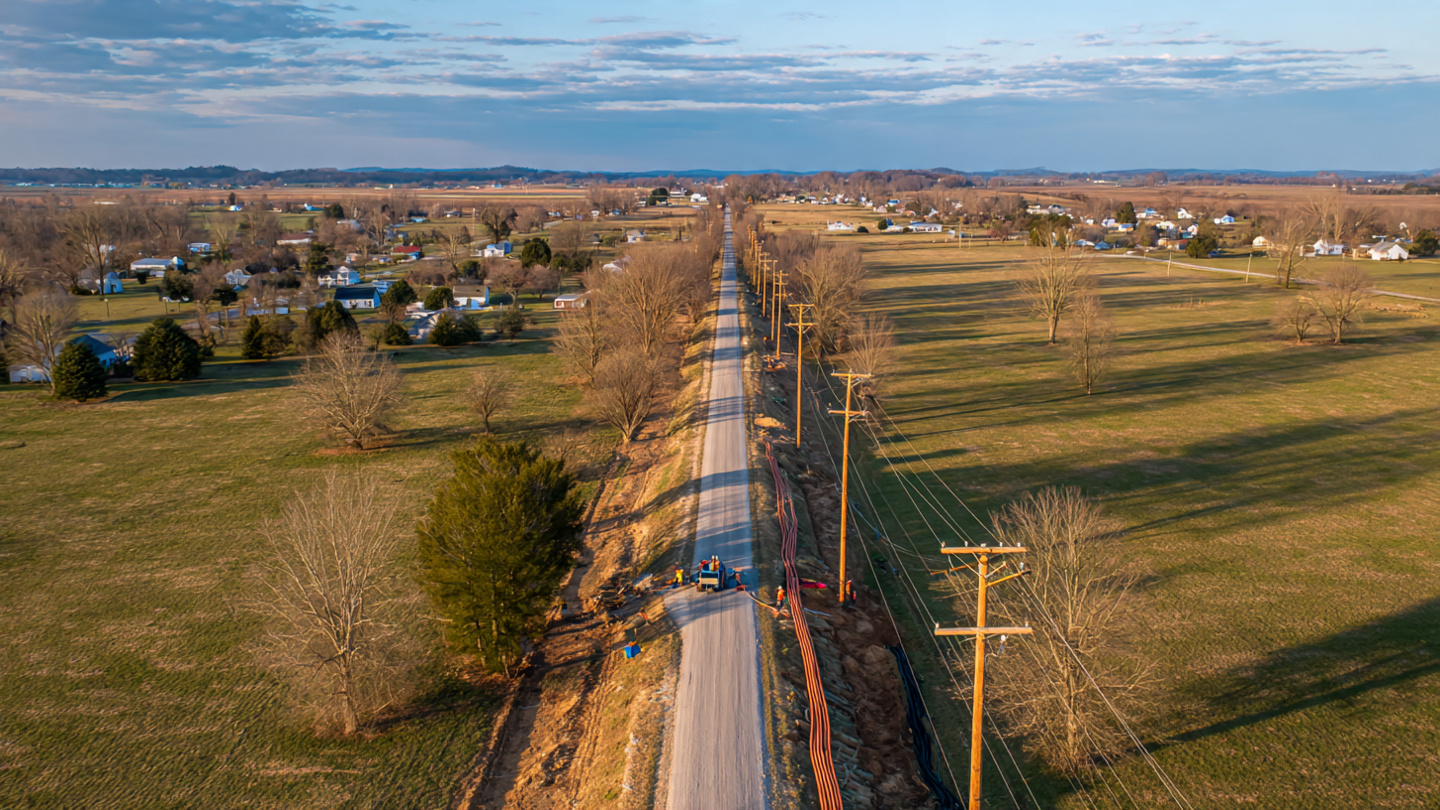
Every mile of fiber demands a staggering volume of permits, and that volume is the core challenge because a typical 50-mile rural fiber route serving 1,000 locations requires approximately 1,250 pole attachment applications at 25 poles per mile, 5 to 10 railroad crossing permits, 15 to 30 municipal road opening permits, 3 to 8 state DOT highway crossing permits, and 50 to 200 private property easements, adding up to 1,300 or more individual permit actions for a single project where each application goes to a different agency with its own form, its own fee schedule, its own processing timeline, and its own backlog of applications from every other ISP building fiber in the same region.
Pole attachments are the volume problem because an ISP must apply to every pole owner along its route for permission to hang fiber, and those owners include electric cooperatives, investor-owned utilities, and telephone companies, each operating separate application portals with distinct engineering requirements, make-ready survey processes, wire relocation procedures, and final inspection protocols. The FCC adopted new pole attachment rules effective May 7, 2026, codifying access timelines and establishing a Rapid Broadband Assessment Team to resolve disputes, and those rules exist specifically because the old process routinely consumed 6 to 12 months per application batch, with some utilities simply ignoring applications until the ISP escalated to a regulatory complaint.
Railroad crossings are the timeline killer. According to congressional testimony supporting the Broadband RAIL Act, railroad crossing permits average $40,000 or more in fees and take 12 to 20 months to process, with industry data pegging the range at $5,000 to $110,000 per crossing depending on complexity, railroad company, and whether the applicant has an existing relationship with the carrier. For a 50-mile route intersecting five rail lines, the critical path through railroad permitting alone burns 15 months of a typical 4-year BEAD deployment window, leaving 33 months for design, procurement, and construction work that normally requires 24 to 30 months of uninterrupted execution. Zero slack.
This is not a theoretical risk. In January 2026, more than 20 telecom carriers notified the FCC they had missed their Rural Digital Opportunity Fund Phase I deployment milestones, with carriers operating across 28 states citing permitting problems as the primary cause, specifically pole attachment delays and railroad crossing backlogs. RDOF was BEAD's smaller predecessor. The same bottlenecks will hit a program seven times larger.
The Gap in the Market
The tools that exist were built for the wrong customer at the wrong price.
| Company | What They Do | What's Missing |
|---|---|---|
| Sitetracker | Enterprise project management for infrastructure deployment with over $250M raised and clients including Tier 1 carriers and major fiber builders like Lumen and Frontier. | Priced for enterprises at $50K to $150K+ per year, which means a 40-person rural electric cooperative that just won a $12M BEAD subgrant cannot justify the expenditure on a platform designed for companies deploying millions of fiber miles rather than 50. |
| IQGeo | Publicly traded network design and construction management platform with deep GIS integration, serving large telcos for fiber plant inventory and field operations management. | Focused on network asset management rather than permit workflow tracking, a gap acknowledged in Fiber Broadband Association white papers that note design tools don't address the operational question of which of your 1,250 pole applications is stuck at which utility on which desk. |
| Trimble Unity Permit | Right-of-way permitting software built for local governments to process and manage incoming permit applications from utilities and contractors. | Serves the government side of the transaction and does nothing for the ISP that filed 1,300 outgoing applications across dozens of agencies and needs to track which are stuck, which are approved, and which threaten its federal milestone deadlines. |
| Spreadsheets + email | What the overwhelming majority of small ISPs actually use to manage permits today. | No automated status tracking, no deadline alerts, no connection between a stuck railroad crossing permit in week 60 and a BEAD milestone deadline in month 18, and when the operations manager who built the spreadsheet quits, every phone number and relationship and agency-specific workaround walks out the door. |
The Fiber Broadband Association's September 2025 white paper identified outdated permitting processes as the single largest barrier to broadband deployment and recommended five reform strategies including digital permitting, escrow mediation, and standardized timelines, but the recommendations targeted policy reform rather than operational software, and no company has built the product that a 40-person cooperative in rural Minnesota needs to track 1,300 permit applications against federal milestone deadlines while simultaneously managing relationships with 47 different pole-owning utilities.
The Solution
A purpose-built permit and milestone tracking platform for broadband deployers, priced for the small ISPs that are actually constructing BEAD-funded networks rather than the Tier 1 carriers that already have enterprise project management infrastructure.
1. Permit lifecycle management ($500/month base + $0.50/permit/month): Every permit application tracked from submission through approval in a single dashboard, with status categories mirroring real agency workflows including submitted, under review, make-ready required, engineering complete, approved, inspection scheduled, and closed, along with automated reminders when applications exceed expected processing windows and email parsing that extracts status updates from agency correspondence automatically so that nobody has to manually update a spreadsheet row after reading a PDF letter from a county public works department at 9 PM on a Tuesday.
2. BEAD milestone integration ($200/month add-on): Maps permit status directly to BEAD deployment milestones, providing real-time progress visualization toward the 40%/60%/100% location thresholds that trigger reporting requirements while generating the compliance documentation subgrantees must submit to state broadband offices. The critical function is the early warning system that flags when permitting delays threaten milestone deadlines months in advance, giving ISPs time to escalate through the FCC's new dispute resolution process, reroute around a blocked segment, or negotiate an extension before the deadline arrives and the clawback conversation begins.
3. Railroad crossing tracker ($100/month add-on): A dedicated workflow for the single highest-risk bottleneck in broadband deployment, tracking application status at each Class I and short-line railroad with pre-populated directories of railroad contacts, application requirements, and typical processing times by carrier. CSX alone processes over 3,000 right-of-way applications per year, and each railroad operates its own submission portal with unique requirements, which means an ISP whose 50-mile route crosses tracks owned by BNSF, Union Pacific, and a regional short-line must learn three different application systems from scratch unless someone has already compiled the information in one place.
4. Pole attachment batch manager (included in base): Template-based applications organized by utility company, with per-pole tracking through make-ready survey, engineering review, and final inspection stages, batch status views showing route-wide progress at a glance, drill-down capability to the three stuck applications out of 1,247 that are holding up construction on an entire fiber segment, and direct integration with the FCC's new Rapid Broadband Assessment Team process for formal escalation when utilities miss their newly codified response timelines.
5. Agency contact database (included in base): A continuously maintained directory of permitting contacts at every state DOT district, county government, municipal public works office, and railroad in the ISP's coverage area, crowdsourced from all BEAD subgrantees using the platform and verified as staff turn over and agency processes change. This network effect is the long-term moat, because every additional ISP user makes the contact database more accurate and comprehensive for all users, switching costs compound as the database becomes the authoritative source for institutional knowledge about agency-specific permitting quirks, and the question of "who do I call at Illinois DOT District 6 about permit number 4,817 that's been sitting in review for nine weeks" has a living, updated answer.
The Math: What a Permit Delay Costs
Consider a small electric cooperative in rural Minnesota that won a $15M BEAD subgrant to connect 2,400 locations across 120 miles of fiber, a representative project size based on early state-level data from BEAD subgrantee selections.
Year 1 milestone: 960 homes (40% of awarded locations) must have service available, and missing that target gives the state broadband office grounds to withhold remaining funding disbursements and initiate clawback proceedings against the cooperative for the full subgrant amount.
Critical path analysis: The 120-mile route crosses 8 railroad tracks, and at the industry-average processing time of 15 months per crossing, the cooperative must submit all 8 railroad applications on day one of the project and receive approvals without a single delay to stay on schedule. If two crossings slip to 20 months because the railroad's permitting office lost an application or reassigned the reviewer, then the construction schedule for every home served by fiber beyond those crossings collapses, blocking service to 600 or more locations and making the Year 1 milestone mathematically unreachable regardless of how fast the rest of the build proceeds.
Cost of a 6-month cascading delay: The cooperative committed 25% matching funds of $3.75M and is paying approximately 6.5% APR on bridge financing, which means six months of carrying costs on outstanding capital run to roughly $122,000, while contractor demobilization and remobilization for crews that were scheduled to build the segments beyond the blocked crossings adds another $40,000 to $80,000, for a total direct cost of $162,000 to $202,000 before accounting for the existential risk that the state broadband office declines to grant an extension and initiates clawback of the $15M subgrant.
The monitoring subscription costs $800 per month ($9,600/year). One prevented cascading delay from a single missed railroad crossing pays for a decade of the subscription, which makes this less of a software purchase and more of an insurance policy against losing a $15 million federal grant because nobody noticed that permit #7 slipped from the critical path tracker.
Revenue Model
| Revenue Stream | Amount | Notes |
|---|---|---|
| Base platform (per ISP) | $500/month | Permit lifecycle management, pole attachment tracker, agency contact database access. |
| BEAD milestone add-on | $200/month | Compliance documentation generation, milestone mapping, deadline cascade alerts. |
| Railroad crossing tracker | $100/month | Dedicated workflow and contact directory for the highest-risk permit category. |
| Per-permit overage | $0.50/permit/month above 500 | Scales with project size; a 1,300-permit project pays approximately $400/month in overages. |
| Professional services | $2,500-10,000 per project | Onboarding, route-level permit inventory, initial application filing assistance. |
Unit economics for a typical customer: Monthly SaaS revenue of $1,200 covering the base platform plus both add-ons and overage on 1,300 permits, yielding an annual contract value of $14,400 and a lifetime value of $57,600 across the 4-year average customer lifespan matching the BEAD deployment period, against a customer acquisition cost of approximately $3,000 through state broadband office partnerships, NTCA Rural Broadband conferences, and Fiber Broadband Association events, producing an LTV:CAC ratio of 19.2x.
Market Size
TAM: NTIA's $42.45 billion in BEAD allocations will fund an estimated 3,500 to 5,300 subgrantees nationally, a range derived from early state data showing average subgrant sizes of $8M to $12M per project (New Mexico's 66 applications for $719M average $10.9M per subgrant, which sits in the middle of that range). At $14,400/year average contract value, the BEAD-only recurring revenue opportunity is $50 to 76M/year during the deployment period, while adding RDOF recipients still building out their networks, USDA ReConnect borrowers, state-funded broadband programs, and private fiber builders extends the addressable market by 2,000 or more organizations to $100M+/year.
SAM: The target customer is an ISP with fewer than 200 employees, encompassing electric cooperatives pivoting to broadband service, telephone cooperatives upgrading from DSL, municipal broadband utilities, and small commercial ISPs that lack enterprise project management infrastructure. States have provisionally awarded roughly $2 billion in BEAD support to rural electrics and telcos as of late 2025, representing an initial wave of 2,000 to 3,000 qualifying organizations that will need permit management tools within 12 to 18 months. At $14,400/year: $29 to 43M/year.
SOM (year 2): 150 customers representing 5 to 7% penetration of the small-ISP SAM, generating $2.16M ARR plus $375K to $1.5M in onboarding and professional services.
Why Now
BEAD contracts are being signed this quarter. North Dakota finished its signing process in May 2026, California and Texas and Minnesota and dozens of other states are in active subgrantee selection or contract negotiation, and over 160 broadband-related bills passed in US state legislatures in 2025 alone, signaling that the political and regulatory infrastructure supporting this buildout is operating at full speed. Construction begins within months. The window to sell a pre-construction planning tool is exactly now, during the 6 to 12 months before ground breaks, because by mid-2028 the early-mover window will have closed and the ISPs that needed help will have either found solutions or failed their milestones.
The FCC's pole attachment rules took effect five days ago. As of May 7, 2026, new federal rules codify pole attachment access timelines and establish the Rapid Broadband Assessment Team dispute resolution process, which gives ISPs regulatory teeth they've never had before to enforce compliance by pole owners, but exercising those rights requires systematic tracking of which of 47 different utilities along a fiber route are meeting their newly codified response deadlines and which are not.
RDOF failures created a burning platform. The 20-plus carriers that missed their milestones in January 2026 became the broadband industry's most-cited cautionary tale, and every state broadband office evaluating BEAD applications is now asking subgrantees what project management tools and processes they have in place to avoid the same fate. Showing up with a purpose-built permit tracking platform is a measurable competitive differentiator in contract negotiations.
Congressional railroad reform is advancing. The Broadband and Telecommunications RAIL Act was introduced in both congressional chambers in early 2026, proposing mandatory 60-day response requirements and 30-day scheduling deadlines for railroads processing broadband crossing applications, which when enacted will create an entirely new compliance tracking workflow requiring ISPs to document whether each railroad is meeting its statutory obligations and to file evidence of violations with regulatory agencies if they are not.
Startup Costs
| Category | Cost | Notes |
|---|---|---|
| Software development (MVP, 6 months) | $320K | Two full-stack developers plus one frontend developer building the permit tracking dashboard, BEAD milestone mapper, notification engine, and email parsing pipeline for automated status extraction. |
| Agency database seeding | $40K | Research team compiling permitting contacts at state DOTs, county governments, and railroads across the 15 states furthest along in BEAD subgrantee selection, using published directories and FOIA requests. |
| BEAD compliance research | $25K | Legal and regulatory analysis of BEAD milestone requirements across all 50 state programs, producing a template library for compliance documentation that adapts to each state's reporting format. |
| Sales and marketing (year 1) | $60K | Conference sponsorships at NTCA Rural Broadband and Fiber Connect, partnerships with state broadband offices, and direct outreach to published BEAD subgrantee lists which are public record in most states. |
| Cloud infrastructure (year 1) | $18K | AWS or GCP hosting, email parsing pipeline, document storage, and notification delivery services. |
| Legal and compliance | $15K | Terms of service, data security policy, and SOC 2 readiness assessment, all required for procurement by organizations receiving federal broadband funds. |
| Operating buffer (6 months post-launch) | $30K | Runway between launch and the point where recurring subscription revenue covers monthly operating expenses. |
| Total | $508K |
Limitations
The 3,500 to 5,300 subgrantee estimate derives from dividing $42.45 billion by an assumed average subgrant of $8M to $12M, but actual grant sizes vary enormously across states: Louisiana's initial awards averaged $3.5M per project while Virginia's ranged from under $500K to over $80M, which means the nationwide distribution of subgrantees could skew heavily toward either many small ISPs (favorable for this product) or fewer large carriers that already have enterprise tools (unfavorable). Early data from New Mexico averaging $10.9M per subgrant supports mid-range estimates, but the nationwide picture won't be clear until more states finalize their selections.
NTIA has restructured BEAD program requirements multiple times, including requiring some states to rescind preliminary subgrantee selections in 2025 and changing scoring criteria to favor lowest-cost bidders, which means further federal policy shifts could extend deployment timelines (reducing urgency), freeze funding disbursements (temporarily eliminating the market), or alter milestone structures in ways that require significant product pivots. Building against a federal program means building against a target that has moved repeatedly and may move again.
The crowdsourced agency contact database only becomes valuable when multiple customers operate in overlapping geographies, creating a cold-start problem where a cooperative in eastern Montana gains nothing from contacts compiled by ISPs in coastal Georgia. Reaching critical utility requires enough customer density within specific states that agency contacts are being independently validated and updated by multiple users, and until that threshold is crossed, each customer's data is only as fresh and accurate as the initial seed research.
Railroad permit cost and timeline data cited throughout this analysis comes from industry testimony before Congress and trade press reporting rather than systematic empirical measurement, because railroads do not publish official processing statistics or fee schedules in a standardized format. Actual timelines vary dramatically based on the specific railroad company, crossing complexity, whether the applicant holds an existing master license agreement, and the railroad's seasonal permitting workload, which means an ISP with an established BNSF franchise may experience 3-month turnarounds while a first-time applicant at the same railroad waits 20 months.
Strongest Counterargument
State broadband offices could build permit tracking themselves and mandate that subgrantees use it, which would eliminate the commercial opportunity within any state that chooses this path. These offices are the entities managing BEAD implementation, they already collect milestone data from subgrantees, and several have deployed or are developing broadband mapping and grant management platforms with substantial technical budgets. Virginia, California, and Minnesota all operate well-funded broadband offices with in-house software teams perfectly capable of extending their existing systems to include permit tracking, and a federal mandate from NTIA for standardized permit management would be even more devastating to a commercial entrant.
The response: state broadband offices are building systems to receive milestone reports from subgrantees, not to help subgrantees manage the operational work required to hit those milestones, and the distinction is exactly the same one that separates the IRS from TurboTax. A state broadband office needs to know whether an ISP served 960 locations by the Year 1 deadline; the ISP needs to manage 1,300 permit applications across 47 agencies so it can reach those locations in the first place. No state has expressed interest in building project management tools for private companies, and NTIA's consistent posture has been to encourage permitting reform while leaving operational execution entirely to the deployers. That said, federal programs are fundamentally unpredictable: if NTIA released a free federal permit tracking portal tomorrow morning, the commercial thesis would evaporate by afternoon, and while the probability of that outcome seems low based on current signals, the risk is real and unfalsifiable until the deployment window closes.
What You Can Do
If you're a small ISP starting BEAD construction: Before submitting a single permit application, build a complete route-level inventory of every permit your project will require by cataloging every pole owner, every railroad crossing, every municipal jurisdiction, and every state DOT district along your fiber route, then assign a realistic timeline estimate to each based on the agency's historical processing speed, which you can determine by calling the permitting office and asking directly since most will tell you their current backlog if you ask politely. Plot the critical path: railroad crossings and the largest pole attachment batches submitted to the slowest-responding utilities will almost certainly be your binding constraints, and those applications must go out first, in parallel with engineering design, not after design is complete. If your route crosses more than three railroad tracks, consider hiring a right-of-way acquisition firm like SelectROW that specializes in railroad negotiations, because a $15,000 consulting engagement that shaves 4 months off your railroad timeline is the best money you will spend on the entire project.
If you're building this product: Start with three pilot customers in a state where BEAD contracts have already been signed, with North Dakota, Louisiana, and Kentucky as strong candidates given their early progress in subgrantee selection. The MVP is a permit status database with workflow stages, deadline alerts, and a BEAD milestone dashboard, and you should skip the crowdsourced agency contact database for version one because your first three customers will tell you exactly which agencies create bottlenecks and reveal whether the core value proposition is permit visibility, milestone compliance, or an operational need you haven't anticipated yet. The sales cycle is short because the pain is immediate: present at NTCA Rural Broadband in September 2026 and the Fiber Broadband Association's Fiber Connect conference, since the entire buyer pool for this product will be concentrated in those two rooms.
If you work at a state broadband office: Publish your BEAD subgrantee list with project details, which most states already do as public record, then require subgrantees to submit route-level permit inventories as part of their initial deployment plans. Next, do something that no state has yet attempted: compile a model permit timeline for every county in your state by contacting each county public works department, state DOT district, and railroad with track in your jurisdiction to ask for their average processing times and current backlogs. This data does not exist in compiled form anywhere in the United States, and publishing it would transform the construction planning capability of every ISP building broadband in your state from educated guessing to evidence-based scheduling.
The Bottom Line
The United States is attempting the largest rural infrastructure buildout since the Rural Electrification Act of 1936, and the permitting system supporting it was designed for a world where one telephone company served one town and needed one permit from one agency. Twenty-plus carriers already failed their deployment milestones because they couldn't get permission to string wire on poles and lay conduit under railroad tracks fast enough, Congress is rewriting the rules in real time, the FCC is overhauling pole attachment regulations, and states are signing contracts committing billions of federal dollars to organizations that will manage their most critical operational workflow with a spreadsheet last updated by someone who no longer works there. What's missing is the boring, unsexy software layer that shows an operations manager in Fergus Falls, Minnesota that 3 of her 1,247 pole attachment applications are stuck at the Otter Tail County electric cooperative, that railroad crossing number 4 on the BNSF line just slipped to month 18, and that this cascade means her cooperative will miss its BEAD Year 1 milestone by six weeks unless she files an FCC complaint by Thursday. She will pay $800 a month for that screen without a second thought, because the alternative is discovering the problem in a letter from the state broadband office that opens with "Pursuant to your BEAD subgrant agreement, we are initiating clawback proceedings for $15,000,000."